The Chromophobia installation by Winston-Salem-based artist Kelsey Merreck Wagner adds color and interest through recycled materials
by Ayn-Monique Klahre
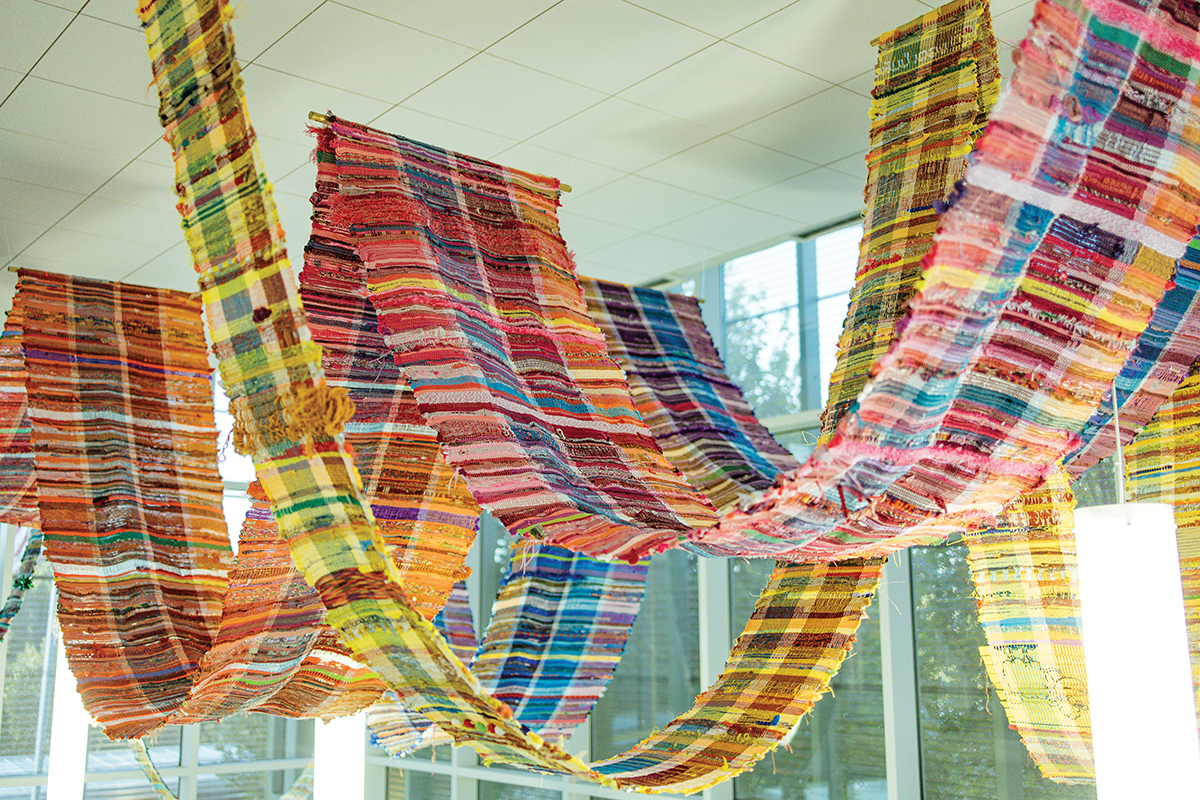
Swaths of color drape from the ceiling in the two-story, window-lined entrance to the Abbotts Creek Community Center in northeast Raleigh. Teals and turquoise, shades of yellow, mixes of red, orange, pink and everything in between — they invite guests to look up and pause. “The building was gorgeous, but it was exciting what a big change the color made,” says Winston-Salem-based artist Kelsey Merreck Wagner, who created the installation, called Chromophobia. “The work shimmers and changes with the shift in the sunlight during the day and to overhead lighting at nighttime.”
The installation was created as part of the SEEK Raleigh program, which was started in 2017 by City of Raleigh public art director Kelly McChesney. “SEEK projects are all artist-led; we provide the funding and support,” says Jenn Hales, who was the project manager for Chromophobia. “The city has so many cool spaces that people interact with — parks, greenways, community centers — that can be used as a canvas.”
Chromophobia is made up of four nearly 50-foot weavings suspended from the ceiling. Each is made from recycled material. It’s an invitation to think about environmental stewardship in a space that connects to an elementary school, the greenway and a park created on a borrow site south of the North Wake Landfill Park. “It’s a way to talk about plastic pollution and consumerism,” Wagner says.
Wagner uses reclaimed materials like old clothes, housewares and charge cables in her weaving. “I’m basically always collecting materials — not just from my own household, but from people in my community, my friends and family, or local businesses,” she says. Wagner sorts all of her materials and cuts it into strips, then keeps it organized by color. She never dyes her materials since part of the point is to understand its previous life (she gets a lot of yellow, for example, from discarded Dollar General bags). “When I start with a project, I’m able to pull from a massive inventory of textures and shades and materials,” she says. She connects strips of material with a dot of hot glue to create a thread of sorts that’s wound onto a bobbin to use on a loom.
Wagner started working on this project in 2024, and it took several months to choose the site, plan for the installation and construct its components. During the summer of 2025, Wagner left a loom in the atrium for summer campers and other guests to try out. “Our SEEK projects often include a phase where the public is invited to participate in creating the art,” says Hales.
Once she finished the weavings (each has to be hemmed, and she sews in pockets for the dowels that hold them up) it took a full day on a scissor lift to secure everything to the ceiling and finesse the “linework” of the weavings, getting the drape right and avoiding things like sprinklers and lighting systems. “It’s a fun little puzzle once you’re in the installation phase, adjusting everything to get what you want,” she says.
Chromophobia, which will be up through June, fits into Wagner’s larger goal to make more art outside of galleries and museums, she says: “Art really should be everywhere and for everyone.”

This article originally appeared in the January 2026 issue of WALTER magazine.