These water mammals are well-adapted for swimming and a treat to see in action the Triangle’s lakes and streams
by Mike Dunn
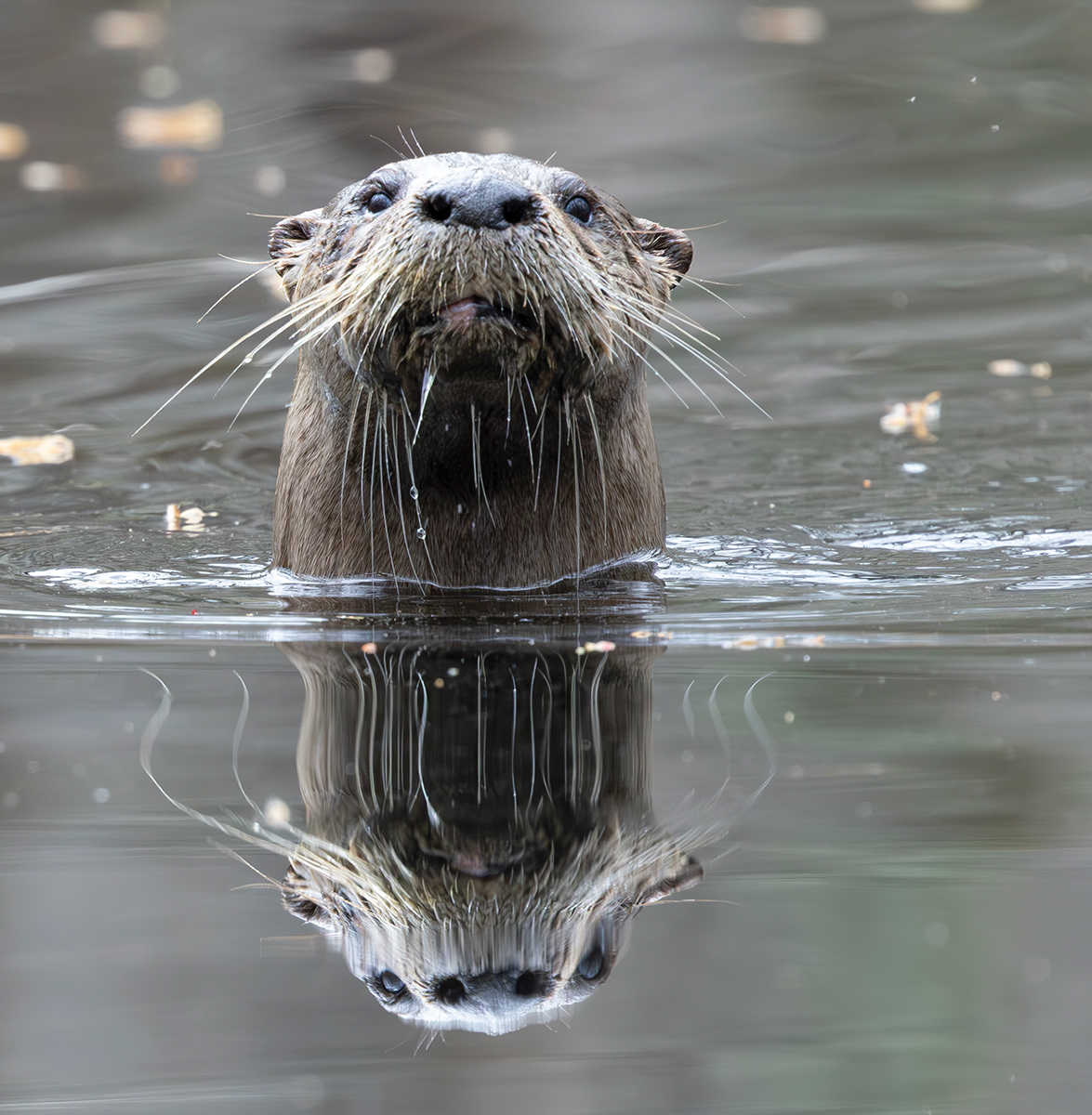
I have loved river otters ever since I saw one swimming effortlessly alongside my canoe in a freshwater marsh in Virginia decades ago. Everything an otter does seems easy and playful — but don’t let that demeanor fool you! River otters are efficient predators that eat everything from crayfish to fish of all sizes to amphibians and reptiles like snakes and turtles, and even birds and small mammals. Perhaps that efficiency when food is abundant gives them more time for play.
Otters are most at home along wooded rivers and streams or lakes, but they can occasionally be found far from water as they traverse their territory. Locally, I have seen them in the Haw River, at Jordan Lake, and, somewhat to my surprise, cavorting in Beaver Creek where it crosses under the juncture of U.S. 64 and U.S. 1 in the highly urbanized region of Apex.
Most of my encounters in recent years have been on my trips to eastern North Carolina. Some of my favorite places to spend time with otters are Merchants Millpond State Park in Gates County and three of our coastal wildlife refuges: Alligator River, the Pungo Unit of Pocosin Lakes and Mattamuskeet National Wildlife Refuges. The meandering creek at the upper end of Merchants Millpond is a hotspot for otters. On almost every canoe trip that my wife Melissa and I have taken up into Lassiter Swamp, we have seen at least one. (Incidentally, Melissa always describes herself as an otter, both for her playfulness and her absolute love of swimming in any body of water, no matter how cold.)
On a visit last March, we encountered a group of four otters as we paddled into the swamp. They saw us and began their classic “periscoping” behavior of raising the head and upper body out of the water and bobbing up and down, snorting an alarm call. After a couple of bobs, they disappeared underwater with an audible kerplunk. The group swam ahead of us as we paddled upstream and then split up, going deeper into the swamp and circling back around us, occasionally snorting their displeasure as they went.
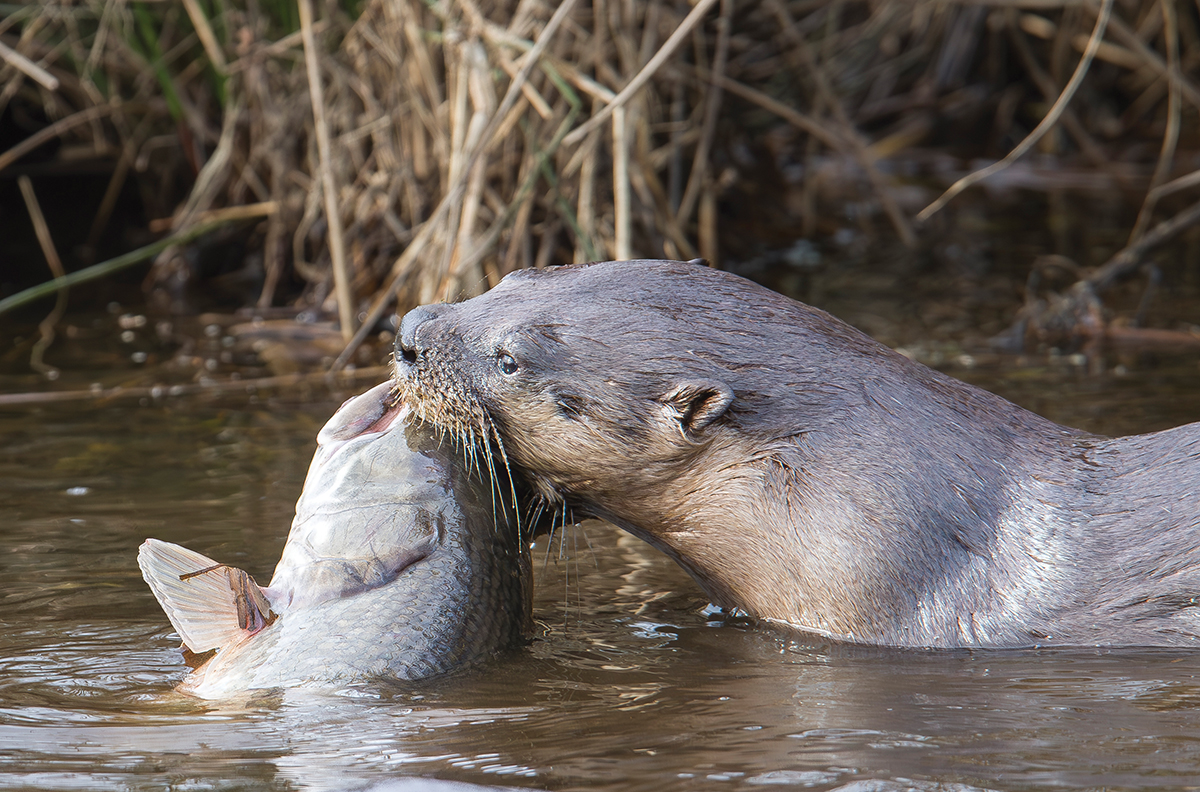
On a trip to Lake Mattamuskeet several years ago, Melissa and I spied an otter as it swam to shore, climbed out on some rip-rap, and started preening. We eased down to the water’s edge and crept closer. As the otter alternated between dozing and grooming its luxurious fur, Melissa sat down within a few yards of it, and we both watched for several minutes. The otter finally slipped into the water and swam toward Melissa carrying something in its mouth. To our amazement, the otter came within 2 feet of Melissa at the water’s edge, dropped the dead duck it had been feeding on, and swam off into the lake. She still believes the otter was offering her the rest of its meal.
Another time, otters gave a gift to an online audience. Melissa and I went to the Mattamuskeet during the pandemic to offer a virtual lesson on the refuge and its wildlife to students across the state. While we were on air, a group of otters swam by and then climbed out on the bank near us before scampering across the road, offering a live glimpse of these beautiful animals to hundreds of viewers.
I have followed many otters at Alligator River by driving slowly as they swam nearby in the roadside canals. They often continue to hunt for food if you stay in your car and watch. The abundant floating aquatic vegetation in many of these canals offers a convenient hideout if they get spooked by your presence. When they catch a small prey item like a crayfish or small fish, they generally eat it while in the water, with just their head above the surface. Larger prey, like big fish, are typically taken to shore to eat, where squabbles often ensue if another otter tries to move in on the feast.
One of my most memorable recent otter encounters was at Pungo in February. It was a beautiful and cold winter day with a skim of ice covering all the waterways. I pulled over next to a juncture of two roadside canals to eat lunch. I knew that otters frequently crossed here to get from one canal to the other, as was evidenced by their scat piles and mud slides on both banks.
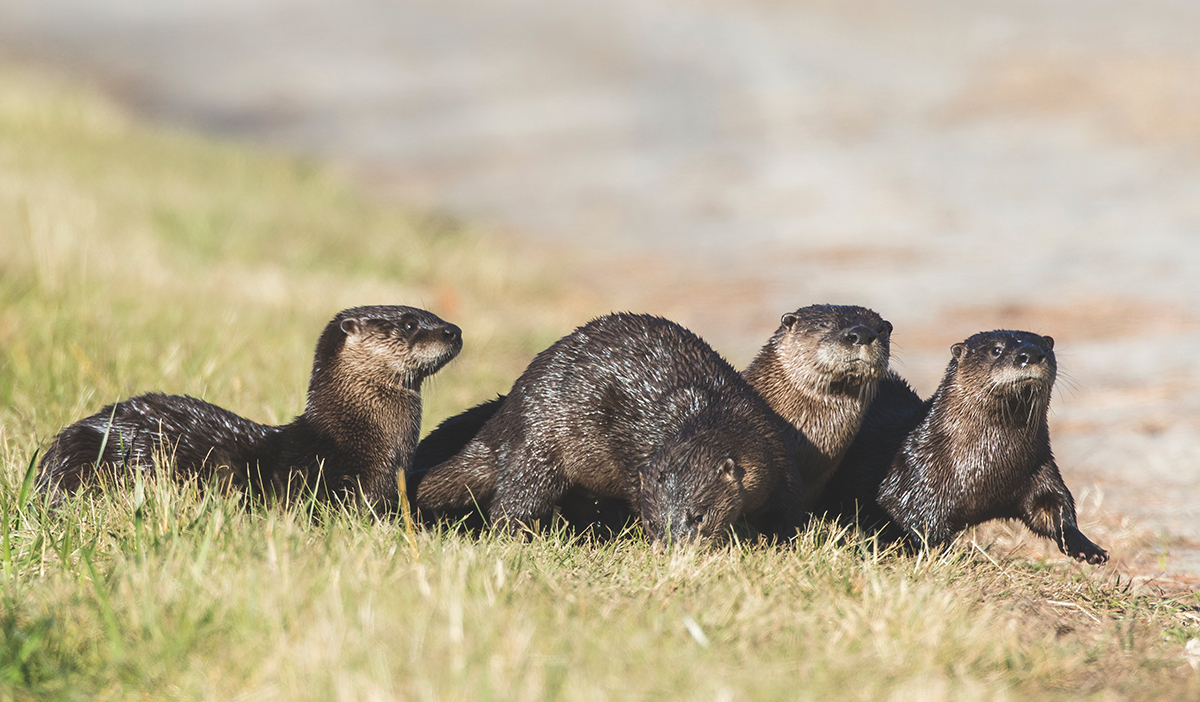
As I sat in the car munching away, I saw a ripple in the pool out of the corner of my eye — an otter had just crossed into this canal and I missed it. I grabbed my camera and carefully opened the car door and, sure enough, the otter saw me and swam down the canal into the woods with a hefty snort. I slowly walked down the edge of the canal, looking and listening. I heard a crinkling noise ahead as the otter surfaced through the skim of ice. I snuck a little closer, and we watched each other for a bit before I backed away and it dropped beneath the ice once more. I heard more crinkles as it worked its way down the canal.
Whenever we see these energetic members of the weasel family, we can appreciate their sleek beauty and swimming prowess. They are acrobatic swimmers and can attain speeds up to 8 mph (faster than the best Olympic swimmers with top speeds of 5 to 6 mph!). Otters can stay underwater for several minutes and swim a considerable distance before resurfacing, usually under an overhanging bush or some other hiding place. (Luckily, you can follow their progress as they swim by the line of air bubbles they leave as they go.)
Several adaptations enhance their aquatic lifestyle, including webbed toes, a strong tail that helps propel them, extra clear eyelids (called nictitating membranes) that act like swim goggles to protect their eyes and allow them to see underwater, and valves that close their ears and nostrils when diving. Otters also spend a lot of time grooming and rolling to maintain their fur. Rolling fluffs it up, cleans and dries the fur, and helps distribute the oils that are critical to maintaining its insulating and waterproofing qualities. All of this makes river otters one of the most successful semi-aquatic mammals — and a welcome sight on any outdoor outing.

This article originally appeared in the March 2026 issue of WALTER magazine.