Along with her book club, this North Carolina native discovers the wonders of the Outer Banks in the off-season
by CC Parker
Last spring during book club, two of our members shared fond memories of summers in Duck. I was ashamed to admit I’d never been to the beach north of, well, Beaufort. How could this be?
My mother is a warm-blooded Kinstonian who summered in Morehead City. As a child, when I inquired about visiting the Outer Banks, Mom discouraged the idea, saying that vacationing on the Outer Banks is “not ideal.” Strong currents. Cold water. Sharks. I accepted this assertion the same way people once accepted that the Earth was flat.
But another North Carolina native in the club said that she had never ventured to the northern Outer Banks, either — so the group proposed a road trip for October, when there would be fewer tourists but still great weather. The vision: To drive down to Ocracoke from the town furthest north, Corolla, along the Outer Banks National Scenic Byway.
Day 1: Getting There
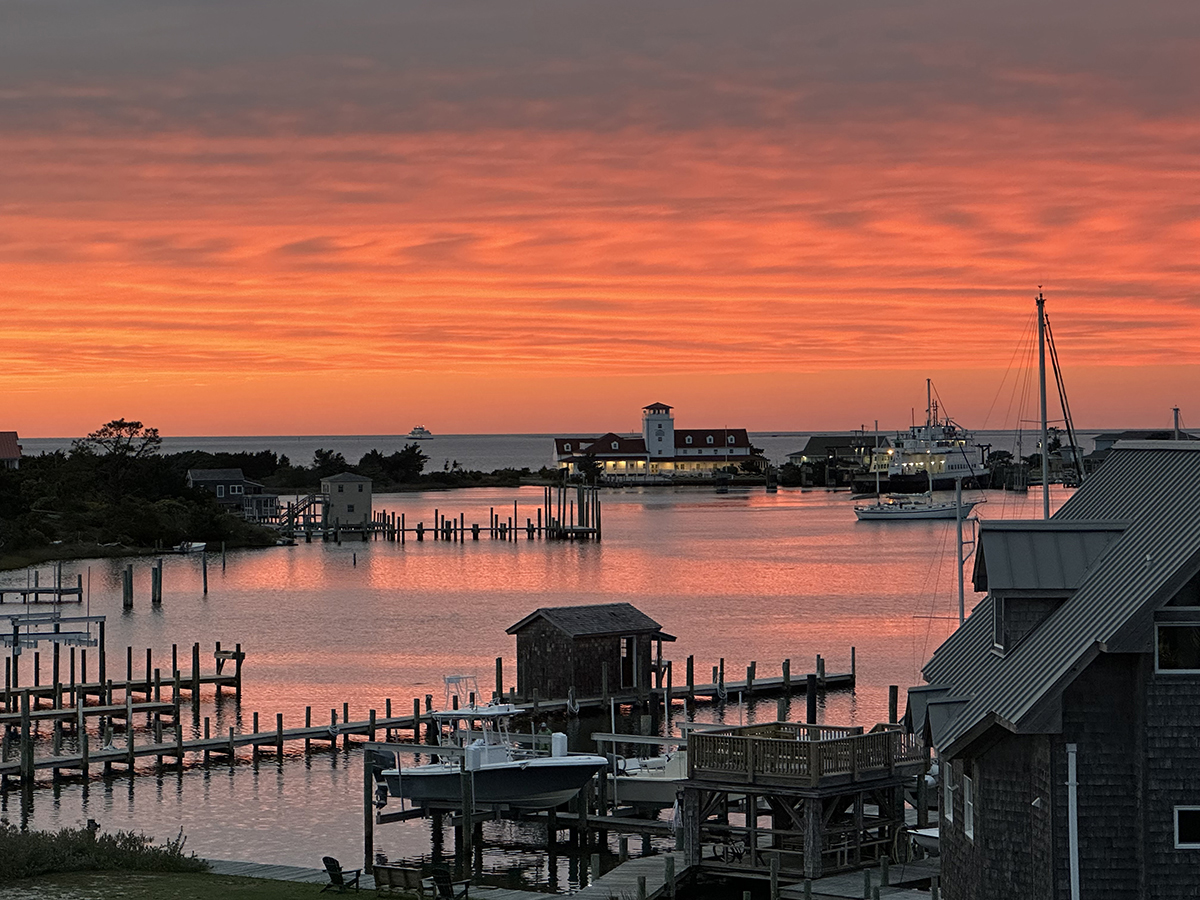
We had an easy drive east on Highway 64, passing cotton fields and small towns before we crossed the Scuppernong Bridge onto the Outer Banks. We spent the night at one book club member’s home in Duck, enjoying a glorious sunset on Currituck Sound over wine and appetizers on the deck.
Day 2: Duck and Corolla
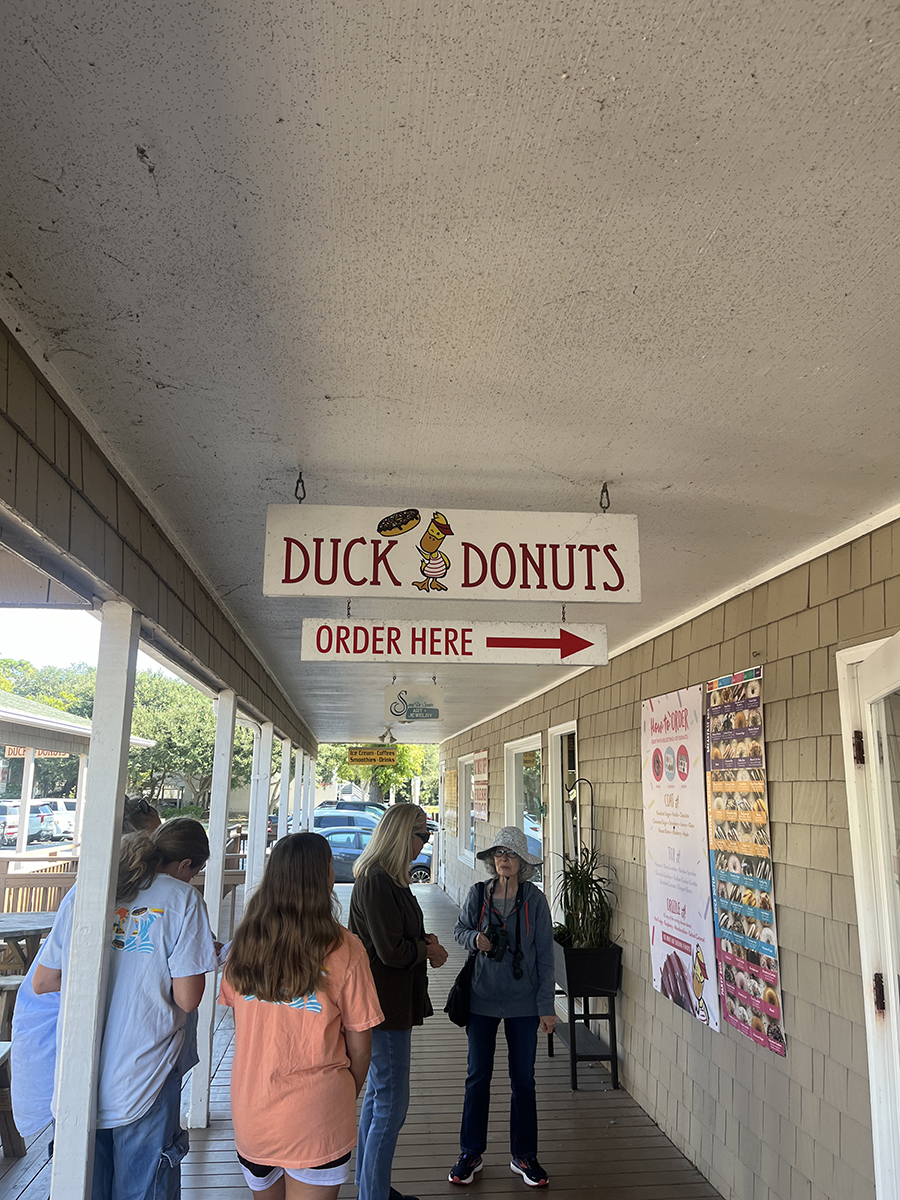
After a brisk morning beach walk, we headed into town. We stopped at Duck’s Cottage Coffee and Books for a mid-morning pick-me-up, then wandered the public boardwalk past the shops and the long line at classic breakfast spot Duck Donuts.
Shortly thereafter, the seven of us piled into my car for the day’s excursion. First stop: lunch at The Sanderling Resort, a high-end hotel I had always hoped to visit. The in-house restaurant, The Lifesaving Station, was a lifesaver, indeed, for our collective “Currituck wine flu” from the night before with its fried pimento hush puppies, salads, burgers and fries. We explored the property to take in the ocean views (no sharks in sight, Mom!), then headed north to Corolla.
I’d previously downloaded the GuideAlong: Outer Banks audio travel guide, an app that tracks your location and tells you about historical sites and landmarks in real time. We jokingly named the animated voice actor sharing the info “Dave.”
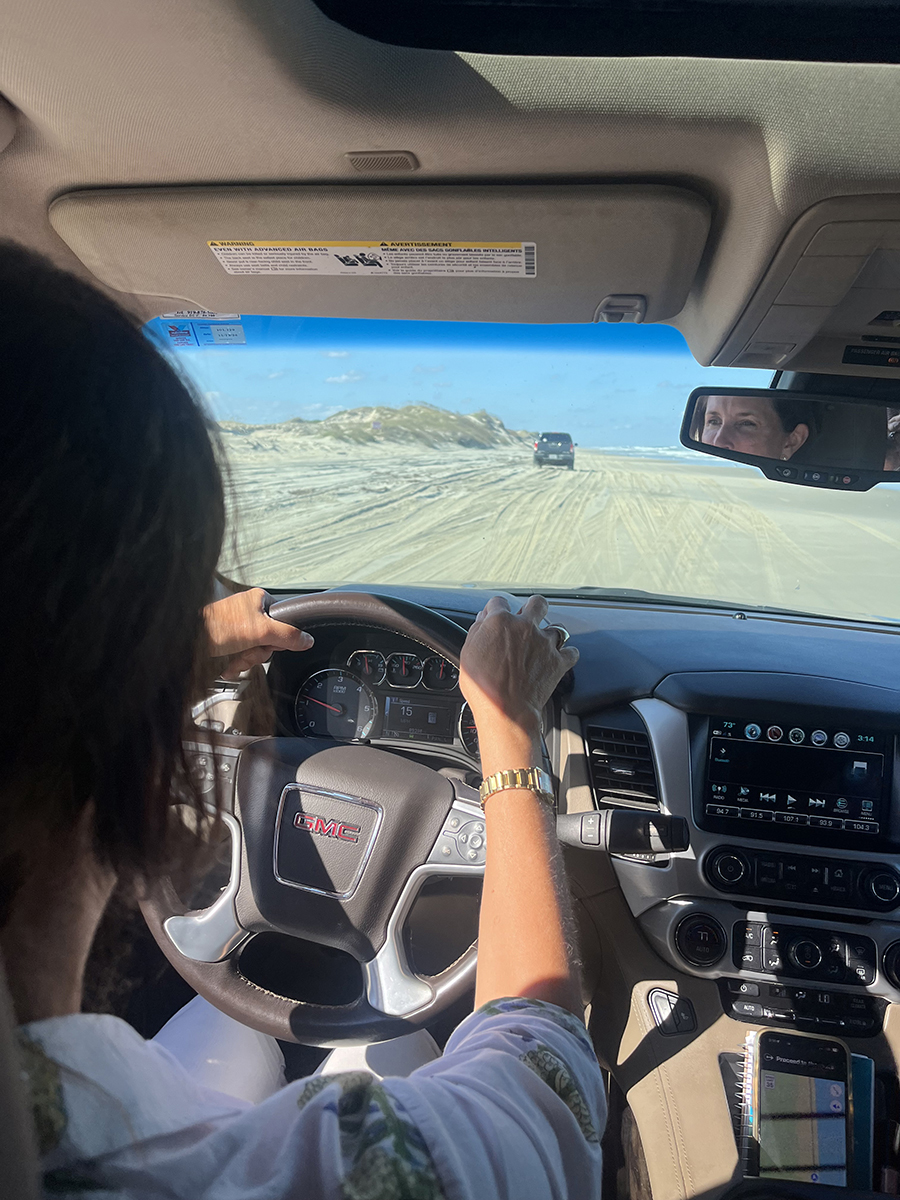
Highway 12 continues north onto the beach in Corolla, but only if your car is made for sand. As we approached the spot where the paved road ends and the beach begins, Dave grew anxious. From our dashboard, he warned that this stretch was “the road to nowhere” and urged us to turn around, insisting we needed a permit to drive on Corolla Beach.
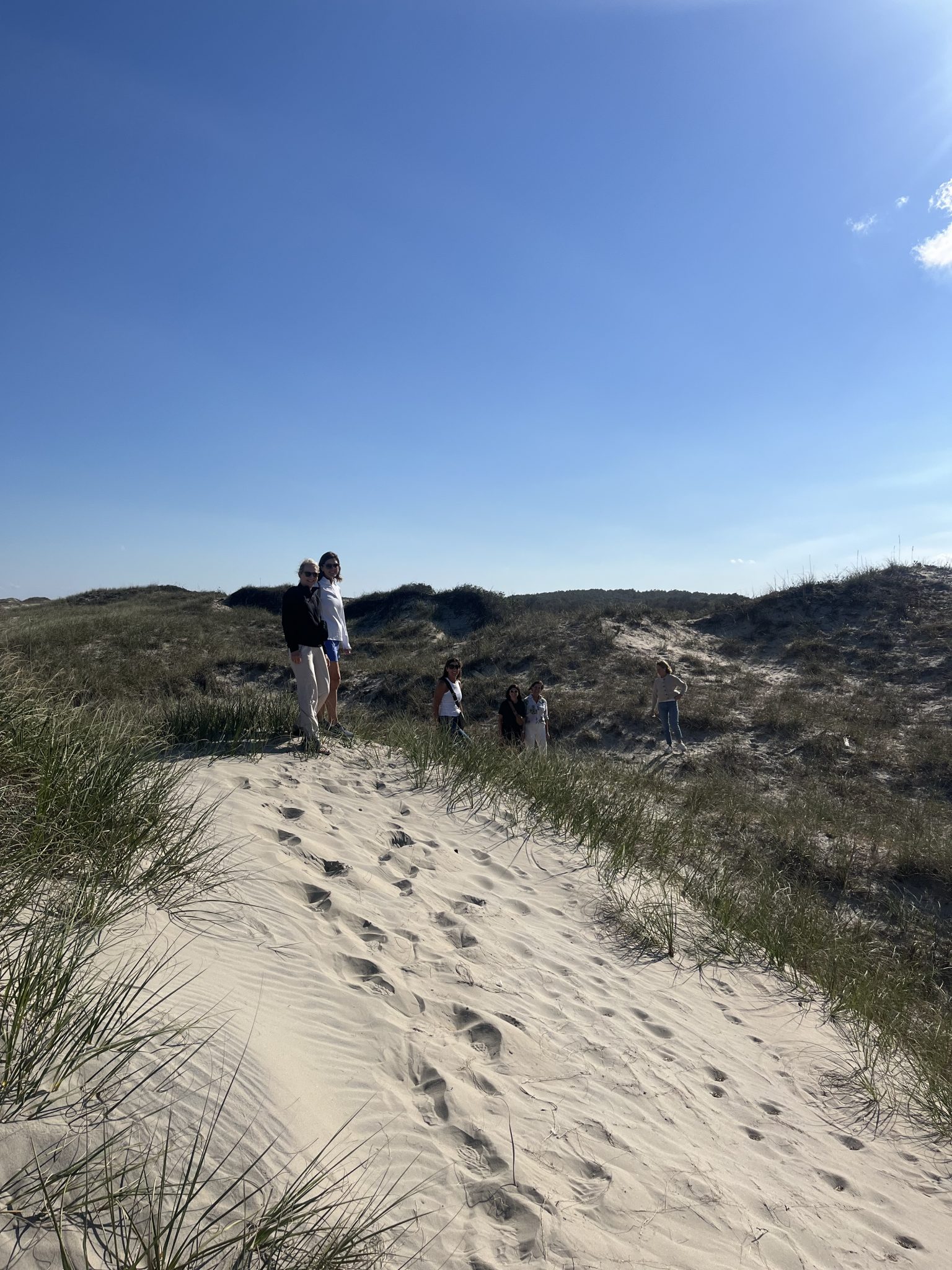
Our Duck hostess dismissed his threats and I shifted into four-wheel drive. With breath held and a few silent prayers, my old GMC Yukon rolled onto the sand. From the dashboard, Dave announced, “Well, this is an adventurous bunch!” We slid along, scanning for wild horses and dodging the tree stumps that dot the shoreline. We passed homes perched at the edge of the Atlantic and marveled at the idea of hauling groceries over the dunes. We stopped to explore, following fresh dung piles in search of the Corolla wild horses. Instead we found a fallen sign reading, “Warning. Possible Unexploded Ordnance” and quickly returned to the car.
We headed back south for a second night in Duck. Sunset, hot tub, porch cocktails and then a walk to AQUA for truffle fries and seared duck breasts for dinner. Amen.
Day 3: Manteo, Hatteras and Ocracoke
Bright and early, our group loaded up to head to our next spot. Heading south on Highway 12, we passed through Southern Shores, Kitty Hawk and Nags Head. This corridor is densely populated with housing developments, strip malls and restaurants — it’s hard to know where one town ends and the next begins. We veered onto the Virginia Dare Trail (Highway 64), crossing the Baum Bridge over Roanoke Sound, to make a quick right into the village of Manteo.
The first stop was the Elizabethan Gardens in the Fort Raleigh National Historic Site several miles from downtown. These gardens were created in the 1960s as a memorial to honor the “Lost Colony” of English settlers who vanished 400 years ago. Our group meandered through the gardens, which boast 500 varieties of plants, including stunning live oaks and a camellia collection, over 10 acres. Just down the road is the theater that has been hosting the summer performances of The Lost Colony since 1937. I wanted to check it out, but our troops were ready to shop and eat.
Back downtown, we parked in front of a fabulous home and gift shop, Sam & Winston, with handmade baskets, art, one-of-a-kind jewelry, coffee table books and more. The shop is run by mother-
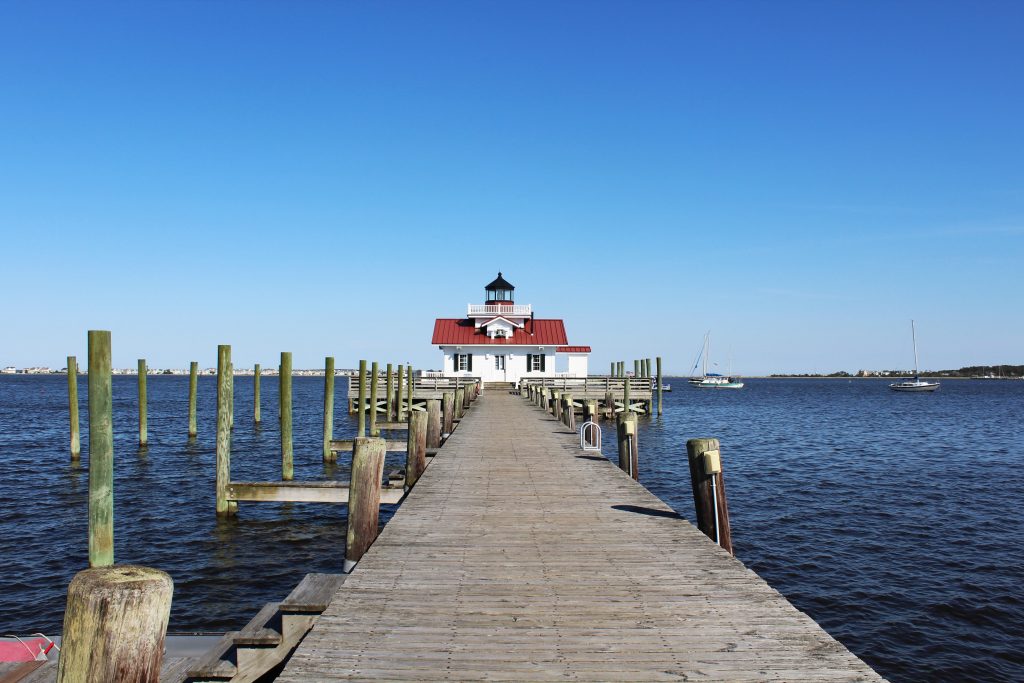
daughter Sheila Silver and Creecy Richardson-Creef in a 200-year-old building. Money spent, we walked to get a closer look at the Roanoke Marshes Lighthouse and peeked in the windows of a few art galleries.
Back on Highway 12, we continued south through Nags Head. We stopped for lunch at Sea Chef, a casual cafe tucked inside the Oregon Inlet Fishing Center, an outfitter just off the highway. We ordered family style, which basically meant everything on the left side of the menu: shrimp burgers, clams in herb chorizo broth with baguette, off-the-boat tuna salad, steamed shrimp, fried shrimp. Then, satiated, our convoy continued south.
We crossed from Nags Head to Hatteras Island on the Basnight Bridge, continuing along the Cape Hatteras National Seashore where we saw pristine sand dunes and unobstructed water views, no other cars for miles. Even Dave ran out of things to say.
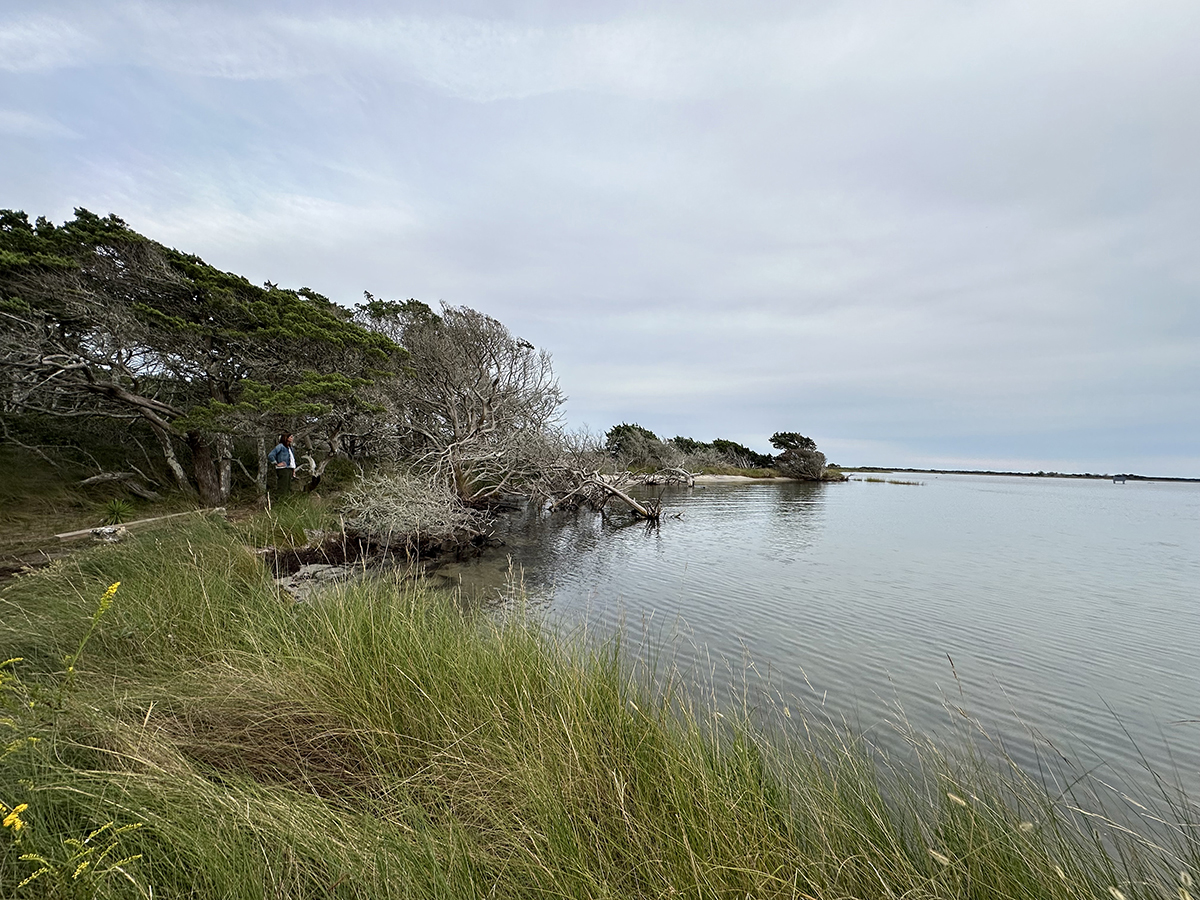
Despite our best-laid plans, we barely made it to the hourly vehicle ferry from Hatteras to Ocracoke. Once settled, we ladies walked a large Yeti cooler into the ferry “lounge” to enjoy refreshments on the hourlong ride. (A nearby deckman yelled, “Party time!”) It was almost twilight when we disembarked, but we decided to make a quick stop at Springer’s Point Preserve, the site of Blackbeard’s demise in 1718.
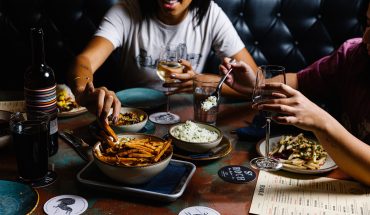
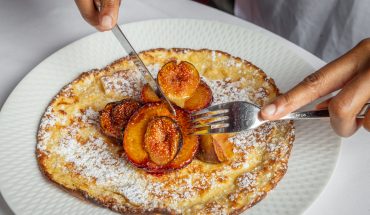
We spent the night at The Castle Inn at Silver Lake, a rambling inn built in the 1950s as a vacation escape for an eccentric mainlander. We headed to The Flying Melon for dinner, a white-tablecloth spot with a menu that included ricotta dip with local figs, mushroom cheesecake, local fish with crab in beurre blanc and a chilled vermentino. Reservations are essential, as is their basil gimlet.
Ocracoke’s sidewalks roll up early, which was fortunate given that we were planning to take a 7 a.m. ferry to make our way home. When we woke up at 6 a.m., we found fresh coffee and fruit laid out for us to pick up. We were grateful for the provisions, since there is no food service on the 2.5-hour ferry ride back to the mainland.
At the ferry terminal, half of our cars loaded into the Swan Quarter ferry, the other into the Cedar Island ferry, which departed next. With blown kisses and a toot toot from the captain, we glided back toward the mainland.
On the 3.5-hour drive home, we reflected on the adventure: gorgeous beaches, delicious food, excellent shopping and a bit of history. And, though we didn’t test the temperature of the water, there was not a shark in sight.

This article originally appeared in the April 2026 issue of WALTER magazine.