Started in 1967 with a $20 budget, this underpass at NC State has evolved into a vibrant social, artistic and political landmark
by Ian F. G. Dunn | photography from the State Archives of North Carolina
The social upheaval of 1967 was a defining moment in America. Dozens of cities across the country rebuilt after a seemingly relentless summer of riots sparked by racial inequality and unrest. The war in Vietnam had brought nearly half a million American troops to the country, and themes of social justice, free speech and individual expression were at the forefront of the zeitgeist — particularly among university students.
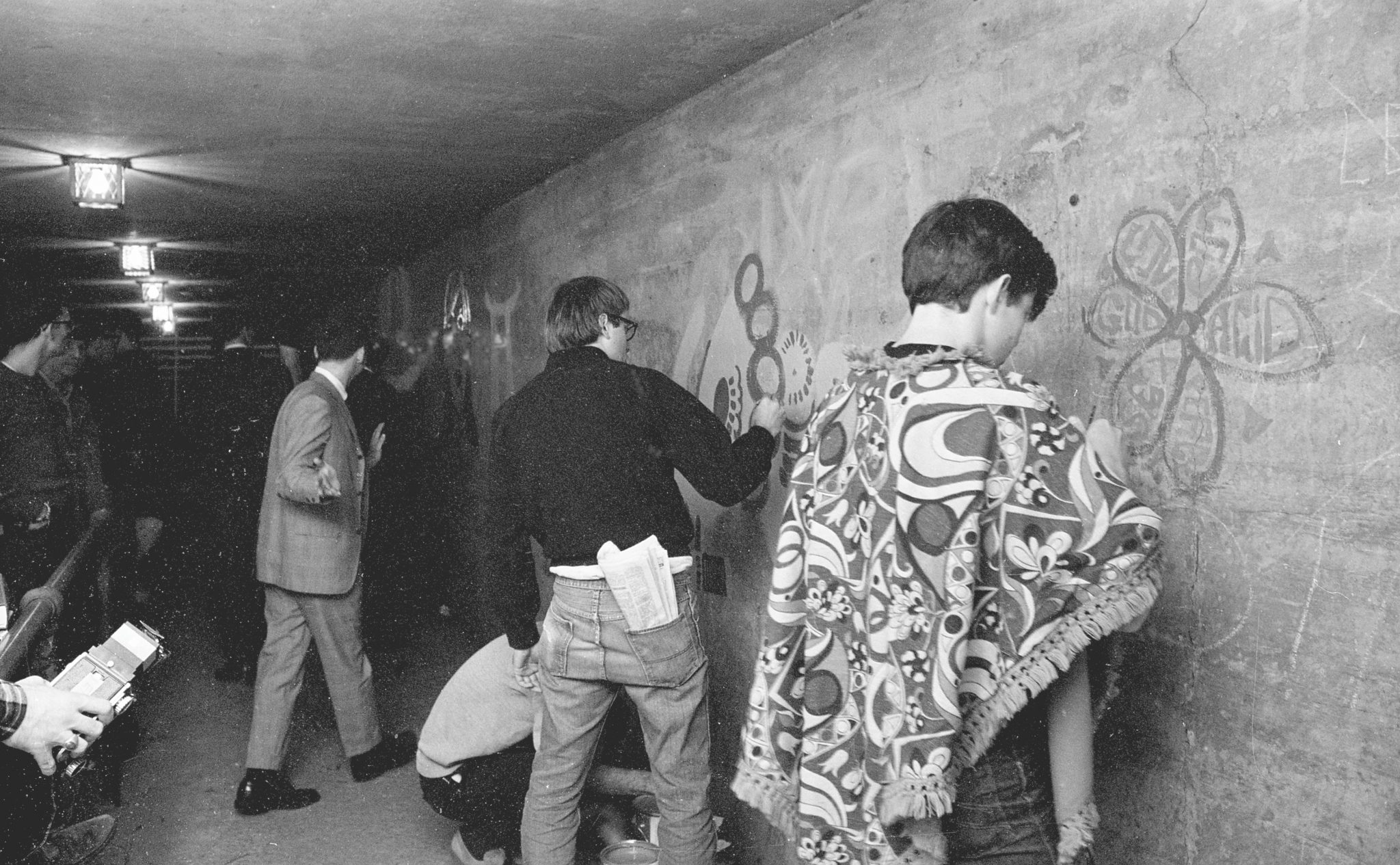
On Oct. 30, 1967, the North Carolina State University Student Government passed the Student Visual Expression Bill, which appropriated $20 for paints and brushes for a “paint-in” at the Student Supply Store tunnel and permitted further use of the location for student expression.
Some of the early works on the walls included a blue flower with the words, “Sex, Acid, Pot, Love” painted on the petals. Another section included an abstract work of colorful circles and shaded shapes. But the Student Visual Expression Bill wasn’t a purely altruistic gift to the student body in the name of the First Amendment. One of its primary goals was to contain graffiti to one location, with the idea of keeping the rest of the campus graffiti-free. There were also rules and limits to one’s “free expression.” As the Dec. 5, 1967, issue of the student newspaper, Technician, proclaimed:
• Only the tunnel at the Student Supply Store is to be painted.
• Any use of obscenity or vulgarity will be considered as “ungentle- manly conduct” and a Campus Code offense.
• Any untasteful remarks will be removed at the expense of the student who painted it or of Student Government.
Obscenity and controversy were a constant from the moment the first sanctioned brush graced the wall. In a letter to the editor of the Technician in November of 1967, just weeks after the paint-in, student Reinhard Koch said, “I am saddened to see what has happened to the SSS tunnel. What at first was a showplace of some real artistry and imagination by State students has been prostituted into a billboard for bigots and morons.”
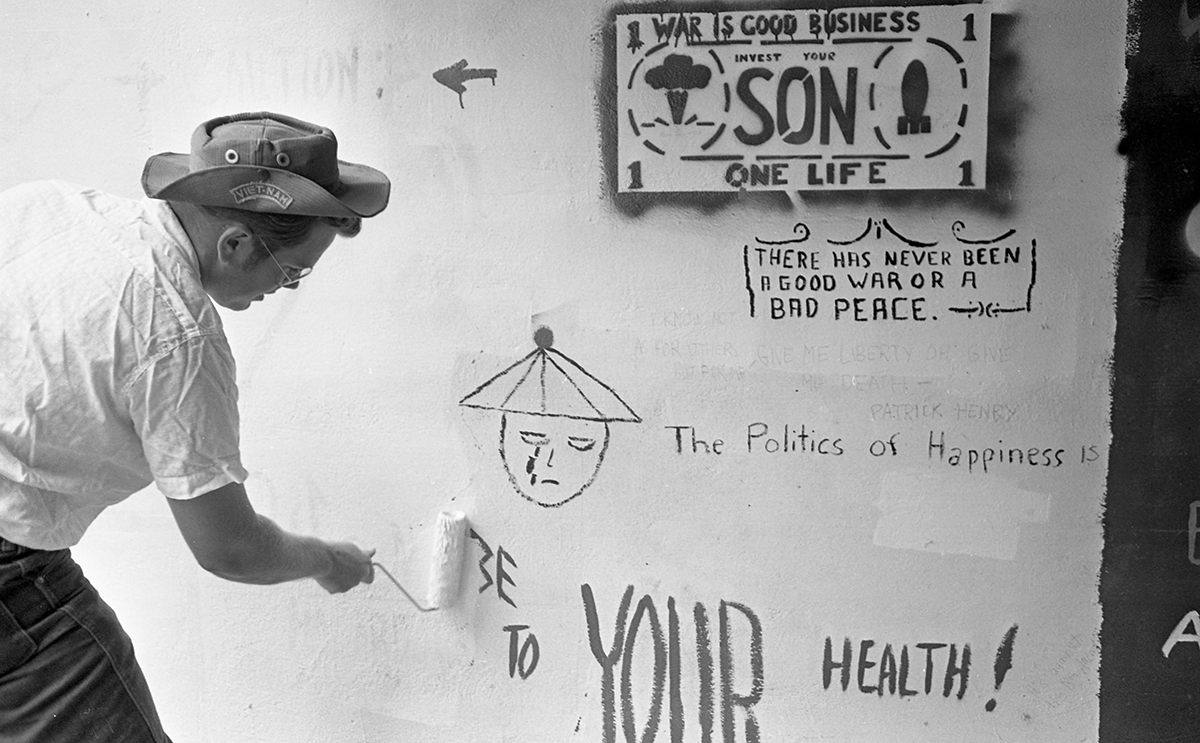
Nearly a year after its inception, the tunnel’s true purpose had been realized: a place for students to express their opinions, be it artistic, political or otherwise. The walls were covered in social commentary from anti-Vietnam War statements to proclamations about the nature of love.
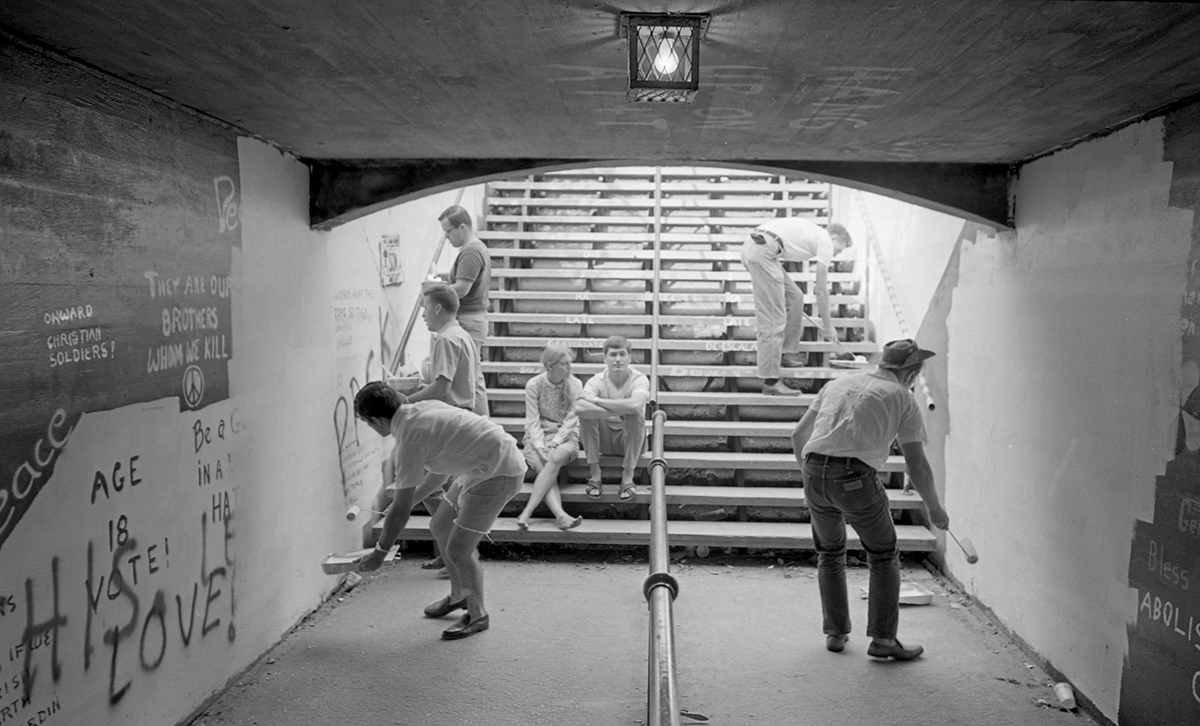
Efforts to censor statements inside the tunnel softened over the years as attitudes about free speech evolved, but there have been exceptions when especially racist or homophobic slurs have been discovered. One even involved the Secret Service, when a threat aimed at President Barack Obama was scrawled in the tunnel after the November 2008 elections.
The Free Expression Tunnel remains not only a beloved NC State tradition, but also a monument to free speech and a looking glass into our societal ills. We may not always like what we see, but we should always be thankful it exists.

This article originally appeared in the April 2026 issue of WALTER magazine.