Through daily painting, Apex artist Mónica Linares built a career defined by bold color and a minimalist style — and she’s sharing her process.
By Colony Little
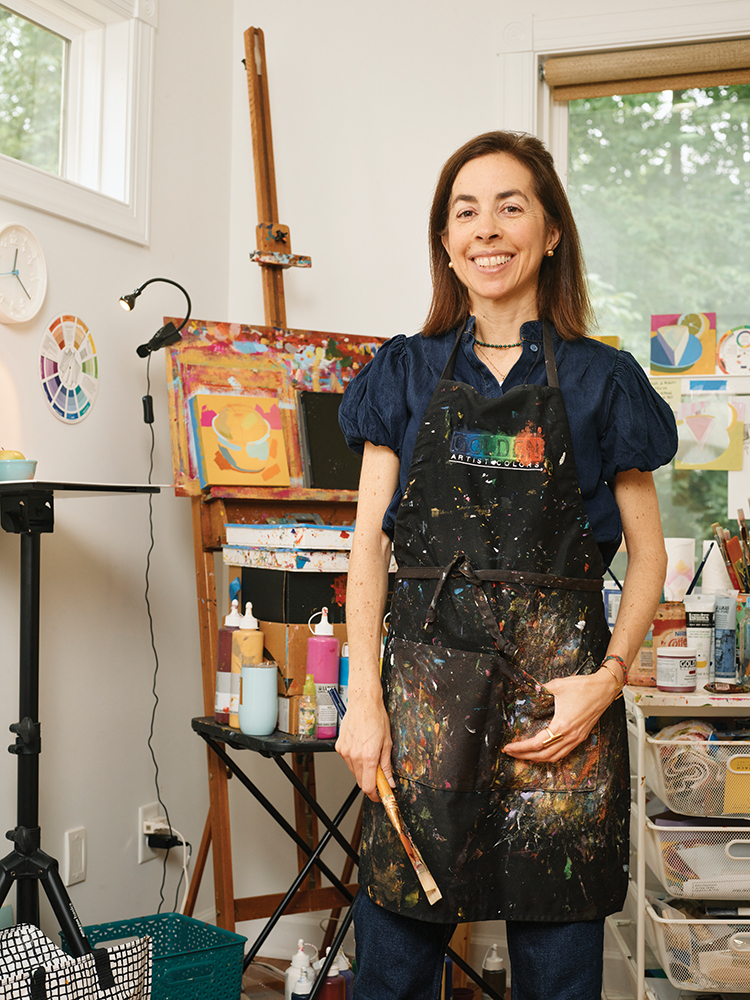
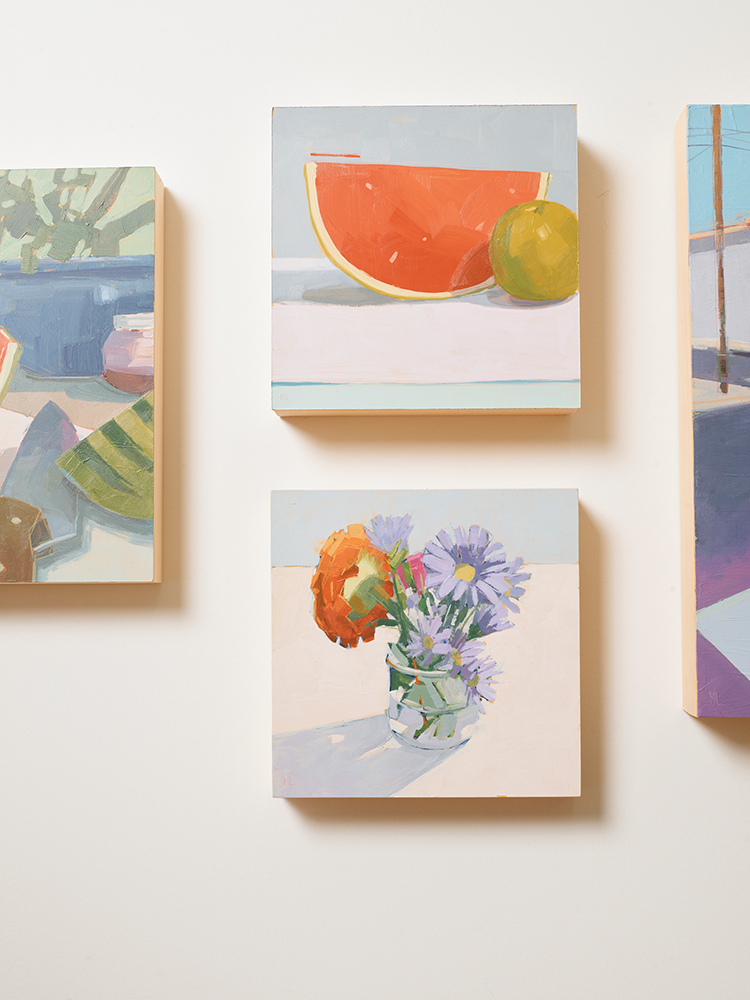
The artist Mónica Linares specializes in paintings of colorful flowers, landscapes and architecture. They’re characterized by bold brush strokes and bright palettes, often in acrylic paint in her favorite color combination, teal and red. The Apex-based artist’s simple compositions reflect a clean, minimalist style that strips her objects of superfluous detail to allow for a close focus on the object itself. Her work combines elements of figuration and abstraction in a style that reflects her influences over the years.
“Early on in my career it was Carol Marine: her art is well thought-out in still life and it’s very color-oriented with shapes,” she says of the Montana-based painter known for her “Daily Paintworks” philosophy. But later on, Linares says, she was drawn towards more abstract and expressionist painters, like Spanish artist Carlos San Millán. “His way of painting is more abstract — if he’s painting a room, you know it’s a room, but he’s not going to put in every detail,” Linares says. “It was very different from what I was doing.”
Linares’ art inspirations also trace back to her professional and family roots in Venezuela, where she was born and raised. She always loved art; her father is an architect and a painter, and she was influenced by the clean, minimal aesthetic he cultivated in his work. She studied marketing and advertising at the Instituto Universitario de Nuevas Profesiones, then started a career in advertising. There, she frequently teamed up with graphic designers on ad campaigns, inspired by their work and use of bold color. “I loved that process,” she says.
It wasn’t until 1999, when Linares moved with her husband from Venezuela to Pittsburgh, Pennsylvania, where he was earning an MBA, that she started to pursue art as a serious hobby. “I took all the painting classes I could find,” Linares says. She studied in oils, acrylic, watercolor painting and other mediums, including ceramics, at the Pittsburgh Center for the Arts. She enjoyed the freedom to explore through her coursework. “I didn’t have any pressure,” she says. “It was great to create, make mistakes and learn — it’s so different from when you are a professional artist and you have to produce.”
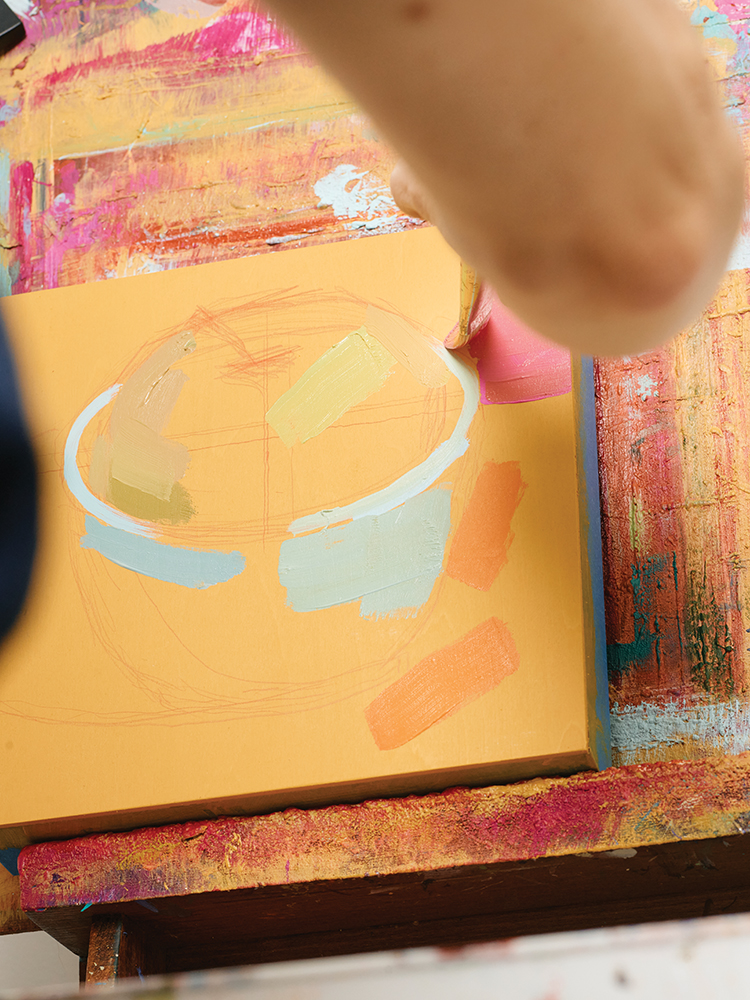
Work brought the couple to North Carolina in 2001, where Linares immediately looked for an artistic community. She began taking classes in Apex at galleries including the Red Canvas Studio, while also working in a copywriting job for a local Latin American advertising agency. As their family grew, one of the biggest challenges Linares faced involved finding a painting routine that fit into her daily life. Balancing a full-time job with family and other responsibilities often came at the price of sacrificing her creative passions. Ultimately she chose to stay home to raise their two children while continuing to take art classes at night.
During this time, Linares focused on refining her technique instead of establishing her own artistic voice — that would come later. “While I was learning, I was trying everything: still life, landscapes. I was depicting whatever the teacher asked me to do,” she says. “Though from the beginning, it was all saturated color, everywhere.” she says. As she began to hone her artistic voice, she leaned into the work she connected with: “Fifteen years ago I took a class where one of the exercises was to paint flowers. I loved the result, so I just kept painting small flowers.”
Linares started showing her work in local coffee shops. She also started inviting artists from outside the state that she admired or followed online to visit the Red Canvas Art Studio and teach multiday workshops focused on skill and technique. (One of them was her early influence, Carol Marine.) Later Linares joined the former Waverly Artist Studio and Gallery in Cary, where she organized larger workshops, bringing artists from around the world to teach, including her other major influence, Carlos San Millán. By 2011 she became a full-time artist, selling her work and organizing workshops under the title Painting Miles, a nod to the amount of time artists must invest in themselves to hone their craft.
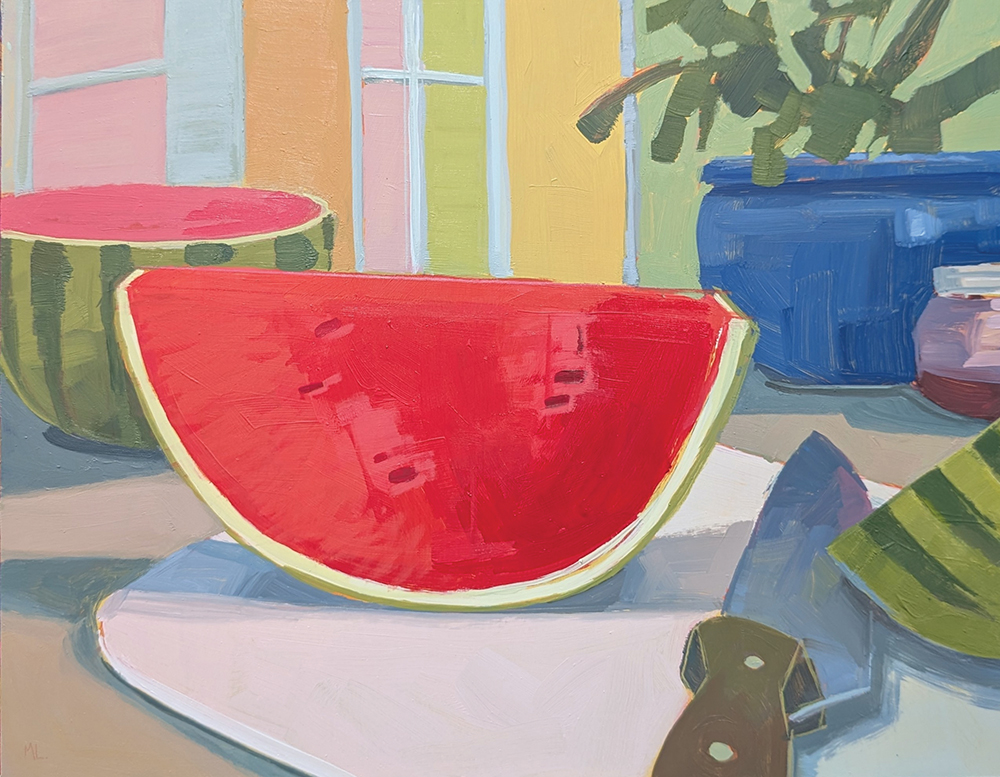
Eight years ago, Linares approached the North Carolina Museum of Art’s Museum Store to inquire about selling some of her paintings at one of their most popular annual attractions. “I said, I’m painting flowers, would you like some paintings for the store during Art in Bloom?” To her surprise, they agreed, but there was a catch: they’d need 20 paintings in under two months. “I never imagined they were going to ask for so many paintings!” she says. “At the time, I wasn’t very organized with my practice. I decided I needed a plan to make that happen.”
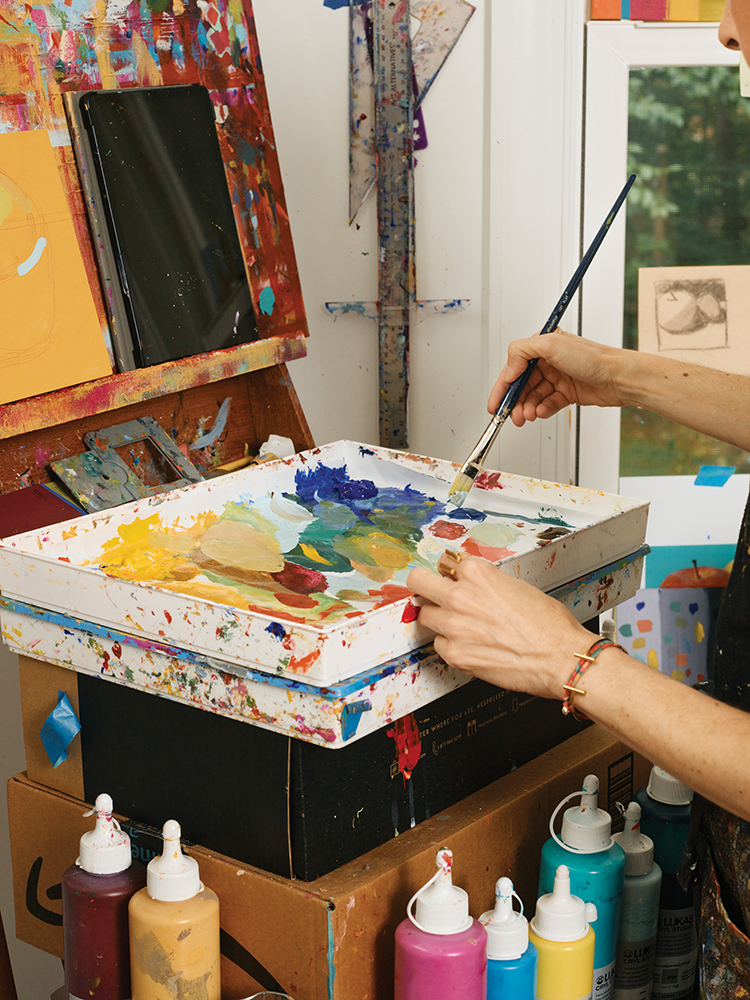
She began studying self-improvement theories around conditioning, devouring information about creating daily routines that lead to productive lifestyle changes. “I researched all the books out there about habit formation,” Linares says. “I started to attach my painting to something that I already do every day, eating breakfast. Directly after breakfast, I go paint for at least 30 minutes.” Much to her relief, that discipline helped her meet her deadline — and she noted that her painting improved as well.
That same year, Linares began sharing the lessons she learned by teaching an in-person and online class called The Happy Habit of Daily(ish) Painting. She hopes the course will kindle or rekindle a consistent, daily art practice. “I realized so many artists had the same problem as me,” she says. Artist Alicia Brinkman was one of her first students. “Mónica really wanted to know what barriers were preventing each artist from creating and help them set up a plan to reach those goals,” she says. “One of the best lessons for me was, there’s always another canvas. It helped me recognize that every painting won’t be perfect, but I’ll learn from the ones that aren’t successful.”
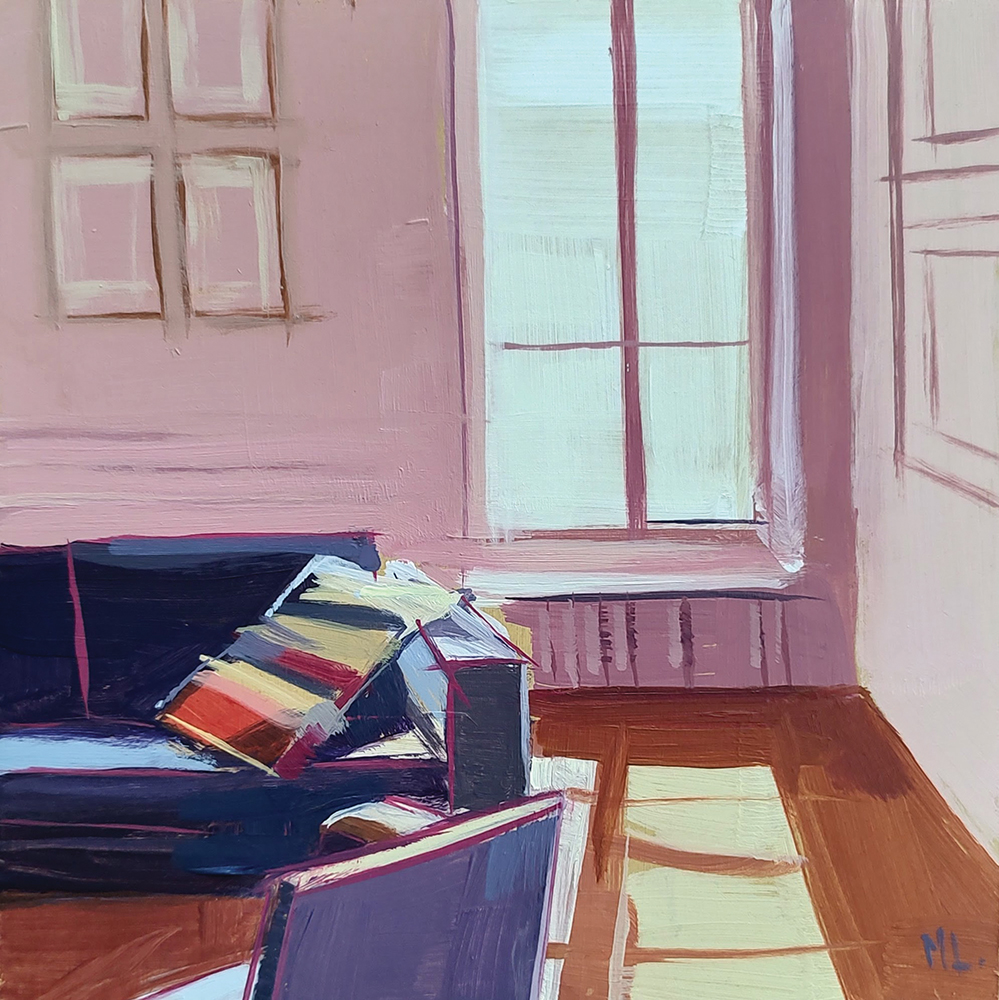
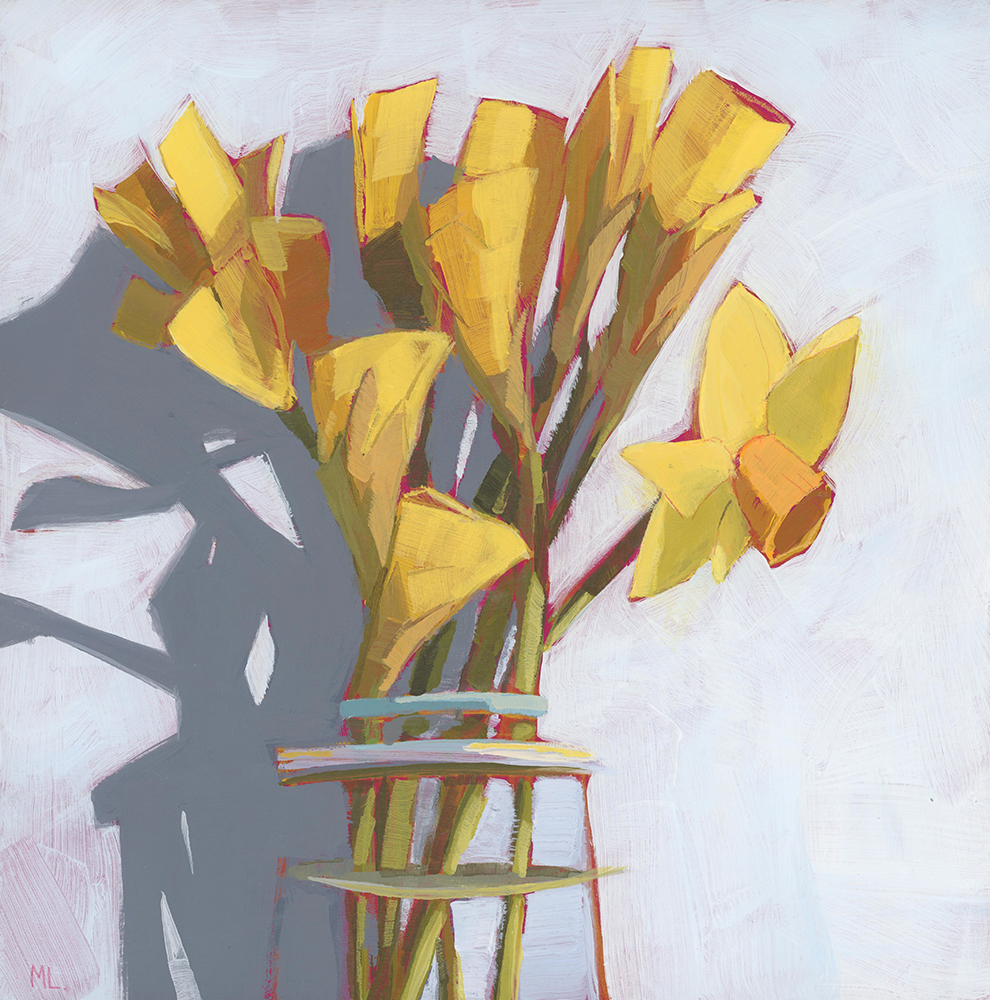
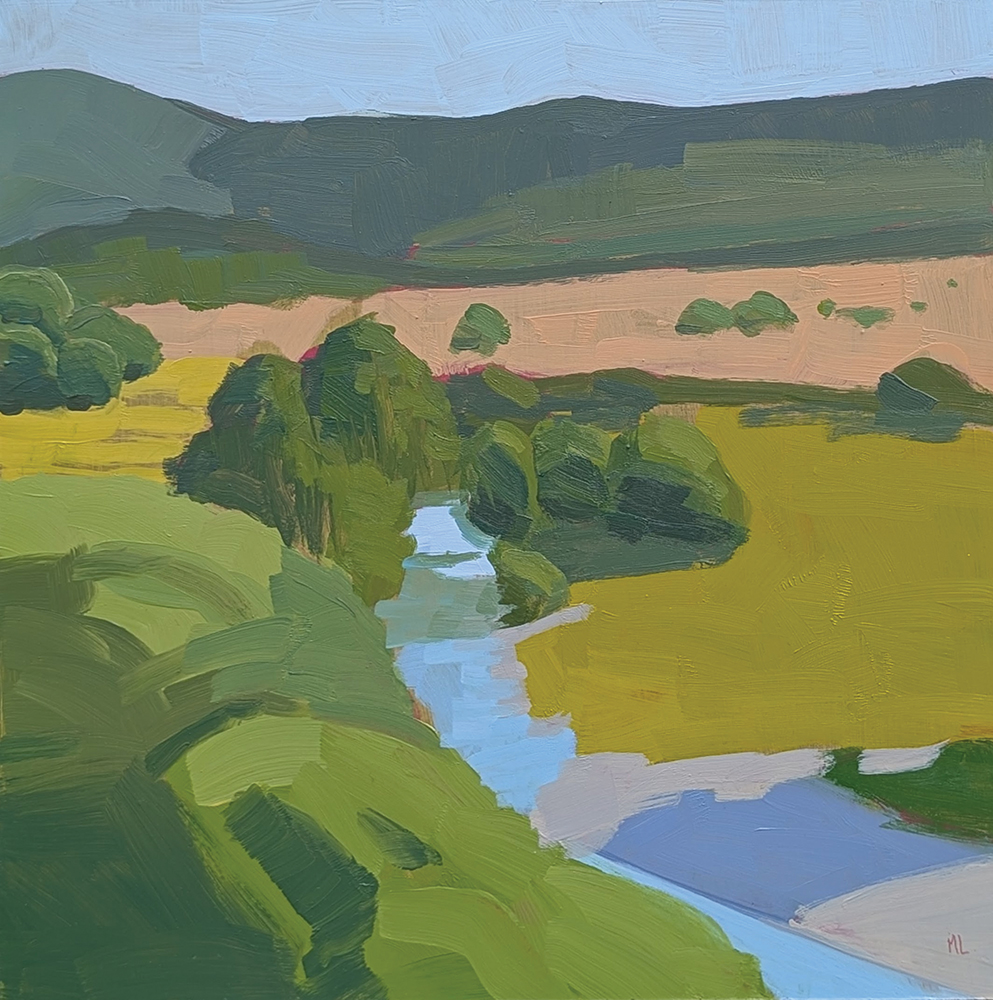
In addition to her Happy Habit courses, Linares teaches a range of painting classes, including one devoted to painting flowers. Over the last eight years, Linares has also presented her students’ work in an annual show titled The Daily Painting Exhibition at various locations in Cary and most recently at the Halle Cultural Arts Center in Apex.
Between hosting workshops and her own classes, Linares has surrounded herself with a community of like-minded artists and colleagues. “When you have people around you that support you and share the same struggles, it’s much easier to keep going. It’s the main reason why I do everything I do,” she says.
And she continues to paint every day. “Learning never stops,” Linares says. “Even if you can sell your paintings or people say your art is beautiful, we need to keep learning. Exploration can make your work grow in ways you will never imagine.”

This article first appeared in the August 2026 issue of WALTER Magazine.