Jazz trumpeter Al Strong is a man-about-town musician who’s dedicated to nourishing the next generation of Triangle musicians.
By David Menconi | Photography by Bryan Regan
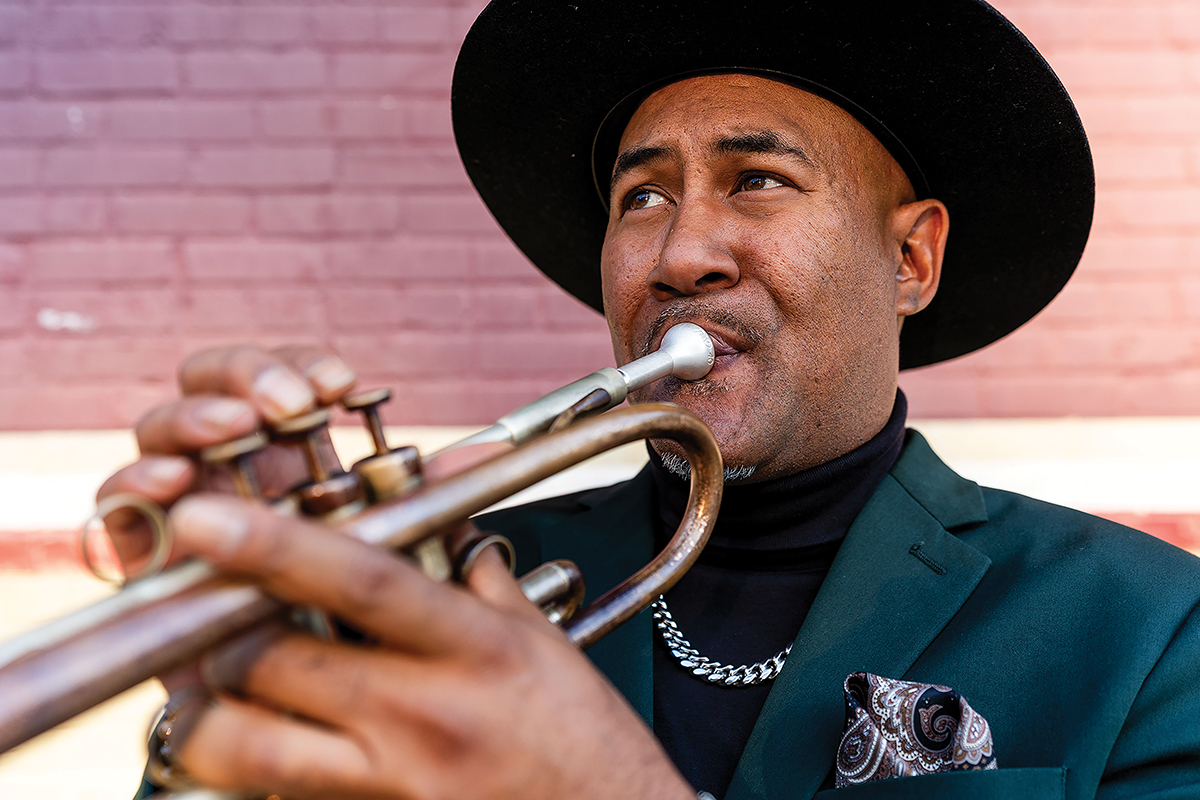
It was late in the afternoon when jazz trumpeter Al Strong settled in to talk while preparing a highly caffeinated espresso as fortification. “Just trying to get my third, maybe fourth wind of the day,” he quipped.
That might seem like overkill, but not if you keep the schedule he does. Strong plays around the area with a range of groups, including Bittersweet Brass Band, Al Strong Quintet, Al Strong Collective, and September: A Tribute to Earth, Wind & Fire. He also teaches at his alma mater, Durham’s North Carolina Central University; oversees local school arts programs for the Durham Arts Council; and even curates the performance schedule for The Den at Montauk, a jazz lounge that a friend and colleague owns 2,500 miles away in Redondo Beach, California.
It’s enough to have the man drinking coffee a lot later in the day than most people. But he has some very personal reasons for doing it all. If not for the opportunities that educational programs created for Strong while he was growing up in Washington, D.C., he might never have become a musician himself.
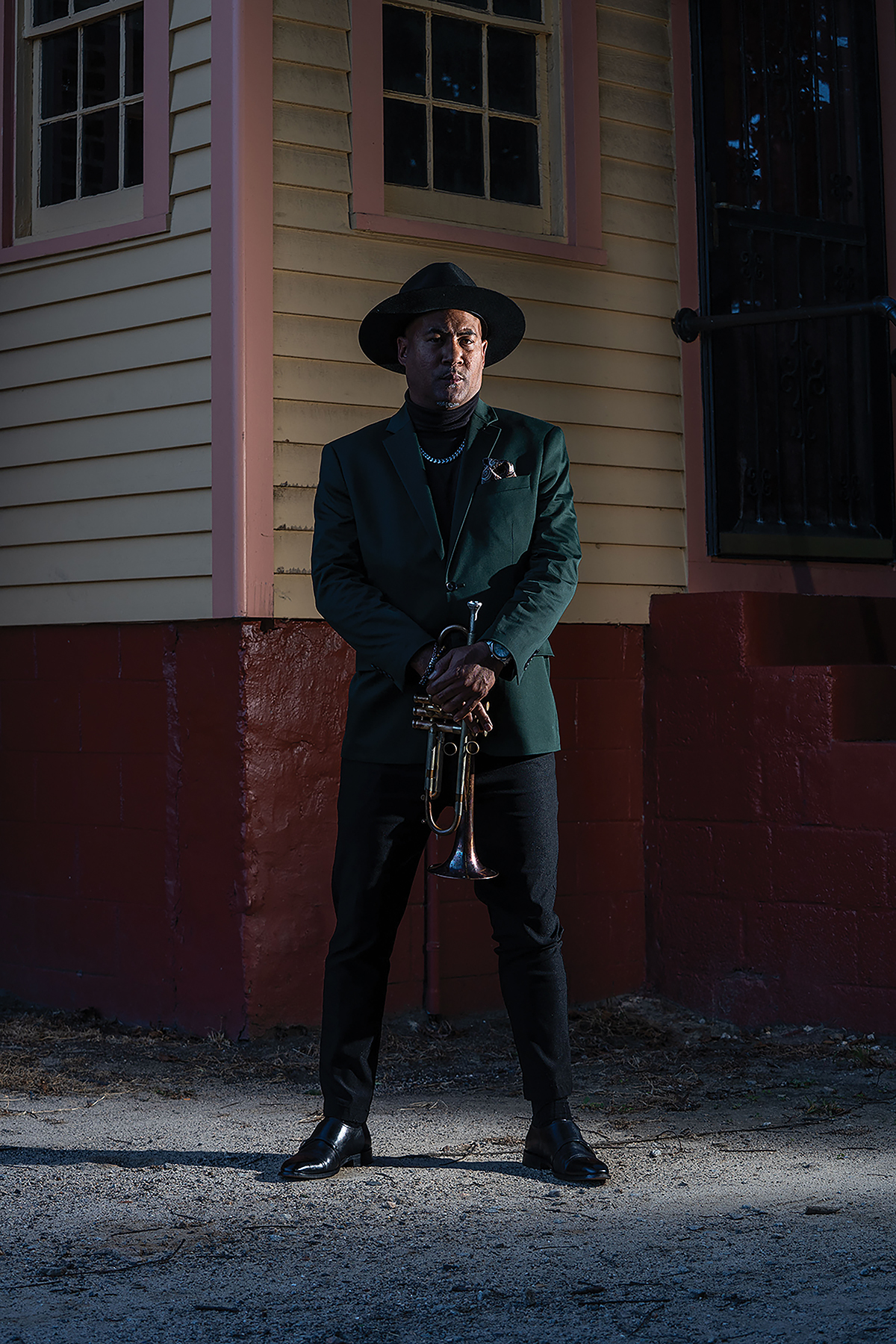
“So much of what I do is full-circle with my first exposure to music and arts,” Strong said. “That was a result of D.C. having robust arts education programs, and now I am the person sending those experiences into schools here.”
Now 45 years old, Strong grew up in a family that was not entirely happy. He describes his father as “in trouble with the law when I was young, in and out of prison.” So he was primarily raised by his grandparents, with various teachers also playing formative roles.
“Education was a big thing for me,” Strong said. “You hear the term ‘strong Black women’ thrown around a lot now, but that’s who I was raised by. They would not take any mess.”
While Strong started playing various instruments at a young age, it was at 15 that music became his focal point. That was the year he auditioned for Washington’s renowned Duke Ellington School of the Arts—and got in.
Trumpet was Strong’s main instrument, but he also played steel drums in East of the River Boys & Girls Steelband. Both instruments took him overseas with tours for different groups. Playing trumpet at the Montreux Jazz Festival in Switzerland as a teenager, he caught the eye of recruiters for NC Central’s jazz program.
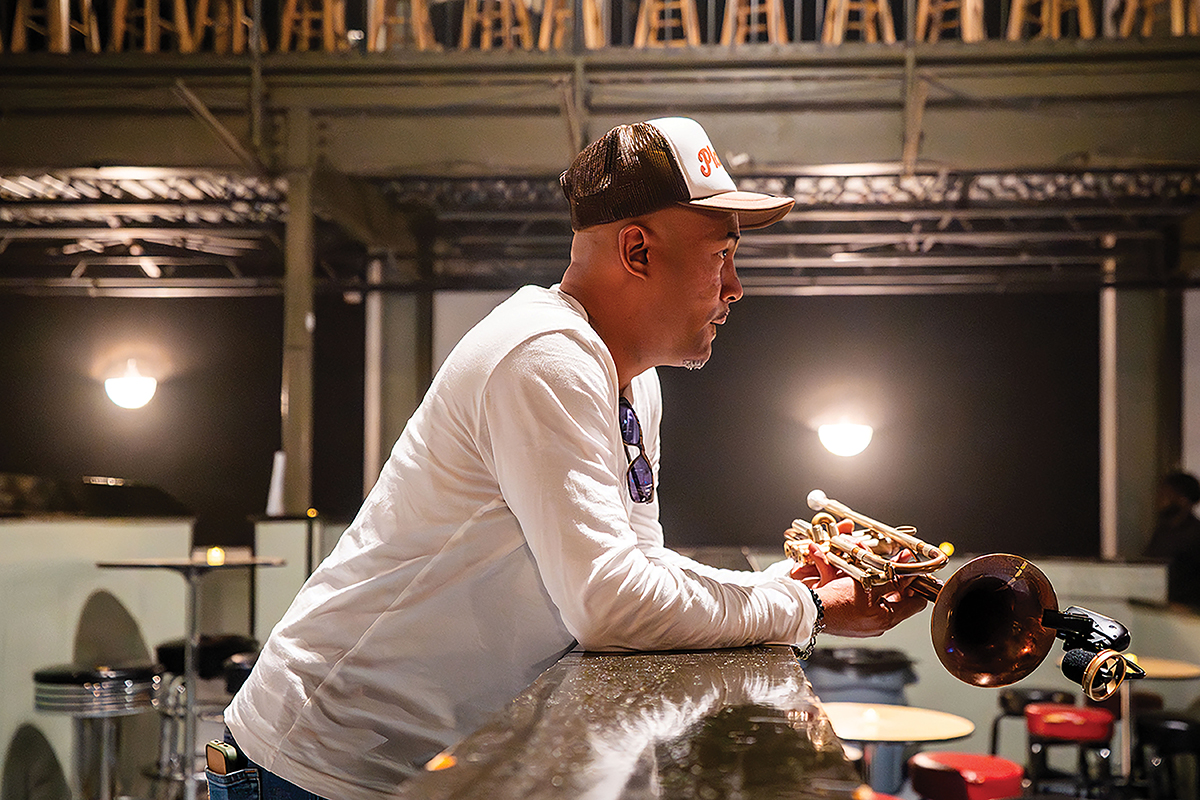
An offer of a full scholarship brought Strong to Durham in 1998. Except for a few years of graduate school at Northern Illinois University, he’s been in the Triangle ever since, thriving as a performer as well as a teacher. Mostly he plays smooth jazz, but he’s also versatile enough to play on projects by New York hip-hop legend Rakim, local Americana singer Rissi Palmer, and local children’s music artist Pierce Freelon.
Along with teaching and gigging, Strong co-founded the Art of Cool Project, which in the 2010s put on some of the best music festivals Durham has ever seen. Eve Cornelious, a local singer who hosted a show for BET on Jazz, has hired Strong many times to back her up at gigs over the years. She realized what a big deal he had become when he hired her to play the Art of Cool Festival.
“He’s one of the leading personalities around here and really gets it done,” said Cornelious, who first met Strong when they were both at NC Central. “He’s an important character, very forward-thinking, and he can play. He’s one of the best and most versatile musicians in the area and, I daresay, in the country.”
Strong’s recent accomplishments include playing New York City’s fabled Carnegie Hall this year for the second time with Lenora Zenzalai Helm’s Durham-based Tribe Jazz Orchestra, and also touring Thailand earlier this fall with singer Riley Rae’s Carolina Jazz Ensemble. If he can ever carve out enough time, Strong hopes to get another record into the world, which would be his third after 2016’s LoveStrong Vol. 1 and 2022’s Love Stronger.
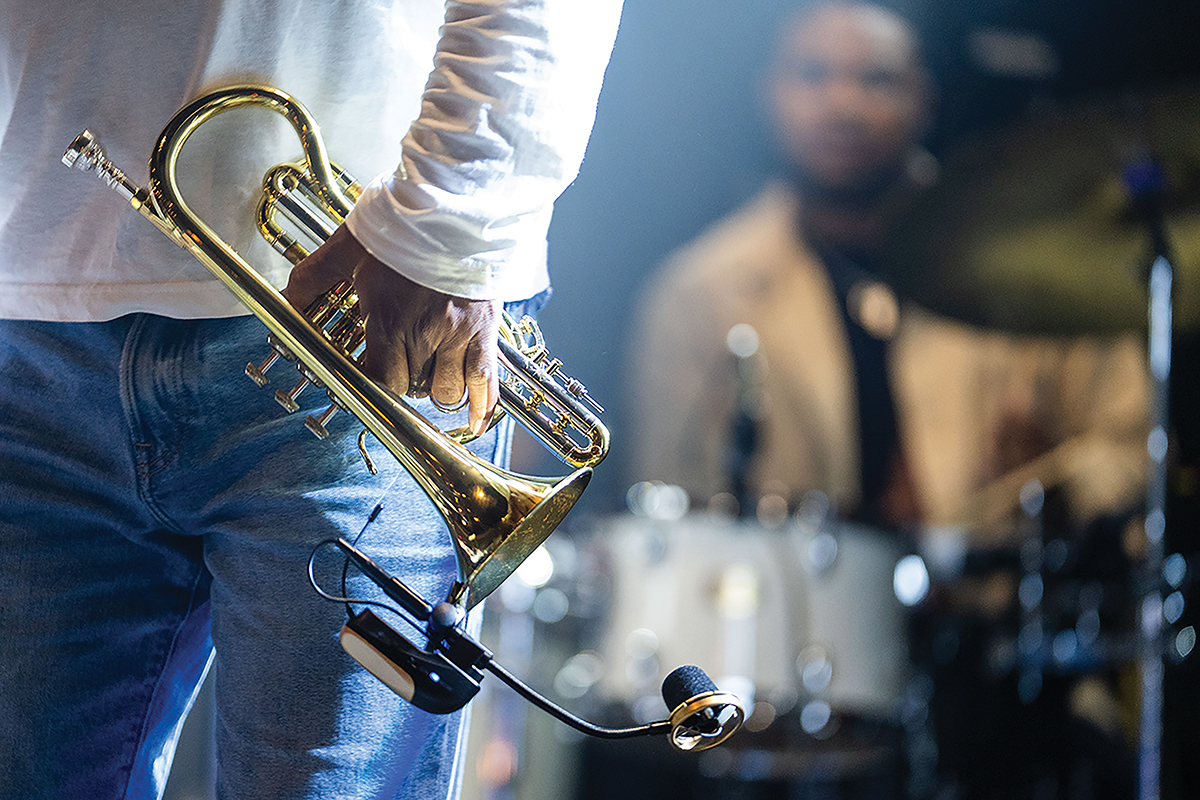
All the pieces are in place for another album, but Strong feels an obligation to keep up his work tending to the younger generation. It’s a role where one is frequently asked for career advice.
“With music, mostly you have to live it, which means immersing yourself in what you want to do,” he said. “Not just listen to and study music, but be around like-minded individuals who can push you. Relationships are everything as well, something to cultivate. But sometimes, you can do everything every jazz great and mentor tells you, and there’s always the chance it still might not be enough. So you have to know yourself and be grateful for the opportunity to practice your craft at whatever level you’re at.”

This article originally appeared in the November 2026 issue of WALTER Magazine.