This maker uses her head for math and science to create colorful, modern quilts that merge traditional techniques with contemporary design
by Colony Little | photography by Joshua Steadman
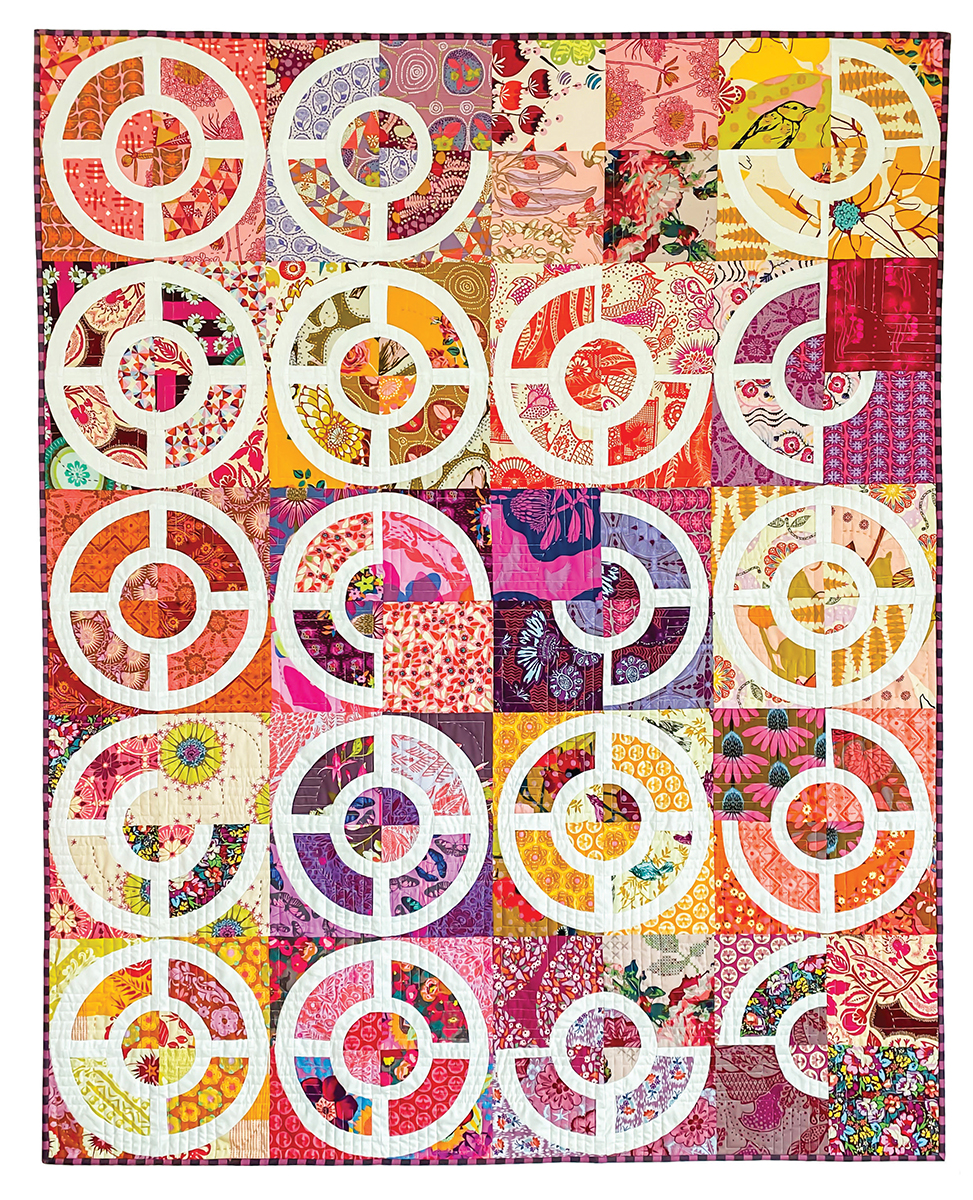
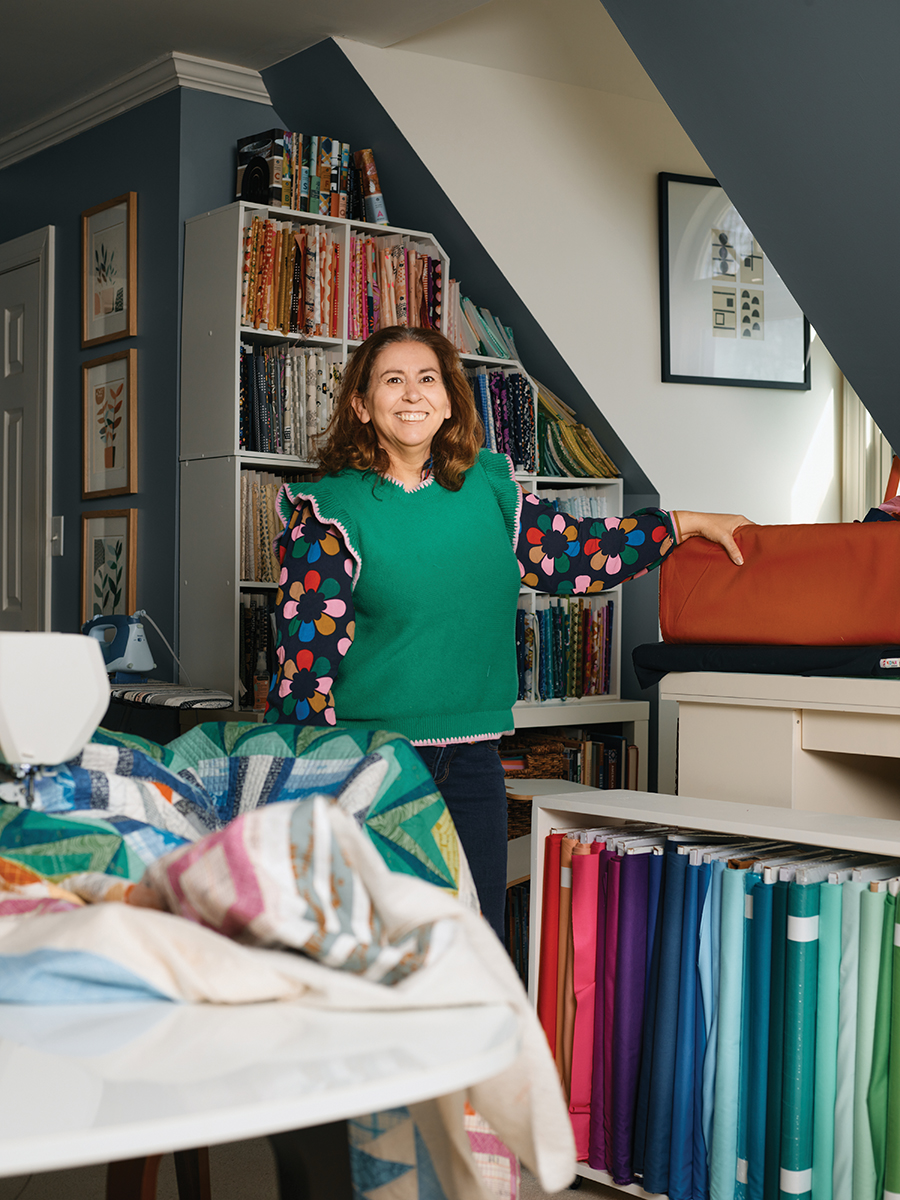
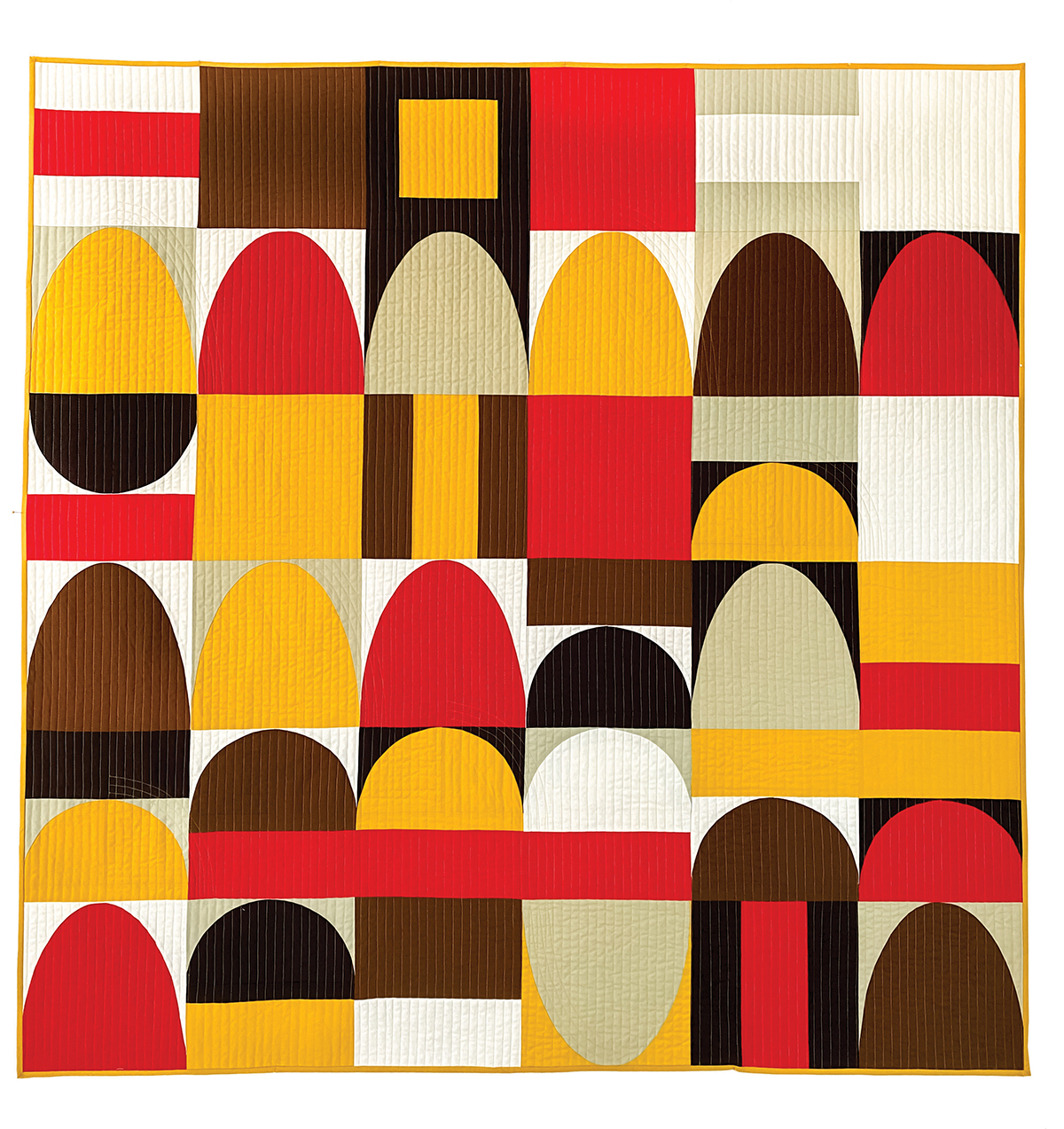
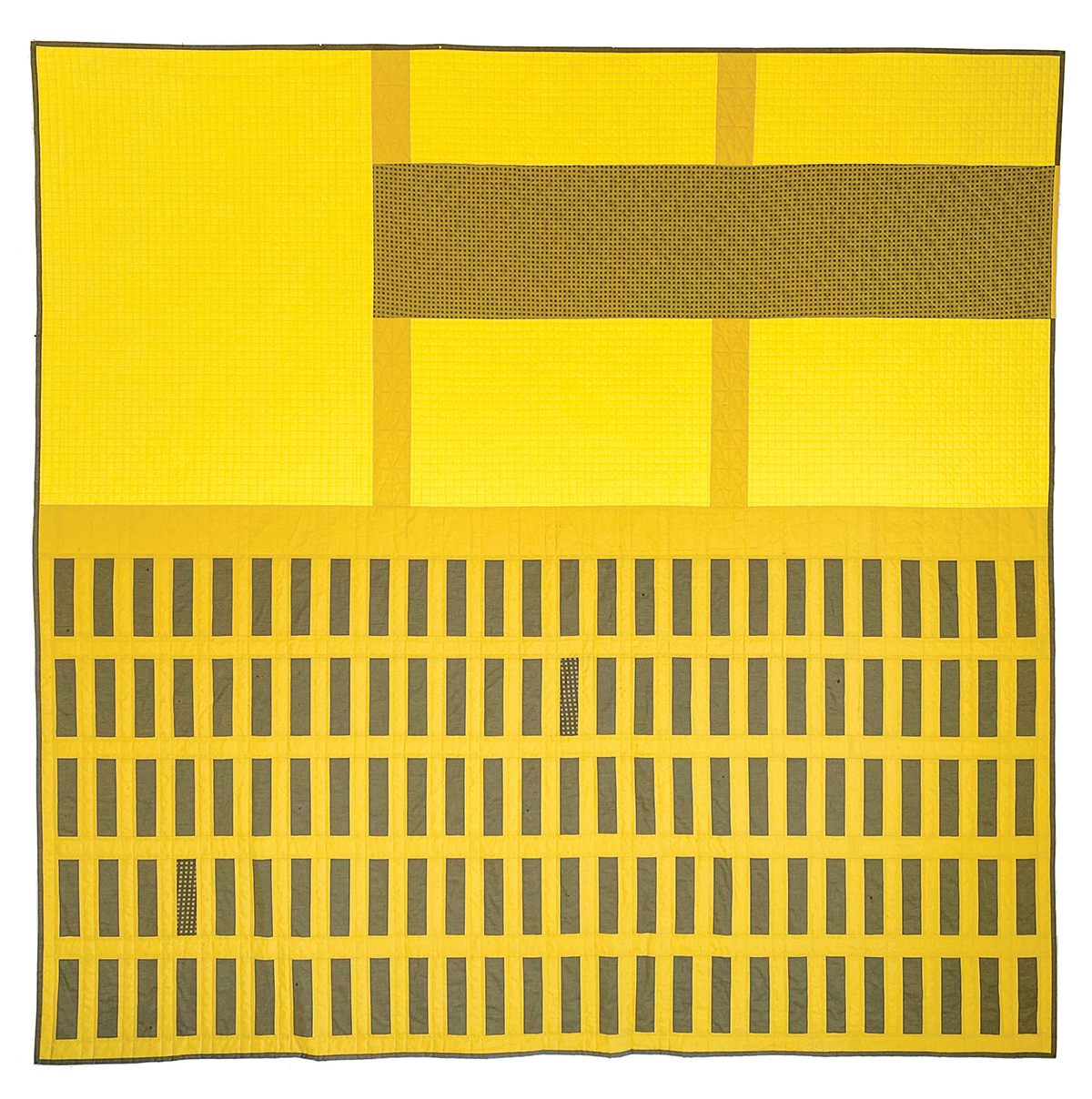
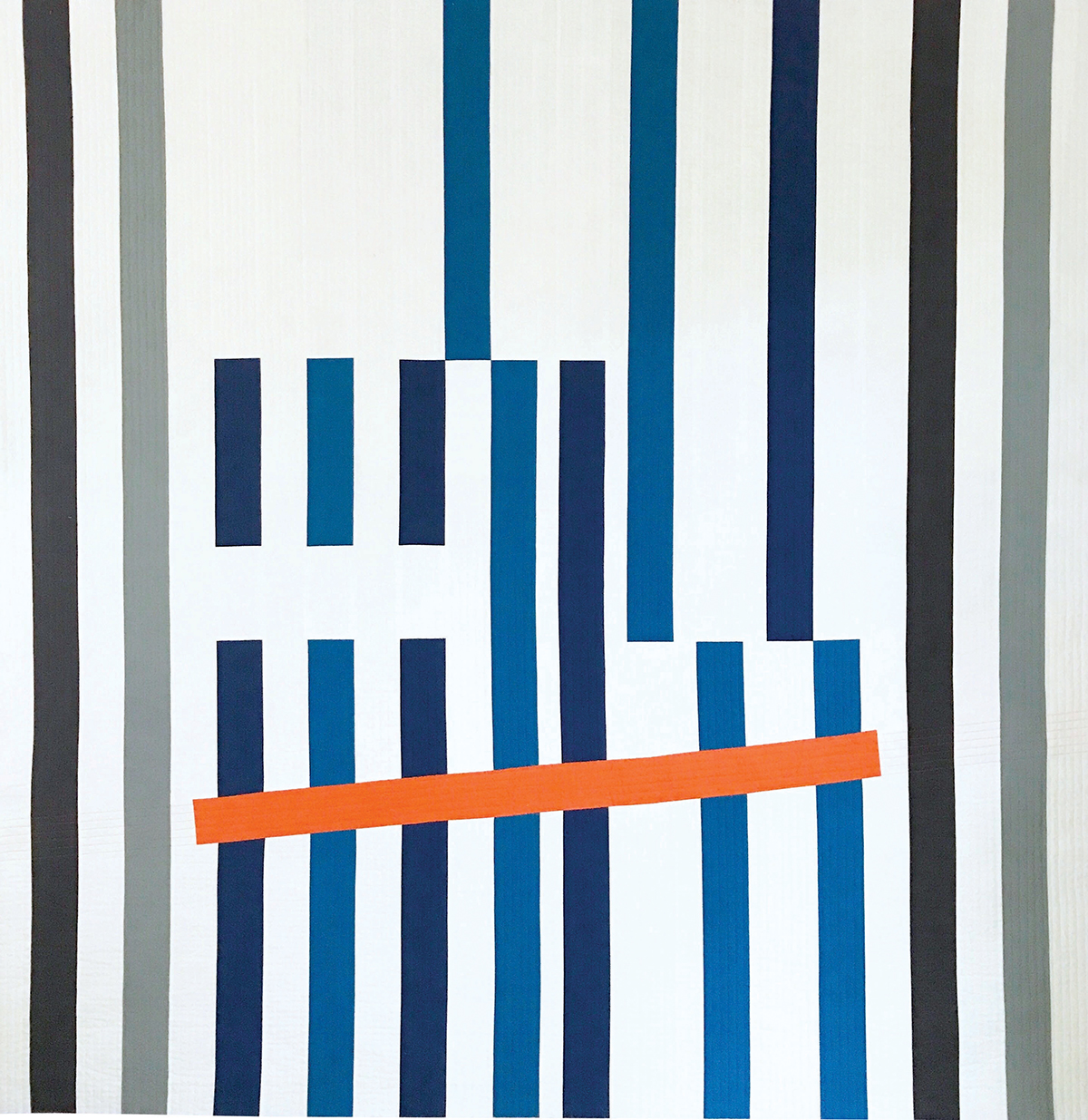
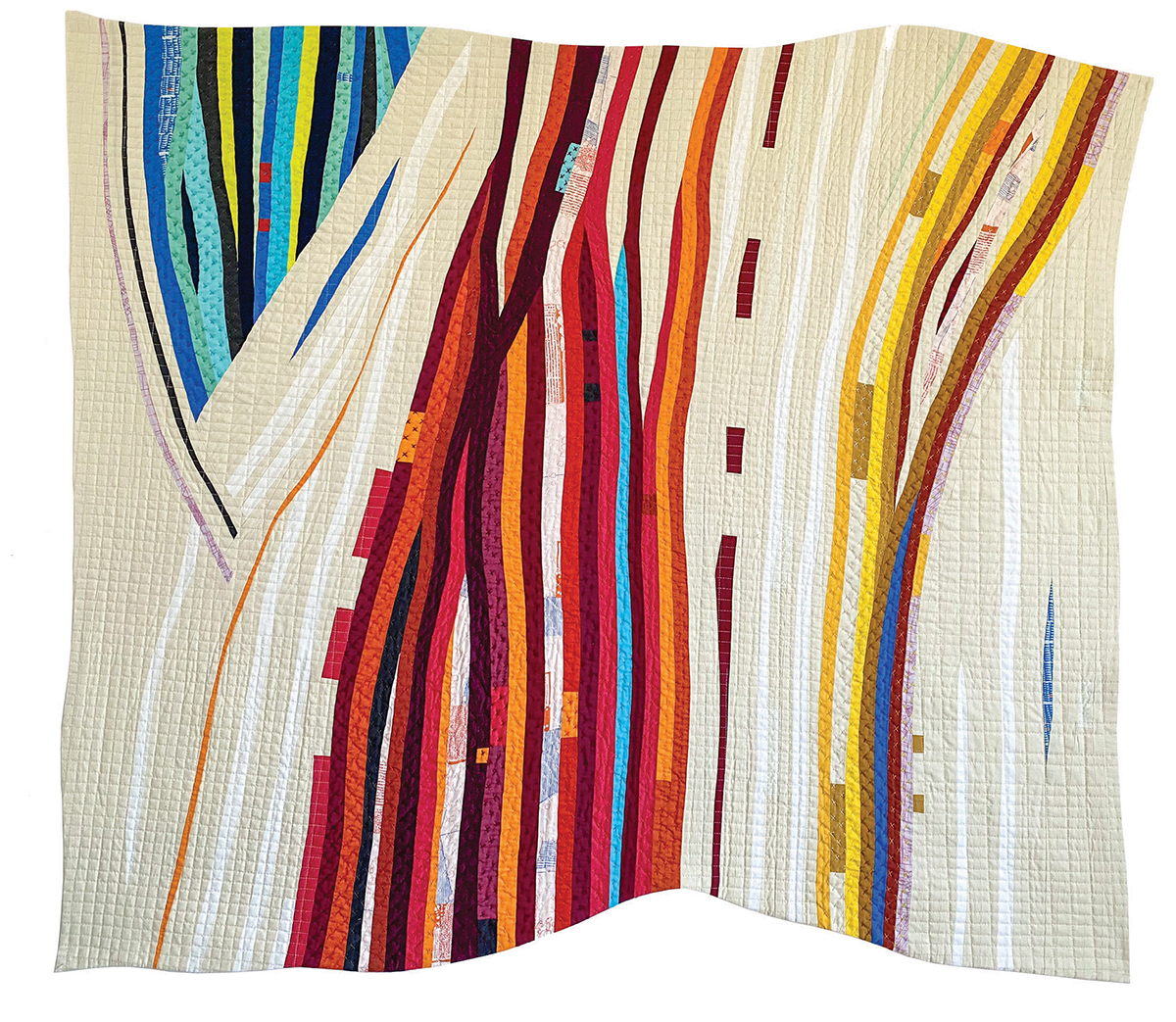
“My love language is color,” says Michelle Wilkie. She creates modern quilts and textile art characterized by clean lines, vivid hues and bold shapes that appeal to both collectors and quilters alike. Wilkie has exhibited her quilts worldwide in group shows and her work can be found in the collections of the City of Raleigh and the SAS Institute.
Wilkie’s quilts reflect a lifelong love of color and design that originated, in part, with her childhood in New Zealand. She was surrounded by creative expression: her father painted and practiced photography, her aunt was a printmaker and her mother was a seamstress. “She made all our clothes growing up,” says Wilkie.
But it was there that Wilkie sharpened her eye for pattern — appreciating, for example, the koru, a spiral shape that’s a traditional Māori symbol representing the unfurling of a fern frond, or the sharp lines in the the decorative woven tukutuku panels found in Māori meeting houses. “The geometric nature of the designs of the Pacific Island cultures I grew up with have been an underlying presence in my art,” she says.
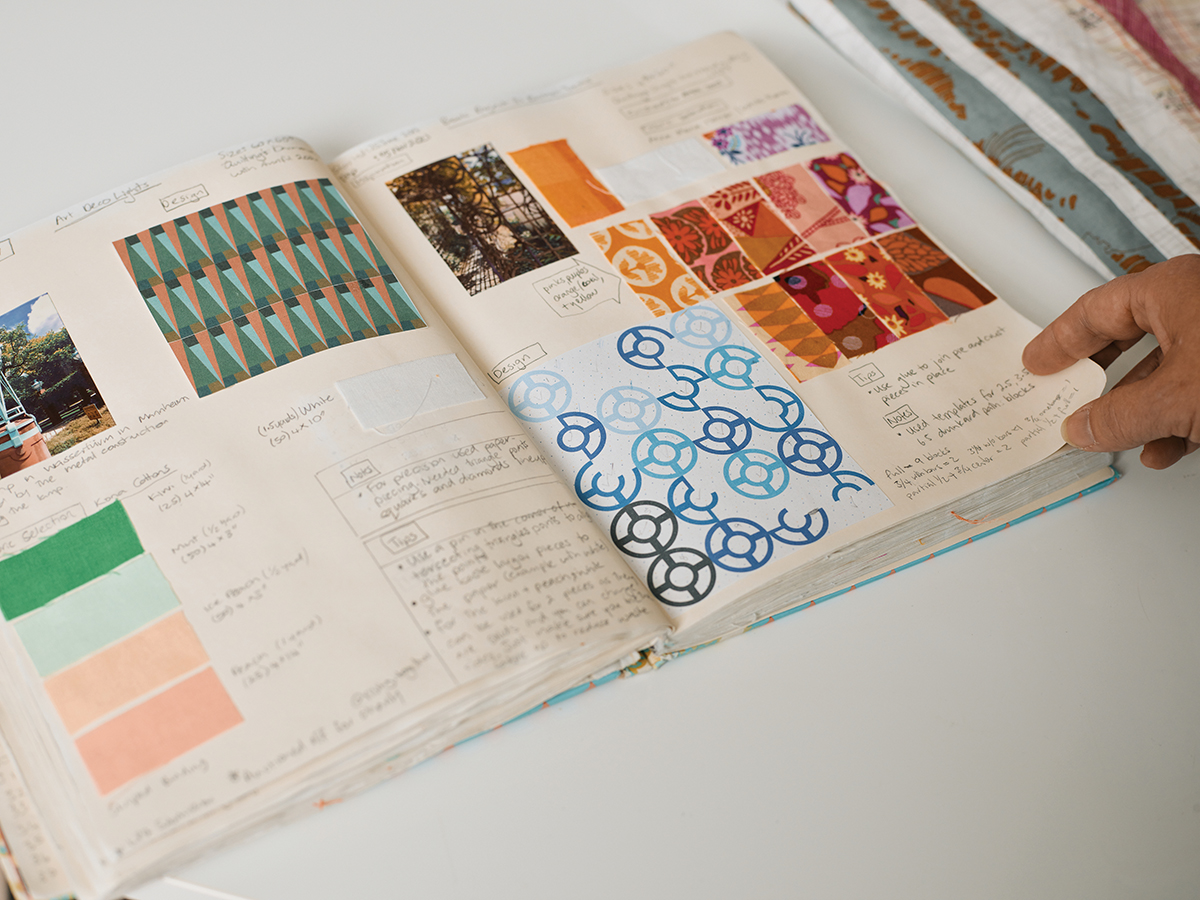
In New Zealand, she studied marine biology and earned a master’s degree in Marine Science before she began working for SAS in Australia as a product manager. She spent nearly 25 years with the software firm; it took her to Heidelberg, Germany, then to the Triangle 19 years ago, where she and her husband raised a son. Through travel, she developed a love for architecture and photography, each form giving her an appreciation for the beauty found in small details, like the masonry of a building or the patterns created by train tracks. During this time, she mainly practiced art through pastel drawings, creating minimalist, abstract works in colored chalk.
It wasn’t until Wilkie was on medical leave, recovering from surgery 12 years ago, that she decided to take on a sewing project: creating pillows for her sofa. “Though my mom was an amazing seamstress, I never sewed with her,” she admits. But that project led her to a quilting site, where “I found somebody making modern quilts, and thought, Oh, that’s my aesthetic,” she says.
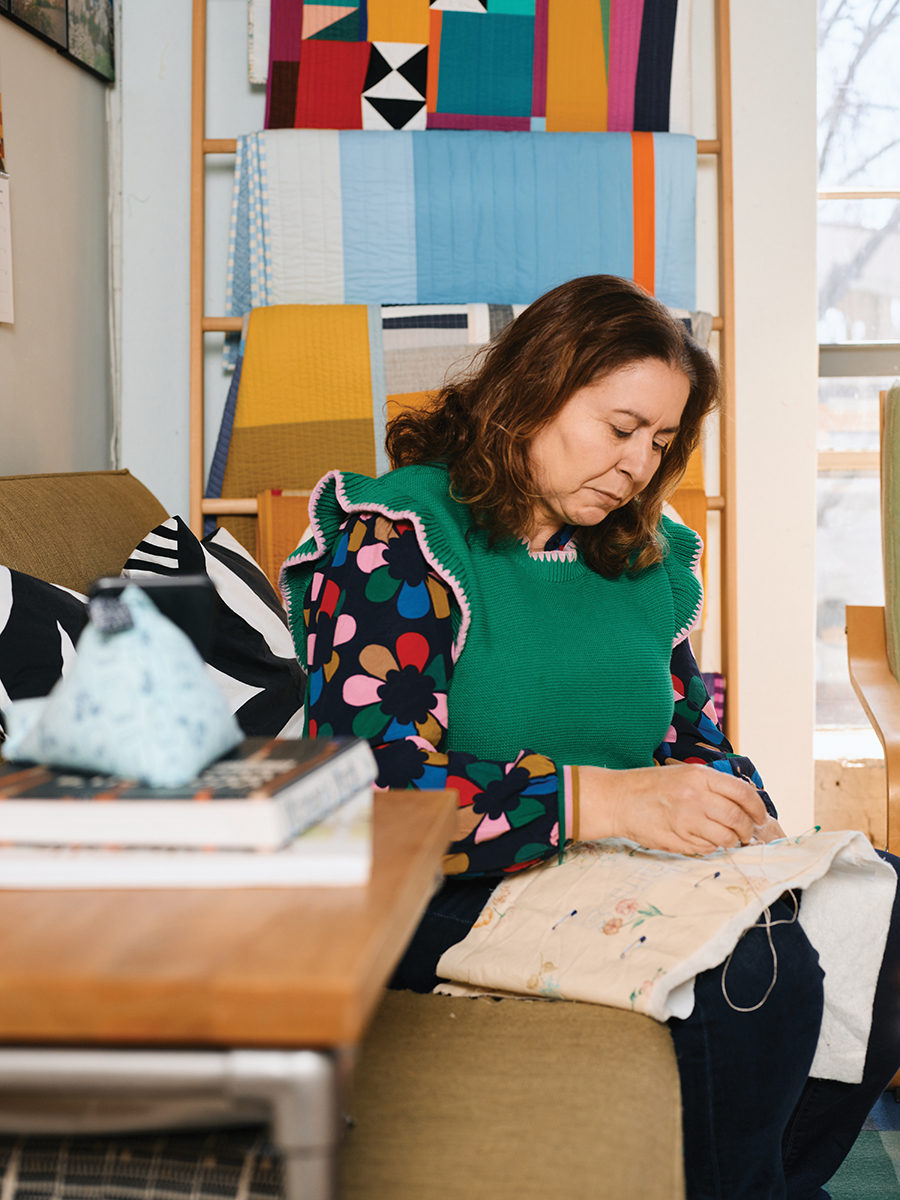
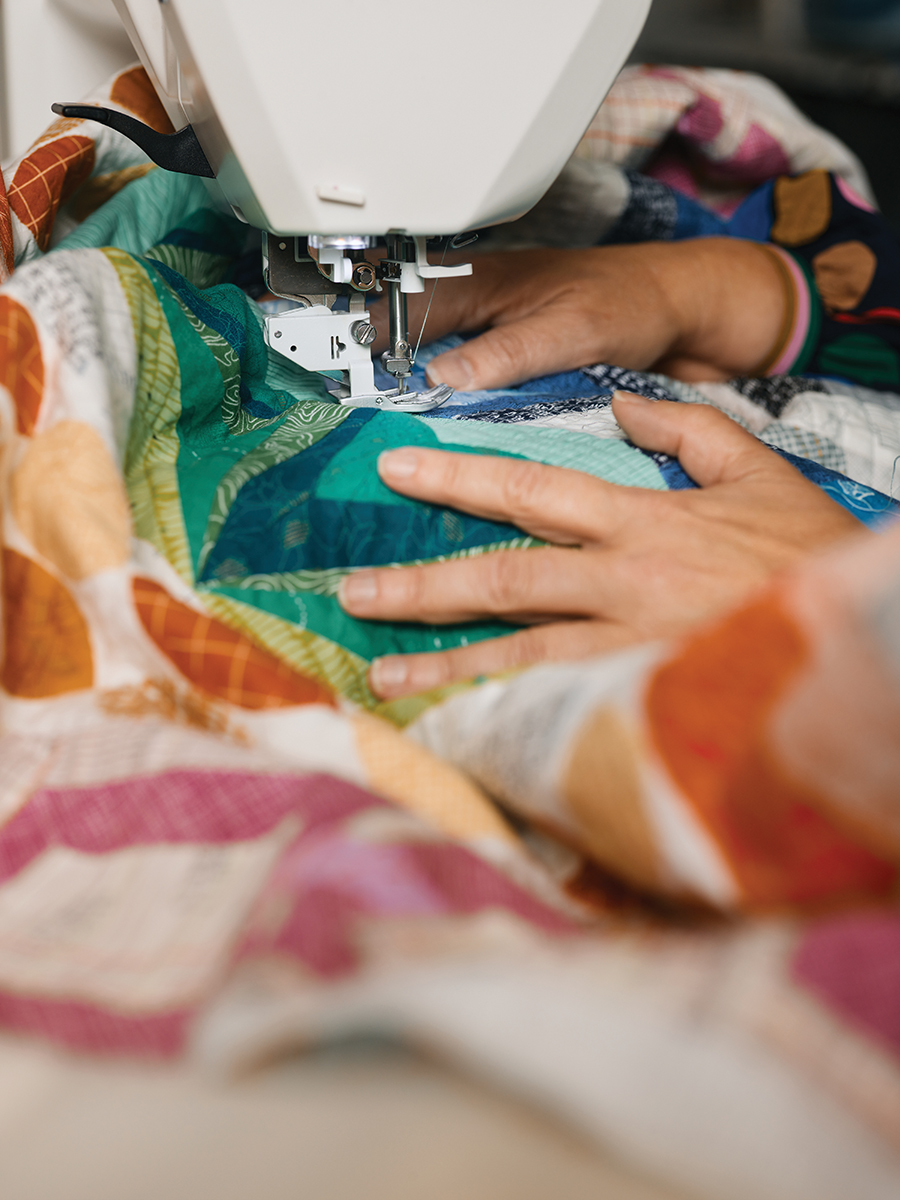
Unlike traditional quilting, which is known for time-honored patterns like the Log Cabin, Pinwheel and Eight Pointed Star, modern quilting embraces a more improvisational style. Particularly found in African-American quilting traditions, it allows a freedom of expression and process; these characteristics of the craft drew her in instantly. “I have a little bit of an obsessive personality when I start something; it becomes all I do,” she says.
Quilting also tapped into her aptitude for mathematics and science, using her technical, problem-solving prowess for the precision that goes into the craft. While many of us have long abandoned our need for using geometry or trigonometry in our daily lives, Wilkie has no problem calculating the hypotenuse of a triangle to measure out strips for a quilt or applying sine and cosine functions to create symmetry within her patterns.
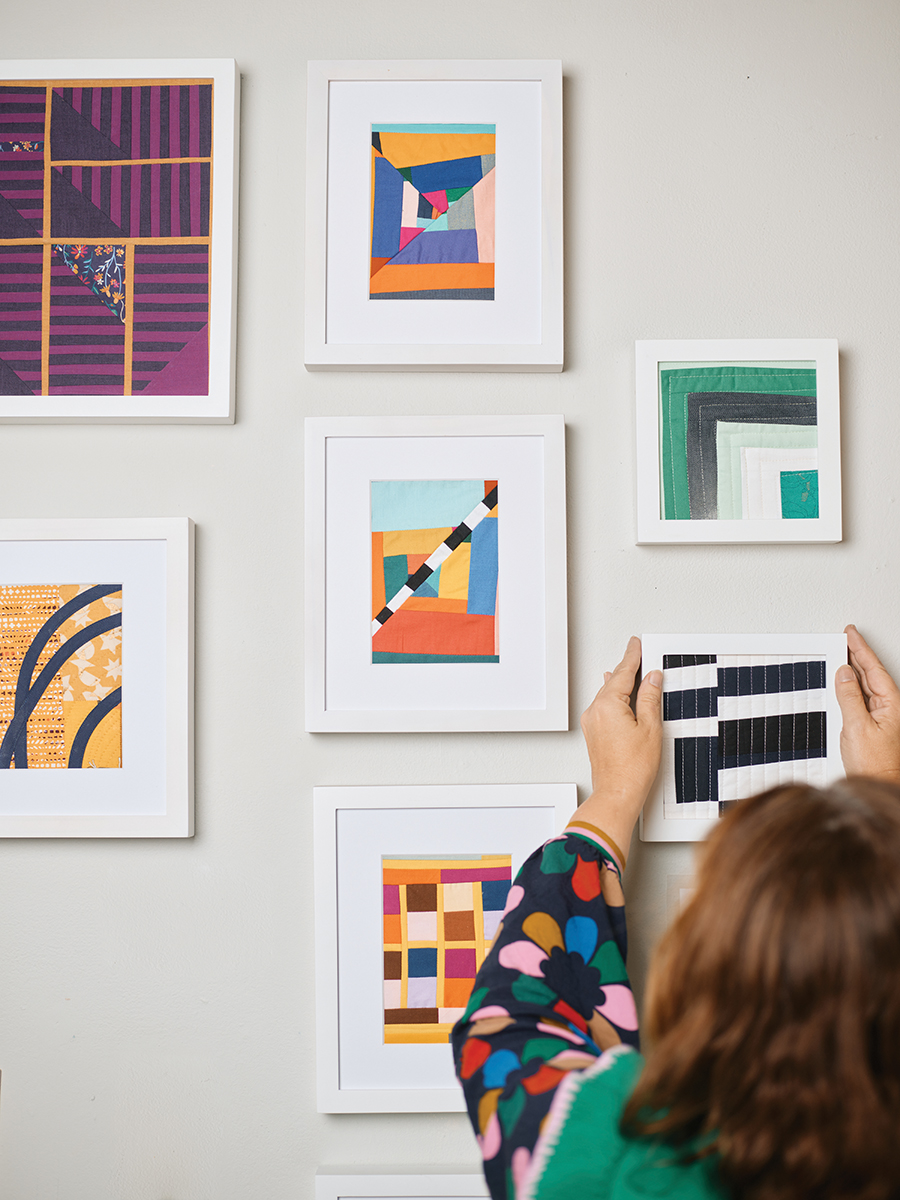
Wilkie draws inspiration from myriad sources, from travel and architecture to math and science; these influences show up in abstract shapes and unique patterns. One piece, titled Neighbourhood, is a white quilt with 12 irregularly shaped rectangles in vibrant hues of canary yellow, pink, purple and orange. Using fine stitching, Wilkie creates sharp angles and variegated lines that add unique texture with each quilt square.
Traces of Bauhaus influence are found in some works, like Orange Creamsicle, a hand-pieced work that uses circular segments, thin rectangles and angular shapes together to evoke balance, symmetry and harmony. Others, like Pyramids, a quilt inspired by the palace entrance of the Castle of the Moors in Sintra, Portugal, demonstrate the precise calculations she uses to create repeating patterns of triangles, hexagons and chevrons.
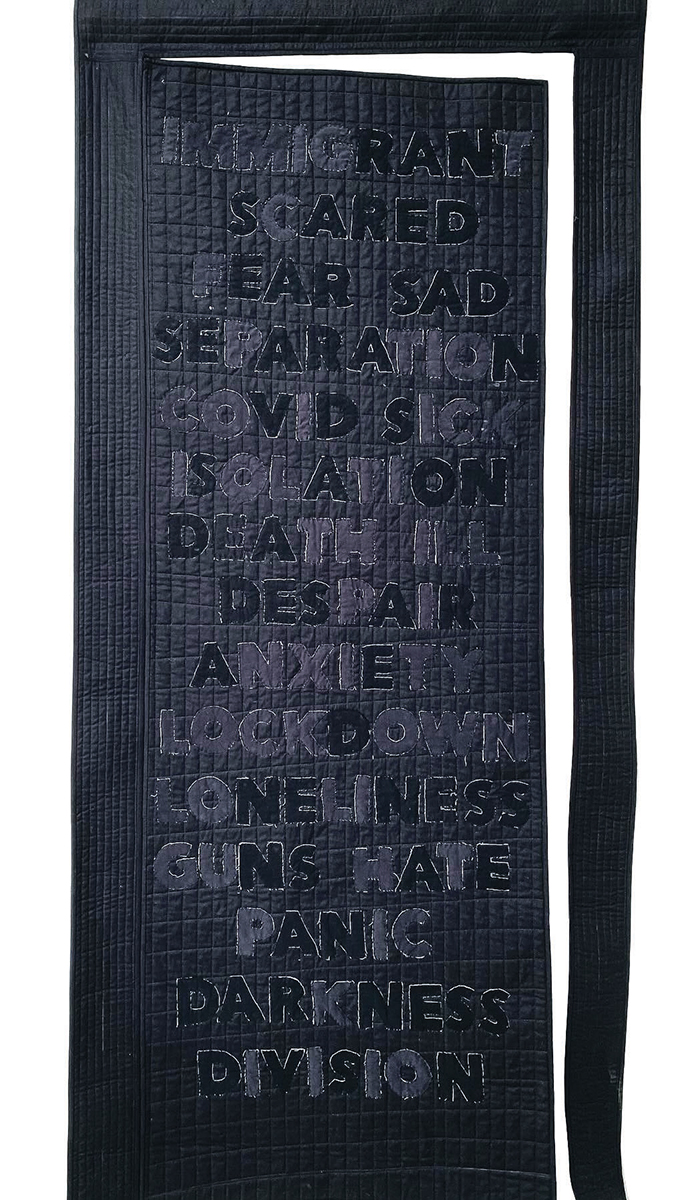
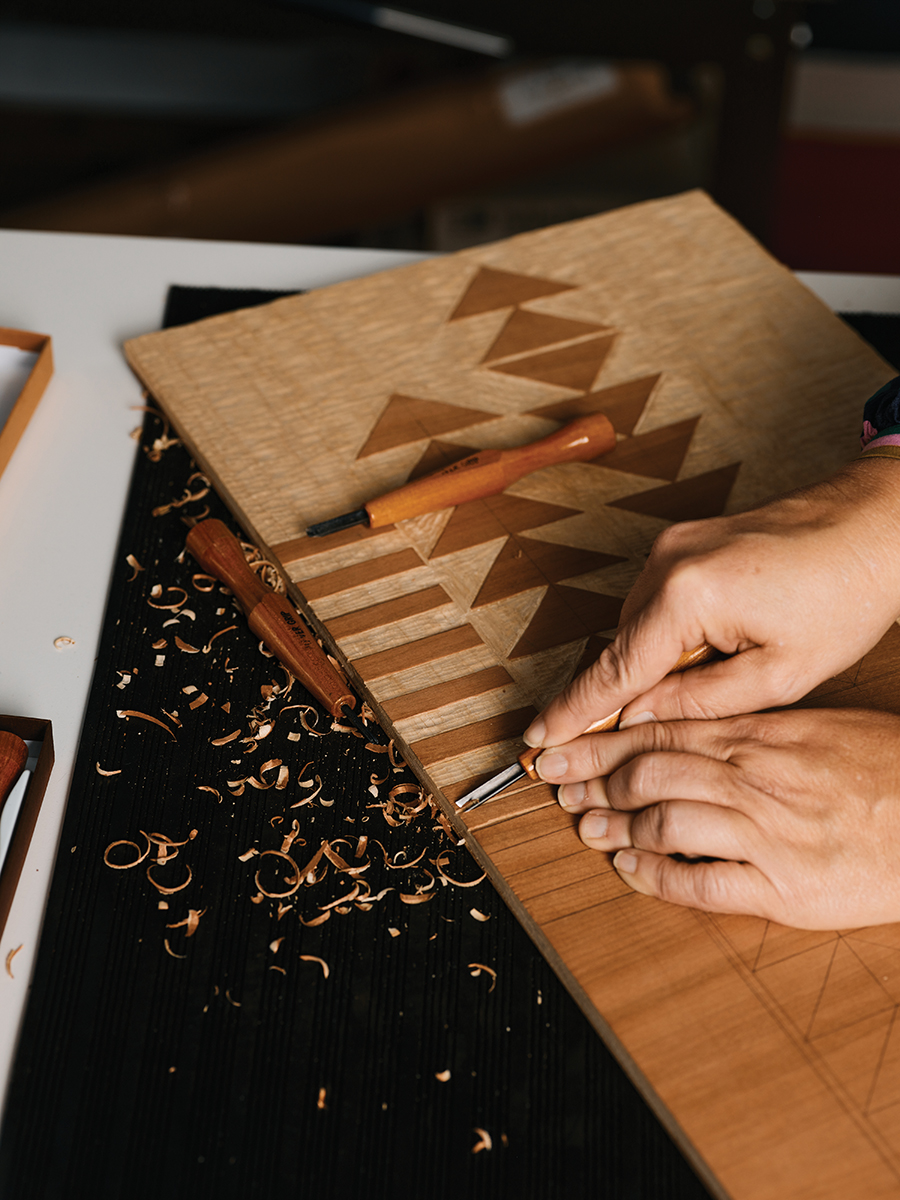
In 2023, Wilkie left SAS to pursue art full-time. This offered the freedom to continue exhibiting her work in both solo and group shows while also exploring new art forms, including printmaking and woodcarving. While attending a three-week artist residency at the Virginia Center for the Creative Arts in 2025, for example, Wilkie created an indigo blue quilt top that combined wood block fabric printing with quilt stitching. The curved lines she printed onto the fabric flow into quilted lines almost seamlessly; only when examined up close do the textural differences on the surface reveal her innovative technique.
Wilkie recently received a grant from United Arts Wake County to purchase a printing press; she plans to use it to create patterns that build on the shapes and designs she sews in her quilts. “I love experimenting,” she says. “I just learn the technique to get the design that I want.”
As Wilkie continues to push her work into new areas, another aspect of quilting — its communal nature — has been at the forefront of her practice. “I studied the history of quilting in the U.S. so that I could appreciate the craft and its traditions,” she says, finding herself fascinated by cooperatives and collectives that both shared in the labor of creating quilts and became vital community links, like the Freedom Quilting Bee in Gee’s Bend, Alabama, which provided foundations for economic independence for women.
Inspired by the idea of sewing circles, Wilkie started to host a regular meetup for fellow quilters in her home in Cary where they share their projects. “Michelle is two parts artist and one generous part social coordinator,” says Ginny Robinson, a quiltmaker and schoolteacher who is part of Wilkie’s quilt circle. “It’s hard to get introverts to move and gather and connect, but she makes it happen — usually serving up some magical cake or muffins to boot.” (Notably, Wilkie’s other love language is baking: “I love making stuff for people; I’m always bringing cake.”) The gathering has become a trusted space of support. “Not only do we lift each other up, but it’s created a circle of friends who are going through similar life experiences and having meaningful conversations,” Wilkie says.
Wilkie recently curated a show for Artspace, Of Place, which featured contemporary quilts from 18 artists, some of them members of her quilting circle. Each of the pieces offered a unique perspective on the art form, from text-based quilts to modern interpretations of traditional styles. In addition to her quilting circle, she also hosts Sip + Stitch, a monthly meetup at Artspace that invites anyone who’s interested to work on a textile project in community. “I love the fact that we all bring different projects,” she notes. “It’s really nice to see what people are making and hear the stories they share about themselves and their lives. I love those connections.”

This article originally appeared in the April 2026 issue of WALTER magazine.