Informed by his work creating visuals for movies and video games, Wilson fuses art and technology to create surrealistic scenes
by Colony Little | photography by Joshua Steadman
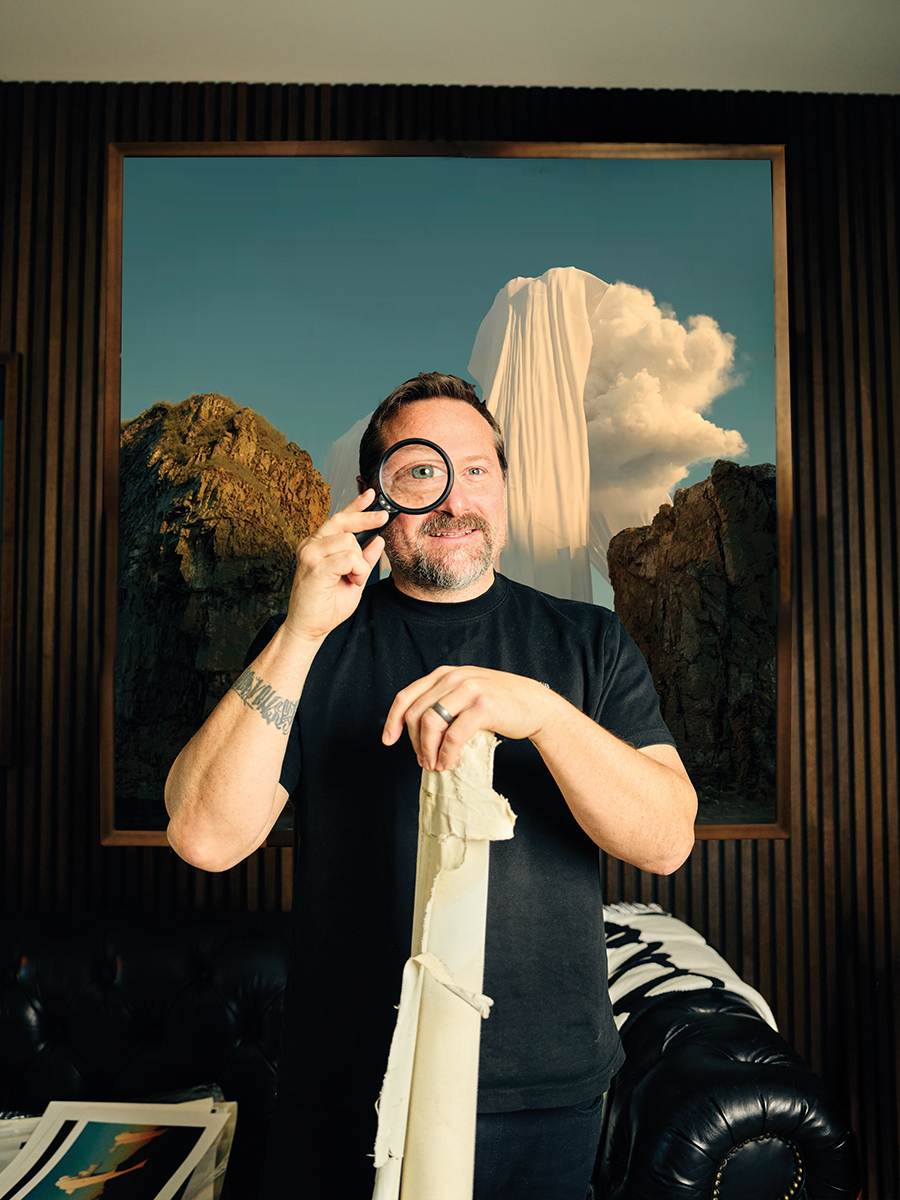
On a breezy, sunny day when the wind slowly pushes the clouds through the sky, what do they look like to you? A beloved dog, a familiar face? Maybe your mind drifts to something more ethereal, like the feeling of fresh snow in your hand or the taste of a first bite of cotton candy. Those sensations, those ephemeral tugs between memory and reality, are what Matt Wilson conjures through his digital artworks.
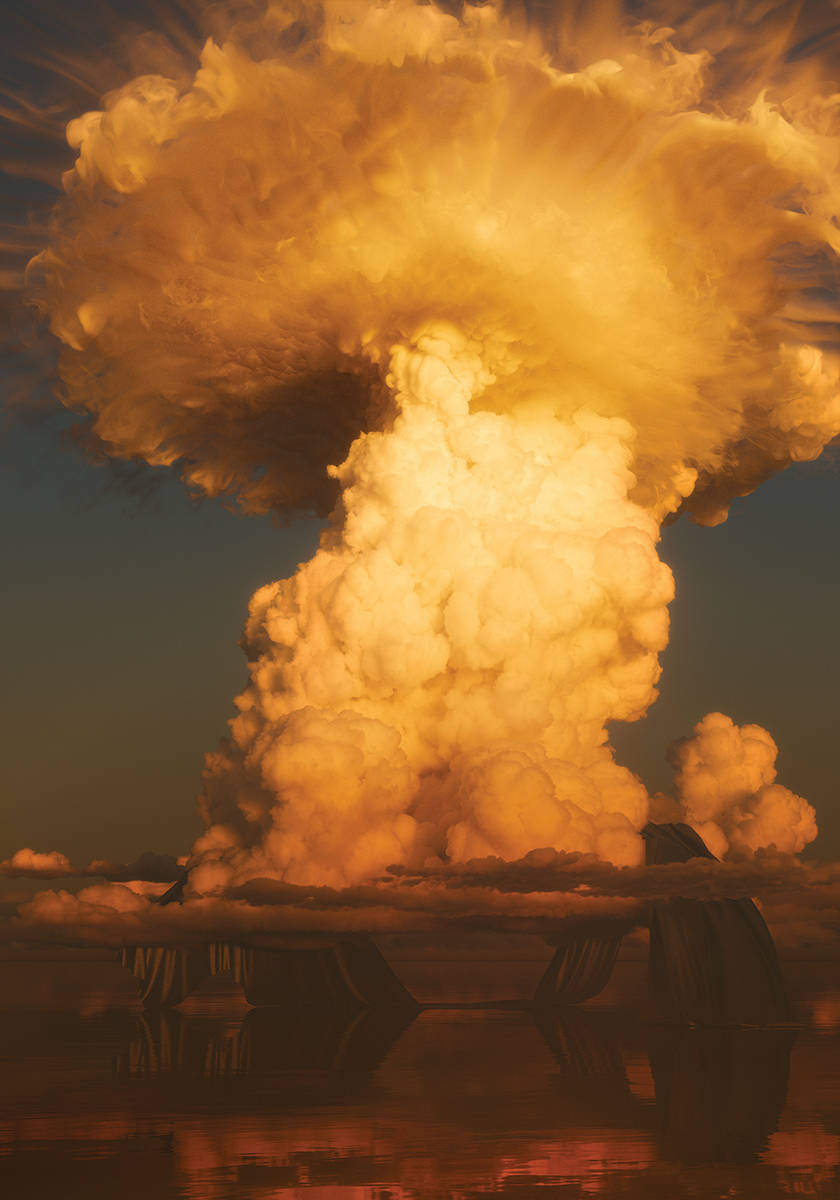
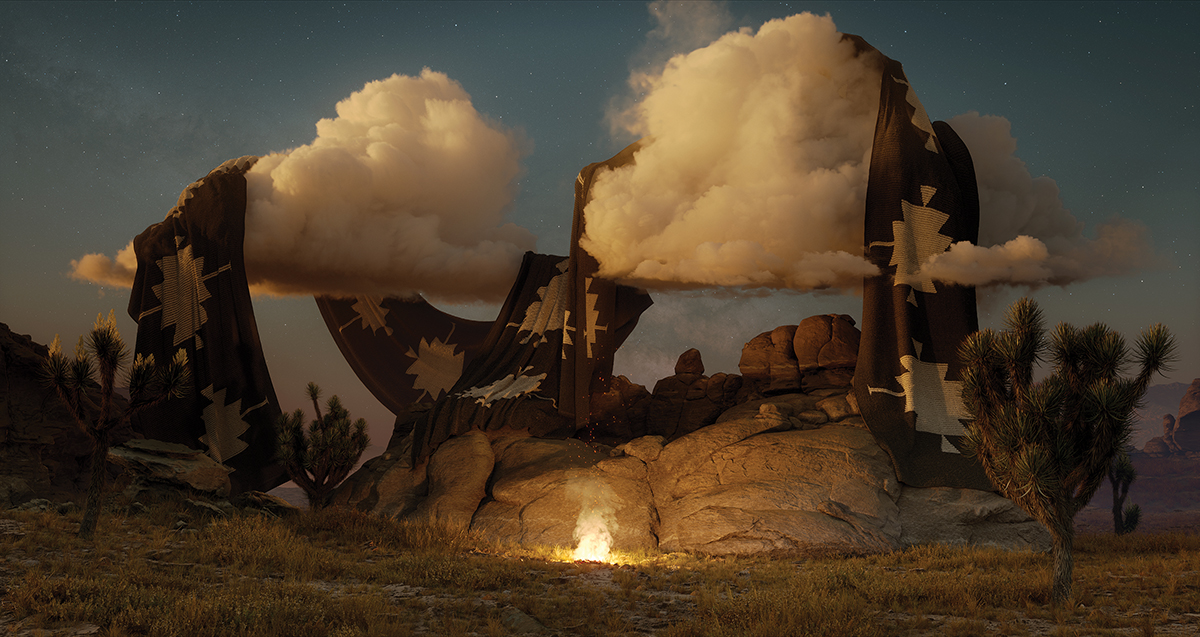
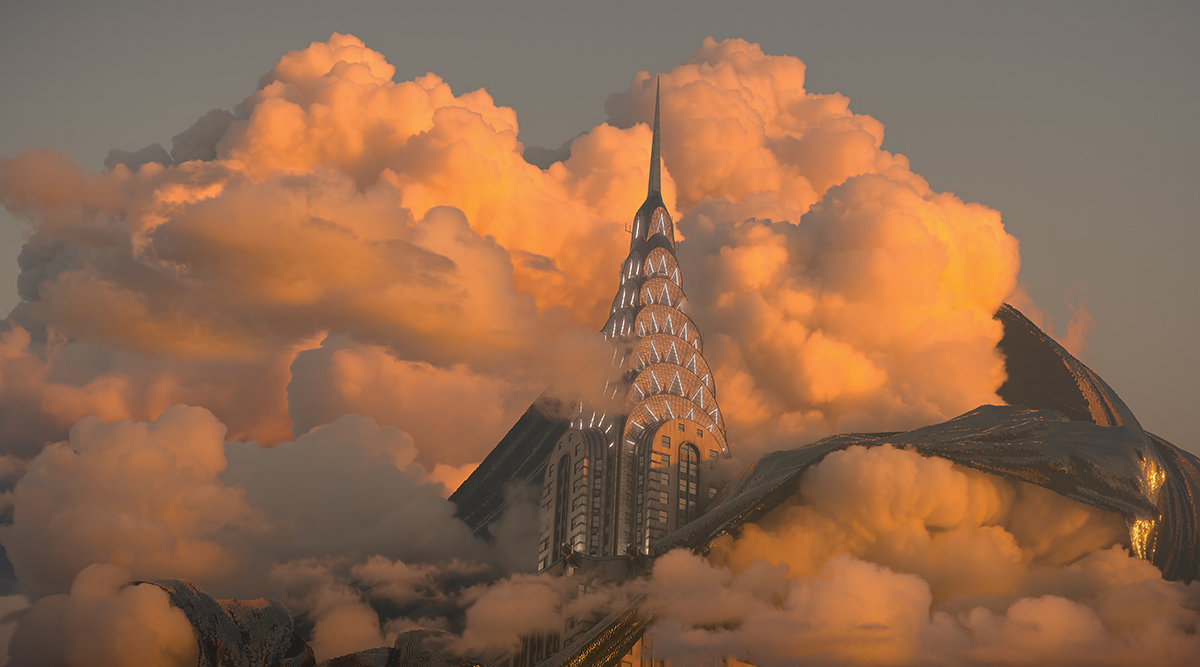
Wilson’s scenes feature hyper-realistic cloud formations that hover over sweeping vistas, their panoramas often disrupted by unexpected, yet familiar objects. The cloudforms may be draped with long swaths of fabric; they may reveal and conceal odd juxtapositions within a curtain of vapor (a building spire, a glowing orb), expertly lit by a setting sun.
These subtle distortions of reality act as bridges to the subconscious. “I’ve always chosen to create images that tend towards the surrealist world, specifically because I’m constantly looking for a sense of wonder, a sense of that a-ha discovery moment,” says Wilson, who works as a lighting director at Epic Games in Cary.
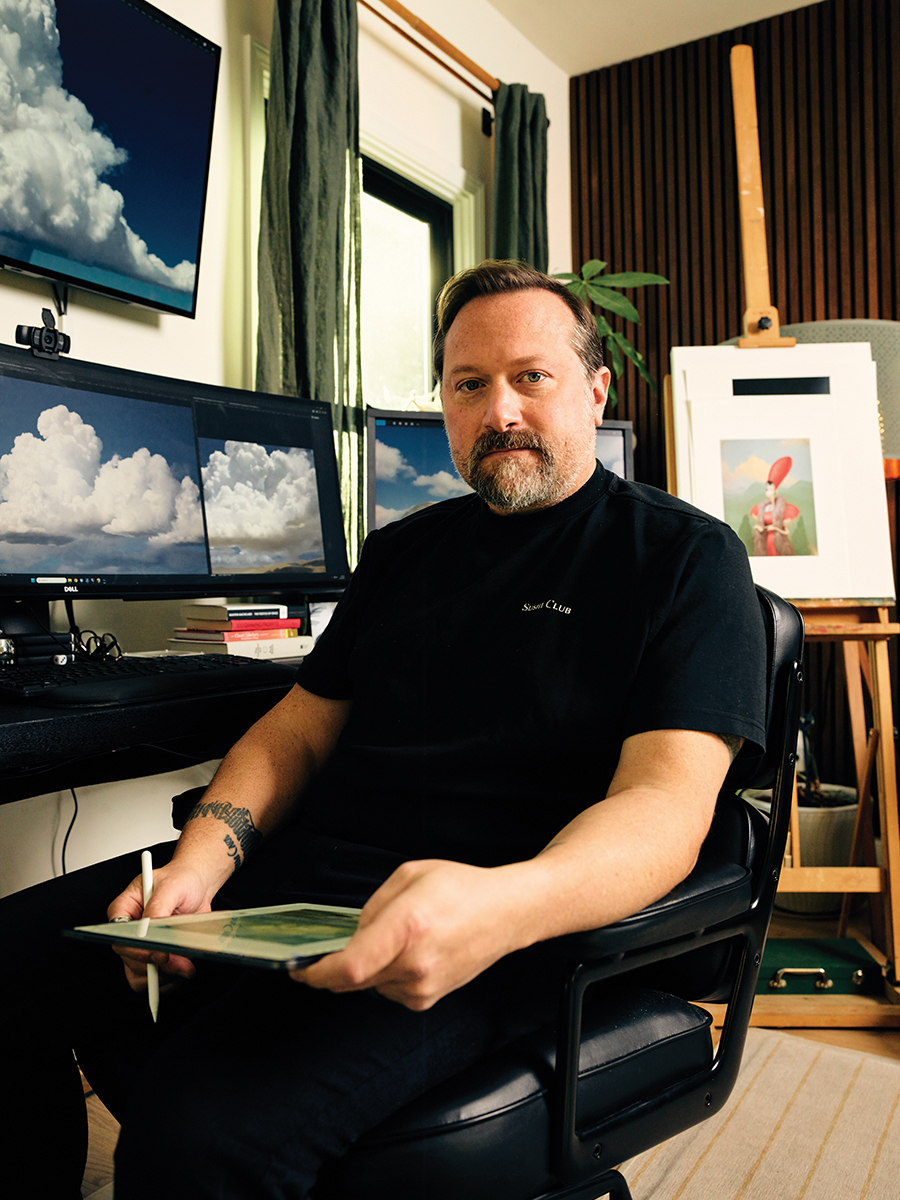
Wilson studied computer animation at the Ringling College of Art and Design in the early 2000s, and has since built a career in commercial animation. He began working with creative studios and animation houses in visual effects, graphic design and lighting — his movie career took off while working with Blue Sky and Pixar on animated franchises including Ice Age and Rio. Clouds were his specialty, and he spent nearly 15 years creating animated cloudscapes, simulating how light moves within them.
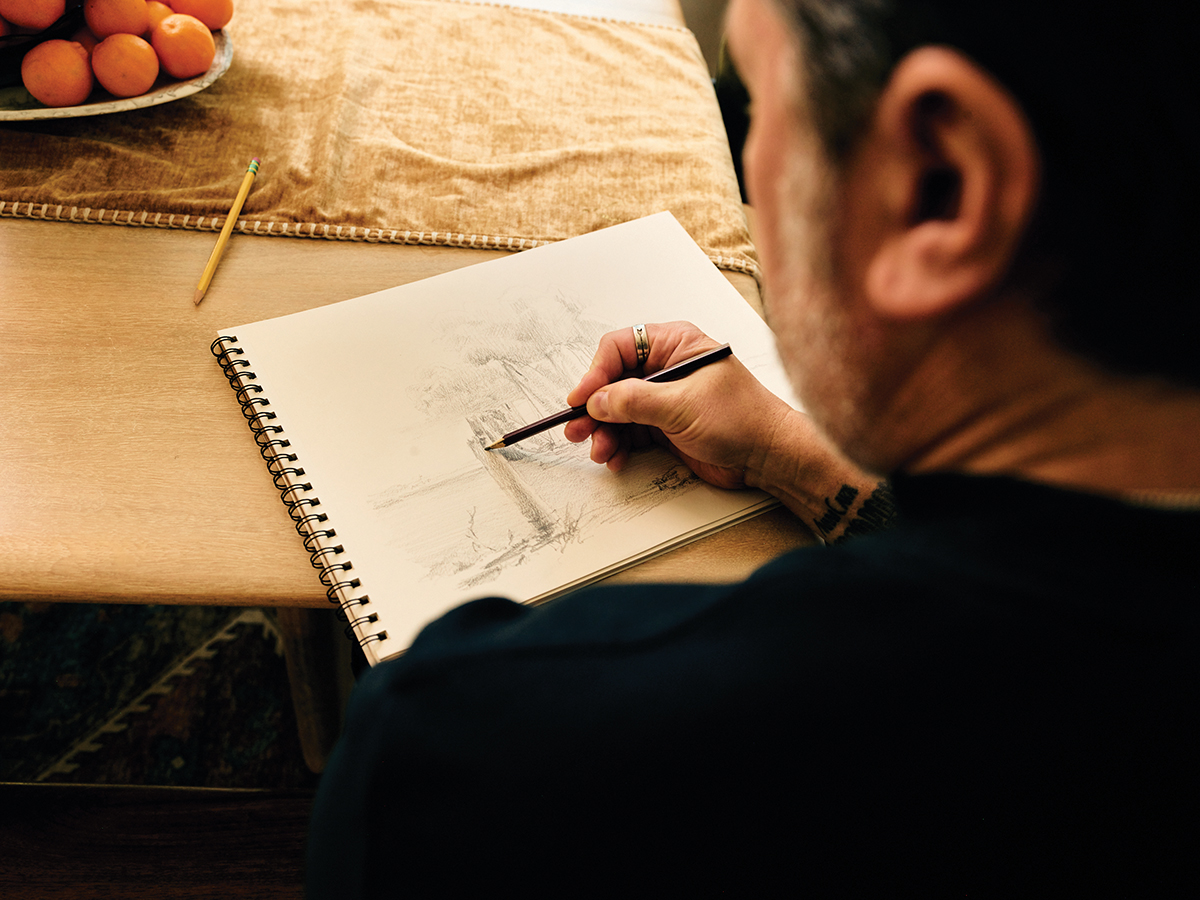
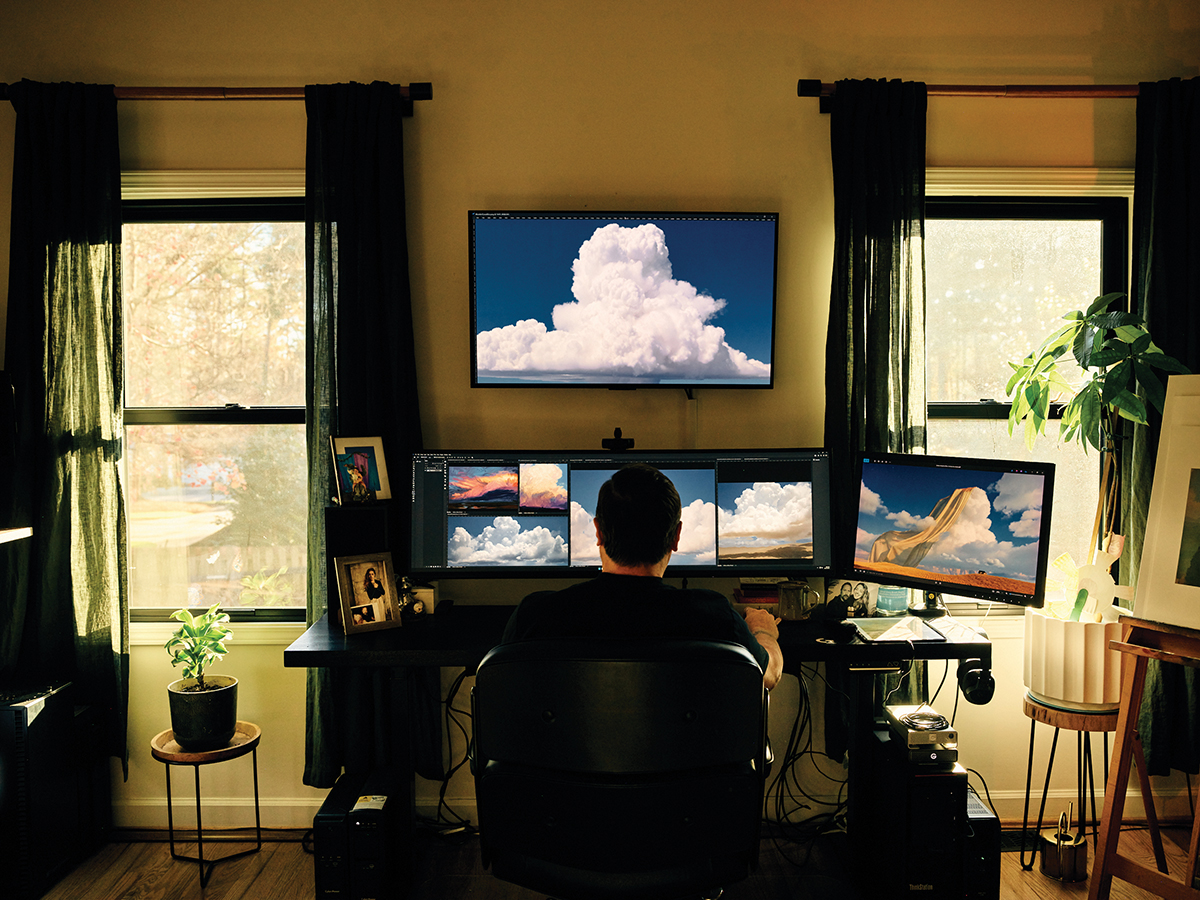
His artwork reflects his fine-tuned technical expertise, though he keeps his professional work separate from his own creative process. Wilson creates his digital landscapes entirely from scratch, often starting by drawing by hand in sketchbooks. From there, he uses software programs like Houdini to build libraries of visual assets like trees, mountains or boulders to pull from to create an image. Then he adds layers of clouds, mist, smoke and lighting attributes that add depth to the picture. “Once I’ve created an image that has the shape and space that I want, I get to start painting with light and color,” he says. For Wilson, this is the fun part: “That, for me, is where the creative process begins to take over.”
Wilson always loved animation and drawing; as a child, he would draw scientific illustrations for his father, who was a professor of immunology and biology. He got into graphic design by experimenting with computers. “That’s really where the technical side of things came in,” he says. “This is back in the early days of Apple. I started doing things that were a little architectural.” These initial artistic interventions shaped his view on art and technology. “The two were bifurcated in my own process,” Wilson says. “I think that this really extended all the way into art school where I did the same thing. I consider myself an artist first and then technology to be a tool.”
Clouds offered a wellspring of inspiration for Wilson, acting as both a visual cue and a structural device for storytelling. “For me, clouds have always been a very personal and poignant metaphor for the human experience,” says Wilson. “They’re elastic, present — but they have no form. We can’t touch them, yet we see them all the time. For me, it very much mimics this internal image of self.”
Through his work, Wilson depicts these fleeting objects as memories or events that have shaped his life. During the Covid-19 pandemic, Disney shuttered Blue Sky studios, which forced Wilson to recalibrate. He moved over to Pixar while working from home, which afforded him a little space and time to explore his personal work. This led to a creative epiphany. “I realized that I was doing a lot of work for other people and had not spent a lot of time engaging with my own life, my own story — this whole component of my creative needs,” he says. “I had to make something that was a narrative engagement with my own existence.”
The Sentinel series includes a dozen variations of a draped cloud motif inspired by the large-scale, outdoor installations by conceptual artists Christo and Jeanne-Claude who, for decades between the 1960s and 2000s, covered buildings, monuments and other landmarks in large swaths of fabric. As digital renderings, Wilson’s work takes a different conceptual approach, offering a more internalized, personalized exploration.
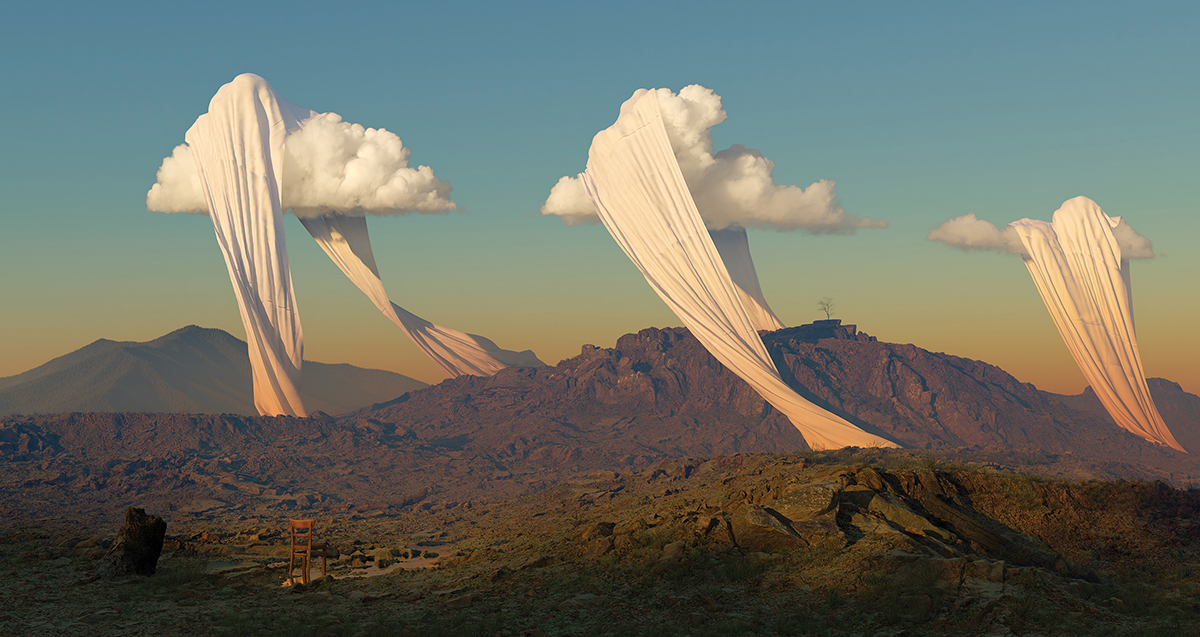
He presents this body of work in two parts, introducing it with a piece titled Traversal, featuring a trio of clouds, each draped in white fabric, floating above a mountain range. Plumes of textile trail behind them, signaling the direction of the wind that guides the cloudpath. In the foothills in the foreground of the image, a lone wooden chair is illuminated by sunlight, denoting its prime location for watching the procession of billowy masses float by. “I started thinking about how Christo had imparted this sense of importance by draping things,” Wilson says. “That got me to this idea of clouds being captured and the idea of walking into an old mansion where everything is draped in cloth, and then you find this thing underneath that’s been waiting to be discovered.”
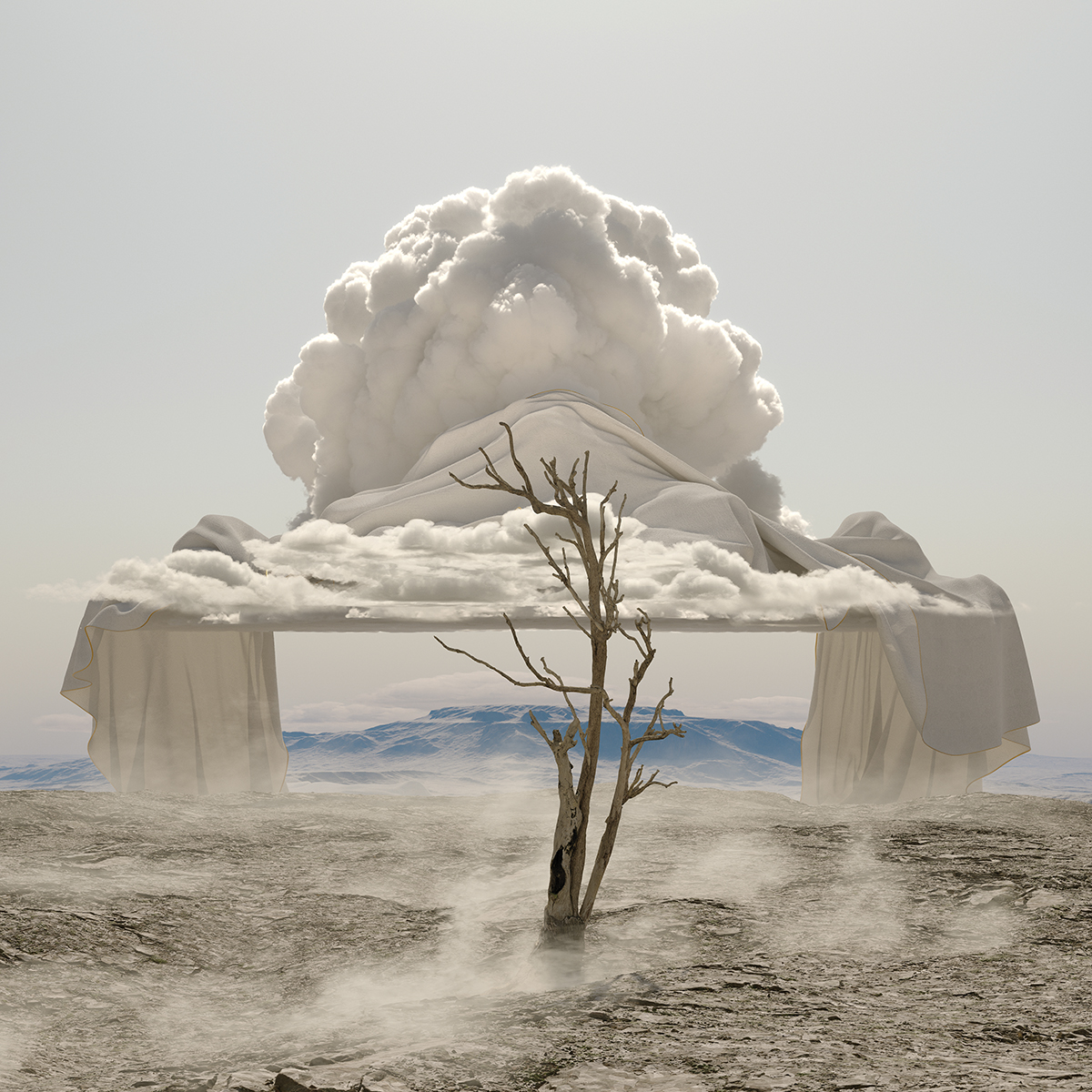
Part two includes a number of works that deal with living through change and finding the resolve to persevere through hardship. In a piece titled The Persistence of Dreams, Wilson’s subject is a lone tree dying in a desert landscape; a small patch of greenery is burrowed within a hollow in the tree. A large draped cloud looms over it. “That little patch of grass is the last persistent life that exists in this environment,” he says, describing the green as a metaphor for hope. “And the cloud is the one thing that the tree has been deprived of in this desert landscape — it just needs a little nourishment to be brought back to life.”
For Wilson, clouds are guardians of memory that protect and preserve important moments in his life: marriage; moves from California to Florida, Georgia, New York and finally to North Carolina; the loss of a loved one; the birth of a child. Wilson hints at these stories in titles and descriptions of the works, while the cloud formations provide room for the viewer to fill in the narrative. “They’re these larger-than-life protectors of the environment, and they have this very stoic presence,” he says. “That became the foundation for me of using them as a lens to engage with many important moments in my life.” He compares his creations to diary entries. “I’ll come back to them years later, where all of these subconscious layers start blossoming into other memories.”
These memory cues are what motivate Wilson to share these works more broadly. While the Sentinel series was originally created as a personal passion project, it has since been exhibited at Caelum Gallery in New York City and the San Diego airport. “I received some really amazing messages from people saying, I saw your work and just couldn’t stop thinking about it,” he says. Through his work, Wilson hopes to encourage people to embrace the rare, fleeting moments in their lives and inspire future artists to recreate similar encounters in their art. “I would love for my work to offer those moments of discovery for somebody else,” he says.

This article originally appeared in the March 2026 issue of WALTER magazine.