Raleigh metalworking artist Bill Hickman — maker of the bull the Ridgewood Whole Foods — creates fantastical sculptures with a deeper meaning
By Colony Little | Photography by Joshua Steadman
If you have ever waited for an order at the butcher counter inside the Whole Foods Market at the Ridgewood Shopping Center, then you’ve likely noticed a majestic metal bull nestled in one of its alcoves. The piece was made by Bill Hickman, a self-taught metalworking artist who creates eccentric sculptures and face masks. The bull, made from strips of bent, welded metal, has a commanding presence — as does the large metal chicken that’s perched over the poultry counter.
These sculptures were commissioned for a remodel of the space in 1992 “There were fish hanging above the seafood counter, a giant piece of cheese at the far end and milk, eggs and large chickens,” says Hickman. The bull was the most challenging of them all. “It took me 18 months to make,” he says. While the majority of the works have since been removed (some ended up at Oberlin Regional Library in the Village District), the bull and chicken remain.
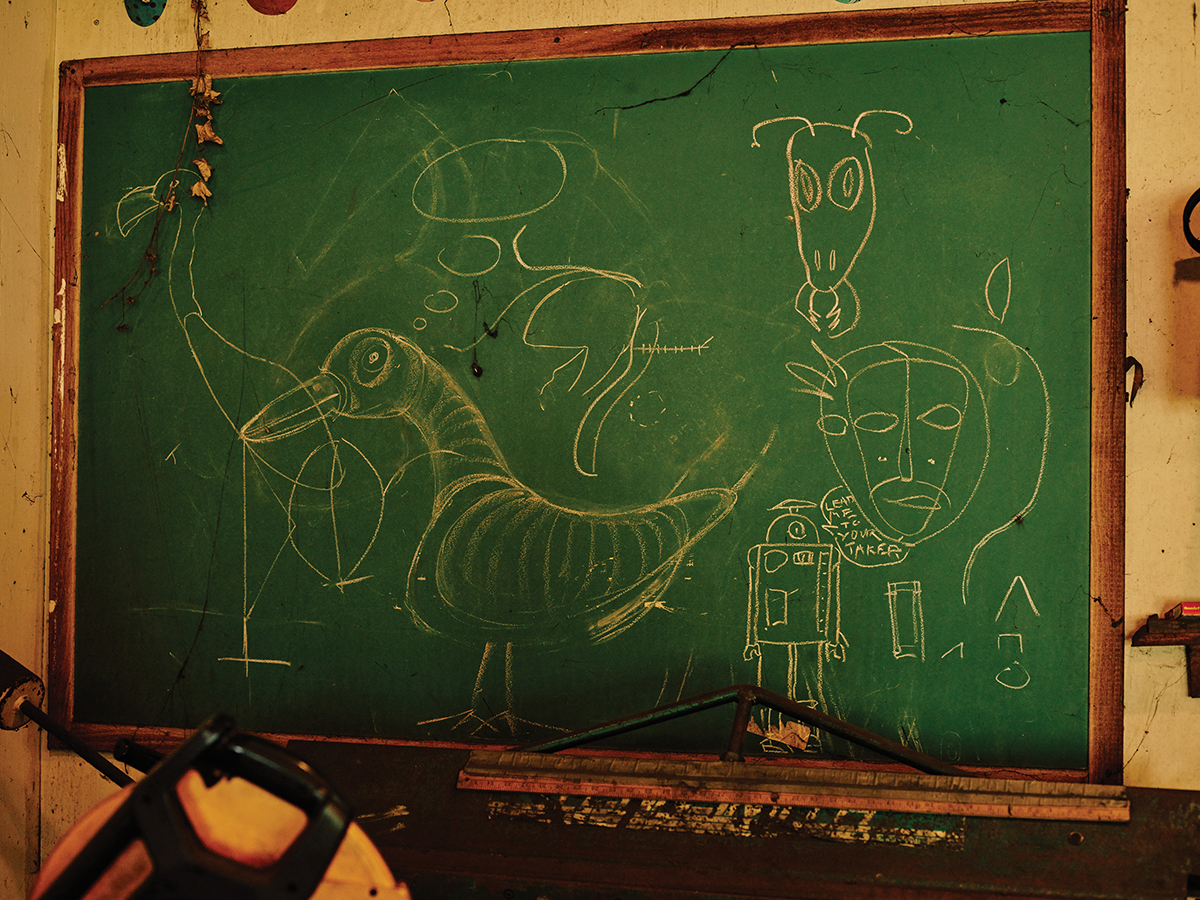
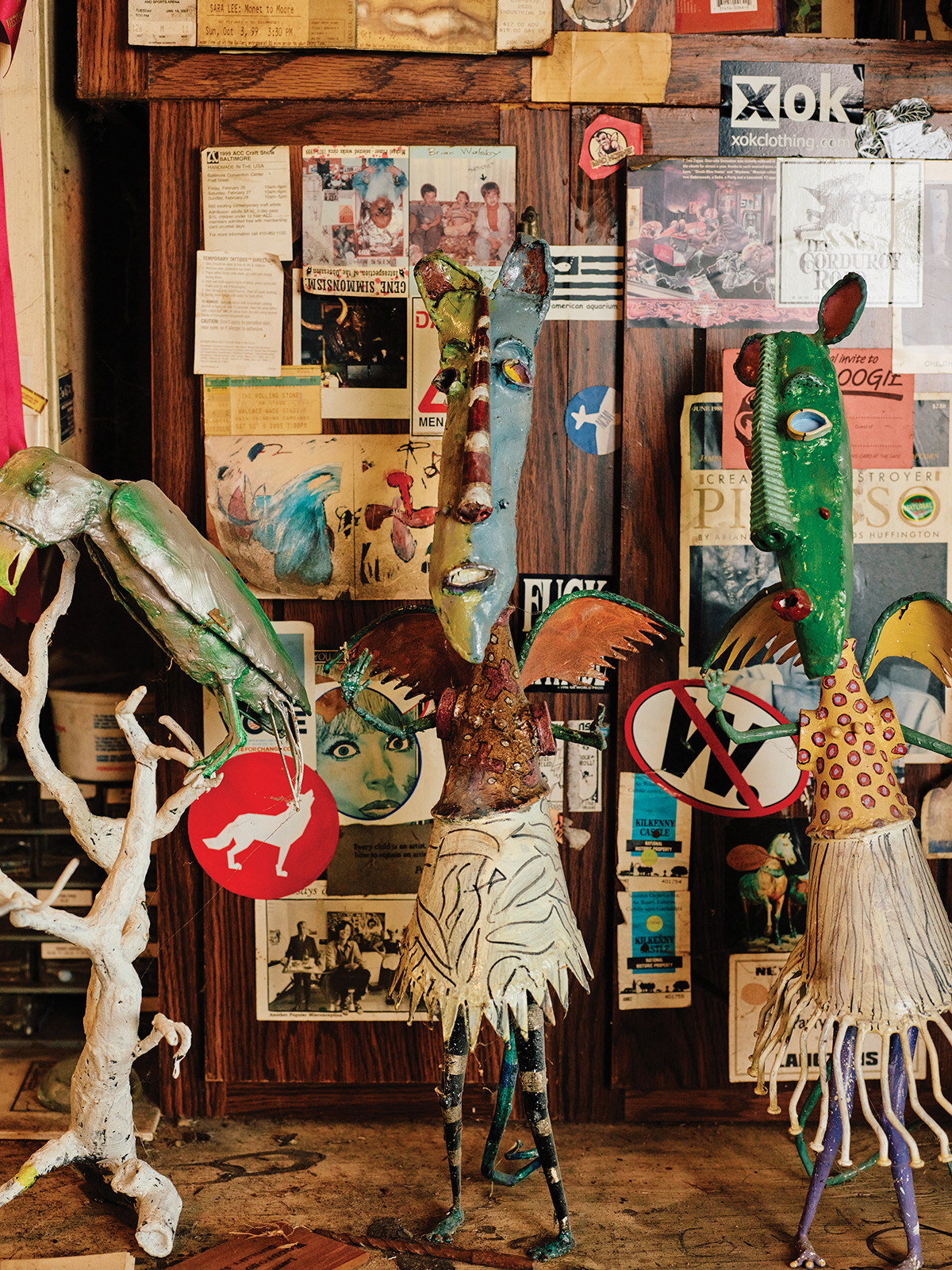
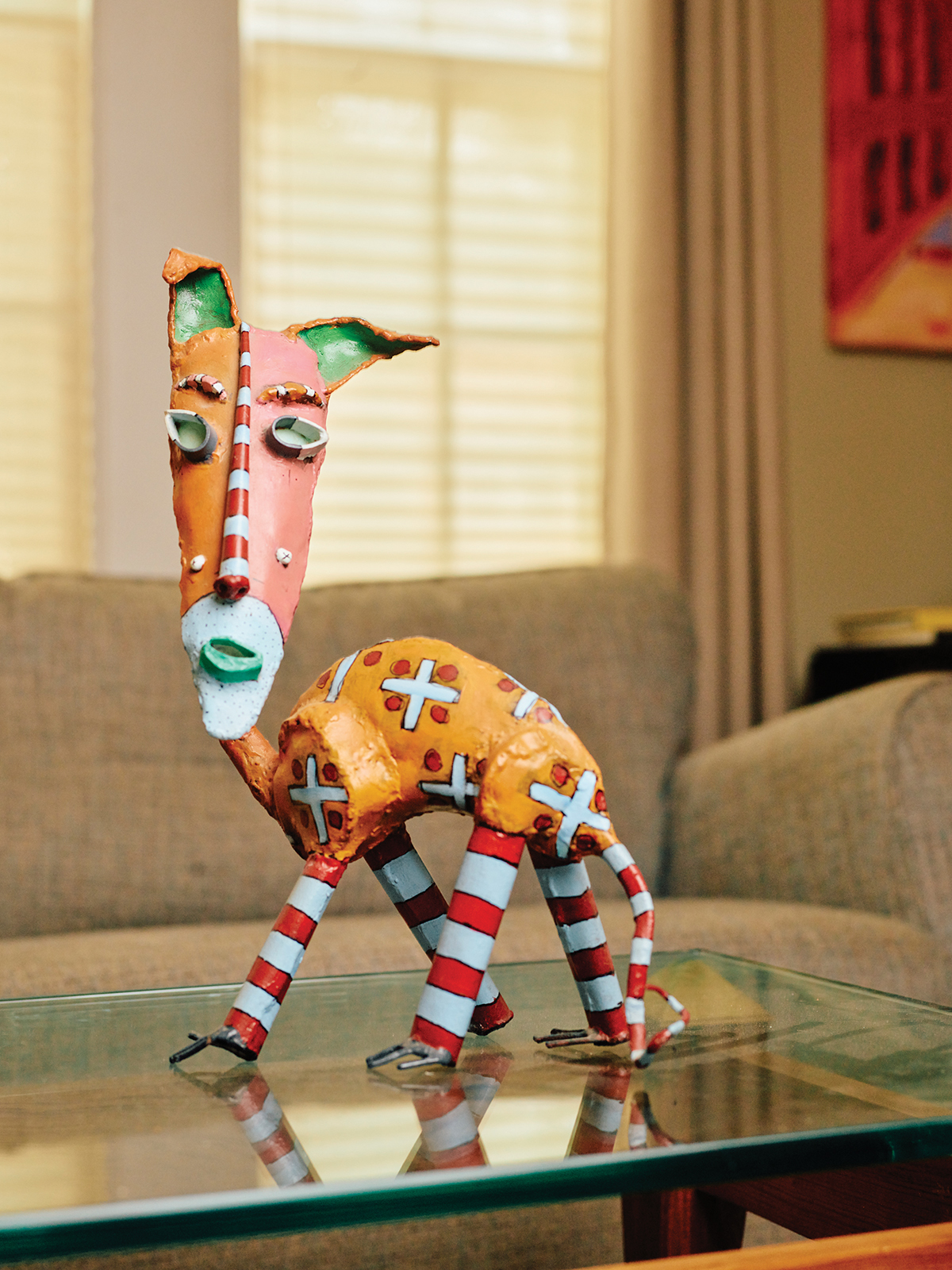
Hickman is known for creating quirky, steel-forged sculptures of long-legged birds and animals wearing whimsical, colorfully painted clothing and accessories like crowns, top hats and striped stockings. The wacky characters are a reflection of a vivid imagination heavily influenced by current events and a deep connection to Raleigh’s music and hospitality scene.
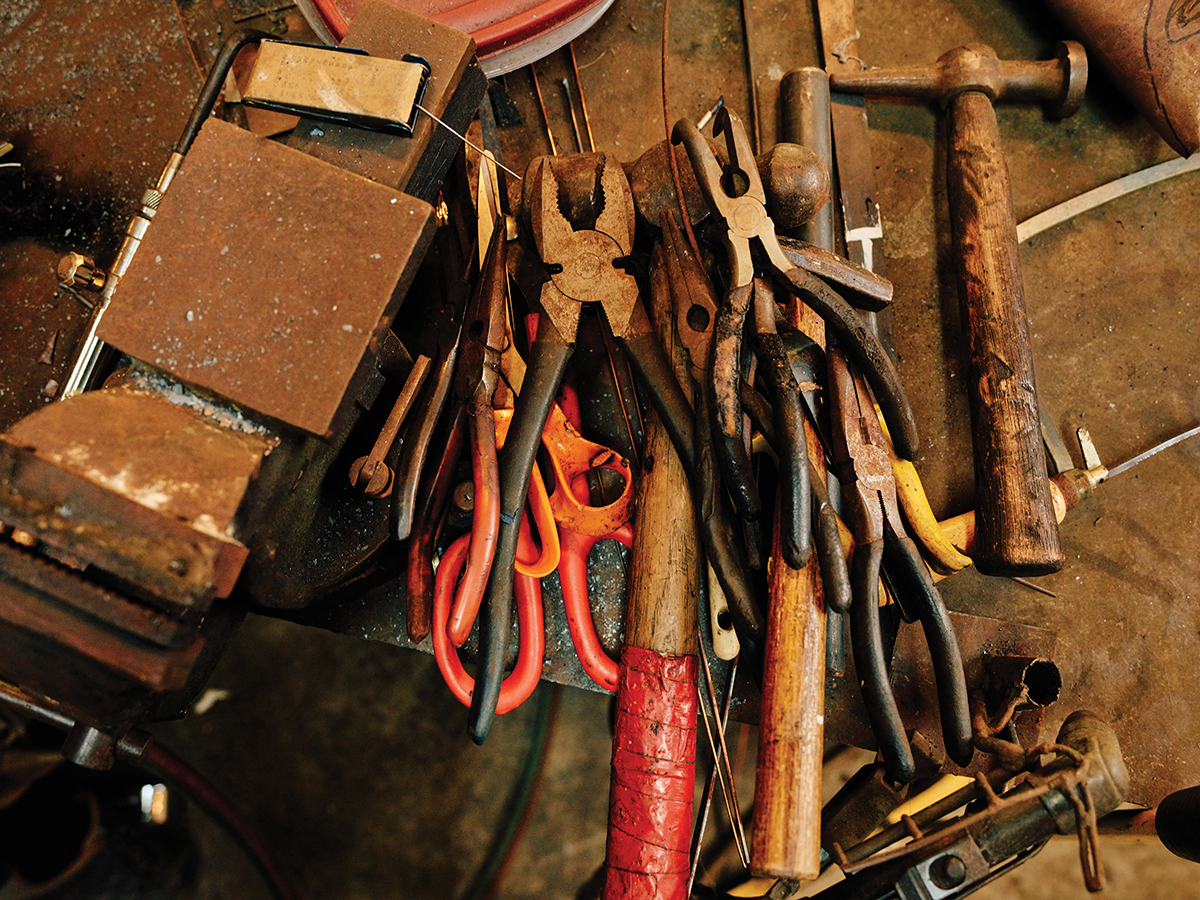
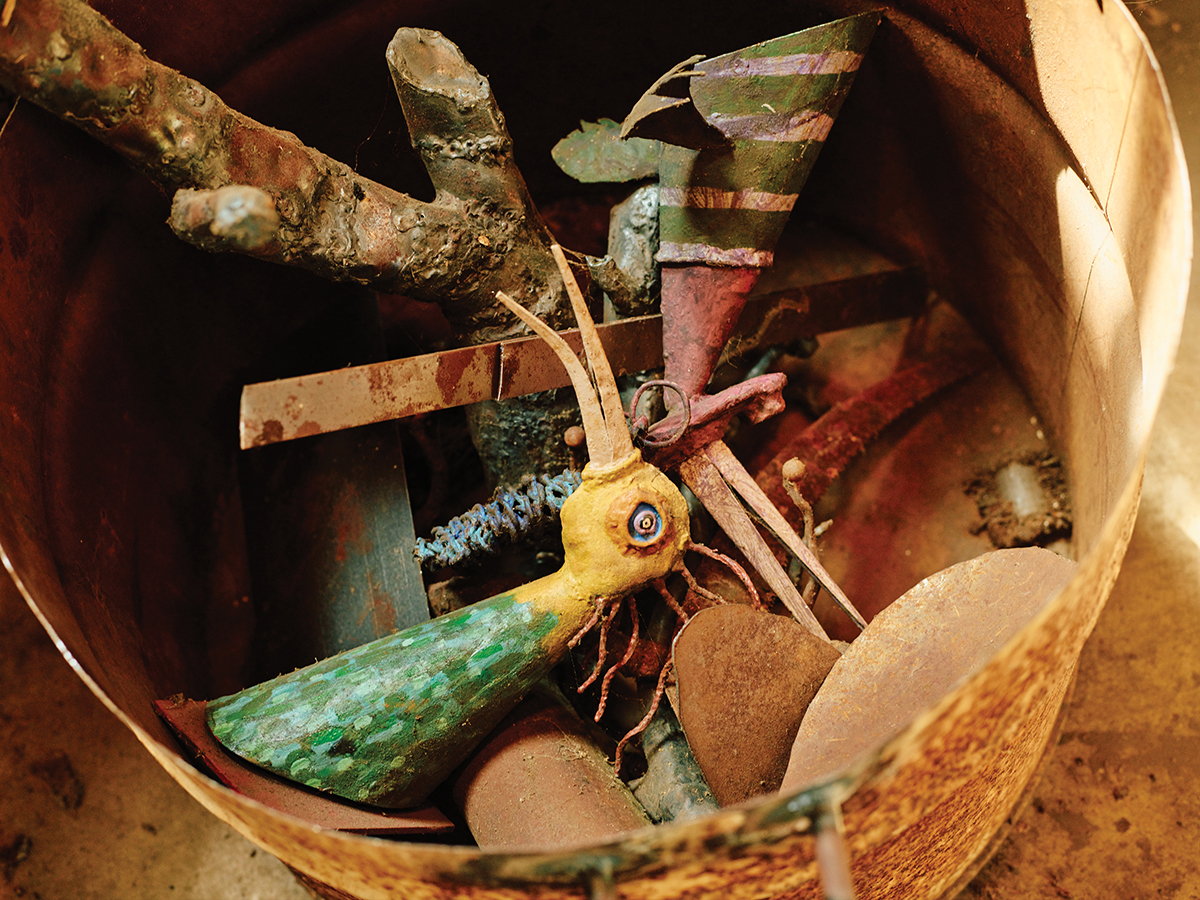
Hickman learned metalworking as a high school student in Alameda, California. His father was in the military, so the Hickman family moved around the country several times as he was growing up, including living in Washington, D.C., and San Diego, California, before moving to the Bay Area his sophomore year. That landed him at Encinal Jr. Sr. High School, a school next to the Naval Air Station Alameda known for its postwar industrial arts program. By day, he took traditional metalworking classes, where he learned gas welding and how to use a cutting torch with scrap steel, iron and aluminum sourced from the nearby naval yard. Outside of school, he dedicated his time and talents to more creative pursuits, taking night classes to learn pottery, lapidary (stone polishing) and lost wax casting. These craft traditions gave him a breadth of skills that he would later incorporate into sculpted metal creations made from repurposed materials. “That’s what I first learned about yard art,” he notes, noting the folk art traditions that transform found materials into unique works of art.
When Hickman’s family returned to D.C. during his junior year of high school, he brought his new skills with him. Birds were his specialty. “My dad was a fighter pilot, so flying was part of that influence,” he says. Through reading books like Direct Metal Sculpture by Dona Z. Meilach, a comprehensive reference guide that explains the techniques behind cutting, shaping and welding metal into art, he found technical and creative inspiration. “It opened a whole new world,” Hickman recalls. At one point, he wrote a paper and gave a presentation on the book that was compelling enough to convince his teacher to buy one of his artworks — his first sale. From there, Hickman was hooked on art as a profession.
After graduating from high school, Hickman continued to pursue his art, working various jobs to support his practice. Hickman moved to Raleigh from Blacksburg, Virginia, in 1979, at the urging of a friend. The two rented a place on Hillsborough Street, across the street from the original Char-Grill, bunking with a housemate who worked for the Audio Exchange, which was located below the rental. To support his art career, Hickman worked at the Rathskeller on Hillsborough across from NC State University, a restaurant affectionately known as “The Rat” that specialized in unique vegetarian dishes, epic parties and a legendary lemon tahini dressing (that Hickman developed). He worked at The Rat as a kitchen manager, opening and closing the restaurant for 18 years. “I had a lot of creative freedom in the kitchen,” he says. “I basically taught myself how to cook, and had a couple of people take me under their wing and show me stuff.” The Rat was also one of many local haunts along the thoroughfare that were part of the city’s alternative-country and rock music scenes between the early 1970s and the 1990s.
It took a while to get noticed as he applied for studios, group shows and opportunities to show and sell his work. In 1987, he had his first big break. “WRDU had a party with a costume contest and I had a piece of an old washing machine that I used to make a mask for the event,” he says. It took a few attempts to build a design that balanced form and function. “With the first one I just slapped a bunch of metal together, but it was a complete failure because I couldn’t drink out of it,” he says. The third mask was a charm — he won the contest, earning a trip to New Orleans during Mardi Gras. In 1988, he entered the same mask into a Raleigh Fine Arts show at Meredith College and won Best in Show.
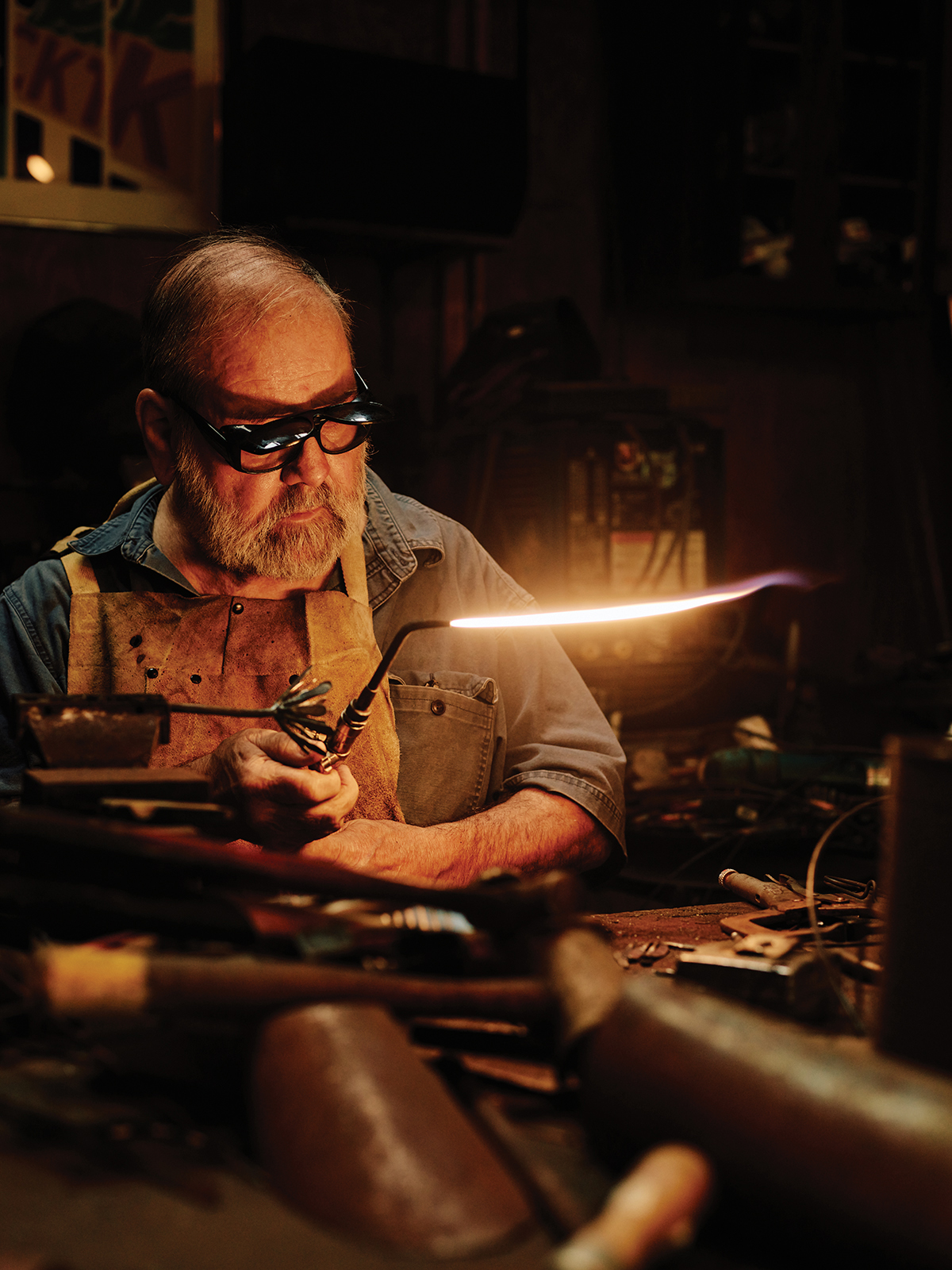
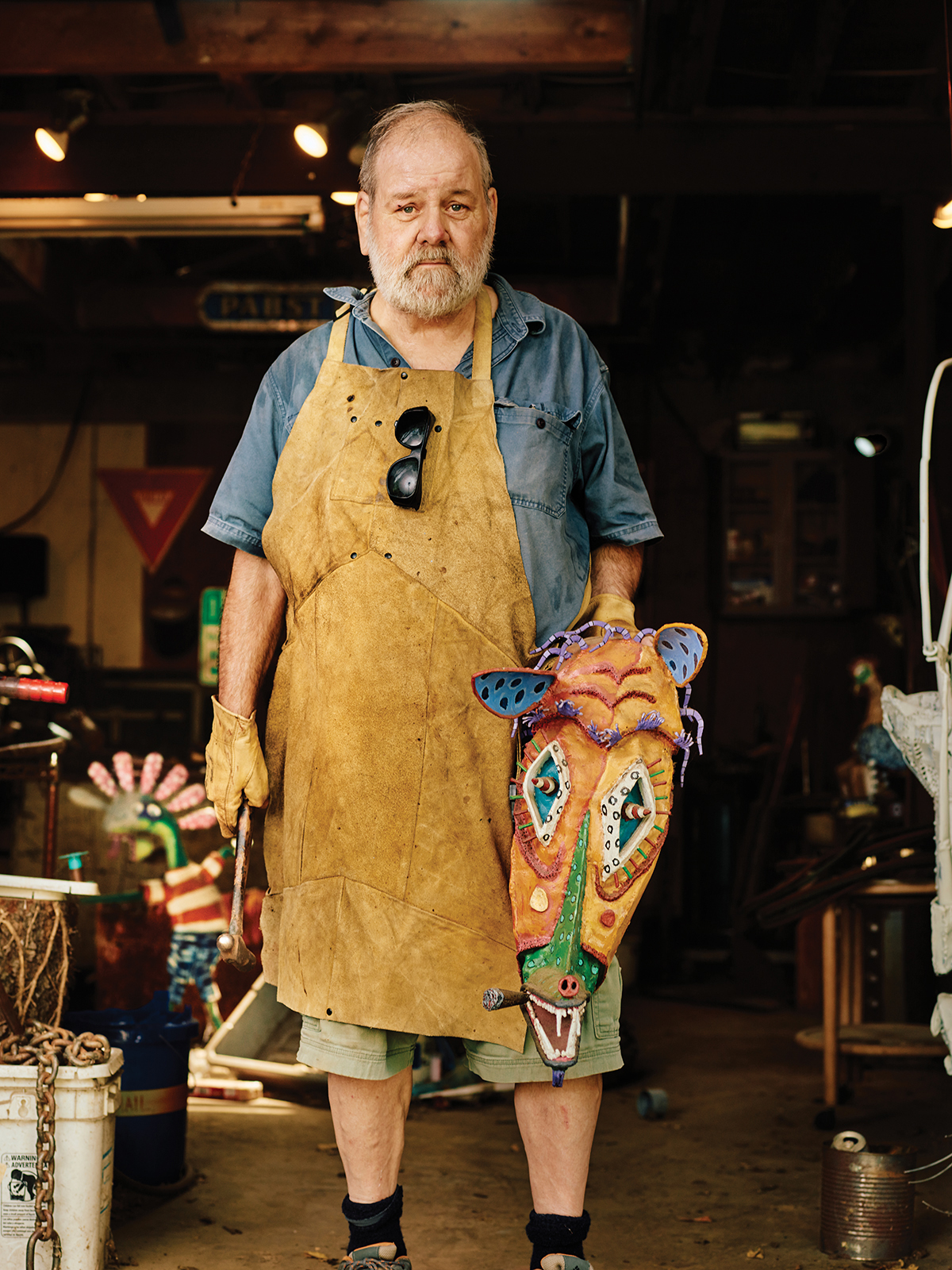
After years of trying to get his work noticed, Hickman was accepted into Artspace in 1989, and rented a studio there for three years before moving into his home studio, the 1,200-foot garage of his Five Points home, where he still works today. Since then, he’s created thousands of masks and animal sculptures and steadily built a loyal following. “His masks are some of my favorites; I have 18 of them!” says artist Bob Rankin, a friend and collector of Hickman’s for many years.
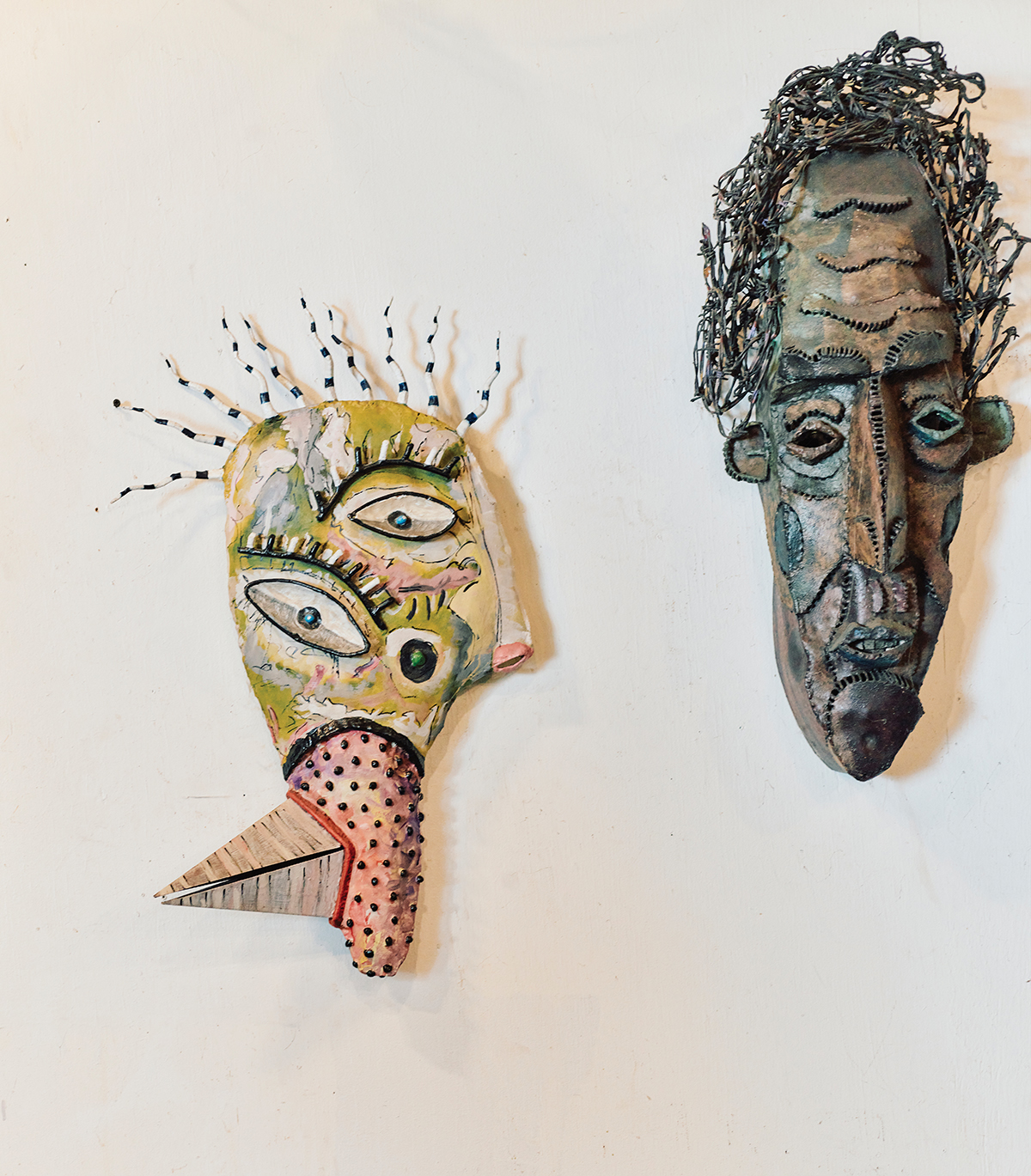
After the visibility with the Raleigh Fine Arts show in the 1980s, Hickman befriended artist and furniture maker Anthony Ulinski, who encouraged him to apply to Piedmont Craftsmen, the Winston-Salem guild that represents craft artists and artisans. With Ulinski’s encouragement, he also began selling works at craft fairs. For the last few years, he’s been represented by the Zoo Gallery, a Florida gallery that specializes in “joyful oddities.”
Hickman’s garage studio is chock-full of materials, welding benches and torches; its walls are covered in ephemera from concerts, street art stick-ups and photographs reflecting the experiences and observations that influence his work. It also holds a collection of past works and current projects.
In one piece, titled American Hoppers, a long-legged warthog rides a red horse with motorcycle-style handlebars coming out of the sides of its head. To make it, Hickman started with his creatures’ signature rounded bodies, then soldered on details like the horse’s tail and the warthog’s spiky mohawk, each made from rolled and threaded metal. He then used automotive paint to embellish the bike rider’s jeans, fur and bulging eyes, for a piece that pokes fun at reality shows glorifying motorcycle designers.
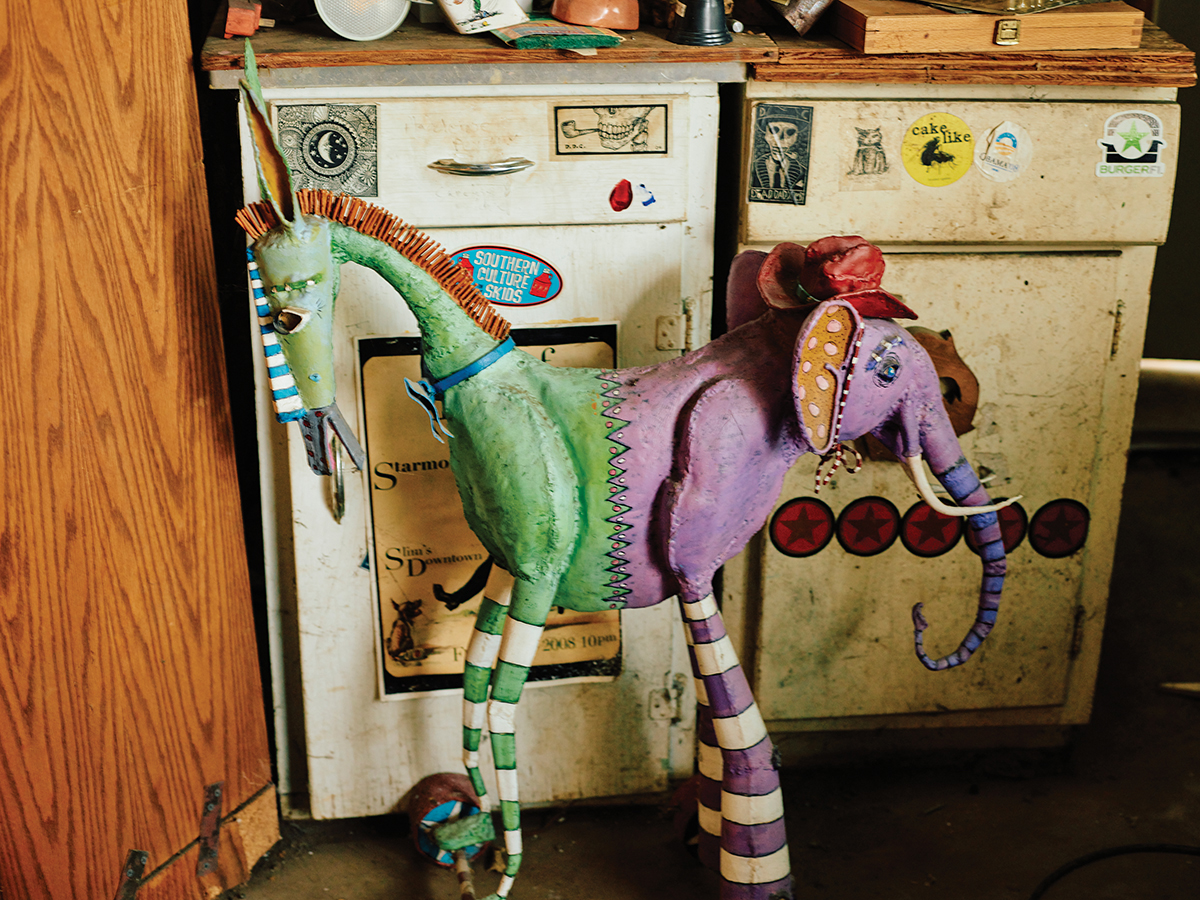
In another piece, Push Me Pull Me, the front half of a green donkey is conjoined with the torso of a purple elephant wearing a red bedazzled cowboy hat. The pair of animals face in opposite directions atop long legs that end in circus wagon wheels in a humorous critique of current-day politics. “Bill is an incredibly talented and original sculptor,” says Rankin. “His work reflects a wicked sense of humor that is wonderfully amusing. His work is always evolving, often responding to current events.”
Music is close to the top of the list of Hickman’s many artistic muses. “I have my stereo at my shop, and I listen to music while I’m working; it allows me to go through the motions of the physical work,” he says. His playlist consists of a broad range of CDs he’s collected over the years; Bob Dylan and Neil Young are in heavy rotation, in addition to bands that performed at his favorite local haunts on Hillsborough back in the day. “Then there’s some obscure people that came through Sadlack’s, like Angry Johnny and the Kill Billies, that are kind of out there,” he says. Hickman uses music to help him connect with the right material that conveys the energy and moods he expresses through his art.
On a recent visit, Hickman was working on sculptures of flowers for a client. “They’re interesting and unique; it’s way outside of my wheelhouse, so it’s inspiring,” he says. For these, he was listening to alt-country singer Jim White: “It’s a feeling, it just transports you. In my head, I just go off somewhere else and react to the material.”

This article originally appeared in the October 2026 issue of WALTER Magazine.