The Emmy-winning Raleigh Ringers have been around for more three decades — and their holiday concerts are a popular tradition
by Rachel Simon | photography by John Hansen

Angie Chiatello has been a member of the Raleigh Ringers for over 16 years, but she can still remember exactly how it felt when she first witnessed the renowned handbell choir perform at an event before she joined, back in 2000.
“I had listened to a cassette tape of them beforehand,” says Chiatello, laughing at the self-described “dated” reference. “But to see them perform live was just something extraordinary.”
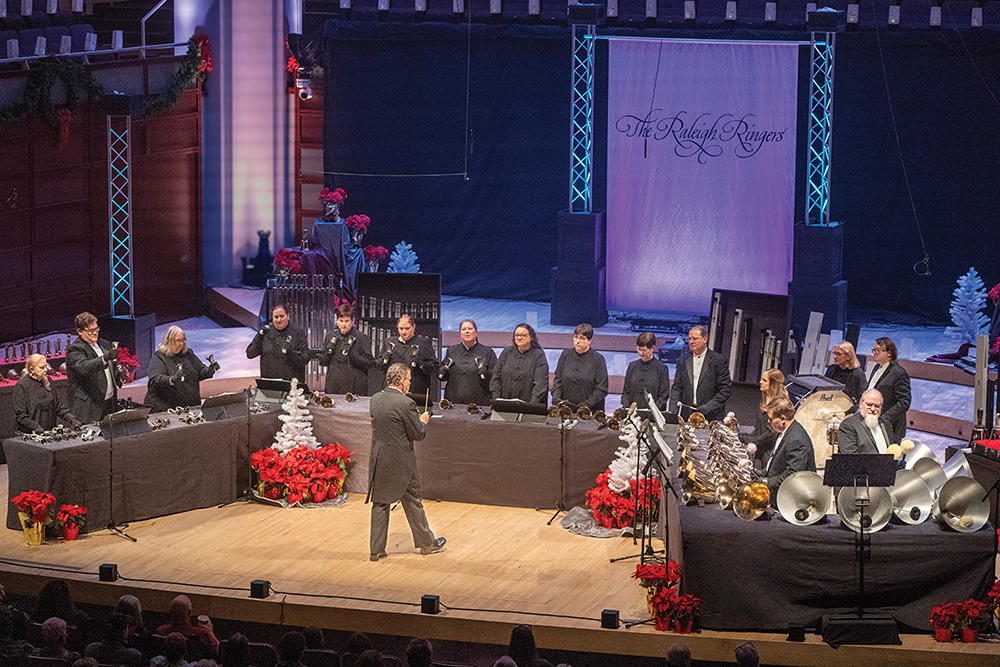
Chiatello’s reaction was (and remains) far from unusual. In the 35 years since the Emmy-nominated group’s formation in 1990, countless people have found themselves awed by the Ringers’ uniquely impressive performances. After all, how often do you get to experience 17 people of all different ages and backgrounds come together to play tunes ranging from “Silent Night” to “Stairway to Heaven,” using instruments normally not heard outside of church?
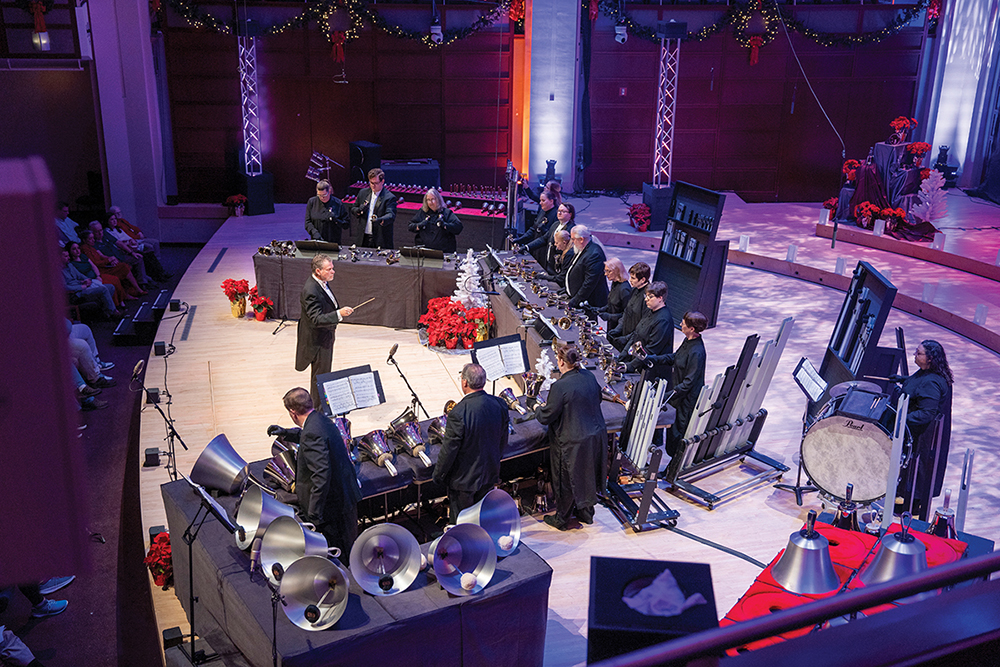
The Ringers’ ear-catching originality has made their concerts — including two highly anticipated annual holiday shows in Raleigh — must-sees for music fans across the world. (This year’s shows will be at the Meymandi Concert Hall in the Martin Marietta Center for the Performing Arts on Dec. 14 and 15.)
Over the years, they’ve toured throughout the U.S. and Europe, released eight popular albums and recorded two PBS specials, among other achievements. While many of the Ringers’ supporters have followed the act since their earliest days, it’s just as common to spot first-time handbell fans in the audience with wide eyes and surprised smiles.
“Being able to change people’s perceptions of what a handbell choir is and what it can do is probably one of the best aspects,” says Chiatello.
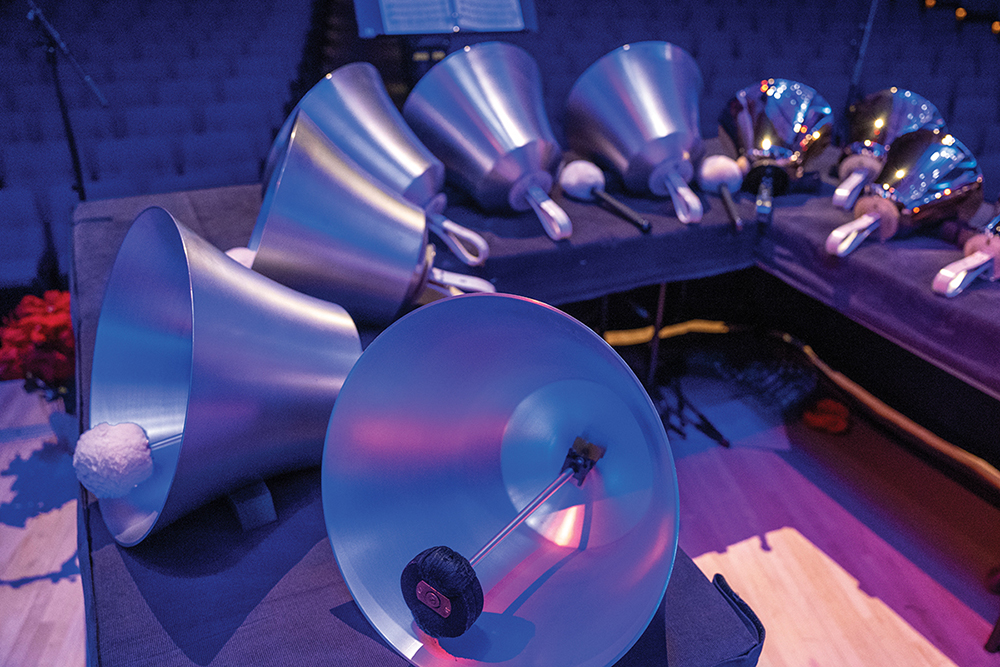
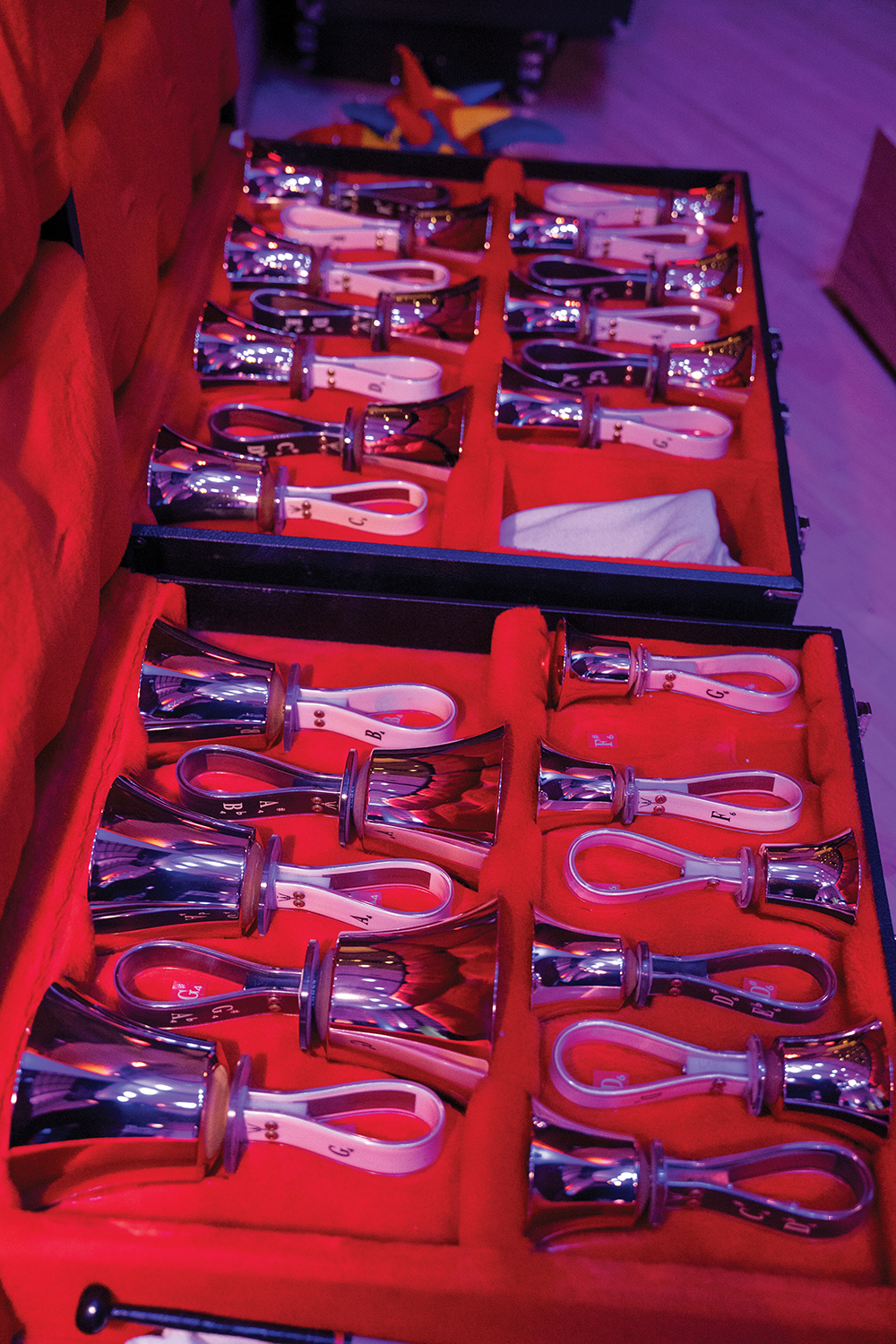
True to its name, the handbell is a handheld instrument containing a clapper inside that makes sound when rung. Handbells come in many shapes, materials and sizes, with larger bells (which can cost thousands each) allowing for lower notes. What makes the instrument particularly unique, though, is that it can’t create a musical phrase on its own; it needs to be played alongside other handbells to produce a full melody.
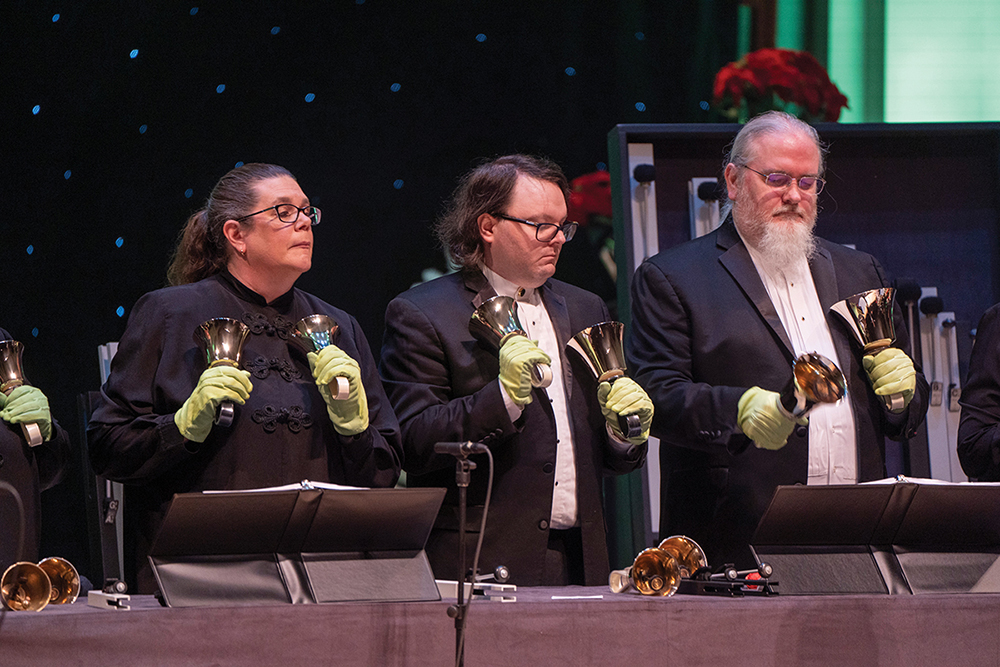
“It takes incredible teamwork to pull off putting a song together, because you depend on your neighbor,” says David M. Harris, the Ringers’ co-founder and longtime director. An acclaimed handbell player and composer who is also the handbell choir director at Meredith College, he was introduced to the handbell as a child via his Pennsylvania church. Instantly drawn to the instrument, he continued playing in church choirs throughout his teens and early adulthood. He enjoyed performing the worship songs that handbells are most typically associated with, but he soon found himself “wanting to experiment a little bit with other kinds of music.”
In 1990, Harris and several fellow church handbell players decided to start the Raleigh Ringers with the goal of performing a mix of sacred and secular songs. The group had humble beginnings: they used instruments on loan from a manufacturing company and practiced at local retirement centers. Despite their modest scale, however, the concerts proved popular with “not only people from the church, but the community,” recalls Harris. The success allowed the Ringers to get their own rehearsal space on Millbrook Road and release CDs that gained the attention of PBS, which filmed two holiday specials in the early 2010s featuring the choir that were syndicated nationwide.
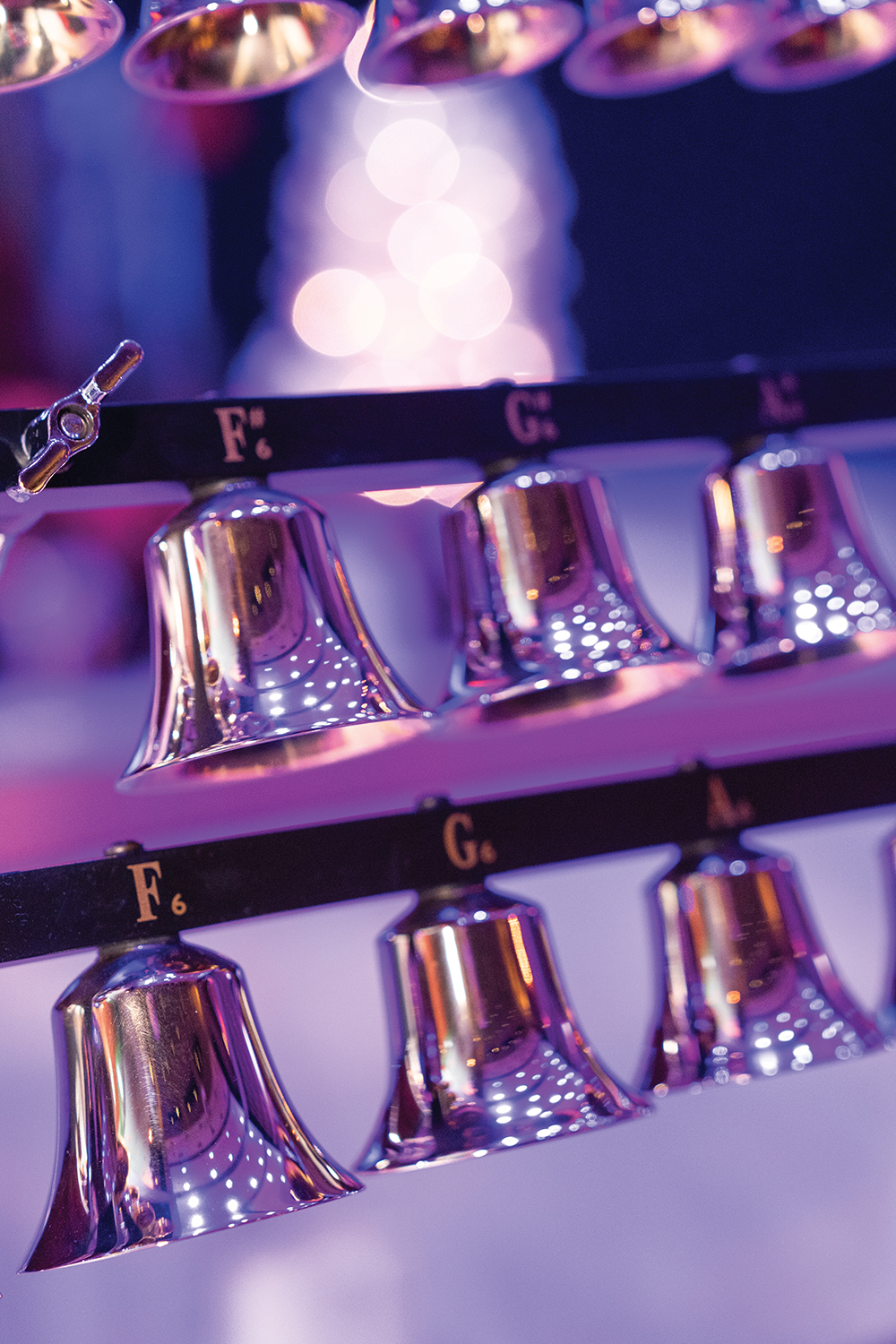
Those specials, says Harris, were key to bringing the Ringers’ performances to the masses. “They reached some remote areas where handbells had never been seen before,” he explains. “We heard stories of ringers getting involved in handbell choirs and choirs getting started because they had seen our PBS specials.”
Being part of a choir like the Ringers is no easy feat. Each member of the Raleigh group must re-audition for their spot each year in a rigorous try-out, no matter how long they’ve been performing with the team. If they’re chosen, they must commit to the choir’s 3.5-hour weekly rehearsals and busy concert schedules, since even one missing player can disrupt the melody. “Every spot is critical,” says Chiatello, adding that she and other members often practice on their own for several hours a week.
While a handful of the Ringers are professional musicians, the majority, like Chiatello, fit in the intense duty around other full-time occupations (she’s a marketing executive by day). Their positions in the group are unpaid, with expenses like travel and costumes covered by sales and donations (the choir is currently fundraising for a new truck large enough to hold their ever-growing collection of touring equipment).

Still, players’ passion for handbells overshadows all. According to Harris, some current and past Ringers even moved to Raleigh just so that they could audition for the acclaimed choir. “We have a lot of very dedicated people,” says the director, adding that the Ringers’ present renown is “certainly nothing that I expected when we started.”
That may be so, but there’s no denying that the Ringers have become a staple of the music world — especially in their home city. Tickets for the annual holiday shows frequently sell out, with audiences eager to hear the choir’s renditions of both solemn Christmas classics and modern hits. For the first time in nearly two decades, this year’s shows will also feature a medley of tracks from the beloved Charlie Brown holiday specials like “Linus and Lucy” and “Christmas Time Is Here.”
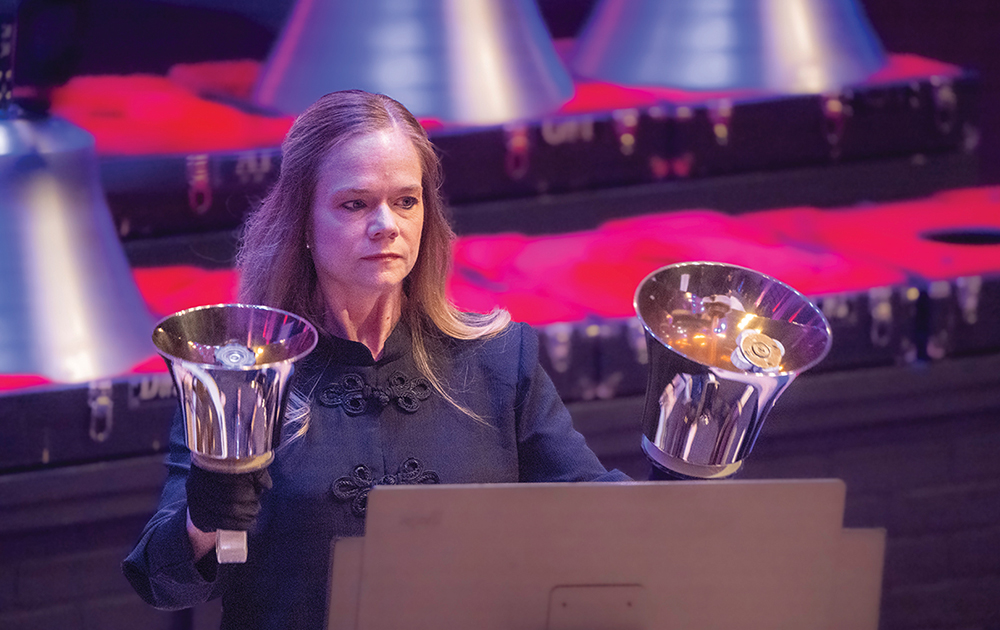
For Ringers like Chiatello, the Raleigh concerts have a “very special feel” thanks to the number of local residents who come to the shows year after year. “There’s something very humbling and touching about being able to be part of somebody’s holiday and bringing joy that way,” she explains.
And if any of this season’s audience members are inspired by the performance, they can sign up for one of the classes the group hosts at their workspace several times a year to try the handbell for themselves.“Come in and get your hands on the bells,” urges Chiatello. “Whether you’re just starting or you’ve played for a while, there’s something for everybody.”

This article originally appeared in the December 2025 issue of WALTER magazine.