Founded by Lindsay Wrege and Michael Evans, 321 Coffee changes the narrative for people with disabilities
By Rachel Simon | photography by Charles Harris
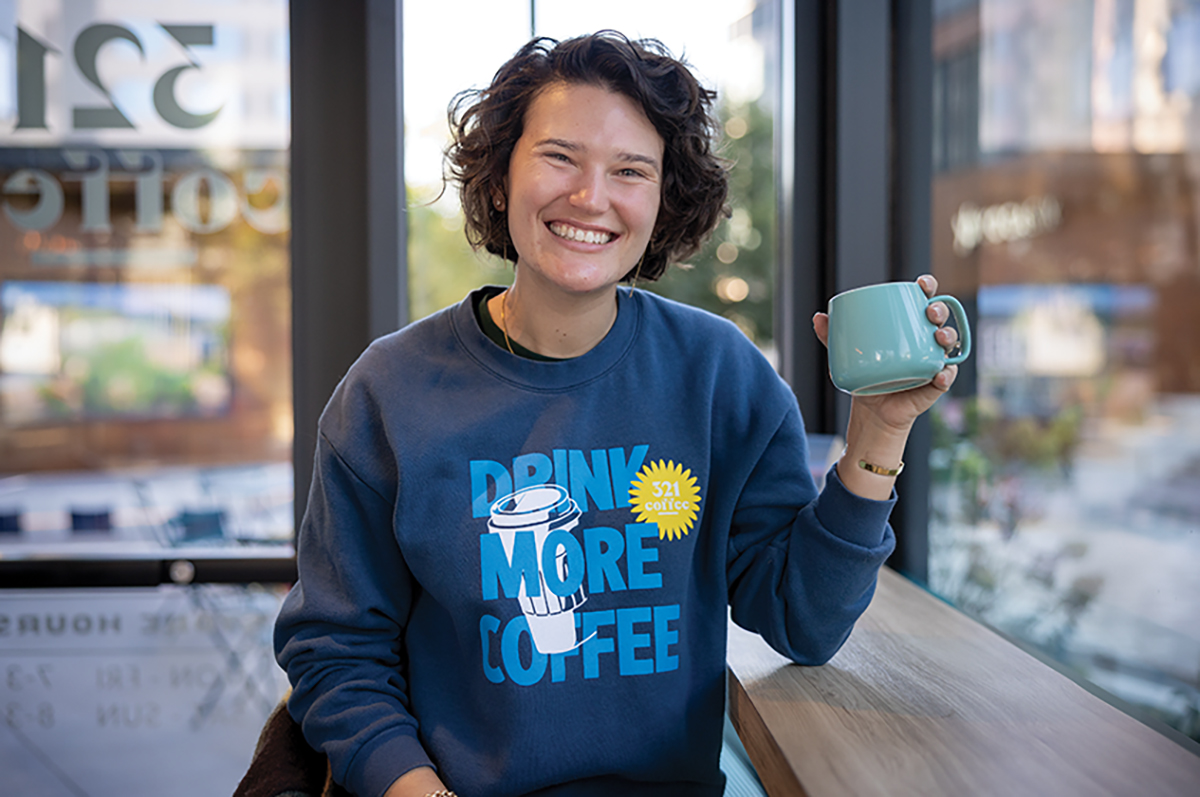
A folding table, a Target coffee maker and a menu advertising “expresso” — that’s how Lindsay Wrege and Michael Evans, then freshmen at North Carolina State University, launched their coffee shop on campus back in 2017. The makeshift, small-scale setup wasn’t quite a match for the duo’s expansive goals: to provide worthwhile job opportunities for people with disabilities while also serving top-quality drinks.
Nine years, six locations and over 50 employees later, 321 Coffee has established a growing presence in Raleigh and beyond, worthy of its boldly inclusive (and seriously delicious) vision.
Taking its name from the genetic makeup of Down syndrome (which is caused when a person has three, not two, copies of the 21st chromosome), 321 initially took shape as an idea a full decade before its founders started serving coffee. As a third-grader in suburban North Carolina, Wrege bonded over hide-and-seek and a love of the color purple with a classmate who had disabilities. Over the years, the lasting friendships that Wrege formed with the girl and other classmates with disabilities gave Wrege, now 27, a firsthand view into “the world of disability inclusion and accessibility,” she explains: “I got to see just how capable this community is.”
When high school graduation approached, both Wrege and her friend expressed interest in attending college and entering the job market. Yet, as Wrege found herself shocked to learn, only about one in five adults with disabilities has a job, and the few who do are often relegated to menial work like dishwashing or cleaning bathrooms. “The harsh reality was that my future looked a lot different than my friends’, and it wasn’t because they weren’t driven,” Wrege says. “It was that the opportunity wasn’t there.”
That infuriating realization was also invigorating. During her first year at NC State, Wrege pondered ways she could help lower that statistic. She landed on the idea of a coffee shop largely run by adults with disabilities. “I thought it would be awesome to directly impact that community and also create visibility for the rest of Raleigh to see these people contributing to the workplace,” she recalls.
Wrege proposed her idea to fellow freshman Evans, the son of a special education worker. Neither student had “any experience in coffee or running a business,” Evans says, but the pair shared a passion for advocacy and a commitment to learning all they could. Before long, they were buying bags of pre-roasted coffee and recruiting adults with disabilities to sell their drinks at events across campus.
Early sales and support were strong, but so was skepticism that the company could find real success. “Because we were young, some people thought it was just the idea of the week,” says Wrege. Some of those doubts came from the co-founders themselves. “We started 321 when we were 18 years old; we didn’t have a ton of proven self-worth,” Wrege explains. “We thought, what are we getting ourselves into?”
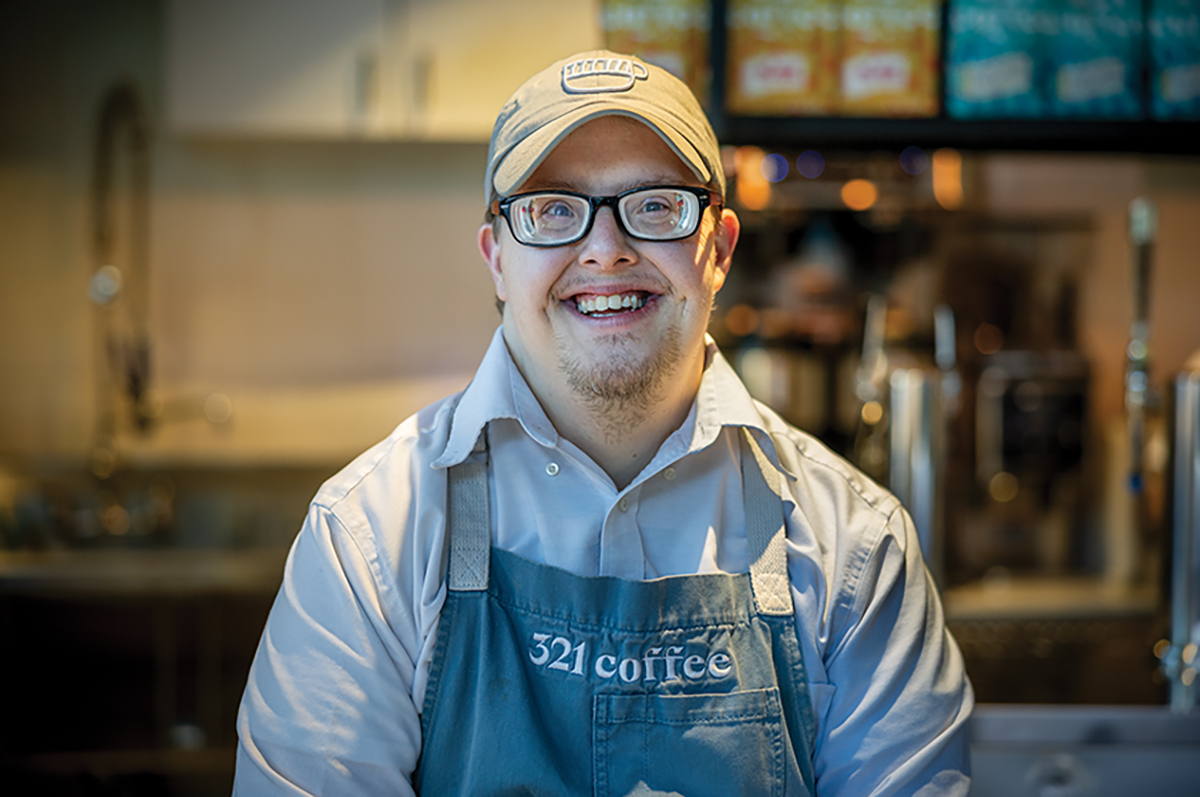
Guidance from older mentors helped Wrege and Evans gain their footing, as did the indisputable fact that 321 was delivering on its mission. “We realized it was having an impact in a way we were super proud of,” says Wrege. The proof? Workers like Sam Hening, who braved an hour commute from his home in Rocky Mount each day to serve coffee to the Wolfpack football team. Learning skills like brewing beans and handling sales “was a bit hard at first,” remembers Hening. Soon, however, he’d not only learned the ropes, but discovered a calling for shopper communication. “I learned how to interact with customers and build relationships with them,” Hening says.
According to his bosses, that’s an understatement. “Literally 75% of our Google reviews mention Sam by name,” Wrege notes of Hening, who’s currently an assistant manager at 321’s Centennial location. (Hening might also be the brand’s most famous face: his portrait is featured on the bag for Greater Good, 321’s collaboration with NC State). “Sam’s excellent at engaging with people and making them feel welcomed,” says Wrege.
Thanks in part to the efforts of employees like Hening, it wasn’t long before 321 graduated beyond the NC State campus. In 2019, Wrege and Evans opened a booth at the NC State Farmers Market, keeping it afloat during the ensuing COVID-19 pandemic by roasting their own coffee and delivering it directly to customers. Buyers included the Raleigh-based software company Pendo, which became one of 321’s first wholesale clients. “That was a really big milestone for us,” says Evans, noting that the orders’ size required 321 to increase its operations and roasting capabilities. Post-pandemic, the market booth turned into a cafe, with an expanded staff; they were also able to expand to house a full roastery.
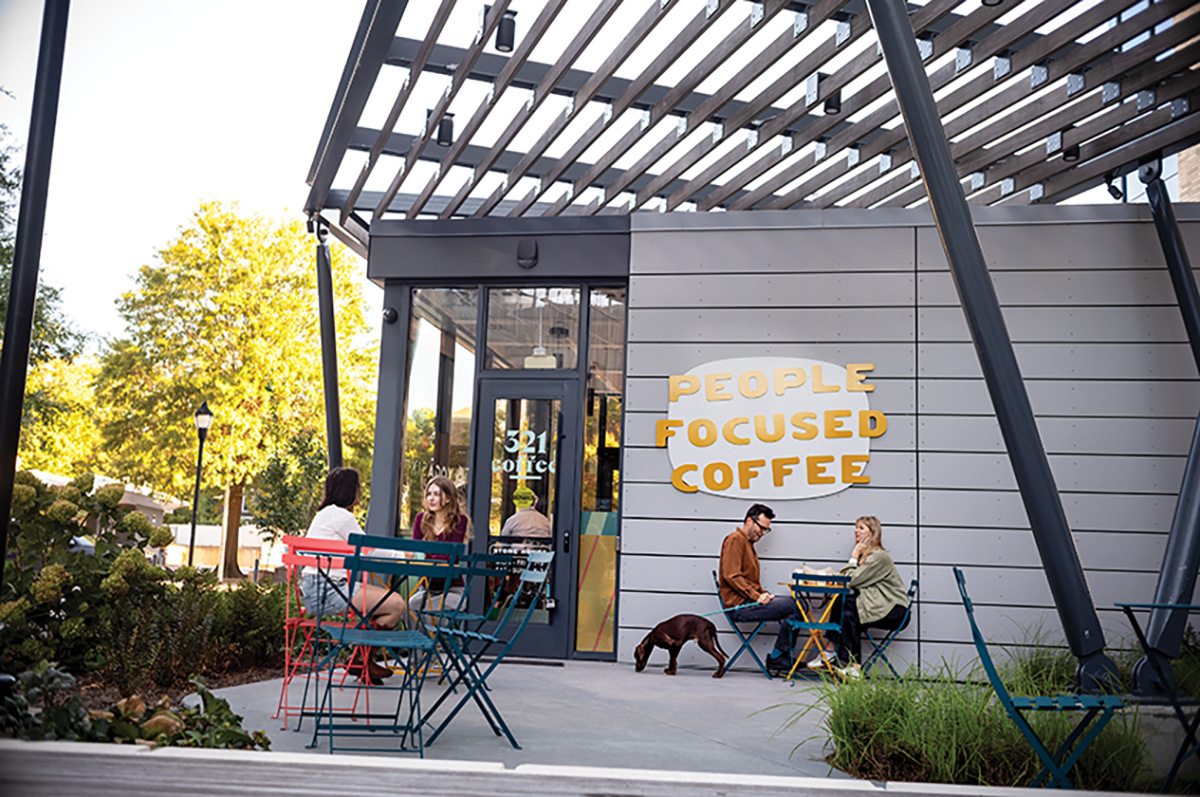
The company hasn’t stopped growing since. Today, it boasts three standalone shops and three more in-office cafes across the Triangle. Over 100 companies have partnered with 321, and bags are available for purchase at grocery stores like Wegmans, Whole Foods and Costco. Most importantly, the brand is well on its way to achieving its goal of providing one million meaningful work hours to people with disabilities over 10 years. The word “meaningful” is key, says Wrege: “You could open a shop tomorrow and staff 100 people in there, but people aren’t contributing if there are too many cooks in the kitchen.” She explains that meaningful work, on the other hand, involves “creating jobs that could be someone’s livelihood.”
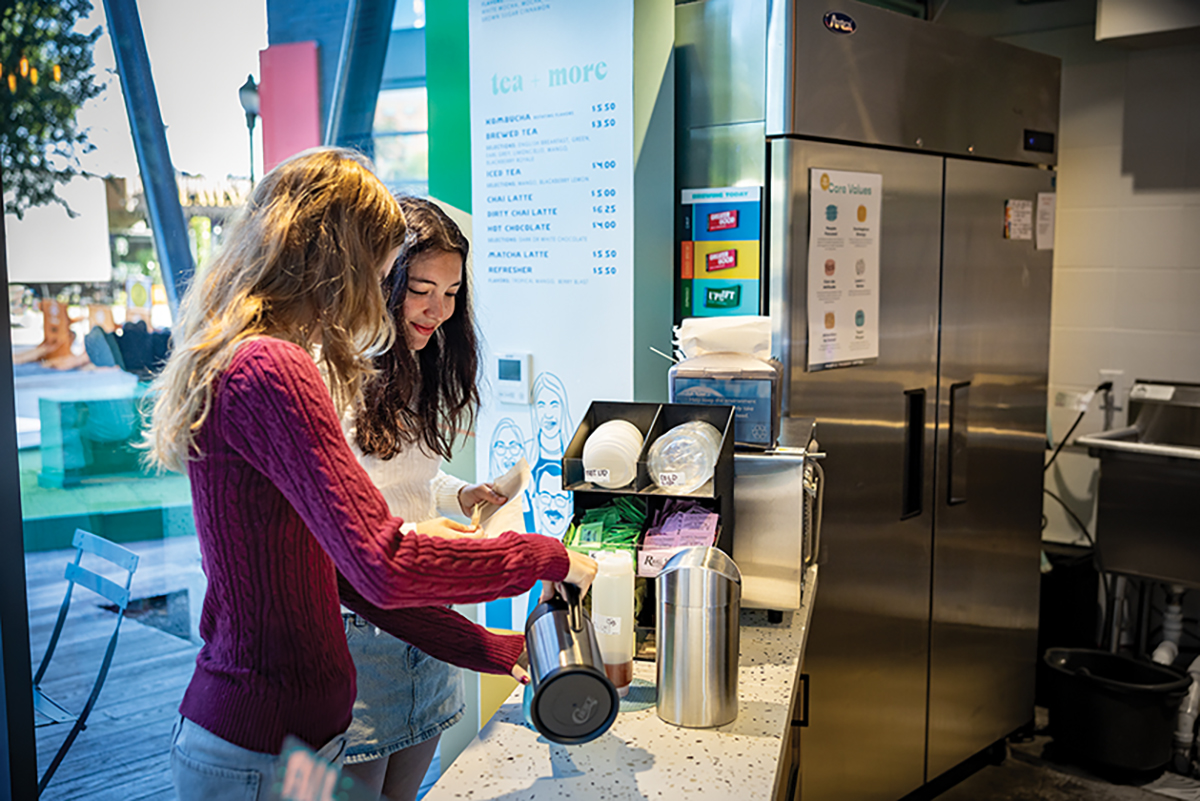
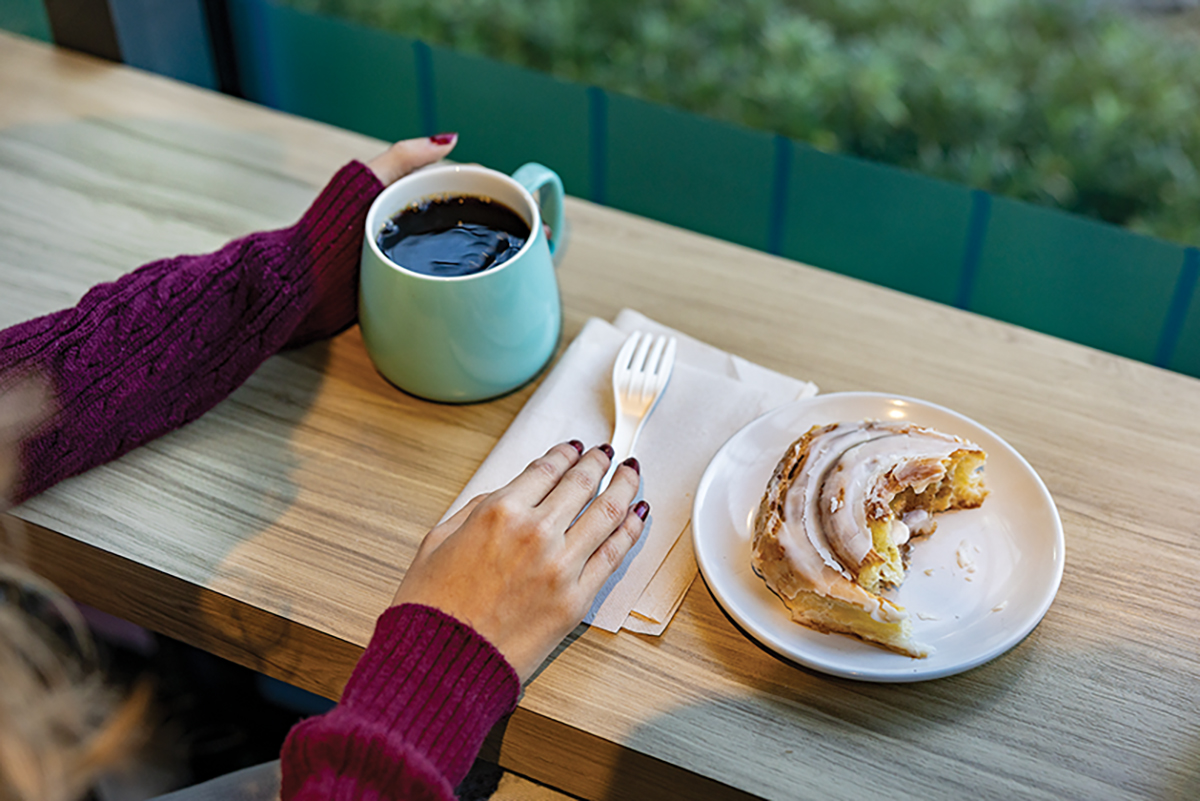
At 321, those roles range from grinding beans to packing orders to manning registers, but the skills gained reach far beyond the tasks on any job description. Various workers have strengthened their public speaking skills, learned money management and mastered the skills to live independently, say Wrege and Evans. Many of their employees have developed close friendships with co-workers and, in some cases, even found love. In 2020, Hening began dating fellow 321 employee Sophie Pacyna. Four years later, he proposed after her shift at the downtown Raleigh shop, and they married in late 2024. “It’s incredible how 321 played a role in our love story,” says Hening.
The company’s founders (who are also married, having wed in January 2026) are just as grateful for Hening and the rest of their employees. “This might be their first job, or their first time working in coffee, but they believe in themselves and we believe in them,” says Wrege. “321’s success goes to show how capable so many people are when they’re given the opportunity to try and learn, and are driven to do so.”

This article originally appeared in the December 2026 issue of WALTER Magazine.