At the North Carolina Museum of Natural Sciences, the confirmation of a new dinosaur species paints a different picture of the Cretaceous period as we knew it
by Hampton Williams Hofer
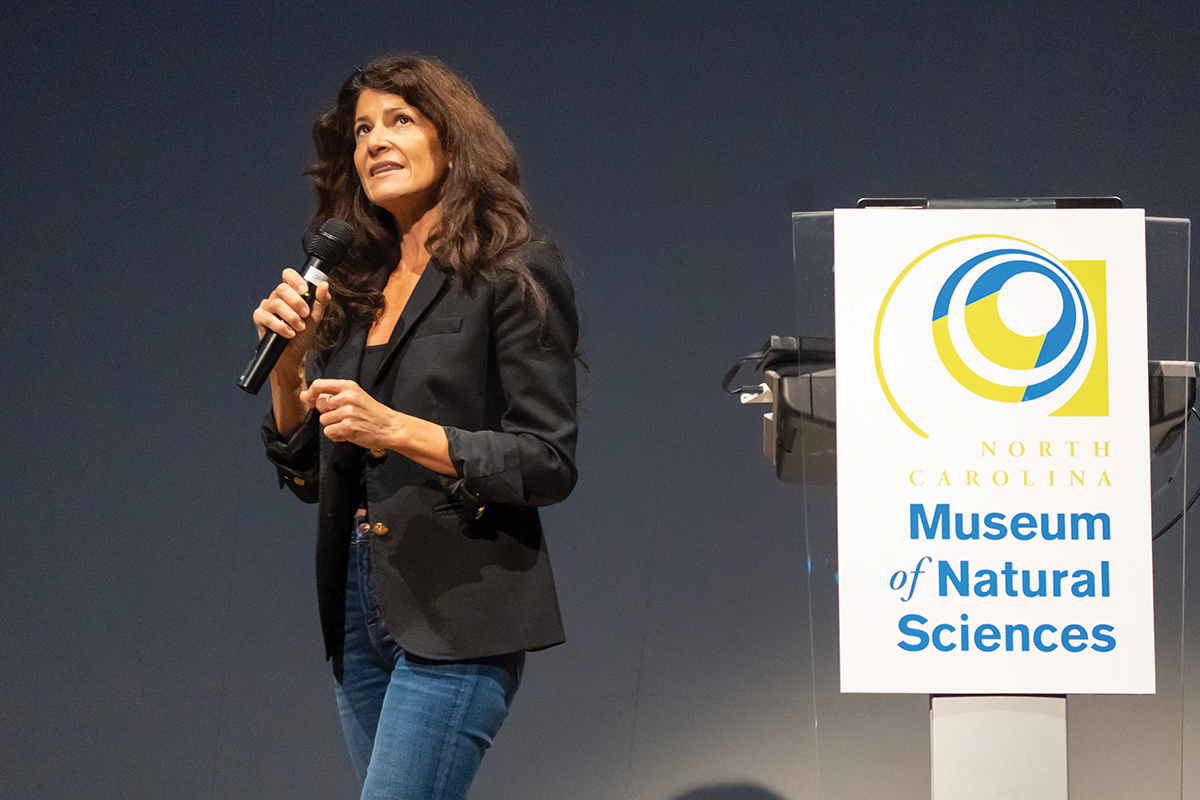
Over the past decade, Dr. Lindsay Zanno, head of Paleontology at the North Carolina Museum of Natural Sciences, has worked tirelessly to bring what she knew would be one of the most significant paleontological finds of the century to Raleigh: the Dueling Dinosaurs, the intact remains of a tyrannosaur and Triceratops who died in combat 67 million years ago. The remarkably preserved fossils — and whatever Cretaceous secrets they held — were, as Zanno said at the time of acquisition, like “a big, unopened Christmas present.”
Now, less than two years since the museum’s interactive SECU DinoLab became the new home of the Dueling Dinosaurs, the first gift has been unwrapped — and it’s a whole new species.
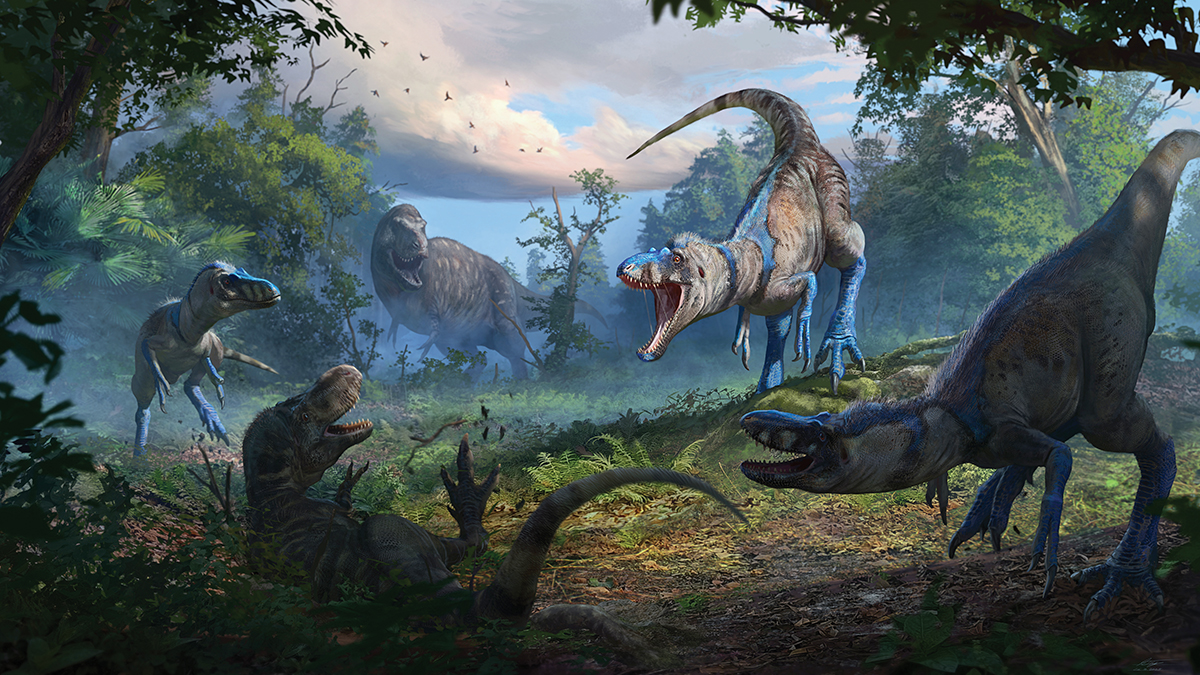
The small tyrannosaur, which had been believed to be a teenage T. rex for the 20 years since a Montana rancher first spotted its pelvis protruding out of the ground, is, in fact, a mature Nanotyrannus lancensis.
Using CT scans and imaging to look inside the blocks of earth housing the fossils, paleontologists at the NCMNS uncovered characteristics in their tyrannosaur specimen that set it apart from a T. rex, including larger forelimbs, more teeth, fewer tail vertebrae and distinct nerve patterns. Growth rings and spinal fusion data proved that the specimen was an adult. At 18 feet long and 1,500 pounds, it is only around a tenth of the body mass and half the length of a full-grown T. rex. The discovery flips decades of T. rex research on its head.
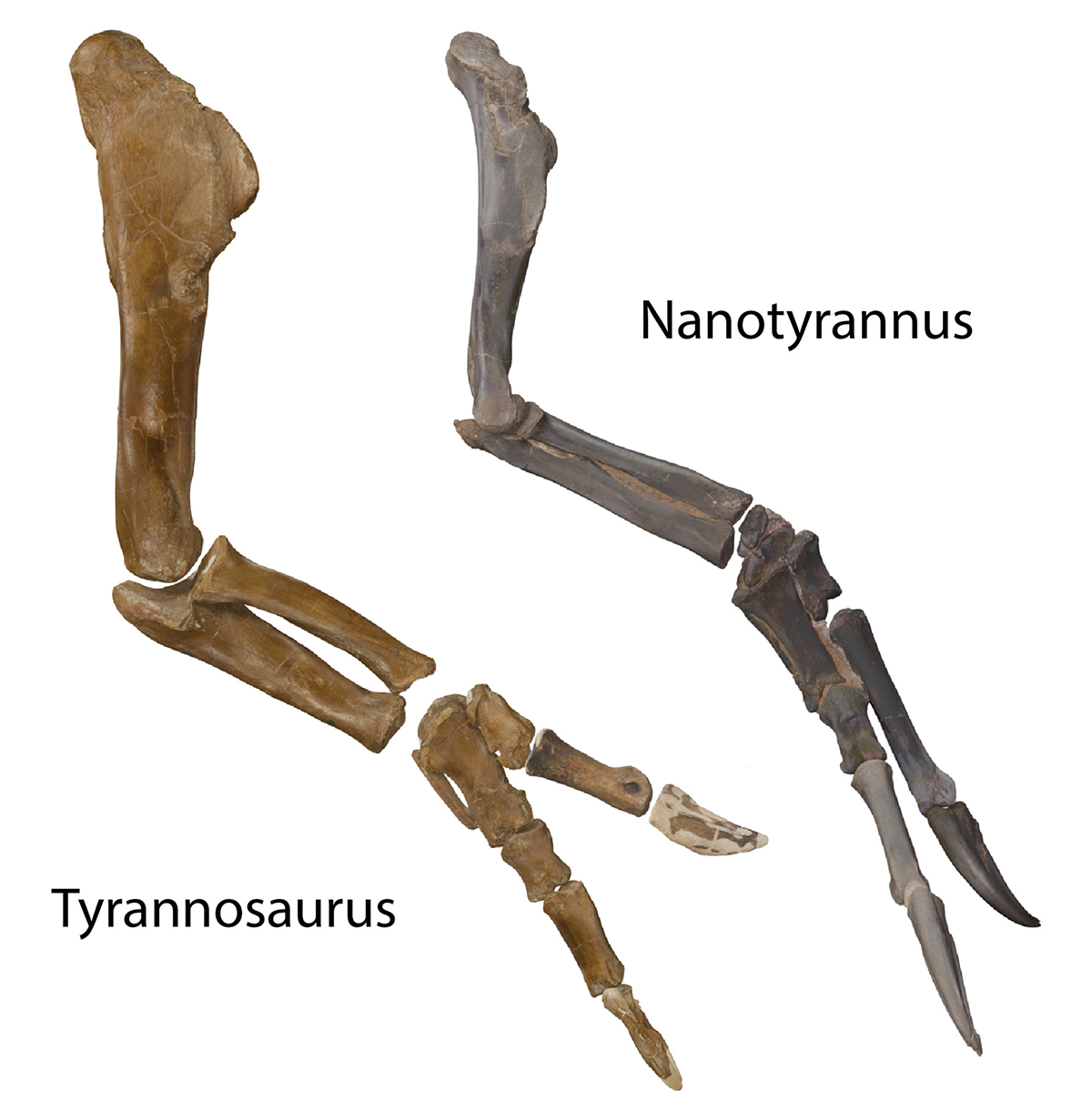
“The implications are difficult to overstate,” says Zanno. “The fact is, much of our current understanding of T. rex was built on three decades of research that unknowingly mixed data from Nanotyrannus with that of Tyrannosaurus — two different tyrannosaurs that aren’t even closely related. Most of that research now needs a second look.”
A long-standing debate in the world of paleontology questioned whether Nanotyrannus was a distinct species or simply an adolescent T. rex. Zanno and her co-author, Dr. James Napoli, vertebrate paleontologist at Stony Brook University, answered that question with their study, which was published in Nature in the fall.
In the past, paleontologists have used Nanotyrannus fossils as models of T. rex behavior and growth, but Zanno and Napoli’s research reveals that they are biologically incompatible. It means that the T. rex’s dominance in the final million years leading up to the asteroid was not unchallenged.
“To me, what’s exciting about this discovery is that it opens the door to a whole new series of questions about how these drastically different predators — one built for brute strength and one built for speed — interacted in the twilight of the dinosaurs. What we can say right now is that life at the end of the Cretaceous was a lot more colorful than we had imagined,” says Zanno.
Though smaller than T. rex, Nanotyrannus was still a valiant competitor and a quicker, more agile hunter. Its existence proves that predator diversity at the end of the age of the dinosaurs was richer than previous research suggested. Now a new question arises: how many other mistakenly identified dinosaur species could be hiding in plain sight?
“Scientists have long debated whether dinosaurs were thriving or diminishing when the asteroid struck at the end of the Cretaceous,” Zanno says. “Without understanding the number of dinosaurs alive at the time and the ecological roles they filled, we cannot document how mass extinction events have shaped life on our planet in the past, nor how they are likely to affect us in the future.”
The specimens at the NCMNS have affectionately been named after two North Carolina locations. Murphy, the Triceratops, is named for the westernmost town in the state, signifying the strength and longevity of the Blue Ridge Mountains. Manteo, the Nanotyrannus, is named for the coastal town on Roanoke Island, home to The Lost Colony and the original American mystery.
“This is just the beginning. We have decades of incredible research in the pipeline on the Dueling Dinosaurs. This is all made possible not just by the outstanding preservation of the fossil carcasses, plus the talent and dedication of the team we have put together, but also by the community backing we have received,” says Zanno. “The people of North Carolina and beyond banded together to protect these fossils for science and the public alike — a powerful force for good that will continue to pay dividends.”

This article originally appeared in the March 2026 issue of WALTER magazine.