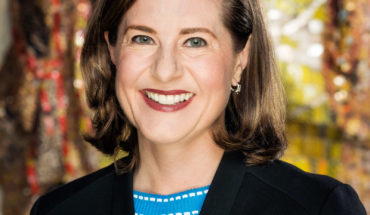
Not every baby takes a bottle—and Jessie Ammons Rumbley is making sure they all feel seen. Her upcoming book draws from her personal NICU journey to beautifully normalize medical differences for families.
By Katie Mangee
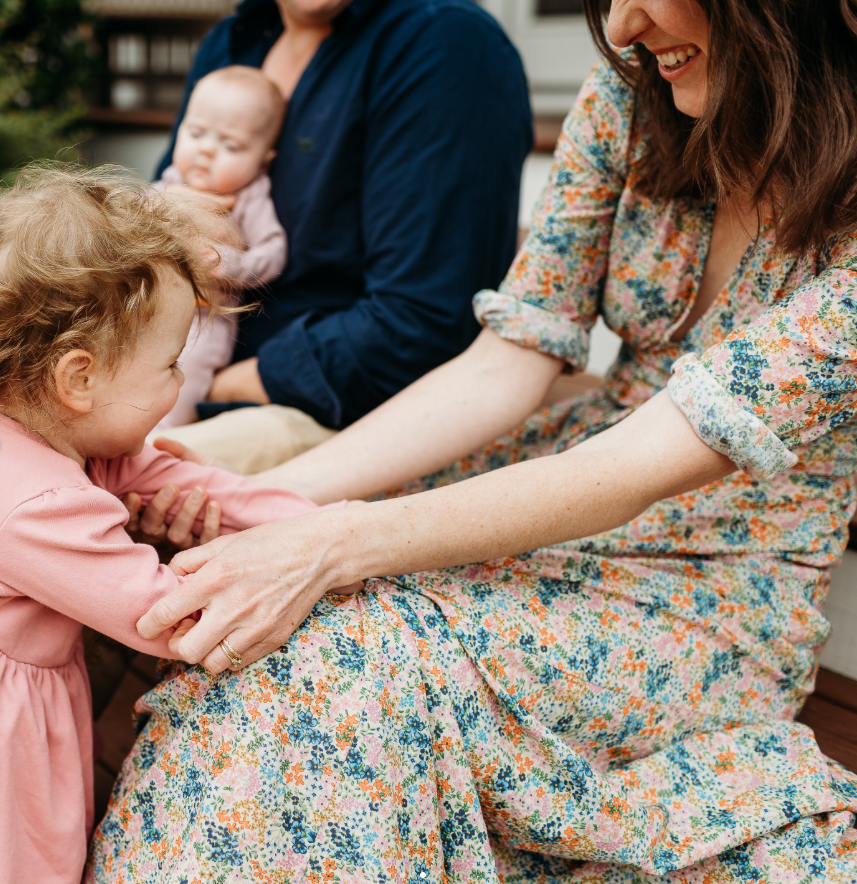
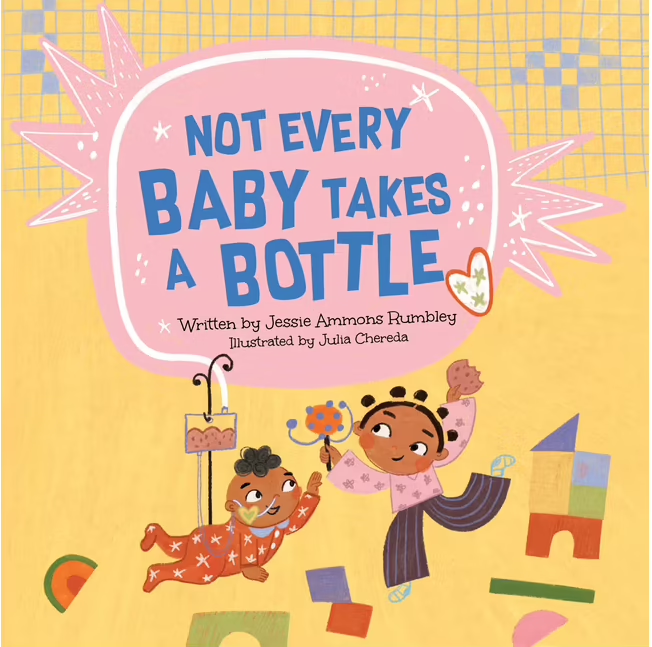
In her upcoming board book, Not Every Baby Takes a Bottle (publishing November 17, 2026), former WALTER editor Jessie Ammons uses comforting, lilting rhymes to normalize feeding differences like feeding tubes and PICC lines. Born from her own experience navigating a grueling five-and-a-half-month NICU stay with her daughter, the book provides a reassuring, positive resource for families dealing with complex medical needs. We sat down with Ammons to discuss her deeply personal journey, the development of the book, and her mission to bring comfort to waiting rooms nationwide.
You’re deeply familiar with WALTER as a former editor, but now you’re on the other side of the pages. What has it been like transitioning from telling other people’s stories to sharing such a deeply personal one of your own?
Promoting this book does feel more vulnerable. I don’t mind being in the spotlight or leading an event when I’m celebrating others, but doing it for myself takes a different type of mental fortitude than I was prepared for.
That said, the story is deeply personal to me. My younger daughter is almost four now and was born at just 26 weeks’ gestation—more than three months early. She was born at Duke and stayed in the NICU for five and a half months. It was grueling and exhausting, especially with my older daughter not even two years old.
During that period, I yearned for this book. It was exactly what I was looking for to help my kids. Ultimately, being in a position to pay it forward by writing the very story I once needed just feels so natural. It makes being on the other side of the page a little easier because I believe so wholeheartedly in this story and the role it can play for families like mine.
While it is deeply personal to me, at the same time, it doesn’t feel like it’s strictly about me. It feels like I’m serving the version of myself from four years ago. I’m serving all the other parents and caregivers, especially mothers, who are in a position that I know and remember so viscerally.
How did you balance the clinical realities of medical needs with the gentle, reassuring tone required for a board book?
I wrote it thinking about the book I was looking for when I had a 20-month-old and a baby. I think that’s why it took me almost four years to write: I needed to be far enough out of the weeds to condense the experience into something that had a little more lightheartedness to it. I think it’s important to find joy even in our hardest experiences. However, I don’t think the joy should overshadow the hard.
The book doesn’t actually mention prematurity—only alternative feeding methods and feeding tubes. I wanted to pick a lane and stay in it, and that’s the lane.
Some of the illustrations show kids with NG tubes (which go in the nose) and G-tubes (which go in the stomach), alongside normal kid stuff. The only difference is that there’s an IV pole in the background with a feeding pump and a bag of formula attached to it.
I think that visual is so important for kids. I don’t need to spell everything out or make the language overly technical because I think that’s exactly what kids are looking for. They want reassurance that says, “This can be my world. We can play and have fun, and normal is what we make it.” This medical equipment can be in the background of their world without being a scary thing that only exists at the doctor’s office. It can just be a part of their life.
That was important to me because that was my life, and it’s the reality for a very real part of our population—a part that I’m part of and have gotten to know so well. Only by living it could I parse all of that out. I could reach a place where I could find the delight in it and the joy in it. I knew the experience well enough that I could boil it down into simple enough language to resonate with young kids.
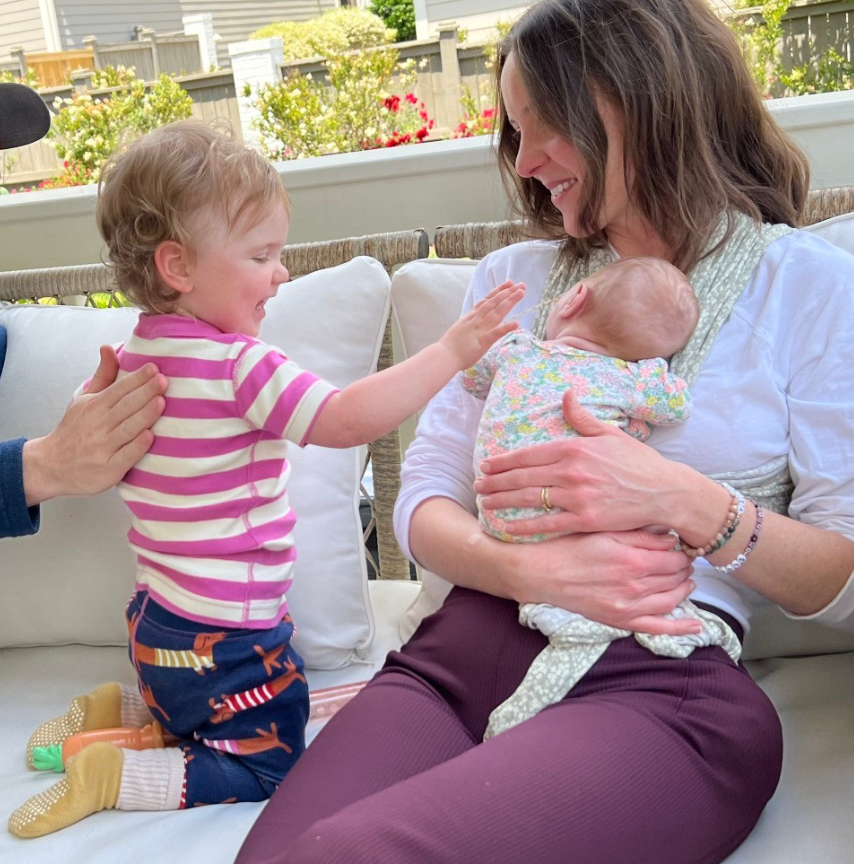
Could you take us back to the moment you realized there was a massive gap in children’s literature for families navigating complex feeding needs and how that sparked the idea for your story?
The moment was around April 2023, when my daughter had been in the NICU for about five months, and we were finally starting to think about discharge and what that would look like. It became clear that she was not going to be able to eat by mouth, so we were going to need an alternative feeding method. At the time, we were just thrilled. She’s coming home! She’s finally leaving the NICU! She had been there for 131 days, and it was so excruciating.
Meanwhile, I had a toddler at home who had never been able to meet her sister because of leftover COVID protocols that restricted young kids from the NICU. Up until that point, she had only ever seen photos of her on an iPhone.
I’m a huge reader, so we naturally turned to books. We got all these big sister books, and while there are so many incredible ones out there, so many of them focus on the exact same themes. I found that we were constantly reading things like, ‘You can be a helpful big sibling by helping Mom and Dad change the baby’s diapers, or by helping Mom and Dad feed the baby a bottle.’
During a conversation about discharge with one of my younger daughter’s NICU doctors, I remember sharing, ‘You know, I’ve been trying to prepare my older daughter by reading all these books to her, but the thing is, not every baby takes a bottle.’ The doctor just kind of looked at me, and that was the moment. Not every baby takes a bottle. There was really something to that. I wrote it down in my journal, and that was that; life went on.
Over time, Louisa, my younger daughter, began to outgrow some of her medical needs, but what remained were these ongoing feeding challenges—and they are still a very big part of our life. She still has a G-tube, and it’s very tedious.
I walked away with a handful of nuggets of wisdom from that time in the NICU. As time wore on and Louisa outgrew certain challenges, I started feeling like I finally had the headspace to pay it forward. I wanted to get involved on an advocacy level and think about how I could improve this experience for other families going through it, because it is just so traumatic and life-altering. The phrase ‘not every baby takes a bottle’ kept popping back up because it was still such a central part of our family rhythm. It just felt like that was the story I needed to tell.
What are your main hopes for this book, and who did you ultimately write it for?
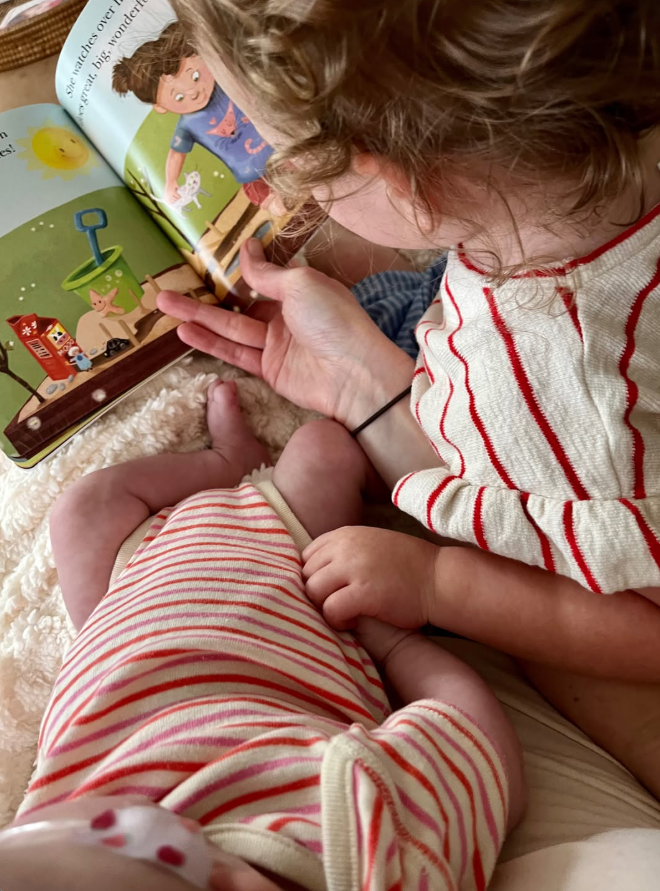
I have a lot of hopes for the book, and I would say there are a couple of key paths for me. Most importantly, I wrote this book for both of my daughters, but especially for my older daughter, Sloan. I want the Jessie from five years ago to find this book, because it is exactly what I needed back then. It’s what I needed to snuggle up on the couch with and read to Sloan to prepare her for Louisa’s arrival.
So, it’s for every parent in a similar situation—where they have a young child and a baby who is having feeding troubles. That could stem from prematurity or other things; sometimes kids unexpectedly need an NG tube for a temporary amount of time due to health concerns. Sometimes full-term babies are born, face unexpected challenges, and end up needing feeding tubes. And very often in the disabled community, alternative feeding methods are just a necessary part of daily life. Any parent who has an older child and is navigating these feeding challenges—this is just so spot-on for them.
That said, I also think it’s important for all kids to see this. Sloan is typically developing and able-bodied, and so are most of her friends. It’s vital for them to build empathy and see that our way isn’t the only way life can look, and that all of these different realities are normal. Actually, that’s how I prefer to describe it. I don’t love having to say Sloan is ‘typical’ or ‘able-bodied.’ Louisa is typical for Louisa, and she’s able-bodied for Louisa.
What is your ultimate hope for how hospitals, clinics, and families—both locally in the Triangle and nationwide—will utilize this book to support one another?
Ultimately, I think this book is important for anyone who wants an inclusive home library and could benefit from it, and I really hope it finds its way into clinical, therapeutic, and healthcare environments.
I am planning to donate a significant number of books. My primary goal is to donate a chunk to all our major local hospitals. From there, of course, I hope they will find enough value in it to buy more and perhaps create packages for families. But I’m not really in it to make a profit off of this book; I just believe it needs to exist. Whatever it takes to get it into people’s hands, I will do it.
While I plan to do a couple of things locally because I know the Triangle area, this isn’t North Carolina-specific at all. Once the book is published, I get some headspace, and it gains some traction; I hope it ripples outward. I would love for it to be in clinical environments nationwide because I think there is a place for it everywhere.
In fact, the illustrator, Julia, is Ukrainian and living in Spain. She does not have kids, but she did such a wonderful job learning about this topic and bringing this book to life. When Julia and I spoke, she said, ‘Yeah, we could have this book in Spain—why wouldn’t we have this book in Spain?’ It’s just a universal thing.
In the meantime, I want to get it into the hands of everybody around here who could benefit from it. I have sat in those waiting rooms so many times, and I still do. I want this to be the book that someone can look at this afternoon while they are sitting in a waiting room.

This post originally appeared on waltermagazine.com on November 16, 2026.