Diaper Train helps more than babies’ bottoms — this nonprofit run by passional community members supplies families with dignity and stability
by Katherine Snow Smith
About 15 years ago, Diaper Train started as a single diaper drive at Christ Church in downtown Raleigh. Today, it’s a mainstay social service that last year served more than 19,000 children and 21 partner agencies across Wake County.
“It’s not just about a diaper — it’s about dignity, stability and the well-being of an entire family. When basic needs go unmet, the effects ripple across communities,” says Katie Lowek, the nonprofit’s executive director. Infants require up to 12 diapers per day, at a cost of $80 to $100 or more per month per baby, according to the National Diaper Bank Network, but they aren’t covered by public assistance programs like the Supplemental Nutrition Assistance Program (SNAP) or SNAP for Women, Infants and Children (WIC). Without diapers, children can’t go to daycare, and children who sit in soiled diapers for extended times can get a rash or infection. “Parents that have diaper insecurity report missing an average of five days of work per month,” says Lowek.
That’s why Christ Church members Cameron Ellerbe and Allene Adams spearheaded their first drive in 2010. Adams had volunteered for a similar program in Maine before she and her husband, Christ Church rector Rev. James P. Adams, moved to Raleigh earlier that year. Wanting to do something similar in her new home, she placed a query for volunteers to start a diaper bank in the church bulletin. Ellerbe, who had recently learned that diapers weren’t covered by food assistance programs, had been trying to find a way to help. “And then I saw that in the bulletin,” she recalls. “It was like serendipity.”’
More than a hundred packs of diapers came in from that first drive. “The second or third client that Allene and I served said, When word gets out about this, you’re going to have people wrapped around the building,” says Ellerbe. So the duo made a plan to continue the program, giving out diapers on Tuesdays and Thursdays from the basement of Saint Saviour’s Center, which housed other community outreach organizations in its Tucker Street building downtown.
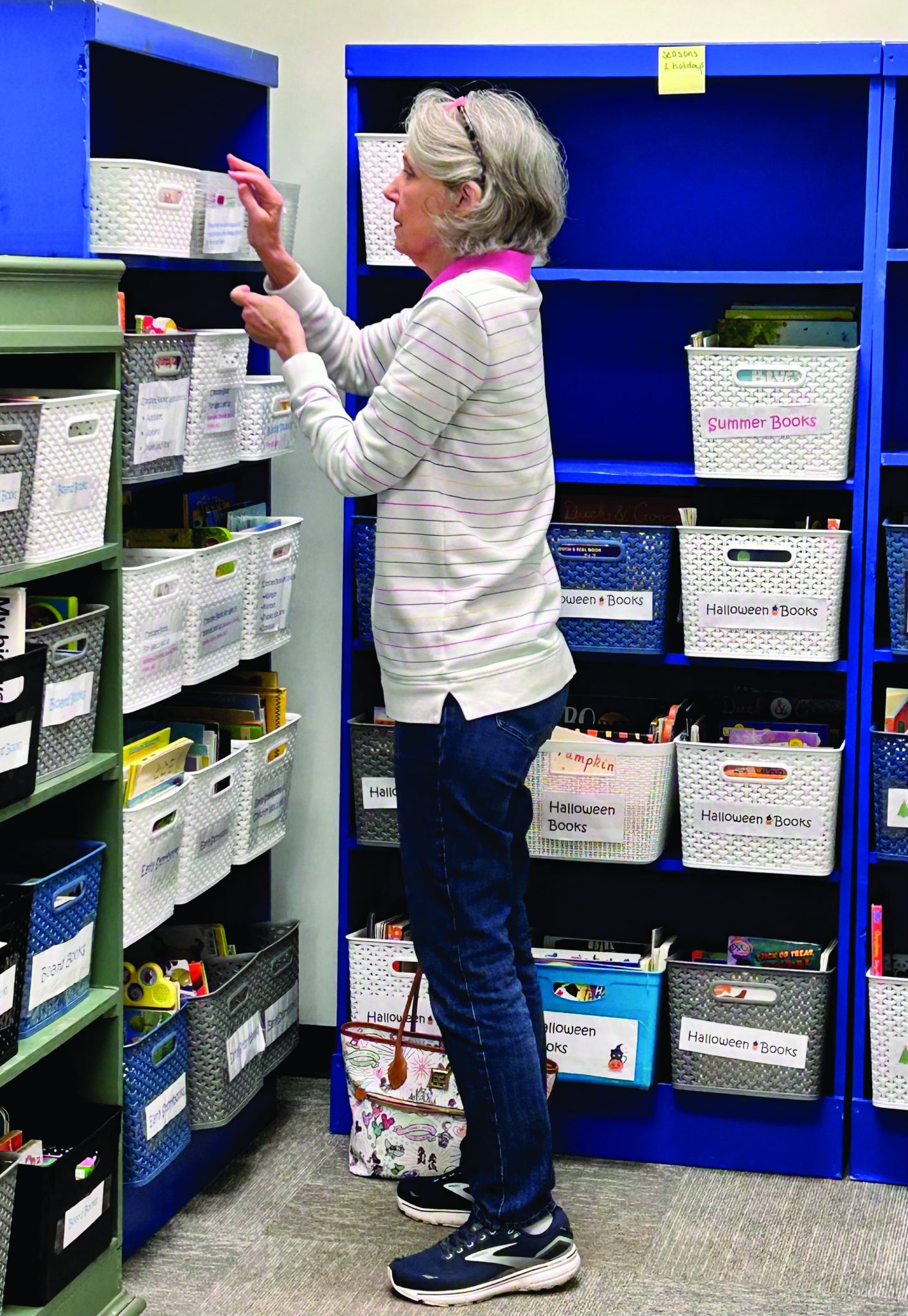
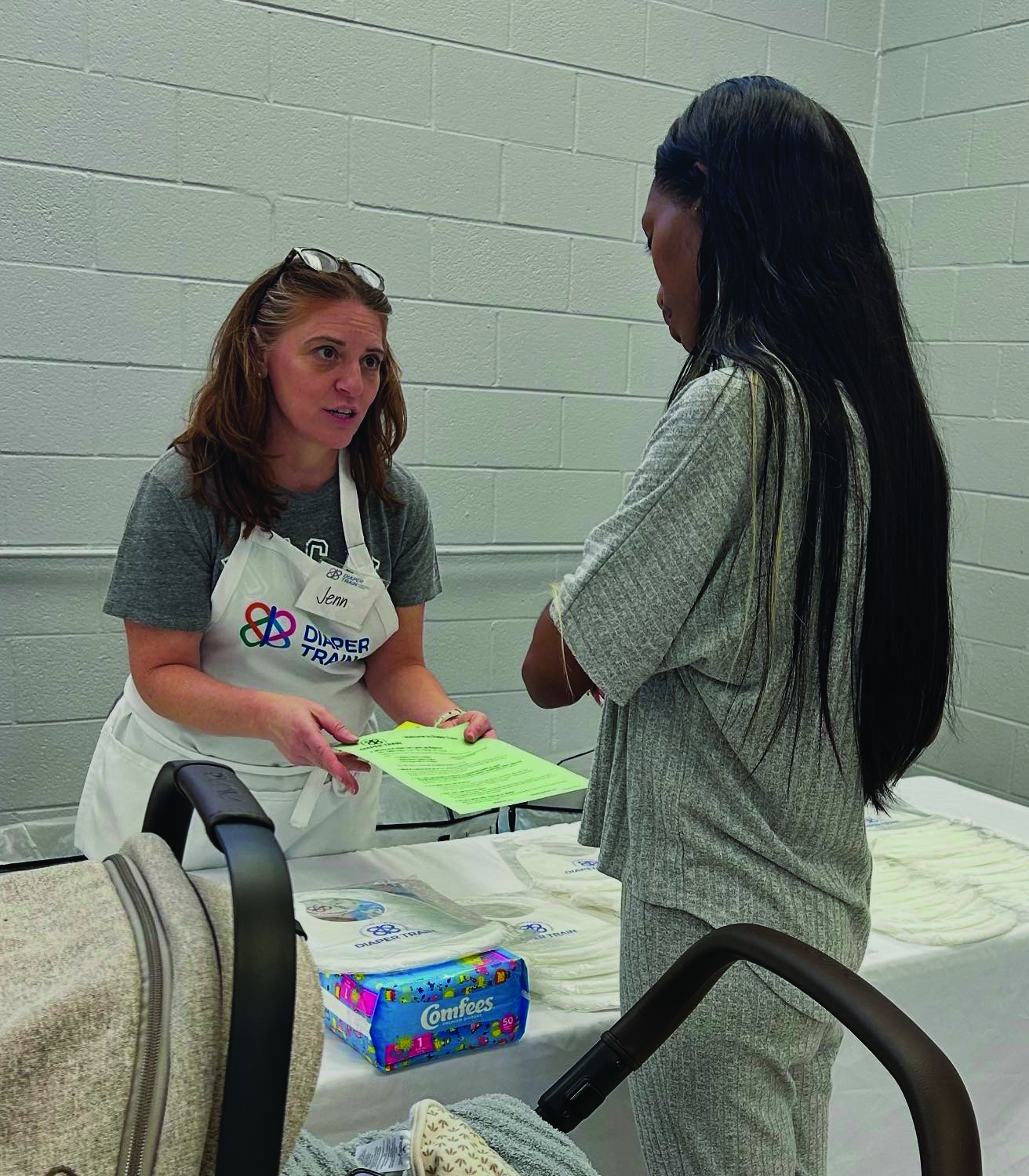
Their client was right: within weeks, nearly 200 families visited Diaper Train’s small office each day they were open. Mothers, fathers and grandparents cradling babies and holding toddlers’ hands crowded the lobby. Volunteers fetched diapers in the right size, hugged moms and asked to feed a bottle here and there. In addition to providing diapers, Diaper Train also embraced the church’s literacy ministry, handing out a book for each child. Children of volunteers sat criss-cross applesauce on the floor reading books to clients’ children.
The need for diapers was much greater than Ellerbe knew. “People would tell me they were putting their kids in Harris Teeter bags for diapers. They would have one diaper and re-use it. They were using towels for diapers,” she says.
Over the next few years, Diaper Train received grants from family foundations and businesses. They enlisted other nonprofits, businesses and churches — among them First Presbyterian Church, Hillyer Memorial Christian Church, White Memorial Presbyterian Church and St. Michael’s Episcopal Church — to hold diaper drives and recruit volunteers to build up its ability to serve more clients. The local chapter of the National Charity League, which connects mothers and daughters with volunteer programs, took up Diaper Train as
a cause.
Diaper Train now raises money from grants and fundraisers to purchase diapers in bulk — in 2024, it gave out nearly 900,000 diapers. It has grown from a core group of about 25 volunteers to more than 900 today. In addition to giving diapers to individuals, the organization also serves as a “diaper pantry” for distributing partner agencies such as SAFEchild, InterAct of Wake County and WakeMed Pediatrics. “We really appreciate Diaper Train so much. They are always ready to help,” says Cristina Madrid, a care management representative at WakeMed Pediatrics, which refers about 10 families a week to Diaper Train for supplies.
In 2020, during the pandemic, the Diaper Train lobby at Saint Saviour’s Center fell silent, but the need was greater than ever. “Our clients were the waitresses and the retail workers and the cooks that were out of work,” says longtime volunteer and board member Lisa Gwyn. By April, the Diaper Train team had worked out a fix: clients parked or waited on foot in the parking lot and volunteers came out in gloves and masks, asked for the ages of their children, went in to grab the supplies and delivered them. This delivery system turned out to work well enough for clients that they kept it in place after COVID. “Before, parents were having to get their children out of car seats or wake up sleeping babies and bring them inside,” Lowek says. “It also allows for quicker service when many parents are coming in the middle of the day from work on their lunch breaks.”
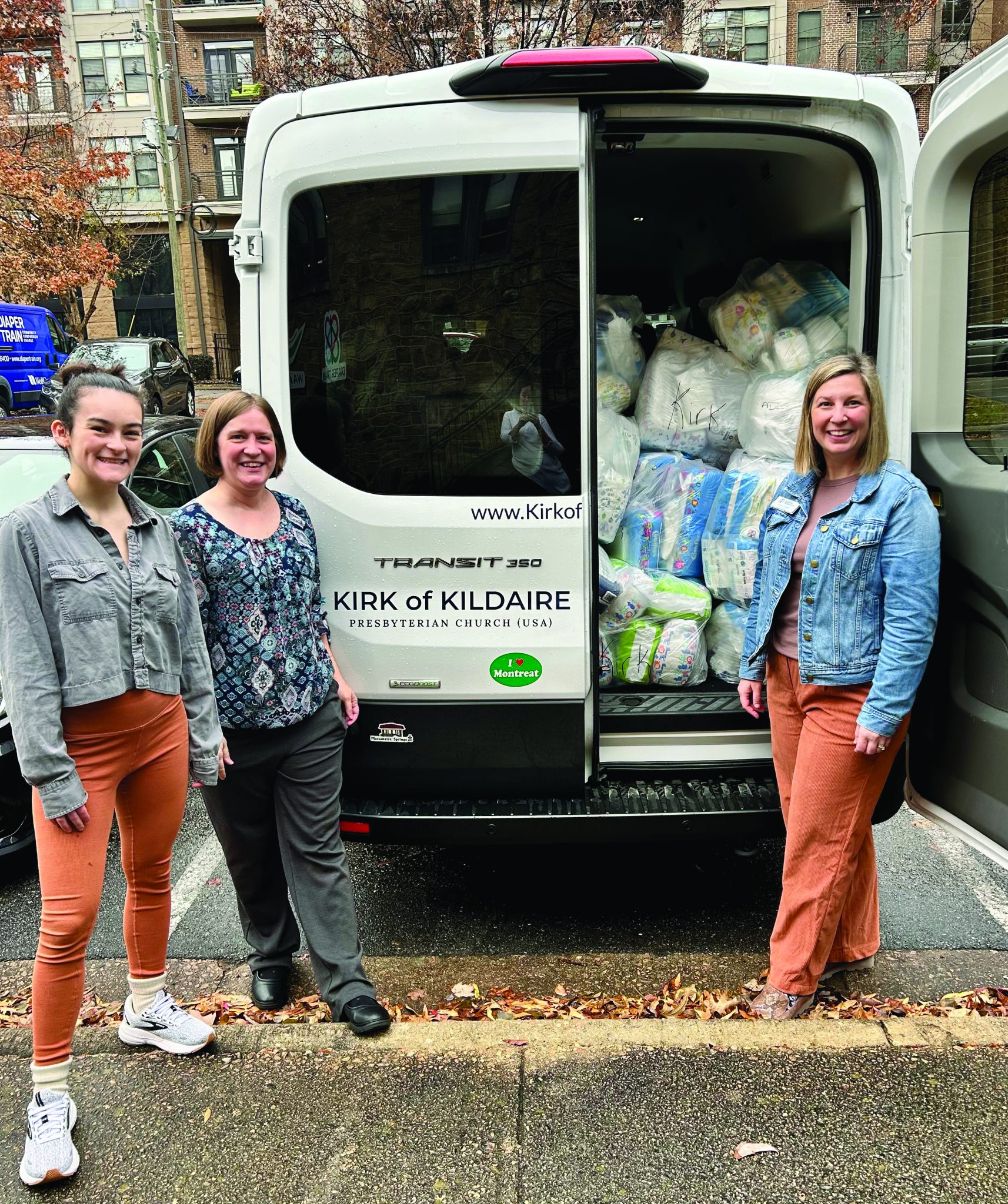
To further expand their reach, two years ago Diaper Train bought a van. “This has been a game changer,” Lowek says. “It’s allowing us to reach parents in parts of Wake County where transportation is a barrier.” Volunteers and staff fill the van with diapers, tables and signs, then set up at resource fairs in places like Raleigh’s Roberts Park or Fiesta Cristiana Church in Apex. Along with handing out diapers to patrons, “it allows us to tell them about our services and how they can access our diapers on a regular basis,” Lowek says.
In May, Diaper Train moved to a new location on Tillery Place off Capital Boulevard, after the Saint Saviour’s Center building was put on the market. The tenants were given six months to move out. “Having to relocate within such a short window was an enormous blow to our organization because we didn’t have the time to fundraise or adequately plan for such a major transition,” Lowek says.
While the move was a large and unexpected expense, there have been some silver linings. The new 4,000-square-foot building is in a small office park with plenty of parking and a stop for the GoRaleigh bus line right in front, which makes it more accessible to clients. Plus, Diaper Train is now closer to many other service organizations. “This area is becoming a hub for nonprofits — The Salvation Army, The Green Chair Project, Tools4Schools, the Food Bank of Central & Eastern North Carolina.
Urban Ministries is right down the road,” says Lowek. Dress for Success and the NC Works Career Center are both in the same small office park as Diaper Train. “It makes it easier for clients,” Lowek adds. She and the Diaper Train team are hoping for a big turnout at their annual “Bottoms Up” fundraiser in September to help cover the expenses. “We lost $50,000 in rental incomes from parents who [sublet] our space and will accrue over $70,000 annually in [higher] rental expenses,” Lowek says.
This year, Diaper Train expects to give out 1 million diapers. “Demand is higher than ever, and we’re committed to keeping up and meeting the needs of the families we serve,” Lowek says. Clients like Dorothy Daniels rely on this commitment each month. “Diaper Train is part of me and my baby’s village,” Daniels says. “I wouldn’t be able to get a full day’s work without knowing that my baby was supplied at daycare… It’s consistent help.”

This article originally appeared in the August 2025 issue of WALTER magazine.