A group of Raleigh families came together to continue the legacy of Porciano, an ancient castle and village in a rural Tuscan Valley.
by Addie Ladner | photography by Michele Squillantini

In the early 1300s, Italy’s most famous poet, Dante Alighieri, was accused of corruption and fled to the Casentino Valley, about 45 miles from Florence. Legend has it that he took refuge in the Castello di Porciano, one of many castles owned by the Guidi counts. The castle sits more than 2,000 feet above sea level, the highest point in the valley, in a part of Tuscany where the Arno River forms before it weaves 150 miles to the ocean. There, Dante began writing some of his most famous letters, including “To the Prince and People of Italy,” “To the Florentines” and “To Henry VII.” When Florentine troops came searching for him, they encountered a man they took to be a villager and asked him if he’d seen the poet. “Well, he was there when I was there,” replied Dante. It’s a favorite local tale.

Today, the stone walls still stand. The castle tower and its accompanying stone cottages, collectively known as Porciano, overlook a valley dotted with olive groves, laurel trees and stone houses. Gravel roads trace through wild patches of lemon balm, blueberry thickets and native irises. But its latest chapter — as an immersive overnight and dining destination — is one with Raleigh roots.
About 15 years ago, Raleighites Will and Molly Volker decided to get married in the Casentino Valley. Raleigh native Molly had first visited Italy as a teen on a school trip, then went on to earn both bachelors and masters’ degrees in the language and teach it at the college level. The two were married at Castello di Poppi, a grandly restored, Renaissance-era estate, but stayed at the nearby Castello di Porciano in the province of Arezzo. In this area of Tuscany, castles are fairly common, a remnant of the days when prominent Italian families erected giant structures to keep watch and defend their land.
While at the Castello di Porciano, they befriended Martha Specht, its countess. Though Italy doesn’t officially recognize noble titles anymore, she was for all intents and purposes the lady of the castle, which had been in her family since the 18th century.

For Martha’s parents, Porciano was a love story. Her mother, Flaminia Goretti de Flamini, came from an aristocratic Florentine family. Flaminia met Martha’s father, George Specht, after World War II. He was a Minnesota country boy who became a lawyer, then joined the Army, serving in Africa and Italy. Flaminia had volunteered as a Red Cross nurse, and the two met at a party for Allied forces celebrating the end of the war. “That changed their lives completely,” says Martha.
In the early 1960s, Flaminia and George embarked on a grand adventure to restore the castle of Porciano, which was nearly in ruin due to an earthquake in the early 1900s. “For 12 years, we were up in the valley staying at different places working to revive it,” Martha says.
As an adult, Martha used the tower as her family’s private residence to enjoy time outside of Florence and used the cottages (acquired by her parents in the late ‘60s and ‘70s) as vacation rentals. But by 2020, she was looking to sell the castle. She’d attracted an investor from New York who was offering a nice price, but it didn’t feel right. “It became too much for me to continue running, but I wanted someone who’d appreciate its history and carry on my family’s legacy,” she says.
In the meantime, the Volkers and Molly’s parents, Betsy and Gene Conti, had begun visiting the area every summer. They bought a house in the area in 2013 and had become friends with Martha. Knowing that the Contis had come to love the culture and community of this region, Martha approached the couple with the idea of selling them the castle. “She thought we’d preserve the character and history,” says Gene. Being such a big, multifaceted investment — including not just the tower, but the cottages as well — they knew they would need more than just their own resources.
The Contis and the Volkers started working to put together an investment group, all close friends or friends-of-friends based in North Carolina, to help acquire it. They recruited 11 families, among them Ron and Nancy McFarlane, Becky and Justin Griffin and Don and Alberta Parson. “It happened pretty organically. It was important for us to put together the right group of people who would appreciate something like this and would work well together,” says Will.

Nancy remembers being perplexed when the Contis first approached her and Ron with the idea. “I was like, You want us to buy a castle in Italy? We don’t need that!” she laughs. “But the more we learned about it, it didn’t feel like investing in stocks. It felt like investing in a community.”
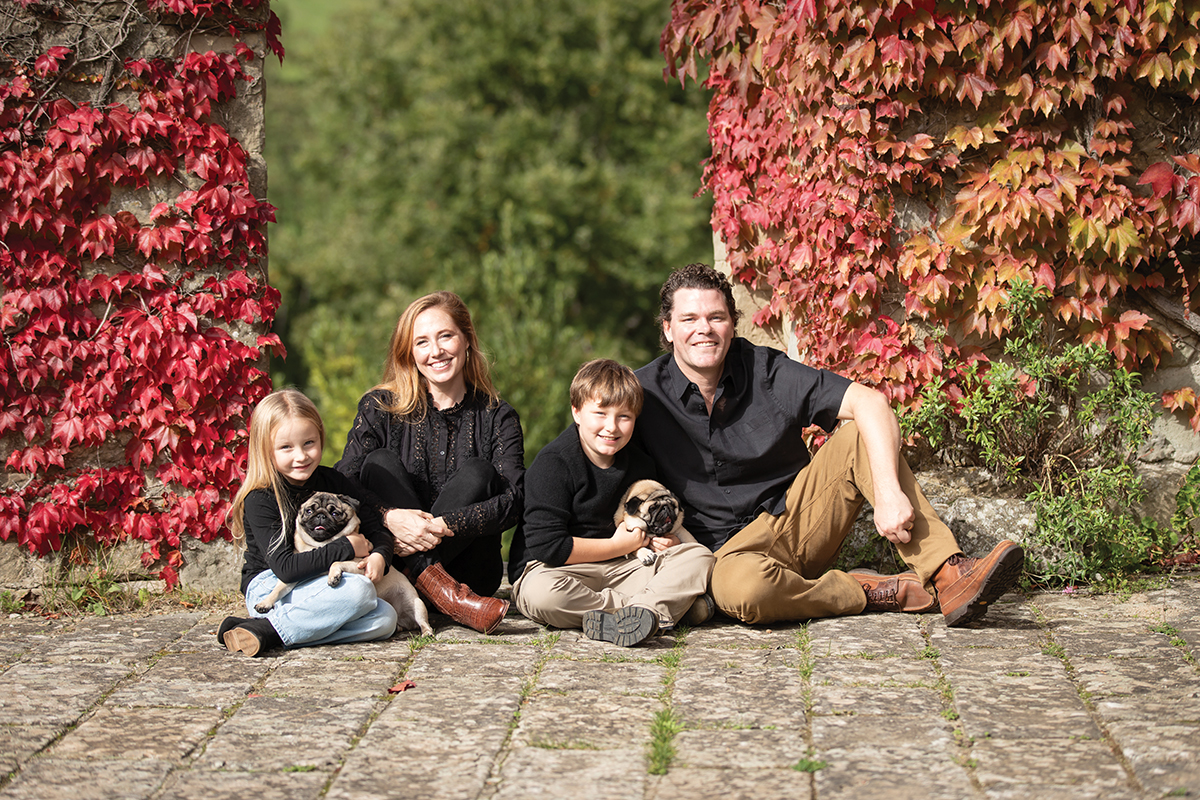
In December 2021, the sale went through. The investors put together a five-year plan to get Porciano up and running for guests and began integrating themselves into the community and its culture. To manage the property, the Volkers sold their house in Oakwood and moved to Italy with their two children, Liam and Daisy, then 7 and 4. “They were nervous but mostly excited about the adventure. The community was so welcoming to them,” says Molly.

Though they didn’t have experience in hospitality management, they were eager to immerse themselves in the trade. The goal in the first years was to make the property more comfortable for American guests: minor updates like getting new beds and bedding, plus making aesthetic improvements like painting walls and opening up rooms. “There was so much beauty already. We just did a gradual cottage-by-cottage refurbishment to create a more uniform feel but retain the Tuscan charm and the amazing elements that were already here,” says Molly.
Since then, they’ve painted walls, refreshed appliances, added local artwork and opened up the spaces. The Volkers learned to navigate multiple levels of approvals, plus the local culture — not just requesting a permit from city council, but going through the art and historical superintendent, working with a local architect and allowing the locals to have a say in everything from the materials used to the windows to the placement of structures. “Everything is done in a very serious way to maintain the historical look,” says Molly, noting that the castle and all the cottages maintain their original stone and ironwork. Adds Will: “And this is Italy, so you won’t be able to get a plumber for a few hours each day after lunch. The process can be a bit slow.”

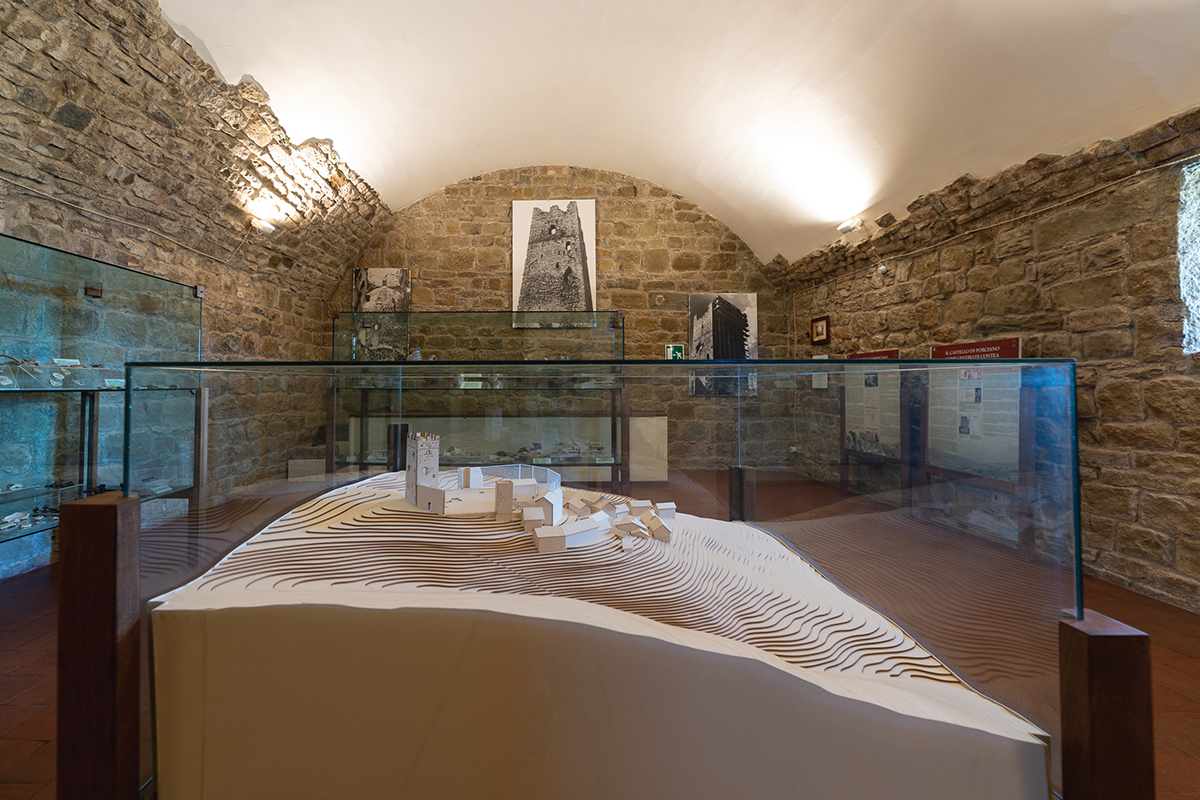
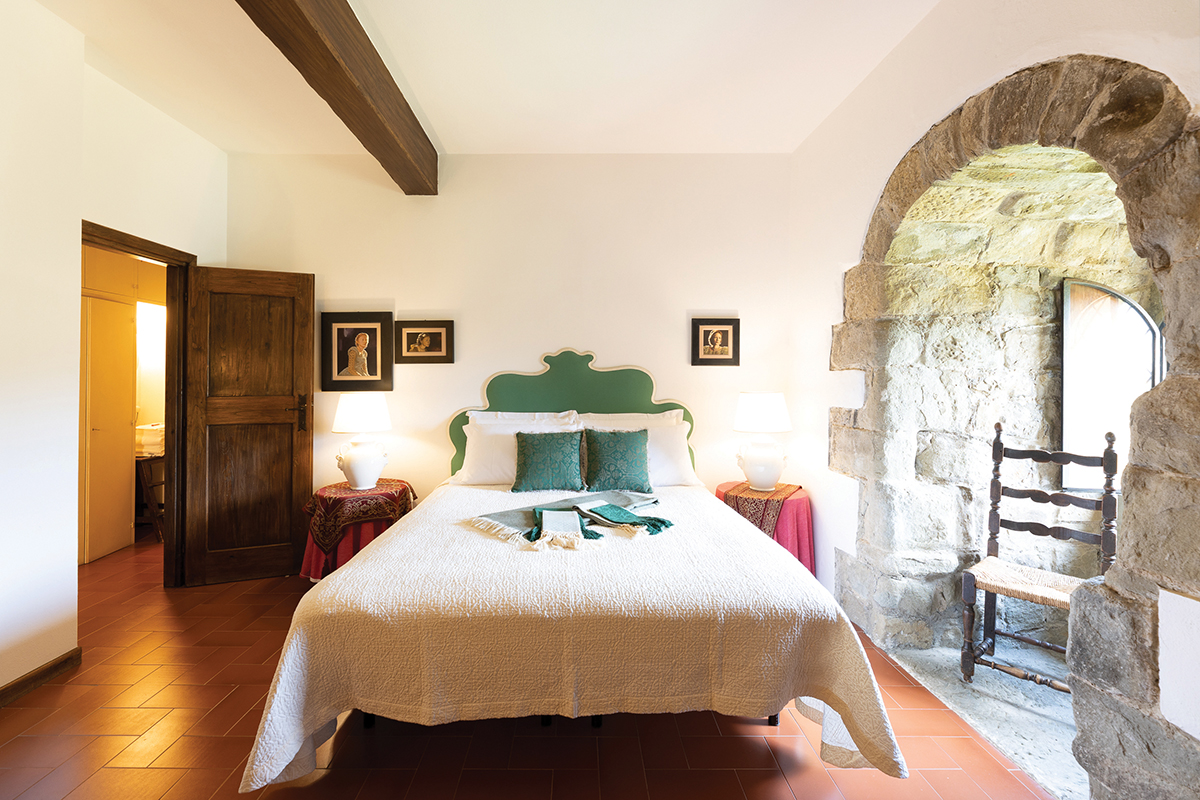
Today, Porciano is essentially a small village that can accommodate about 30 guests between the tower and its seven cottages. The tower has five floors, with a small museum on the first two and private living and guests spaces on the other three. Inside the museum, guests can find dozens of Tuscan relics, most unearthed by Martha’s parents when they restored the tower. Among them are Etruscan pottery and Roman artifacts. In one bedroom, a rare wooden Madonna from the Veneto region hangs on a wall and a 14th-century headboard from a convent anchors the guest bed.

For the guest rooms, the team brought in bedding from Tuscany-based linen purveyor Busatti, locally made ceramics and soap made from the nearby Dominican sisters of Santa Maria de Lane. The cottages — most two stories and all connected in a row — finely balance 14th-century elements, like exposed stonework, wooden beams and still-life paintings, with the comforts of modern hospitality. “People have told us they felt like we were bringing life back into Porciano — and that’s such a good feeling,” says Will.
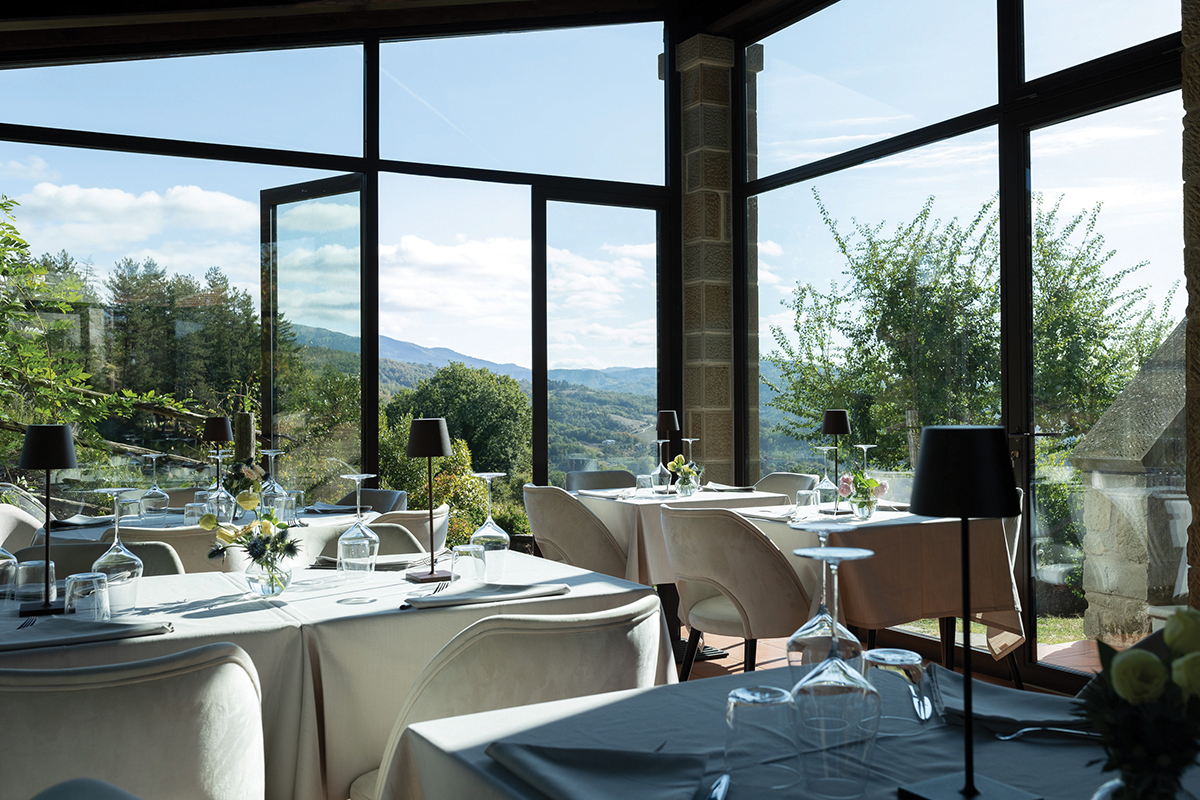
To run the village, the team enlisted locals Nicoletta Lupa, the hospitality manager, and Daniela Zotica, the director of the house. In 2023, the team converted a nearby, ancient barn into a 20-person restaurant, Ristorante Il Fienile at Porciano, and brought on another local, head chef Catalin Lupu. In the mornings, they offer locally made pistachio croissants, seasonal fruit and cappuccinos; dinner specials include regional specialties like gorgonzola lasagna and fried artichokes. Lunch is never before 1 p.m., shorter than two hours or served without wine. “Wine is a food group here, there’s no lunch or dinner without it,” laughs Molly. Dinner is even longer.

Visitors to Porciano may wake to the sound of locals working on a nearby roof or the aroma of concord grapes from an arbor nearby. The view out the window encompasses red ceramic rooftops, olive tree patches and container gardens on neighbors’ terraces. Molly might organize a trip to a sheep farm to learn how to make pecorino cheese or a visit to La Verna Sanctuario, a Franciscan monastery in the mountains. “It’s this old world, human-to-human immersive experience that you get when you come here,” says Will.
A long walk into Stia, the small town down the mountain, offers a glimpse of rural Tuscan life. Visitors enjoy long, leisurely lunches, pop into shops and take respite inside ancient churches. Schoolchildren play in the piazza — the Volker children Liam and Daisy among them, now fluent in Italian and indiscernible from other kids popping into the gelato shop. “I’m so grateful that these lovely people have taken over the castle,” says Martha. “They’re continuing this love story that connects Italy and the States.” Says Gene: “It became a dream, then a reality.”
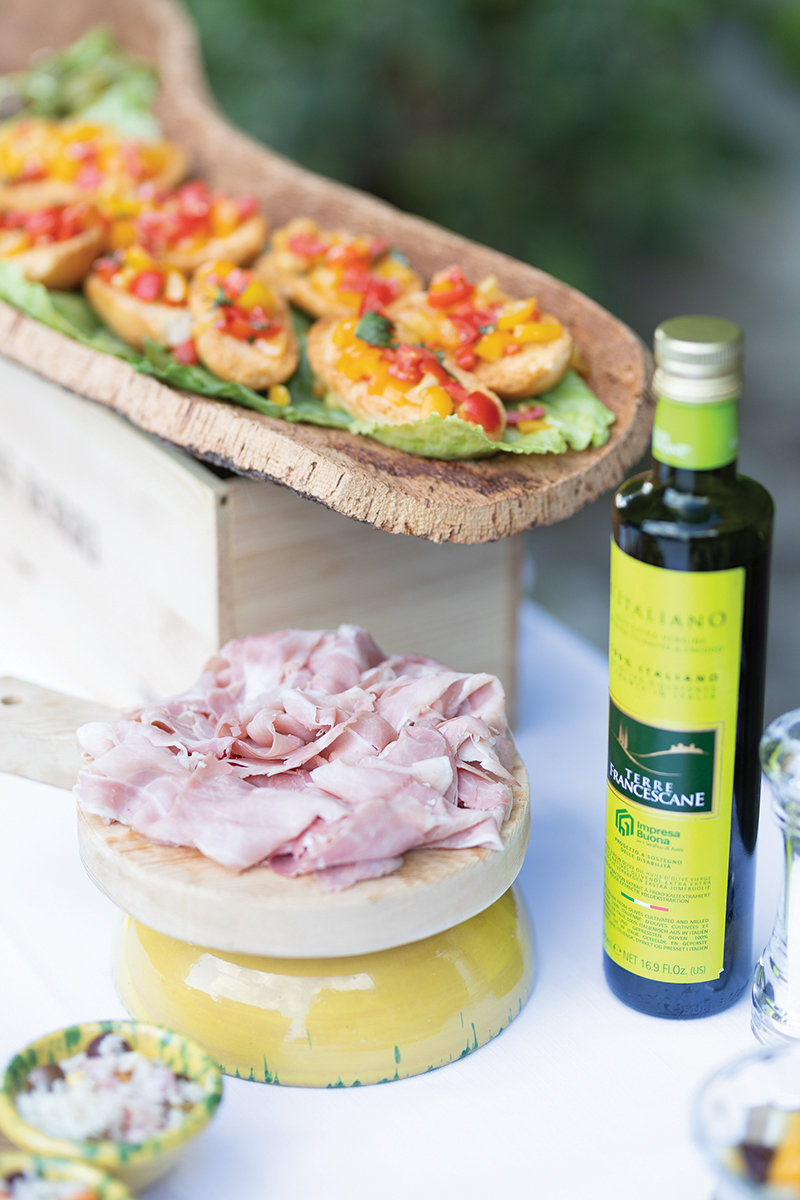

Above and below: Scenes from Ristorante Il Fienile, a farm-to-table restaurant the Porciano team opened in a converted barn on the property.


This article originally appeared in the August 2025 issue of WALTER magazine.