Cheyenne Levinson, the owner of Raleigh’s Little Oak Collective and State of Thrift, is key to the Triangle’s thriving resale market.
By Rachel Simon | Photography by S.P. Murray
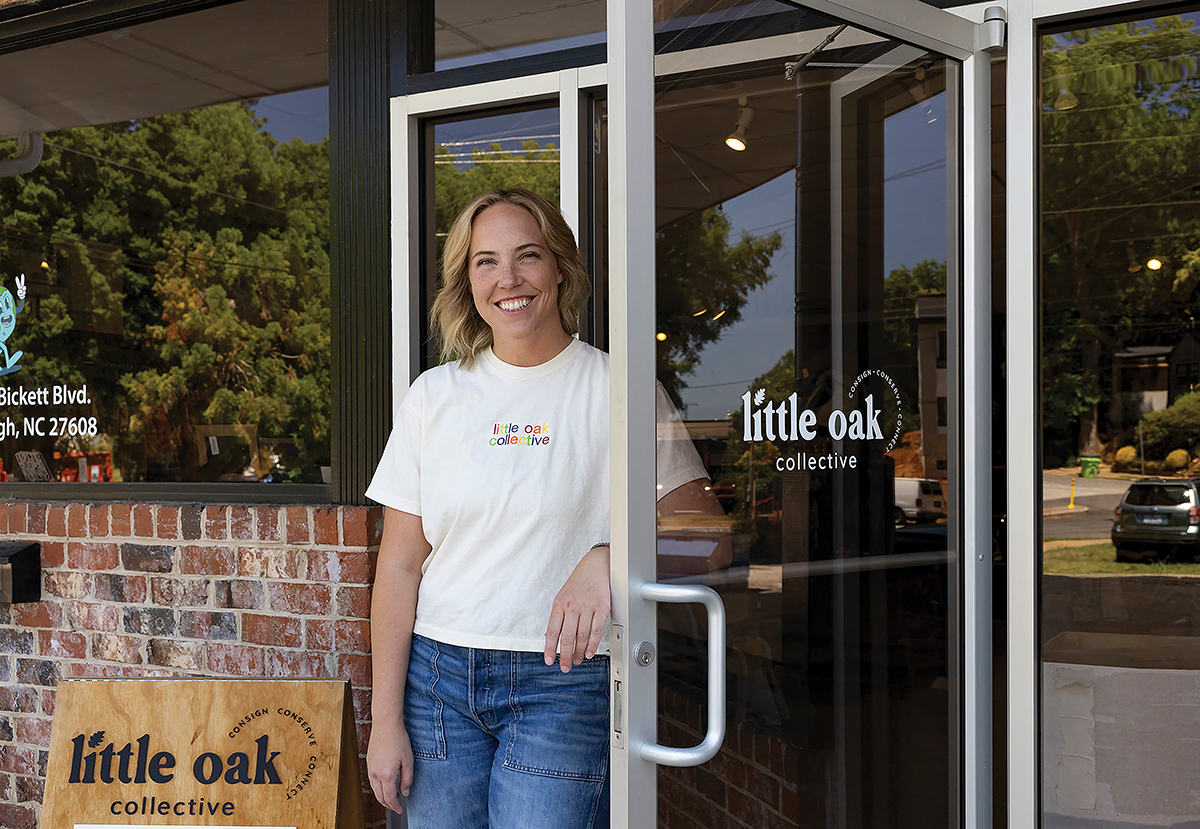
Like countless teen girls before and after her, Cheyenne Levinson spent many free afternoons traveling to different thrift stores, reveling in every new (old) piece of clothing she found. “As soon as I could drive, that’s what I did for fun,” the now 31-year-old owner of Raleigh’s Little Oak Collective and State of Thrift recalls.
So when, at 20, Levinson became pregnant with her first child, the decision to buy her baby’s clothing secondhand was a no-brainer. In Boone, where she lived with her now-husband, Caleb, Levinson was thrilled to discover a local children’s consignment store (Bluebird Exchange) that not only offered used clothes but also carefully curated its selection to feature high-quality items from top brands. “That was what opened my eyes to a conscious way of consuming as a mother,” she says.
Consignment shops, which buy previously worn items and resell them for a lower price (giving the sellers percentages of the profits), have existed across the country since at least the 1950s, but few cater to kids’ clothes. And when Levinson and her family moved to Raleigh in 2018, she found a glaring hole in the market: while the city was home to plenty of traditional thrift stores and a handful of adult consignment shops like MODE and Revolver, there were none aimed at youth. “I just couldn’t get it out of my head that Raleigh was such an amazing place to live for families, and yet we didn’t have a brick-and-mortar children’s consignment store,” says Levinson.
In 2019, she attempted to open one such shop in Cary’s Waverly Place, but red tape and the demands of parenting Oliver, now 11, and Sawyer, now 6, stopped the dream short. The COVID-19 pandemic placed things on further pause, although it did see the launch of the Levinsons’ popular Triangle Families Explore Instagram account, on which they highlight child-friendly activities in the area for 80,000-plus followers. The family’s social media success came at the perfect time, because in 2022, when Levinson found a space in Five Points available for rental, she jumped at the chance—calling on her followers to help raise the funds needed to open a store. They came through, contributing $15,000 via Kickstarter that, along with a family loan and free labor courtesy of Caleb (who works in construction), was enough to open Little Oak a year later.
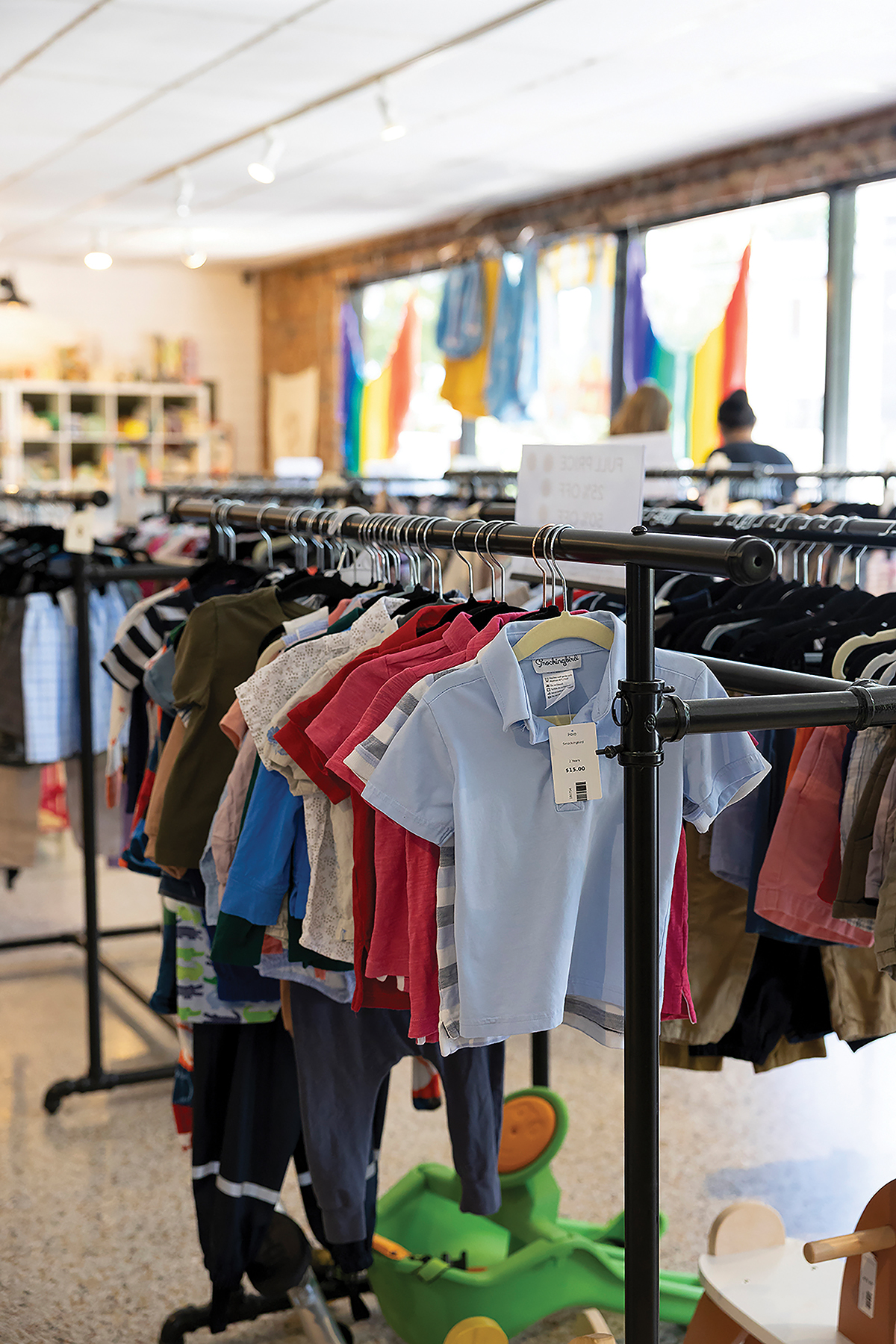
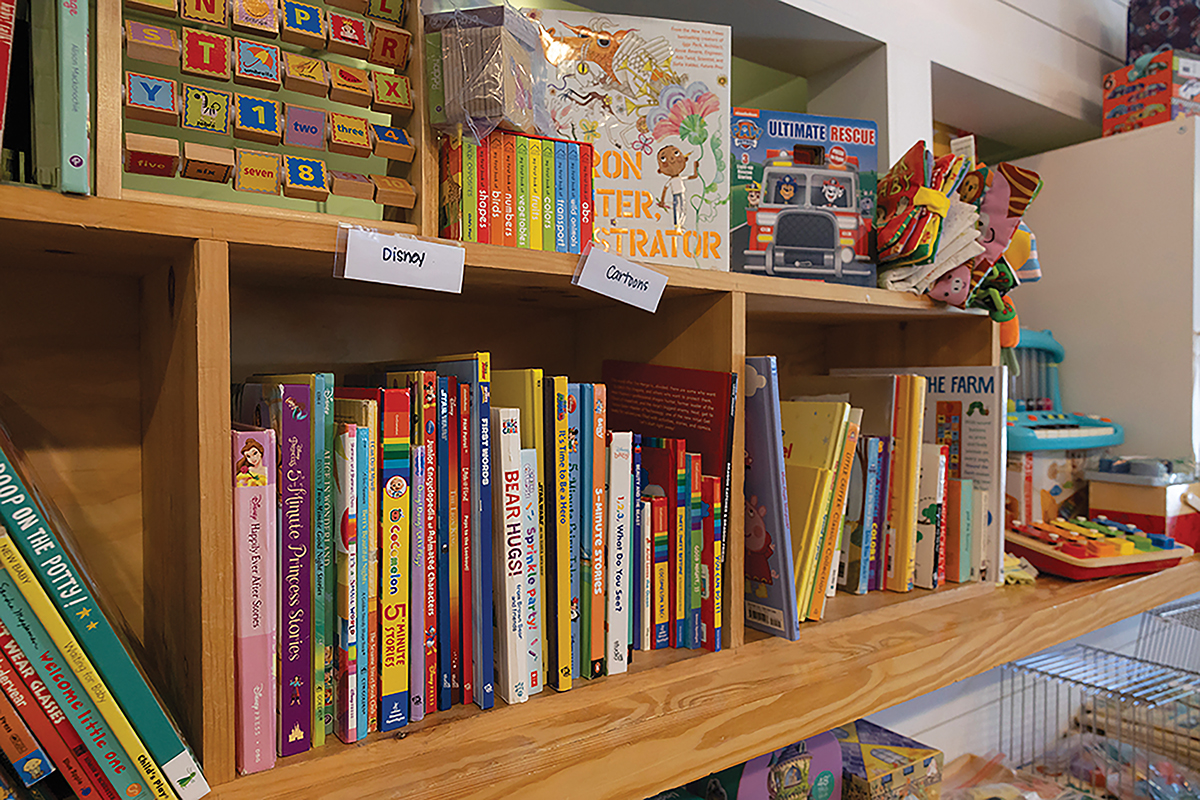
Featuring a wide array of gently used outfit options for newborns to 10-year-olds from top brands like Lilly Pulitzer and Zara Kids, as well as an assortment of toys, books, and gear all discounted up to 75% off regular retail pricing, the store immediately found a loyal clientele—including many shoppers for whom consignment stores overall were “never on their radar,” says Levinson.
“People were like, ‘Wait, I can support this local, mom-owned business, make money, and keep shopping?’ Why wouldn’t I?” she remembers.
Little Oak’s business model and inviting feel (the store features an in-store play area for shoppers’ kids—full of secondhand equipment, naturally) have resonated with Triangle parents eager to shop and sell kids’ wares. For many, the sustainable nature of consignment shopping, especially for kids, adds to the appeal.
“My daughter grows out of her clothes so quickly, so it doesn’t make sense to buy her expensive outfits she won’t be able to wear for more than a month or two,” says Emily Cataneo, who has filled her toddler’s wardrobe with Little Oak finds like Grinch pajamas and baby Doc Martens. Stores like Levinson’s, she adds, allow parents “to get your kids stylish clothes and toys they love without breaking the bank, and then you can pass them to other families—saving your house from becoming a graveyard of hoarded onesies.”
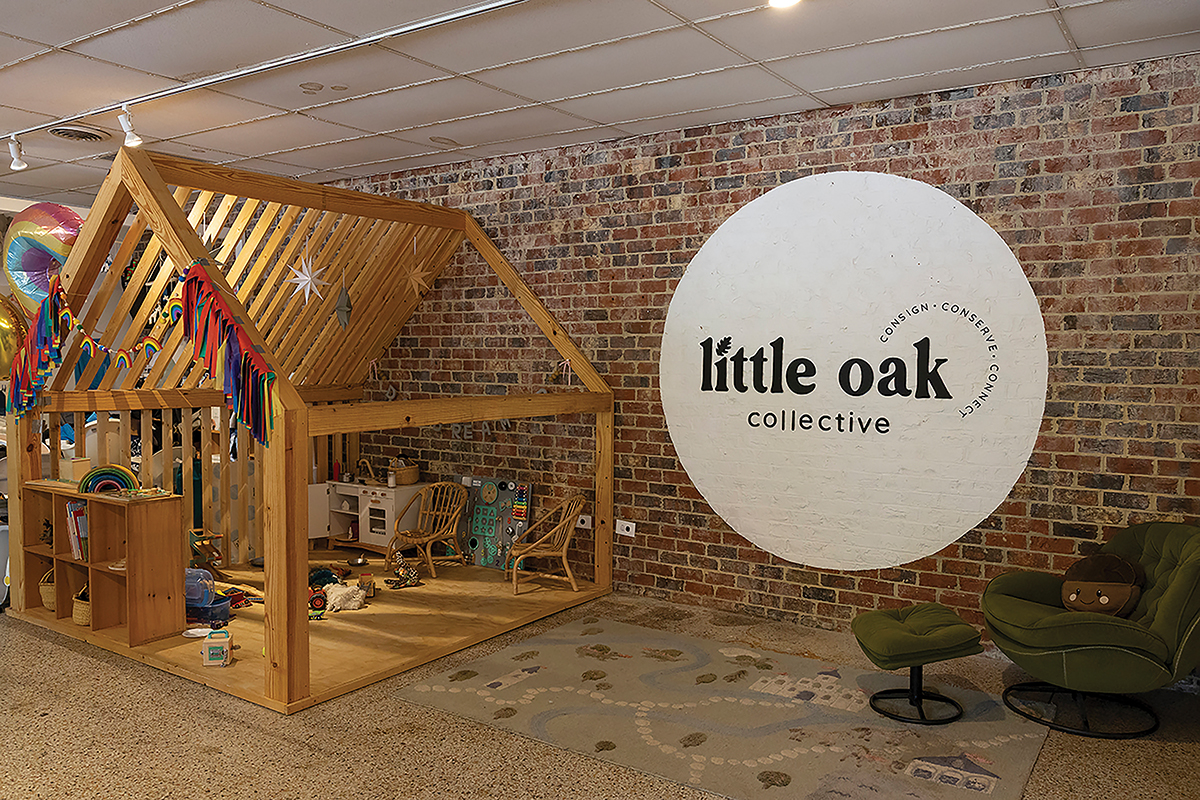
While Levinson certainly hoped that parents would be interested in Little Oak’s model, she was surprised by just how enthusiastic many were to donate items. “I grossly underestimated how much inventory people would have, which is ultimately why we were able to grow,” she recalls. Little Oak’s early success led Levinson to open a second shop in Wake Forest in September 2024, as well as a third Little Oak in Cary’s Waverly Place retail complex this summer. “The fact that we’re a secondhand store in a major shopping center, with a Whole Foods as the anchor tenant, goes to show the demand,” says Levinson. “It’s very exciting.”
This March, Levinson decided to see if that demand could extend past Little Oak’s age range with State of Thrift, a consignment shop just steps from Little Oak focused on trendy, youthful looks. While State of Thrift was originally intended to be aimed at teens—”We had families that had grown out of Little Oak and were like, what do we do now?” says Levinson—she soon found that adults were also gravitating to the store. Already, the shop is so full of inventory that it’s growing out of its space and may soon require an expansion, too.
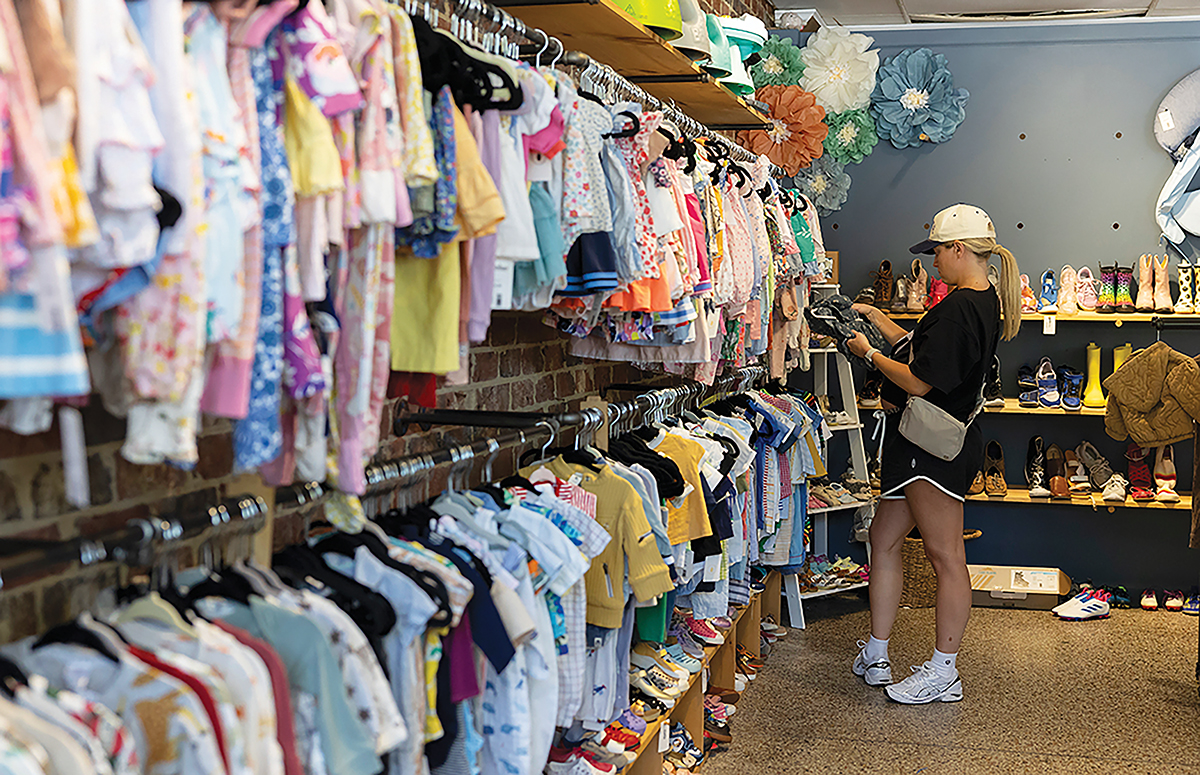
Levinson credits her “amazing team”—including Caleb, who’s built out each store; brother Dylan, who runs State of Thrift; and Madison Moreno, who manages the Raleigh Little Oak—for the businesses’ continued success. Her family’s ever-growing social media fanbase has also been an asset; Triangle Families Explore frequently collaborates with Little Oak for family-friendly markets and clothing swaps that “tie it all together,” Levinson says.
And of course, her stores wouldn’t be able to thrive without their customers. After all, Levinson notes, consignment stores are only as good as the products sellers provide.
“We really owe it to our community in Raleigh that this has worked,” she says. “They make all these stores possible.”

This article originally appeared in the November 2026 issue of WALTER Magazine.