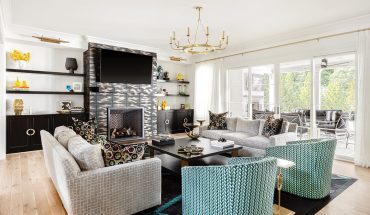
Interior designer Robert MacNeill worked with his client to create a bold, sleek living space that effortless mixes heritage and contemporary pieces.
by Ayn-Monique Klahre | photography by Anna Routh Barzin
In this Village District townhome, antiques live alongside contemporary art, and traditional furnishings find balance with an industrial vibe. “The home is more modern, but these touches are a reminder of a whole life built together— we wanted the heritage to show,” says interior designer Robert MacNeill, a cofounder of Roux MacNeill Studio, who was the principal on the project.
The homeowners, a couple whose children are grown with families of their own, moved to the Legacy Builders townhome from a much larger residence in Country Club Hills, attracted by the walkability to the Village District and accessibility features for the future. But that involved culling down furniture, art and more — a collection accrued over a lifetime. “They have great taste and beautiful pieces, so as we downsized, we worked to include just the most important things that each of them liked,” says MacNeill. “The hardest part was paring down and focusing on one or two things per room to use as a starting point,” agrees interior designer Katerina Pugh, who also worked on the project.
Those special pieces — including two Oriental rugs, antique cabinets and a suite of early-American wallpaper panels — became the anchors for each of the rooms. The wife drove most of the design choices, informed by an appreciation of a range of influences, from 18th-century antiques and traditional styling to contemporary pieces and zippy prints. “She has such a good design instinct and pulls from fantastic sources,” says Pugh.
As an overall theme, “we did sort of an industrial vibe,” says MacNeill, pointing to the ebony-stained floors, lacquered kitchen cabinets and stark white walls in the main living spaces. “At its core, the house is almost gray scale, there’s not much color,” he says. “But we layered in a teal-and-orange color scheme throughout the home through decorative elements like rugs, upholstery and art.”
The open-plan dining room, kitchen and living areas presented a challenge. “We wanted to visually connect the spaces, but also have them feel different from each other,” MacNeill says. To unify them, they sprinkled chrome and high-shine accents throughout, including in the kitchen hardware and lighting as well as in the vintage chairs in both the living and dining areas. “We also bookended the rooms with color, it helps keep your eye traveling,” MacNeill says.
But beyond that, each space has its own feel. In the dining room, they took the “color drench” approach, says Pugh, painting the walls and molding Farrow & Ball’s Inchyra Blue. The homeowners already had the wallpaper panels and crystal chandelier; the Roux MacNeill team cleaned up and reframed the wallpaper, selecting pieces that would fit in the available wall space. “They create a sort of panorama,” says MacNeill. The sideboard is a new-to-them antique found at High Point, which MacNeill selected for its mixed metals (“I like how it combined the brass and chrome,” he says), but the dining table is actually a commercial conference table. “It has a concrete base and a nice modern curve to it,” says MacNeill. He worked with a custom rugmaker in Nepal on a check-print rug to tie it all together. “We changed the color a few times to get it just right,” he says.
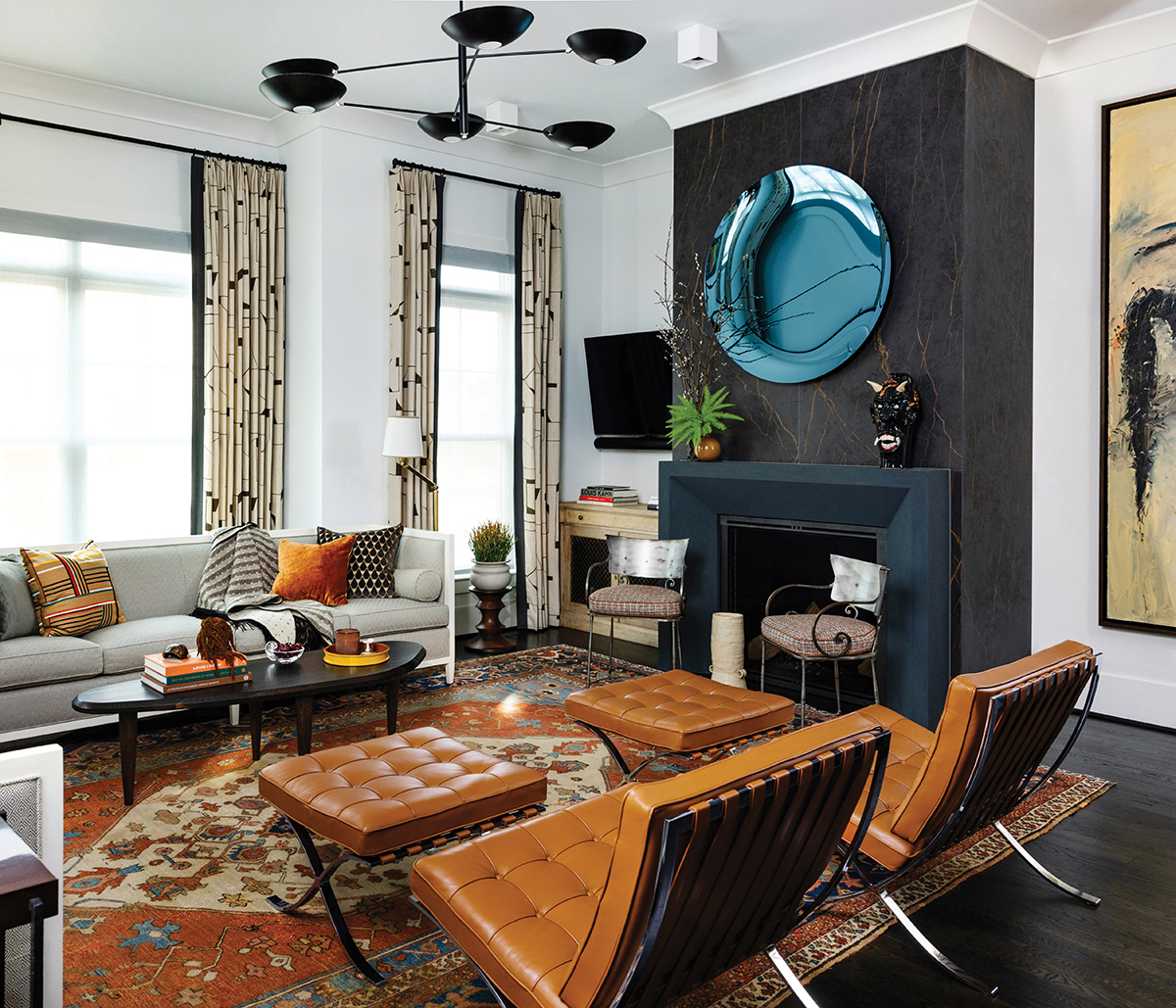
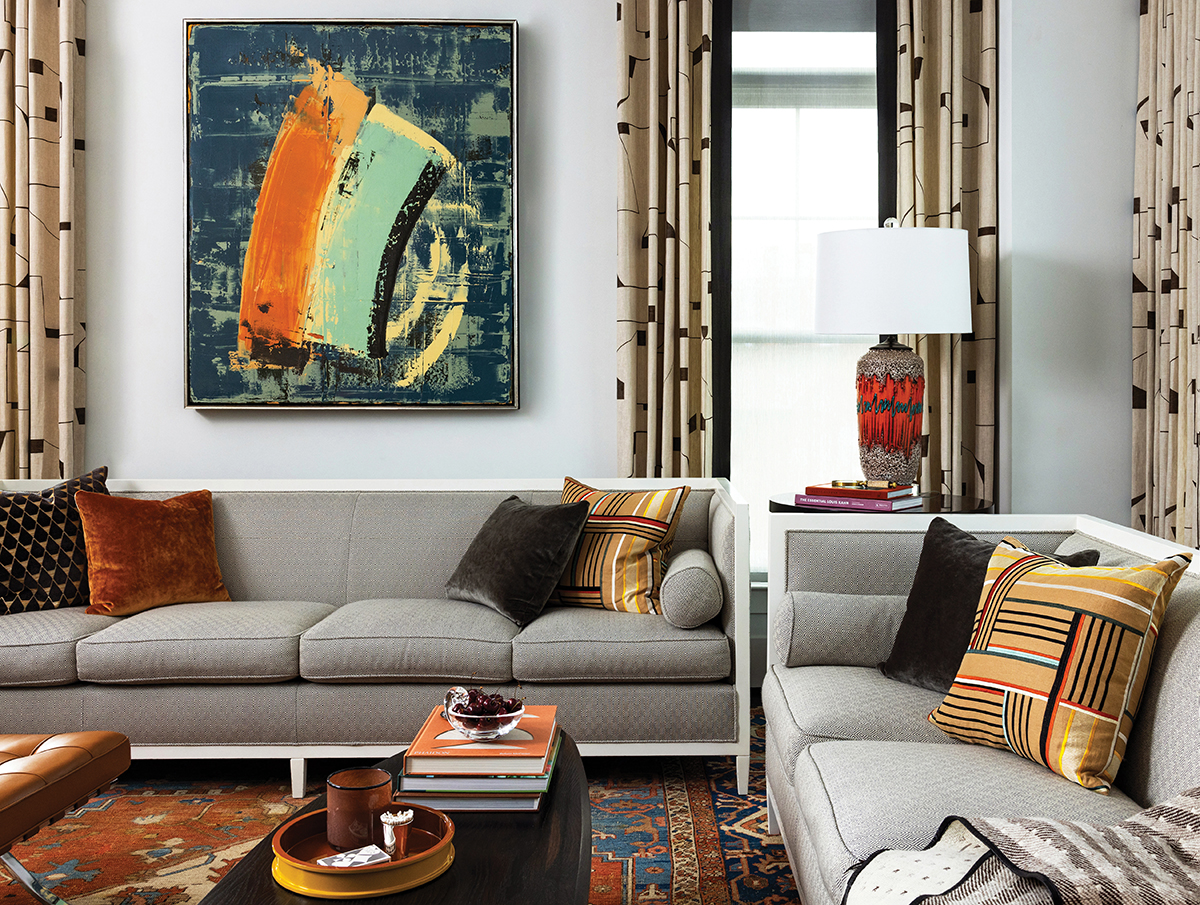
In the living area, a teal mirror on top of a Dekton fireplace surround decorates the mantel without overpowering the art. Two Baker sofas from their previous home, which were recovered, line adjacent walls. “They serve as sectionals, but in a more refined way,” says MacNeill. In front of them is a coffee table custom-made by local woodworker Eric Padden. “Its shape was inspired by a Georg Jensen cheese board,” says MacNeill. The television is tucked into a corner; they cut down a 19th-century cabinet to fit into the nook below for all its components. And precious pieces, like a face jug collected in the North Carolina mountains and a pair of outdoor chairs that were family pieces, round out the spaces. “It’s a fun marriage of new and old,” says Pugh.
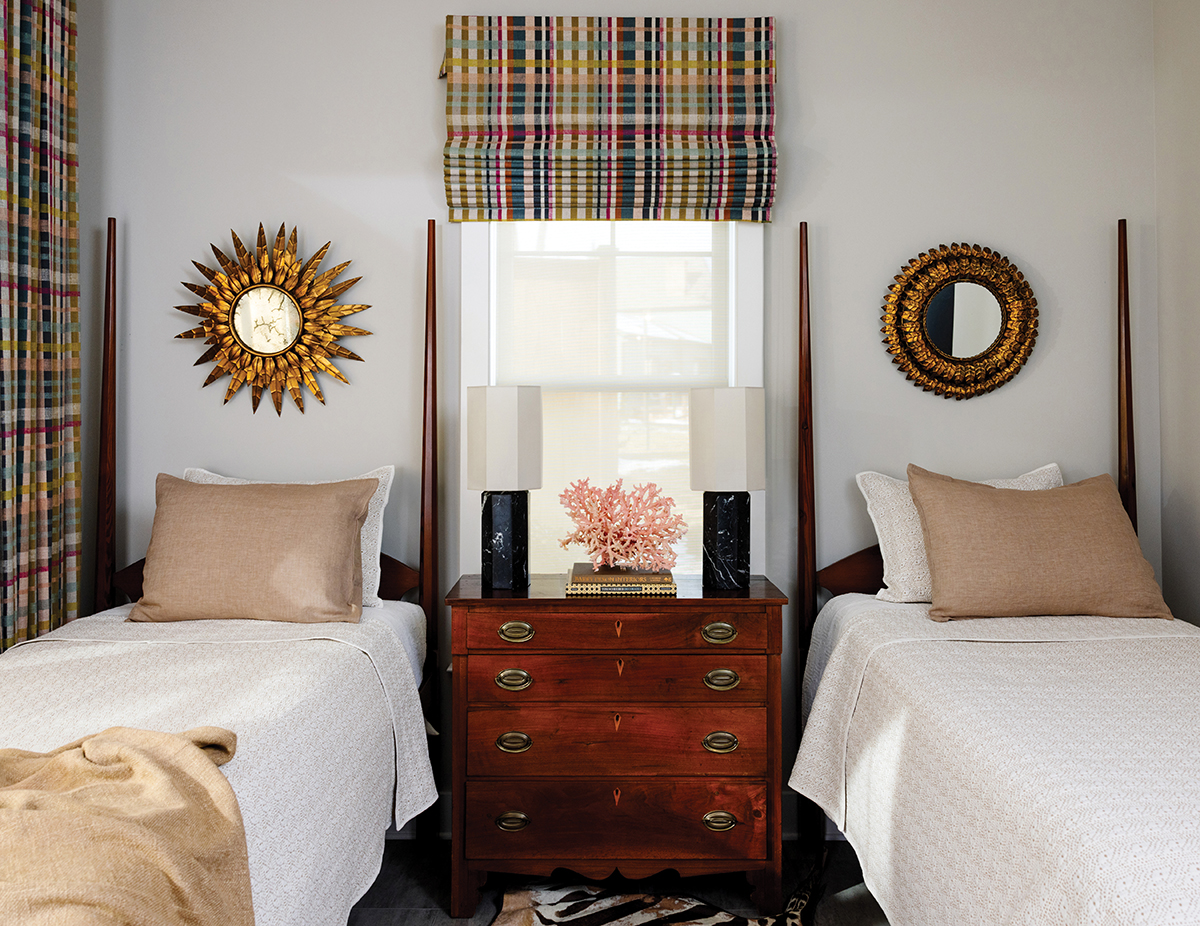
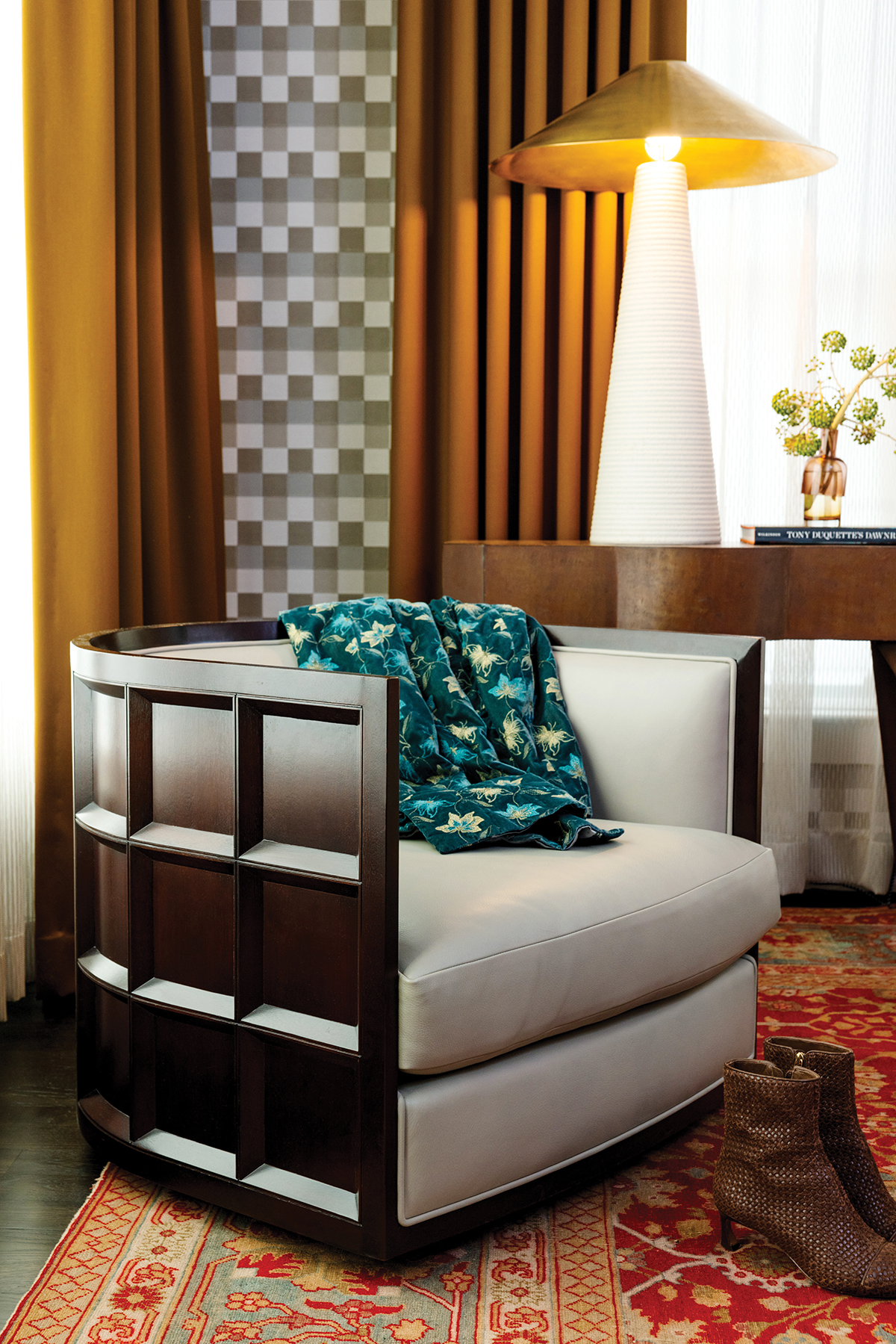
They used this formula throughout the home. In the bedroom, for example, they paired an antique rug with a bed in the same color scheme, custom-upholstered in a contemporary Kelly Wearstler for Lee Jofa fabric. Checkered wallpaper offers a contrast, and a Baker accent chair they already had was recovered to work for the space. In the guest room, the near-identical combos of beds, mirrors and ottomans are “sisters not twins,” says Pugh. “The symmetry is there, but it’s just a little off.” MacNeill chose plaid curtains to round out the space. “We wanted to jazz it up a little, make it more colorful and fun,” he says. “The stripes in the curtains feel cohesive with the zebra rug, but a little unexpected.”
Throughout, the design connects the homeowners to their past, with an eye toward ushering in their next chapter, says Pugh: “They have been around the world and have a funky style, and this home reflects that great combo of a love of antiques and an appreciation for contemporary design.”

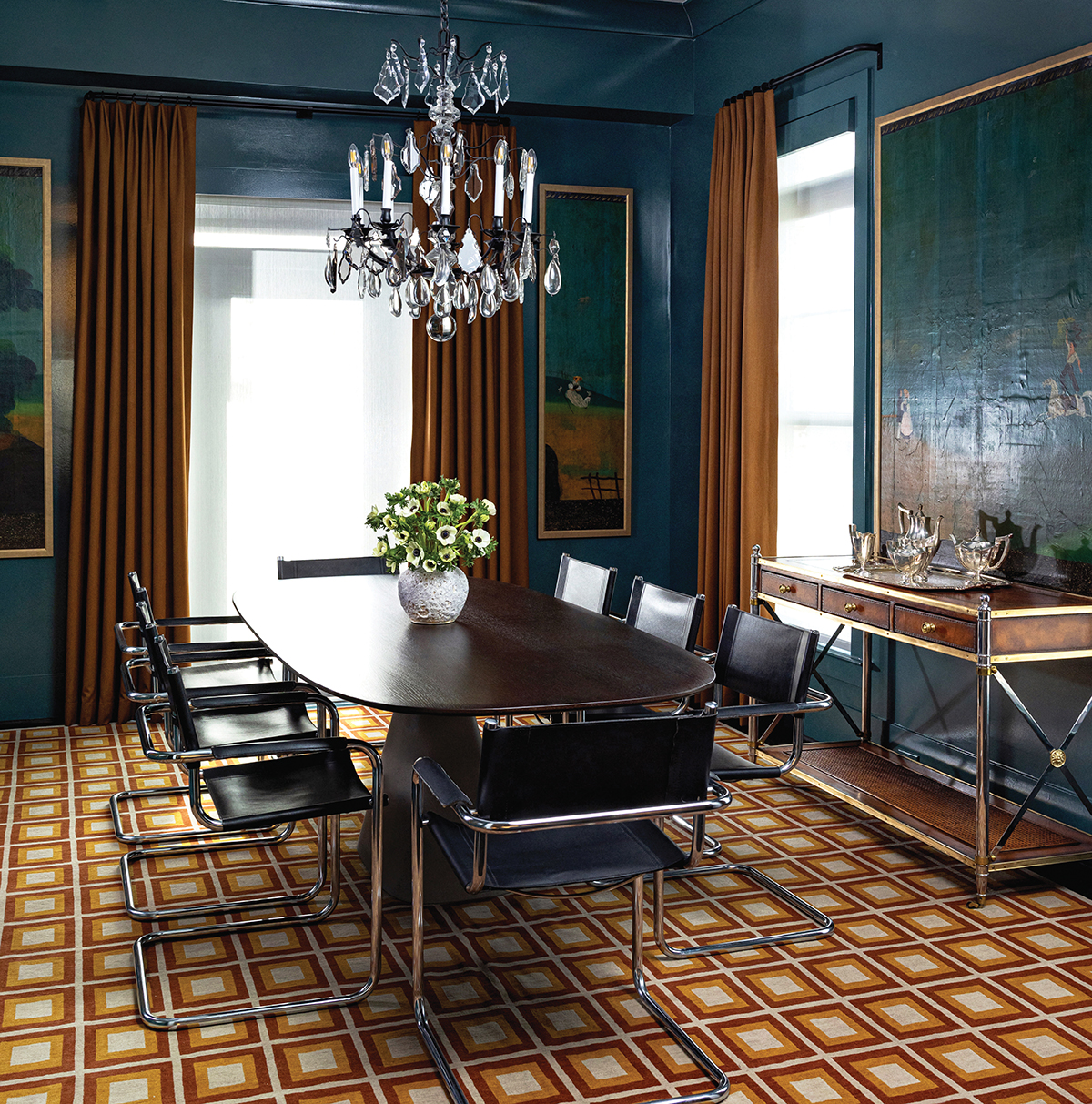
“I’ve always had an eclectic, slightly masculine style,” says the homeowner. “I like to buy old things first, but if I buy something new, I want it to feel new, not like an imitation of something that’s been done before.” For the dining room (top left), that meant finding vintage Marcel Breuer chairs and an antique console to fit the space, but bringing in a chandelier from their previous home. “My chandeliers come with me from house to house,” says the homeowner.
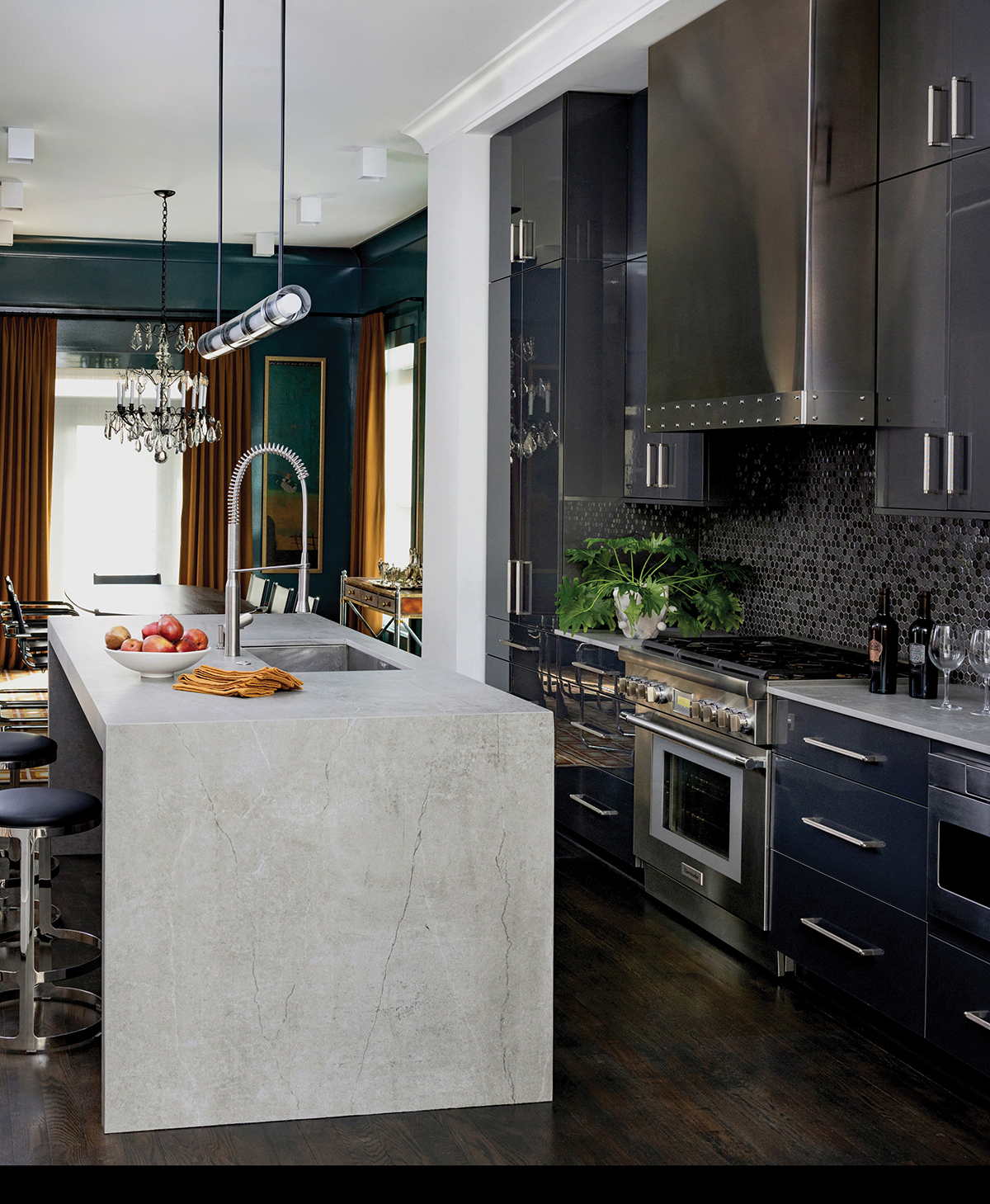
“I’ve always liked the industrial look in a kitchen,” the homeowner says. The kitchen countertops (top right) are Dekton by Cosentino. “They’re indestructible, for a worry-free kitchen,” MacNeill says. “With the connected living space, it makes it an excellent place to entertain. It’s not a huge space but it lives bigger than it looks.” In this area, they made some minor changes to the floor plan, like adding some blocking around the entrace to the dining area in case they want to add doors in the future. The blue paint and ochre curtains in the dining room pull in the colors from the rug in the living area.
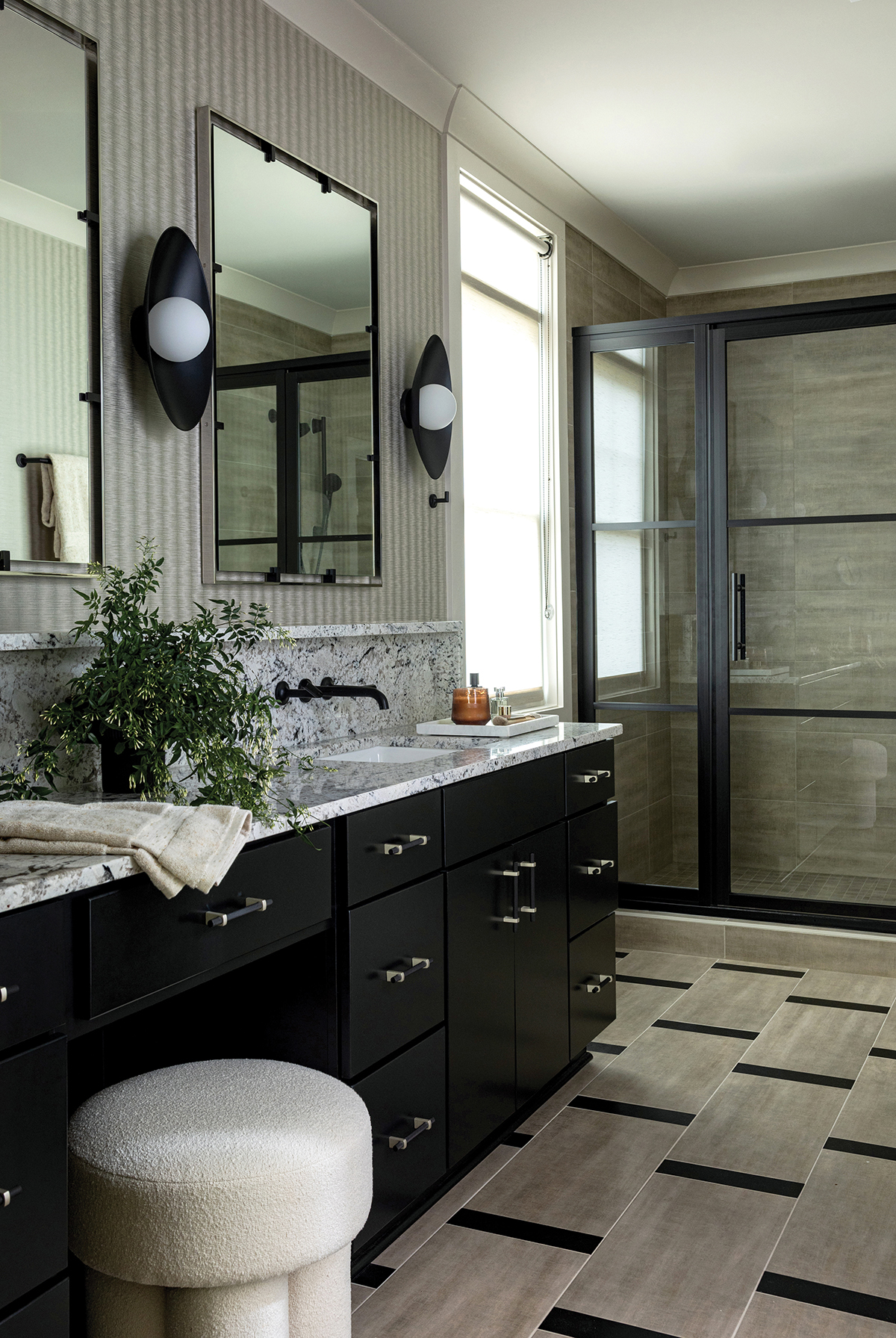
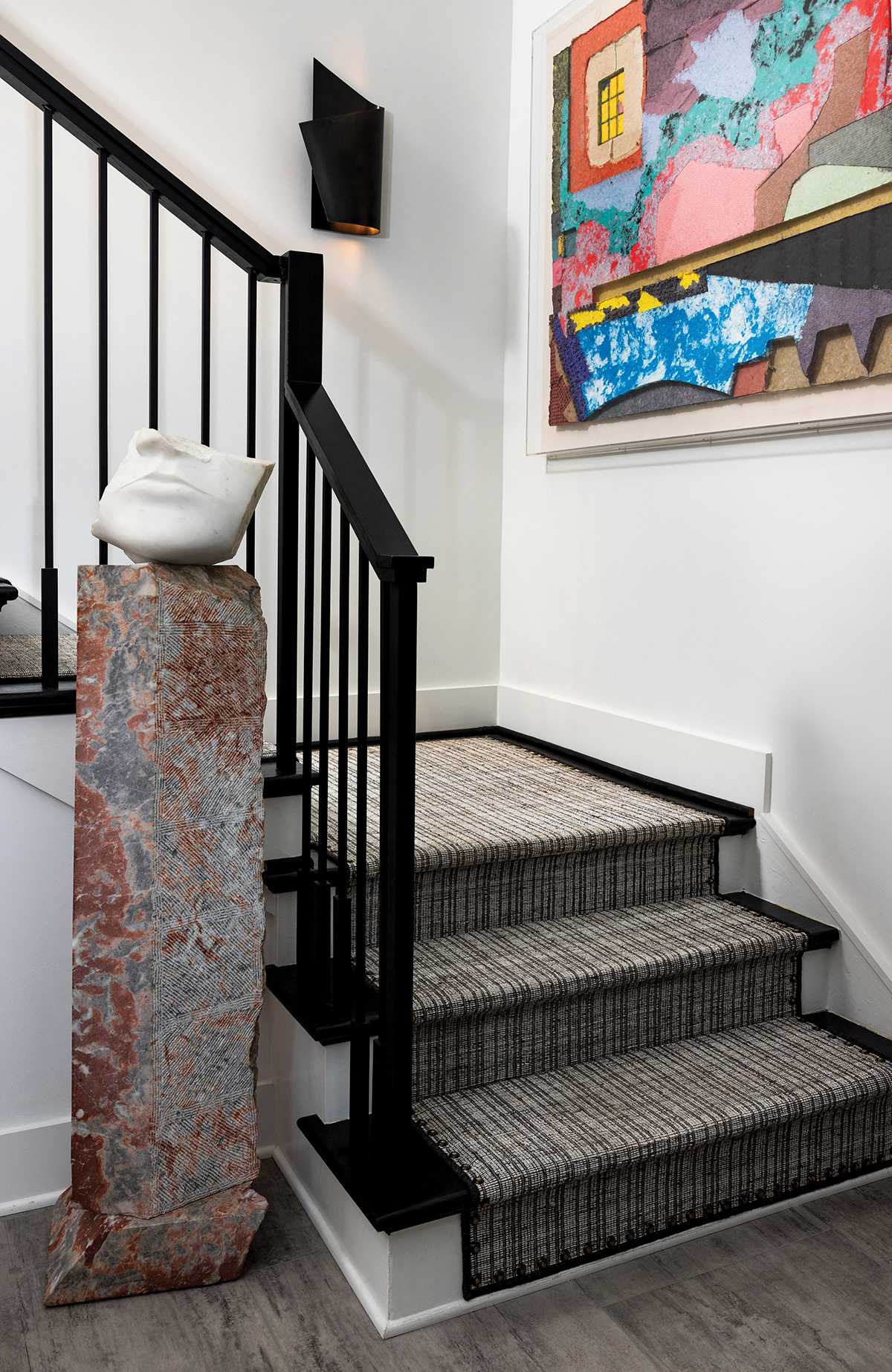
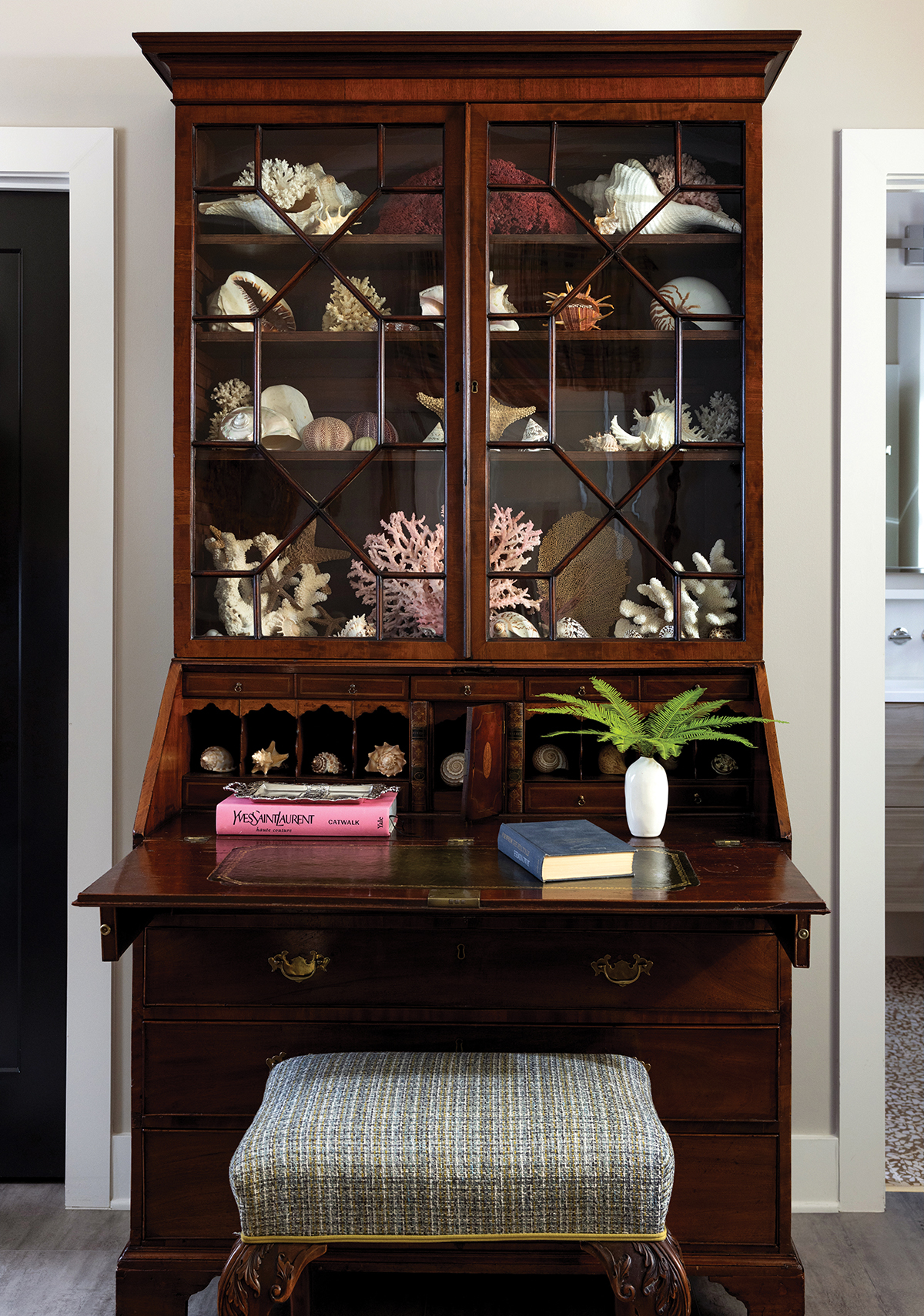
MacNeill added a nailhead trim to the Eatmans Carpet runner on the stairwell (top right). “I love the brass tack, it feels old-timey and European,” says the homeowner. For the primary bath (top left), MacNeill designed a vanity with a built-in makeup counter. They laid two different tiles to create the pattern on the floor. “We liked repeating the idea of the rectangles and squares from the wallpaper in the bedroom,” he says. The black cabinetry and steel on the shower door further draw out the pattern. An antique secretary in the guest room shows a collection of shells and other treasures.
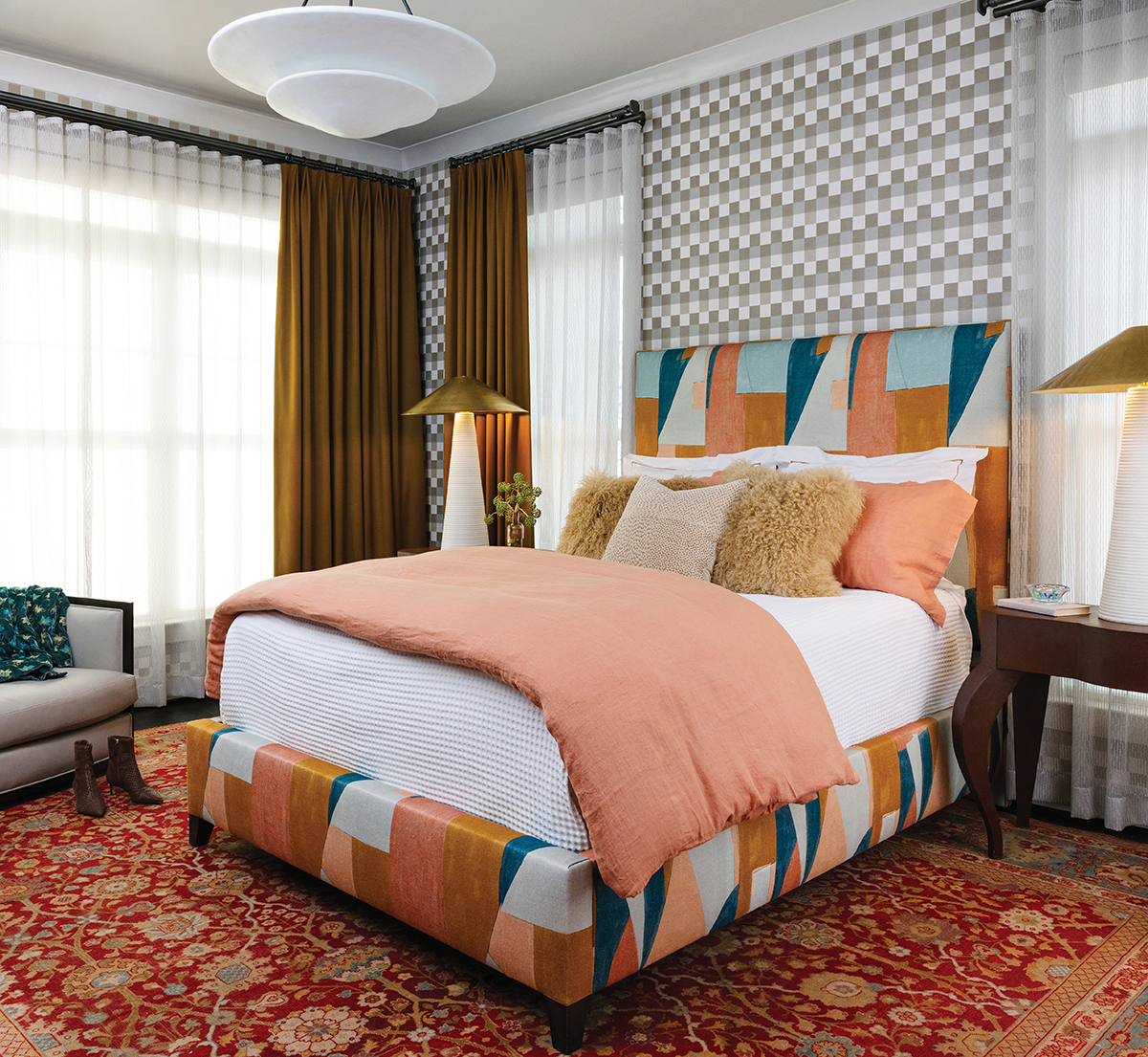
The master bedroom started with the rug, which had previously been in their dining room. The Roux MacNeill team found the new-to-them antique side tables in High Point and had the Baker accent chair recovered. The bed is upholstered in Kelly Wearstler for Lee Jofa fabric. The curtains are an ochre wool, and they are actually the same fabric as the ones in the dining room. “I don’t usually repeat things, but the fabric was perfect in both spaces,” says MacNeill. The bedroom lamps and chandelier are from Visual Comfort.
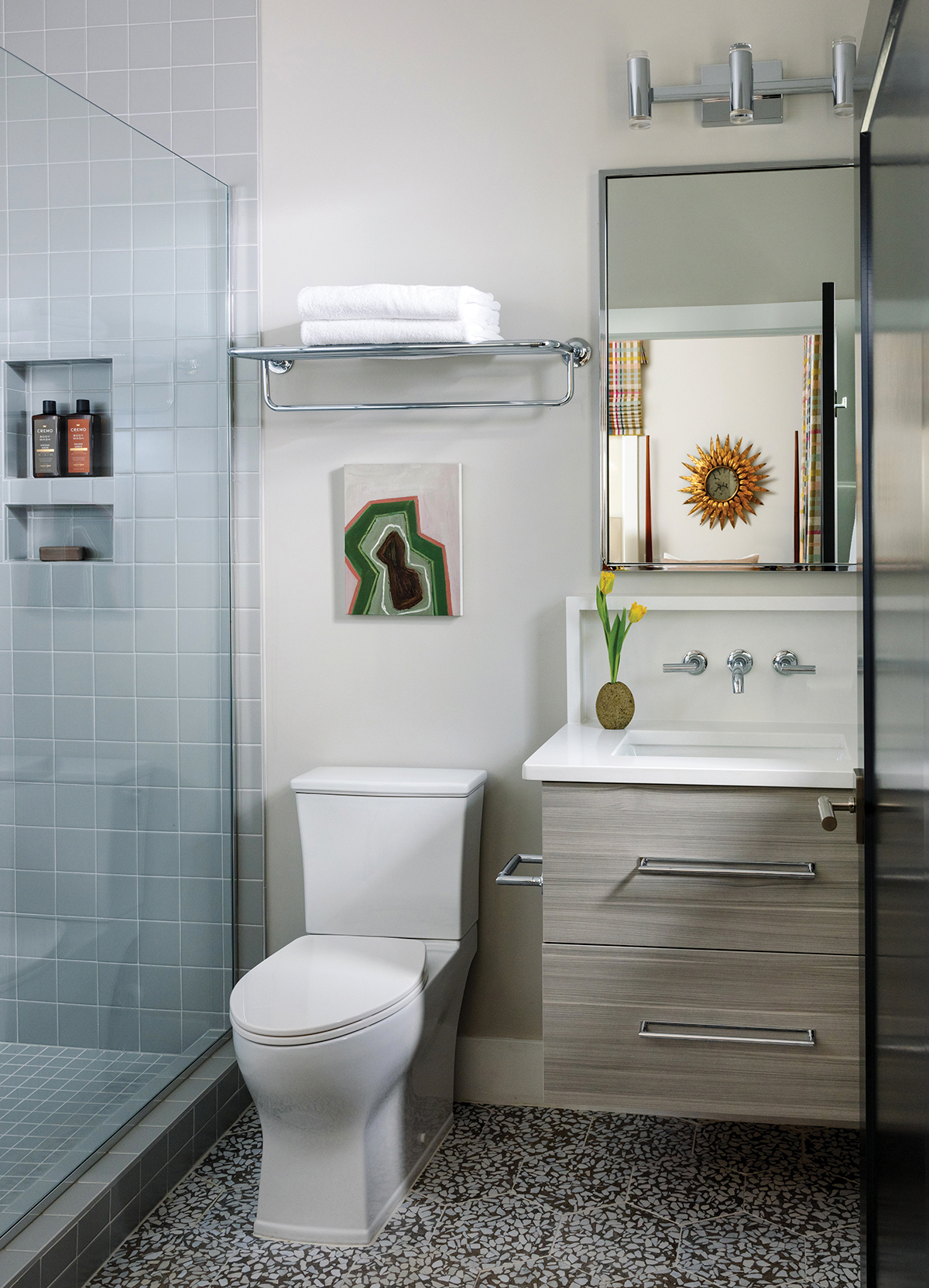
In the guest bathroom, commercial-grade tiles give an almost institutional look. “It’s the sort of tile you’d find in a YMCA shower,” laughs MacNeill. The art is by Raleigh-based painter Ashlynn Browning.
In the guest room on the ground floor, almost all of the furnishings came from the owner’s previous home, including the antique beds, the zebra rug, the mirrors, the chest and the ottomans, which MacNeill had recovered in a patterned tweed.

This article originally appeared in the February 2026 issue of WALTER magazine.