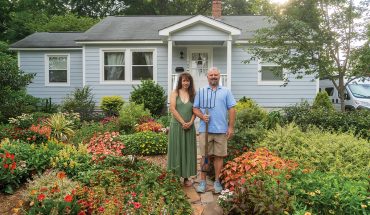
Frances and Barrett Cain have turned their barren land into an oasis of beautiful plantings that they love to share with others
by Helen Yoest | photography by Juli Leonard
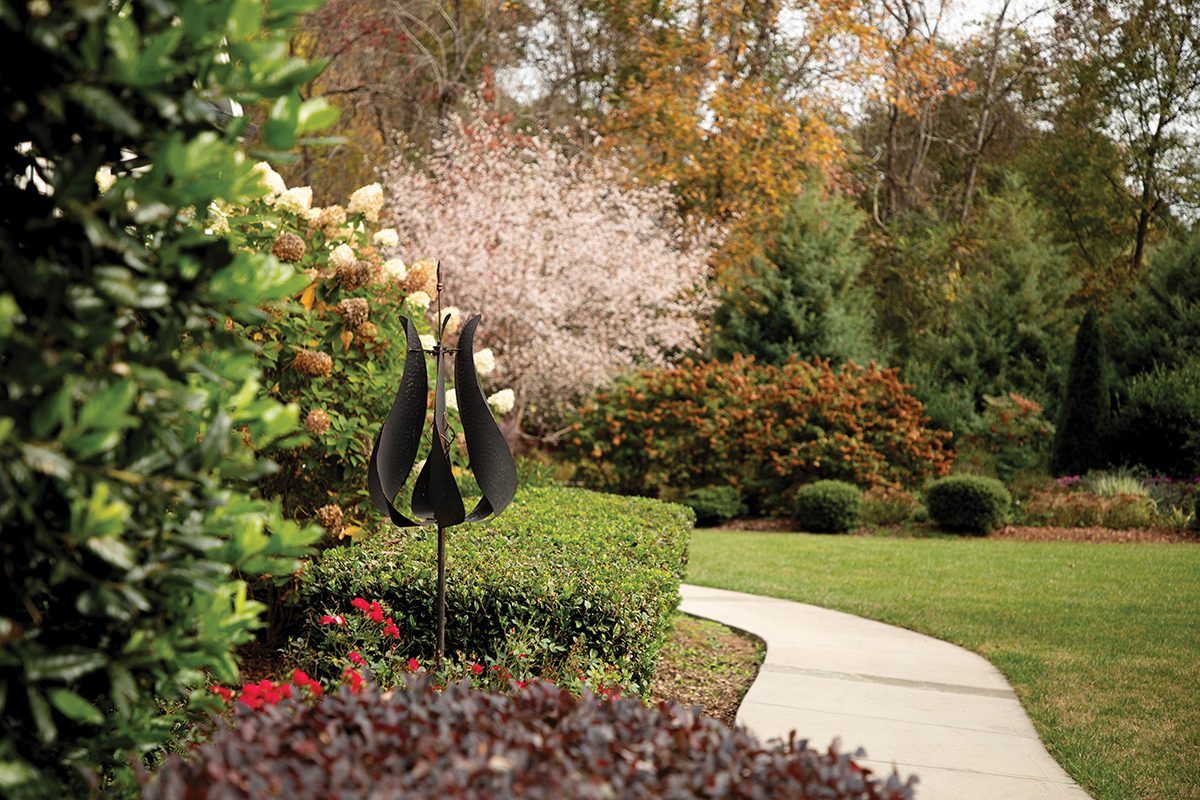
Nine years ago, Frances and Barrett Cain’s 2-acre plot in the Carries Reach area was a compacted lot with untilled dirt that once housed storage barns for an adjoining tobacco farm. The Cains weren’t gardeners when they lived in Northern Virginia before retiring to Raleigh, but you’d never know this from what they have accomplished — turning the barren land into an oasis of beautiful plantings on fertile soil. It was no easy task, Barrett jokingly says: “We have the pain and surgeries to prove it!”
As busy professionals, Frances and Barrett had little time for hobbies for much of their lives. Both worked for USAID in Washington, D.C., and Barrett also worked with the Small Business Administration and the Veterans Administration. Their dream, however, was to move to Raleigh to own land where they could build a garden.
Neither had much experience gardening; Frances grew a few flowers, Barrett took care of the lawn. “But my parents had an interest in horticulture, with Mom growing flowers and Dad growing roses,” Frances says. And during visits to her grandparents’ farm in Southampton, Virginia, Frances says, her grandmother, aunt and uncle would let her “playfully” work the rows of peanuts and tobacco.
In 2014, the Cains bought this property from Homes by Dickerson, a local custom builder, then worked with them to build their home. After purchasing the lot, Frances asked the builder, “Who owns the land next to us?”
Turns out, the builder also owned the lot next door, too — so Frances offered a quick follow-up: “Can we buy it?” The Cains were able to purchase the second lot, which was full of hardwood trees, and they left that land as it was.
With land already purchased in Raleigh, they listed their home in Fairfax, Virginia — but didn’t anticipate how quickly it would sell. “We had no choice but to find temporary housing,” says Frances. “We put most of their things in storage and rented a room at an extended living hotel in Fairfax for eight months, traveling to Raleigh weekly or biweekly to check on the building progress. Even with the storage unit, there were boxes all around.” (It was the first real test of their marriage, she half-jokes, since they’d been wed just two years before.)
Once they moved in, the Cains began working the land that would surround the house. “We found all sorts of tools and such from where the old tobacco barn disintegrated,” says Barrett. “There were gears, plow parts, ball joints, tin, barbed wire and old barn wood.”
“And there were so many rocks — big rocks — that had to be cleared, as well as roots,” add Frances, figuring that the rocks were used as edging for earlier garden beds.
They amended the compacted soil with pine bark, homemade compost and humus compost, then added layers of plants to the new beds, with a goal of having something blooming each season, starting with Liriope along the bed edges. “Things are now growing into each other, the pruning seems nonstop!” says Frances.

While Frances designed the flower beds, Barrett tended to the lawn and the vegetables in the raised beds he had built. “We didn’t have grandiose garden plans, we just went forward with what we could do ourselves,” says Frances.
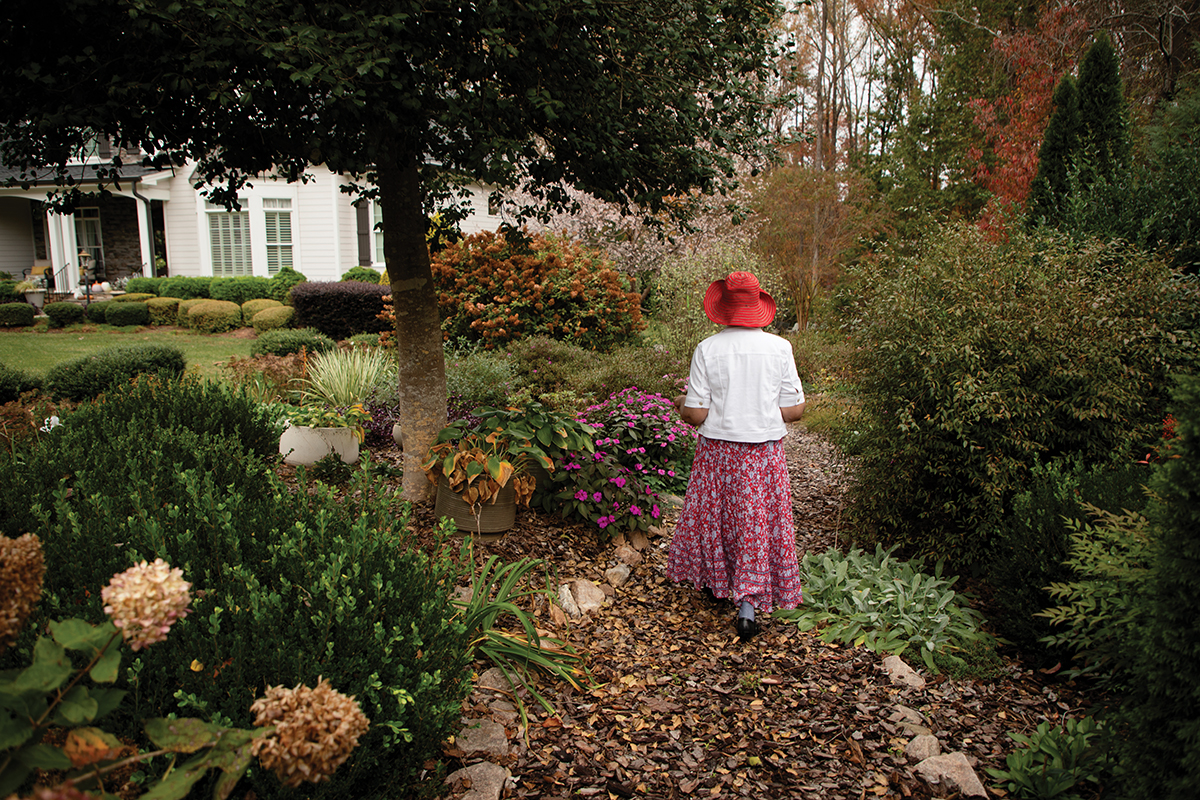
Together, they created walking paths throughout; they also grow in containers. “I have an herb garden with oregano, rosemary and thyme at the back kitchen door, where I can easily snip, snip, snip,” says Frances.
In the summer, they’ll grow squash, tomatoes, swiss chard, peppers and cucumbers. “We tried melons this year, but they require way too much space,” she adds, “and the figs really showed off this year, way more than we can eat!”
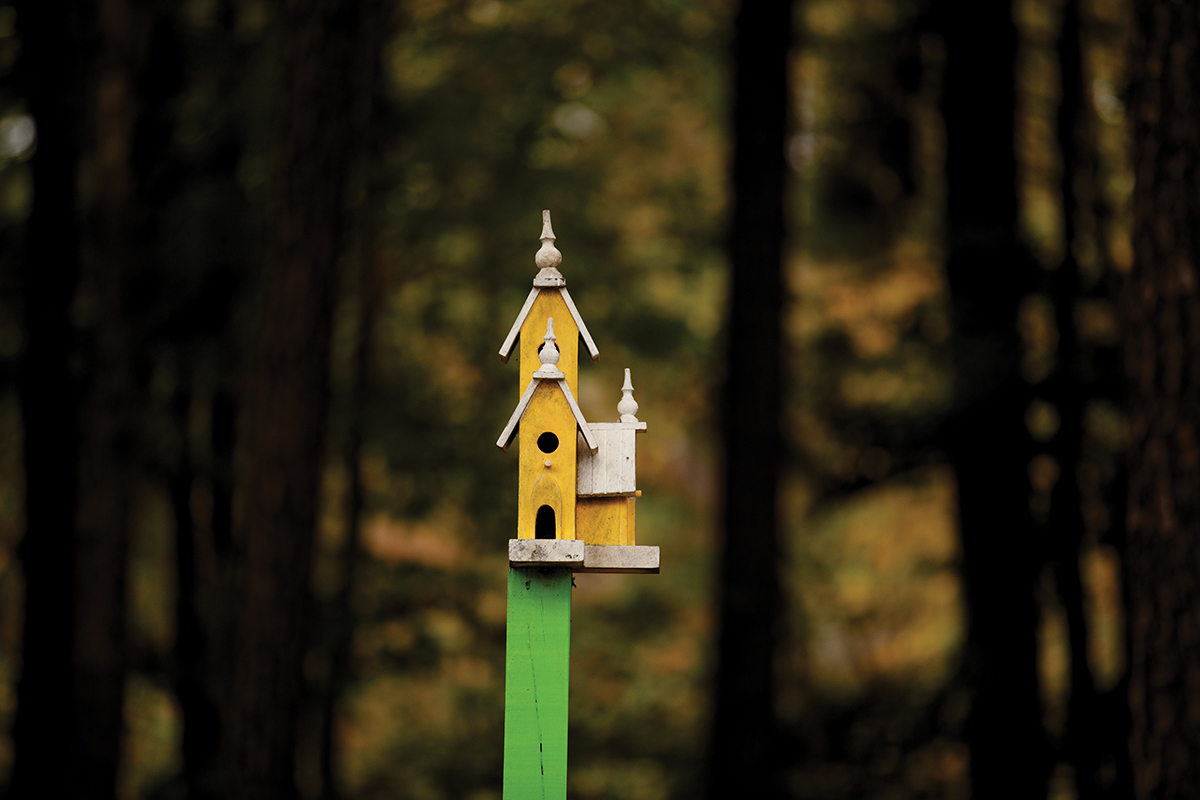
The Cains are environmentally conscious. “We don’t use any chemicals, and keep the garden as natural as possible,” Frances says. “And when I started the garden, native plants weren’t talked about like they are now. But I am working to incorporate more.” Barrett adds, “We have oodles of birds and other friendly wildlife.”

Today, they are reaping their rewards and sharing with others as they host garden tours and events with their church, First Baptist in Raleigh. “We talk a good game about enjoying the garden, but seldom get to do so on a regular basis,” says Frances. “Though we do have parties on the back porch, complete with table arrangements from the yard.”
In addition, they volunteer with the Raleigh chapter of International Focus, a nonpartisan nonprofit that promotes understanding between North Carolinians and the international community. So far, they’ve hosted five groups, including parliamentarian members, judges and attorneys from Moldova and
a group from Serbia.
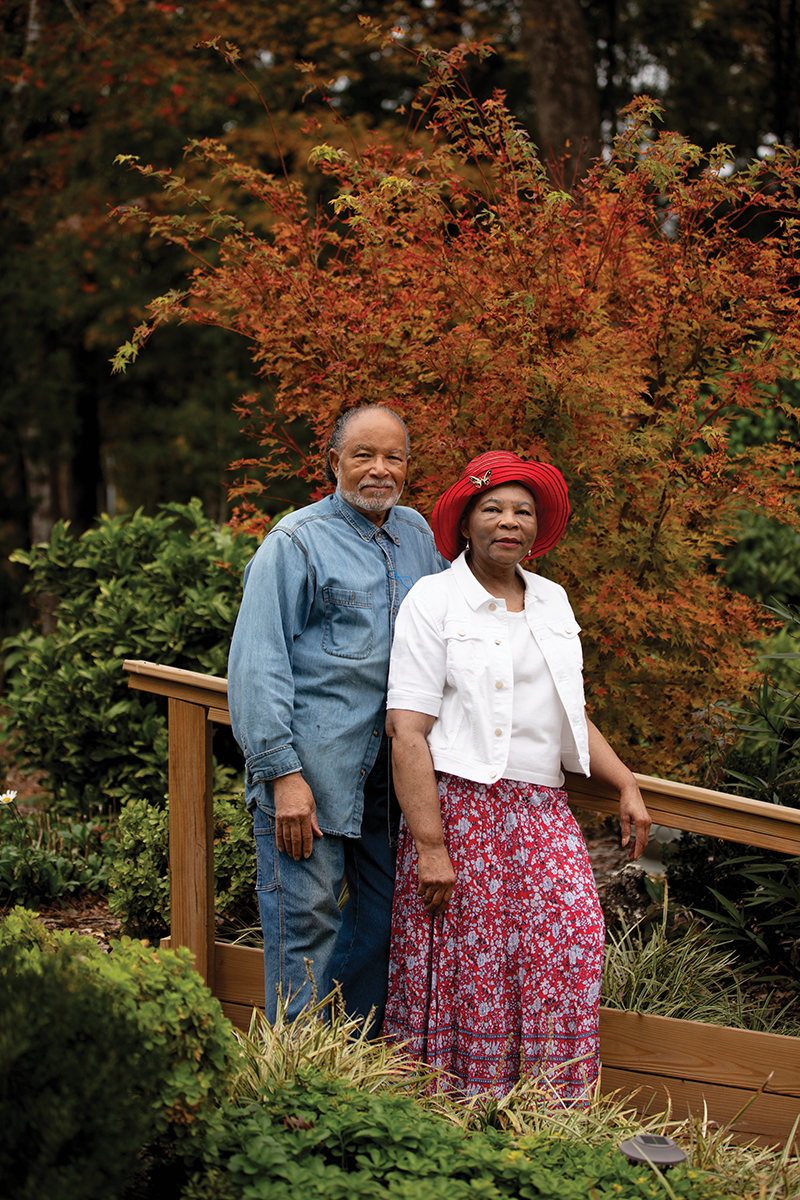
Frances has also gotten involved with the gardening community. She’s the past president of the Raleigh Garden Club and currently serves as the third vice president of the Garden Club of North Carolina. “Frances is a true pioneer and trailblazer, making history as the first African American officer in the Garden Club of North Carolina,” says Charles McLendon, president of the Garden Club of NC. “She is a joy to work with and her service inspires and uplifts us all.”
When their blended family of eight children visited, they gave the garden a name: Cain’s Park. It’s fitting for all they have accomplished. “We enjoy seeing the results of our gardening chores,”
says Frances.
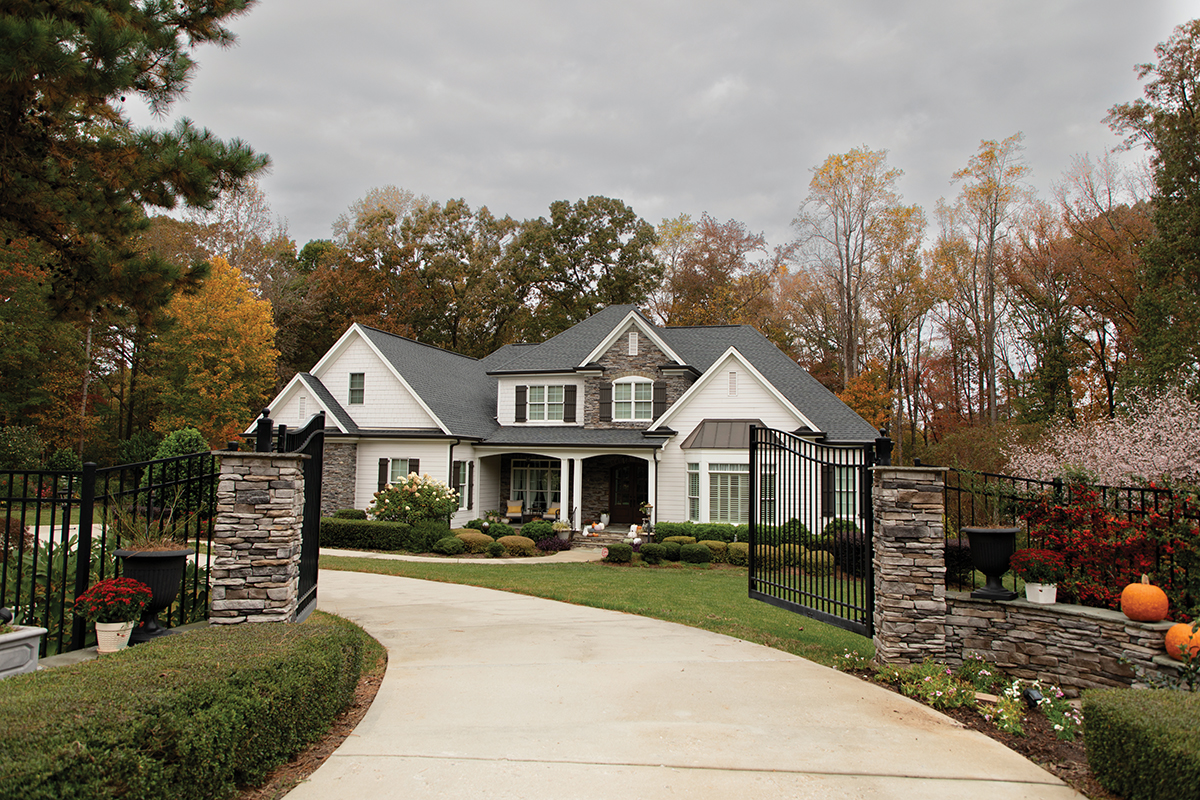
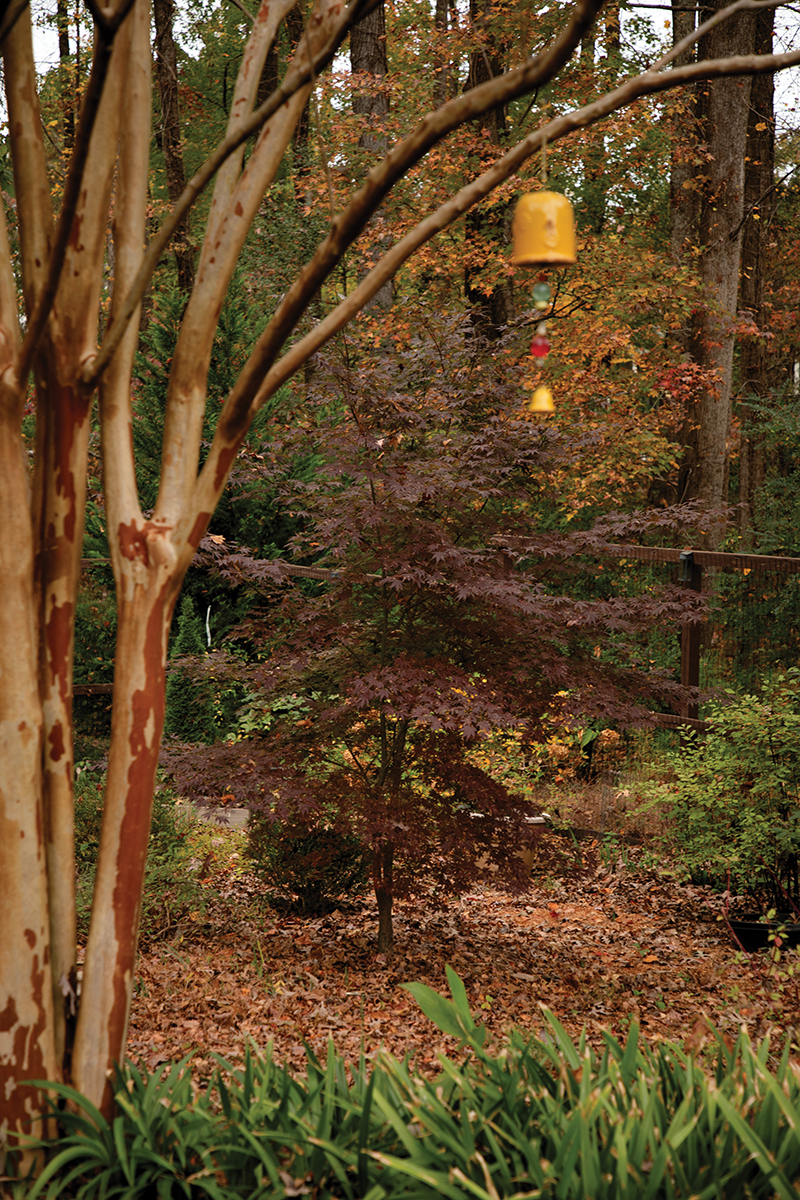
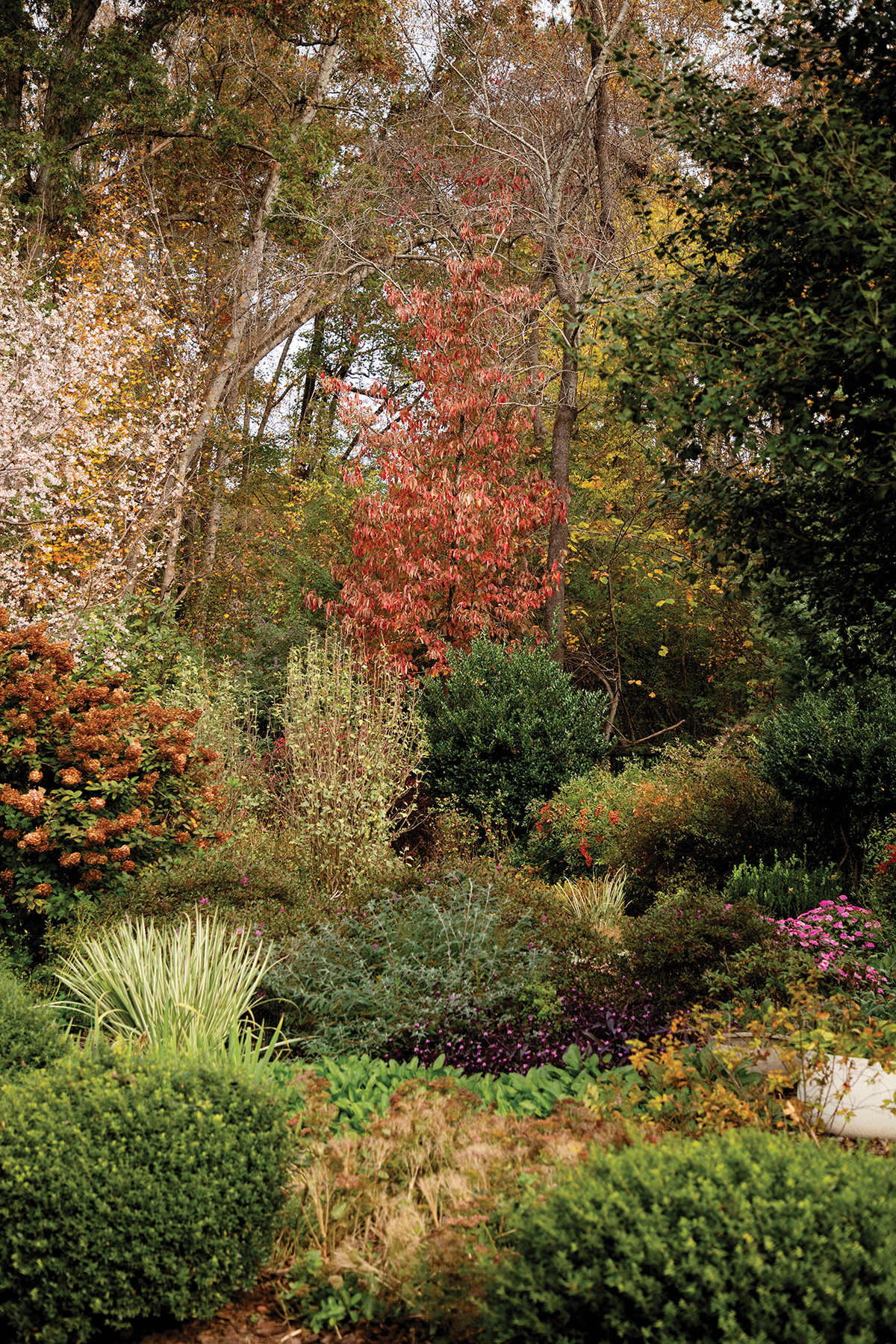
The Cain garden in the fall, where a layered and diverse group of plantings showcase a beautiful array of colors. They’ve worked their garden to include walking paths through different areas and raised garden beds for growing fruits, vegetables and herbs.

This article originally appeared in the October 2025 issue of WALTER magazine.