An ambitious relocation to the other side of the globe offers this author a fresh appreciation for his home state of North Carolina
words and photography by Michael Zimmerman
As I stepped onto the promenade of the starboard side of the Spirit of Tasmania, the brisk wind hit me so fiercely that it took my breath away — something I wasn’t expecting on the first day of June. But it was the dead of winter on this end of the globe.
At 6:30 a.m., it may as well have been midnight. Pure darkness all around, except for a few lights twinkling on a grey freighter that silently floated parallel to my vessel, which was now safely docked in the Port of Devonport, on the northern coast of Tasmania. We had just sailed for 10 hours across the choppy Bass Strait from the port of Geelong, on the southernmost coast of mainland Australia. My trusty Subaru Forester was tucked somewhere 15 meters below me in the hull, ready to disembark on an adventure.
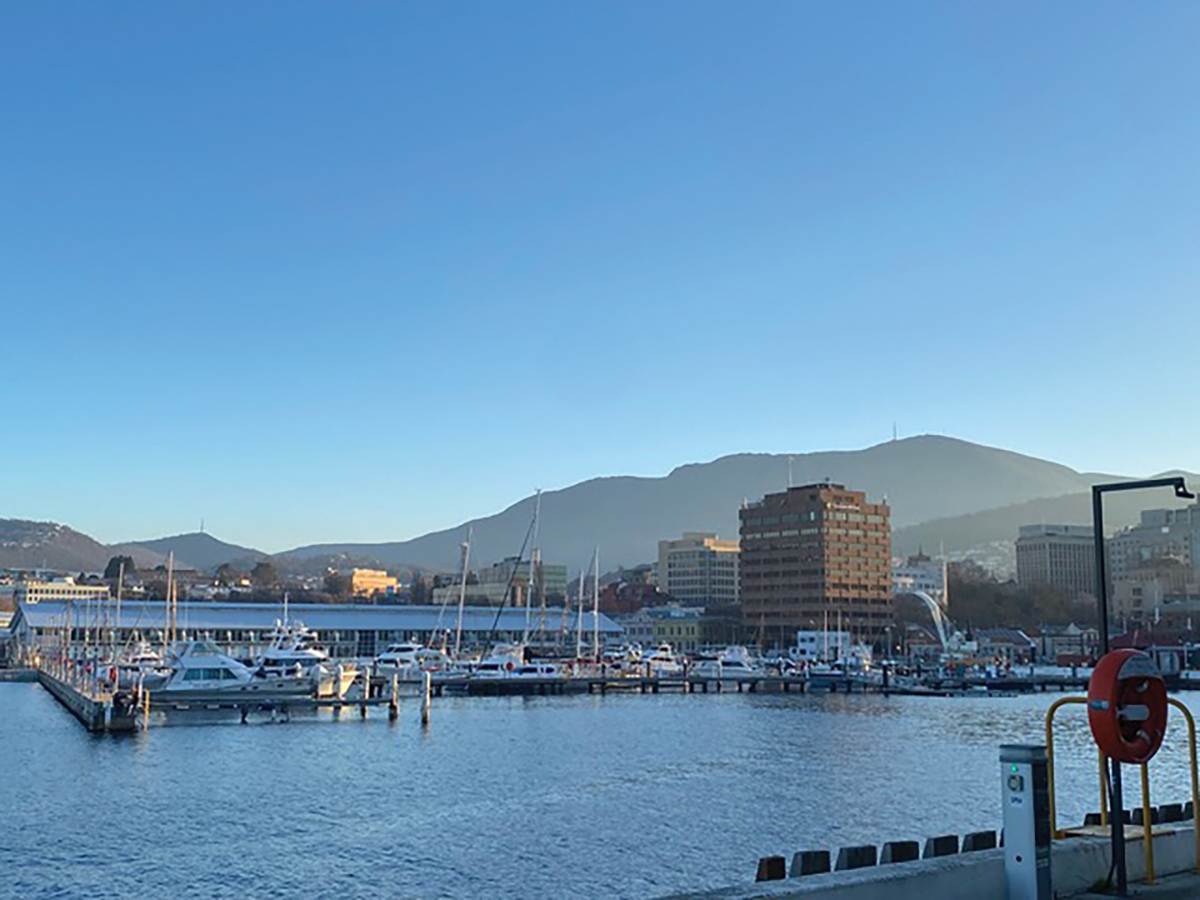
I still had some driving to do on this island: approximately three hours further south to the state capital of Hobart, where a cottage fifteen minutes outside of the small CBD (central business district, “downtown” in Australian vernacular) waited for me at the base of the snow-capped Mount Wellington. It would serve as my home for a much-anticipated — and much-needed —six-week sojourn. I reflected on what brought me to this point. What was I thinking? What was I doing here? What North Carolinian in their right mind goes this far south in the Southern Hemisphere, alone, in the middle of winter?
I went sprinting out of North Carolina towards Australia in 2018, four years into a full-time career with Ernst & Young. Or perhaps “flying” is a better word.
I’d been offered the opportunity of a lifetime to relocate to Melbourne, moving expenses covered, a big promotion in hand and a new portfolio of work in a place most Americans only see in movies. Oi oi oi! I was young, healthy, ambitious. Maybe a bit naïve, but hey, I could speak the language. It was a no-brainer.
I sold my car and my comfortable townhome at the edge of Research Triangle Park, packed my furniture in storage and spent a few weeks saying goodbye to friends and family, daydreaming about what this adventure would have in store.
I was greeted by a much bigger-city culture. “You’re from where, mate? Rail-lee?” Aussies are friendly and blunt, often skeptical of Americans’ propensity for politeness. This Southern boy, with all his “manners” and social habits, was in for it. “Don’t call me ‘sir,’ what kind of wanker says that?!”
The two work colleagues who’d recruited me, Ash and Shameer, showed me the ropes around the city. Over time, Ash became like a second father and Shameer the older brother I never had. I came to deeply appreciate the importance of mentorship — especially one that is underpinned by authentic cross-cultural and familial understanding.
That’s why you move abroad: to learn a new culture, meet people, expand your mind, make mistakes, share your own experiences with others. I had a blast.
But I soon learned I had a tendency to overdo it — both socially and professionally. I wanted to be liked. I didn’t want to let anyone down. If a partner needed a report ASAP, I got it done. If a colleague wanted to grab drinks, I’d go out. “No” or “later” were never options. Two years in came 2020 and Melbourne had one of the longest, strictest COVID lockdowns in the world: 9 p.m. curfews, a 5-kilometer home-radius boundary, just one hour of leave time allowed per day for outdoor exercise or groceries. Gyms and pubs were closed. Remote work, day in and day out.
Back home, my mother was diagnosed with aggressive breast cancer. Though I was able to fly home to visit for her final months, watching her battle treatment while in social isolation was a torment. Work became my primary outlet as hitting the gym, weekend road trips and happy hours became distant memories. I found it difficult to sleep, and going for daily runs, alone, was arduous. This period, from early 2020 through late 2021, felt like Groundhog Day.
I’d heard it through COVID and in the advent of (real) global mental health awareness: Don’t ignore your wellbeing. Be kind to yourself. Take breaks. Be your own best friend. But that was just not me.
I knew I had to change.
Which is how I came to Project Tassie (that’s how the Aussies say Tasmania, mate). Encouraged by Ash and Shameer, the trip was an experiment: quit work, unplug, clear my head, get bored. The idea was to immerse myself in a quiet wilderness backdrop, far from the norm of daily busy city life, for an indefinite amount of time. And figure out what I most wanted from life.
Before driving off the boat, I pushed myself to fully awaken without the aid of a proper flat white. (I’d become a coffee snob after six years surrounded by arguably the best cafes in the world.) It’s OK to be sleepy and a little cranky at 6:30 a.m., I thought to myself. After all, that’s what this trip was about: giving myself grace.
I steered off the ship, straight into the dark, and onto Route 1 south towards Launceston. I ate breakfast in the small city followed by three hours of driving to get to my cabin outside of Hobart.
I got off social media. Watched zero TV. Stopped drinking, ate healthy, read, wrote, slept a lot, worked out like a fiend.
Nearly every day, I went for long runs through the Tasmanian Wilderness World Heritage Areas. I ran (well, jogged, at times) up countless steep climbs, stumbled upon aqueducts built in the late 1880s, and realized just how little I missed the concrete jungle. It started to make me feel like myself again.
Although I was physically alone, it felt different from the isolation in Melbourne of the years prior. I could wander where I wanted. Work was no longer the focus. Exercise, sleep and a good diet did wonders for the body and mind.
The space — physical and mental — allowed me to reflect on the place I love so much: North Carolina. I love the camaraderie we have and the facets of wellbeing that we take for granted. The Tasmanian fire trails I ran were similar to those that weave through Duke Forest. The roads evoked the twisty turns and views along the Blue Ridge Parkway. Nearly every car sported a “Keep Tassie Wild” or UTAS (University of Tasmania) bumper sticker — much like the OBX, Duke, Carolina and State gear everywhere in our state.
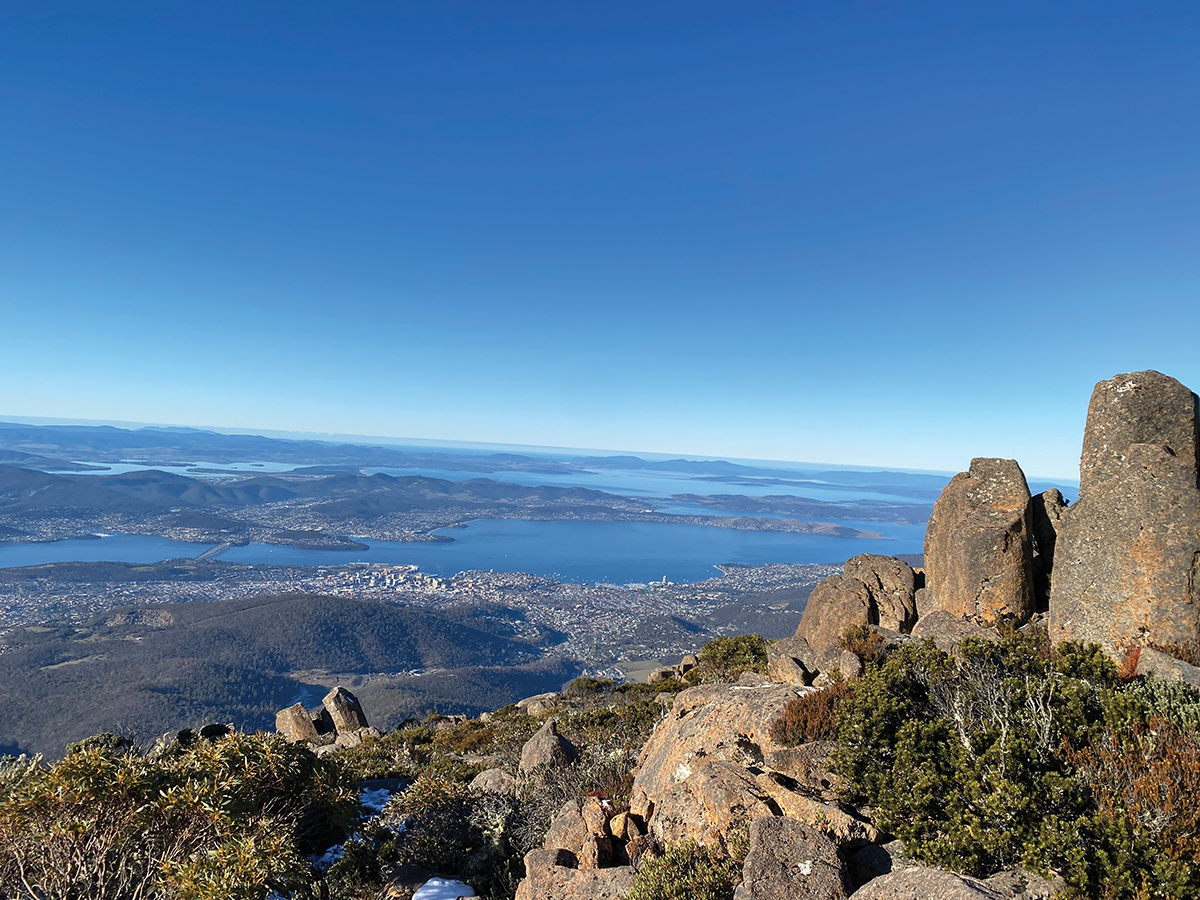
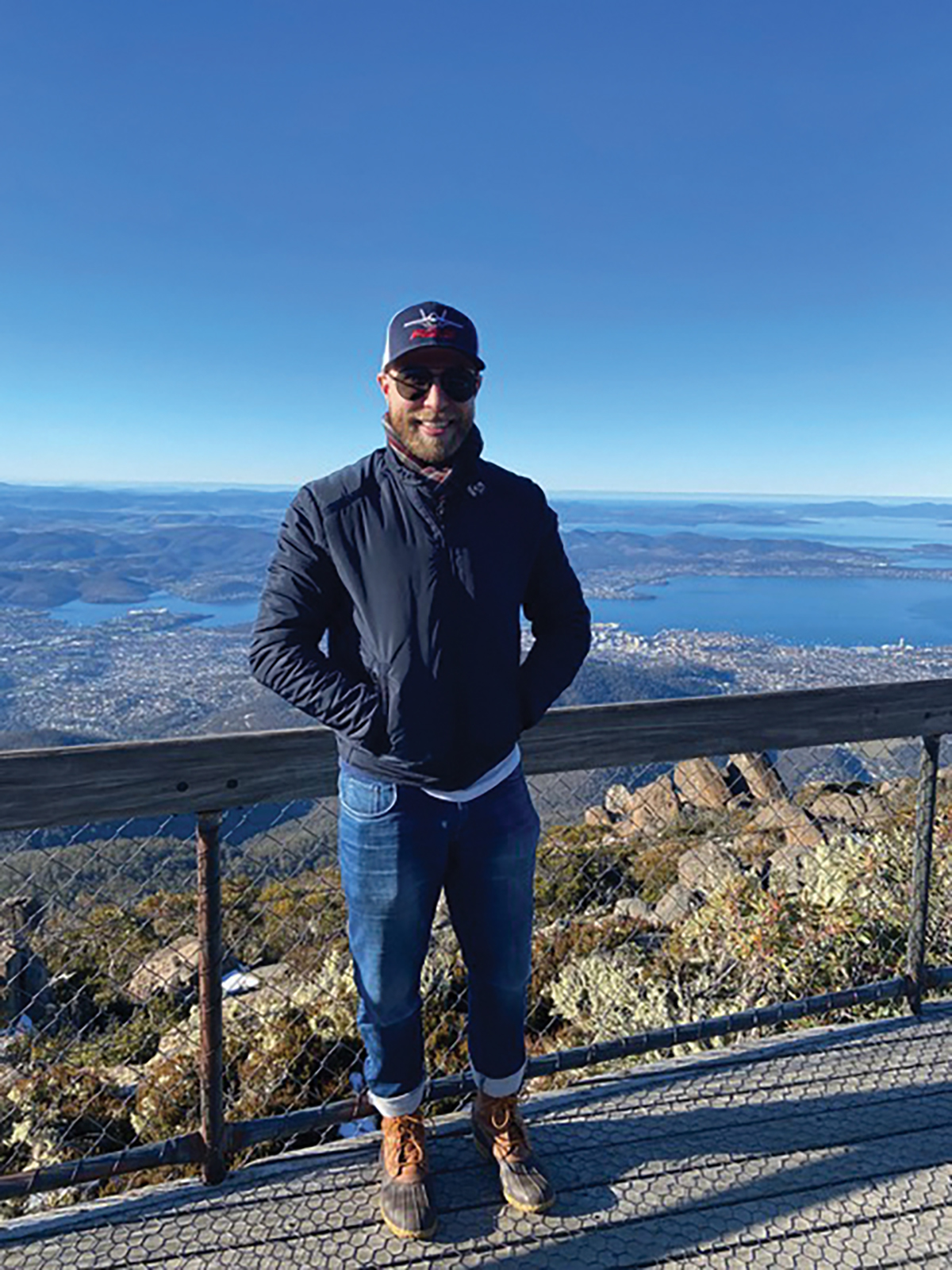
My six-week Tasmanian sabbatical culminated in a solo run that summited Mount Wellington. It took just over an hour to climb 4 miles and nearly 4,000 vertical feet. There, above the treeline, it was windy, cold and completely exposed. I could see for miles without end, over the forests and the harbor below, and all the way to my small cabin in the neighboring valley.
In that moment, it occurred to me how small I am in the grand scheme of things — yet so alive and so lucky. I felt accomplished, but not in the professional sense. I felt like I had become comfortable with myself and my time in Australia. I didn’t need to be liked or prove myself any further to my colleagues.
I also realized moving back to North Carolina was the right decision. It wasn’t a failure, it meant being true to what my heart wanted: home and family, Southern culture and the balance I find here.
I sold my car to a local family, packed my bags and boarded a plane to North Carolina. I landed back in a state that had grown rapidly since I left (but alongside all that development I’ve found a few cafes that can make a proper flat white). My giants aren’t completely slain, but I’ve cut them down a size or two. And although I still occasionally curse our I-40 traffic, I try to pause and reflect on that distant mountaintop. I can give myself — and those around me — a little grace.

This article originally appeared in the February 2026 issue of WALTER magazine