Poet, author and NC State University professor Diamond Forde discusses her latest body of work and the woman who inspired it.
as told to Addie Ladner
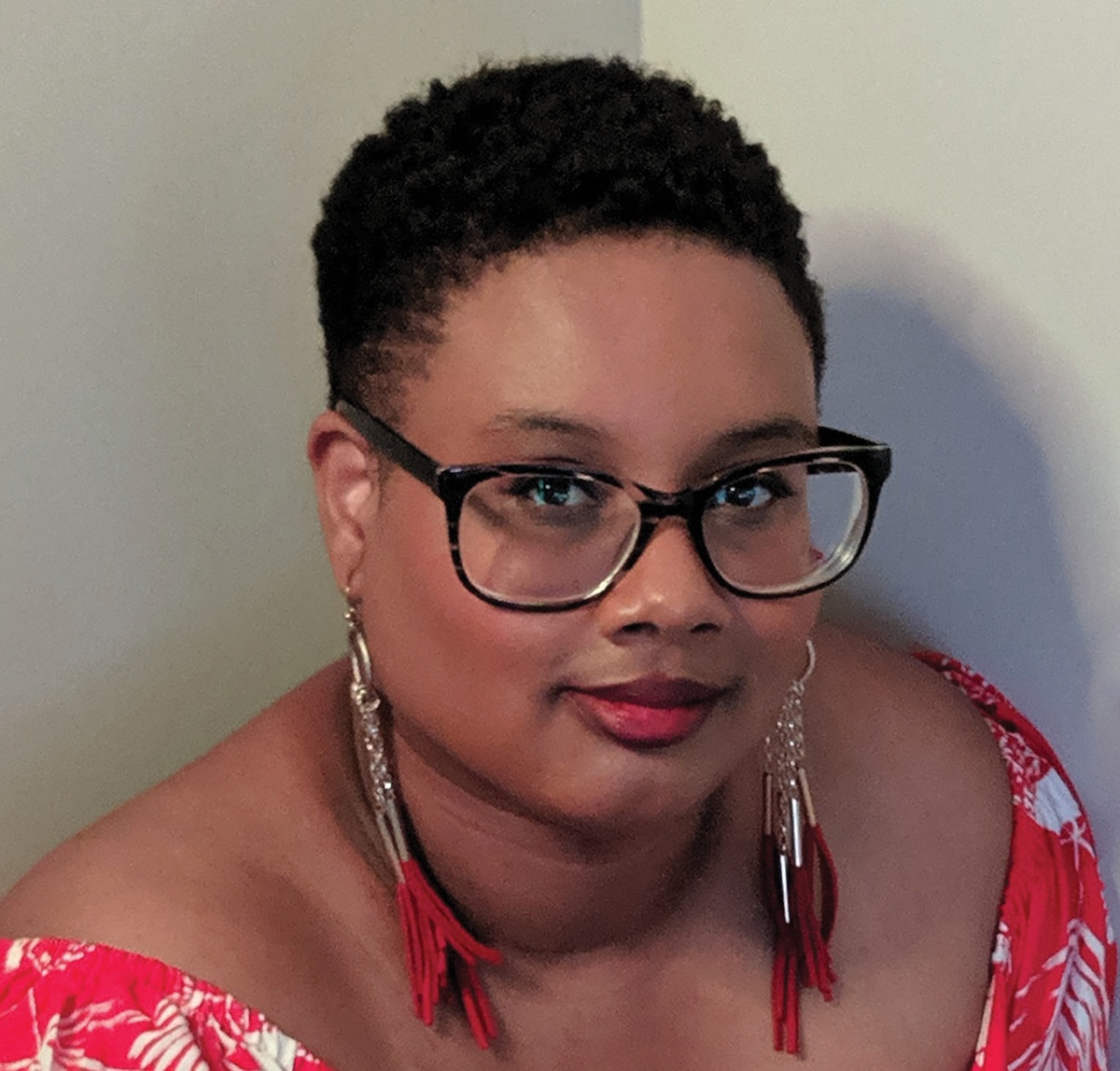
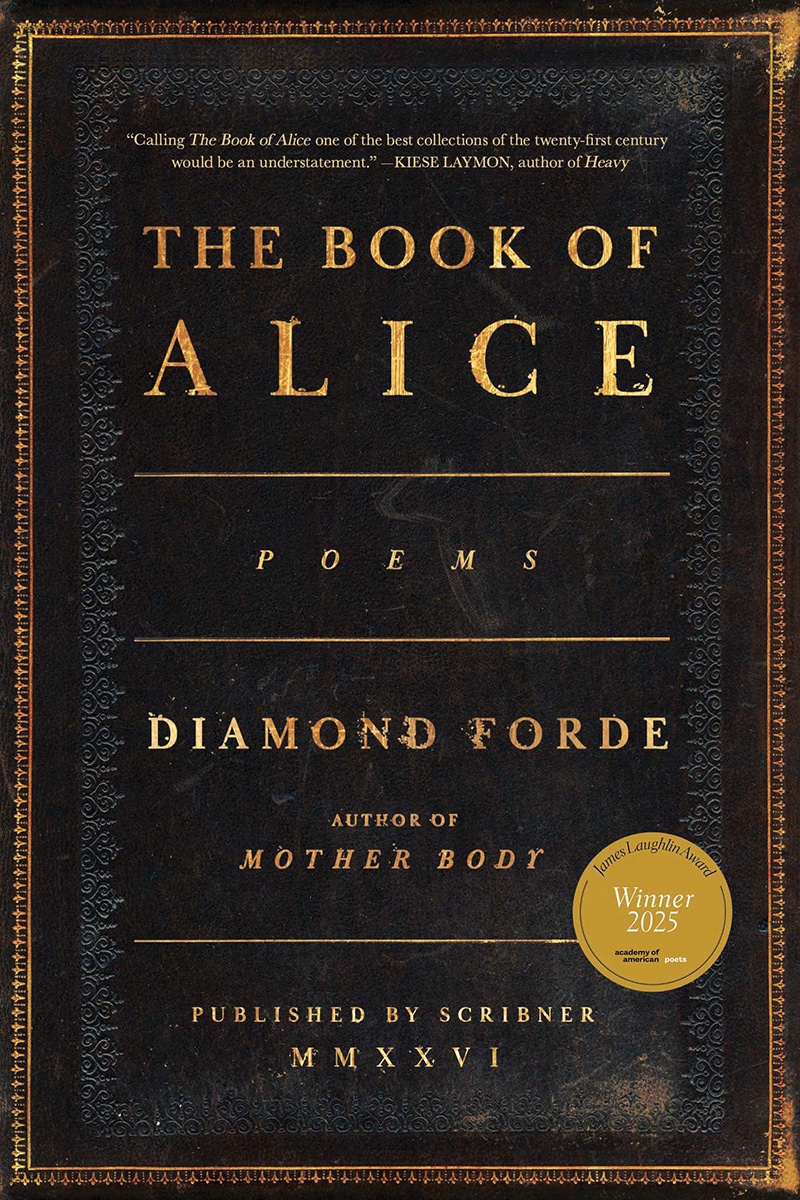
Award-winning Raleigh-based poet and North Carolina State University professor Diamond Forde’s latest book, The Book of Alice, takes readers on a deep, honest dive into her family’s history. It’s written largely through the lens of her grandmother, Alice, exploring what her life was like as a Black mother and Black woman during the Jim Crow South. The compendium of poems is less than 100 pages long, and was originally Forde’s dissertation to receive her doctorate in creative writing at Florida State University in 2022. It received rave reviews in academic circles and went on to win the 2025 James Laughlin Award from the Academy of American Poets. Scribner picked up the book and published it in January of this year, presented with a black cover and gold font resembling the leather-bound Holy Bible Forde’s grandmother gifted her before she passed.
There are intentional parallels between The Book of Alice and the Bible. Alice’s words are printed in red, just as Jesus’s words in the Bible are, and it includes sections named Genesis, Exodus and Revelation. Together, the book offers glimpses into Alice’s life story, one of survival, loss and upheaval — but also of grace and deep familial bonds. The poems in the book come in all forms, from classical stanzas to more unexpected styles, including a family tree and several in recipe form. We sat down with Forde to discuss some of the influences behind the work.
Did you know Alice? How did she influence you?
My grandmother was a big part of my childhood. We spent a lot of our summers at her house. Then they lost her house pretty early into my childhood, so she was always living with one of her daughters, including my mother. She was always a kind of fixture. It was interesting to dive back into these memories in a certain light, an attempt to understand who I am by recognizing her influence both directly and indirectly. I am strongly influenced by her legacy of survival and the conditions in which she survived on all accounts, mentally and physically. A big part of this journey is about learning to understand a person in their wholeness.
Let’s talk about the “U.S. Department of Commerce Bureau of the Census: 1960 Census of Population and Housing or Census Sonnet” in which the “race” column is in red. Why?
One of the things I am trying to reckon with as a whole is documents of history: what is available to me and what is available to Black folks across the diaspora. For instance, photos aren’t something I have access to because my family financially couldn’t keep their homes and storage, so we lost things. This is common in Black families. When some scholars talk about the evidence we use to provide proof of Black life, it’s obituaries and stock inventories. I wanted to play into that tension. I went to the census website to look through their database, trying to recreate what a 1960 census looked like. The reason I use the red letter font there and throughout the book is that all of those moments are when my grandmother speaks. There’s a tradition in the Bible: when Jesus speaks, it’s a red letter font, an import of the spoken word. So much of the book is written in dialect and song and it encourages you to read it out loud. This work lives off the page. That’s my goal with the red letter font.
The idea of God is a huge theme in the book. How did spirituality or religion play a role in your life?
There’s definitely a divide between spirituality and religion. Part of the book is trying to reckon with white Christianity, whose influences can become internationalized. The book that my grandmother found solace in is the very same book that was used as a tool of oppression and to justify enslavement and regulate women. One of the tensions is the biblical expectation that she be a caretaker of the home, to care for her children and husband. I am trying to explore tensions. I grew up Christian in a megachurch. The choir was my first understanding of God. My mother and aunts are a collection of fantastic singers. We’d get there early and use the Gospel to call the spirits down. That was the closest I ever felt to feeling God. Today, when people ask about my relationship with spiritual God, I think of the scene in Alice Walker’s The Color Purple when Shug and Celie are looking at a field of violets. The color purple is God, he creates this beautiful divinity. That’s something that can’t be corrupted by oppressive forces.
The book references a fair share of poets and writers, from classics like Walker to ones in the pop-culture sphere like Doechii. Can you share some of your favorites?
I wanted to make malleable the idea of lineage, the folks that influenced the way I experience the world. A big portion of this book wouldn’t exist if I hadn’t been reading Toni Morrison. She was a literary mother to me. Additionally, poets Patricia Smith and Aurielle Marie. Another one is the poet Ai [born Florence Anthony]; she’s no longer with us but she wrote a great deal of personal poems. There’s this poem she wrote during the Cuban Missile Crisis, “Cuba, 1962,” which is written in the voice of someone who discovers his wife dead in a sugar cane field. It talks about grief as sweetness — once you’ve had it, you can’t get enough of it. The poem rewrote the ways I thought about grief. In ways, to grieve someone is a testament in loving someone, too. Another big poetic influence is Donika Kelly, an incredible poet and probably the first poet I read that made me think of who I want to be as a poet. I’ve read all her books. They bridge the gap between grief and childhood violence with profound love. I also consume pop culture. If we pretend poetry exists in a vacuum, we’re doing it a disservice.
This interview has been condensed and edited for clarity.

This article originally appeared in the February 2026 issue of WALTER magazine.