After losing beloved athletes to suicide, these Raleigh groups are working to raise awareness and support for those in crisis
by Sydney Brainard

Sandy Bridger remembers the night that the Broughton High School wrestling team gathered in her den. It was 2019, and Kaleb Wright — their leader, team captain and friend — had just died by suicide. “They didn’t know what to say,” Bridger says. “They didn’t have the words.”
Wright was a talented champion wrestler, whom many on the team and in the wrestling world looked up to. He was also known to be a skilled singer, even singing at Broughton’s annual Queen of Hearts dance. Those who got to know him describe him as kind, with a lot of love for his friends. Even individuals who interacted briefly with him at wrestling tournaments or elsewhere remember his humble, caring nature.
Bridger’s son was Wright’s friend and teammate, and Bridger was friends with his mother. Even though she had been doing work in the mental health space for decades, Bridger didn’t know how to confront a tragedy that hit so close.
At the time, with these teenagers packed into her house, she remembers thinking, “I didn’t know how to offer these kids comfort, or to let them know that it’s going to be OK, or to give them back the innocence they had when they woke up this morning, before they knew that they could lose their friend like this.”
As incomprehensible as a loss like that feels — confusing, destabilizing and unbearably tragic — it’s unfortunately not a rare feeling in the United States. Suicide is the 11th leading cause of death nationally and the second leading cause for individuals between the ages of 10 and 34, according to 2023 data from the Centers for Disease Control and Prevention.
Mental illness can affect anyone, from the high-achieving, social student athlete to the withdrawn, quiet co-worker. Racial minority groups and members of the LGBTQ+ community often face a higher risk, particularly Native American individuals and trans people, as do men, who have long had a suicide rate multiple times that of women.

The link between suicide and mental health doesn’t discriminate, but it can easily compound under increased pressure, says Shelley Belk, executive director of the Foundation of Hope, a Raleigh-based nonprofit that invests in research and treatment of mental illness. Discrimination, racism, sexism and homophobia can all increase stress and negatively affect mental health. As can pressures from athletics, school or work — even when a person is, by outward measures, successful. Some people will show predictable warning signs, but others will shock friends and families who never saw it coming.
In May 2024, Raleigh native and two-time PGA Tour champion golfer Grayson Murray died by suicide at the age of 30, following a long battle with depression and anxiety. Murray had spoken openly about struggling with mental health and alcohol abuse and had received treatment in the past, even spending a month at the Betty Ford Center, an addiction and mental health treatment center in Minnesota. Still, there were always ups and downs for Murray, just like anyone else.
Just a few months before his death, Murray gave an interview at the Sony Open in Hawaii, sharing that he was more than eight months sober and thanking his friends and family for their support. “I still have hard days,” he told them. “But I feel a lot more at peace inside the ropes now.”
Often, it will never really seem to make sense. For friends and family members left behind, the doubts, the questions, the “what-if’s” run in an endless cycle. Suicide and mental health are not simple issues, and nothing can be solved overnight. Still, the family and friends of Wright and Murray have taken up the mission of advocacy, attempting to defeat the stigma surrounding mental illness and provide tangible support to those who are struggling.
After the death of Wright, members of the Broughton wrestling team and other Broughton students carried his senior banner at the 2019 Walk For Hope, a charity 5K walk hosted by Foundation of Hope, for the purpose of raising money for mental health research. Among the sea of walkers wearing red “Walk For Hope” shirts, the Broughton students stood out in their signature purple. They carried the banner, which showed Wright posing in his wrestling uniform, the whole way. The group ended up raising more money than any other high school team participating.
In the years that followed, more and more of Broughton Athletics joined the Walk For Hope — last year, they were recognized for raising $5,000 for the cause. This past October, Broughton Athletics partnered with Hilinski’s Hope, a mental health foundation formed after the death by suicide of Washington State University football player Tyler Hilinski, to highlight Student-Athlete Mental Health Week.
The movement had to grow beyond any single person, Bridger says. As the years crept by and new classes of students filtered through, fewer and fewer of the participants in the walk had a personal connection to Wright, but they still walked. The Broughton community wouldn’t soon forget the loss of any of their students.
“It was gut-wrenching for the entire school, for not just a small amount of time, but for years,” Belk says. “It caused the Broughton community to want to rise up and take action and do something about it.”
In similar fashion, the Grayson Murray Foundation was formed by Murray’s parents following his death in 2024. Much of the foundation, which conducts advocacy locally in Raleigh, is based on a blueprint that Murray himself had drawn up before he died.
Quietly generous during his lifetime, Murray would donate anonymously to charities, send clothes he received through sponsors to kids at his former high school and cover expenses for those in need. It’s not exactly surprising that he would already have envisioned creating a foundation in order to help people struggling just like him, who couldn’t afford the care that he could.
“Grayson’s family has a plan, written in his own hand, where he said that he wanted to help those that wanted to be helped but may not have the help they need financially,” says Jeff Maness, president of the Grayson Murray Foundation and a close friend of Murray’s. “Part of our foundation is to carry out Grayson’s wish to help fund treatment for people who are really interested in mental well being, and to get better.”
While he was in treatment, Maness says, Murray saw people struggling with mental health having to leave the treatment facility early and lose the care they needed and wanted because they couldn’t afford to keep paying for it. His plan grew out of frustration with what he witnessed there.
Now, the foundation formed in his name raises money so that people can afford treatment, along with raising awareness about mental health in general. The organization has expanded its reach through partnerships, like one with the Ben Hogan Foundation, to which they contributed $20,000 for a scholarship that provides educational support for a child who has lost a parent to suicide in Wake County. Murray’s foundation also has an ongoing partnership with the Hazelden Betty Ford Clinic in Minnesota to help provide patients with financial support. And they’re working with WakeMed to help create a new mental health hospital.
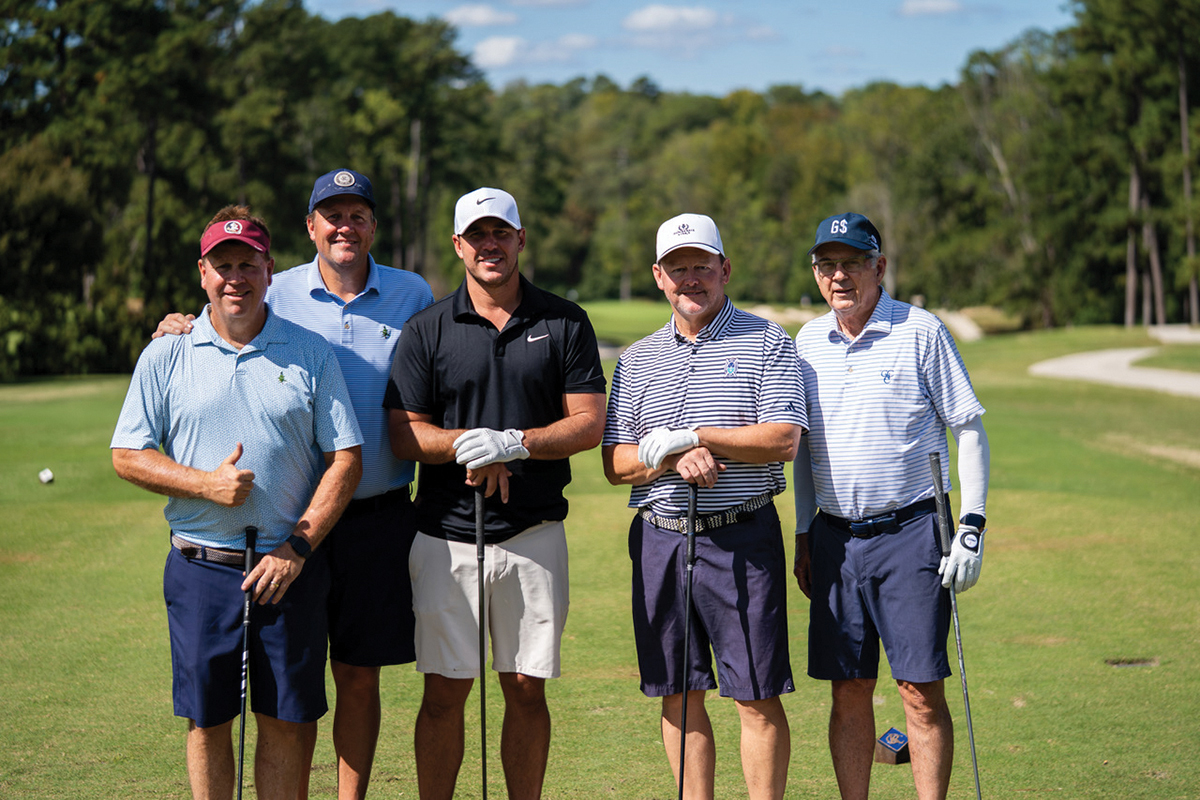
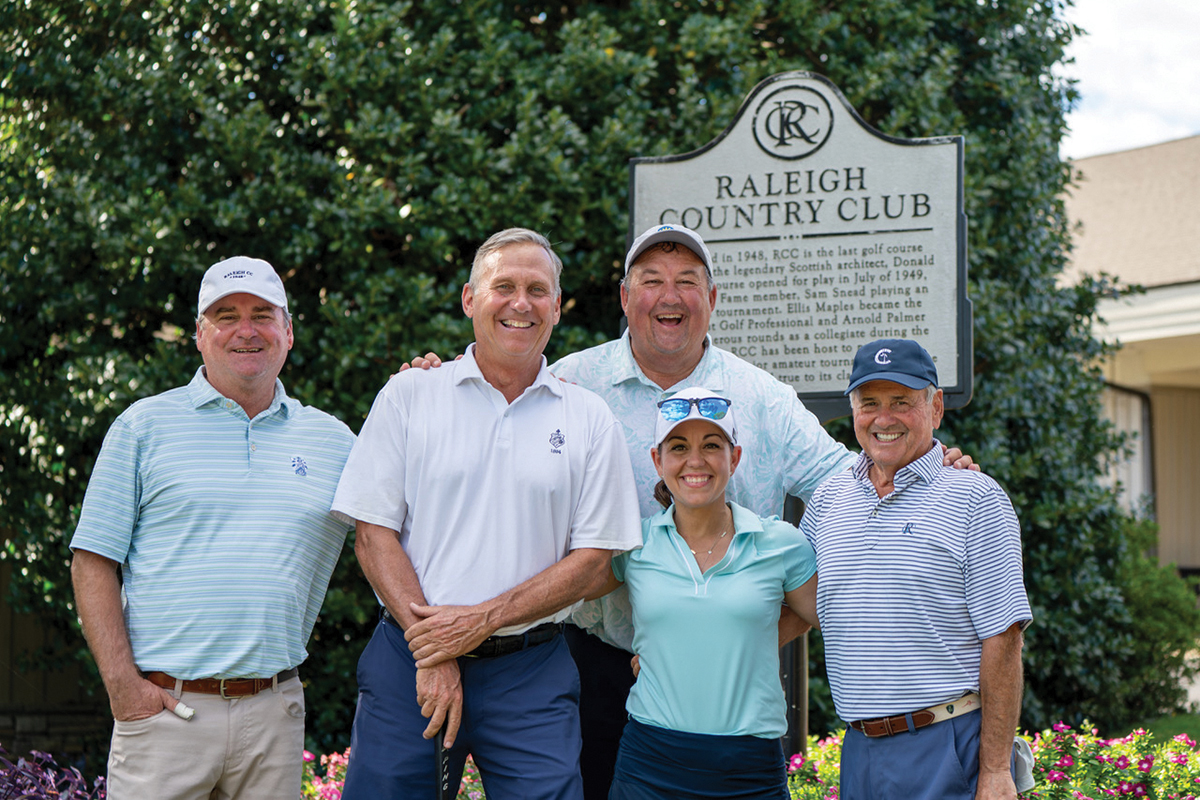
For all the resources these projects need, the foundation has been working to raise money. Just last year, the foundation hosted their inaugural golf tournament in Murray’s honor, which was attended by dozens of top golf champions, like Brooks Koepka, Chesson Hadley and Jason Gore. All proceeds went to the foundation.
“For those of us that were very close to Grayson, it might have been easier for us to just try to move on. But we’re not. We’re addressing these issues,” Maness says. “So we’re encouraged by the conversation around these topics.”
Awareness about mental health has increased drastically over the past few decades. According to CDC data, over half of U.S. adolescents reported talking about their mental and emotional health with a health care provider in 2023, and 20% of adolescents reported receiving therapy. The World Health Organization reported that countries around the world have made significant strides in mental health policies since 2020.
Yet, the gaps in support and knowledge still loom large. That’s why the initiatives like the ones at Broughton and the Grayson Murray Foundation won’t be slowing down anytime soon.
“There are more opportunities to address these topics than there are resources to address them,” Maness says. Bridger believes that mental health advocacy is only going to expand as the new generations grow up and more people take up the cause. And she has big dreams for the future.
“We’re getting these kids in when they’re young, letting them see what it means to be part of a community and helping them understand that advocacy starts very small — it can start as small as signing up for a walk and walking for three hours,” says Bridger. “I think giving the students a voice, giving them a purpose, will go so far in our community and in their lives.”

This article originally appeared in the May 2026 issue of WALTER magazine.