Architects Eliza Montgomery and Will Choi designed an airy, barn-inspired home for their friends
by Addie Ladner | photography by Trey Thomas
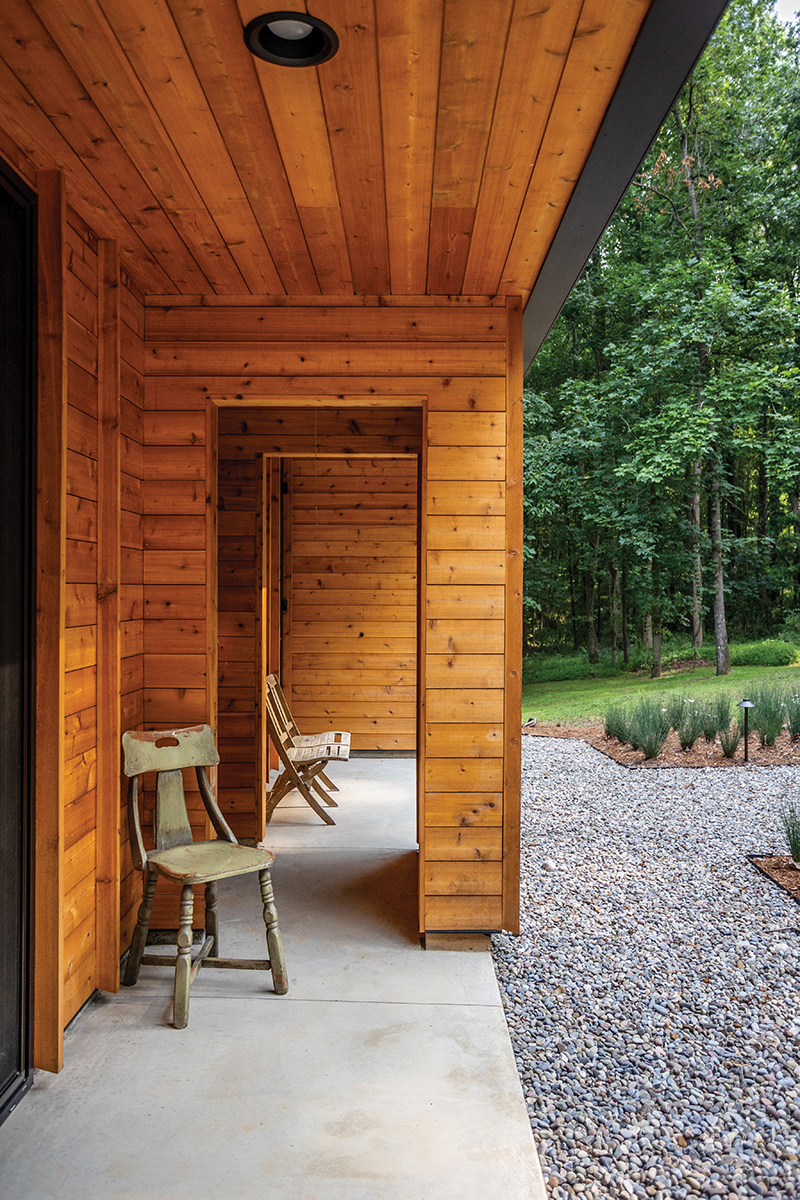
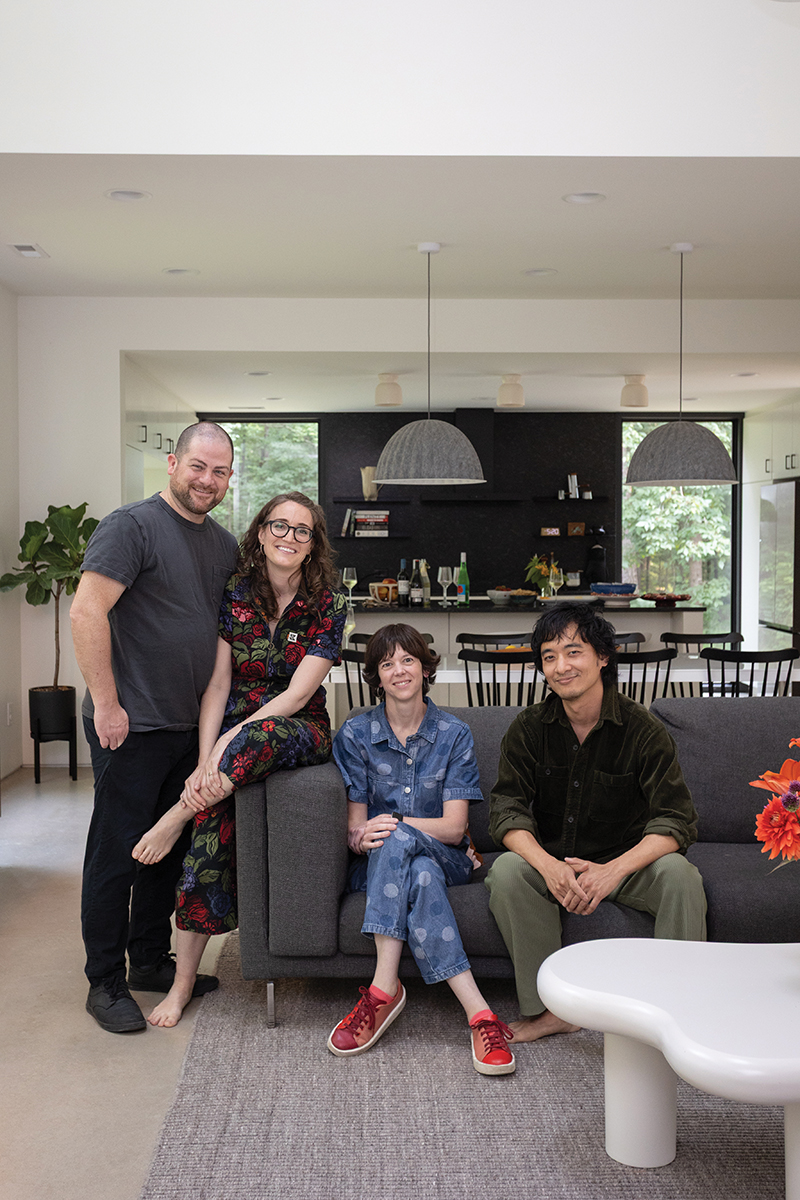
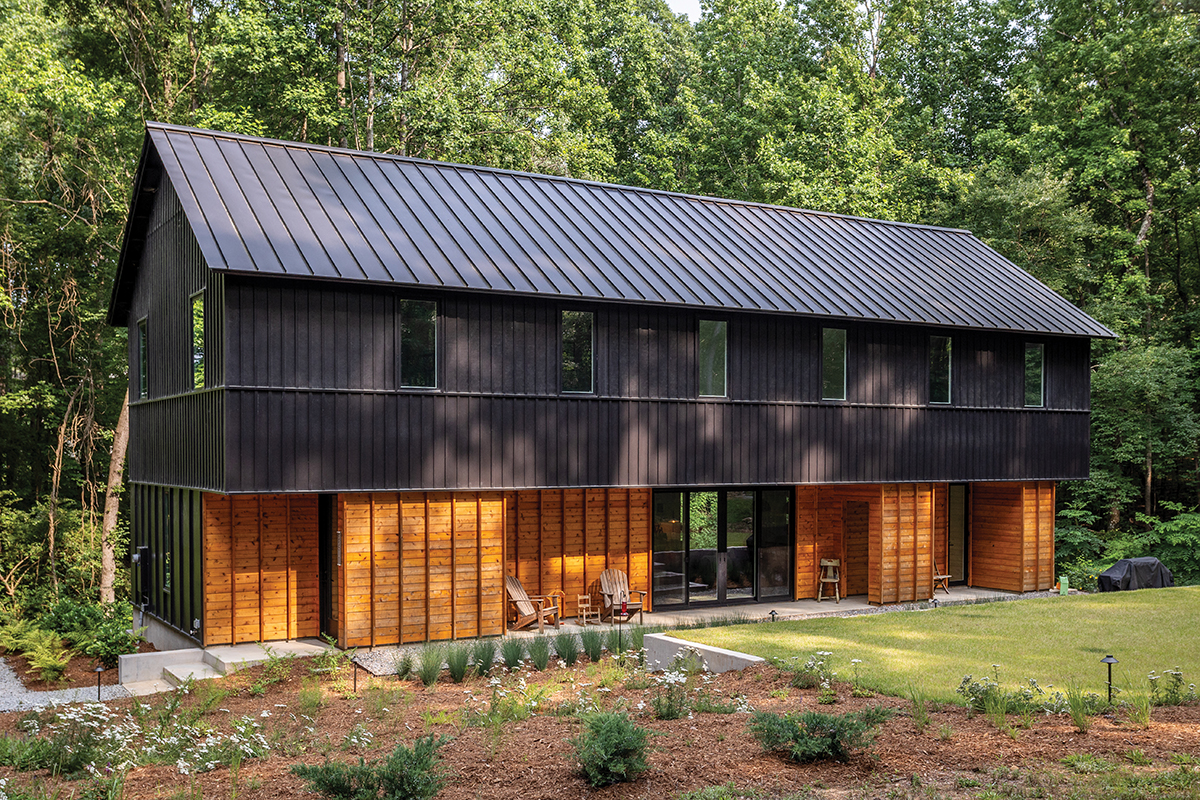
Back in the day — and still, in some rural areas — barns did more than just store hay and livestock. They doubled as gathering spaces for dances and parties, even meetings. “Barns are these cavernous buildings that connect to their surroundings in a specific way,” says architect Eliza Montgomery. She and her architect husband, Will Choi, are partners at MontgomeryChoi. They used the idea of a barn as a jumping-off point when they designed a home for their friends Chris Barr and Wilson Sayre, creating a space to gather, find synergy with their environment and enjoy their relationships. “We practice in a non-stylist way, what we care about is, what does this house want to achieve?” says Choi.
Sayre, a Raleigh native, oversees digital content at WUNC and Barr leads product development at a tech startup. After living in Miami (where they met) and then Chicago, the two were married in 2019 in Raleigh and decided to settle here. It happened that Montgomery and Choi had moved to the area from New York City around the same time (Montgomery had grown up here, as well). “We met at a mutual friend’s party and quickly connected over a shared love of culture and being in a similar phase of life,” says Choi.
Sayre and Barr had some land tucked in the woods off Lake Wheeler Road, and at a picnic in Dorothea Dix Park, the two couples got into a conversation about what a dream home would look like for Sayre and Barr, and a natural follow-up question was whether MontgomeryChoi would design the house. At the time, they had completed some commercial and multi-family projects in the area, but no single-family homes.
The idea of working with friends was a little risky. “We thought, worst-case scenario, it would hurt our friendship, but I think deep down we knew that wouldn’t happen,” says Montgomery. Instead, Barr and Sayre got the best-case scenario: to have their home designed by architects with whom they already had a great relationship, who had a deep understanding of how they live. “They know how we act and flow and what we like,” says Wilson.
Sayre grew up in an industrial space surrounded by art and natural materials (her father is earthcast artist Thomas Sayre), while Barr is a devoted minimalist. “I wanted it to feel like a museum,” Barr says. But both agreed that they wanted to be able to entertain both large and small crowds, invite in tons of natural light and have unimpeded views of the surrounding woods. “It was an interesting challenge blending their aesthetic lenses,” says Choi.
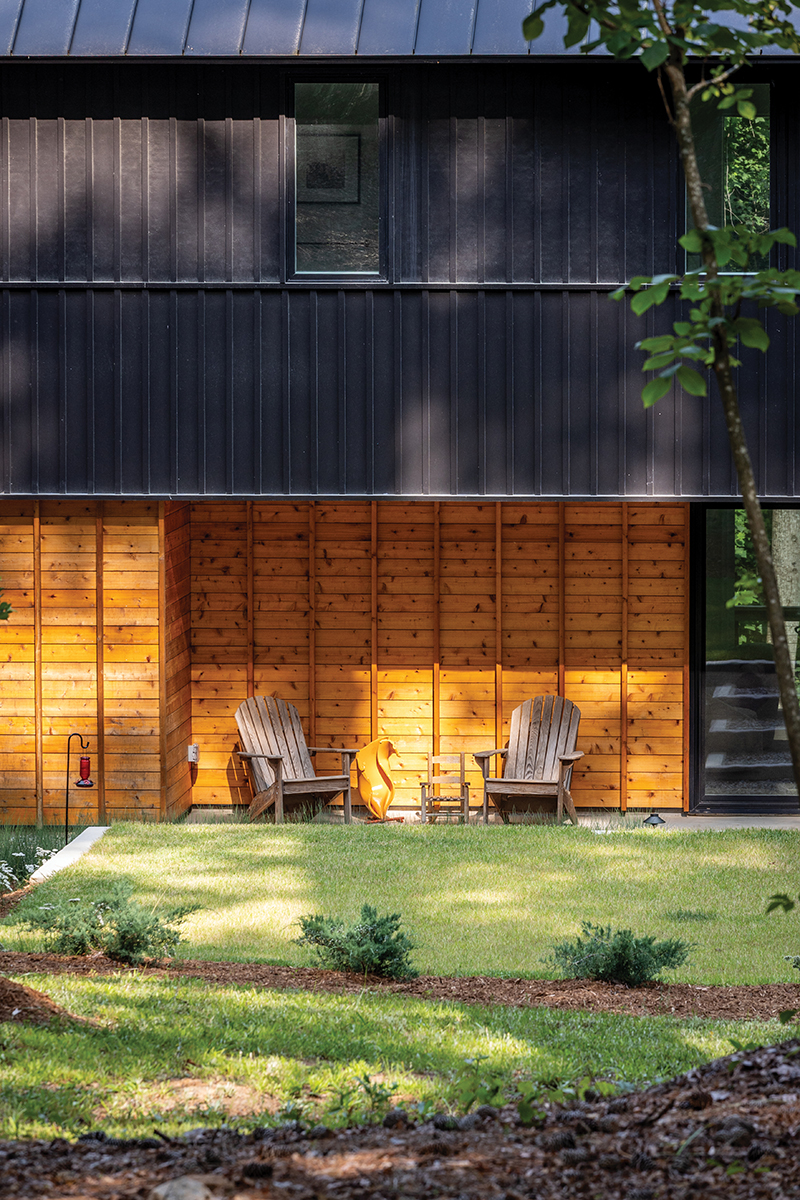
Montgomery and Choi started designing the home in 2022 and finished building it in 2023. It’s done in a modular container style that mimics a rectangular barn, with a peaked roof and two sets of double sliding doors mirroring each other on the long ends. The exteriors are done in western red cedar, cement siding and black metal, while the interiors boast concrete floors and countertops for a nod to Sayre’s more rustic, industrial preferences. “The floors are polished, but not so polished that you can’t see the speckles and aggregates,” says Choi.
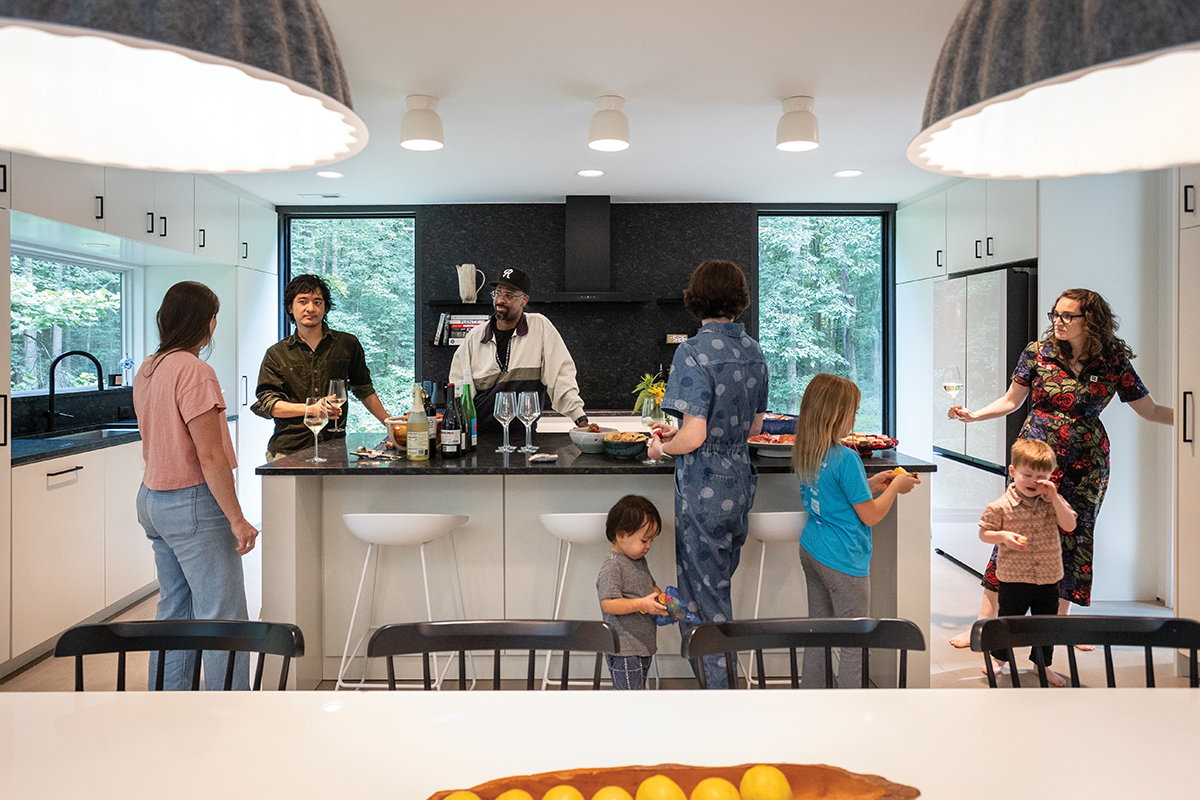
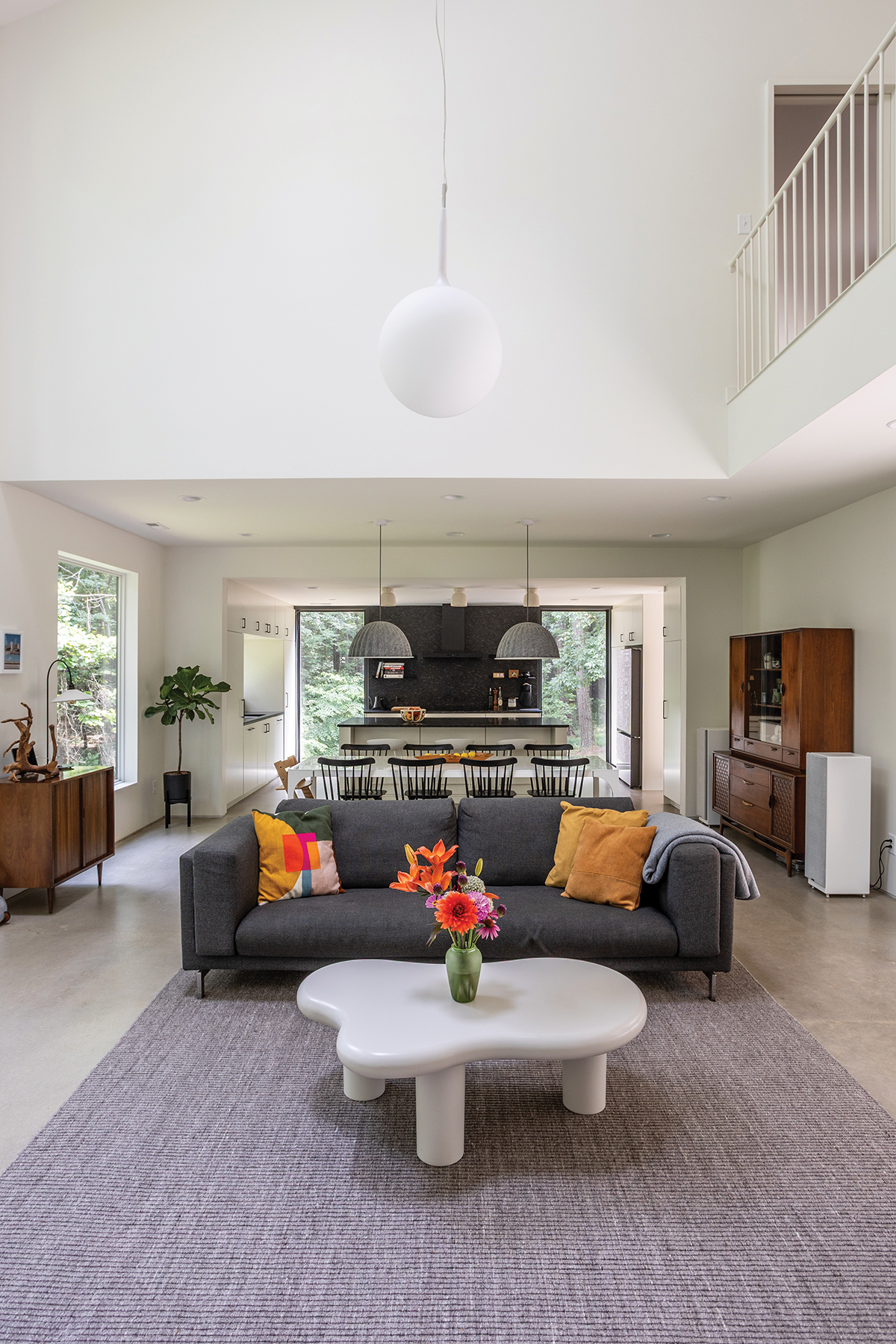
Inside, the downstairs offers a seamless blend of indoors and out, featuring a mostly open floor plan, lots of windows and clean white walls. In the living area, double-height ceilings and a skylight pull in the sunshine, while the sliding doors allow for easy traffic flow and a crossbreeze. “We are so in love with the space and light,” Sayre says. True to Barr’s preference for a gallery feel in the home, the main living area is minimalist by design: few furnishings and a palette of greys, black and white serve as a canvas for windows that frame tulip poplar, oak and sycamores. “We didn’t want to do anything to take away from the views of the outside,” she says.
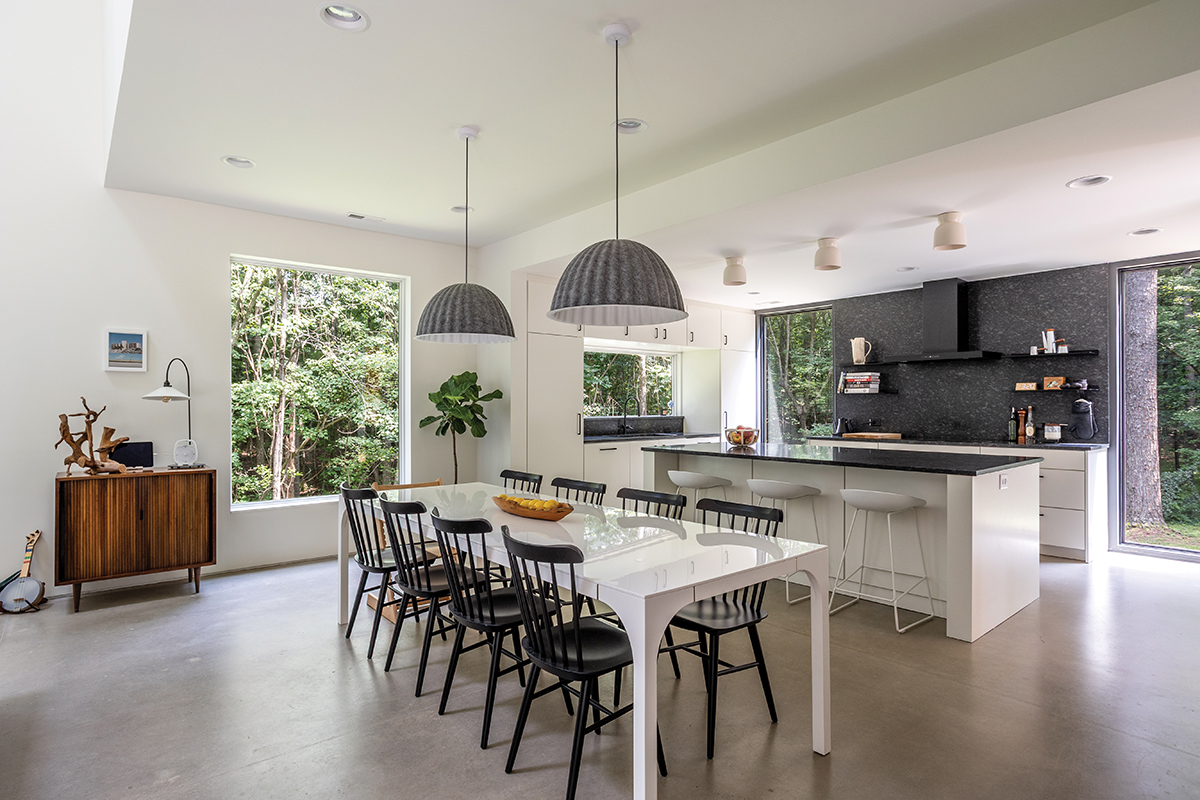
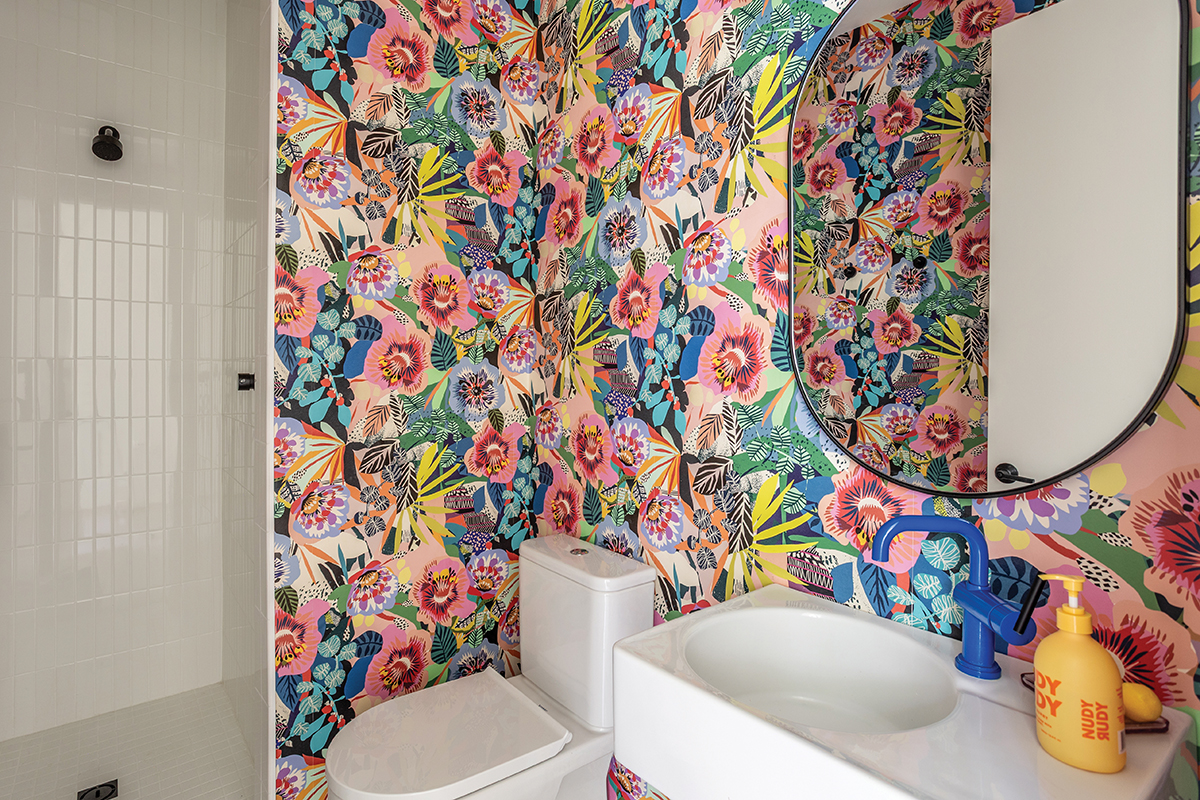
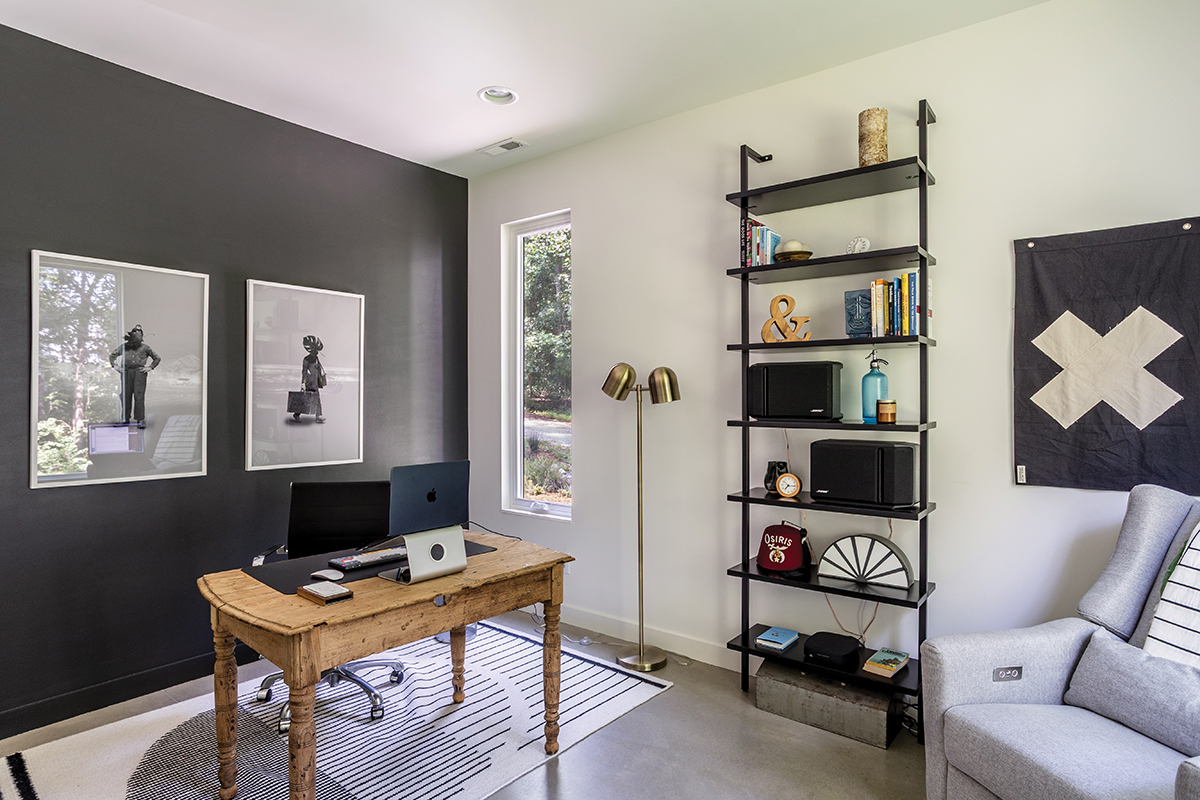
The ceiling is lower in the kitchen area, which gives it a more intimate feel. Black countertops and white cabinetry let the trees shine through the floor-to-ceiling windows on either side of the cooking area. “Black is actually a color in nature that allows you to disappear — shadows, mountains — it’s surprising,” says Choi. Agrees Montgomery: “It’s a way to make the architecture invisible.” Just out of sight, down two short hallways, are some functional spaces, including a landing area with spots for shoes, hidden play storage for the couple’s young son, Barr’s office and a surprisingly colorful powder room finished in tropical-print wallpaper.
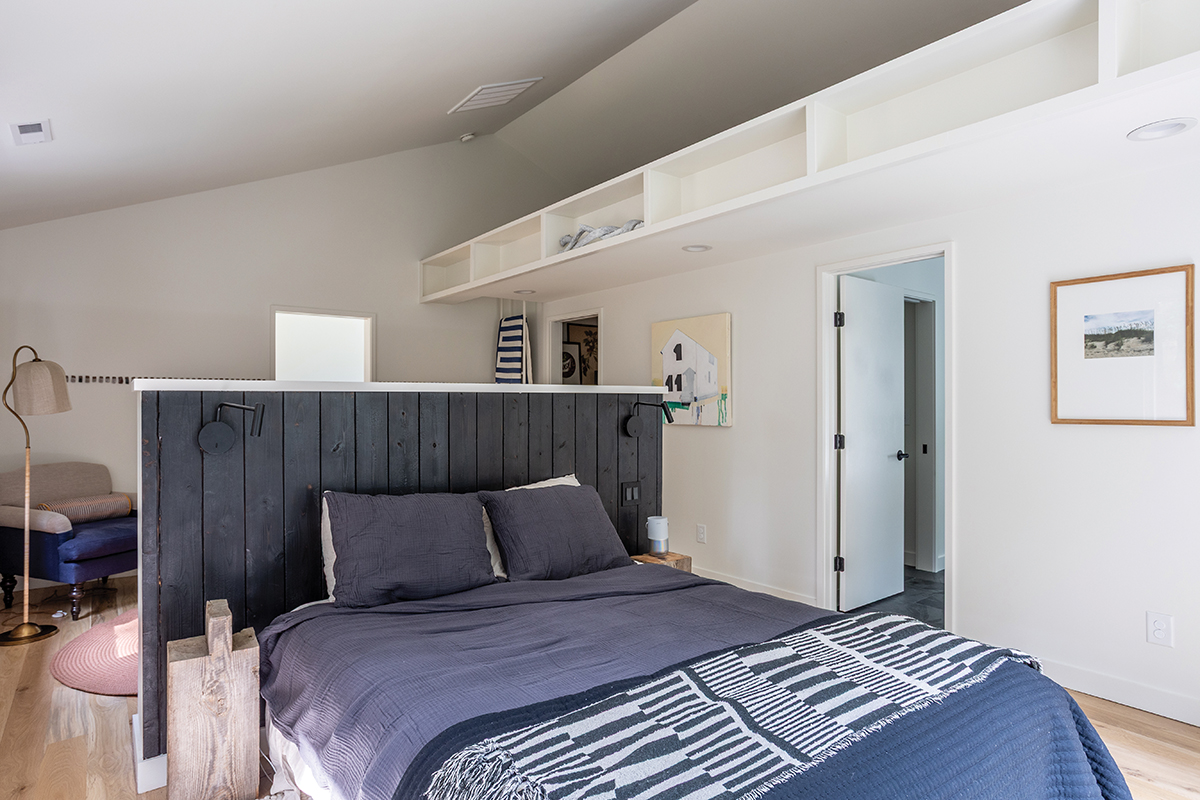
Upstairs are the more private spaces, designed as two wings on either side of the home, connected by a bridge above the living area. Barr and Sayre’s bedroom suite is on one end. It’s modest space with a bed facing the windows and a headboard that doubles as a bookshelf to divide the sleeping area and a reading nook. “I need a certain amount of coziness,” Sayre says. “I like spaces to curl up and read a book without feeling fully exposed.” A spacious closet, bathroom and laundry room are adjacent to their bedroom. “I’m a functional person, so I think about the flow of life — how do you move about your day, how do you all stay connected?” says Choi. “I wanted it to be single stream: you use the bathroom area, get dressed, toss your clothes in the laundry room… it’s an assembly line.”
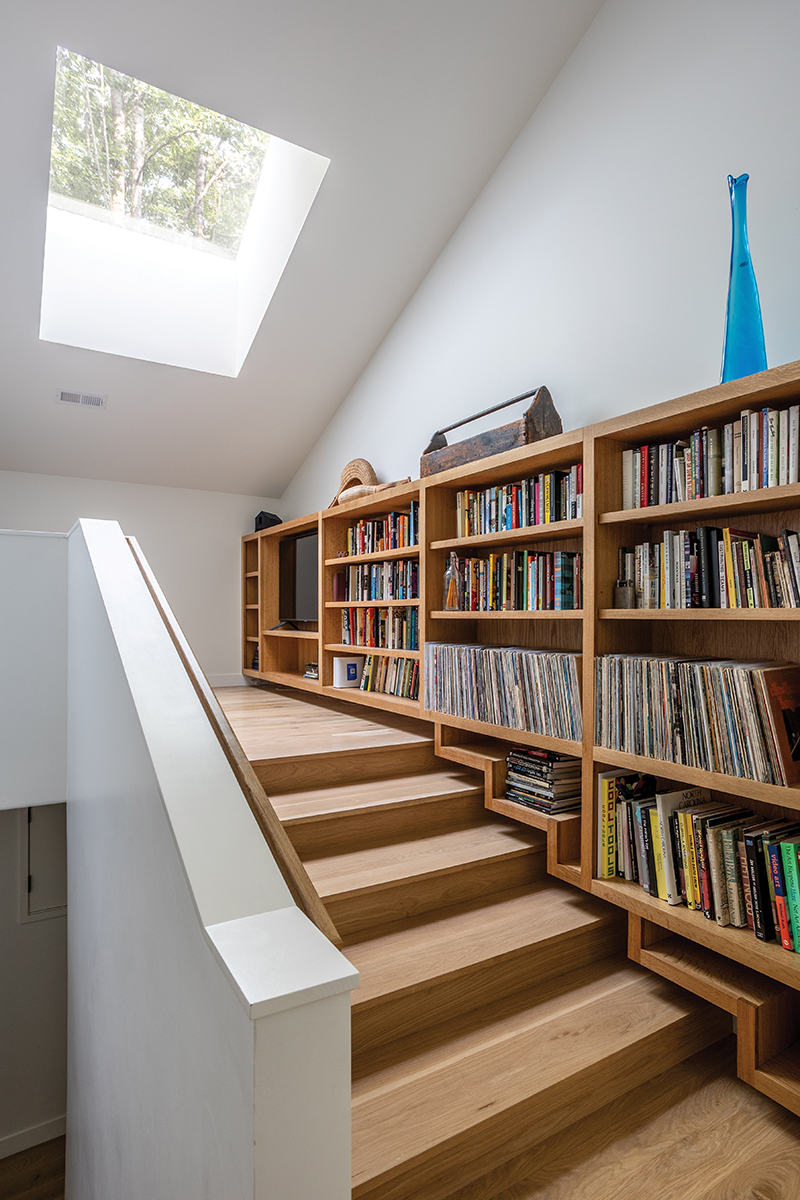
On the other side of the second story are their son’s bedroom and bathroom, as well as a guest room. There’s also a loft-style television nook at the top of the stairs which holds their books, records and other tchotchkes within built-in shelves.
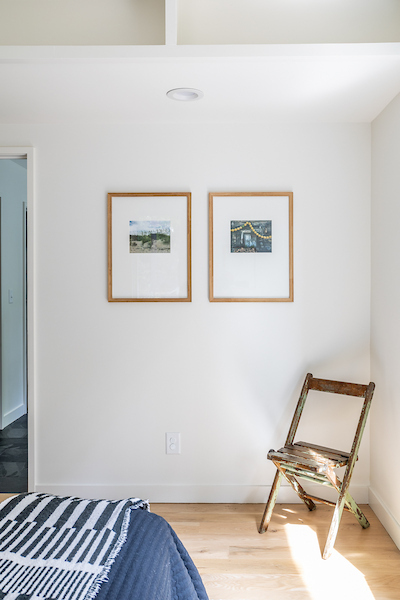
In this part of the house, there’s more art on the walls — some pieces the couple made themselves, others from travels and friends — plus softer furnishings and a little more color. Sayre tapped a friend in the home staging business to help them incorporate meaningful pieces without detracting from Montgomery and Choi’s minimlist design. Their son’s room, in particular, has playful wall decor and a colorful rug, plus a bookshelf filled with books of all hues.
Today, their home works just as they’d hoped: as an oasis that feels modern yet warm, open yet cozy — but most of all, a reflection of Barr and Sayre themselves. “And Eliza and Will get to come over and see us live in this space. It’s been so special,” says Sayre.


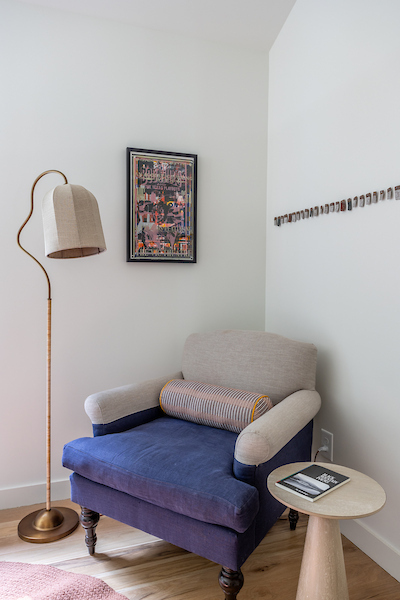
The reading nook in their bedroom is decorated with a series of clay squares that were tests for the napkin holders they made for their wedding. They found the chair on auction at Leland Little in Hillsborough. The light is from Restoration Hardware and the side table is from Amazon. “I like looking at funky stuff and mixing it up,” says Sayre.
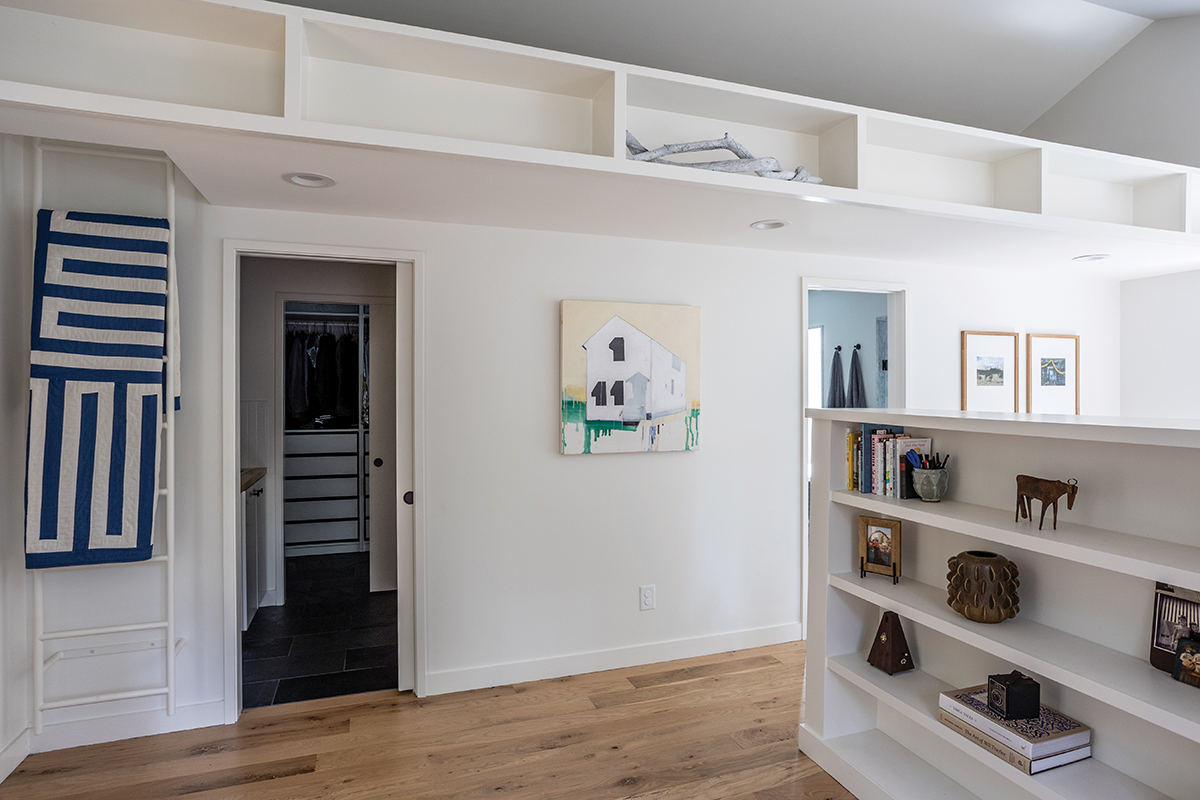
A bookshelf in Sayre and Barr’s bedroom (above and below) doubles as a headboard. It’s made with extra pieces of cedar from the exterior of the house, blackened with fire as a nod to Shou Sugi Ban, a Japanese practice of charring wood. “We wanted to clad the entire house in it, but it’s way too expensive, so we did it for the headboard,” she says. The painting of the white house piece is by Amy Greenan, a friend of Barr’s; the bedside tables are made from beams salvaged from an old home nearby. The bedspread is from Quince and the sheets are from West Elm.
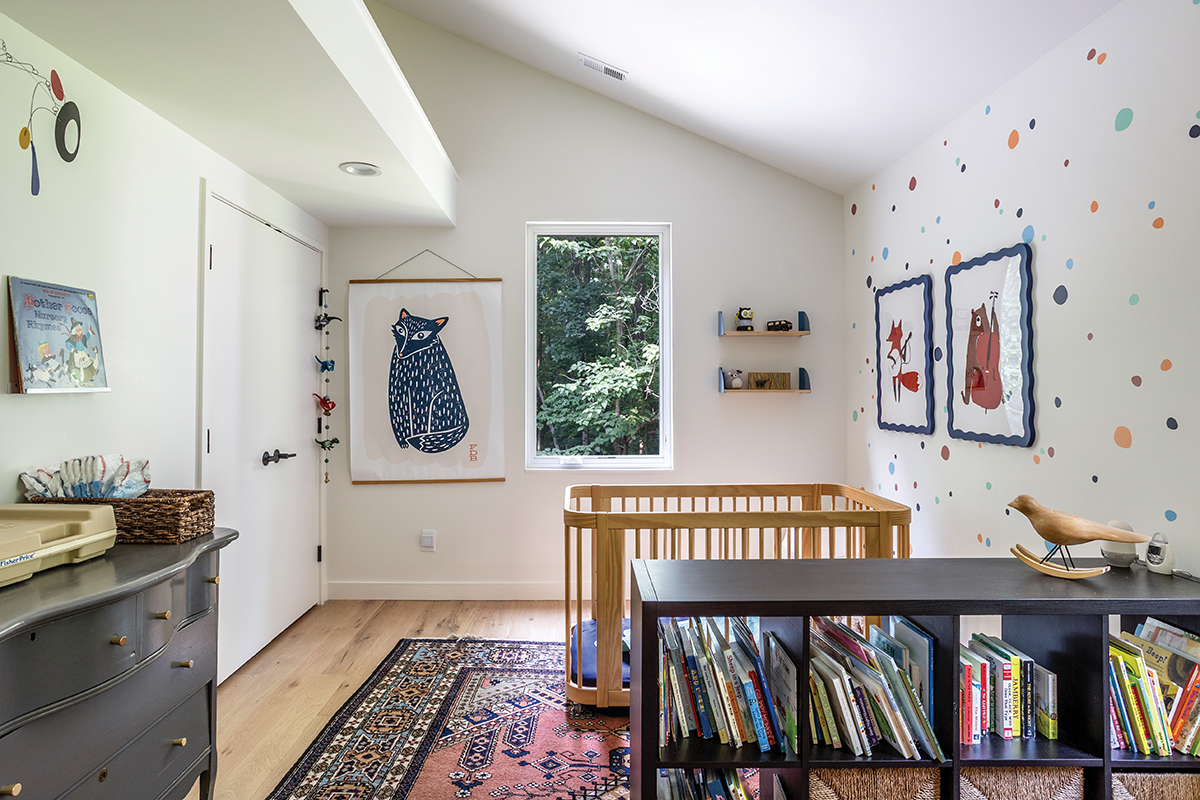
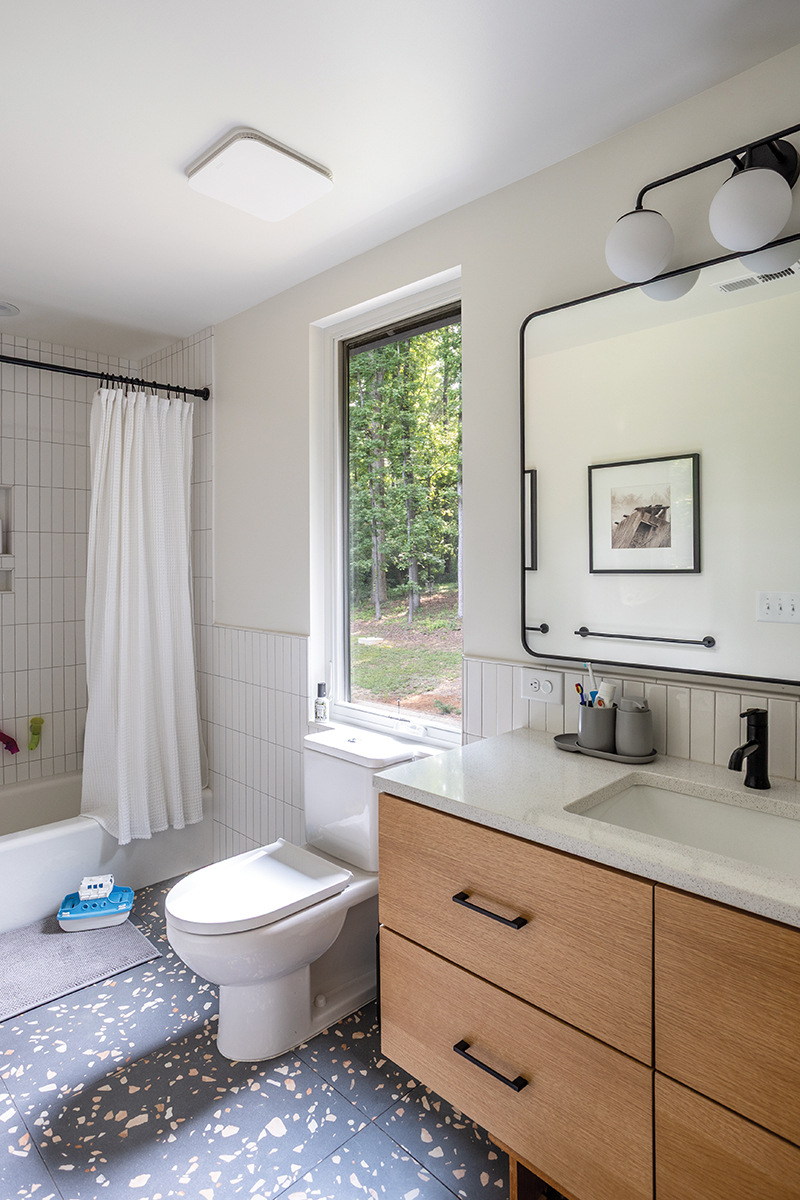
Above and below, Barr and Sayre incorporated more playful elements, like terrrazzo tiles, in their son’s bathroom. In their son’s room, they incorporated whimsical decor like free-form wall decals from Etsy and animal prints in squiggle frames, which Barr found online. Barr made the blue fox piece and the rug has been in Sayre’s family for several generations.

This article originally appeared in the October 2025 issue of WALTER magazine.