From a homegrown Ogden Nash
by Jim Dodson | Illustration by Gerry O’Neill
My daughter, Maggie, was born in 1989. It was a year of revolutions, a turning point in world affairs that witnessed the opening of the Berlin Wall, a Velvet Revolution in Czechoslovakia and the end of communism in Europe’s eastern bloc. It also saw the birth of the World Wide Web and the first commercial internet providers — social revolutions of a different kind.
Mugs, as I called my beautiful baby girl from day one, was born in the aftermath of a huge snowstorm in Maine. We took her home to our cottage on Bailey Island on day two, after her paternal grandparents arrived from North Carolina.
One of my fondest memories is of sliding on my rump down the deep, snowy hill behind our cottage, my bundled-up papoose clutched to my chest. When I looked at my daughter’s tiny face, I swear she was almost smiling.
Upon returning home to Carolina, my dad, a veteran newspaperman with a poet’s heart, jotted me a note with a bit of whimsical verse attached. He fancied himself, I think, a homegrown Ogden Nash.
Sadly, I can only remember the opening lines of the ditty because I kept it in my office desk forever — until it apparently migrated into attic boxes stuffed with half a century of manuscripts, letters and correspondence. Someday, I hope to unearth it. In the meantime, here’s the bit that I recall, advice from a happy grandpa:
There’s nothing in this whole wide world
As precious as a baby girl
who someday soon will surely be
A child as happy as can be
Your job, my son, is take her hand…
at which point my memory fails.
When Maggie and her husband Nate visited us in the autumn of 2024, she graciously offered to plow through my mountains of archives and work papers, giving me hope that she might find my dad’s wise little verse.
Instead, she found a pile of letters from my early career that included an unopened one from legendary The New Yorker magazine editor William Shawn. In it, he complimented me for an investigative piece on a forgotten African American community I’d written for the Sunday magazine of The Atlanta Journal-Constitution, where I was a staff writer. He’d read it while waiting for a plane home to New York from Major League Baseball’s spring training in Florida. He also wondered if I had interest in writing for his magazine.
I laughed at this discovery because my career ambition in those early days was indeed to someday write my way into The New Yorker.
My daughter was incredulous. “Dad!” she playfully chided. “How could you have not opened this letter?”
Sheepishly, I explained that I had a habit in those days (and even today) of setting aside important letters to read and properly answer later. “I probably just put it in my cluttered desk and forgot about it,” I theorized. “Crazy, I know.”
But perhaps, I added, my mistake was a perfect, unanswered prayer.
If I’d achieved my ambition to work for The New Yorker, I probably never would have burned out covering crime, politics and racial justice in the so-called New South. I might not have fled to a winding trout stream in Vermont, where I’d become the first senior writer of Yankee Magazine, marry her mom, build a gorgeous house on a forested hill in Maine and become the father of two beautiful babies. Moreover, I might never have also found my way home to North Carolina, where I’ve written a dozen books and helped start arts-and-culture magazines that are thriving today.
Last May, we were thrilled to learn that Maggie was pregnant with our first grandchild, a baby girl due on Christmas Eve.
June Sinclair Prescott arrived seven days early, weighing in at a healthy 9.9 pounds. I immediately nicknamed her “June Bug,” because they are said to bring good luck (and my spring garden is always full of them).
Maggie’s mom, and my first wife, Alison, flew to Los Angeles first to be with mother and baby as they got better acquainted.
The plan called for “Nana and PopPop,” aka Wendy and myself, to follow in early January. Unfortunately, a powerful ice storm struck the day before our flight was to depart. A flow of adorable photos and videos of June Bug had to suffice. In half of them, she appears to be smiling and even belly laughing. Like her mama at the same age.
Two weeks later, we tried again. This time, it snowed 13 inches on the eve of departure and thousands of flights up and down the East Coast got canceled. Including ours.
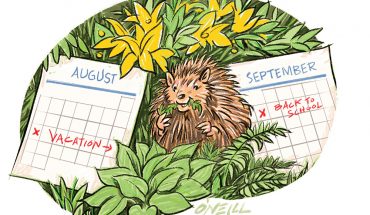
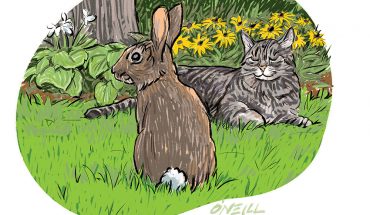
The day after the big snowstorm — shades of Maggie’s own birthday in 1989 — the sun popped out and I stepped outside to fill the bird feeders and think about my spring garden. An old idea suddenly came to me.
Pushing the snow off my favorite wooden chair, I sat down and jotted a letter in light verse to my new grandchild like my father, the homegrown Ogden Nash who preceded me. I also asked the artist Harry Blair, my good friend, to illustrate it.
Dear June Bug,
Someday while you are still a tyke,
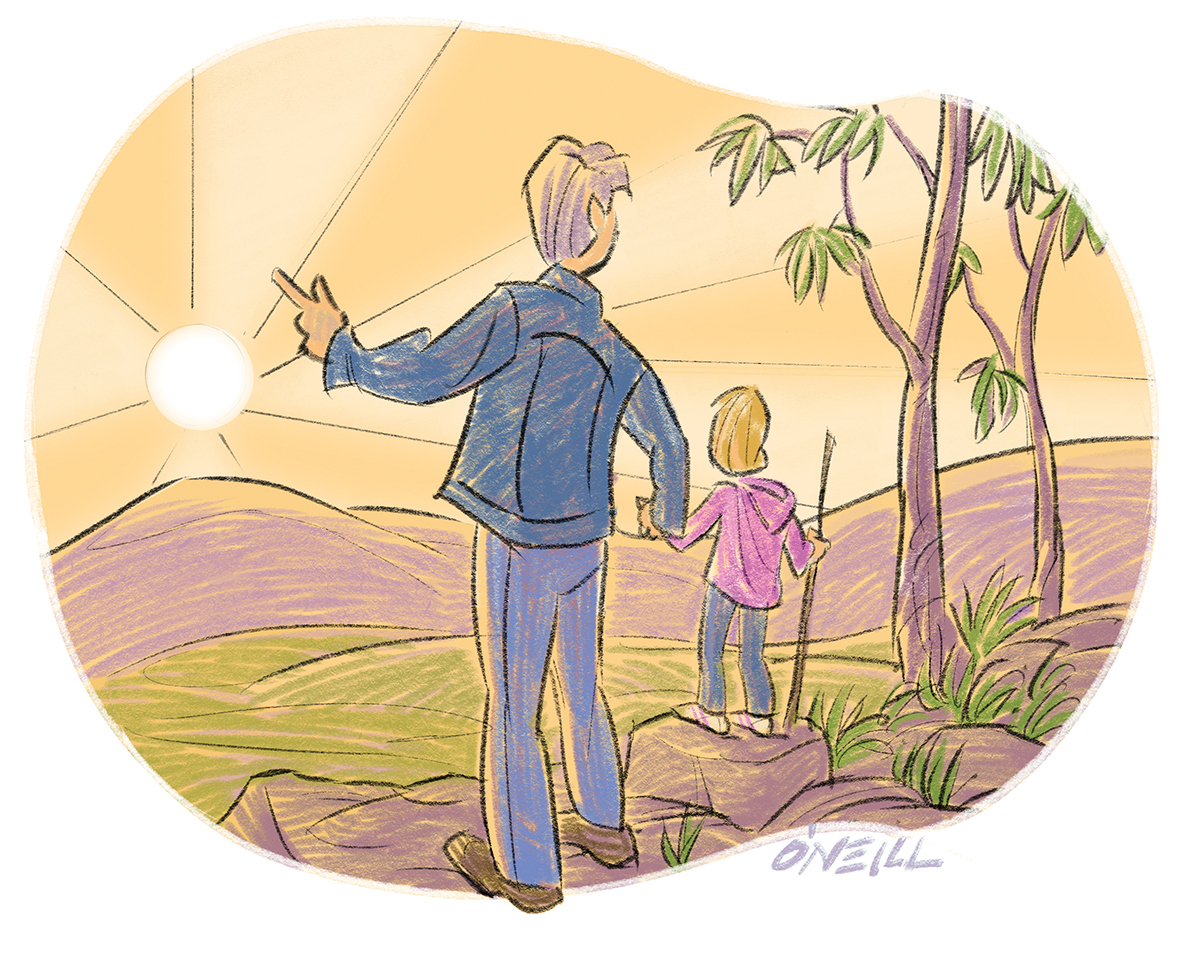
I’ll take you on a wondrous hike
To see the world from on a hill
And all the places that will fill
Your life ahead with joyful things —
Like winter snows and golden springs.
For nature is the ideal guide
To leafy paths that cannot hide
The glory of a world that’s wide —
With loving souls so full of grace
Who’ll help you find your perfect place
To live the life your heart desires —
With faith — and strength — that never tires.
With my love forever,
PopPop
Our third effort to reach Los Angeles proved a charm.
We took the illustrated verse, lots of cute new baby clothes and a lovely Swedish bear to finally meet our beautiful new grandchild. All we did for five days was rock, hike, hold, cuddle, feed and play with June Bug and her mama.
Like her mother, baby June was born at a moment of revolutionary change and turmoil across the planet. But I have a feeling that our laughing June Bug will bring good luck and happiness to anyone she meets on her life’s journey, just as her mother has.

This article originally appeared in the May 2026 issue of WALTER magazine.