
A passion project leads to this visual tour of sweet potato farming in North Carolina, the nation’s top sweet potato state
By Ayn-Monique Klahre | Photography by Bill Reaves
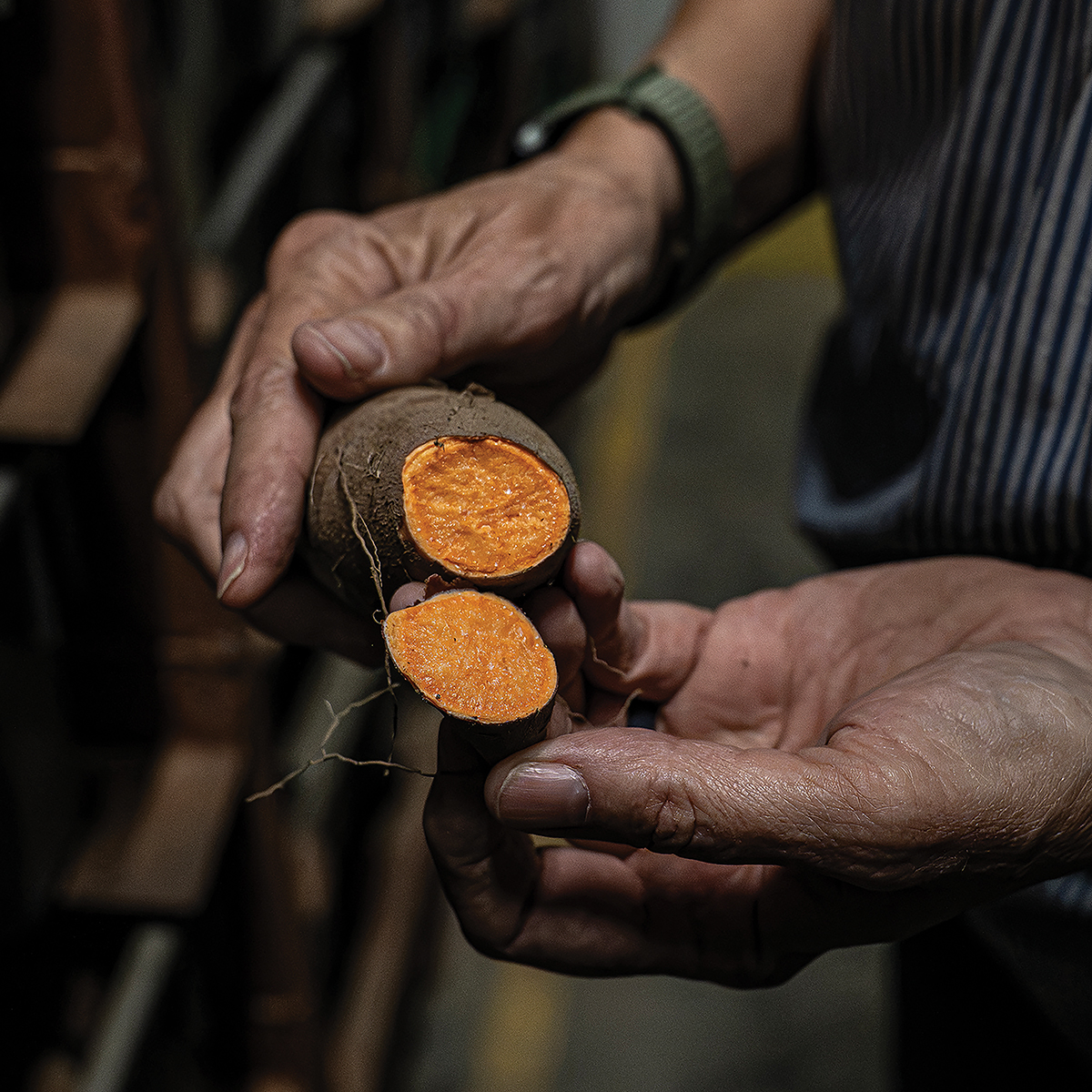
About a year ago, photographer Bill Reaves got an invitation from the North Carolina Sweetpotato Commission to tour local farms and learn about the industry alongside other foodies and media sorts. “And I was thinking, man, I’m a city boy—I had no idea how this stuff was grown!” he says.

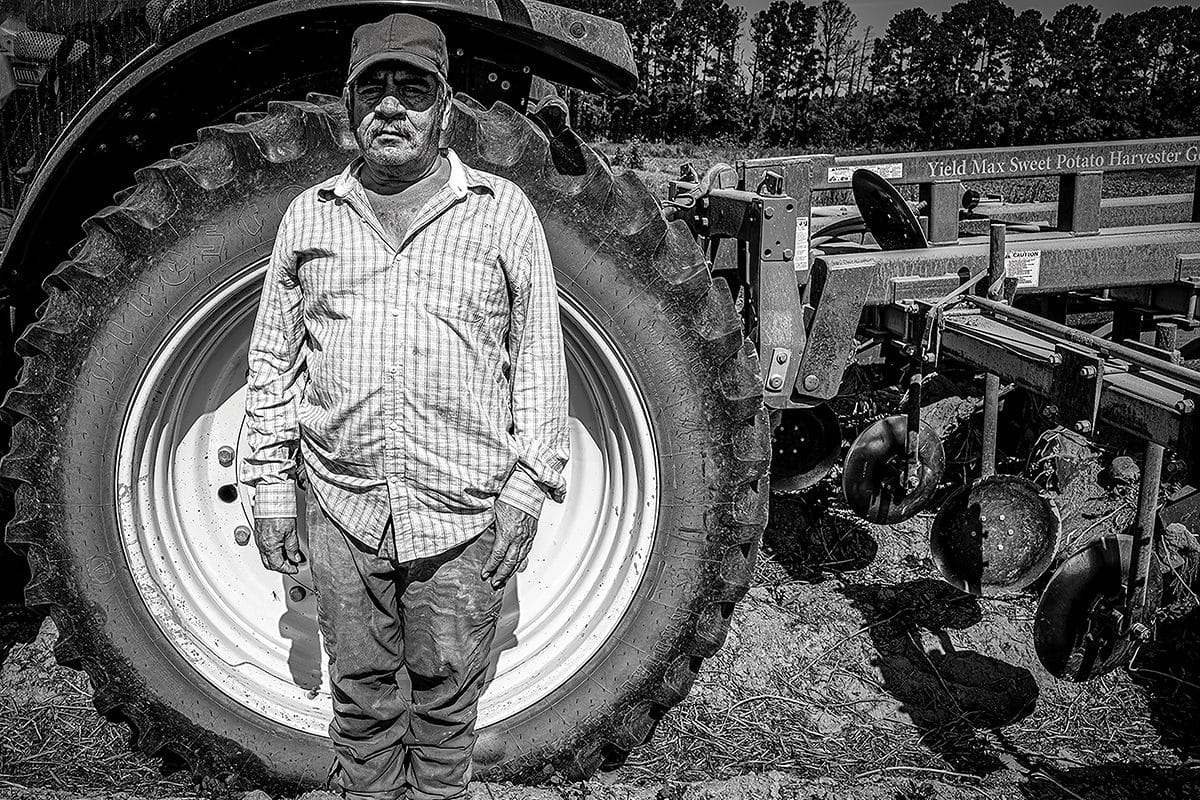
Old tack from mules that once plowed the fields (Left). An H-2A worker at Tull Hill Farms in Kinston, where he’s worked for 26 years (Right).
That tour inspired him to dig deeper. People in Peru have cultivated sweet potatoes for food for more than 4,000 years. “This root vegetable became a mainstay of civilizations and cultures globally because it’s nutritionally dense—it’s considered a superfood,” says Michelle L. Grainger, executive director of the commission. Today, North Carolina produces and exports more sweet potatoes than any other state. “It’s a tropical veggie that likes sandy soil and a hot, humid climate—we’ve got that!” she says.
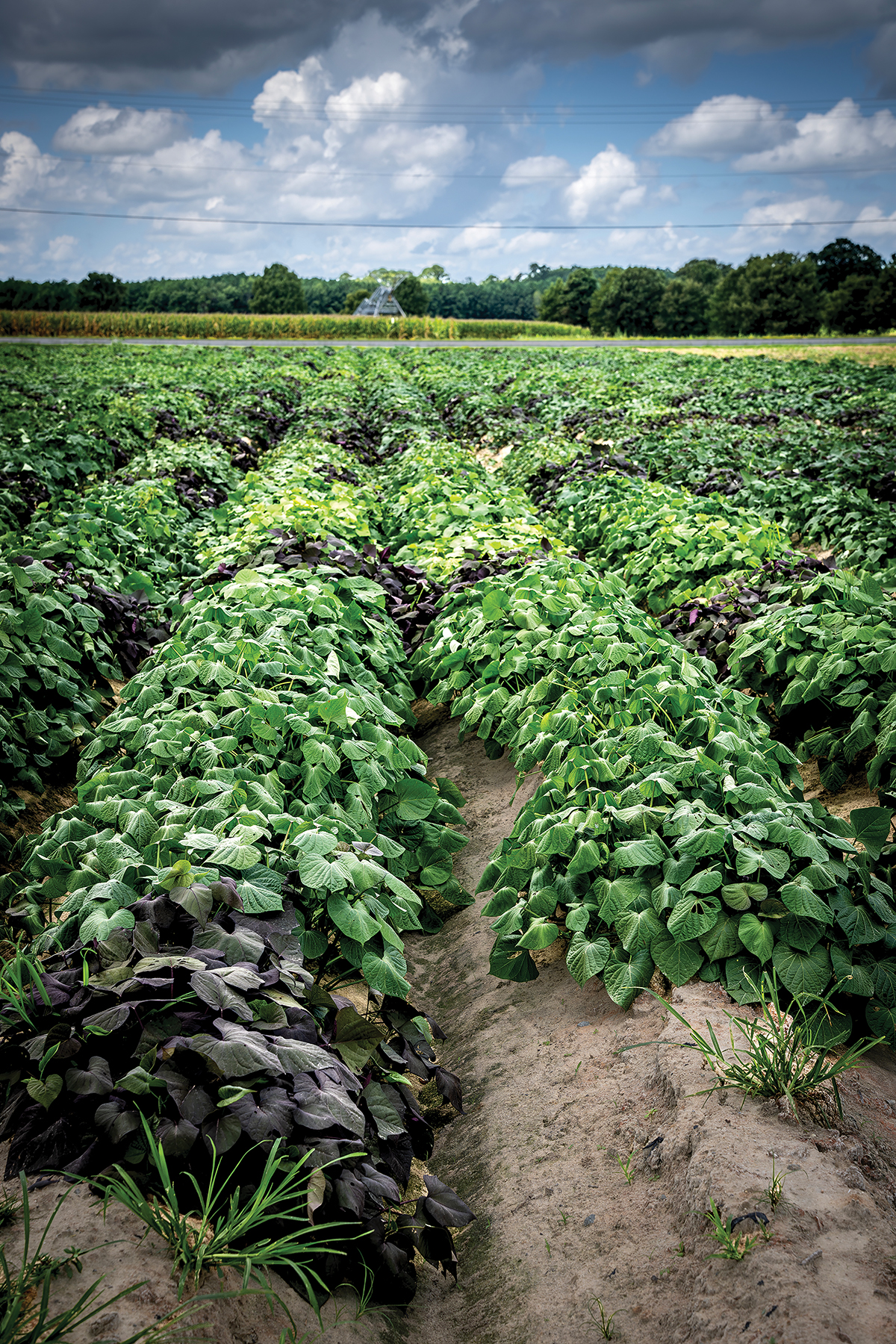
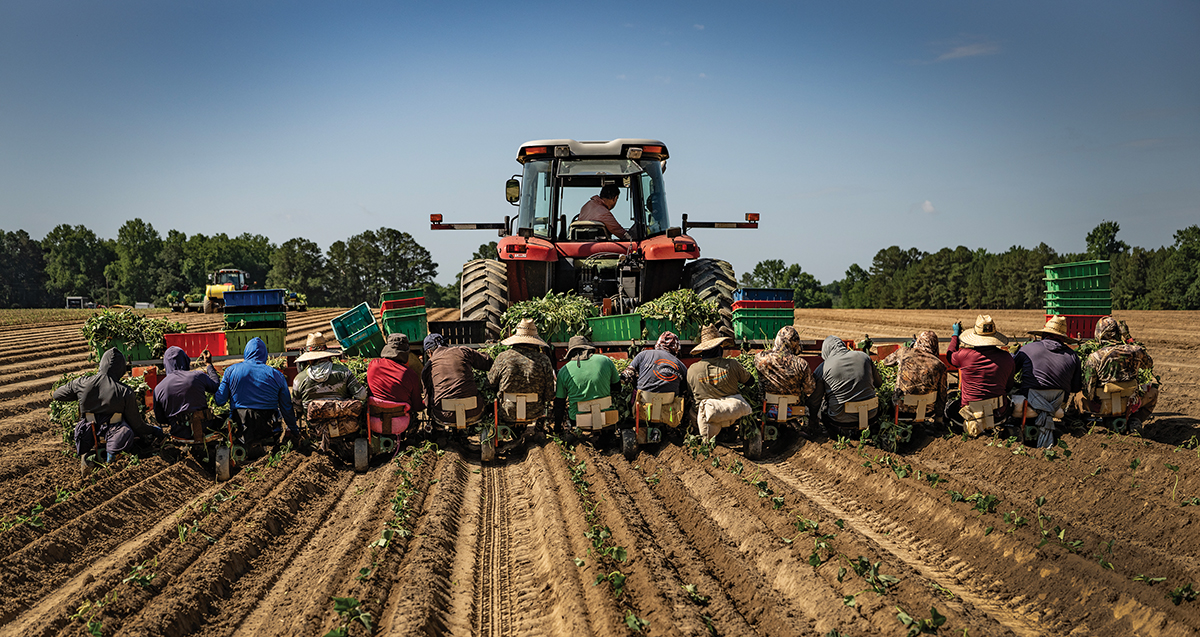
The sweet potato season starts in February or March, when seed sweet potatoes are bedded to grow slips, sprouts that are cut and planted in May and June. It takes 90 to 120 days for the slips to produce sweet potatoes, with harvest starting in late summer. “But unlike white potatoes, sweet potatoes’ skin is too fragile to be mechanically harvested,” says Grainger. “There’s no way around it,” agrees Reaves. “It takes workers to pick them up and get them into boxes.”
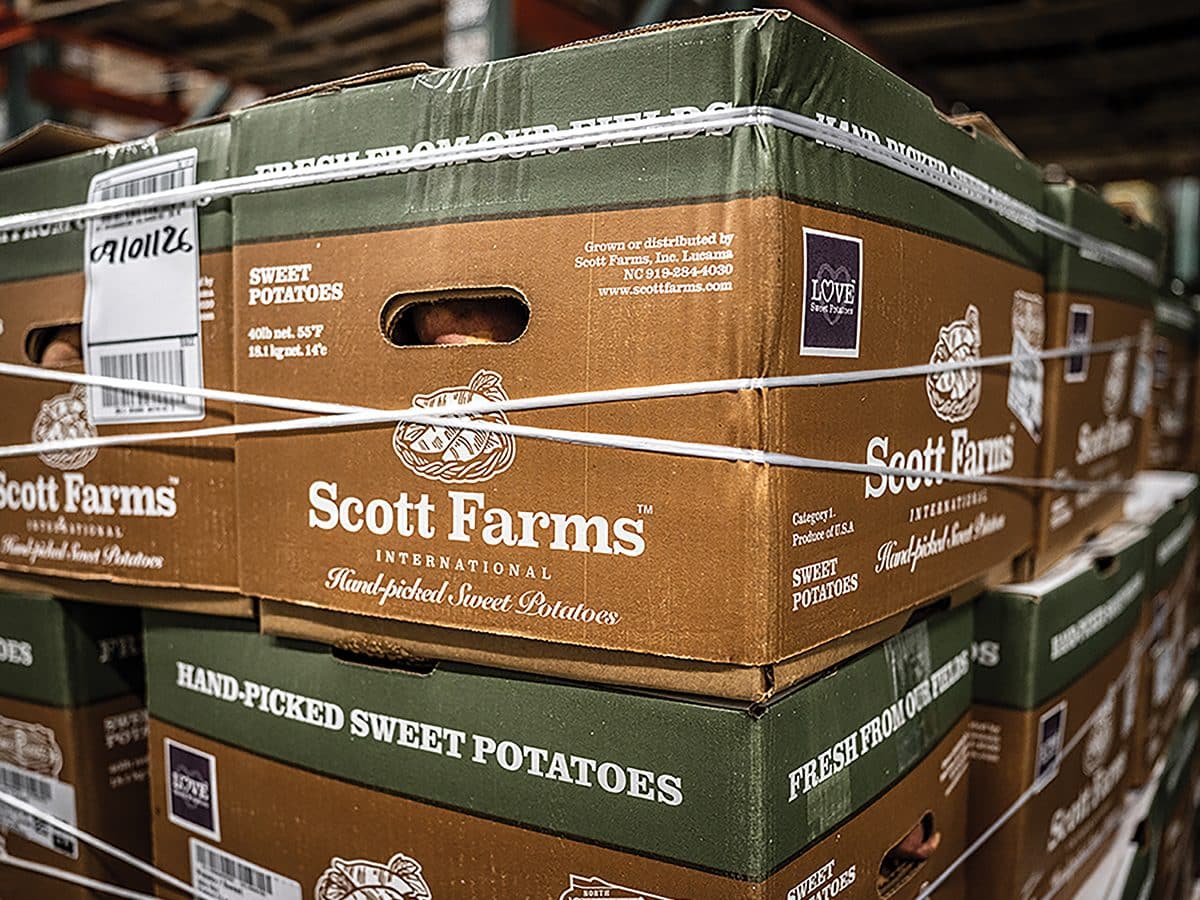
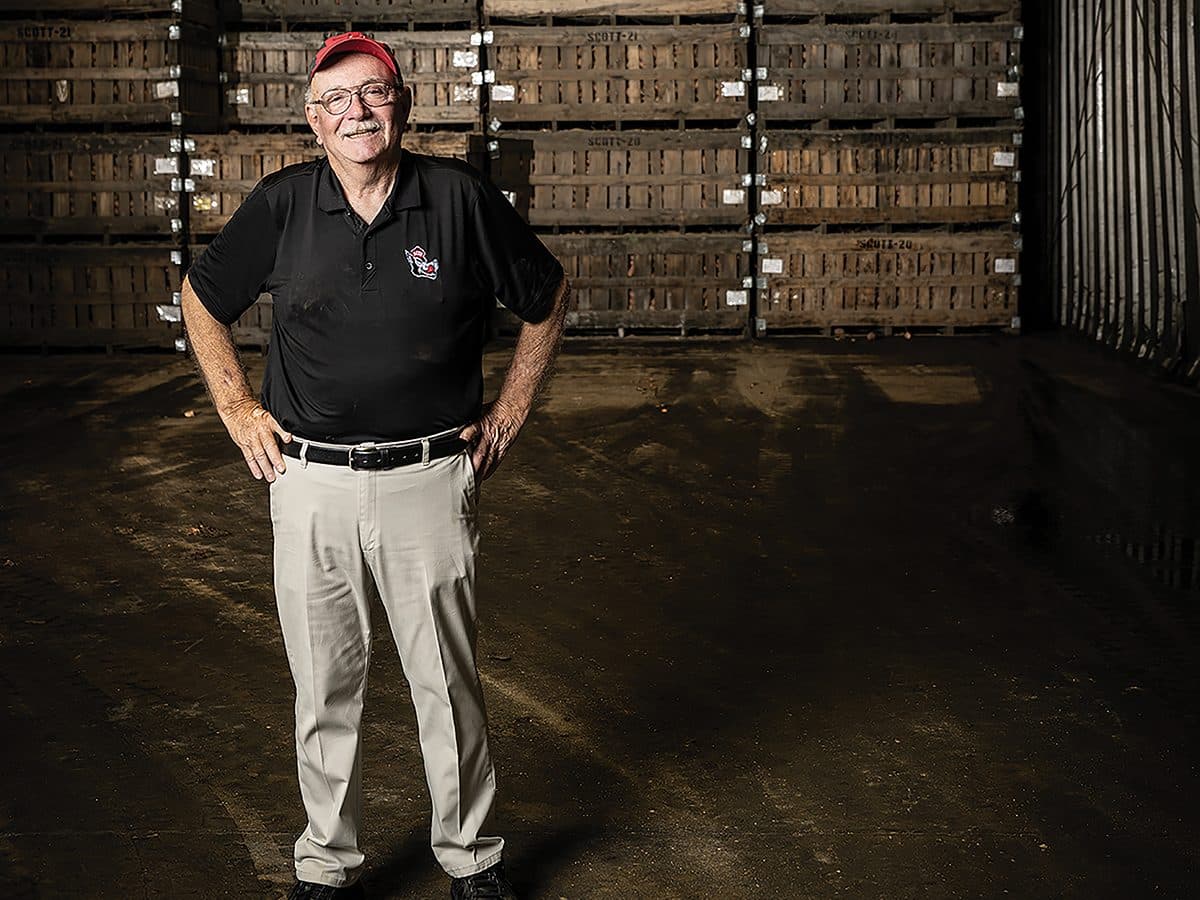
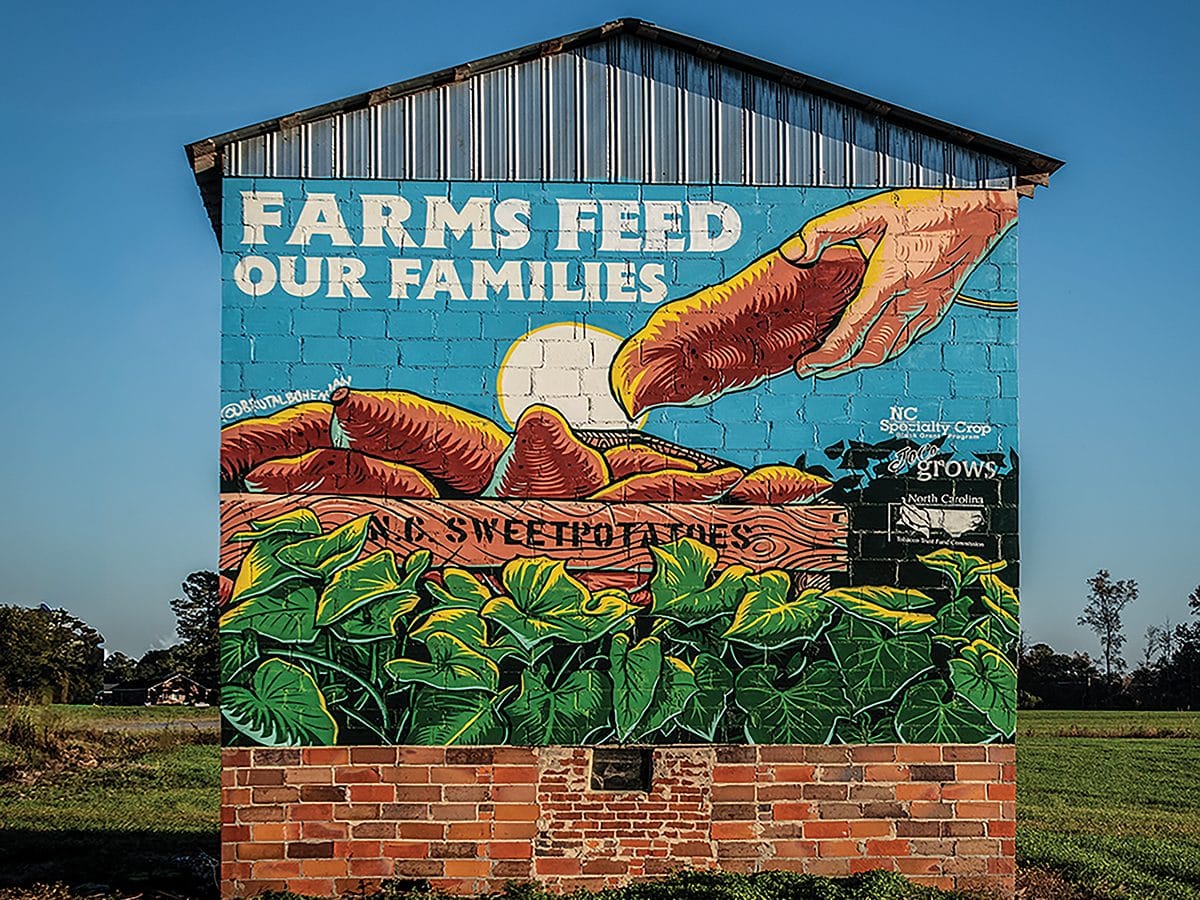
Left to right: Forty pounds of North Carolina-grown sweet potatoes, Dr. Michael D. Boyette, who helped design negative horizontal ventilation, and an old barn in Johnston County.
After the sweet potatoes are collected, they’re cleaned and cured, a process that seals the skin and converts the veggie’s natural starches into sugars. “Before curing, there’s not as much flavor,” says Grainger. The sweet potatoes are also graded to determine their use—for sale in grocery stores in the U.S. or abroad, for example, or for processing into soups, purees, canned goods, and the like.
Part of what has made our state so successful at sweet potato farming, Reaves learned, is work done at NC State University, a global leader in sweet potato research, from breeding to production. “I just thought all the farmers were in the mud, but the amount of research they put into this is just amazing,” he says. Among the developments: the Covington sweet potato, a patented variety that thrives in our climate, and negative horizontal ventilation, a system that allows sweet potatoes to be stored for up to a year.
But for Reaves, touring these farms emphasized the human factor of the harvest, which includes many generational farmers and seasonal workers who return year after year. “It’s all about the people. It takes a village. These people leave their homes and come here to work hard,” he says. It’s also, he says, about trust: “You put the slip into the ground, but you can’t see it growing. You just have to know when it’s ready.”
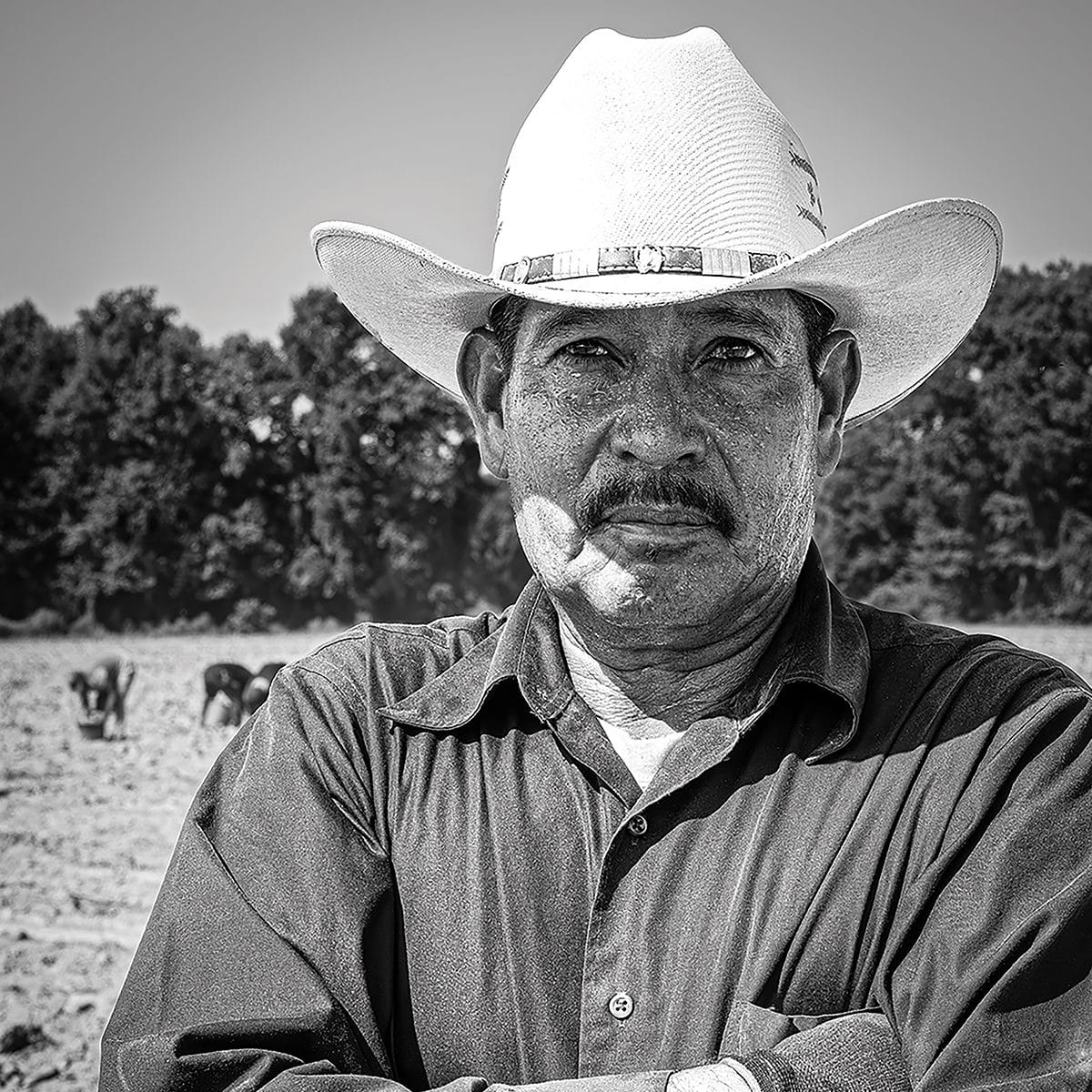
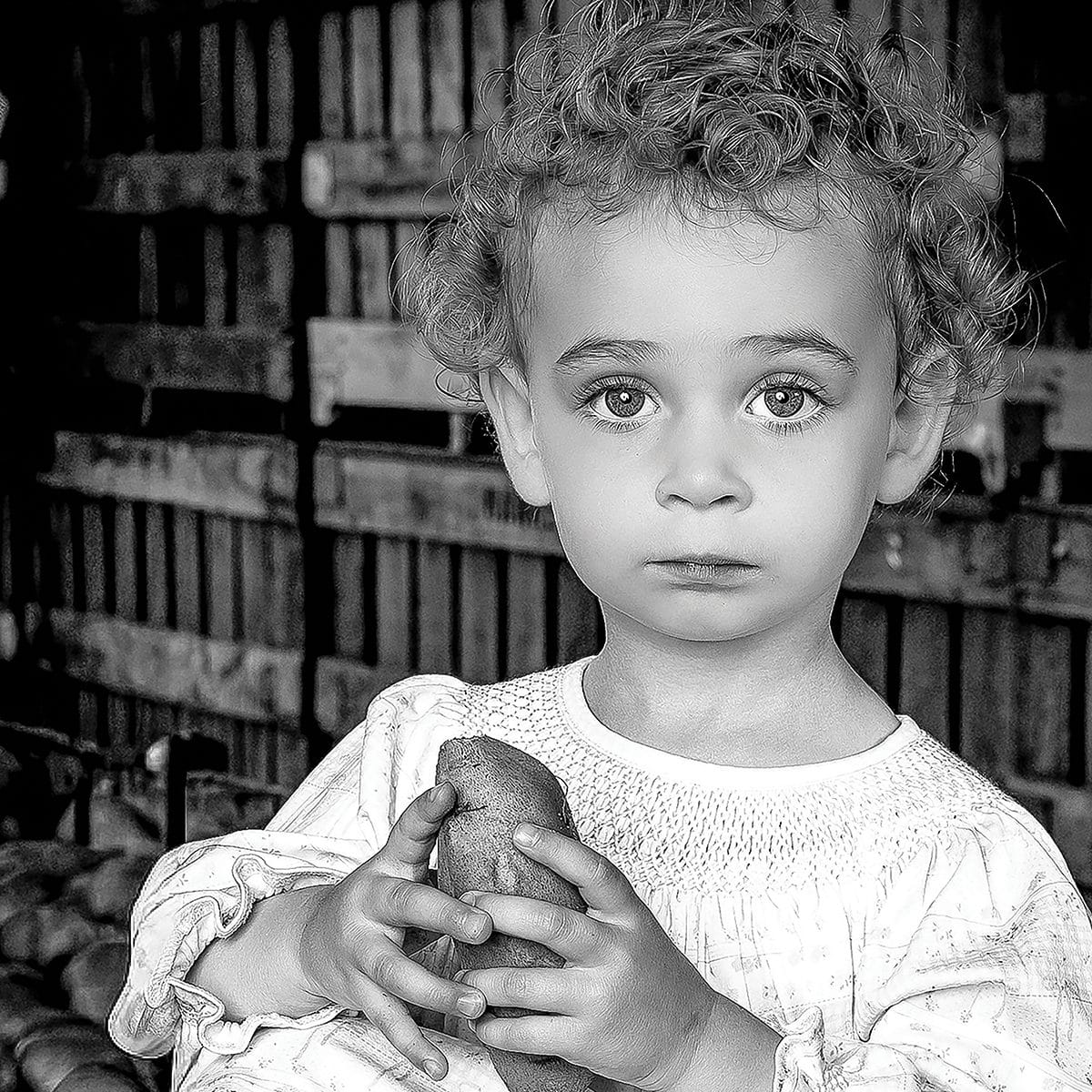
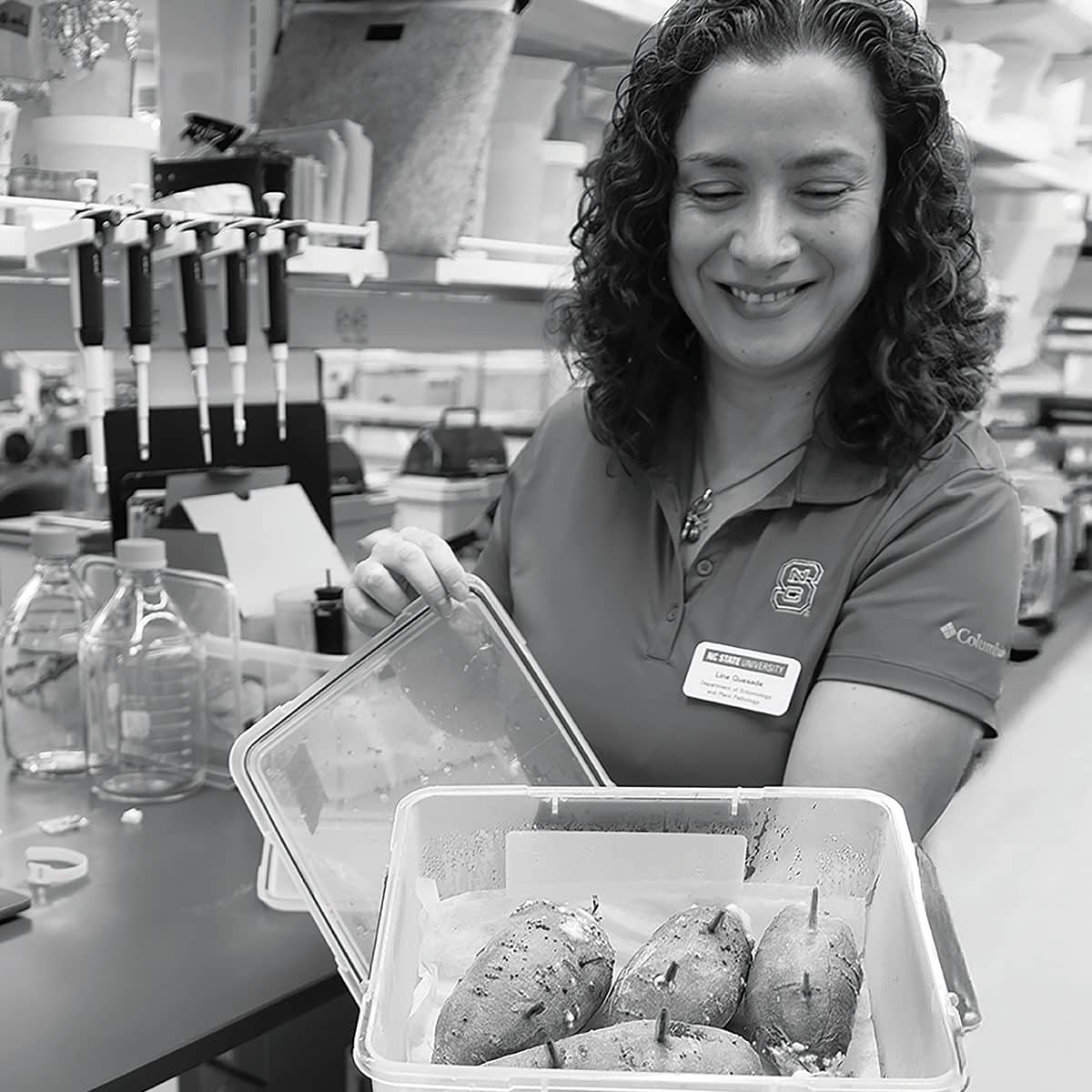
Left to right: A field boss who goes by “El Jefe,” a potential fourth-generation farmer in Spring Hope, and someone conducting research at NC State.

This article originally appeared in the November 2026 issue of WALTER Magazine.


