These five residences across the state offer a beautiful and nuanced window into the lives of their residents and how our society has evolved
by Sydney Brainard
Stepping inside a historic home can offer an intimate perspective on what kinds of lives its former inhabitants lived. “To be able to step back in time and see something that’s been preserved since, say, the 1700s, gives one a sense of permanence, gives one a sense of continuity,” says Vonna O’Neill, president of the Cupola House Association in Edenton. North Carolina has several grand homes across the state that are worth visiting for their architectural significance and the ways they illustrate our society’s evolution since the colonial era. The next time you want to explore more of North Carolina, consider a road trip to visit one of these five historic homes.
Tryon Palace
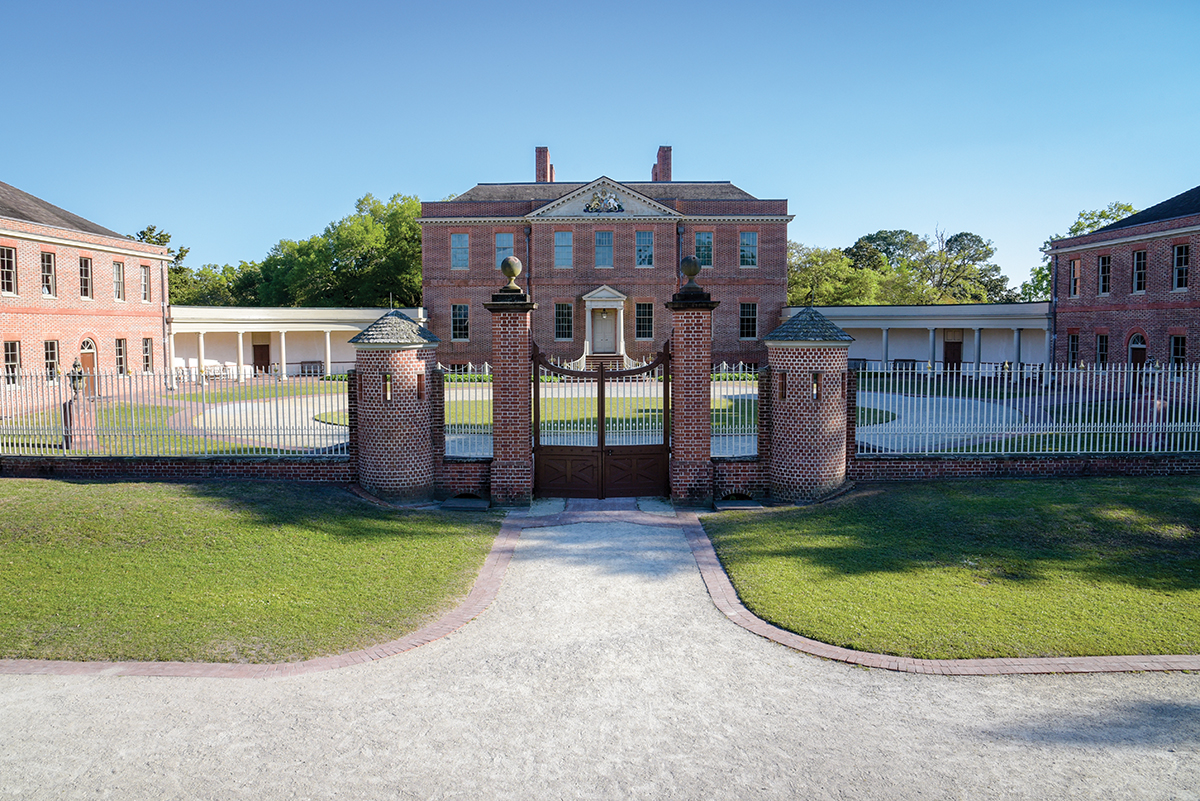
As the state’s first capital, New Bern is a worthwhile destination for anyone who enjoys history. The Tryon Palace and grounds, located at the waterfront edge of downtown, immerse you instantly into the colonial era. After construction was completed in 1770, the Georgian-style mansion served as the home of North Carolina’s governor at the time, William Tryon, his family and — as highlighted by the Palace’s “Life on the Lesser Stairs” tour — a sizable crew of servants and enslaved workers. The current palace is largely a recreation of the original, due to a fire that destroyed the main building in 1798, but was reconstructed on the original foundations using the original architectural plans.
Tours of the palace, led by costumed tour guides, take you through the opulent residence, with its walls of intricate, colorful moulding and large collection of antique, period-accurate furniture, pulled straight from Tryon’s meticulously cataloged inventory. The tour also takes you through the kitchen office, a more modest building with brick floors and a massive fireplace, where servants prepared meals for the family. During the tour, you can see historical actors cooking in the kitchen like servants would have centuries ago. “They use herbs from the garden; sometimes they’re cooking medicinal things and sometimes they’re cooking meals,” says Nancy Figiel, public affairs director for Tryon Palace. On your own, you can explore the stable office, complete with several horse stalls and a harness room, in its original structure from the 1770s, as well as the vast palace gardens on the property.
After your visit, you can continue to explore the historic homes and buildings near the palace, like the 1830s Dixon House or the New Bern Academy Museum. Don’t forget to grab a bite to eat in downtown New Bern, either. If you’ve got kids in tow, the Cow Cafe on Middle Street is always a crowd-pleaser with its homemade ice cream and fresh pies. From $20; 529 South Front Street, New Bern; tryonpalace.org
Körner’s Folly
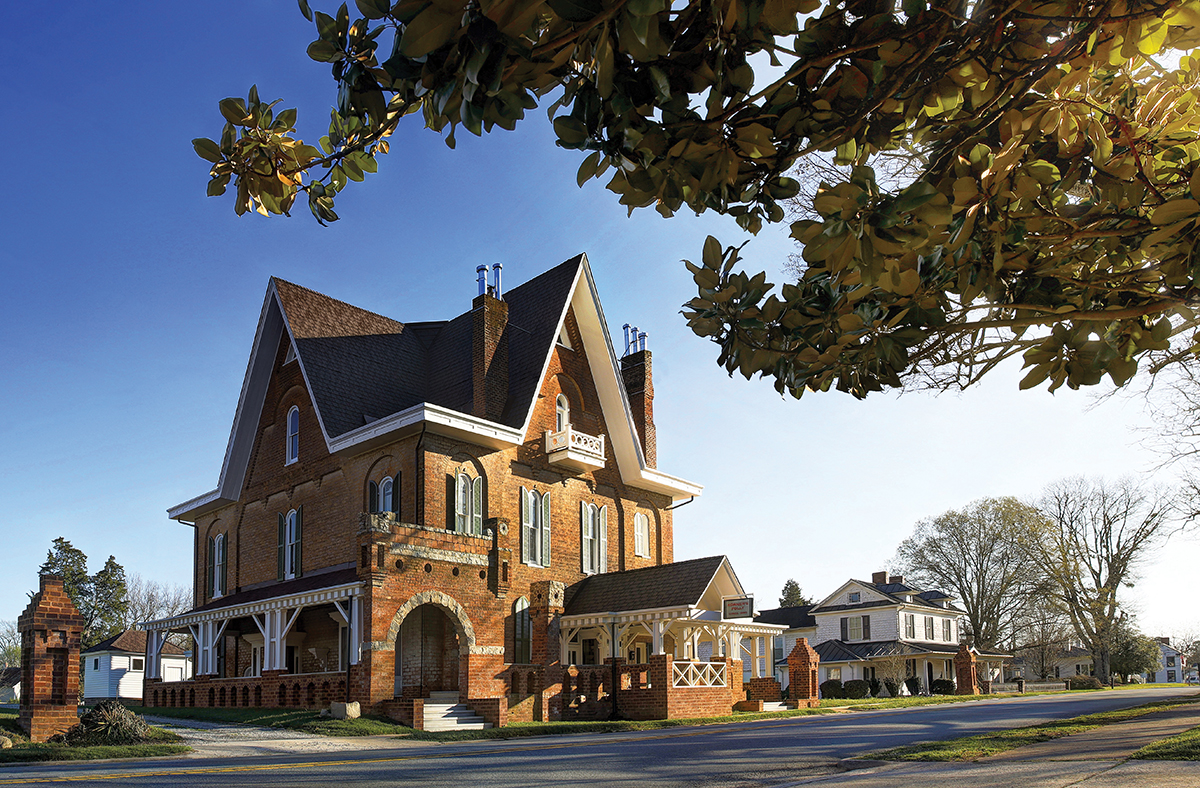
Design addicts will either love or loathe the architectural anomaly that is Körner’s Folly in Kernersville. Construction began in 1878 on this Victorian-era home, which served as a studio and design portfolio, as well as a home, for interior designer Jule Gilmer Körner. But its floor plan might make your head spin: the residence has 22 rooms, three floors, seven levels and ceiling heights that range from 5.5 to 25 feet!
Körner was an eccentric figure, regularly renovating his house to accommodate all his new ideas, even after he married and had a family. At the time of his death in 1924, his daughter discovered that Körner even had future renovation plans for the house.
The house’s architectural styles range from Gothic to Colonial, New Classical to Baroque. There are elaborately carved ceilings and window frames that give way to penny-tile flooring, detailed carved-wood furniture in one room and American encaustic tiling in another. Colors, textiles, furnishings and decor vary widely throughout the house.
Today, the home is open to be explored, even as it continues to be preserved and restored. Körner’s Folly offers both guided and self-guided tours, so you can choose your own pace. “I think the self-guided option really allows you to use your imagination, and to really think about what life was like during that time — to think about what it would have been like to grow up in Körner’s Folly and to play in 22 rooms with your pet raccoon,” says Suzanna Ritz Malliett, executive director of Körner’s Folly Foundation. (Yes, the children had a pet raccoon!) Follow up your tour with a stop at The Prescott, just down the road, for wine and dinner made with local ingredients. From $14; 413 S. Main Street, Kernersville; kornersfolly.org
Duke Homestead State Historic Site and Tobacco Museum
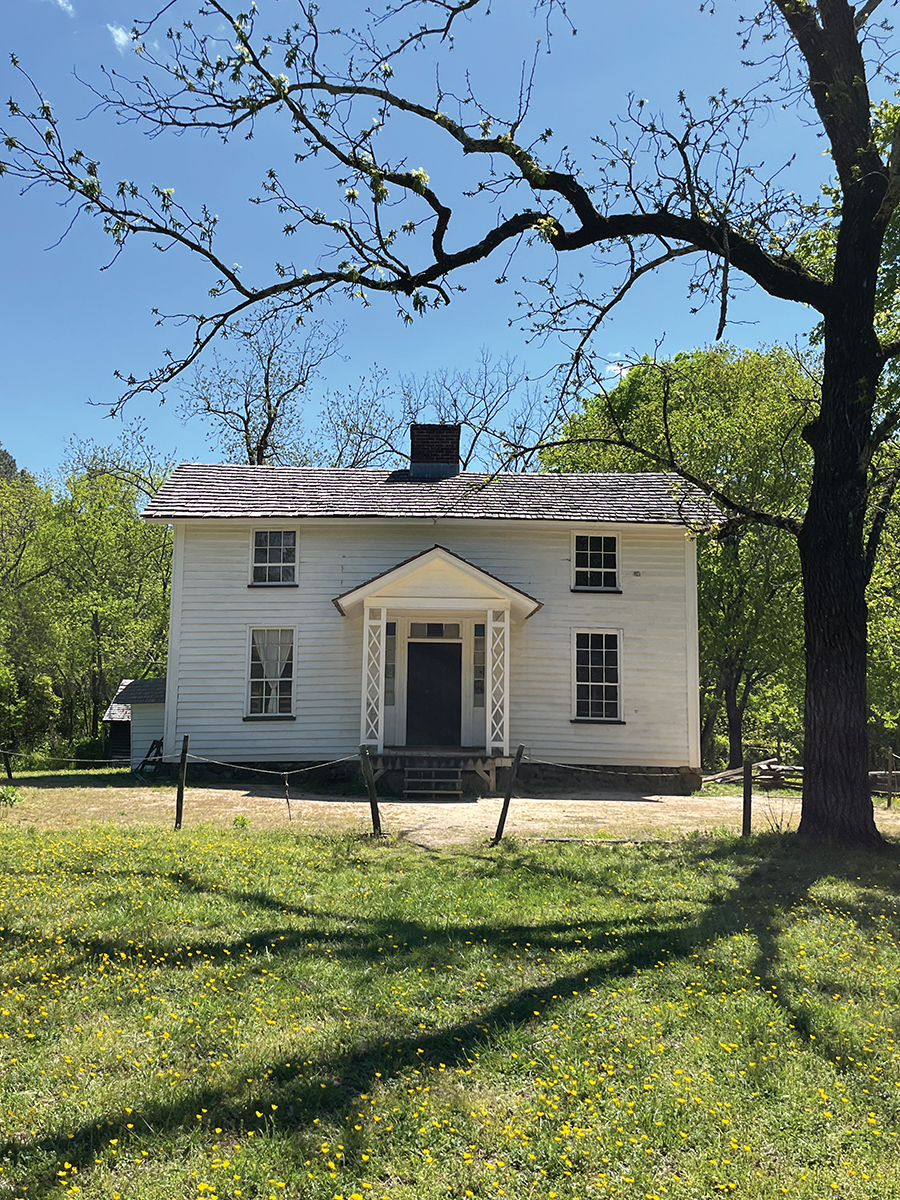
Just a short trip from Raleigh, tucked away in the forest, lies the storied Duke Homestead, a simple frame house built in 1852 by Washington Duke. Within a few decades, the Duke family would control the tobacco industry and later help create what is now Duke University. The site of the homestead, along with the accompanying Tobacco Museum, tells the story of Washington Duke and his family, along with the two enslaved workers who lived on the property. It traces the Dukes from their earliest beginnings as farmers to the start of their tobacco empire, when they began to outgrow the factories and farm on the property.
The site offers 45-minute guided tours of the homestead — which includes the house, farm and factory buildings — as well as a self-guided option of the visitor and museum. (The historic building interiors are only accessible with a guide.) After your visit, take a stroll around Duke University’s sprawling campus, where you’ll spot a statue of Washington Duke reclining in a bronze chair at the entrance to East Campus. From $2 for guided tours; 2828 Duke Homestead Road, Durham; dukehomestead.org
The Cupola House
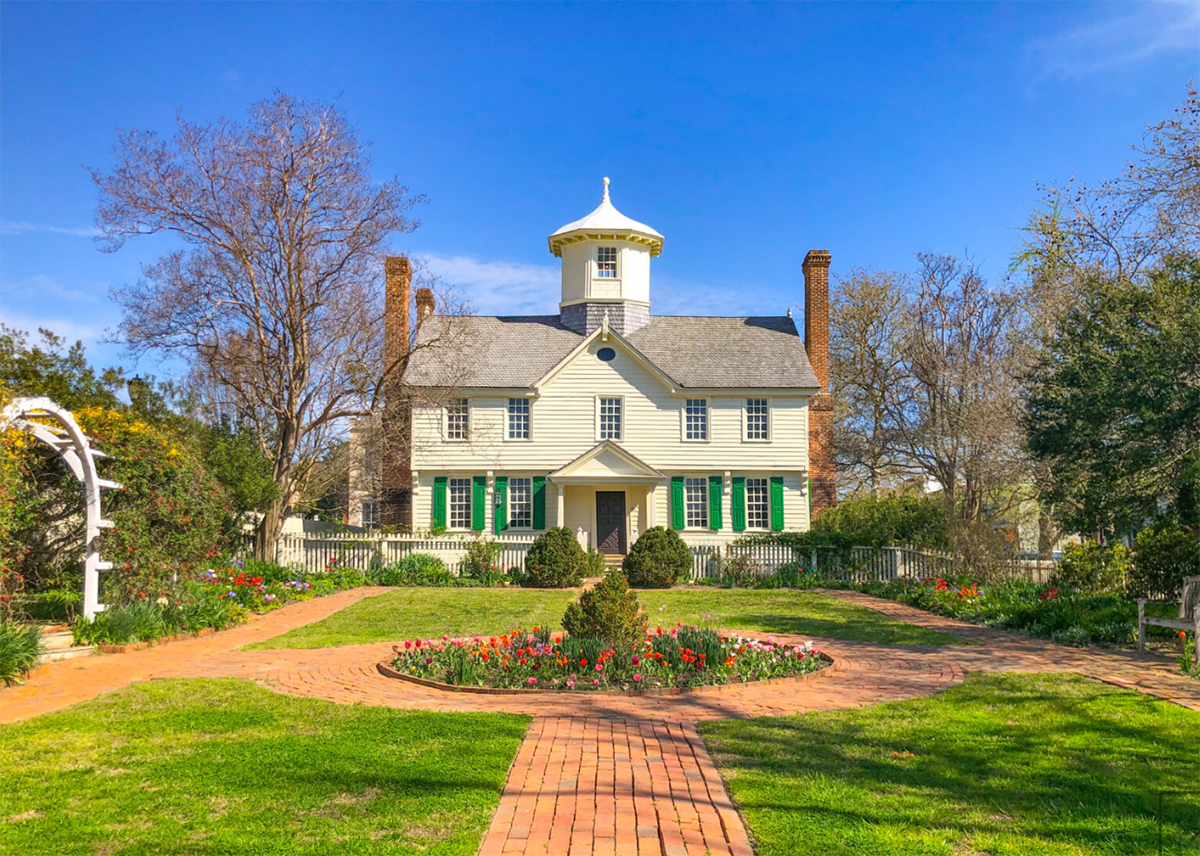
Only steps from the shores of Edenton Bay sits the colonial-era Cupola House and its lush gardens. As North Carolina’s second-oldest town, Edenton is chock full of history — during the 18th and early 19th century, it was a prominent port city and part of the Maritime Underground Railroad. The Cupola House, built in 1758 by a land agent named Francis Corbin, was inhabited for over a century and a half until it was bought for preservation in the early 1900s. “The ambience, when you step in, you do feel like you’ve stepped back into time,” says O’Neill.
The unique house, constructed with a blend of Jacobean, Colonial and Georgian architectural styles, gets its name from the large cupola that sits atop the roof. The Cupola House provides guided tours, while the gardens are free to explore between 9:00 a.m. and 4:30 p.m. daily. The house is also a stop on the Trolley Tour that runs through Edenton, which is an efficient option for exploring the area. Stop by The Herringbone On The Waterfront for dinner with a view, and if you’re interested in a weekend or long-term stay, the nearby Inner Banks Inn provides a charming historic bed and breakfast experience. From $12.50; 408 S. Broad Street, Edenton; cupolahouse.org
The Biltmore
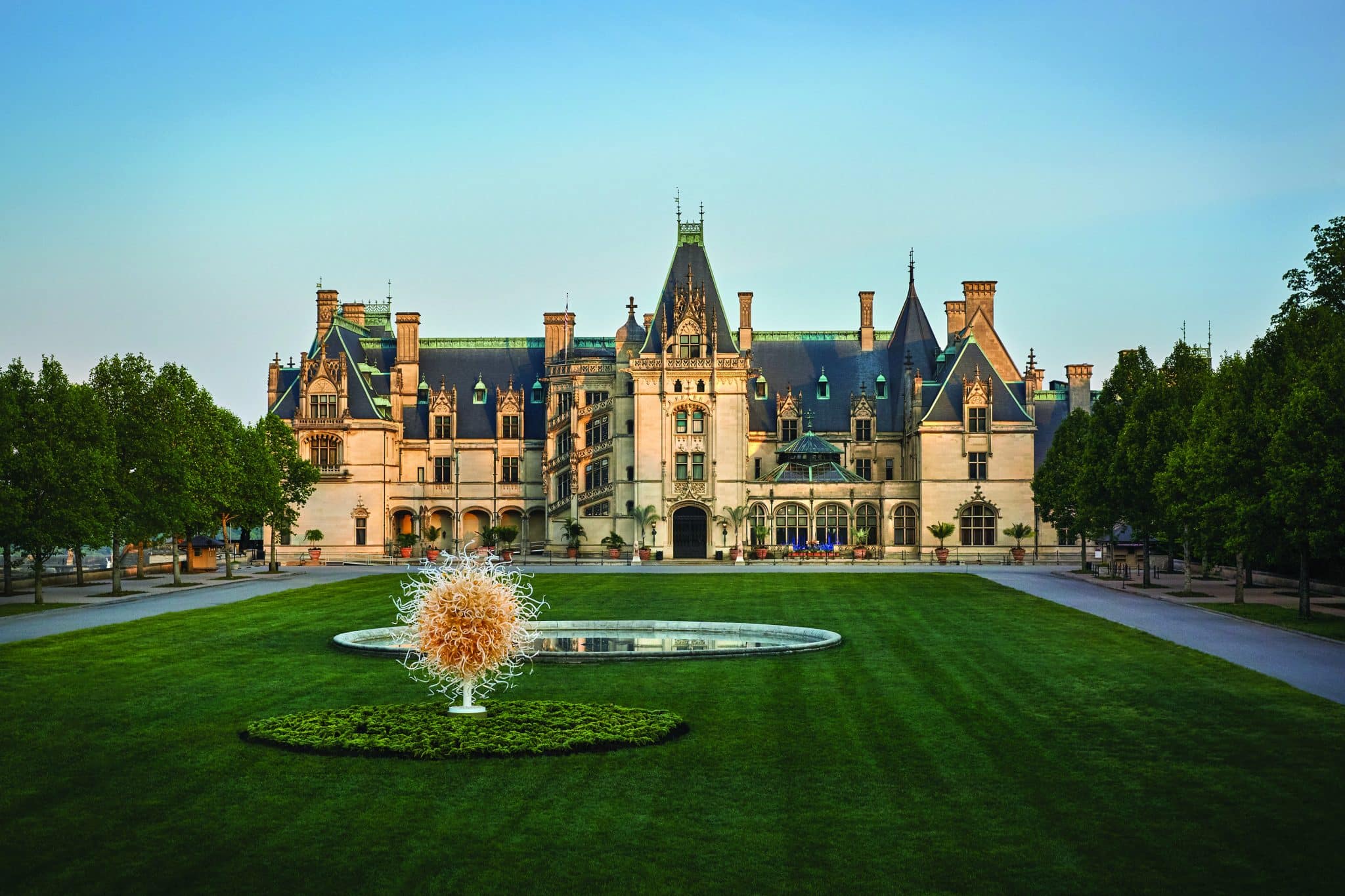
You can’t talk about grand historical North Carolina homes without mentioning the Biltmore Estate. The massive 250-room chateau was a marvel even in 1895, when construction was completed. Built by George Vanderbilt as a country retreat, the Biltmore Estate is practically its own town. The 175,000-square-foot French Renaissance Revival-style home was built primarily from limestone sourced from Indiana. With a two-story library, a banquet hall with a 70-foot ceiling, an indoor swimming pool and a bowling alley, one could get lost for hours exploring the Biltmore.
Aside from the house, the estate contains large gardens, a winery, an inn, a hotel, cottages, a farmyard and a shopping area. While the Biltmore is especially popular around the holidays for its elaborate Christmas decor, the warmer seasons offer much to see as well, including abundant blooms like hydrangeas, abelias, magnolias and a variety of tropical plants, as well as lovely weather for wine tasting and visiting the farmyard. For the full Biltmore experience, spend the night at one of the many accommodations on the property, or head out to explore Asheville’s renowned food scene.
From $85; 1 Lodge Street, Asheville; biltmore.com

This article originally appeared in the November 2025 issue of WALTER magazine.