The Curb Museum of Music and Motorsports in Kannapolis is a true Old North State experience that shows of Grammys, guitars and… cars!
by David Menconi
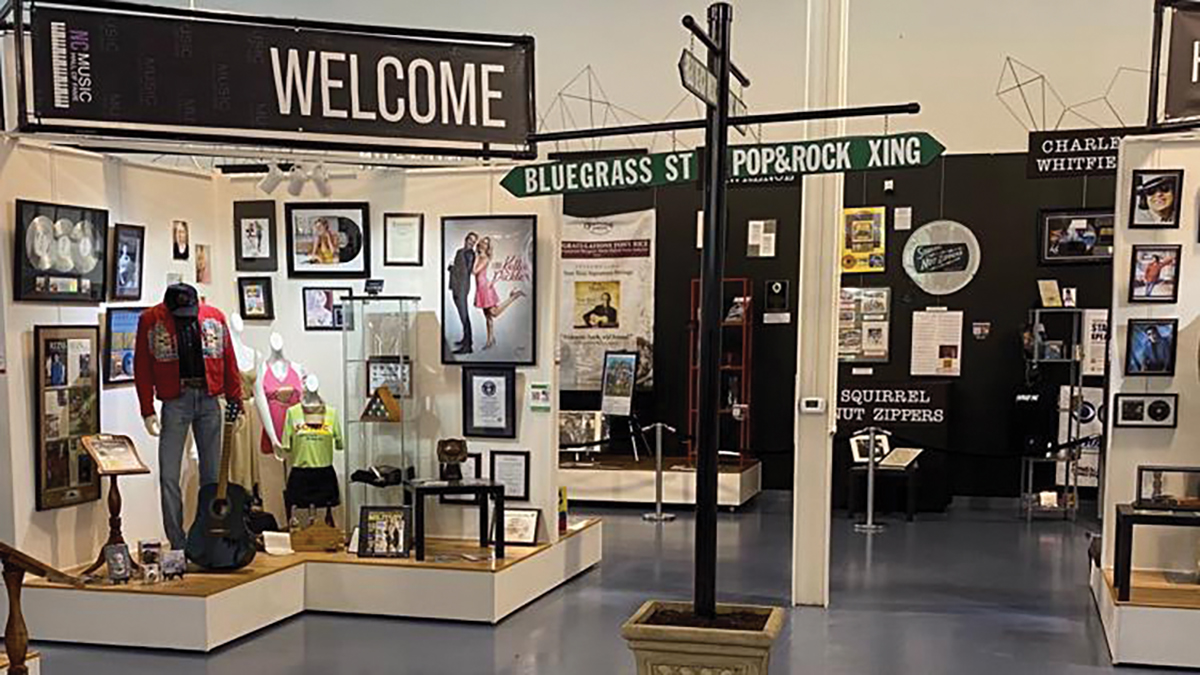
Upon entering the North Carolina Music Hall of Fame, it’s possible the first thing you notice won’t be music-related. That’s because the music hall shares space with the North Carolina Motorsports Hall of Fame, so racecars are on display. The joint facility is the Curb Museum for Music and Motorsports (named for benefactor Mike Curb) in Kannapolis.
“It’s actually very cool to have the racecars here,” says Veronica Cordle, executive director of the Music Hall of Fame since 2017. “When we first moved in here, I did wonder: How would this work? But it’s a beautiful combination. This area is so saturated with both music and motorsports, it works perfectly.”
NASCAR’s roots go back to Prohibition-era moonshine runners. But our state’s musicians have made monumental contributions to American music. From Doc Watson to Nina Simone, John Coltrane and Earl Scruggs on down, there truly are enough genius-level artists to fill a music hall of fame.
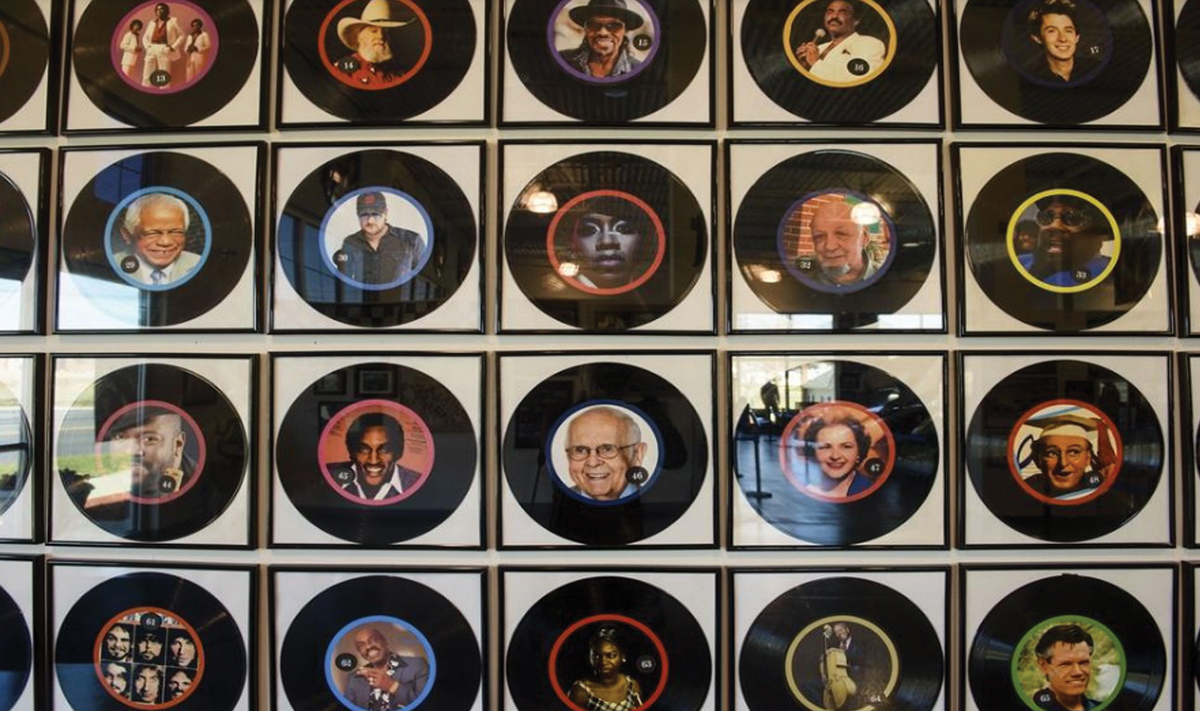
You’ll find displays about all those artists at the hall. There are 132 inductees going back a century, from Roaring Twenties pre-bluegrass pioneer Charlie Poole up to present-day stars like country singer Luke Combs (who is going in this year).
“The number-one thing I hear from people who come is they’re just totally floored because they cannot believe how much greatness comes from North Carolina,” says Cordle. “I never knew so and so was from here, they’ll say — Roberta Flack, Randy Travis and all the rest. It really is unbelievable.”
The North Carolina Music Hall of Fame originated in the 1990s in Thomasville, when a group of music fans started collecting memorabilia to display. Curb, a politician and longtime music-industry mogul (as well as leader of hit-making Christian pop band Mike Curb Congregation), got involved in 2008 and moved it to Kannapolis, where he owned a NASCAR racing team.
It was Curb’s idea to combine music and motorsports in one building, and he is the operation’s major underwriter. According to Cordle, Curb provides between 60 and 70 percent of its funding (which is enough to make admission free).
It’s hard to pinpoint how many music halls of fame exist in America. Bob Santelli, who has had key roles at the Grammy Hall of Fame in Los Angeles and Seattle’s Experience Music Project, puts the number at about three dozen, from big institutions like the Country or Rock and Roll Hall of Fame down to modest mom-and-pop operations.
“State halls of fame have a tough time, because most of their visitors are going to be from within that state,” says Santelli, now founding executive director of the Bruce Springsteen Archives and Center for American Music at New Jersey’s Monmouth University. “But they are still great and necessary. Huge museums like the Rock and Roll Hall of Fame can’t tell all the stories or preserve all the history. That’s why the smaller halls of fame are valuable.”
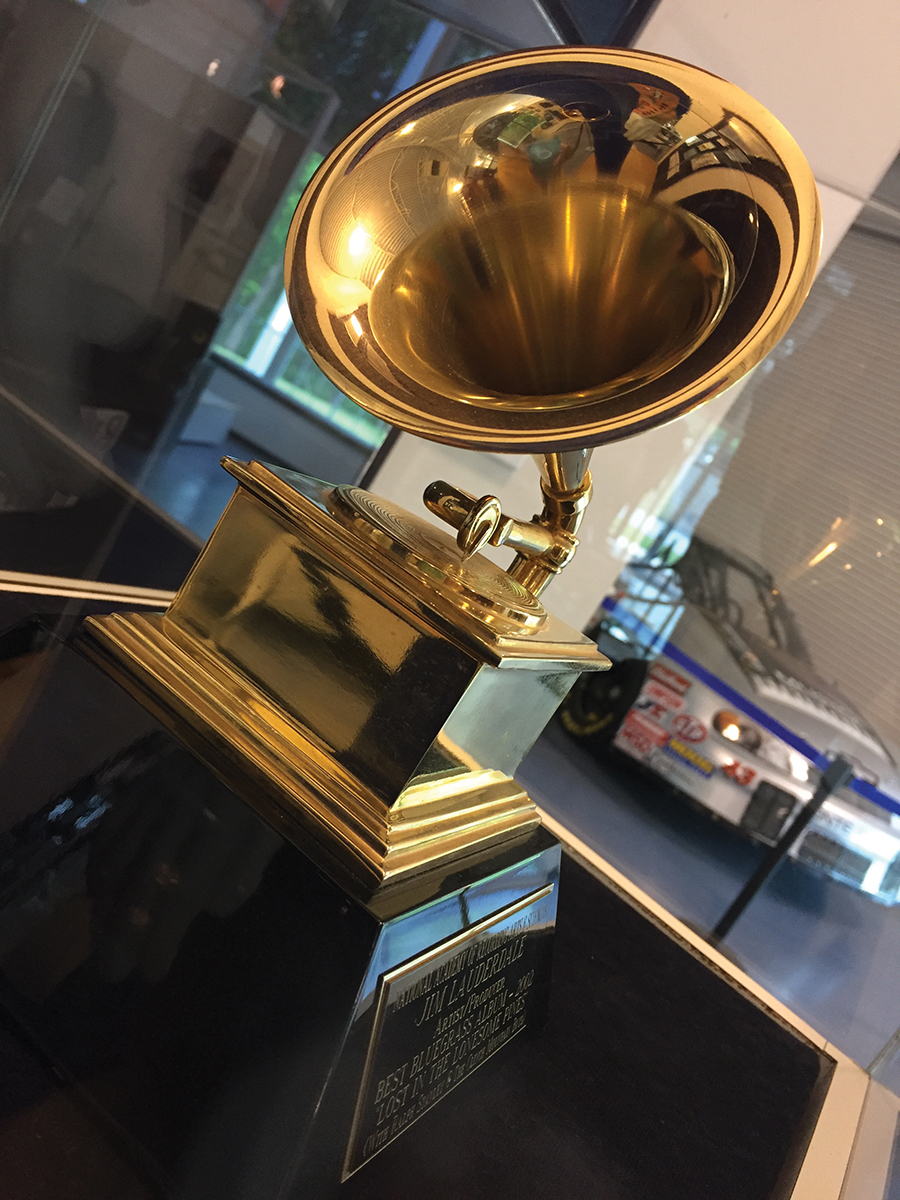
While the pandemic shutdown took a toll, Cordle says the hall has seen its annual attendance double since then to around 6,000 a year — mostly from school groups coming for tours. Among the most popular artifacts on display are a golden fiddle from Wilmington native Charlie Daniels, of “The Devil Went Down to Georgia” fame, and Grammy Awards on loan from Troutman-born Americana star Jim Lauderdale and Newton bluegrass-fiddle legend Bobby Hicks.
An advisory board selects inductees from a running list of nearly 400 names, based on influence and artistry. Most but not all are native-born and the vast majority are recording artists, but the membership does include a few nonperformers like Motown Records executive (and Climax native) Clarence Avant. Membership has become coveted enough for Cordle to regularly get inquiries from musicians lobbying for induction.
“It’s a cool thing, very nice of them to think of our band as worthy of inducting alongside George Clinton, Maceo Parker, so many others,” says Hope Nicholls, whose alternative-rock band Fetchin’ Bones was inducted in 2023 (and did not lobby for it). “It’s a building full of cool things and we had a lot of fun curating our exhibit. We gave them so much stuff, costumes and instruments and handmade posters, crazy DIY things we did through the years.”
The latest class will be inducted in October at the Mooresville Performing Arts Center, a class of six led by country hitmaker Combs. Also entering this year are cult-favorite roots rocker Dexter Romweber, country pedal-steel guitarist Clyde Mattocks, singer/songwriter David Childers, pioneering radio DJ Hattie “Chatty Hatty” Leeper and director/producer Robert Deaton.
This year’s ceremony will have to go a long way to top the hall’s most memorable induction, of platinum-selling country star Eric Church in 2015. The Granite Falls native wasn’t supposed to be there, sending relatives to accept on his behalf — but unexpectedly appeared after all.
“His mom was in the middle of reading Eric’s acceptance speech apologizing for not being there, when all of a sudden he walks onstage,” says Cordle. “Surprised everybody, and there was an amazing eruption from the audience. That was the best.”
The North Carolina Music Hall of Fame is in the Curb Museum for Music and Motorsports, 600 Dale Earnhardt Boulevard, Kannapolis. Admission is free. For details on hours as well as tickets to the Oct. 16 induction ceremony, see northcarolinamusichalloffame.org or call 704-934-2320.

This article originally appeared in the October 2025 issue of WALTER magazine.