This Triangle folk music collective gathers singers and instrumentalists for otherworldly takes on traditional tunes
by David Menconi
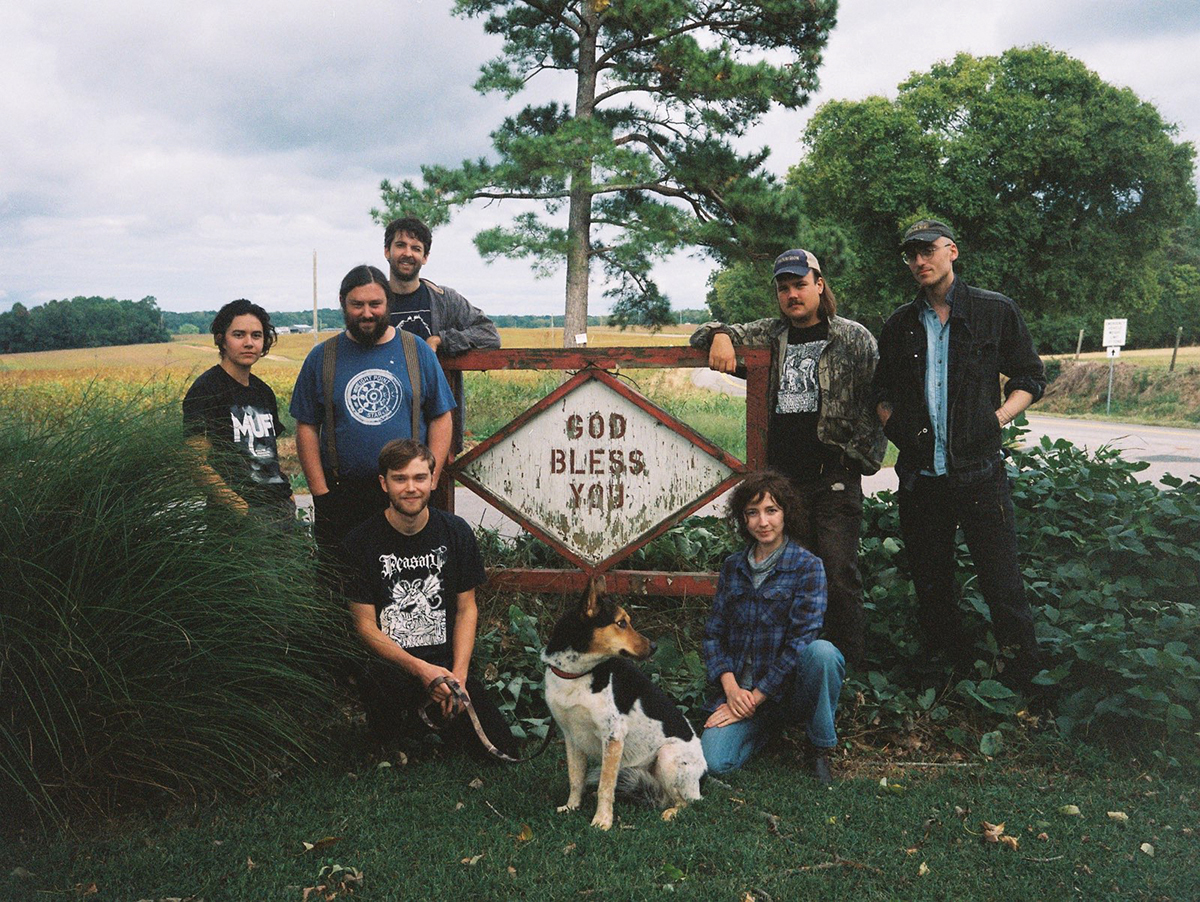
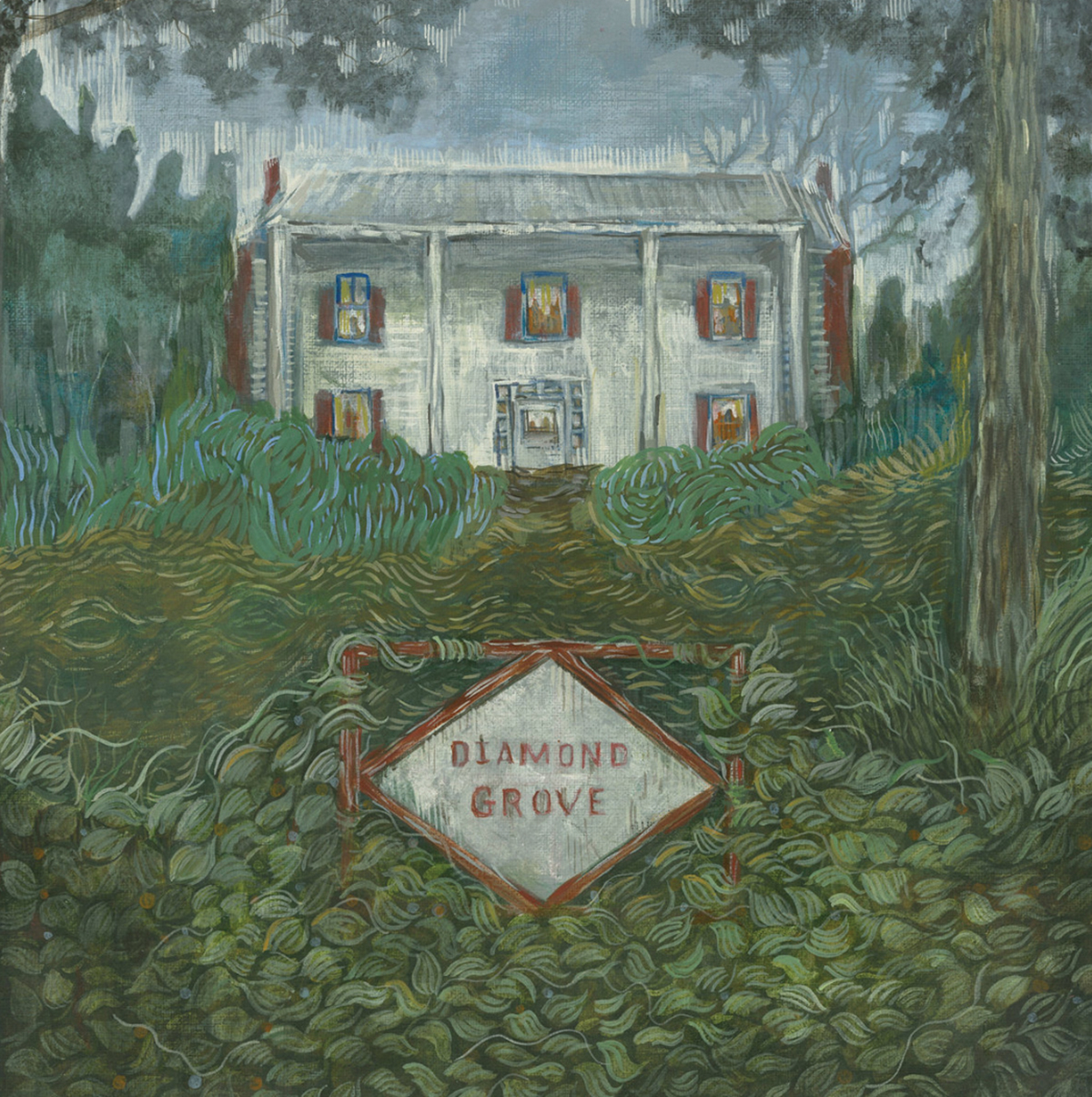
On their second album, Diamond Grove, the local music collective Weirs covers some of the most familiar tunes from the traditional folk music canon. There’s “Lord Randall” and “Edward,” ballads made famous by American folk revival legend Jean Ritchie; the African-American spiritual “I Want to Die Easy”; and two versions of the “Doxology” that you may have sung yourself if you’ve ever attended a Methodist church.
Yet this still might be the most unusual folk record you’ll ever hear. Along with ambient noises typical of field recordings, it also has water dripping onto a grate, looped samples and mind-blowing distortion. One of those “Doxology” versions was recorded through an iPhone for a warped, otherworldly effect, punctuated by the faint sound of dogs baying in the distance.
“This is traditional music as practice, rather than something you try to make ‘perfect,’” said Oliver Child-Lanning, co-founding ringleader of Weirs. “I’m fascinated with ‘cabin records,’ where people go away and make a literal record of a time and place and group of people. Like a snapshot.”
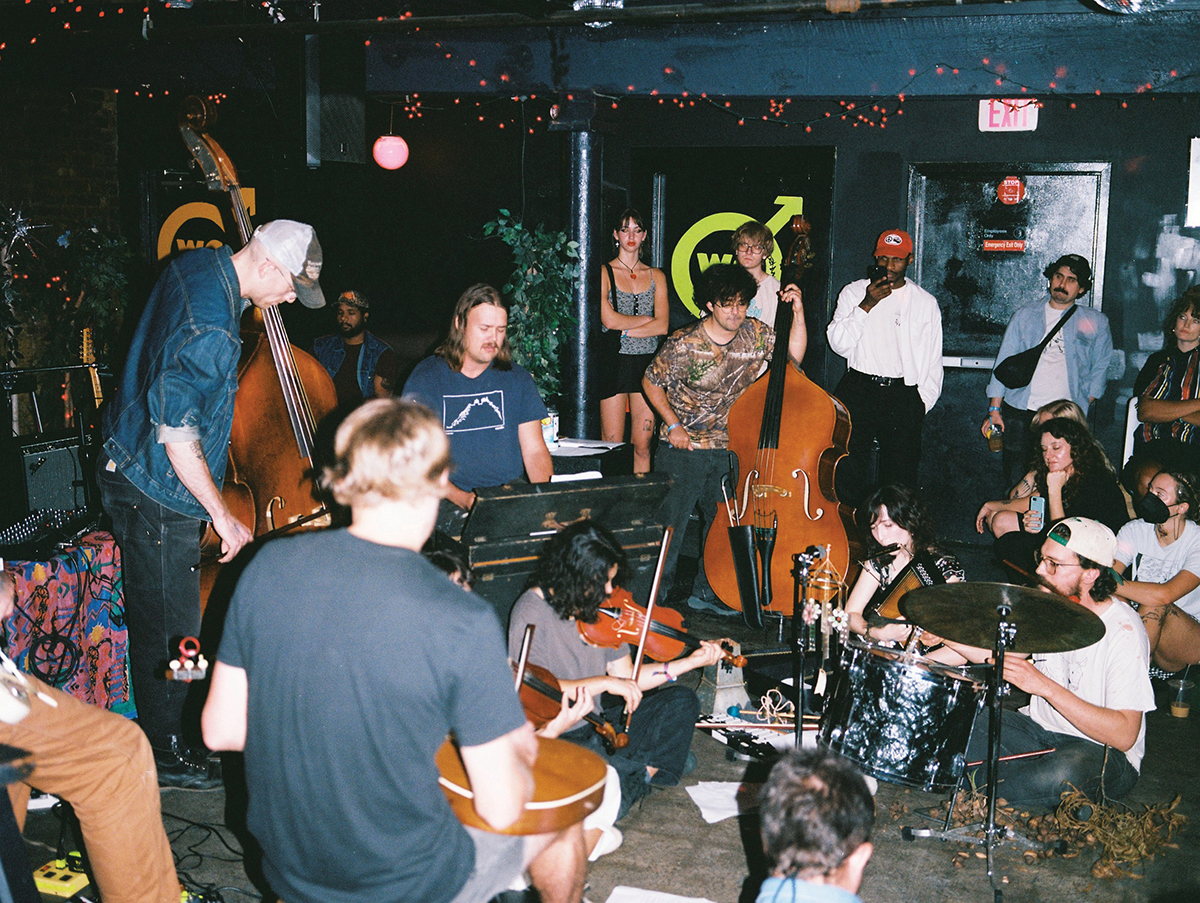
This mindset extends to the band’s name, Weirs, after the low barriers that direct the flow of a river. Child-Lanning captains the ship with a lineup that’s anything from just him and co-founder Justin Morris up to a 12-piece ensemble. Supergroup as well as side project, Weirs draw members from a range of area bands working at the place where experimental improvisation meets traditional folk — including Magic Tuber Stringband, Sluice and Fust, among others.
“We all have some kind of relationship with improv music,” said fiddler Libby Rodenbough, best known for her time in Mipso. “Saying we have a shared ‘vocabulary’ is too precise, it’s more a shared sense of improv, structured in rootedness. There’s something very evocative about these narrative songs. Just listening to the singer, you start to visualize and it leads your hands.”
Child-Lanning has lived most of his 30 years around Hillsborough. He has worked a variety of day jobs, lately for Durham-based Merge Records’ accounting department. But that’s just what he does to get by. What he lives for is making and recording music in unusual places.
Weirs began with Child-Lanning and Morris (whom he supports in Sluice) sending recordings back and forth during the Covid shutdown. Those eventually became 2020’s Prepare to Meet God, the first Weirs album, with high-tech, low-fidelity renditions of selections from the Great American Folk Songbook. Prepare to Meet God is highlighted by a couple of Doc Watson covers, plus the old spiritual “The Old Rugged Cross” sung by Morris’ grandmother (who has since passed), recorded through her porch screen door during quarantine.
By the time Morris and Child-Lanning were contemplating a follow-up album, Weirs had expanded into a performing band. So they decided to make one of those “cabin records,” decamping to the old Diamond Grove dairy farm owned by Child-Lanning’s family in rural Virginia.
They would start most days with a walk in the woods, recording sounds. Then they’d play some tunes on the porch after lunch and move indoors for evening recording. Among the places they recorded was the farm’s silo, which offered amazing reverb.
“That silo is honestly what drew us to the farm, because it sounds so cool in there,” said Child-Lanning. “First instinct when you go into a space like that is to clap your hands or sing something, so you’ll hear it come back to you. The sound of a space, the character that leaks through, is an obsession of ours. That’s a large part of the charm of old archival recordings.”
The album’s key stretch is side two’s three tracks on the vinyl version. It begins with “(A Still, Small Voice),” a nervous-sounding instrumental made with fiddle, banjo, harmonica and sheet metal. That leads into a 20-minute version of the love-story epic “Lord Bateman,” followed by a closing a cappella “Doxology (II).”
“‘Lord Bateman’ really is the heart of the album,” said Child-Lanning. “We started playing that one on a Magic Tuber Stringband tour a few years back, adding more and more to it, and over the course of about two weeks it just got longer and longer. We thought about cutting some verses for recording, but no. Gotta do the whole story.”
Diamond Grove comes with impressively detailed liner notes laying out inspirations and source material for various songs, like noting which stretch of highway Child-Lanning was traveling while recording samples from his truck radio (US-21 crossing the Roaring Fork River). As for Weirs’ next act, that’s hard to predict.
Everyone in Weirs plays in multiple bands, most of which will release new records this year. But the a cappella songs bookending this album, “I Want to Die Easy” and “Doxology (II),” might point the way to the future — unaccompanied singing in the sacred harp tradition.
“It feels like I’m hearing a lot of choirs in recorded music lately,” Child-Lanning said. “A zeitgeist thing. I’m interested in assembling a group to sing. We’re playing some festivals this summer, and that usually starts the gears turning. We’ll see where it goes.”

This article originally appeared in the April 2026 issue of WALTER magazine.