A photograph from the State Archives of North Carolina offers insight on a furniture making business that evolved into a funeral home.
by Ian F. G. Dunn | photography by the State Archives of North Carolina
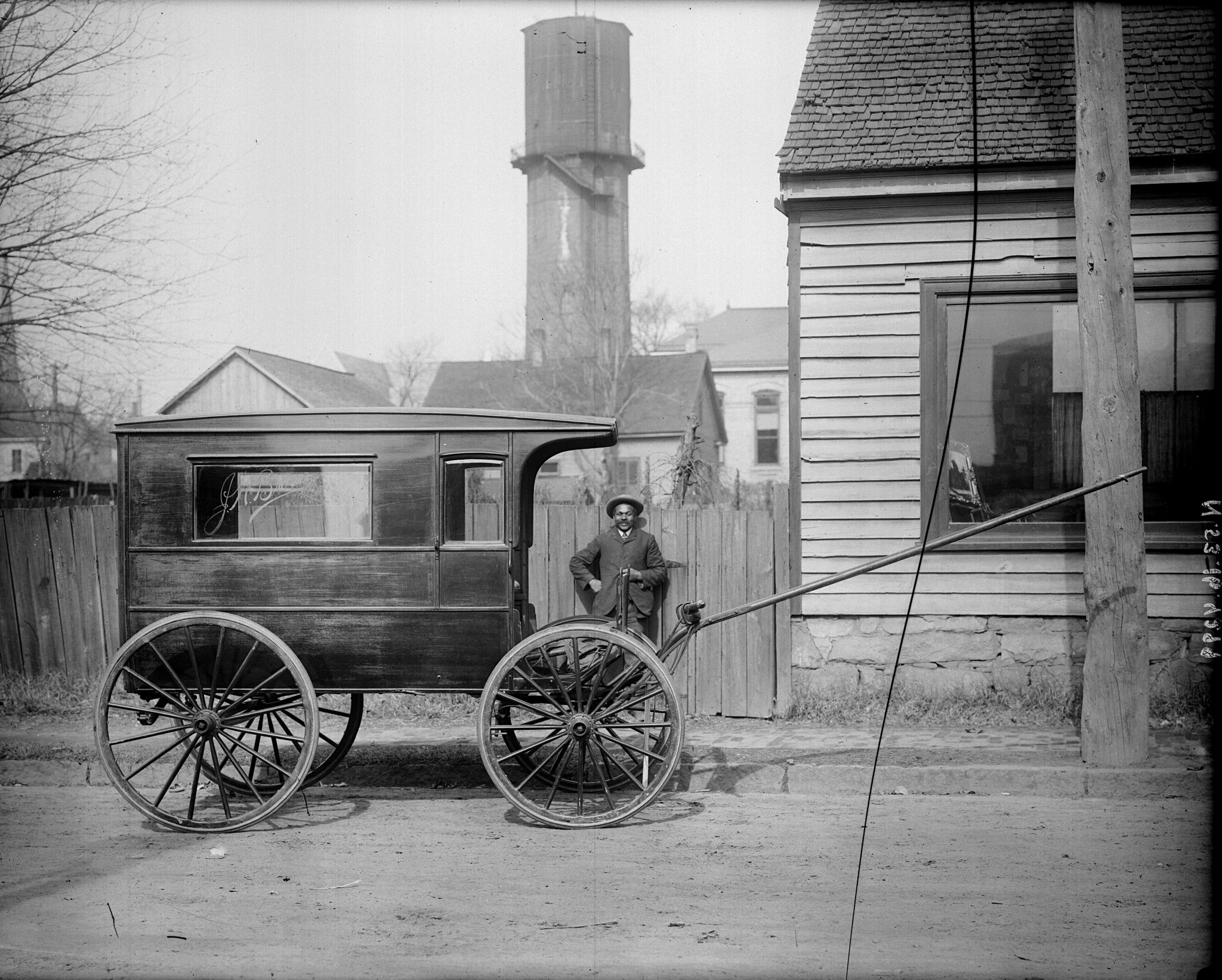
In this photograph from the State Archives of North Carolina, a horse-drawn hearse belonging to H. J. Brown Coffin House is seen on the 100 block of W. Hargett Street in 1910. The photographer of this image had their back to the funeral home’s headquarters, which is now the high-end restaurant Death & Taxes.
H. J. Brown Coffin House, now the Brown-Wynne Funeral Home, is Raleigh’s oldest continually run business. The company namesake, Henry Jerome Brown (1811-1879), was born in Virginia and came to Raleigh with his family in 1816. After learning woodworking from his father, he established a business manufacturing furniture in 1836.
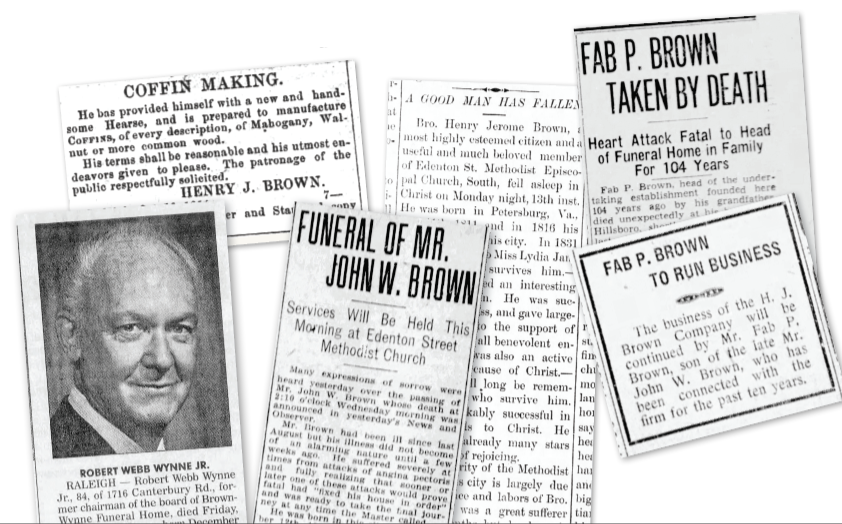
By 1854, Brown was providing funeral services and hand-built coffins in addition to making furniture, a common industry overlap in the 19th century. An 1854 advertisement in the Raleigh Semi-Weekly Standard read,
“COFFIN MAKING—He has provided himself with a new and handsome Hearse, and is prepared to manufacture Coffins of every description, of Mahogany, Walnut, or more common wood… The patronage of the public respectfully solicited.”
After the difficult years of Reconstruction, the business flourished, and upon H. J. Brown’s death in 1879, his son John Wesley Brown (1849-1914) took the reins. He continued to grow the business, moving away from hand-crafted caskets to wholesale units. In 1907, a purpose-built three-story brick building in the Classical Revival style was constructed on the southwest corner of Hargett and Salisbury Streets. This new facility, where Death & Taxes sits now, was advanced for the time and featured electric lighting, a heating plant and even an elevator.
In 1914, the business passed into the hands of John’s son, Fabius “Fab” Porter Brown (1873-1940). Under his leadership, the business matured and advanced alongside changes in funerary trends and technology, all while weathering the 1918 influenza epidemic, World War I and the Great Depression.
After Fab’s unexpected death in 1940, his nephew Robert Webb Wynne, Jr. (1912-1997) purchased the business. It was renamed Brown-Wynne Funeral Home and in 1954 moved to its present-day location on St. Mary’s Street.
Looking back at the photograph, keen eyes may notice the framed picture through the window on the right. This small building was occupied by Raleigh Art Company, a short-lived business offering picture framing and wallpaper hanging services. This clue helped greatly in dating the photograph.
In the background, you’ll see a rare view of the 1887 Raleigh Water Tower on Morgan Street, complete with its 100,000-gallon iron tank.
The man in the photograph is thought to be Thomas Holloway, the only hearse driver employed by H. J. Brown between 1900 and 1912. Affectionately known by scores of Raleighites as “Monk,” he was known for his jolly demeanor and love of children and horses. Upon his death in 1912, local newspapers lauded him as a man of few faults, but one was tardiness — so often he’d stop and chat that it “permitted time to flash by him.” The days of horse-drawn hearses ended soon after Monk’s death, when the company began employing motorized hearses in 1915.
Brown-Wynne continues to operate in Raleigh from its main location on St. Mary’s Street.

This article originally appeared in the February 2026 issue of WALTER magazine.