How to attract the prettiest swallowtails, monarchs and more to your garden? Plant their larval host plants
by Helen Yoest | photograph by Liz Condo
Some years ago, a friend visited my garden at the peak of butterfly season. He was enthralled by all the winged beauties and asked how he could get started. I suggested planting parsley, dill or fennel.
A month or so later I checked in. He said his parsley was covered in green worms, so he tossed the plant, worms and all, into a nearby river. Clearly, I should have explained the process better — those green worms were the caterpillars of the Eastern Black Swallowtail!
If you plant lots of flowers, you’ll attract butterfly visitors searching for nectar. But if you want butterfly residents, grow their larval host plants. Some butterflies, like the Eastern Black Swallowtail, will lay eggs on several types of larval host plants, but others require a particular genus. Here’s what’s in my garden to breed pretty pollinators…
Milkweed (Asclepias spp.) is the only larval host plant for the iconic orange-and-black Monarch butterfly. There are several species that you can easily find, including Butterfly weed, Common milkweed and Swamp milkweed (which prefers moist soil and grows well in large containers).
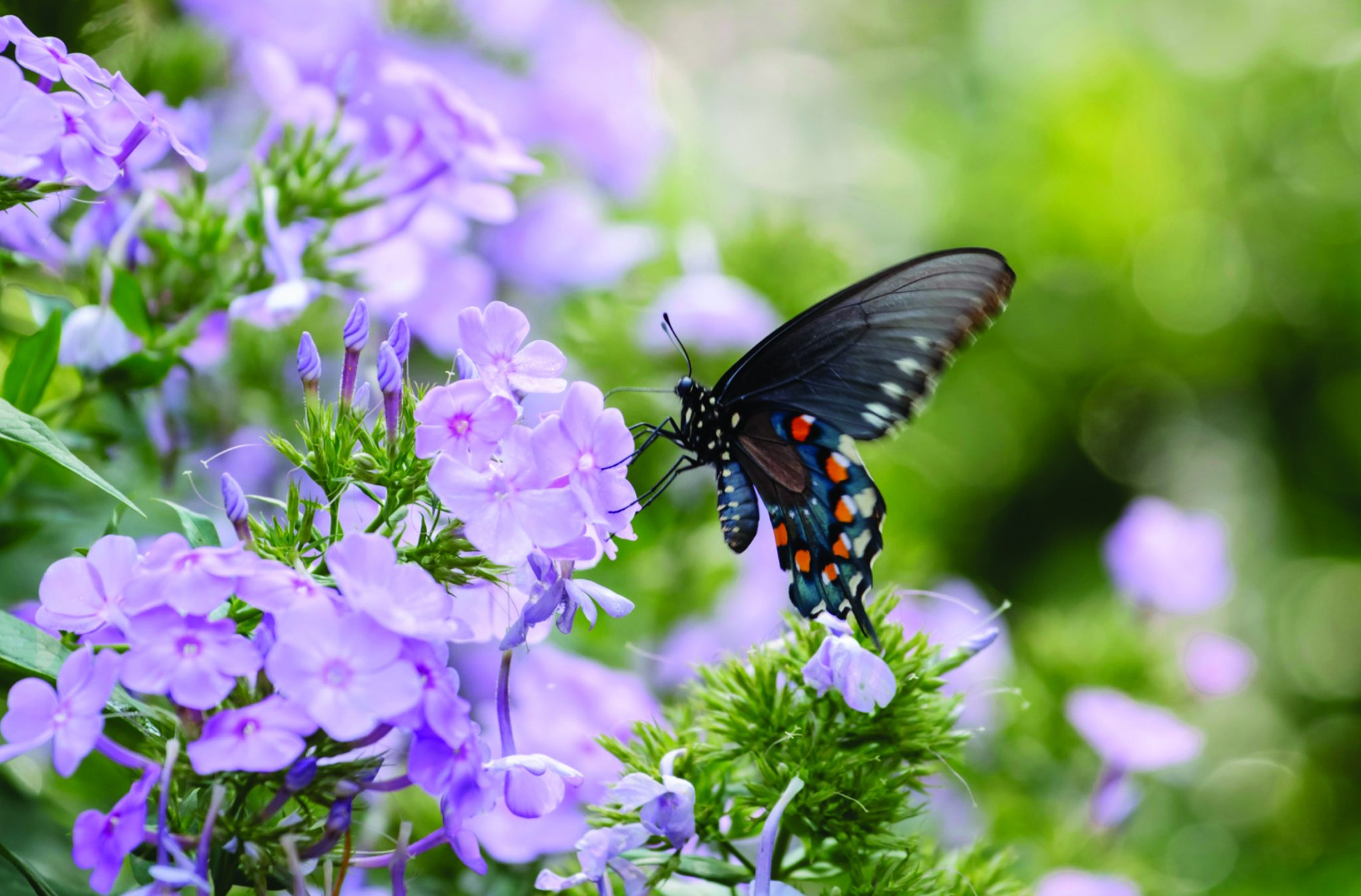
Plants in the genus Aristolochia, commonly known as pipevines, are the primary host plants for the Pipevine Swallowtail, a beauty with fast-moving black forewings and iridescent black hindwings. Big-leaf pipevine, Virginia snakeroot and White-Veined Dutchman’s pipe are good options in our area.
Black cherry, cottonwood, poplar and willow are good fodder for the larvae of the Red-Spotted Purple. This butterfly looks similar to the Pipevine Swallowtail, but with orange spots on the underside of the wings and no tails. (It’s a good example of Batesian mimicry, where a harmless species protects itself by resembling a toxic species.)
Growing these plants can bring even more beauty to your garden. Just hope they’re eaten to the nub — that means the butterfly found a home to raise her young.

This article originally appeared in the July 2026 issue of WALTER magazine.