The Raleigh couple behind gardening advice channel HortTube shares a passion for working with plants and making use of their space
by Helen Yoest | photography by Bryan Regan
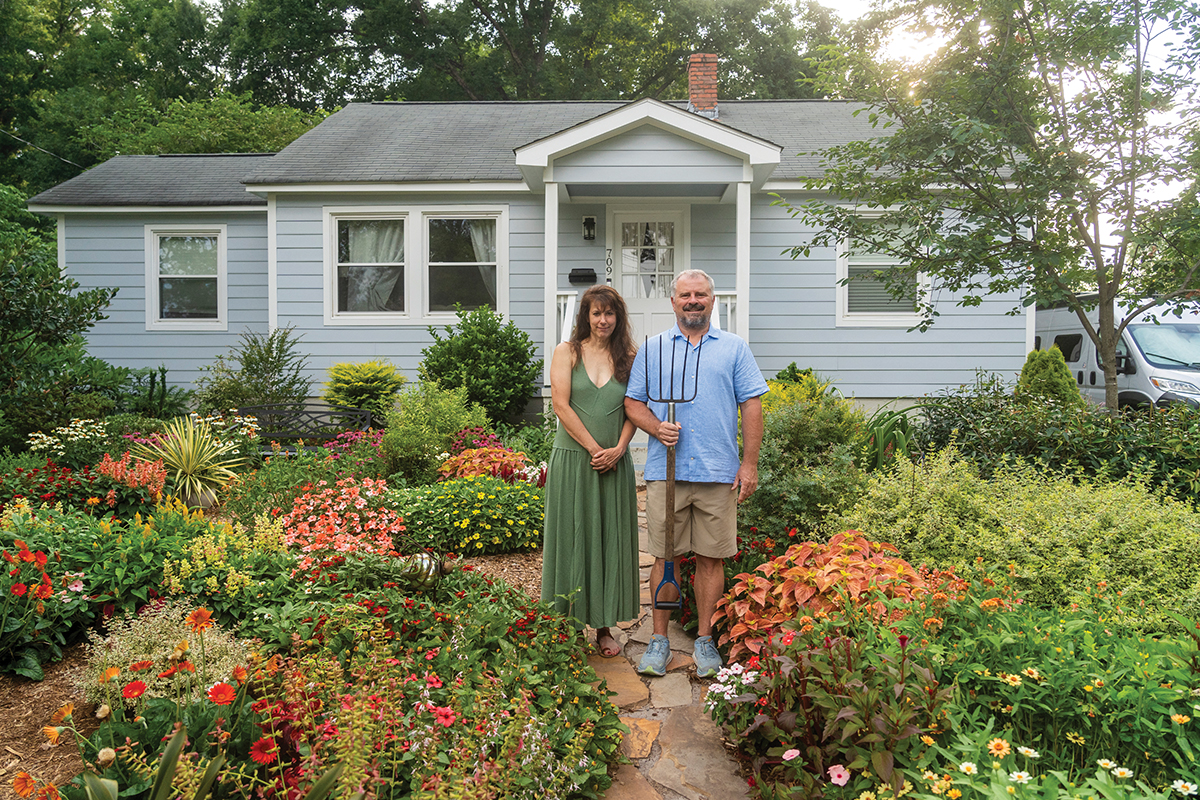
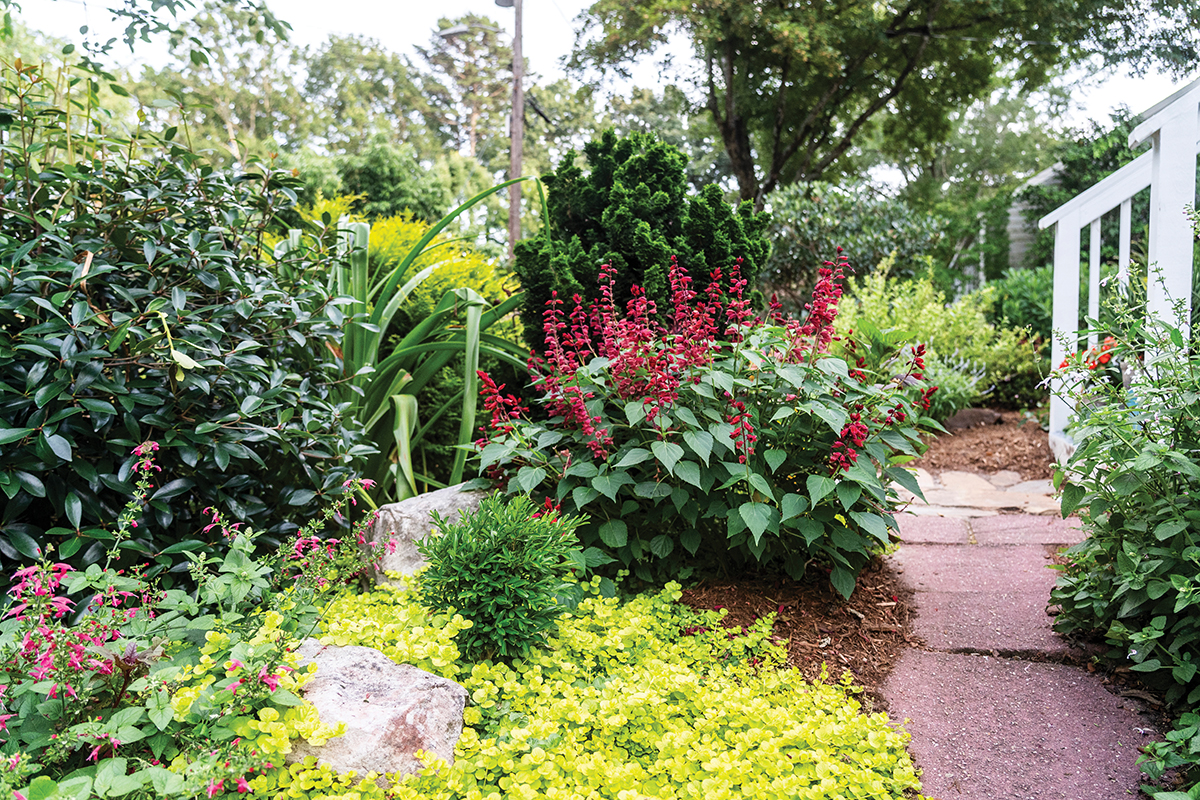
There’s a little blue bungalow in the University Park neighborhood, just off Lake Boone Trail, filled with paths that wind between trees, shrubs, perennials, annuals, ground covers and vines.
The garden is so well designed that the space feels expansive, but it sits on just a fifth of an acre.
This is the home and garden of Jim and Stephany Putnam, who are not only a gardening team, but business partners running the popular YouTube Channel, HortTube with Jim Putnam. Each has decades of expertise in the field, and they share a passion for both working with plants and educating others, complementing each other’s individual strengths.
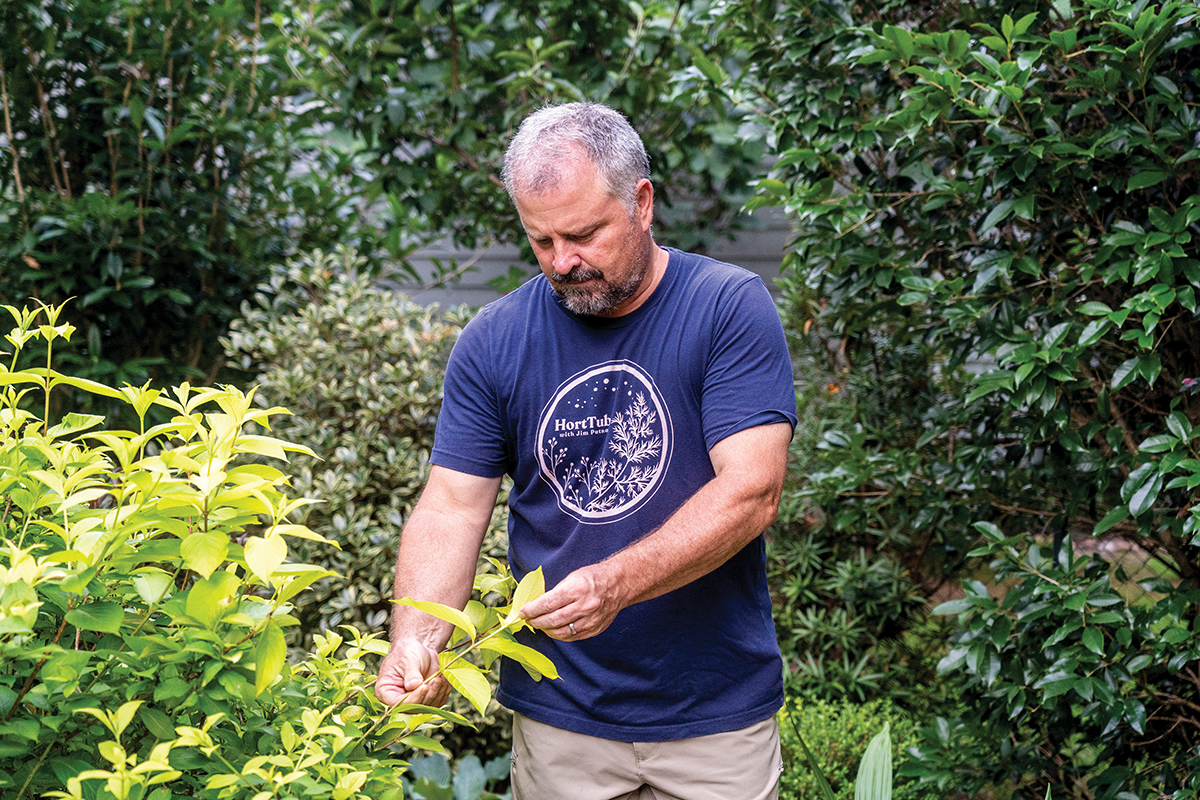
Jim has spent a lifetime in horticulture, from working at a garden center to serving as a landscape contractor to owning his own landscape business and consulting in the green industry. “His extensive exposure to all things horticultural provides a broad knowledge base. When viewing a problem in the landscape, Jim can readily arrive at the best plan of attack,” says Stephany, who holds a degree in landscape design from North Carolina State University. “She uses her knowledge of design principles to create attractive and successful garden vignettes,” says Jim.
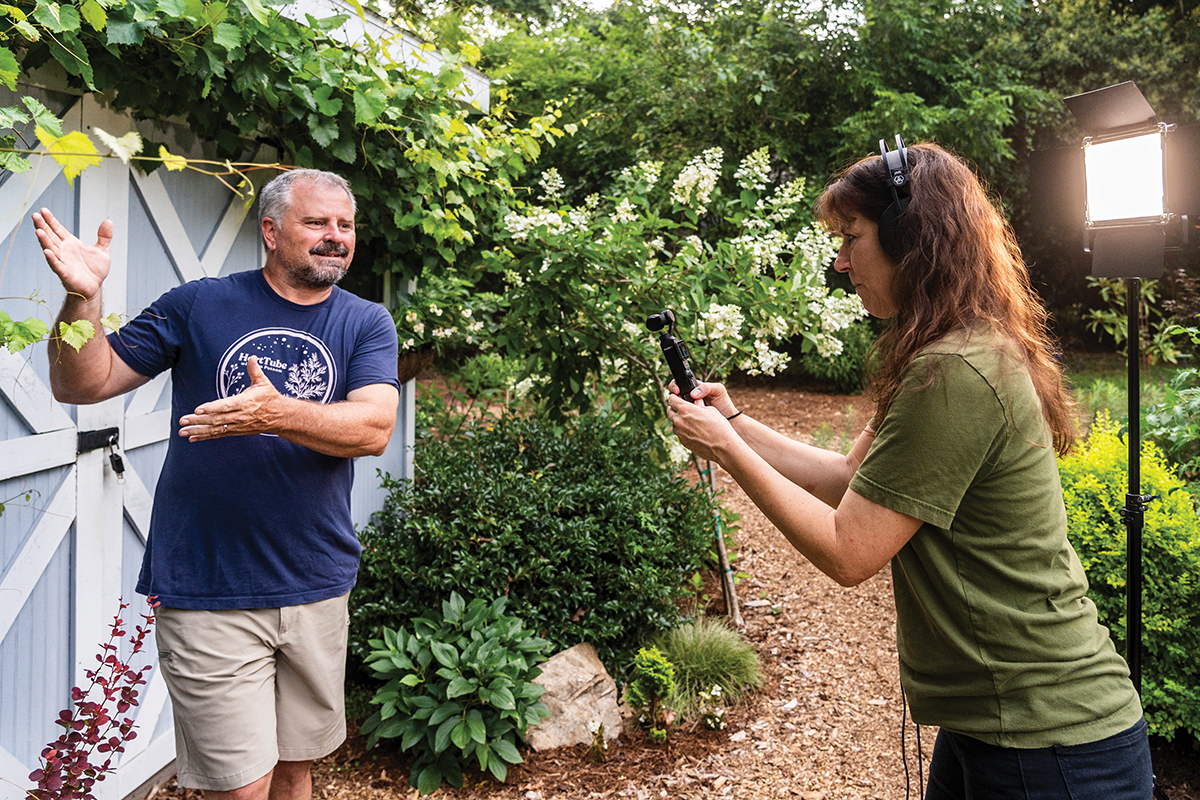
Jim started the HortTube with Jim Putnam YouTube channel in 2016 while selling plants at his garden center, and his short videos quickly reached a large audience. “I saw the positives of having an online resource for my customers, so they could find the information they needed when they got home,” he says. “I fell into making more videos, featuring a diverse palette of horticulture topics.”
Over the past nine years, HortTube has reached more than 270,000 subscribers and offers more than 2,000 episodes covering all aspects of gardening. “Jim is a great educator,” says Stephany, who works as the videographer while Jim is primarily the face of the show. “He can break down complex science into a comprehensible form.” (While he’s comfortable on camera, Stephany says she needs to calm her nerves if she’s going to appear in an episode.)
The couple began creating their garden in late 2019, just prior to the onset of the pandemic. The goal was to create an ecosystem, a community of living organisms with plants and microbes. “The development of our ecosystem means that maintaining the garden takes way less work from us than you would think,” says Jim. The two believe in the idea of soil-first gardening, a regenerative approach that focuses on building a thriving, living soil ecosystem before planting.
They worked with a company called ChipDrop, which offers free delivery of wood chips from local tree removal companies, to create that first layer. “We aimed to mimic the forest floor by adding a 6- to 8-inch-deep layer of arborist wood chips throughout the garden plot,” says Jim.
Through heat and moisture, the wood chips decomposed into a rich soil over the course of about a year. “On the forest floor, seasonal debris breaks down, providing nutrients and mulch for a self-contained system,” Jim says. “The closer we can get to mimicking these processes, the better.”
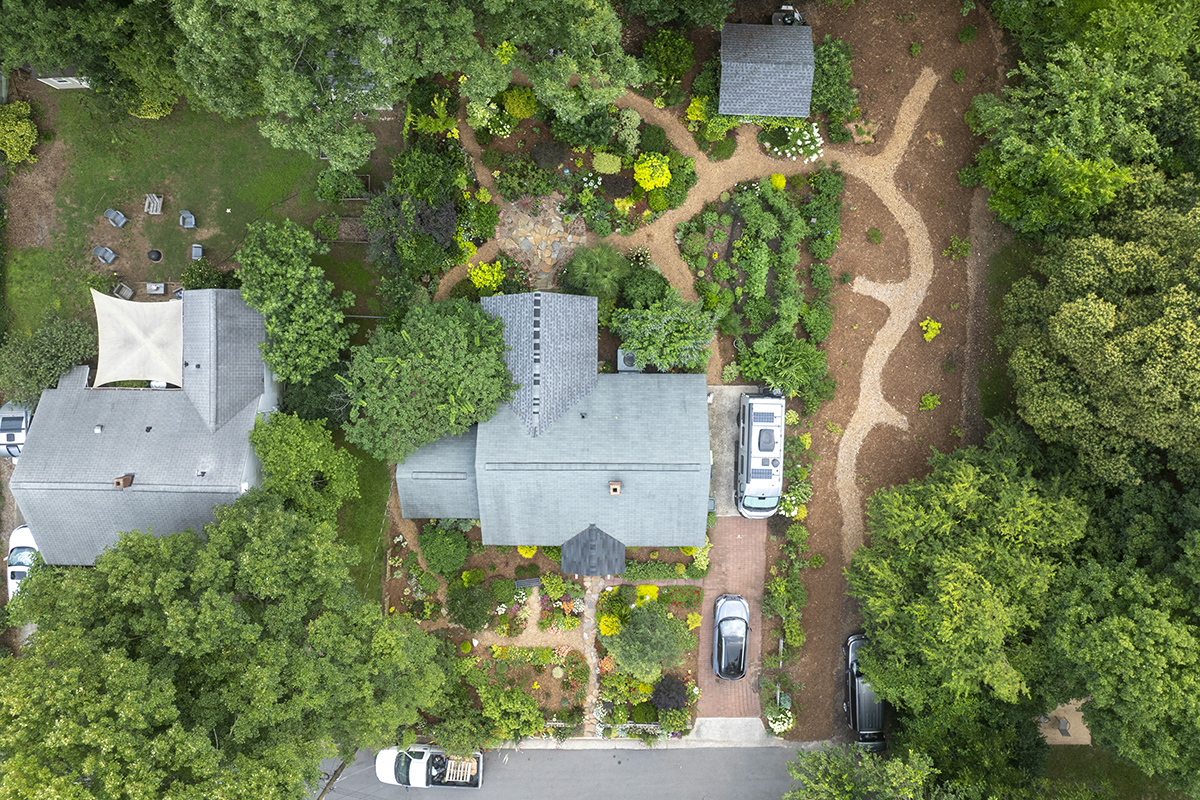
Some of the larger shrubs and trees were planted early in the process, while most of the other plantings were added after the wood chips had decomposed. Jim planned the path system using his drone, which provided a bird’s-eye view of the property. The paths created flow through the landscape while making access easy for maintenance tasks such as mulching, watering and weeding.
The development of rich soil promotes plant health by encouraging beneficial insects, discouraging non-beneficial ones, attracting birds to eat pests and creating a system that reduces maintenance. Each year, they apply more mulch. “It cools the roots in summer, warms them in winter, decreases evaporation and water loss, and discourages weed seed germination while providing an attractive cap on the ground,” says Jim. “By mimicking a forest floor, our garden thrives with less input from us,” Stephany adds.
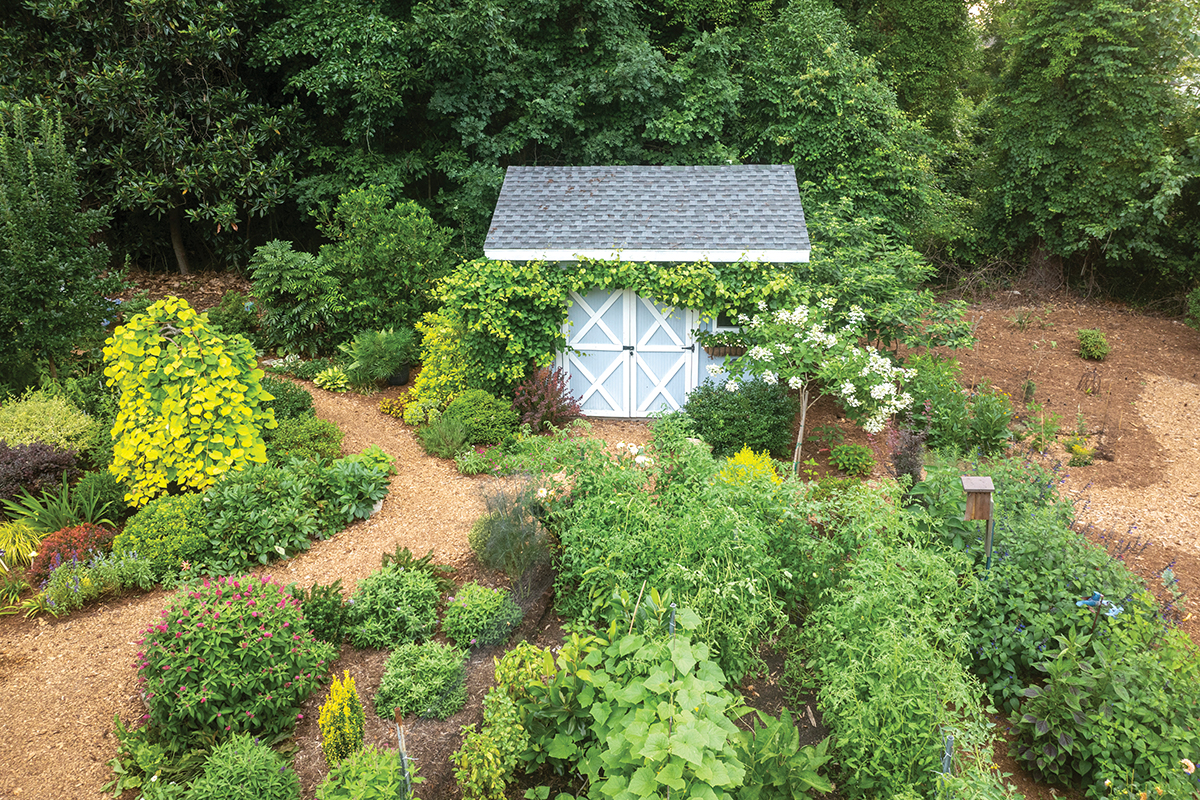
Natural materials are used throughout the garden design. “Aesthetically, we feel that this offers a more organic look, mimicking the beauty of nature,” says Jim. The garden also incorporates broken pieces of brick they found during the planning. “For a while, any time you tried to dig a hole to plant a shrub, your shovel would hit an old brick,” says Stephany. “They’re an homage, a connection to the origins of this 1948 bungalow.”
Throughout the year, Stephany maintains the garden beds, deadheading, weeding and watering. “I enjoy the small tasks — getting my hands into the soil and tending to all the plants in the landscape makes for a great day,” she says. Meanwhile, Jim handles the major maintenance issues and hardscape construction and also prunes, stakes, mulches and applies yearly fertilizer. “We communicate readily with each other about what needs to be done,” says Stephany.
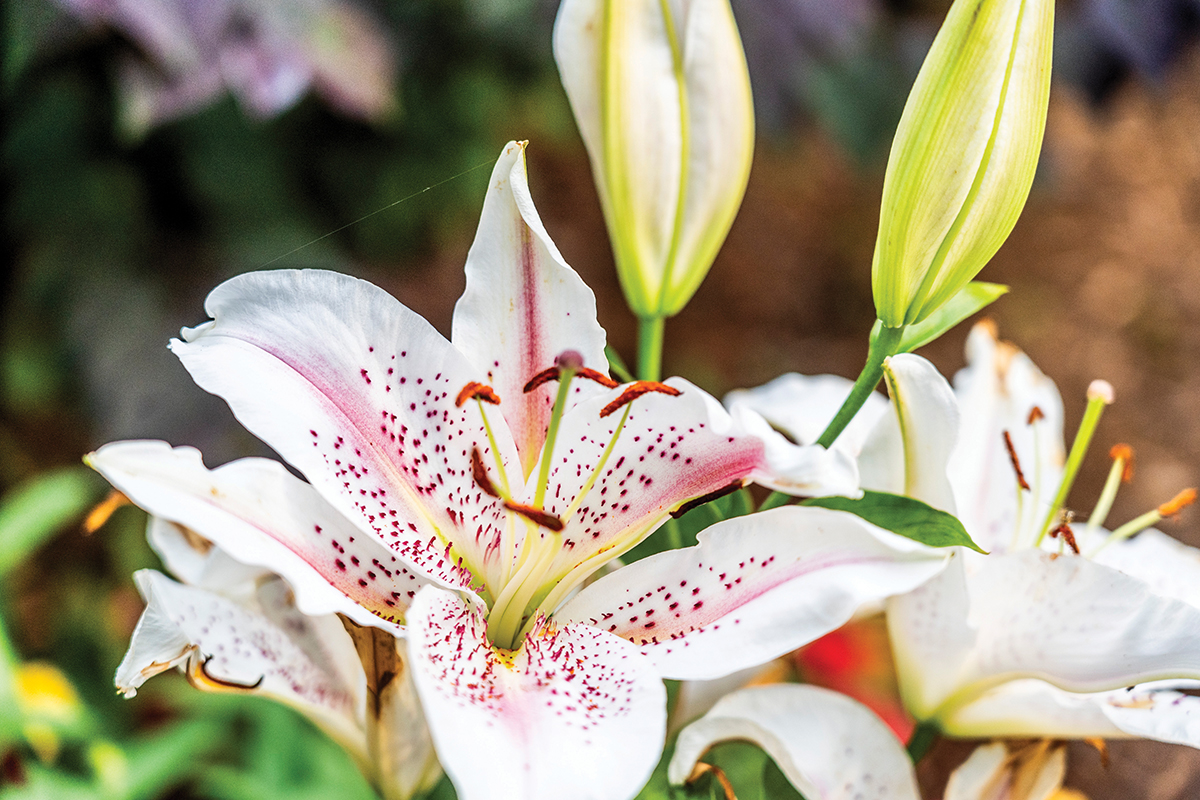
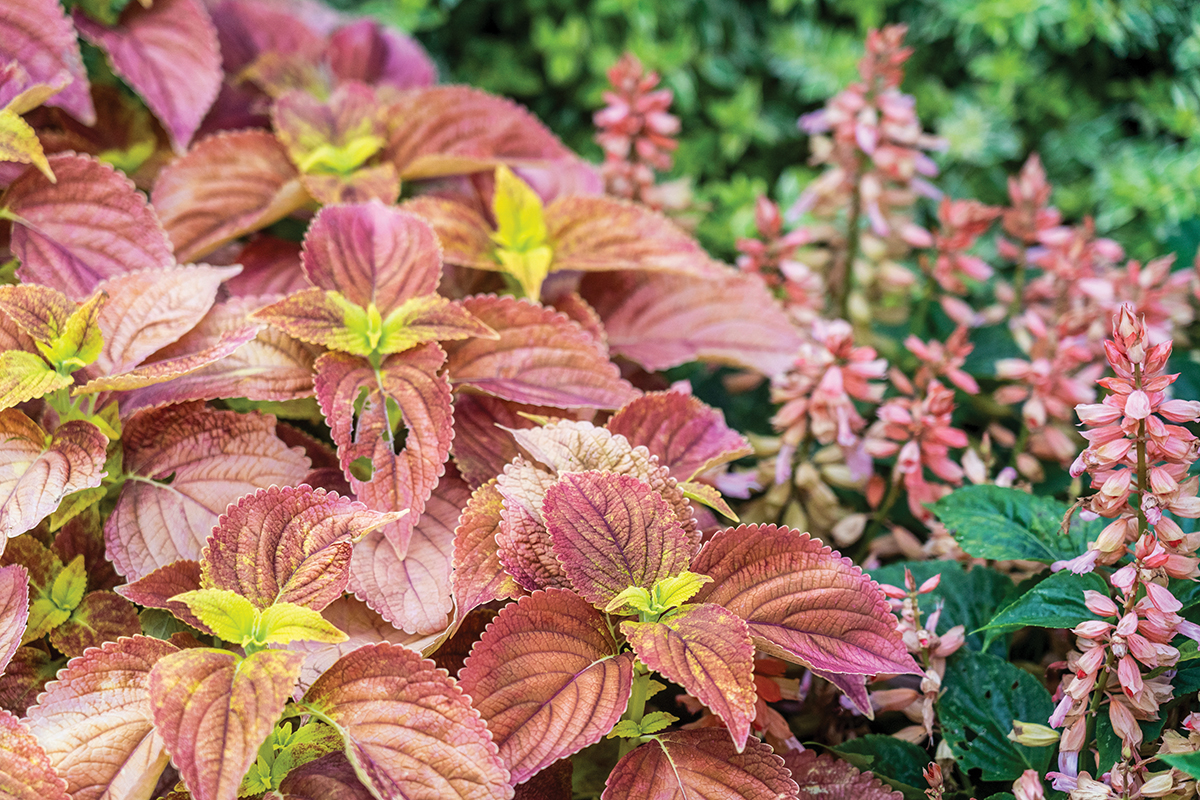
In summer, their garden is lush with annuals and perennials, with layers of plants displaying a range of contrasting colors, textures and forms. Coneflower, coleus and scarlet sage add reds and purples; narrow-leaf zinnias and annual vinca add vivid pops of yellow, pink and orange against deep emerald leaves; lilies and giant onion add height at architecture. Vines climb toward the roof of their garden shed, and container gardens connect the patio, which is made from found stone and bricks, to the beds. Many of the garden’s plantings were shared by friends. “The story that comes with the plant makes it more precious in our landscape,” says Jim.
They come together in a small garden that lives large, where Jim and Stephany use their vast experience to educate their viewers — and create a beautiful oasis for themselves.

This article originally appeared in the July 2026 issue of WALTER magazine.