Chef Meherwan Irani brings playful Indian street food to Raleigh at Botiwalla in Iron Works
By Catherine Currin
Photography by Forrest Mason
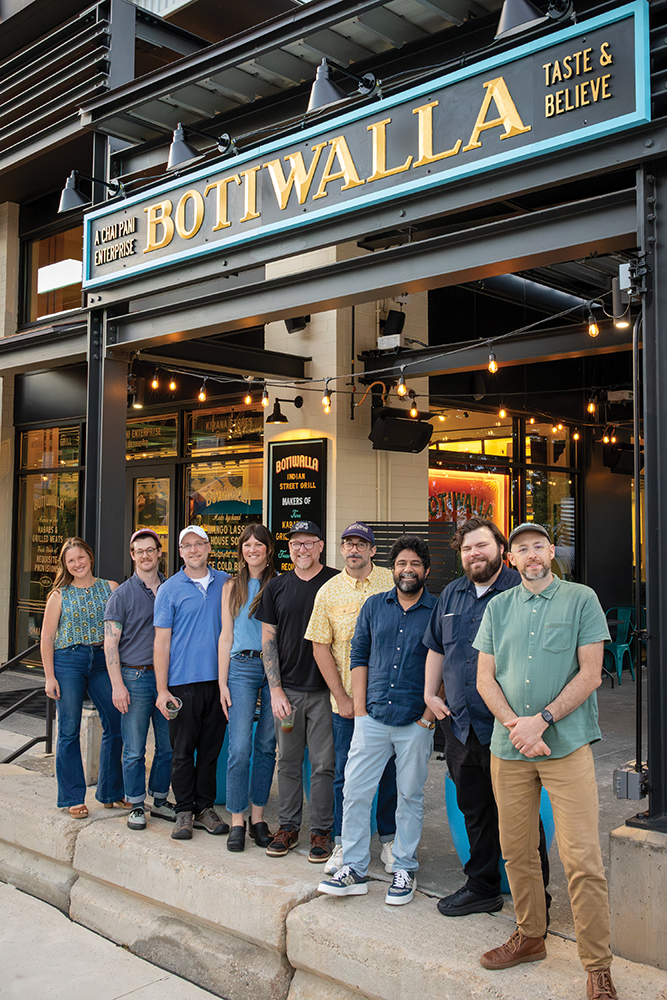
Outside Botiwalla’s front entrance, a giant sign depicts a chicken with a bodybuilder’s physique. “Botiwalla makes strong,” it declares. “Taste and believe.”
It’s a bold statement, a little absurd — an invitation and a challenge to guests, delivered with a wink. That spirit is woven throughout Botiwalla’s menu: from inventive chaats to bright charred vegetables to Tandoori-spiced meats, the flavors are strong and layered, but the delivery is casual and fun.
Situated in Raleigh Iron Works, this is the fifth location of Botiwalla from Asheville-based restaurateur Meherwan Irani. Originally from Ahmednagar, in the midwestern Indian state of Maharashtra, he and his wife Molly started their restaurant group with the James Beard Award-winning Indian fine dining restaurant Chai Pani in Asheville. “Botiwalla is the more casual sibling to Chai Pani and built around fun, deliciousness and nostalgia,” says Irani.
Chai Pani now has locations in Washington, D.C., and Decatur, Georgia, as well, and their Spicewalla brand of seasonings is sold nationwide. For them, the Raleigh Iron Works location was an obvious next step as they expanded across the Southeast. “We’ve always wanted to bring Botiwalla to Raleigh because of the exciting food scene that has developed here, led by a very supportive culinary community,” says Irani.
Irani says that like America, India is simply too vast for one restaurant to represent its entire culinary footprint. So instead of homing in on flavors from one region, Botiwalla aims to capture the spirit of Indian street food like intensely flavored snacks, sandwiches and grilled foods. “Indian street food transcends regional differences and is enjoyed in all its multi-textural deliciousness by over a billion people every day,” says Irani.
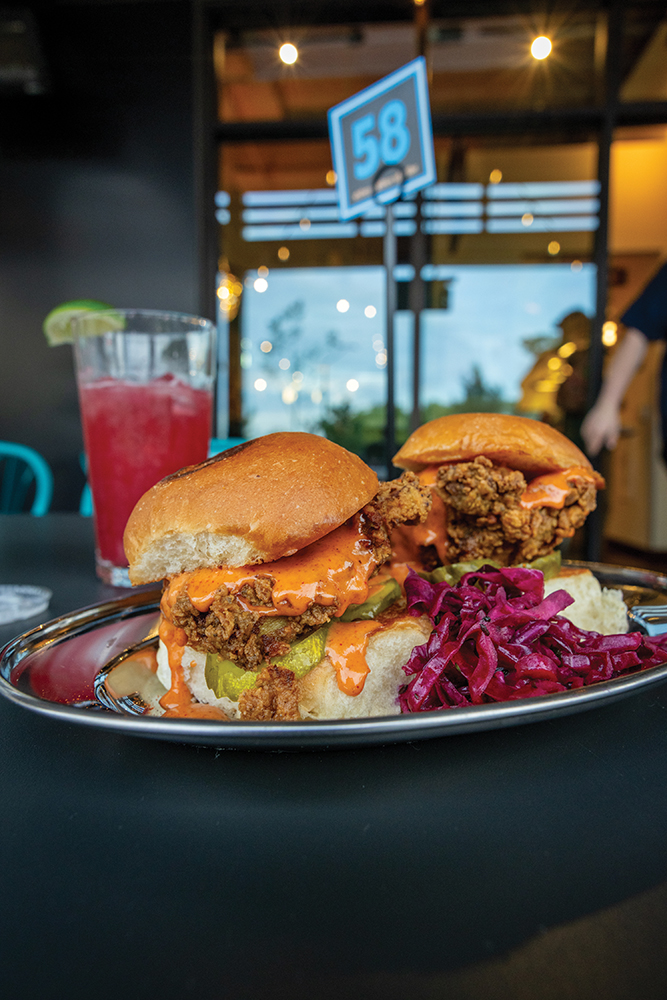
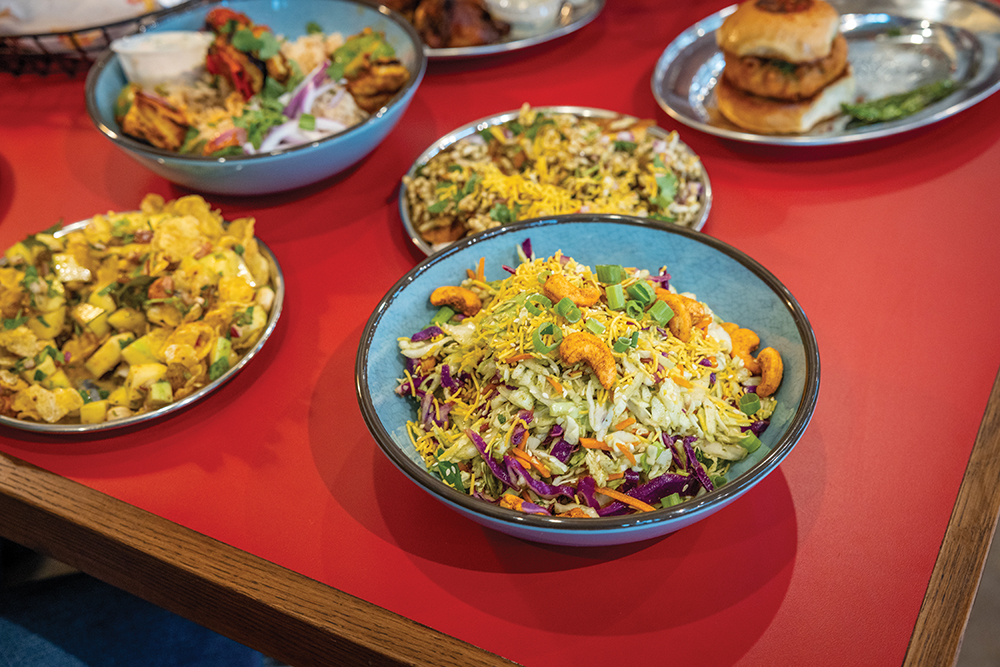
The offerings are sorted by style of delivery: finger foods, grilled items wrapped in naan, sandwiches, rice bowls and salads. On the chaat menu, a compilation of small plates and starters meant to be shared, highlights include the Gobi 65, a crispy cauliflower that packs a punch with ginger, red chili and coriander; and addictive okra fries that are thinly sliced, served salty and crunchy with chana masala and lime.
From the Sigri menu, diners can choose the filling — savory chicken tikka, lamb seekh kabobs and masala fish, among them — to be wrapped in naan with accompaniments like slaw, onion, cilantro and chutney. The same fillings can top a rice bowl or salad or be served on their own as a simple skewer. A pav (that’s a classic Indian dinner roll) can be filled with lamb sliders or potato dumplings. “All of our pav is made locally by Union Special Bread; that’s 5,000 buns a week,” Irani says. The beverage menu highlights local breweries as well as Kingfisher, an Indian lager, plus house-made sodas and slushies (to which you can add a float for a boozier take). Classics round out the menu: a mango lassi, lime rickey and of course, chai, served hot in the traditional manner or iced.
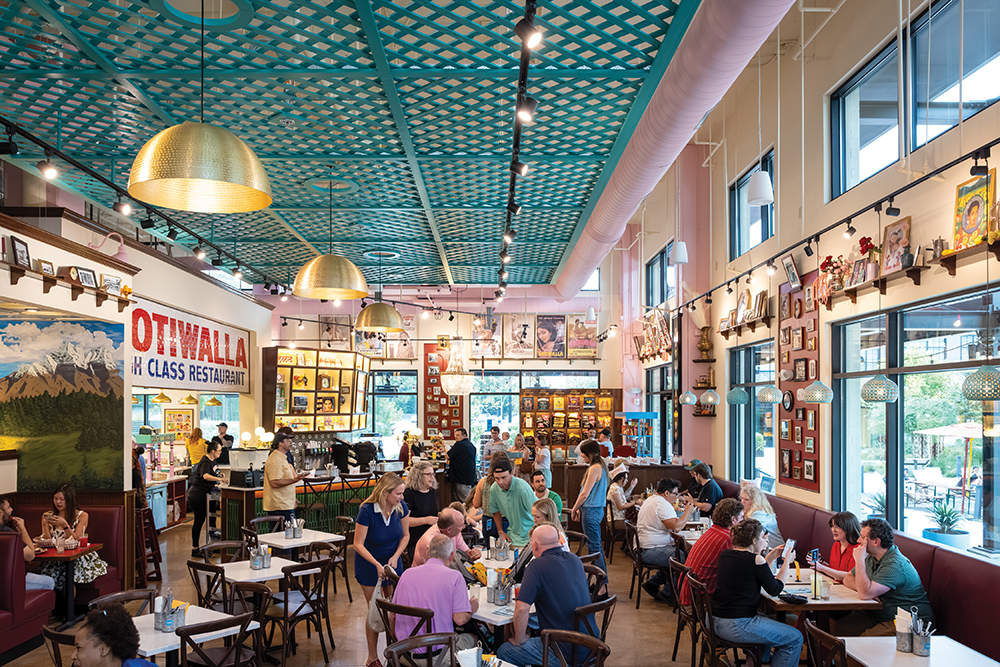
The space itself “is inspired by the Irani cafes of my childhood, a wild and wonderful mashup of Indian sensibilities and Victorian decor,” says Irani of the Persian-style coffeehouses founded by Zoroastrian Irani immigrants to India in the 19th century. “My great-grandfather owned the only Irani Cafe in my hometown, Sarosh Canteen.” The restaurant was designed by Michael Files, who serves as the creative director for the restaurant group. “Irani cafes are completely unique institutions in India that are dwindling in numbers in the modern era,” says Files.
To that end, the restaurant is chock-full of bold colors, from the bright red signage and a robin’s egg blue spice cart to rich green bar tile. Murals, art, family photographs and knick-knacks line the shelves. More traditional furnishings and vintage Bollywood film posters in muted tones provide contrast and add to the eclecticism. “Irani cafes always have that dark stained wood and big framed portraits, but the Indian urge for color and maximalism is undeniably present as well,” says Files.
Bridging the street food and restaurant concepts, you order at the counter and have your meal delivered to your seat. “We’re leaning into what’s great about the convenience of ordering at the counter and being able to select your own seat, but it doesn’t feel like a throwaway experience,” says Files. While waiting in line, guests can browse an array of Botiwalla merchandise, Spicewalla blends and other goodies.
Through the menu and the space, Irani hopes guests get a taste of his nostalgia for his childhood. “I hope guests to Botiwalla are transported to Ahmednagar: by the food, the chai and the family photos covering the walls,” he says.

This article was originally published in the September 2026 issue of WALTER Magazine.