Fire Station 3 in Raleigh, NC has a unique tie to our first Black firefighters — and boasts all the latest in department technology
By Ayn-Monique Klahre | Photography by Geoff Wood
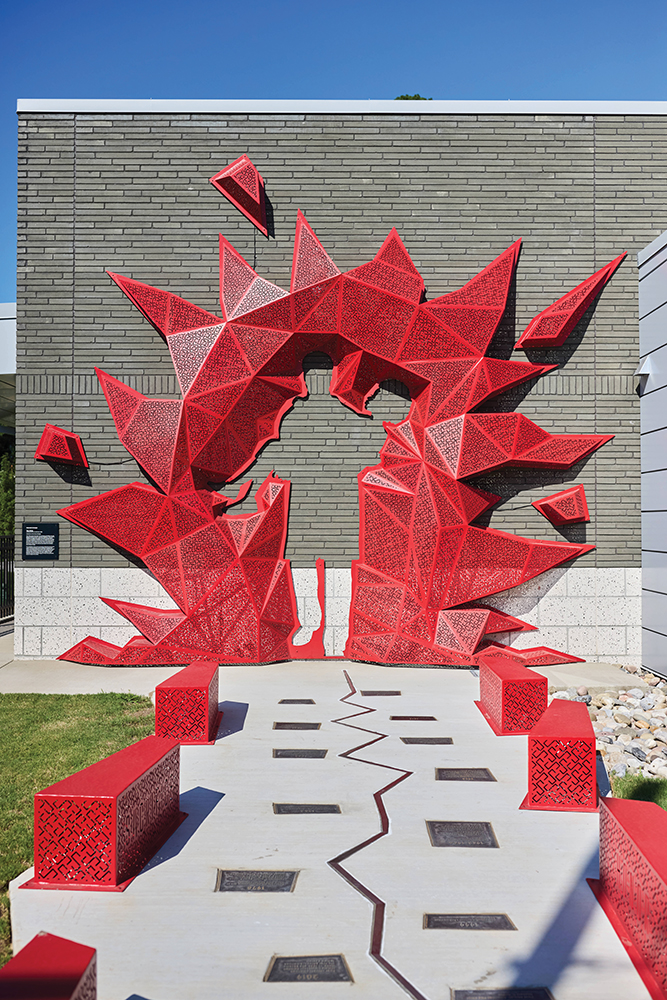
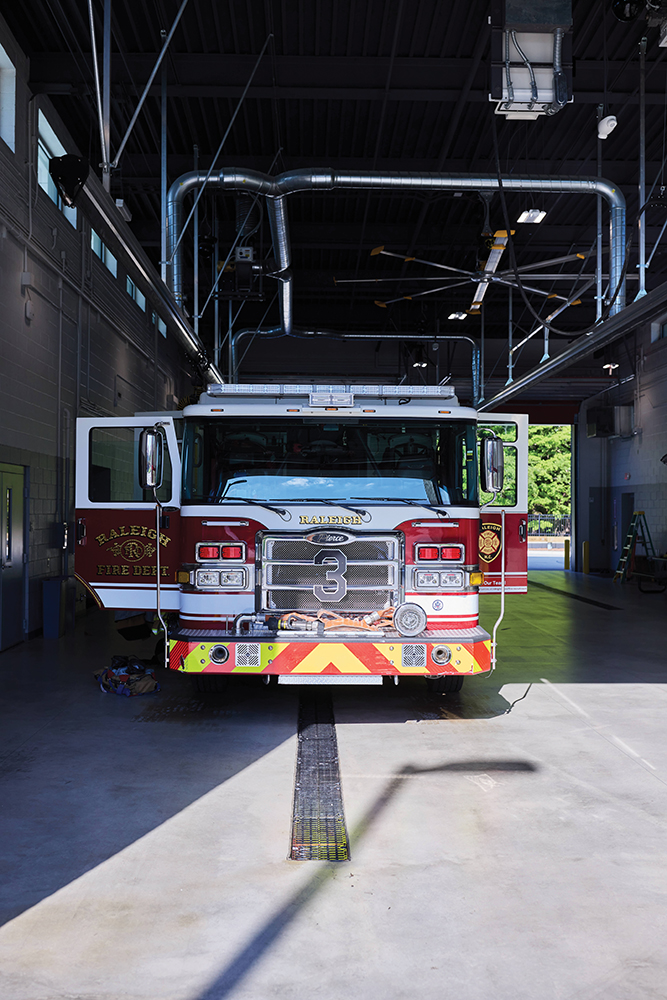
Driving southbound on Rock Quarry Road, a giant red number “3” strikes you first — quickly followed by the art along the side of the building: geometrically rendered flames encircling a silhouette of a firefighter rescuing a child. The metal sculptural installation was created by Chicago-based artist Maxwell Emcays as an invitation to come closer: there’s a walkway leading to the flames with plaques that help explain the unique history of Fire Station 3 and its connection to Raleigh’s first African American fire company. The Raleigh Fire Department worked with Raleigh Arts to select Emcays for the project. “We didn’t want something too abstract, we wanted something that anyone who walked up would understand,” says Division Chief of Logistics Scott White.
When the City of Raleigh was created in 1792, there was no formal fire protection. In the event of a fire, folks would form lines to pass buckets of water from a source to a blaze, relying on neighbors or passersby for help. “It was everyone’s responsibility and no one’s responsibility,” says Mike Legeros, a historian at the Raleigh Fire Museum. In 1819, in response to a devastating fire in 1816, the city got its first fire engine. “But fellow citizens were still expected to pitch in and put out a fire,” Legeros says.
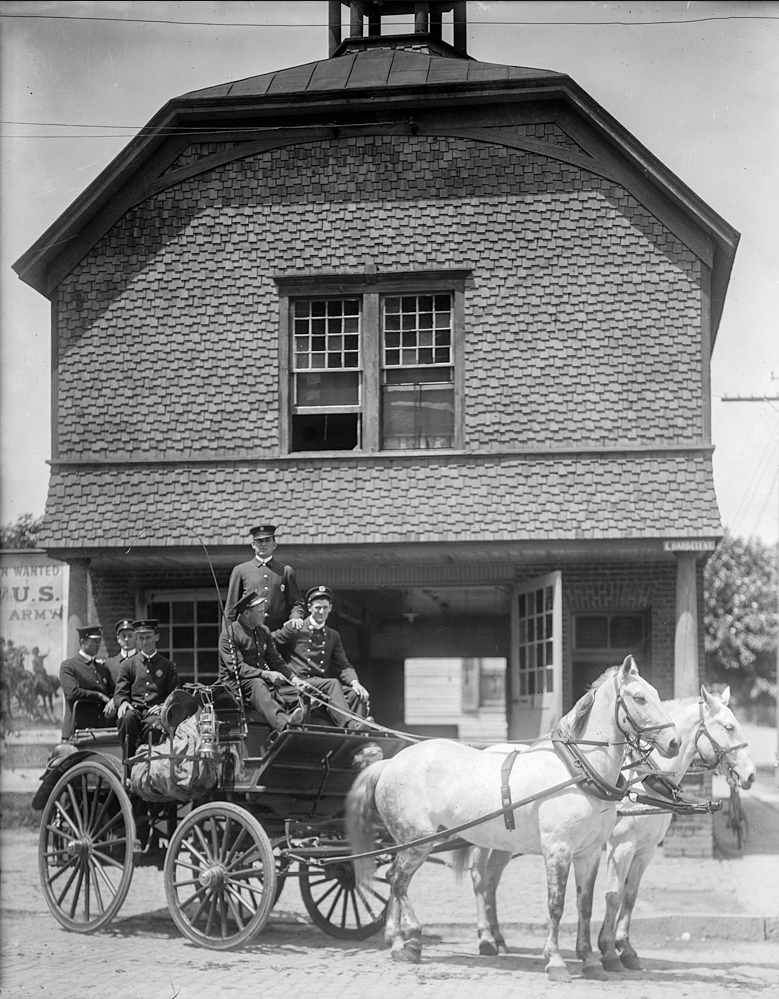
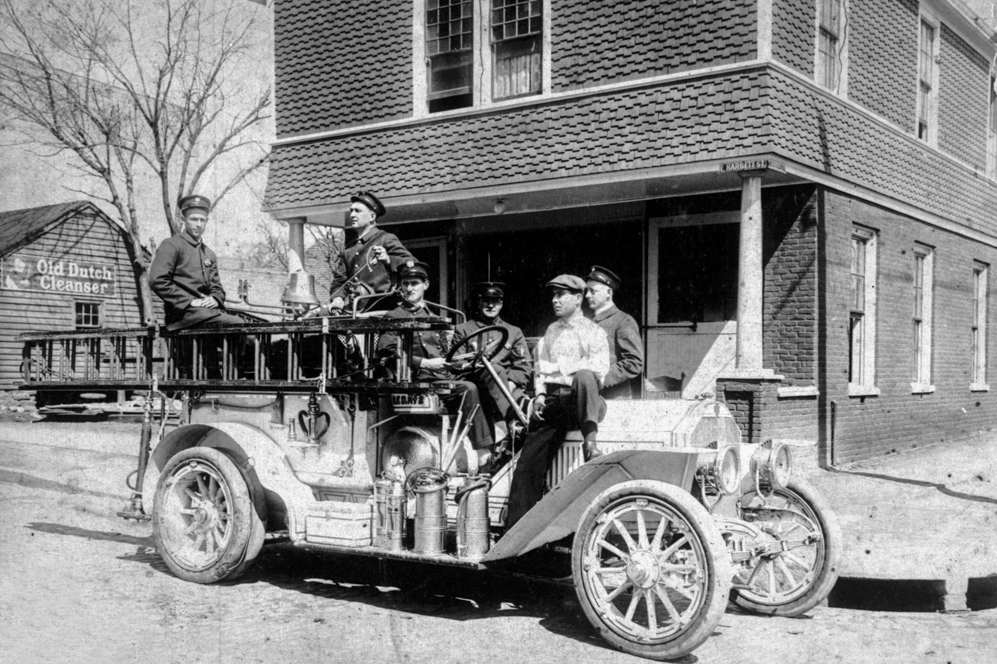
In 1852, a unified Raleigh Fire Department was created with three companies: Fire Company No. 1, Fire Company No. 2 and the Hook and Ladder Company. Each company was made up of volunteers who would operate a particular fire apparatus — a catch-all word still used to describe firefighting vehicles of all kinds. “These fire companies operated hand-pulled and hand-powered apparatus, which were later replaced with steam-powered and horse-pulled apparatus,” says Legeros.
In 1869, the first fire company composed of Black firefighters was formed. Originally named Fire Company No. 1, it was renamed the Victor Company in 1870, after winning a hand-engine tournament at the NC State Fair. “Picture a wooden box with wheels and a seesaw with handles attached to it. You’d push the handles up and down to operate the pump,” says Legeros.
The volunteer fire companies continued to operate through the late 1800s and into the early 1900s. In addition to the Victor Company, there was a second company composed of Black firefighters, the Bucket Company. “Though the fire companies were segregated, everybody worked together on the fireground,” says Legeros. In 1898, the Victor Company moved into a new engine house, the Victor Quarters, at 135 E. Hargett Street.
In December 1912, a career fire department was formed, hiring the first full-time firefighters, but only white men were allowed on the new paid force. In March 1913, an ordinance was oassed declaring all volunteer companies out of commission. The Victor Company was disbanded and the Victor Quarters was renamed Fire Station 3. Hose Company 3 began service out of the building with a horse-drawn hose wagon.
In 1914, the wagon was replaced with a motorized combination hose car. In 1917, Fire Station 3 was closed and its company relocated to Station 1, with plans to build a new fire station on E. Martin Street. The closed fire station briefly served as military police headquarters, then reopened, still as Fire Station 3, in 1919 after plans for the new building were delayed and ultimately abandoned because of insufficient funding.
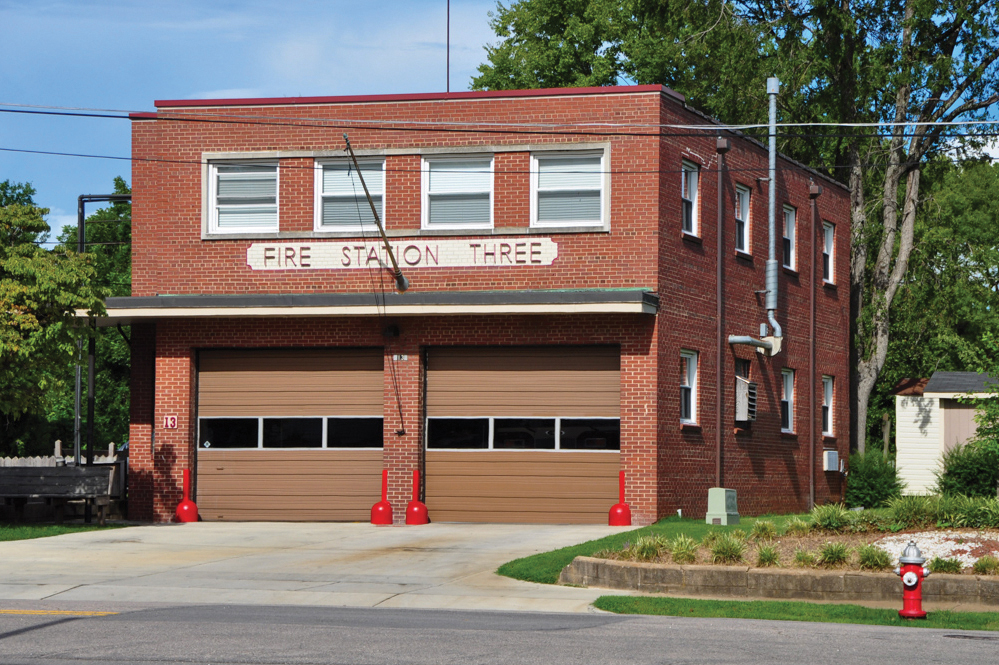
In July 1951, a new Fire Station 3 was opened at 13 S. East Street to better serve the city’s eastern neighborhoods, where it operated until April of this year. This fire station was over 3,500 square feet — nearly double the Hargett Street station’s 2,000 square feet— and was built for $35,000. “They needed more living space, and modern fire trucks were larger than the apparatus in the horse-drawn era,” says Legeros. “The original Fire Station 3 was not designed to have people living in it, but by the 1950s, fire stations needed kitchens, dormitories and day rooms for people to live there 24/7.”
In spring of 1952, the original Hargett Street fire station was demolished after being used for commercial purposes, bringing an end to one of Raleigh’s oldest firehouses. (Today, that area is a parking lot.) It wasn’t until the early 1960s that the first African American firefighters were hired by the City of Raleigh.
Through the 1970s and ‘80s, Fire Station 3 housed a rescue company, then a brush truck and, in 1986, placed a Mini 3 — a smaller fire truck often used in wildland firefighting — in service, reflecting the station’s expanding role beyond engine company operations.
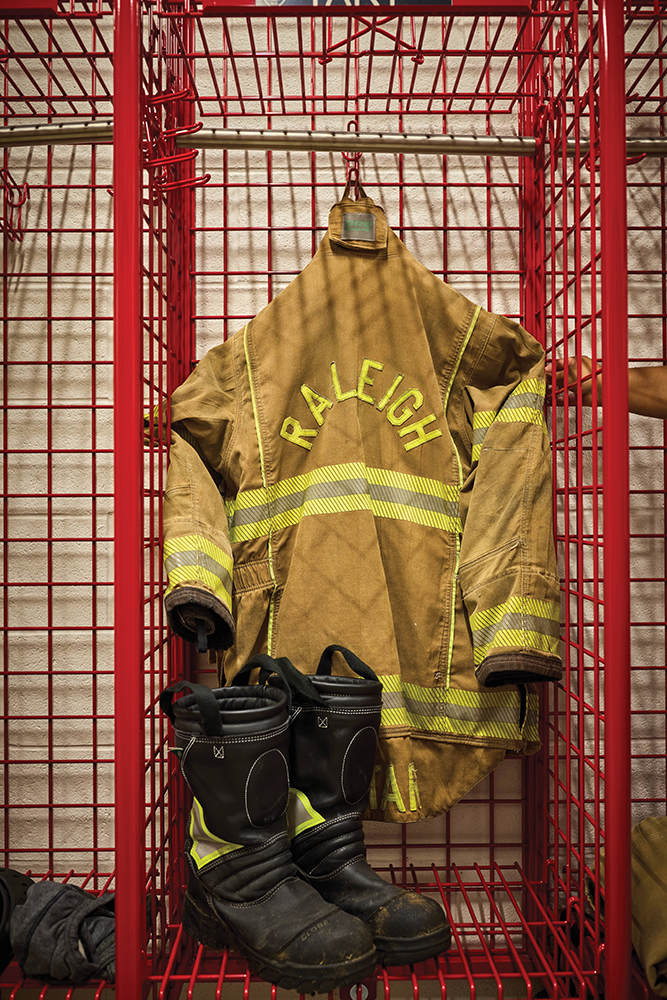
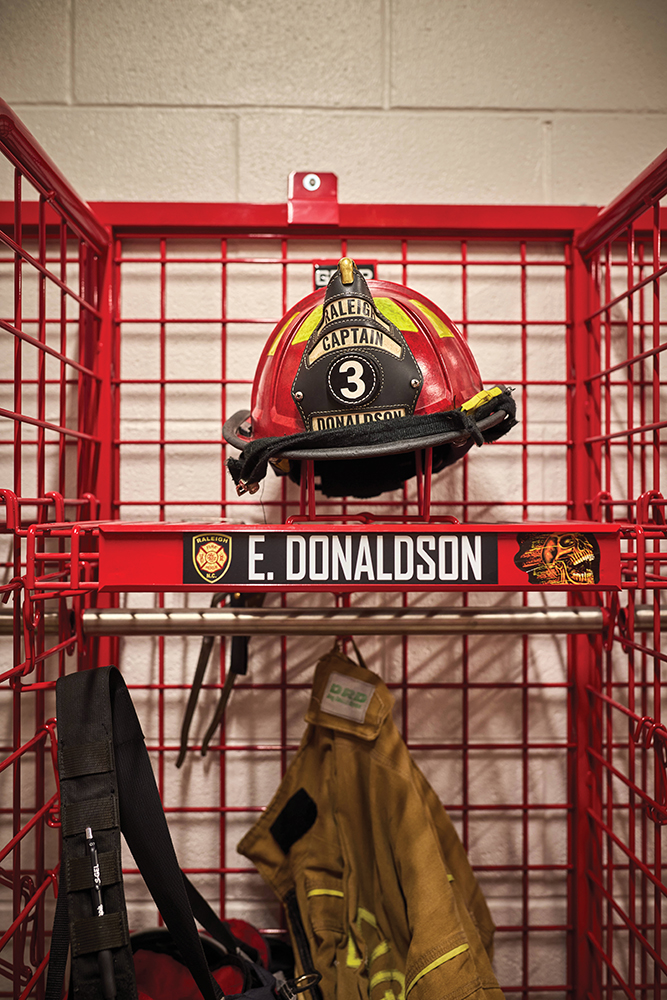
The decision to relocate Fire Station 3 was made in 2014, after more than 60 years in operation. It reflected a goal to better cover a growing Raleigh, to create space for larger apparatus and more companies, and to incorporate best practices in building design and features for firefighter health. “The East Street Fire Station 3 was modern in the 1950s, but we’d evolved,” says White. “We’re in the service industry — we’re always trying to reduce our response time and grow our coverage to be a better service to the community.”
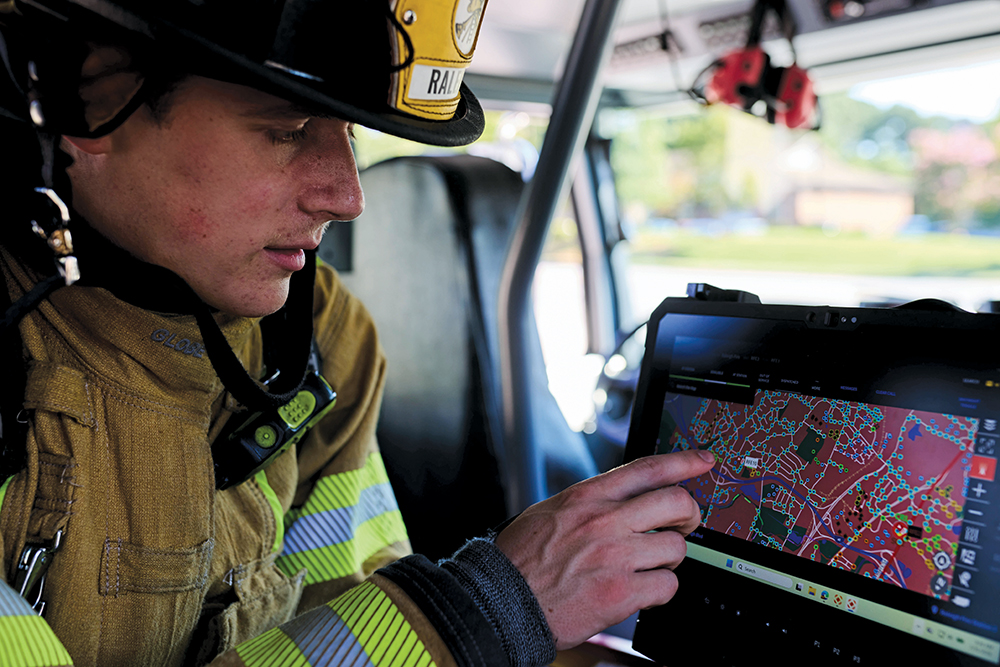
After years of planning, finding the right property and construction, the new 11,105-square-foot Fire Station 3 opened at 936 Rock Quarry Road this spring. According to the Raleigh Fire Department, the $11.5-million station “incorporates the latest architectural strategies, construction materials and operational technologies to reduce carcinogen exposure and foster a healthier environment for firefighters.”
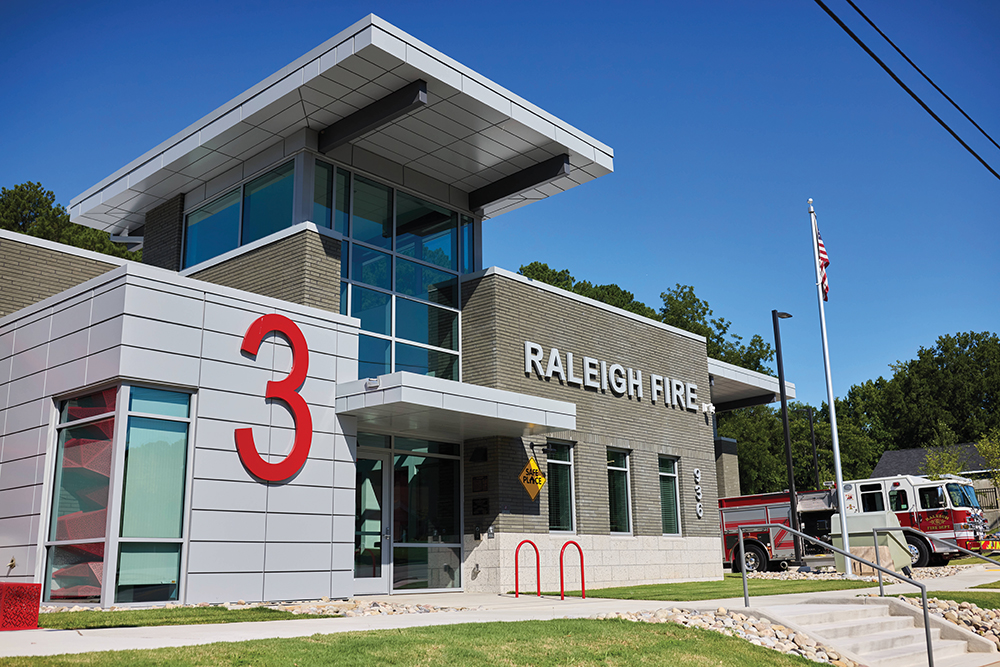
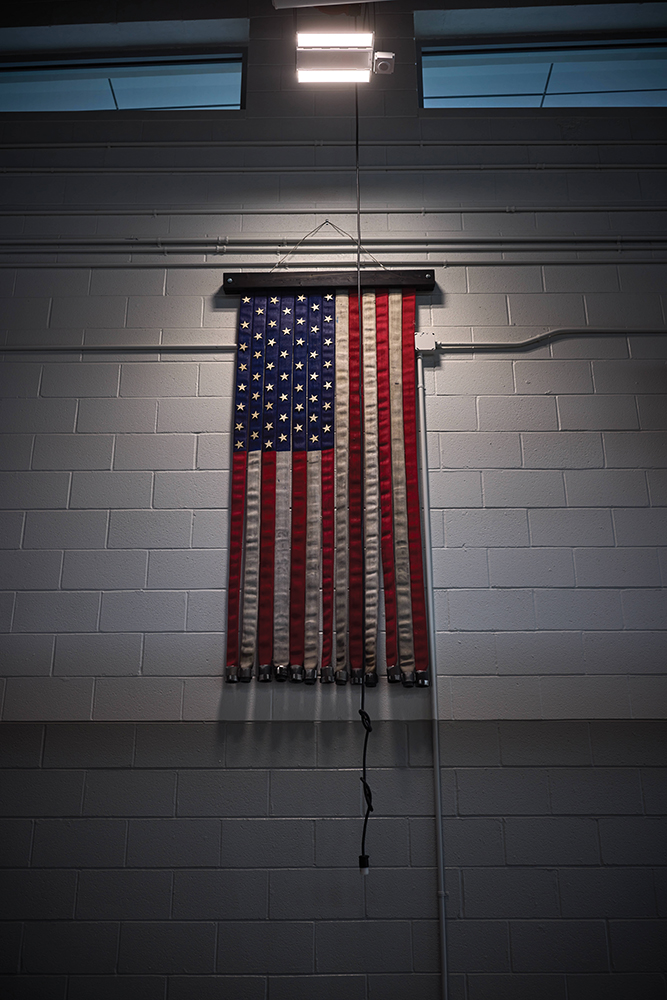
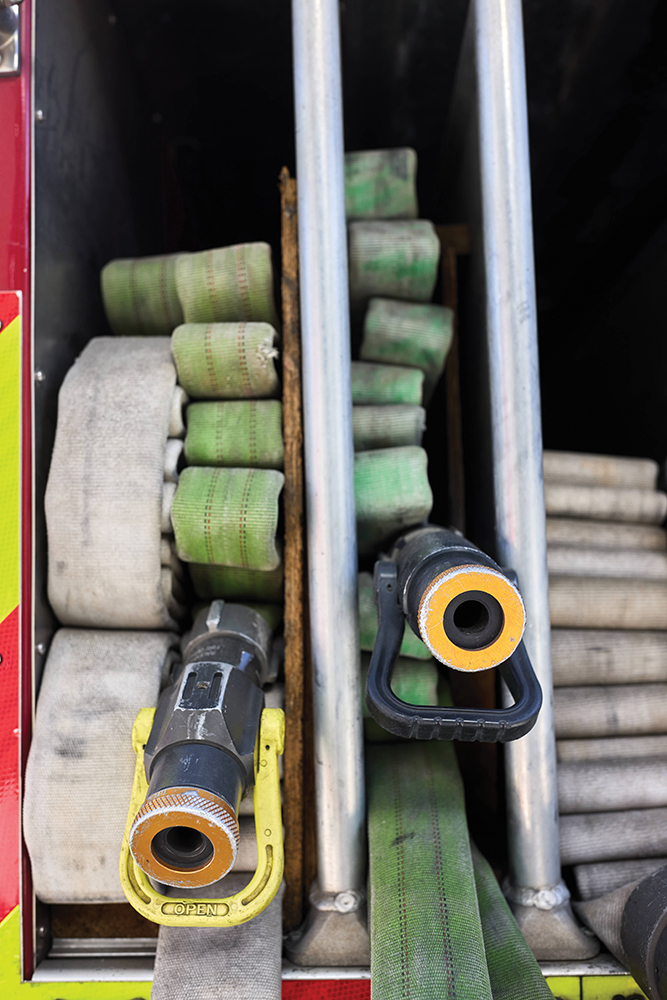
Among the features: the building is LEED Silver-certified and ADA-compliant. It includes dormitories and facilities designed for use by both men and women (the first female firefighters were hired in 1978), a private patient evaluation room, office space and a gym. “It used to be that people were bringing in their own gear and setting it up on the apparatus floor, so we started creating a space for fitness,” says Assistant Chief of Logistics Danny Poole.
A feature that White is particularly excited about: the station’s state-of-the-art decontamination room, which is immediately adjacent to the apparatus bays. After returning from a call, firefighters can go directly to a shower area to wash off contaminants like carcinogens. They can put their gear directly into extractors — big commercial washing machines that can clean and dry the fire gear at specific temperatures — and store their personal protective equipment in lockers separate from the living spaces. “There was a time we took our PPE into the living areas and dorms of the fire station,” says White.
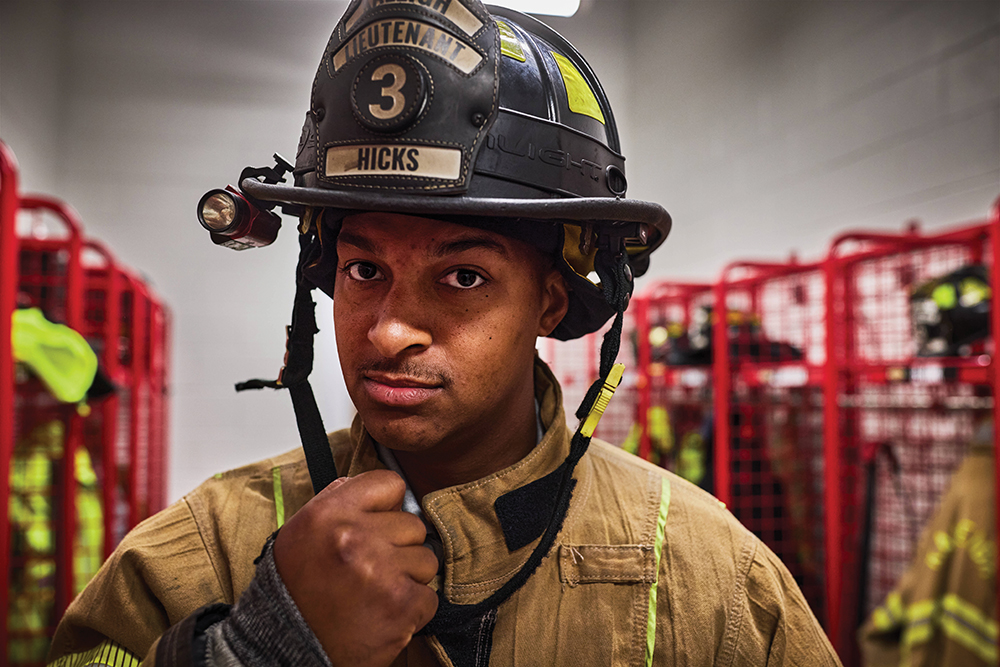
Additionally, the new station is built to house the city’s first electric fire truck (currently, most apparatus are diesel-
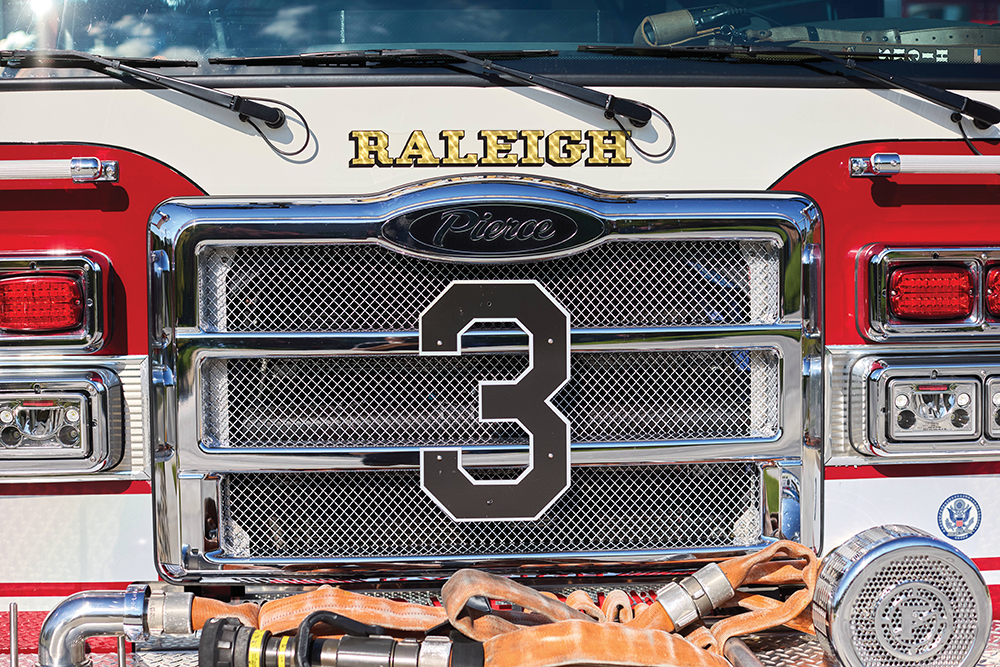
powered). “We are adding light duty vehicle EV chargers at our facilities as we remodel, and fire apparatus EV charging stations are being incorporated into our new fire station building programming,” says Poole. While it currently holds one company, Engine 3, there is room for two apparatus in its 75-foot-deep pull-through bays.
Inside the fire station hang photos from Fire Station 3’s past, selected by the Engine 3 company. Among them are images of earlier companies, buildings and apparatus through the decades. Just as the art outside invites people to learn about and contemplate the Raleigh Fire Department’s history, these images cement the connection that today’s firefighters have to those who came in the decades before them. “I’ve always been taught, don’t forget the past because you’ll repeat it,” says Poole. “We want to make sure that people born and raised here don’t lose their heritage.”

This article was originally published in the September 2026 issue of WALTER Magazine.