As early as elementary school, this Raleigh artist and teacher made the connection between exercising his talents and earning a living
by Colony Little | photography by Joshua Steadman
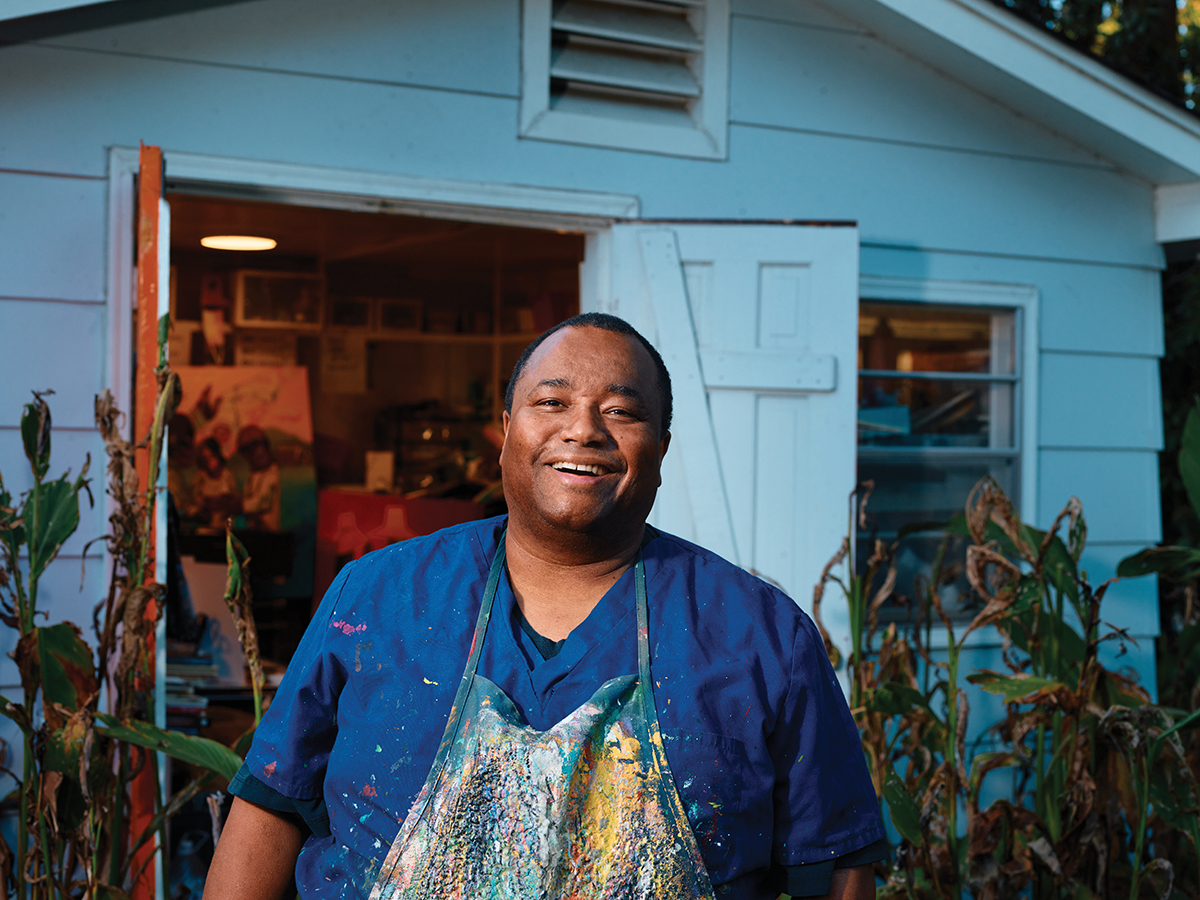
For Eric McRay, making art and making a living with his art are one and the same. His website offers his creations for a range of budgets — prints as low as $40, original paintings in the low four-figures — and a mix of wall-friendly renderings of jazz greats, pop-culture iconography, abstracts and Raleigh landmarks like the iconic Krispy Kreme sign on Person Street. He’s also a speaker, teacher and an art proselytizer determined to practice on his own terms.
For McRay, who grew up in Washington, D.C., this spirit was largely inspired by his family. “My father was a businessman, and I saw how he conducted himself. My grandfather was a farmer and also owned a store, so I come from people who were entrepreneurial,” McRay says. “I knew you could be paid for your skill.”
McRay remembers being into drawing and illustrating as early as 6 years old, and by the fourth grade, he found that other students were willing to pay for his creative skills — specifically for decorating the brown paper bags they used as book covers. “Kids were into pro football, so people would ask, can you draw the Redskins helmet or a Chargers helmet? So I would draw all these football helmets, and I would get a nickel or a dime,” he says. In the 1970s, that change added up. “You could get a lot of ice cream for a dime and a nickel back then,” he laughs.
By the time he was in high school, he was already gaining recognition for his work, creating illustrations and cartoons for a local business that specialized in hand-painted signs. Yet one important accolade evaded him: the “Most Creative” superlative in the yearbook. “I was the editor of the yearbook, I’d done murals, I did everything you could imagine a young person could do,” he says. “But when it came time to vote, the students chose another guy who played football and had name recognition. It was about politics and celebrity.” McRay was galvanized by the disappointment: “I was determined to build a name for myself.”
Encouraged by his mother and brother to pursue his artistic talents, McRay got a scholarship to attend the Maryland Institute College of Art (MICA), where he planned to study illustration. But the critical attitudes of his illustration teachers discouraged him from pursuing the major. “We didn’t have many cheerleaders there,” says McRay. “Some of my professors were just brutal. I told myself I’d never be torturous like that.”
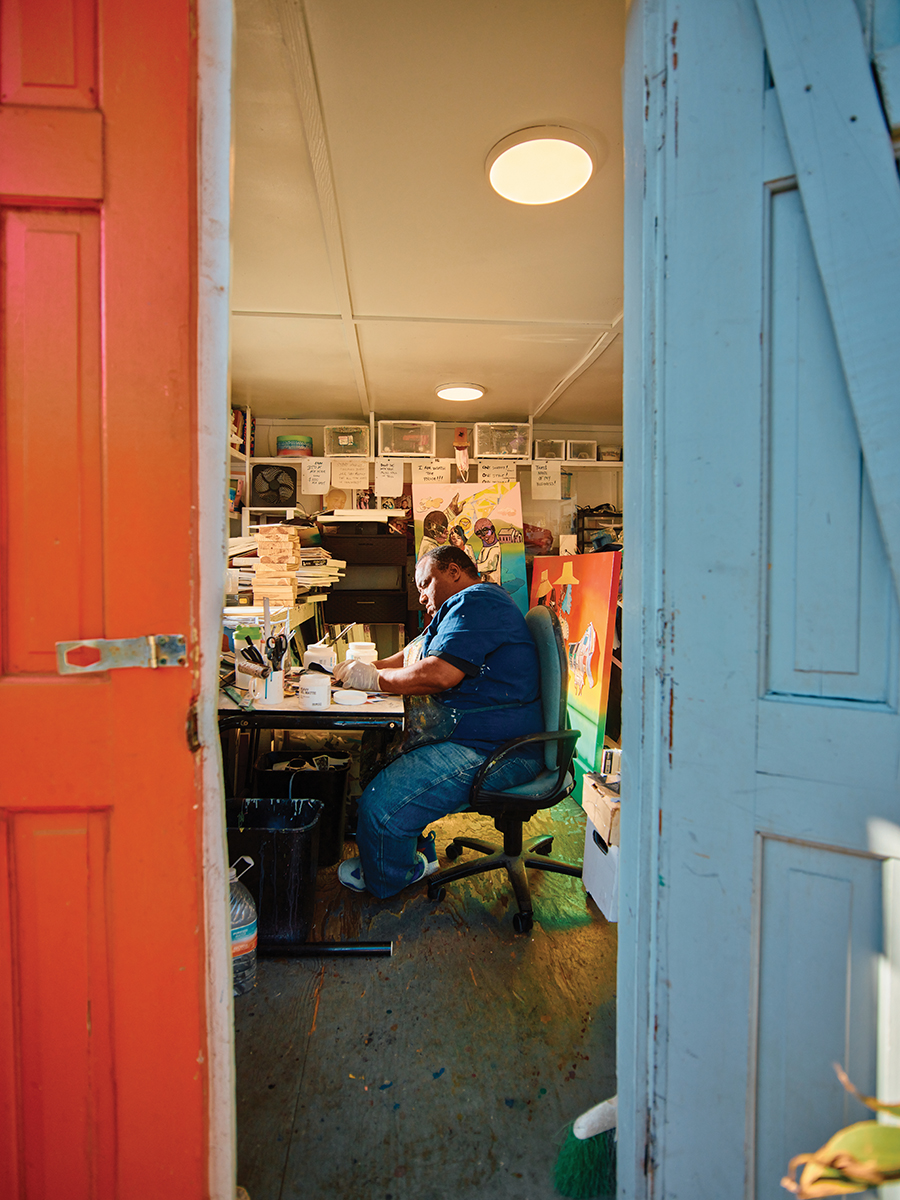
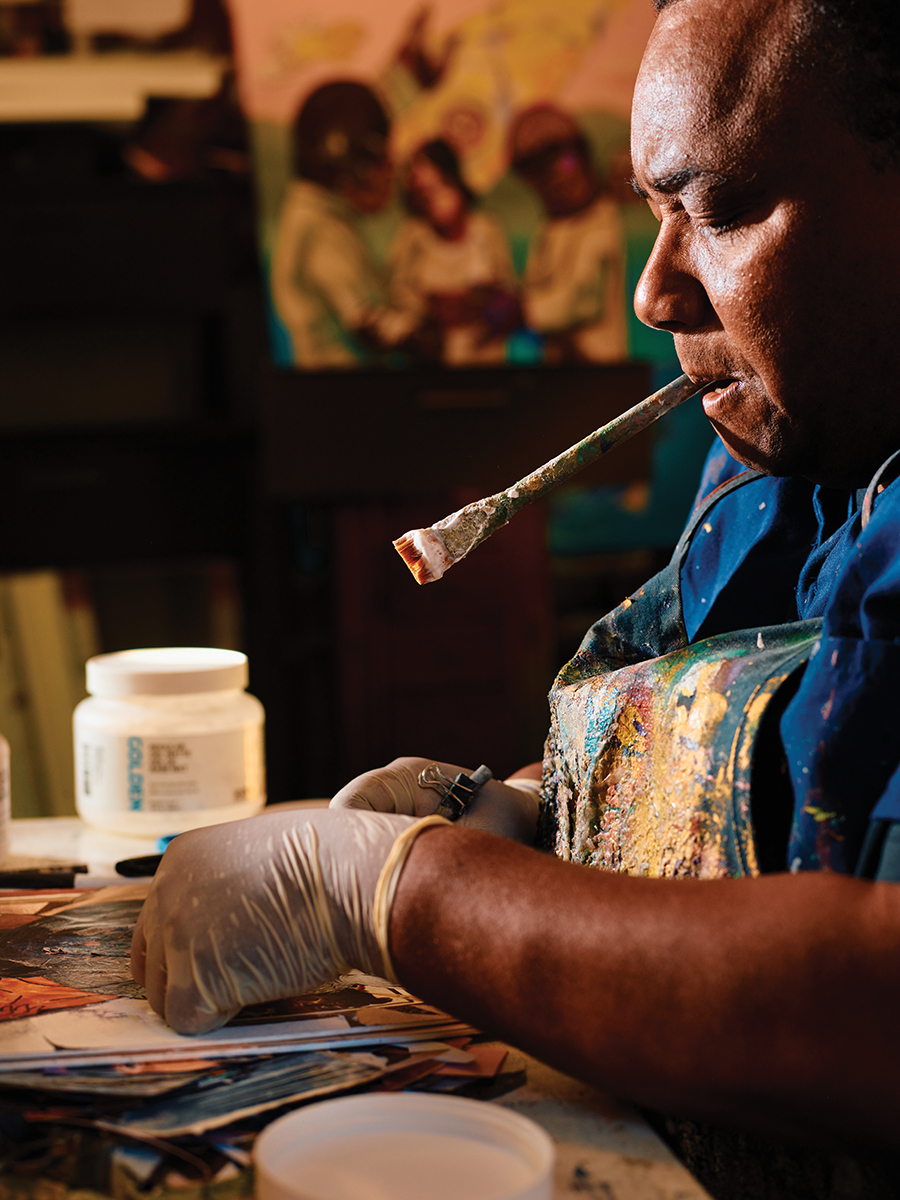
McRay switched his concentration to a multidisciplinary program called General Fine Art that exposed him to different mediums and art forms. “Taking abstract painting classes, illustration classes and realistic painting classes gave me a broad skill set,” he says.
After graduating, McRay worked in commercial art, first painting signage and backdrops for a design shop. He moved to North Carolina in the late 1980s, spending his days working in multiple fields — from teaching to information technology — while painting and exhibiting his work on the side.
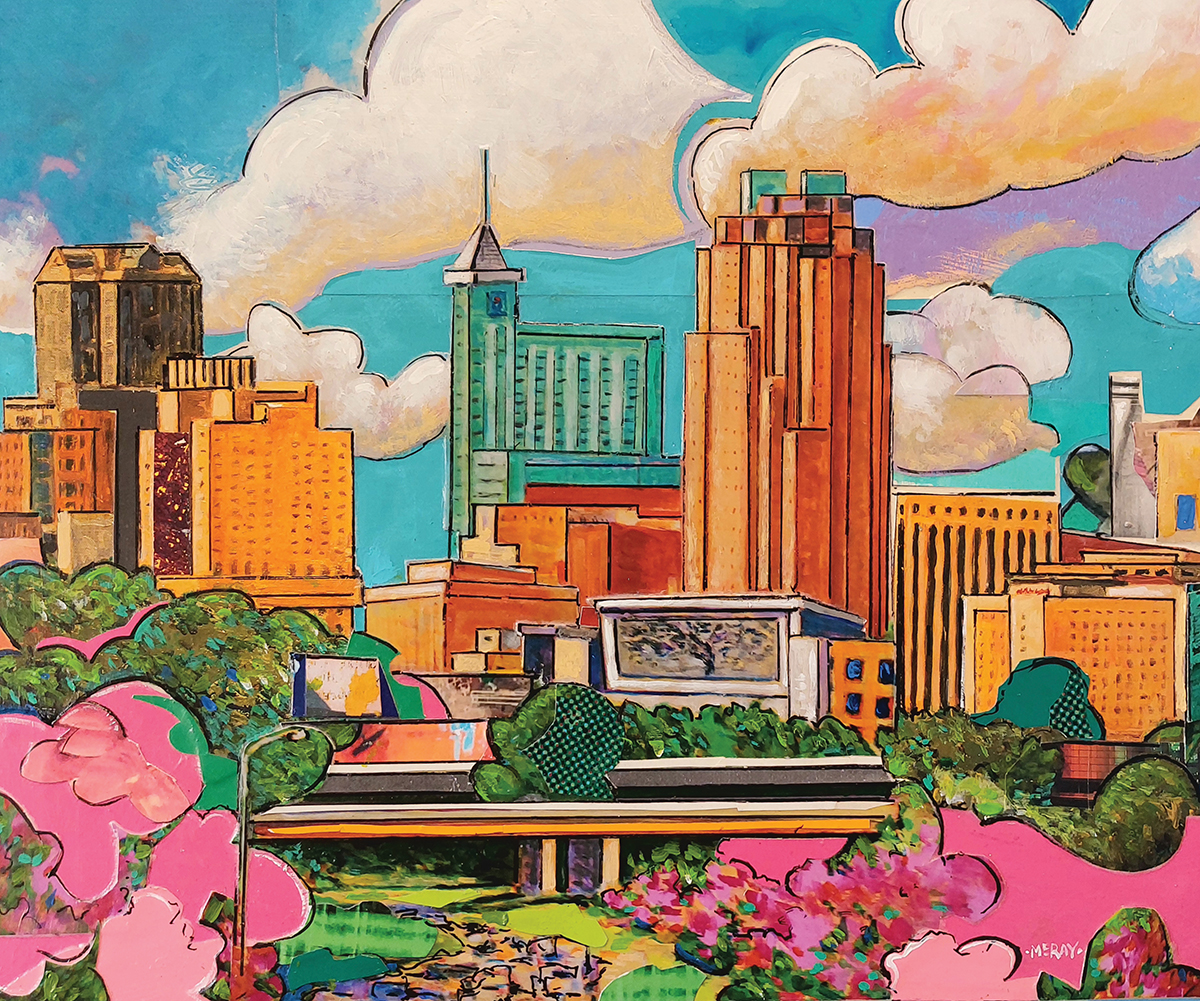
McRay established a studio in Artspace in 1999, creating original paintings and prints in a myriad of styles ranging from figurative works to abstract art. He found success as corporate and academic institutions including SAS Institute, North Carolina Central University Art Museum, Duke University Medical Center and North Carolina State University began adding his work to their collections.
McRay has never locked himself into a singular painting style, instead painting works in numerous series, where he experiments with different mediums that all begin with bold color. His Jazz, Rhythm, and Blues series, for example, captures the kinetic energy of performance using splatters of purple, orange and red paint around the musicians and instruments that dance on the canvas like musical notes.
of this month’s issue.
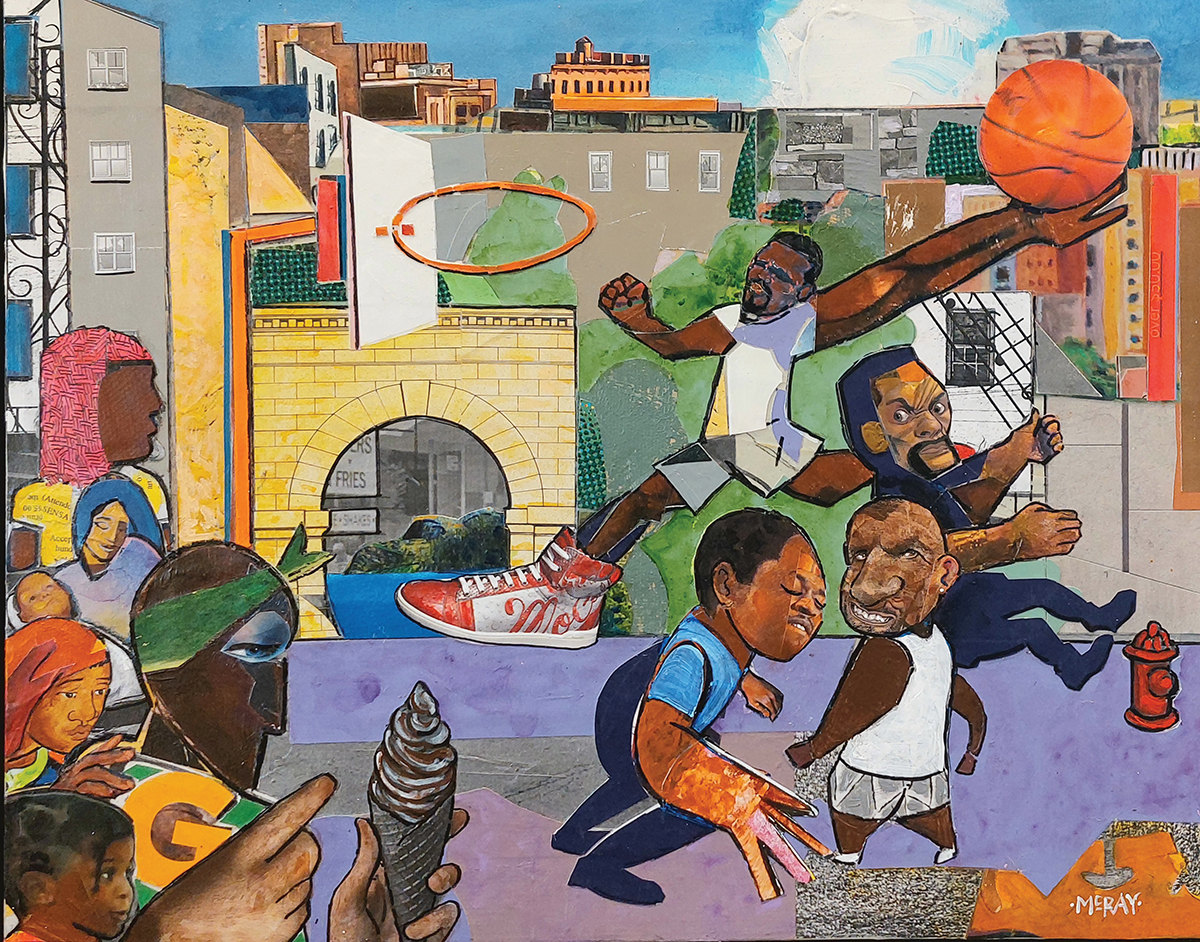
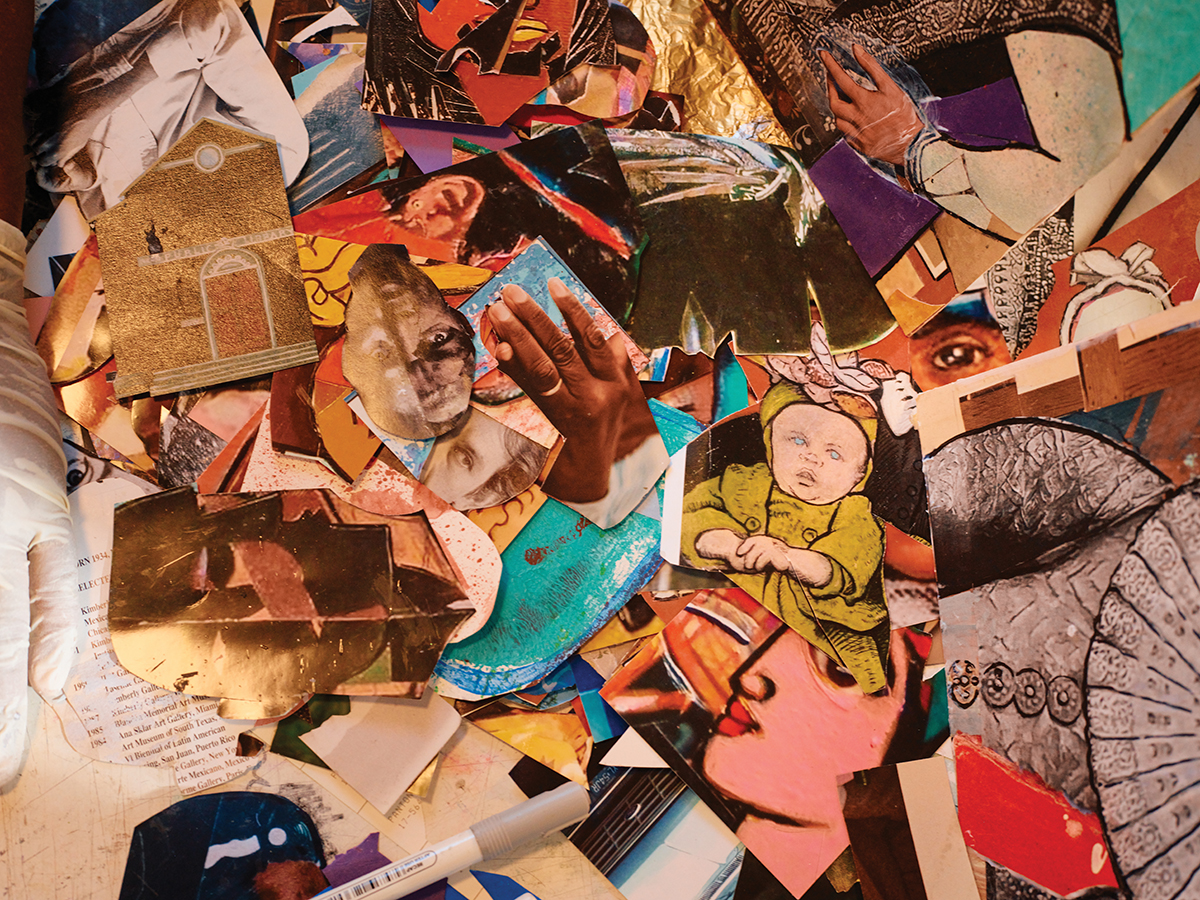
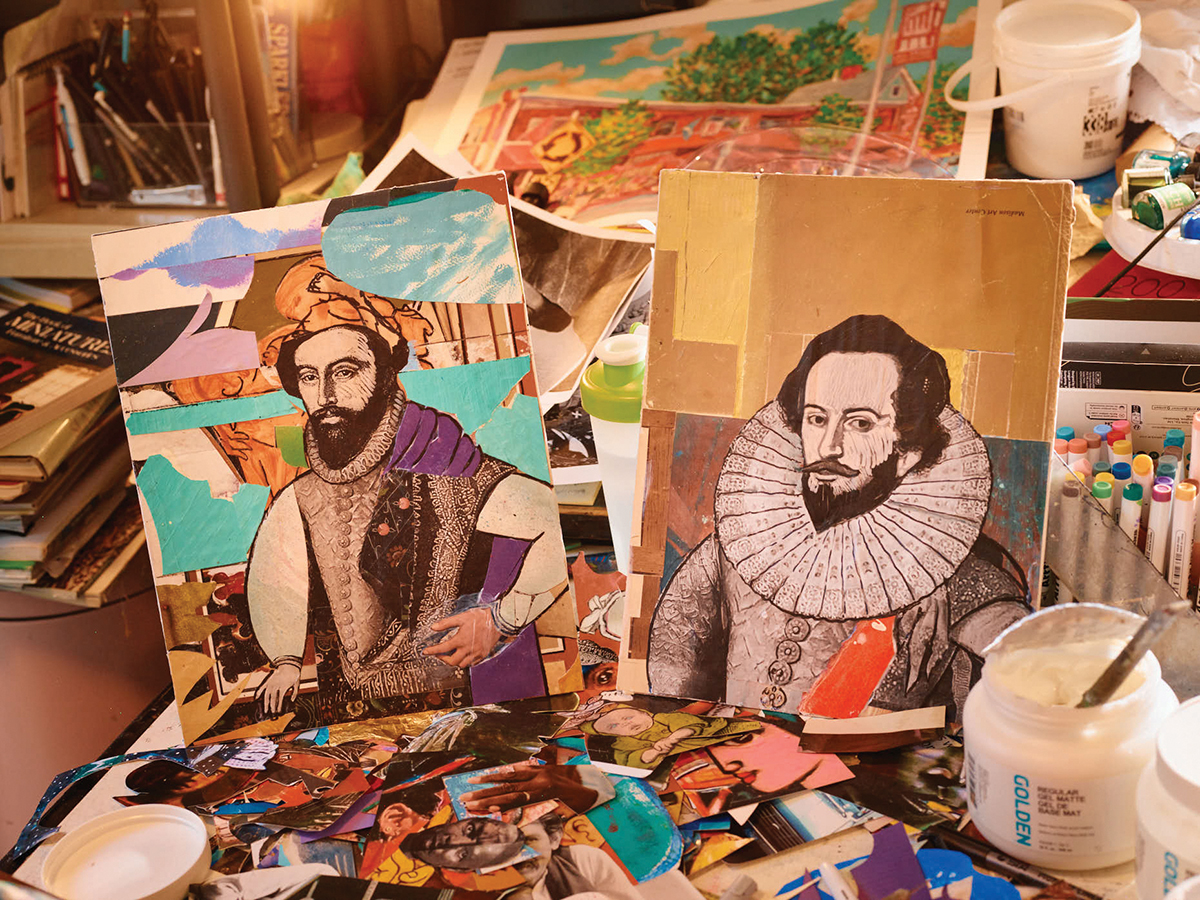
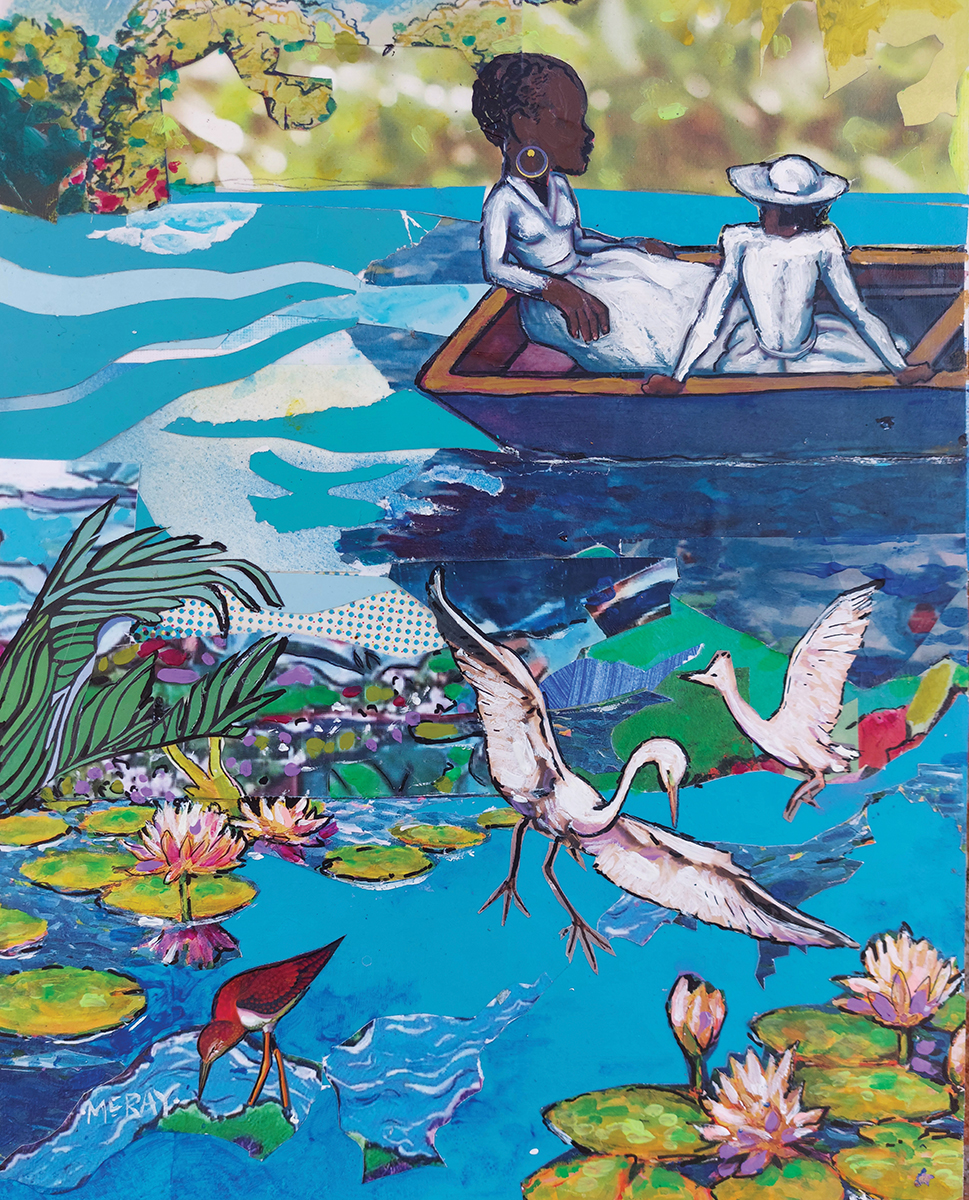
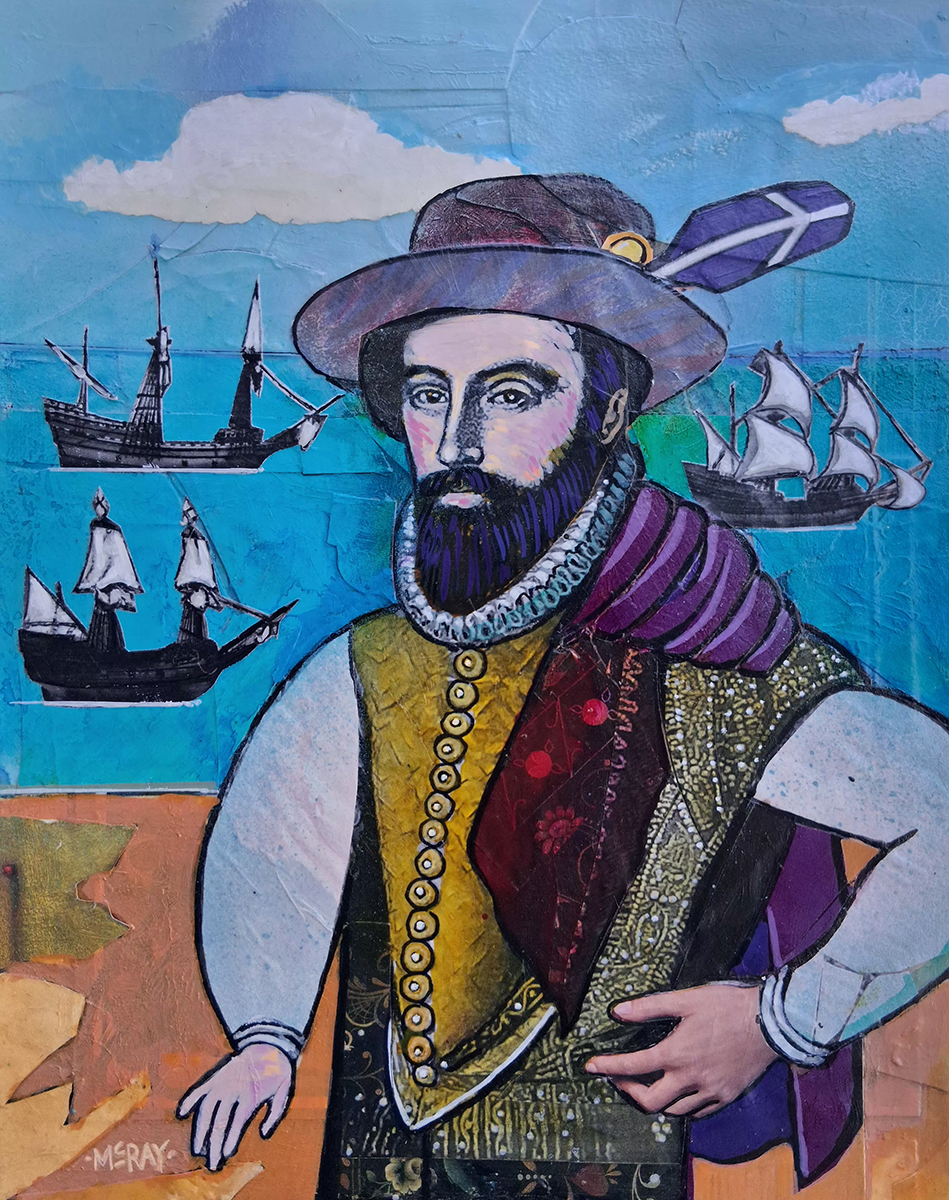
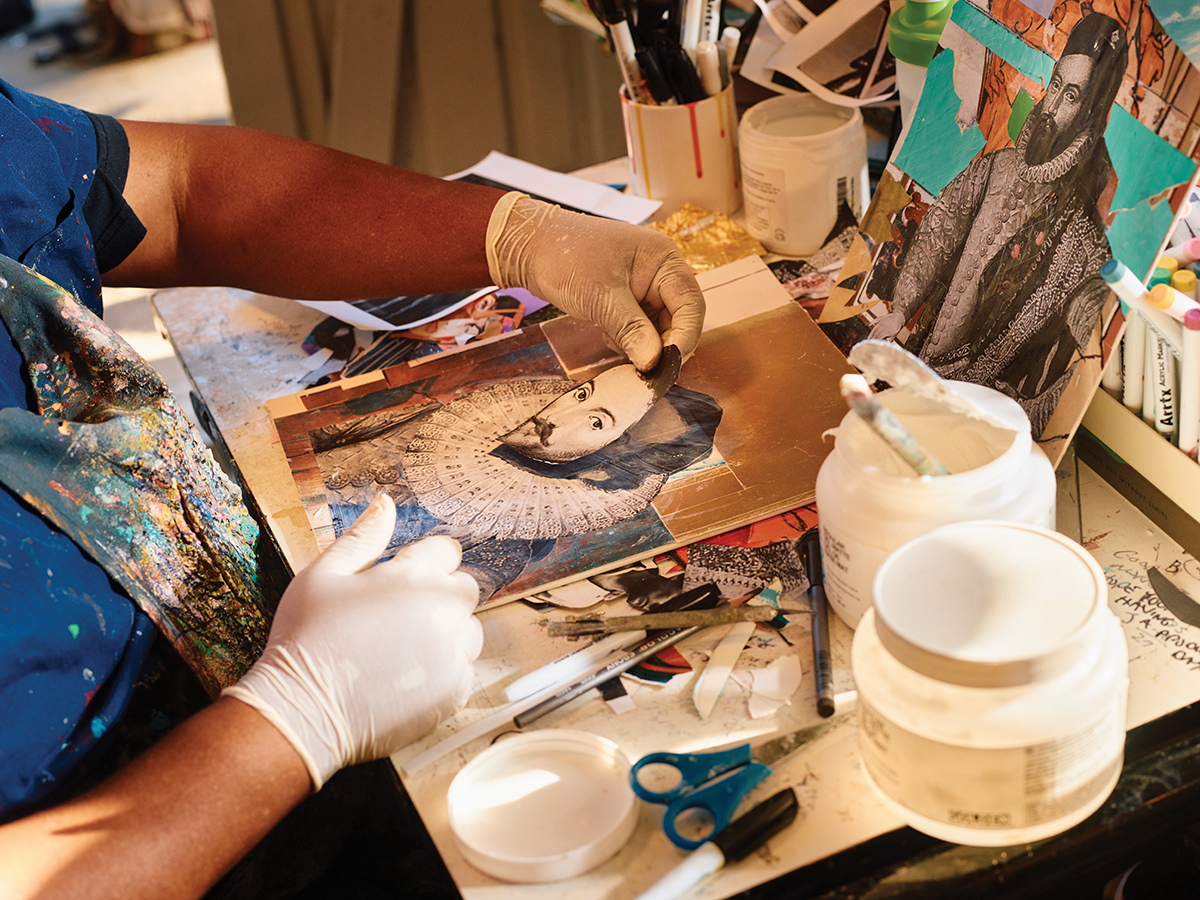
Today, he works from his home studio, where he’s currently working on a series of collages in a visual style reminiscent of one of the most influential African-American collage artists, Romare Bearden. A piece titled Boomtown at Night shows a collaged cityscape of an imagined metropolis in the background; interior, everyday moments in the foreground include a trumpet player being watched by a collaged couple and other people walking the streets.
In many respects, his newer collaged constructions are an amalgam of the painting and illustration techniques McRay has experimented with over the years. “A former art dealer of mine told me, Eric, when I look at this work, I can see everything you ever produced,” McRay says.
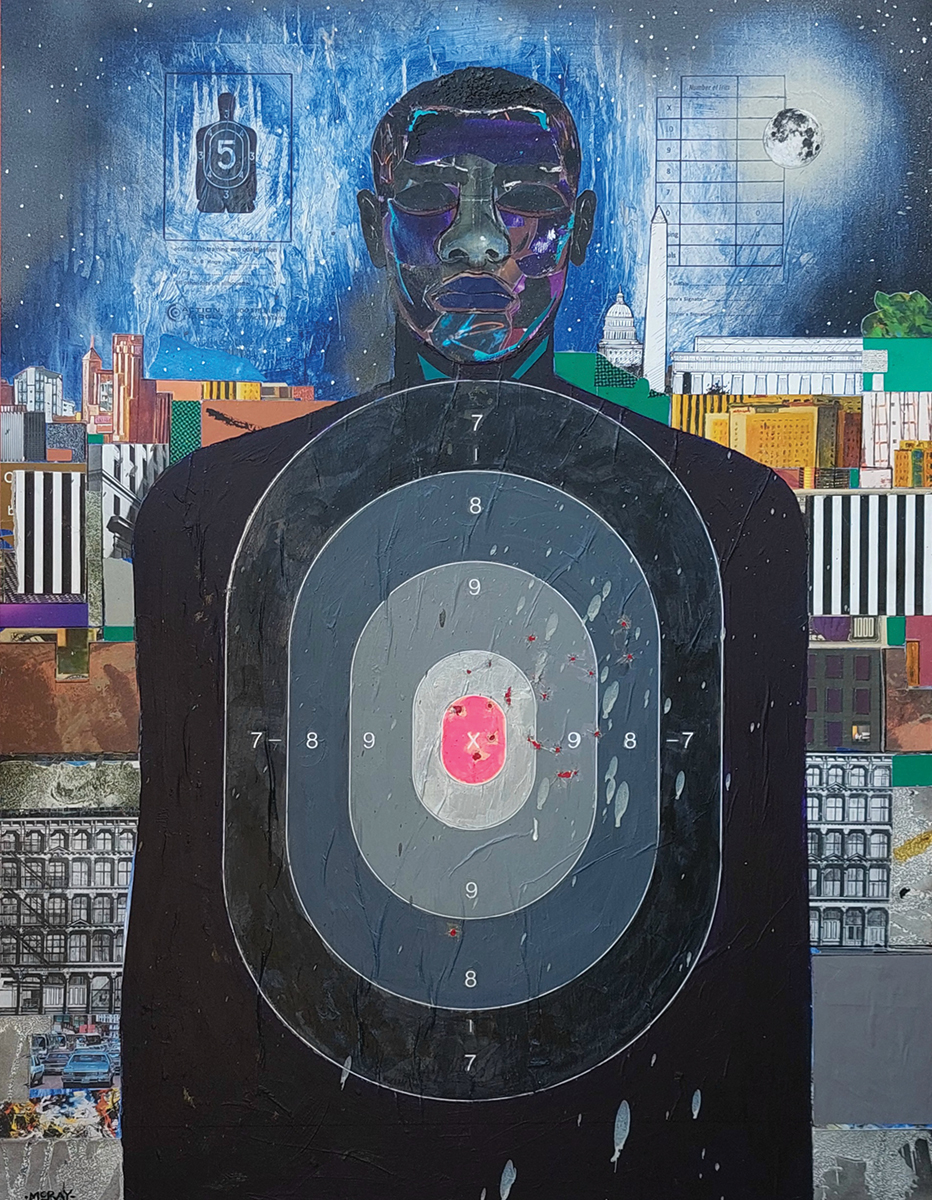
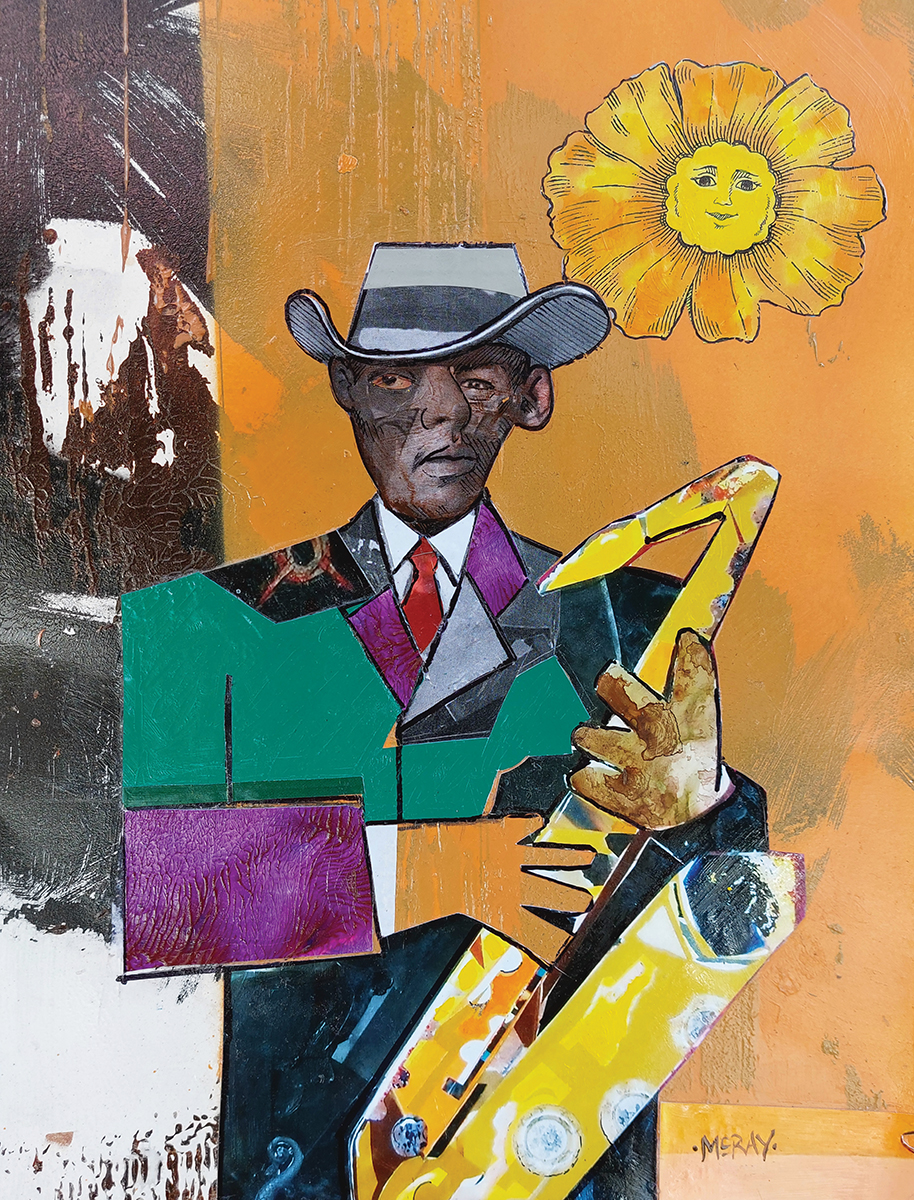
His penchant for marketing and selling work through active promotion on his social media accounts keeps his work visible and recognizable. On the McRay Studios website, you’ll find a streaming carousel of photos of collectors holding his paintings. “When I went full-time as an artist, my mother said to me, you need to take pictures with people who bought your art and put them on the wall,” says McRay. Instead he opted for a more portable visual archive that he calls his “Collectors Gallery.” “I had this big book in my studio art space on the tabletop and people would flip through it and say, that’s my pastor!” he says.
Among “Collector’s Gallery” is a photo of Susanne and Nick Portanova holding a piece called Pulse Heart #5 from his Heart Series. Each of these small-scale paintings reads like a study, encapsulating the various art forms he practices, from collages to figurative works, into a 6- inch square themed heart — one may feature Star Trek iconography while others will include a cup of coffee, a Superman logo or an abstract landscape.
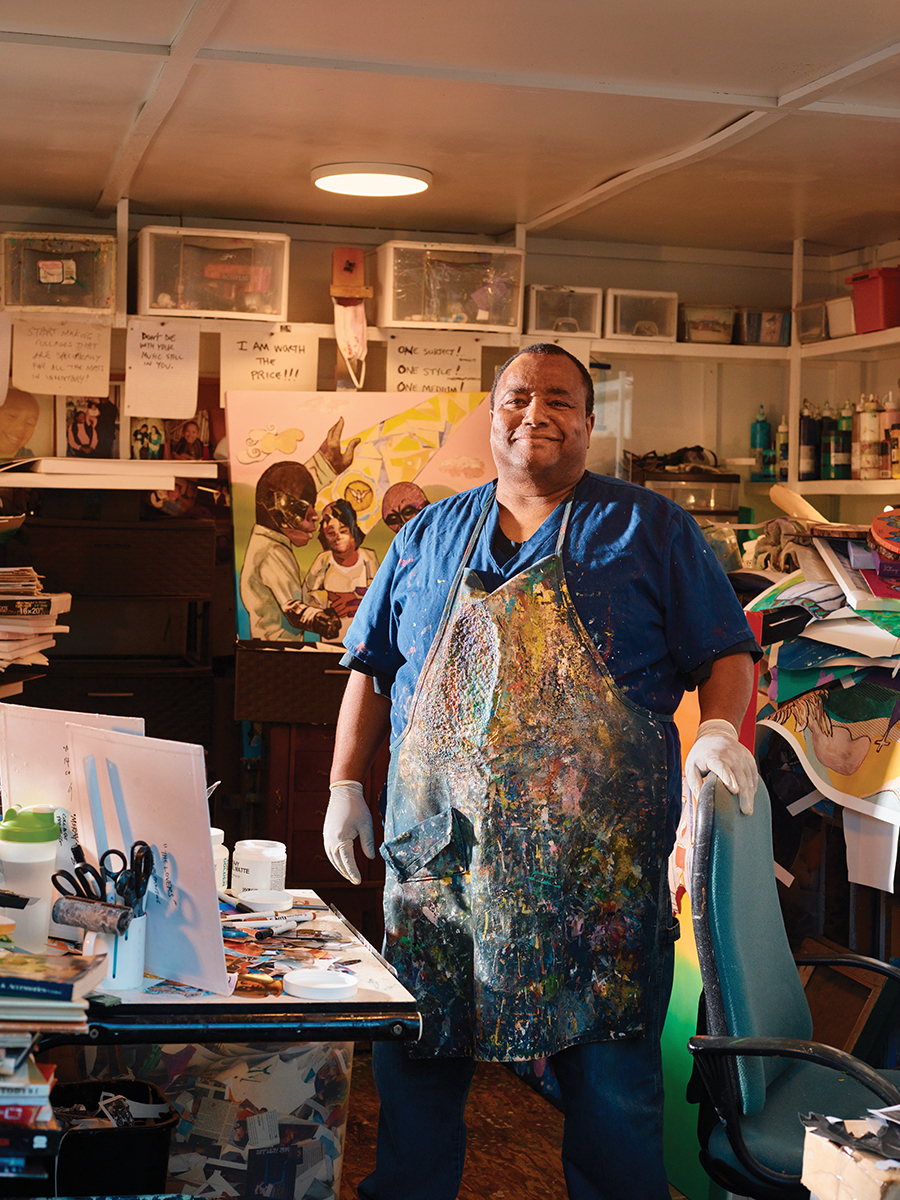
“Eric has done so much for the arts and artists in Raleigh,” says Susanne, who is a ceramicist. “He brings life to his work using the energy and sound of the colors he uses — they’re bright, bold and jazzy.” Her husband, Nick, has taken classes and workshops with McRay, she says: “He always comes back from them feeling energized.”
In addition to the strong relationships with his collectors, McRay loves how art has the capacity for opening eyes and expanding the horizons of people who may not have ever thought about collecting, experiencing, or creating art. “People who were never into art will tell me, you made art fun,” he says.
Susanne agrees: “When he had his studio at Artspace, Eric was always the busiest one, sharing his love of art with anyone. When we’d do First Fridays as a family, we’d always say, Let’s go see Eric!”
McRay loved fostering a family atmosphere in his Artspace studio, where his two children, who are now young adults, spent their childhoods hanging out with their father. “I used to paint over my dad’s old jazz paintings,” says his daughter Erica. “I would use tons of paint and he would get upset, but in a good way. He always loved me being creative. Art is a path I personally wanted to take and he was a huge inspiration, especially since I grew up in his art studio.”
Erica now has her own art practice selling vibrant, colorful works (butterflies are a signature motif) at art fairs around the Triangle. When she told her father she was struggling to sell her works, he suggested co-hosting a livestream Art-a-Thon on social media, where they sold archival pieces and new works together.
By being visible and open to sharing, McRay is setting an example for young artists — not just his own daughter — to learn how to market and sell their works.
In addition to working for himself, McRay has taught dozens of workshops and classes in partnership with organizations like the United Arts Council, Cary Arts Center, The Salvation Army, Wake County Public Schools, North Carolina State University and Saint Augustine’s University.
These classes and open studios have left lasting impressions on him. “I love it when young artists call me Unc or OG, or tell me, When I was in elementary school, middle school, high school, I met you and I thought I could become an artist because I saw you do it,” he says. “I love to offer that encouragement to others.”

This article originally appeared in the January 2026 issue of WALTER magazine.