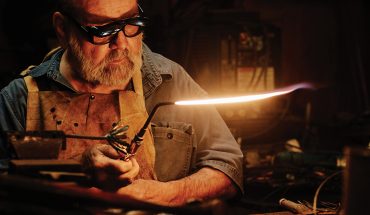
An artist with a background in textile design found a love for working in enameling. She builds skill through teaching and fearless experimentation
by Colony Little | photography by Joshua Steadman
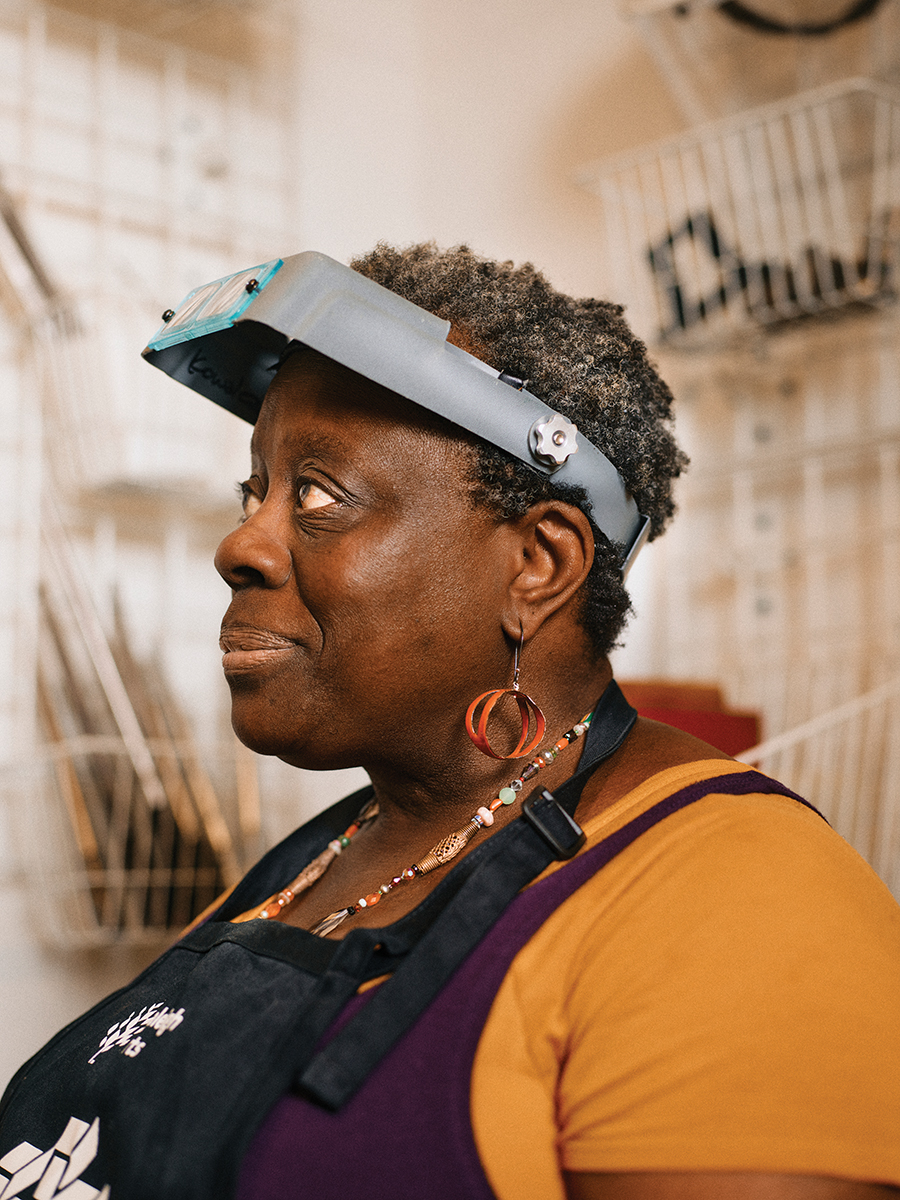
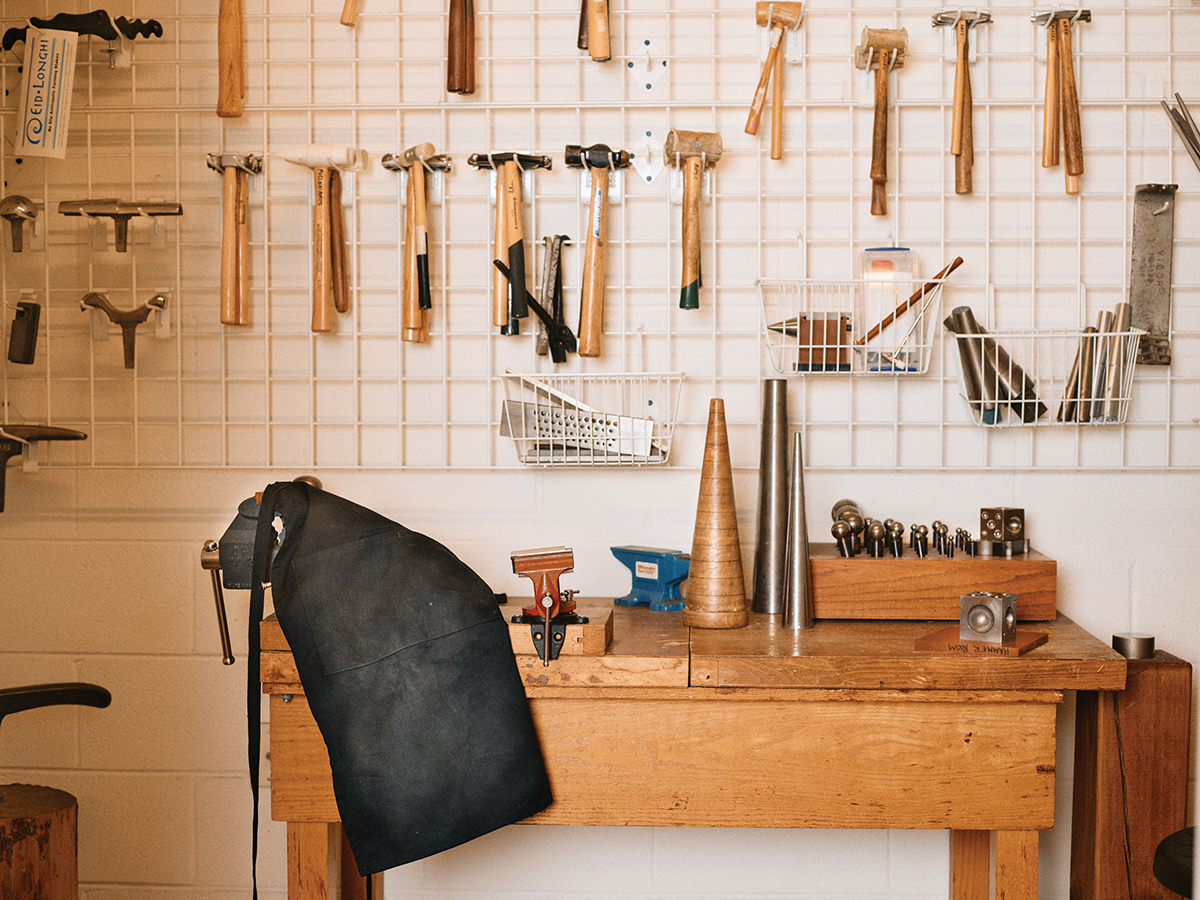
On a recent afternoon at Craft Habit, the classroom was filled with students engaged in various stages of metal-working, from cutting to soldering. The sounds of clanking chisels, sanding files and whooshing blowtorches provided a steady, rhythmic beat in the busy workroom. Occasionally a student would blurt out an “oops” as something snapped or failed to fuse.
“There’s no such thing as a mistake,” encouraged metalsmith Ndidi Kowalczyk, who was leading the class, invoking the “happy accident” ethos of painter Bob Ross. It’s all part of the process, she assured them. Four hours later, a final dip in an acidic pickling bath revealed the final products, stacks of delicate silver rings that each of the students could take home.
Kowalczyk has taught numerous classes in metalsmithing over the years. In addition to Craft Habit, she’s instructed at North Carolina State University and the Pullen Arts Center, teaching artists and novices alike in jewelry making. “I love learning new techniques and teaching them to other people,” she says. “I teach a lot of people who don’t have an art background, or aren’t sure if they’re creative. And I tell them that everything that they’ve ever done will impact whatever art they make… the realm of the creative world is infinite.”
The same spirit of grace and experimentation guides her work as an artist. Kowalczyk currently specializes in enameling, a form of metalworking that involves fusing pigmented glass powders to metal, creating color gradations and dappled shading. It’s a technique she’s been honing for well over a decade, making colorful statement earrings and other ornamental artworks she sells at craft fairs, including CenterFest and the Piedmont Craftsmen Fair. Her designs range from abstracted flowers to fluid organic forms in an array of rustic colors like indigo blue, moss green and ginkgo yellow. Patterns and surfaces vary as well — some appear etched, while others contain additional layers of enamel that provide depth and texture.
Kowalczyk grew up in Philadelphia with Nigerian parents who set their sights on their daughter attending medical school. She excelled in science but found that she also loved making clothes. While attending Drexel University, her experience with the ultra-competitive fashion design program and the cutthroat nature of that industry ultimately left her uninspired. “I came to the decision that what would be required of me to thrive in the industry wasn’t something that I was willing to do,” she says. “By the end of my senior year, I decided I did not want to design clothing, but make fabric and my own printed textile designs for others.” She enrolled in a master’s textile design program at Philadelphia University (now Thomas Jefferson University) to pursue a learning path that merged technology and design.
After she graduated in the mid-1990s, Kowalczyk and her husband moved to North Carolina. They chose it on a whim — “We were astonished at how amazing people were to us and how it felt like home being here,” she says — though she was, in part, drawn to the fabric traditions in the state. “I thought I would find a job in textiles, given my master’s degree, but what I wanted didn’t quite mesh with what was going on within the industry,” she says. The convergence of globalization and the burgeoning Computer Aided Design (CAD) boom had dramatically changed the industry, influencing how textiles are created and manufactured.
She spent her early days in Raleigh visiting craft stores and eventually took a job at the former craft store Ornamentea, where she strung beads, helped clients with their projects and explored various crafts. While running errands one day, an ad for a six-week immersion course in metalworking at Meredith College piqued her interest. “It was one of those tear-off advertisements at Whole Foods, and I thought, Oh, this is cool, OK, why not? I’ll try it,” she says. There, she learned how to saw, solder and torch metals under the late Mary Ann Scherr, a renowned jewelry designer and metalsmith.
“Taking a blow torch to a piece of copper or hybrid brass and heating it up until you saw colors — or getting to the point where the change in color of the metal indicated it was soft enough to bend — it was fascinating that I could take something so rigid and make it look like fabric, something I was used to creating,” says Kowalczyk. “We started out sawing things, cutting out shapes and thinking organically.” She found that metalworking synthesized subjects in school she loved. “I didn’t feel so distant from my training in terms of manipulation of a material and being able to add texture to it,” she says.
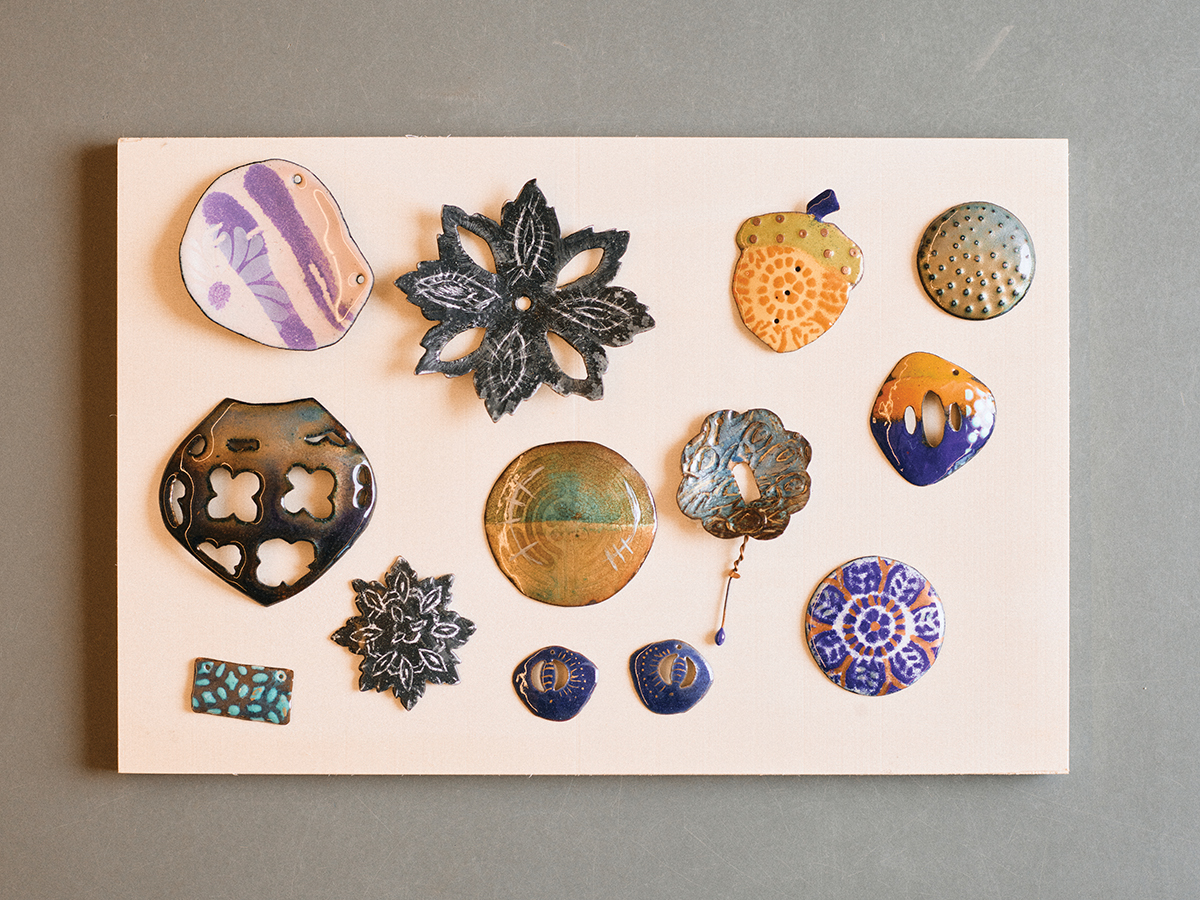
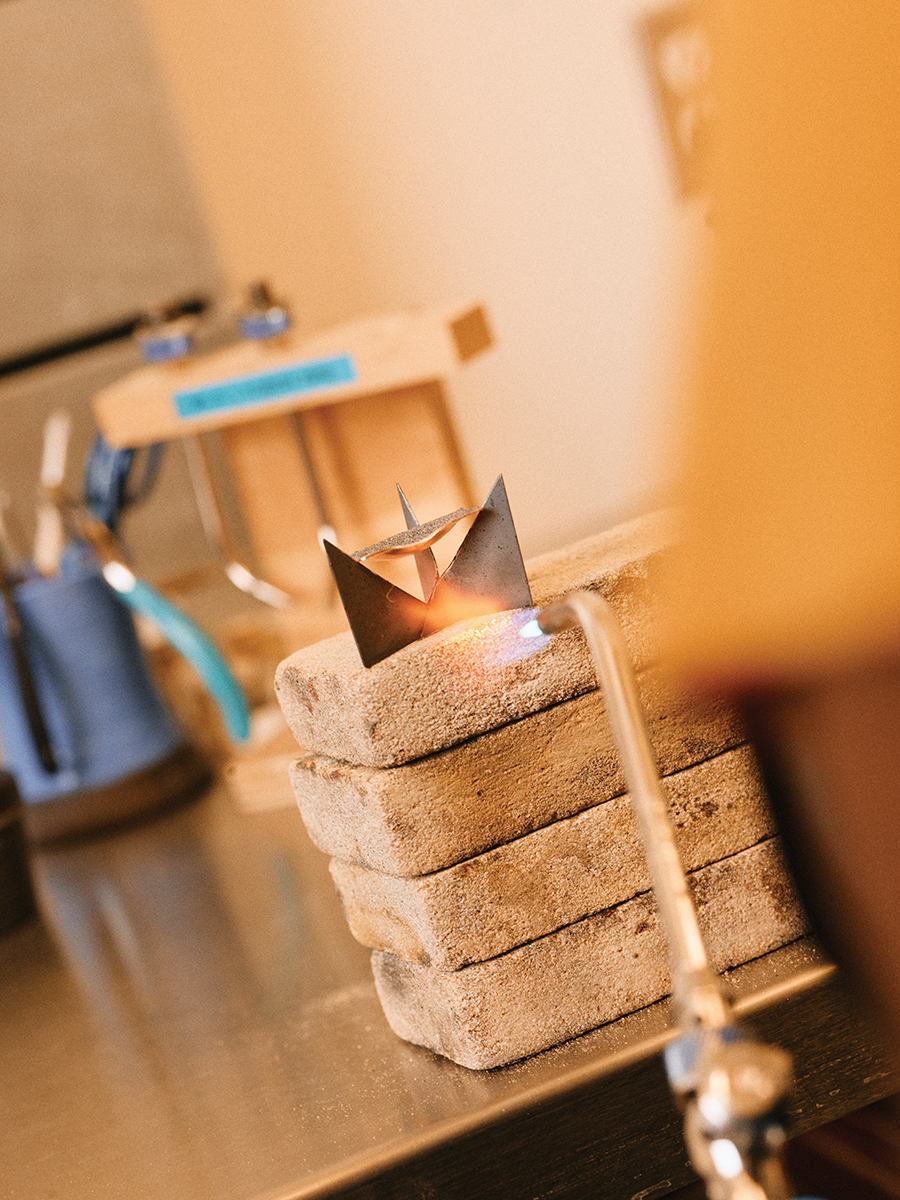
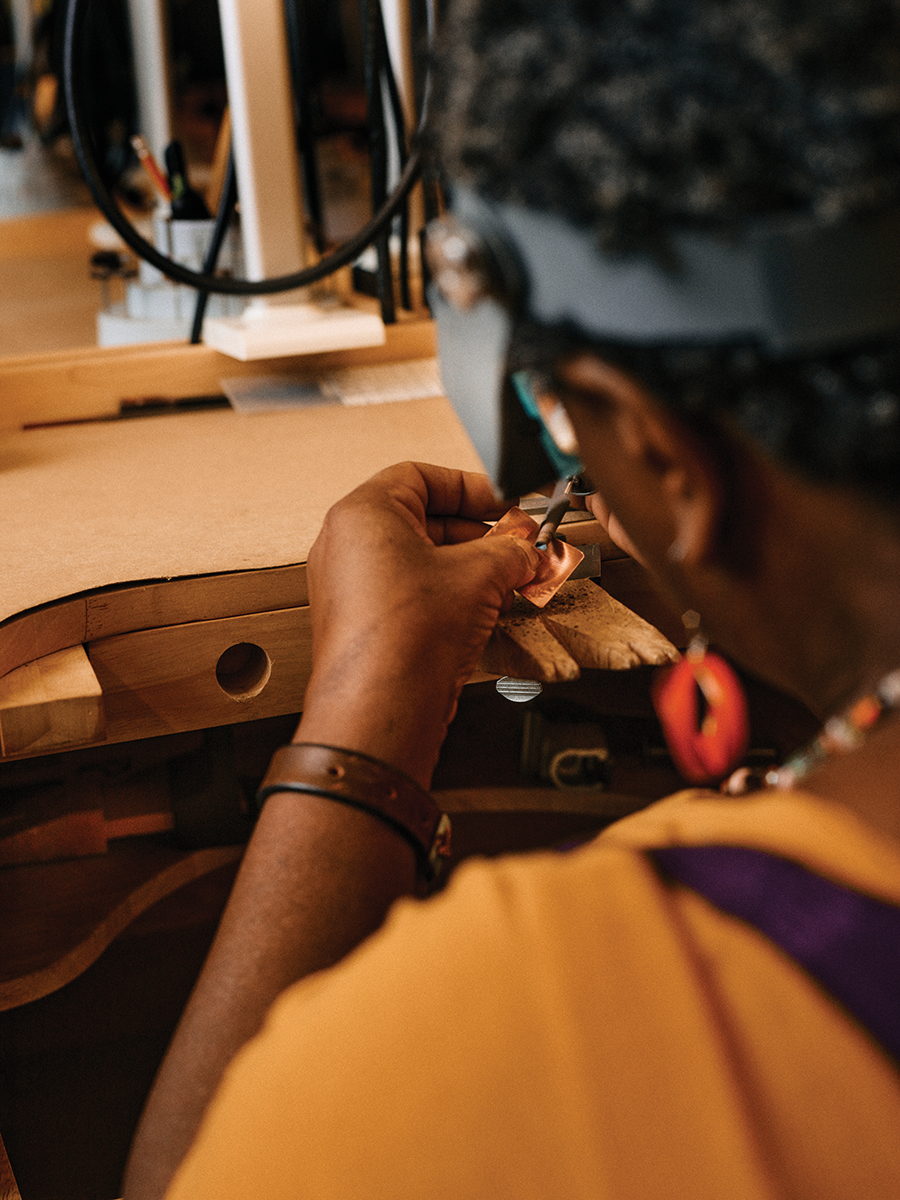
While the class sparked her love affair with metalworking, adding enamel allowed Kowalczyk to bring color into the work. In enamelling there are two techniques used for fusing glass powder to metal: one uses a small tabletop kiln that evenly and quickly heats objects up to 1,500 degrees Fahrenheit, the other a handheld torch to fire the piece directly. Kowalczyk prefers the latter approach.
The process involves meticulously degreasing the metal surface (copper or silver) with an abrasive cleaner or acetone. The metal is then treated with a bonding oil, after which tiny sifters containing glass powder are used to gently dust the metal surface.
Once coated, a torch flame bakes the enamel onto the metal surface. After a base layer of enamel is added, Kowalczyk refines the piece by adding additional layers of texture, pattern and color, using transparent enamels, stencils and a process called “wet-packing” that involves adding liquid to glass powder to create a thin paste that’s added to the metals. The options are endless, she says, and the experimentation keeps her engaged.
“I take classes here and there to learn new techniques, but also while I’m teaching my students, I’m learning things every time as we’re trying to navigate the heat or create an environment for the heat to work better,” she says. “It’s been really fun to learn as I go, both for myself and with my students.”
In her jewelry-making class at Craft Habit, there were audible “oohs” and “aahs” from students as they experienced the alchemy of fire. Kowalczyk fosters that sense of accomplishment in students at all levels. “To see their growth and their confidence in being able to create is really empowering for me,” she says. “I don’t know if I say it enough to my students, but I get as much from teaching them as hopefully they are getting from me.”
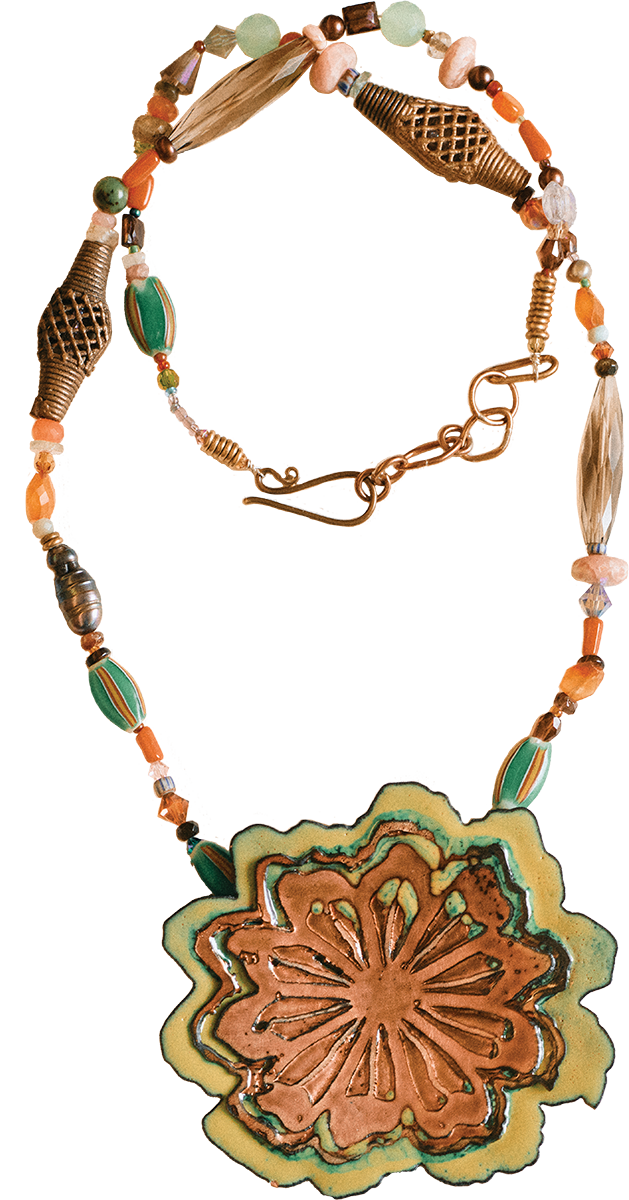
Kowalczyk’s husband is the resident gardener at their home, and the name of her business, Hothouse Posey, riffs off his gardening and her early work in ceramic flowers. “I create inside a lot and at the onset, most of my work was floral inspired, so I thought, You can create flowers in an enclosed space like a greenhouse, what’s another name for that?” she says. She’s dubbed her small home studio The Plottin’ Shed, a name that’s a playful take on a gardener’s potting shed.
Her latest project, which is currently on view at the Pullen Arts Center, is part of a group jewelry challenge organized with instructors Amy Veatch and Terry Thompson. They assembled a series of boxes containing jewelry items and found objects donated by the late jewelry designer and metalsmith Madelyn Smoak. Participants were given the boxes without knowing what was inside, charged with creating new works of art.
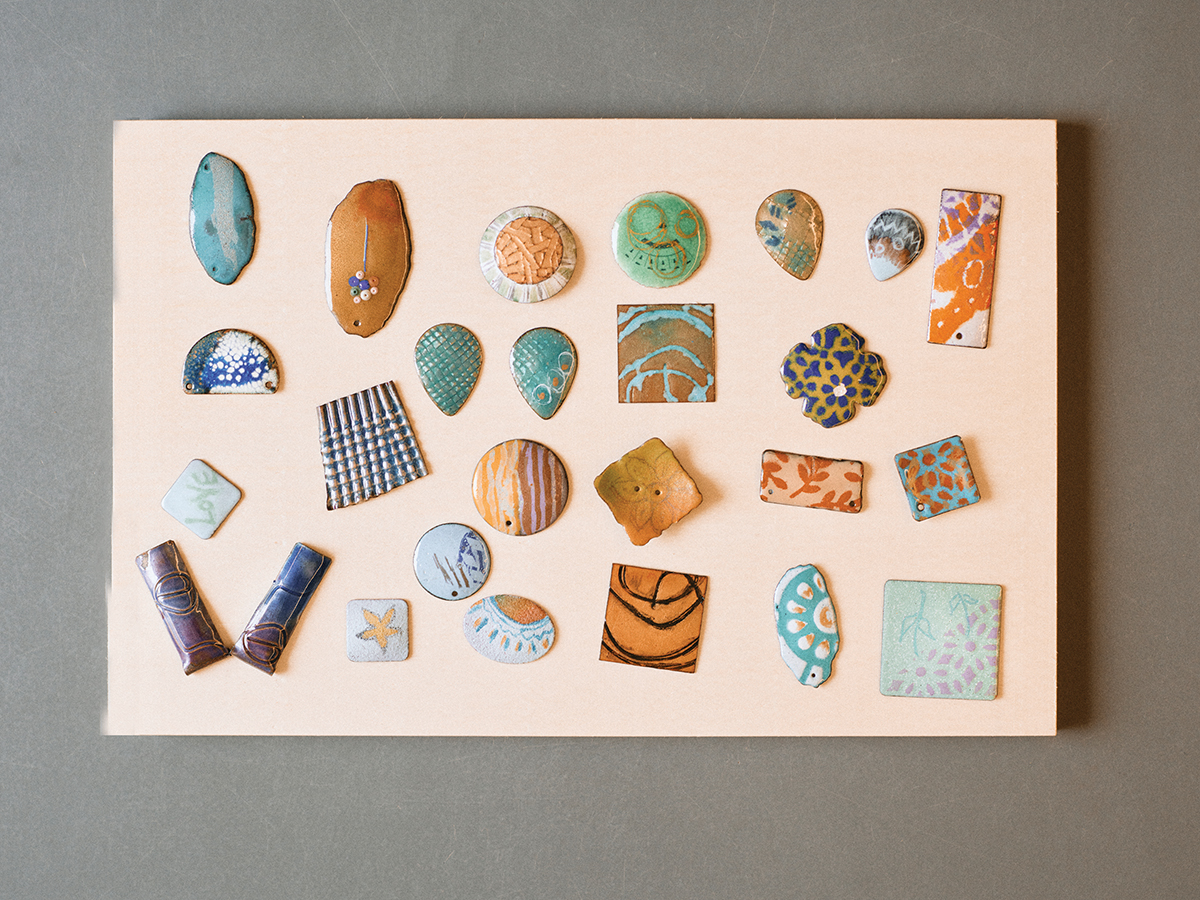
The only rule: “We had to use 75% of what was in the box,” says Kowalczyk, who created a series of three small enameled metal jewelry boxes containing earrings, necklaces and other wearable artworks. “Working together with Ndidi is amazing,” says Veatch, who first met Kowalczyk at Ornamentea and has worked with her over the years. “Collaboration is really important, and with this project people were given time to reflect and put their voices in the work. The more we practice celebrating other people’s voices, the more important your own voice becomes, too.”
From wirewrapping and beading to metalsmithing and enameling, participants created a variety of jewelry pieces and sculptural works that challenged them to embrace the unknown. For Kowalczyk, the project became a springboard for new work. “I am using metal forging and forming in a way that I would like to expand on,” she says.
“I started with a version of it for one of the jewelry boxes, and I’m really excited about it.” Evidence of this experimentation is found among her antiqued jewelry boxes, which contain repeating patterns that are embossed, etched and hammered onto the surface — some including florals filled with colorful resin.
These latest works are emblems of a practice that continues to evolve and build upon itself. Twenty years after her first metalworking class at Meredith, Kowalczyk still thinks about what she learned from Scherr: “One of my great takeaways from taking a class from her was that metalsmithing didn’t have to
be rigid.”

This article originally appeared in the June 2026 issue of WALTER magazine.