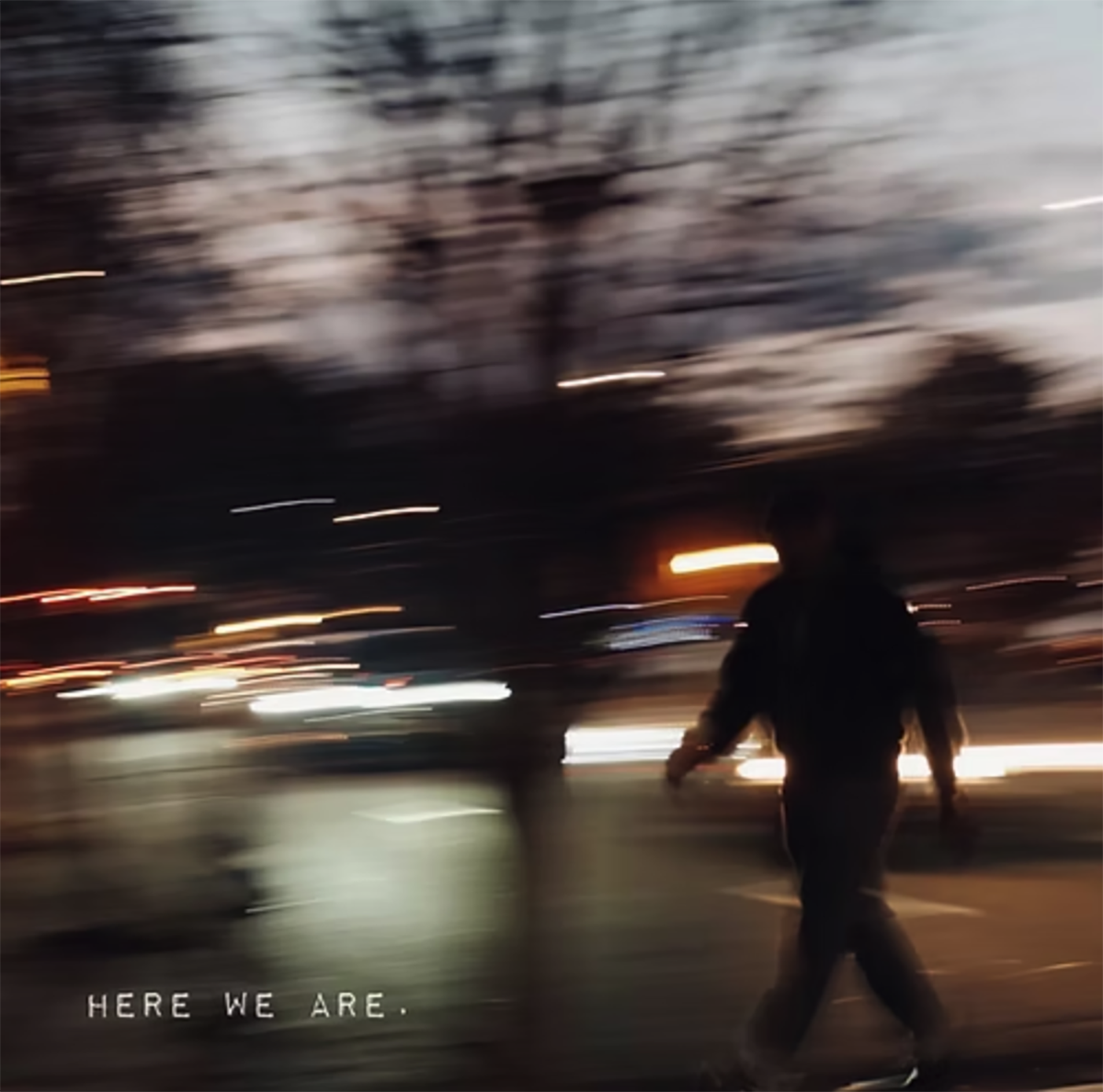
The Durham R&B and alternative rock artist creates ethereal. layered soundscapes on his current most recent album, Here We Are
by David Menconi | photography by Samantha Everette

A few months back, Tre. Charles faced a tall order. It was this year’s first “Live After 5” show and he was the opening act, playing in daylight as a crowd gathered at City Plaza in downtown Raleigh. Early on, the crowd trickling in seemed inattentive enough that Charles resorted to between-song jokes to get a reaction.
“I moonlight as a comedian,” he cracked.
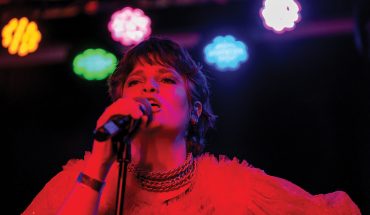
Even though the vibe of Charles’ music was better suited to darkness, the crowd gradually came around as the set continued on. Applause grew louder with each song, especially when he’d play “reimaginings” — covers of songs by Bill Withers and Frank Ocean; even The White Stripes’ “Seven Nation Army” — bathed in the reverb-drenched echoes of his guitar. By the end, he’d won the crowd over.
“That was a rough one,” Charles said a few days later. “One of those gigs where a bunch of people just want free music to dance to. It turned out fine, but it’s always better to have an engaged crowd. One of the best was Newport. You could just tell everybody there wanted to experience all the art and stories.”
That was last year’s Newport Jazz Festival, where Charles played alongside acts including former OutKast rapper André 3000, New Orleans soul legend Irma Thomas and Rock and Roll Hall of Famer Elvis Costello. Charles’ music is similarly eclectic, equal parts R&B and 1990s-vintage alternative rock. The piano riffs layered with chill, ethereal guitar soundscapes on his current release Here We Are. owe almost as much to Cocteau Twins as the late soul man Ray Charles.
Among Charles’ fans is Haw River Ballroom co-owner Heather LaGarde, who booked him for a “Saturdays in Saxapahaw” show earlier this year. To her, his music is “poignant, soulful, gut-wrenching and soaring.”
“He means everything that pours out of him,” LaGarde says. “The music is so genuine and open, and you can see it costs him something to create and share from such a deep place. But he is willing to, and it feels like trust in both directions from artist to audience and back. It’s a communion with Tre., and the music is so intricate, precise and sophisticated.”
Truly, Charles is unafraid to put himself out there. One of the tracks on his record is titled “(the session.) – Interlude,” a recorded snippet of an actual therapy session. Like all his titles and his name, the period is there for a reason.
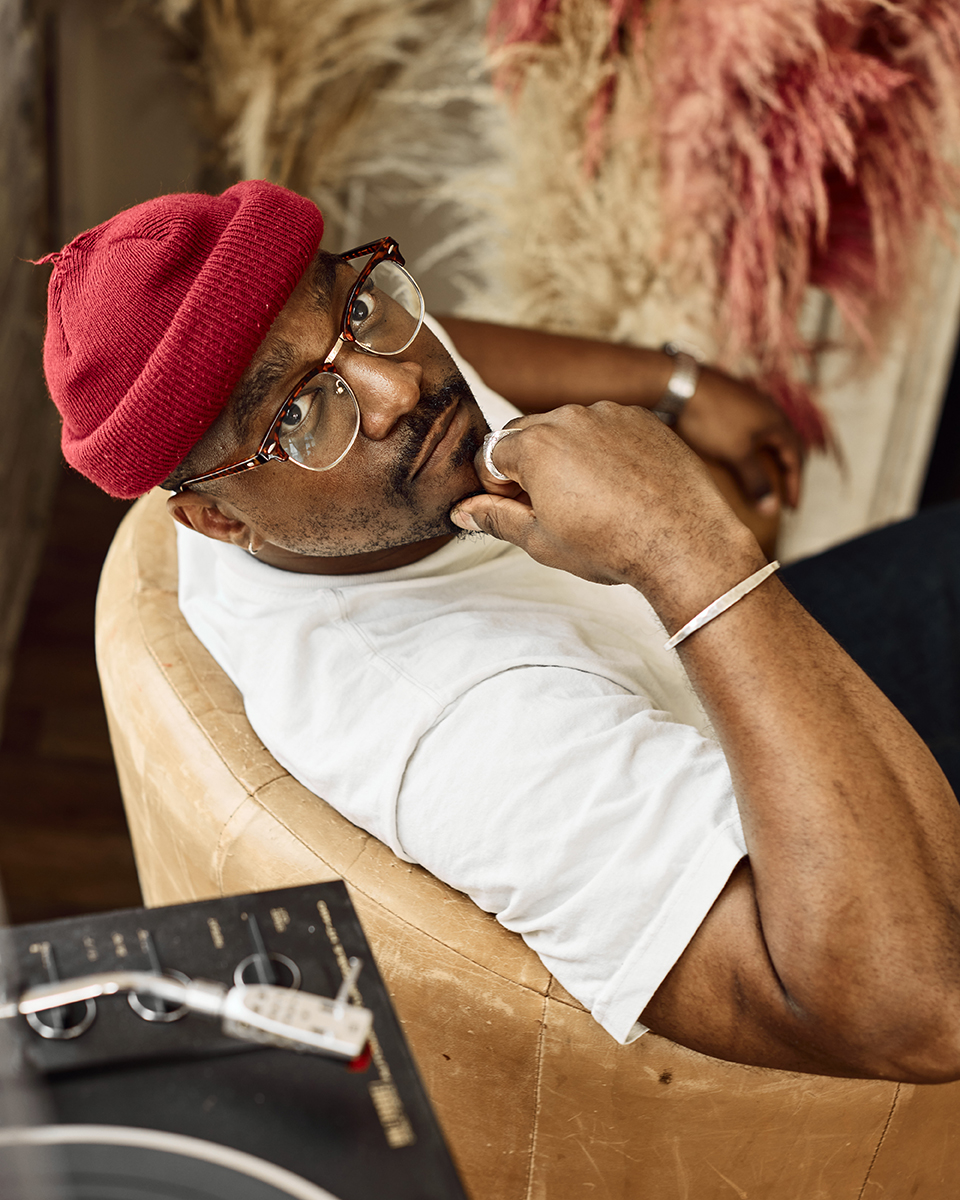
“That symbolizes a hard stop,” Charles says. “It took some abrupt, dramatic and traumatic stops before I got into this, so it’s a good reminder — an Easter egg to remember why I do it and how I started. There are pivot points that life gives you, and you can respond to or ignore them.”
Now 34 years old, he was born Trey Charles Horton in upstate New York and grew up mostly near Charlotte. The extent of his formal musical training was high school chorus, and his initial artistic path was acting. But that didn’t work out and he wound up working in restaurants. Then came one of those pivot points, a near-fatal 2019 car accident.
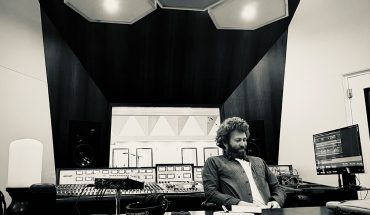
While he’d been playing guitar informally, music became a more serious pursuit after his recovery. He taught himself how to really play guitar and record, using what he jokingly calls “YouTube University” for training.
Shortening his performing name to Tre. Charles, he also took his first tentative steps toward music performance at karaoke bars and open-mic nights. He stood out right away, a musician whose influences ran from the offbeat R&B of Erykah Badu to the anthemic rock of Bon Jovi to the dreamy pop of the Cranberries records his parents played. An alternative rock, of sorts, contrasting ambient sonics with his husky croon.
“I always liked the lushness of big swells and reverb, music that evokes emotion,” he says. “The swelling reverb lushness is the easiest way for me to come to that. I always try for a bigger cinematic experience.”
Charles moved to the Triangle about five years ago with his partner, visual artist Mayanthi Jaawardena (the bike mural on an exterior wall of Raleigh’s Exploris Middle School is one of her works). They’re both making a go of it as full-time artists.
For Charles, part of that is live gigs. His recordings are one-man-band affairs where he plays and sings everything, but playing onstage takes other players. For his “Live After 5” show, he was backed up by Keenan “XOXOK” Jenkins on bass and drummer Carl Jenkins (no relation). Charles has come a long way since his first tentative show years ago in Charlotte, where he was accompanied by a friend playing piano.
“I did not know what I was doing,” he says with a laugh. “So I’d strum a chord, sing a line. Rough. But now the band thing is a whole new dynamic, because I’ve been used to doing everything myself. It’s an adjustment. I am making music as a form of therapy for me, to promote being more human and more present.”

This article originally appeared in the August 2025 issue of WALTER magazine.