This painter and muralist combines prismatic colors, bold lines and techniques like collage and cyanotype printing into her work
by Colony Little | photography by Joshua Steadman
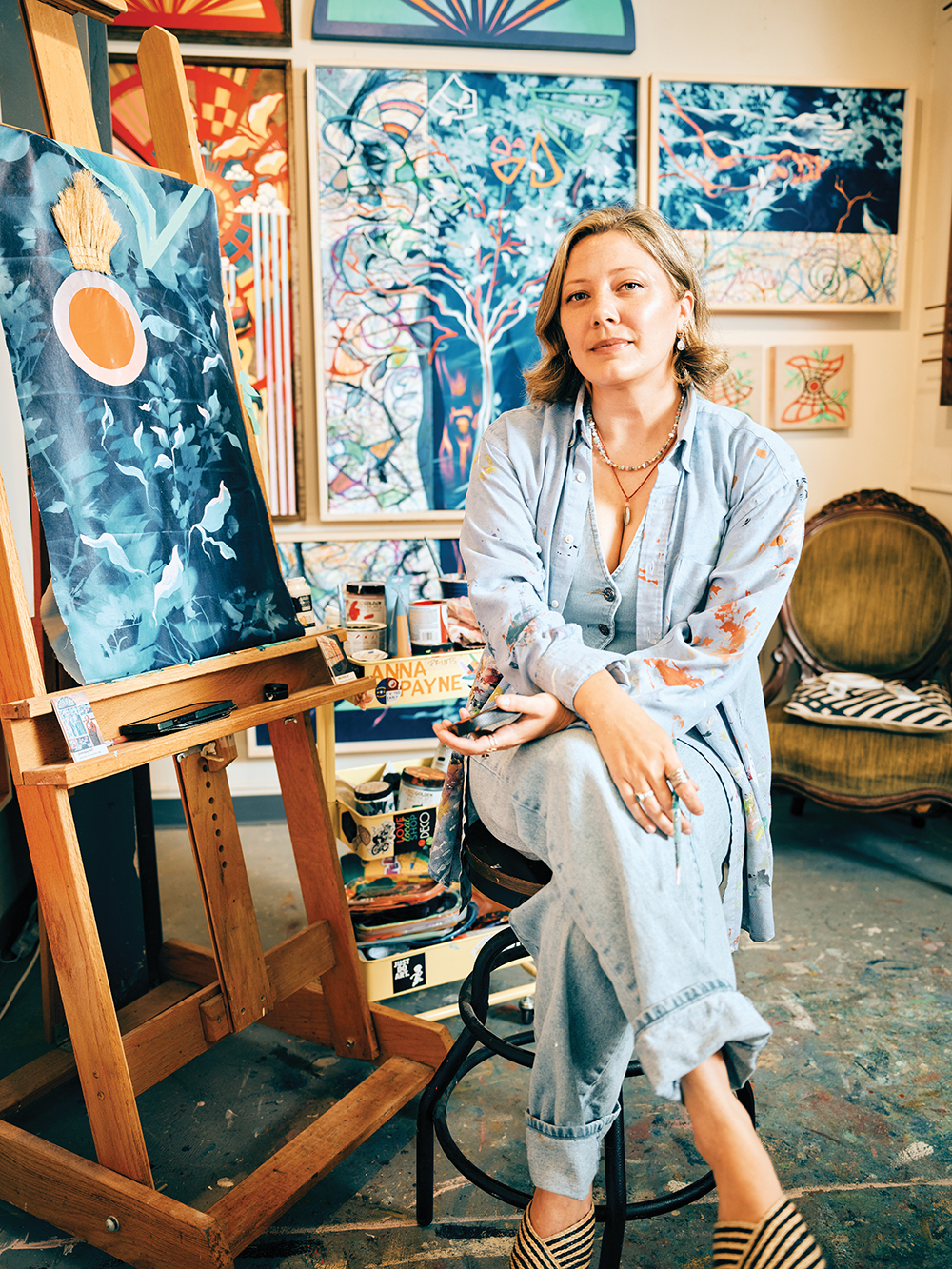
Murals have the ability to transform spaces — they can pay homage to the past, convey a sense of place and activate energy within the public sphere. Artist Anna Payne Previtte’s work does just that, combining fresh color, symbolism and bold geometric elements to engage its viewers. Payne Previtte painted her first mural in Gateway Plaza in 2019 along the walls of Mordecai Beverage Co.
There, bold stripes in alternating shades of blue and pink melded into tree trunks whose roots envelop the wall and surround a golden sun painted in gradient yellow. The style feels both new and a little retro, an appropriate flourish for a 1960s-era shopping center that was recently revitalized and now holds retail, restaurants and bakeries including Union Special, Fiction Kitchen and Mala Pata.
Another large-scale piece, titled Of the Same Vine, decorates the enclosure for the outdoor seating for Parkside Restaurant on the corner of W. Martin and N. Dawson Street — on view not just to diners, but to the tens of thousands who drive through this busy split before it turns back into NC Highway 401.

Striped hues of red, orange and green mimic the restaurant’s architectural details and iconic neon sign; multicolored, outstretched hands emerge from lush green vines. “I love the interplay between figure, nature and architecture,” Payne Previtte says. “I designed the mural to speak to our own intermingling as people as well as our innate connections to our surroundings and natural evolutions.”
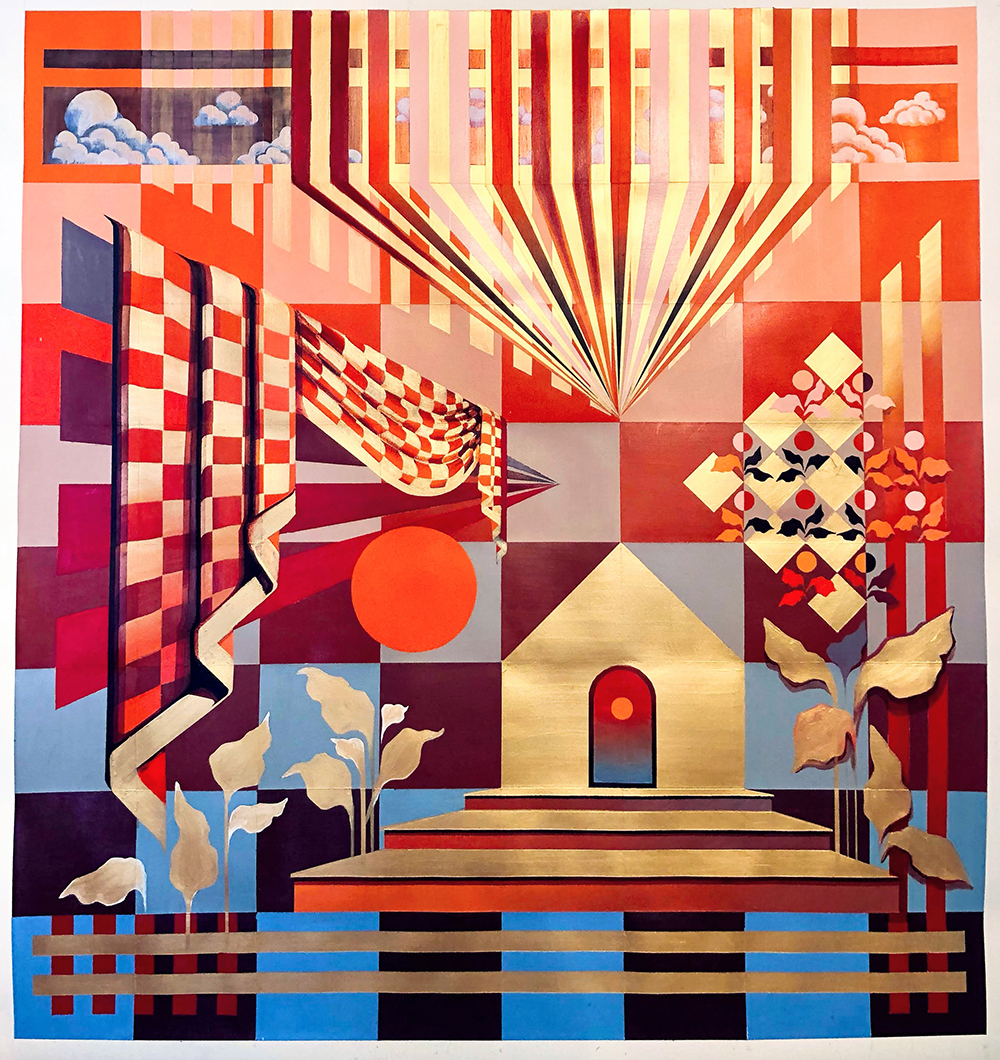
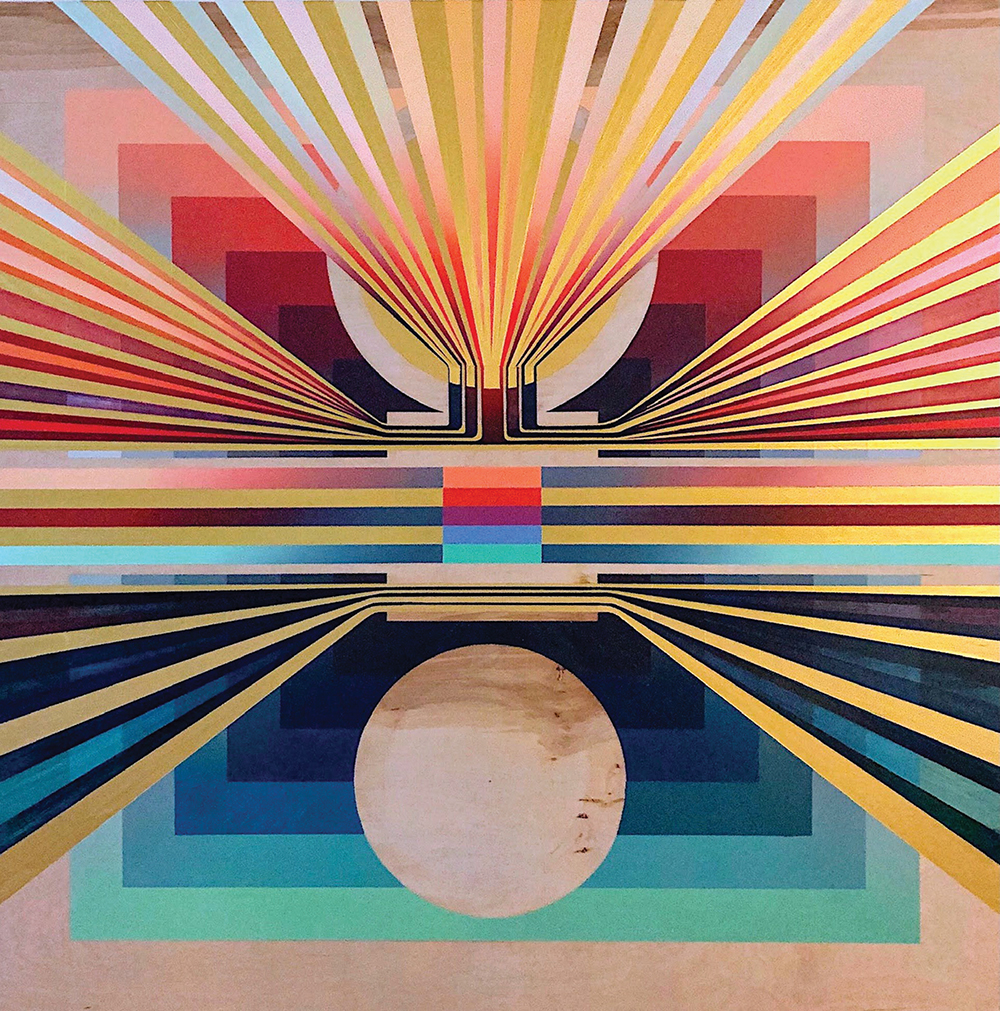
Both murals showcase some of Payne Previtte’s signature motifs: strong lines and hard-edged graphics that convey the prismatic properties of light. Often, multicolored light beams extend from a central point and radiate to the margins. Even in her smaller-scale work, like paintings, she frequently incorporates muralistic elements, allowing the bold lines from the canvas to extend onto the walls surrounding the work as part of an installation.

She recalls painting her first mural somewhere between grade school and middle school. “I was allowed to paint my room as a kid,” she says. “I think that might be one of the experiences that pushed me towards muraling.” Inspired by her older sister, who had painted her own bedroom wall with a small design, Payne Previtte wanted to make her own unique mark in her space. “I painted this big iron archway with a sunset in the middle; it’s very emblematic of what I do now,” she says.
Payne Previtte grew up in Greensboro and studied fine art and religion at the University of North Carolina at Chapel Hill, where she learned to incorporate multiple art forms into her practice, including hard-edge abstraction, collage and cyanotype printing. “I try to experiment,” she says. “I just barely tip over into mixed media, but at the very least, it’s postmodern in that I pull a little bit of classic figuration with constructivist modern abstraction.”

With her husband, she moved to Raleigh in 2018 and was inspired by its potential. “We found a house and I had a home studio, but as we grew roots, I really wanted to be immersed in the art scene,” she says. She started working at Gallery C and teaching classes, then heading downtown for First Fridays. “I was finding my path — actively seeking group exhibits, showing my work and making sure that I was in conversation with other artists,” she says. She had solo showcases at Trophy Brewing & Taproom and the Wake County Justice Center.
In 2023, she was awarded an Emerging Artist Residency at Artspace, a program where up-and-coming artists are granted free studio space for a year to create and collaborate with fellow tenants. “Artspace was a savior and a place where I could tap into a stable pipeline of opportunities,” she says. “Coming here helped me focus all of that energy.”
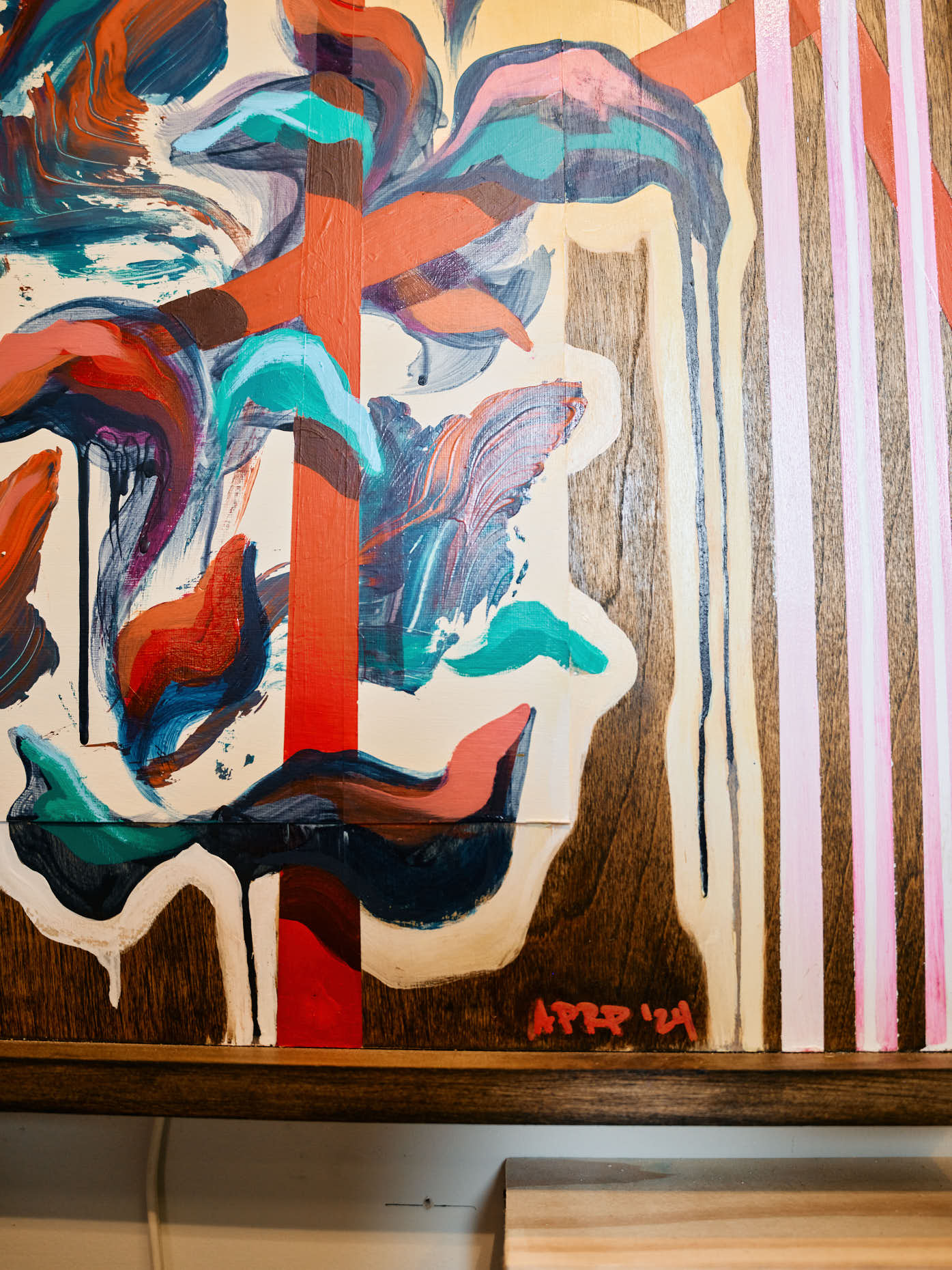
Over her year-long residence, Payne Previtte experimented with technical elements of her work, incorporating light sources and figurative forms like arms, hands and eyes into her paintings. In doing so, she expanded the artistic conversations and narratives she was conveying in the work, drawing the viewer’s eye with color. “I wanted to push this conversation of innovation, drawing from classics but not reinventing the wheel,” she says. In addition to the strong bands of color that evoke the patterns that come from concentrated light beams, she conceptually began to explore the way living beings are attracted to light itself.
One piece she created during her residency is Phototrophs in Sanguine Sun, a triptych painted on paper that she layered onto acrylic-painted wood panels. At the bottom of each panel, a set of hands rendered in oil pastels reaches toward polished golden orbs that contain LED lights. Beams of painted, multicolored light rays shoot from each source.
The piece was a byproduct of Payne Previtte’s examination of and experimentation with concepts in nature, specifically with the idea of phototropism, or the way plants grow towards light. She explains: “I really enjoy intuitive art making, so I started dragging ivy leaves through paint.” She began replicating the lines she created through her experiments in her paintings. “I wanted them to have kind of this trailing at the end, but the paper I started it on wasn’t big enough, and I wanted more space to explore the subject.” That’s how the wood panels were introduced into the piece, and later the orb-shaped light sources.
The work was loosely inspired by a visit to the Prado Museum in Madrid, where she experienced Hieronymus Bosch’s surrealist Renaissance-era masterpiece Garden of Earthly Delights, a triptych that depicts the Garden of Eden, Earth and Hell in three panels each loaded with figurative symbolism.
“I’m drawn to the Enlightenment, that was a huge inspiration for me in school, but I’m also so drawn to futurism,” she says. With her own work, Payne Previtte frequently explores the ideas of light and hope.
The leaf motif shows up frequently in her paintings. “I use it as a motif to talk about humanity,” Payne Previtte says. In Phototrophs in Sanguine Sun, the leaves are intertwined with hands on a blood-red base (“sanguine” meaning “of the blood”) and each panel has its own light source. “The hands are growing; some are more successful [at reaching the light] than others; it has this liturgical, expressive movement and posture and the light lifts the piece, like an ascension,” she says.
The religious undertones reflect her childhood experiences. “My family was very involved in a progressive, ecumenical and diverse church, so for me, religion was more in line with therapy and community,” she says. Through her work, Payne Previtte also seeks to evoke a visceral reaction from viewers that transcends religious beliefs. “I was trying to ask this question, what’s important?” she says. “If I’m going to make something that people are looking at, what am I going to try to tap into? I wanted to create a sense of warmth.”
Building on that communal ethos, throughout her residency Payne Previtte engaged her studio visitors in a form of call-and-response for another one of her pieces. “I was most excited about having a public-facing studio, and I wanted that to show up in the work,” she says.
For this collaborative work, she invited First Friday visitors to artistically respond to a prompt to draw a continuous line on paper. “I wanted them to focus and relax — I asked them to take a few deep breaths and respond to their environment,” she says. She was pleasantly surprised with how participants delivered their artistic responses through squiggles, lines and loops. She also noticed (despite a request to avoid representational illustrations) repeating symbols like faces, skulls, hearts and eyes.
“I initially planned to make a series of architectural paintings, and I thought people were going to respond to their physical environment,” she says. “Instead, people responded to their mental states and their emotional environment.” She changed the blank pages each month, and started to recognize seasonal iconography differences in what her guests drew.
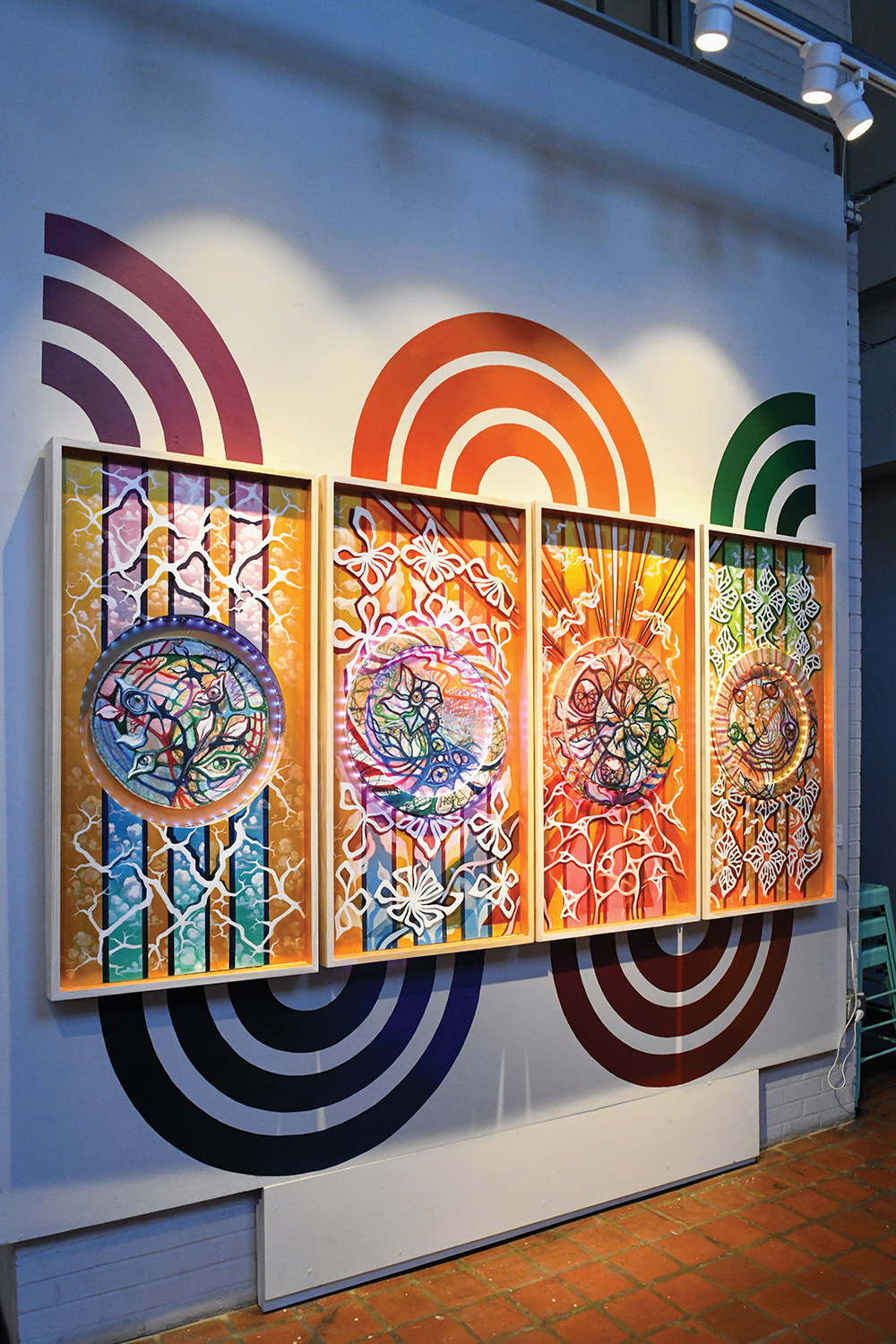
Using these drawings as a base layer in the work, Payne Previtte created a multipanel piece, titled Seasonal Sightlines, featuring four round portals lined in LED lights surrounded by painted leaves, flowers and rays of light depicting the seasons. When she displayed the piece at Artspace during her 2024 solo show Life Lines, Payne Previtte painted a series of retro-style rainbow waves with colors corresponding to the seasons within each panel. “They are the ebbs and flows of art making,” she says, reflecting on her residency.
After Payne Previtte finished her residency, she decided to continue working out of Artspace. “The lesson I needed to learn was confidence, and I think that that’s where the residency structure was very helpful,” she says. “Artspace has a legacy of resident artists; I feel honored to be a part of that conversation and yet still feel I need to live up to it.”
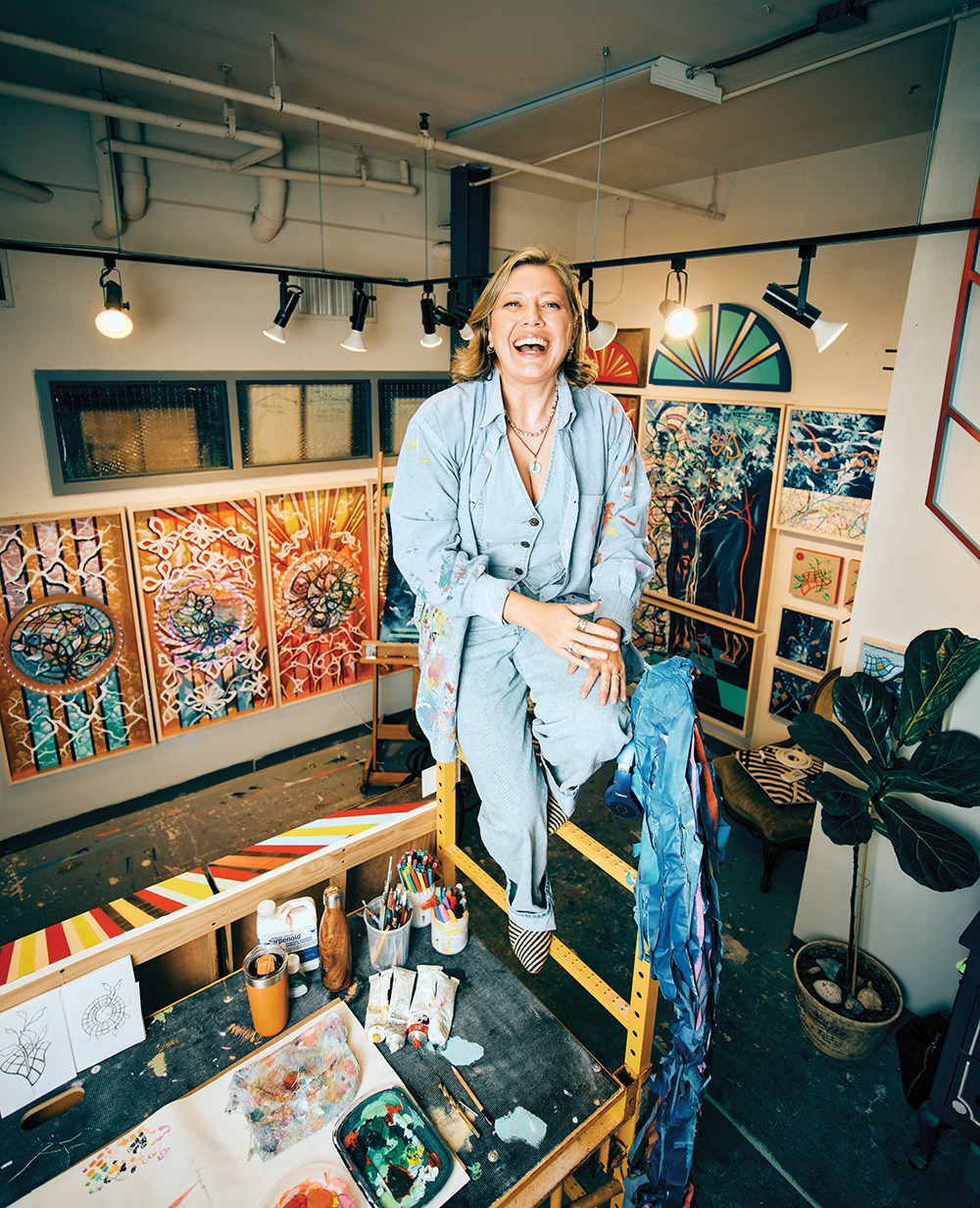
In her brightly lit studio, a few of her completed works are displayed, embellished with sharp lines and sinewy vines that extend beyond the paintings onto the walls. Collectors of her work are drawn to the energy she creates through her painting. “Anna’s use of vibrant colors and intricate patterns instantly attracted us to her work,” says Jedidiah Gant of Raleigh Murals Project, who engaged Payne Previtte for the Mordecai Beverage Co. mural back in 2019.
Afterwards, he and his wife commissioned a piece for their own home. “We had open wall space facing east that was screaming for art, so we asked Anna to paint a rising golden sun surrounded by a burst of colorful rays,” he says. “Our visitors regularly comment on how dynamic the piece is.”
Recently, Payne Previtte’s painting Overflow was acquired by Visit Raleigh for its lobby. “I’m quite proud of that piece and greatly enjoy placing works in public spaces, especially those that value creativity and like to support local,” she says.
Payne Previtte is spending quality time in the studio taking stock in her work and career. “I am greatly enjoying the evolution of style and purpose this year has brought to my new work. I’m hoping to go into next year with a poignant and representative body of work that focuses on themes of responsibility, accountability and humanitarianism — all while still existing in a celebratory and positive creative space.”

This article originally appeared in the September 2025 issue of WALTER magazine.