The creative couple behind Forested Way have developed a niche artistic style that uses reclaimed materials to celebrate their love of nature
by Colony Little | photography by Joshua Steadman
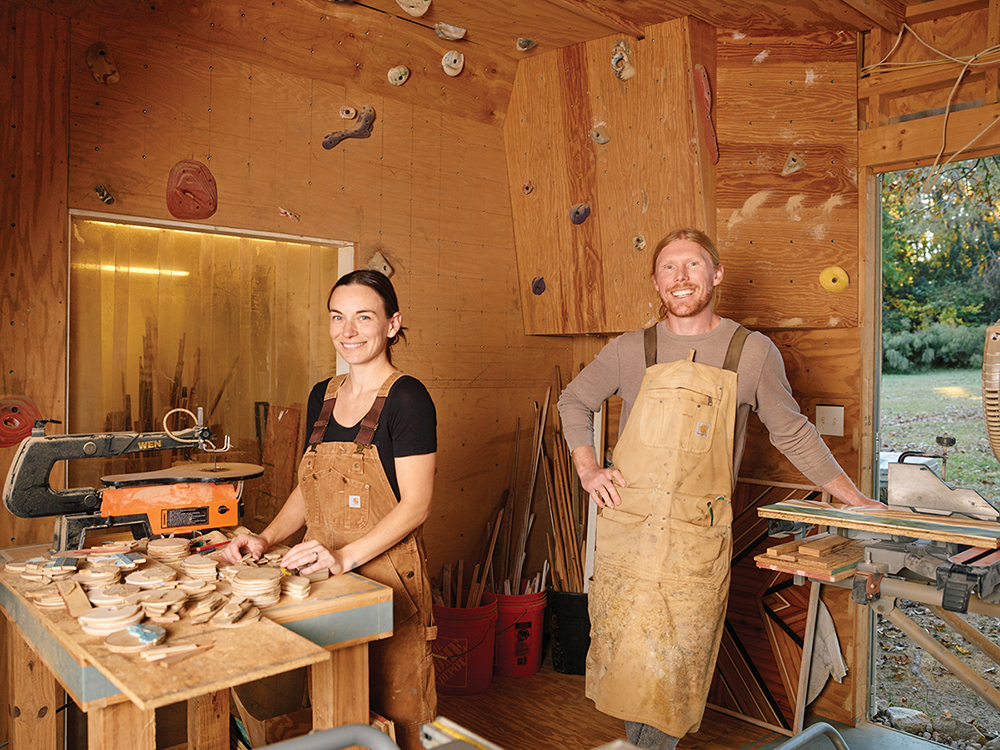
Brian and Tracy Frerichs share a passion for the outdoors that has blossomed into a creative partnership. The two run Forested Way, a woodworking studio in Knightdale, where they make art — mostly landscapes — from upcycled wood. “Honestly, we just love the mountains. We’ve painted them, photographed them and climbed them,” says Tracy. “So when we started woodworking, it just seemed like a natural direction to take.”
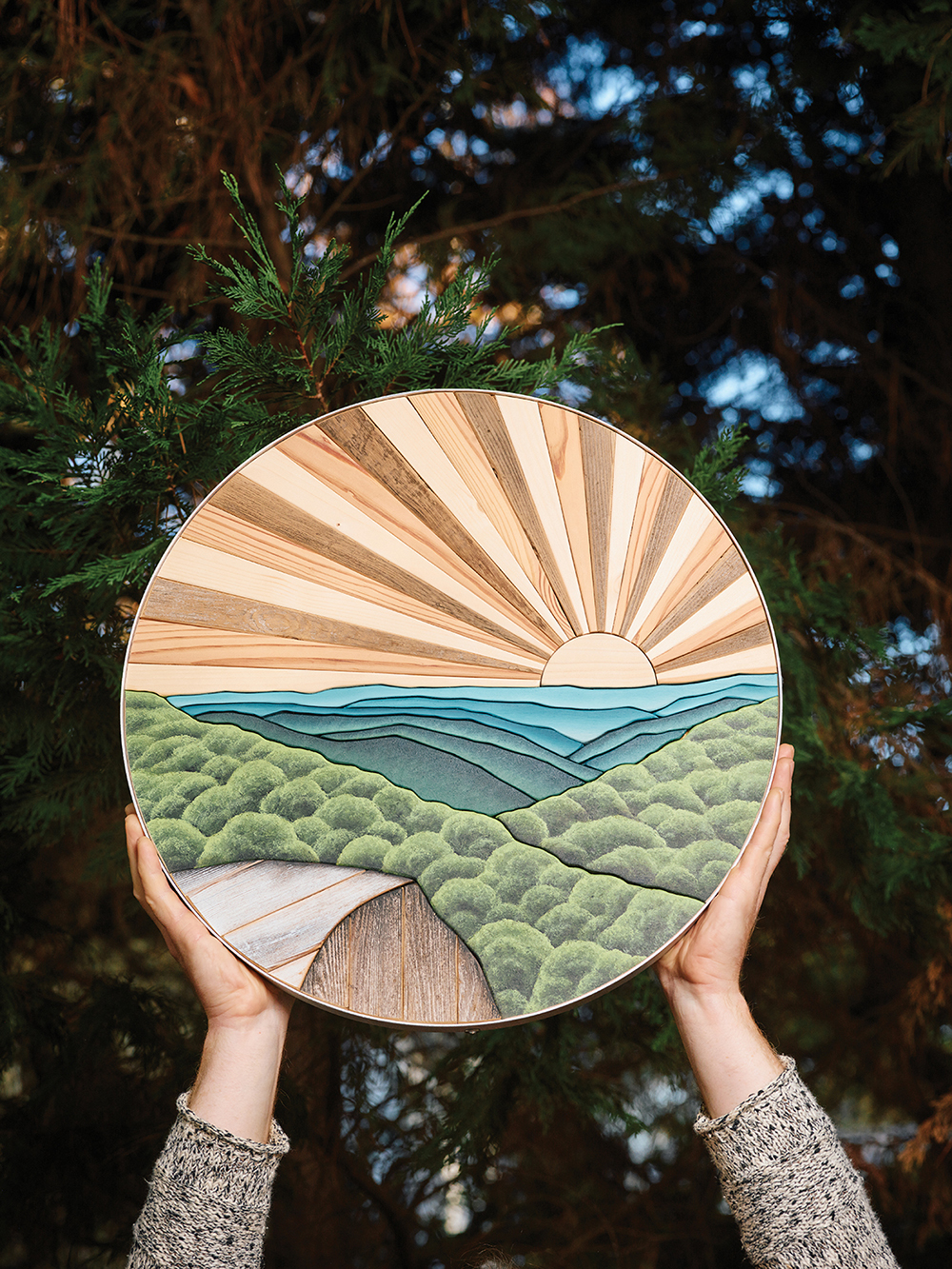
Among the landmarks they have portrayed in their artwork: the Blue Ridge Mountains, the coastline of Acadia National Park in Maine, the Grand Tetons in Wyoming and Half Dome in California. “We choose the locations based on either that we know this area is incredible and beautiful and we love spending time there, or the area looks incredible and beautiful and we want to go spend time there,” Tracy says.
For Brian and Tracy, who are both originally from New Jersey, this endeavor is a natural byproduct of their relationship — but the path unfolded somewhat unconventionally. Neither was an art major (Brian studied economics; Tracy studied sociology and German), and after college, they both worked in noncreative fields.
But Brian’s parents had a paint-and-sip art studio, where he began painting and teaching classes. The two met at a rock climbing gym while Tracy was in graduate school.
Early into their relationship, Brian learned about Earthship Biotecture, a program that offers education courses and builds sustainable, off-grid homes out of recycled materials. “I’d decided
I wanted to go try it out,” Brian says.
“So I asked Tracy, do you wanna come?” For Tracy, who was experiencing some career wanderlust of her own, the answer was an easy yes. The two spent a month backpacking through South America, then another month on Easter Island, off the Chilean coast, where they worked with the Earthship Biotecture people to build a music school.
This trip sparked a mutual interest in upcycled materials and earned them some carpentry skills, too. Back home, the two opened their own paint-and-sip studio and Brian started experimenting with woodworking, first making picture frames from reclaimed wood. “We started really basic,” says Tracy.
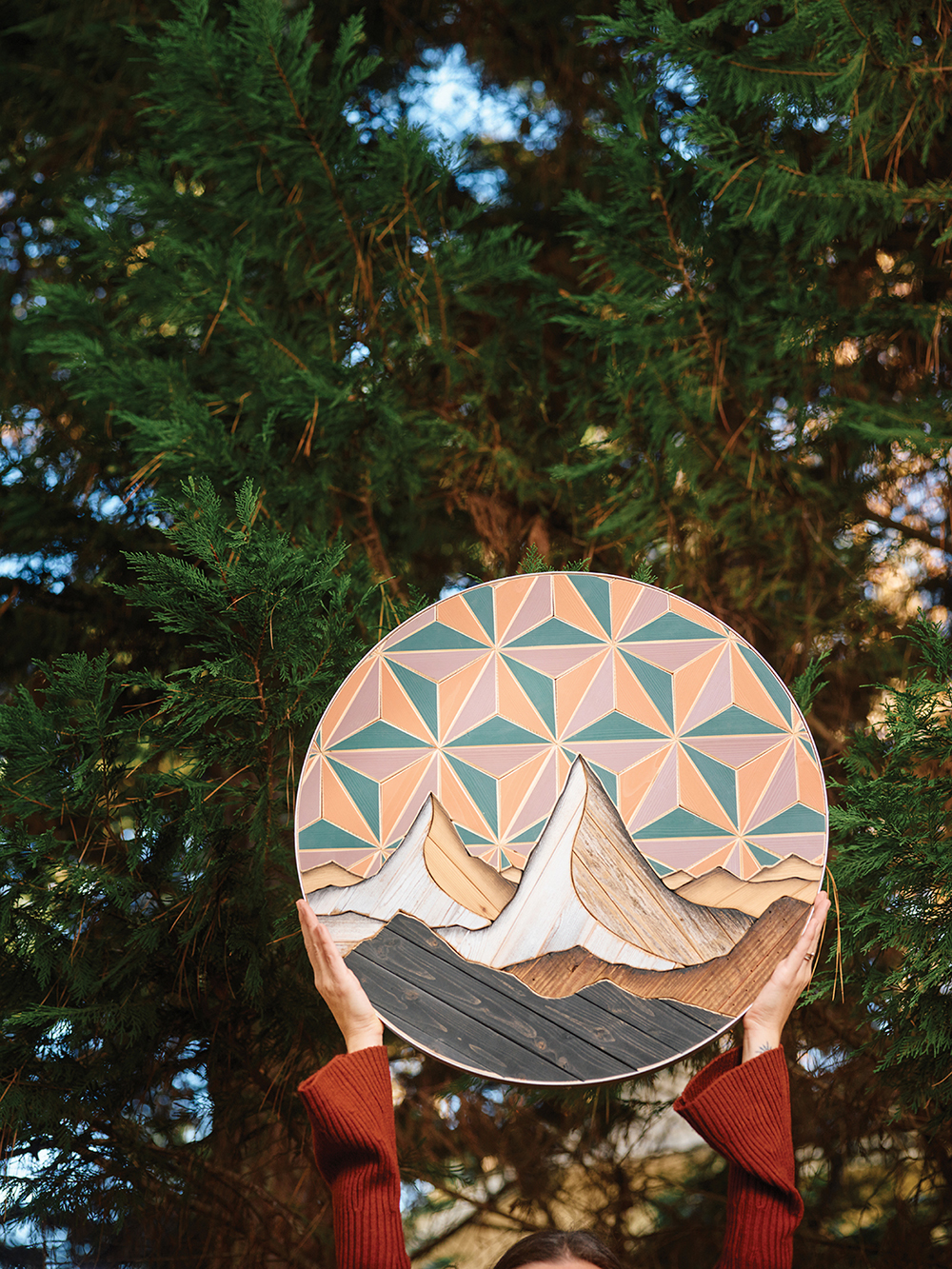
From there, Brian branched out to building furniture pieces, including the tables and benches the couple used for their wedding reception. Encouraged by positive feedback from their guests, the couple started experimenting further, making more artistic pieces. Their early works included wooden mountain and skyscapes made by nailing together painted cubes and trianglular prisms.
As the two got more skilled with woodworking, so did the sophistication of their pieces, with Brian using his painting skills to fill out the scenes. “Wood lends itself really well to depicting rock — especially a really silvery piece of wood — so it makes sense within a greater landscape,” Tracy says. Adds Brian: “I like the hybrid of painting and woodworking, it gives the work so much more vibrancy and depth.” They started doing landscapes on a commission basis, often depicting the location where a couple had gotten engaged. “Trying to recreate the magic of those places was like bringing a little piece of them home,” says Tracy.
By 2017, they had enough requests for work that they created a name for their company, Forested Way, and started making small works to sell in craft fairs and markets in New Jersey. “There was a brief period of overlap where we were running the studio and trying out art markets,” says Brian. “We started really small because we didn’t know if we could sell enough to make it worth it.”
They lived with family and friends while they honed their craft and found the balance between identifying the right shows and creating enough work to offset expenses. In 2018, a friend suggested they sell their work at Artsplosure, Raleigh’s long-running downtown arts festival. “It blew us away, there’s nothing like it in the Northeast,” says Tracy. “It was the best time — people were having fun and there was so much incredible talent.”
They loved the community so much that in 2019 they moved to the area, first crashing with friends in Wake Forest before settling into their own place in Knightdale, a fixer-upper with a small shed in the back. Unfortunately they bought the home in early 2020. “We got notified that our offer was accepted the same week that everything shut down,” says Tracy. “All of our shows for the whole year were canceled.”
But the couple found a silver lining, using the extra time to transform the shed into a proper woodworking shop, including adding large barn-style doors to provide adequate ventilation and help manage the copious amounts of milling sawdust they produce. “We turned it into a cool workshop,” says Brian. “It’s an easy commute, we just walk out back to work.” And they were still able to sell their art online. “I couldn’t believe how supportive art lovers and customers were in seeking out small businesses to support during that time,” says Brian.
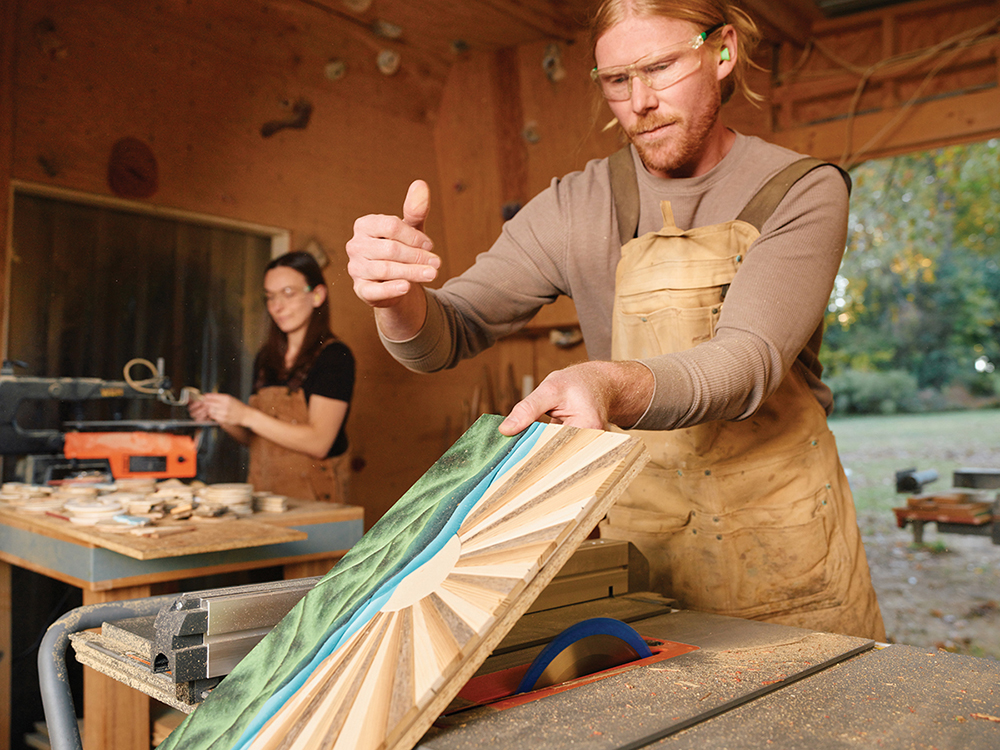
Now, Forested Way is known for its textured wooden recreations of mountain landscapes, which play up the natural grain and coloration of reclaimed wood that’s cut, shaped, painted and assembled, like puzzles, into works of art. Often starting from a photograph (plus additional research into the location), Brian will sketch the design onto a piece of thin plywood. “We use a projector when working with specific landmarks so that everything is the right proportions, but we really have to interpret the photos into lines that make sense with our style of work,” says Tracy.
They then figure out how to simplify the design into pieces before hand-cutting each piece out of the plywood to use as a stencil for the wood they’ll use for the final piece. “For rock faces, for example, we’ll orient strips of wood vertically for a cliff face and diagonally for slopes,” Tracy says. They then puzzle the pieces back together, and Brian uses acrylic paint to fill out colorful details like trees, water or sky; they’ll also stain the natural woods to bring out the grain.

Together, the pieces create naturalistic renderings of rolling hills, distant mountainscapes and breaking waves. The dark, visible seams between each piece give the final scene its puzzle-like appearance while enhancing its natural texture and depth. They source their wood from a variety of places, but much of it is old cedar fencing they pick up when someone installs a new fence, or extra flooring left over from a construction project — materials that might otherwise be trashed. “Many of our local sources have just been nice people at art festivals who like our work and happen to have some old wood lying around,” says Tracy.
These days, the couple is back on the fair circuit, attending roughly 20 shows per year, building the business and creating strong friendships with fellow craftspeople. “We still meet up with some of our friends from the early shows to camp together. It’s a good community of people,” says Tracy. When they travel, it’ll inspire ideas for new work — keep an eye out for a scene from Iceland — and conversely, commissioned pieces can inspire their plans. “We just did a Mount Kilimanjaro commission and now we’ve got an Africa trip happening next year!” she says.
But one of the most meaningful byproducts of making this sort of art has been its ability to connect them to others. “One of the coolest things about having these pieces hanging in our tent at shows is hearing everyone’s stories,” says Tracy. “We had a Monte Fitz Roy piece hanging this spring and a family at the art festival had just gotten back from there — and another couple, who ended up purchasing it, got engaged there!”

This article originally appeared in the December 2025 issue of WALTER magazine.