Wake County Smart Start helps children and families thrive through early childhood education and other support
By Rachel Simon

When Gov. Jim Hunt established Smart Start in 1993, it was with quite a lofty goal: to give every child in North Carolina access to the resources and foundation needed to start kindergarten ready for success. Wake County Smart Start (WCSS), which celebrates its 30th anniversary this year, annually serves over 40,000 children, providing essential tools like early education and health services not only to kids, but also to their teachers and families.
“Smart Start addresses the whole child,” says executive director Gayle E. Headen, who joined WCSS in 2019 and supervises the organization’s annual allocation of over $12 million to families and child-centric programs. “If you really want to support young children effectively, then you have to support the entire ecosystem, and that is exactly what Smart Start does.”
When WCSS first launched, there was one primary area of focus: making sure that local kids’ pre-kindergarten learning environments were of the highest quality. Throughout the late ’90s and early 2000s, the nonprofit’s staff used a rating system to measure the strength of the country’s pre-K schools and programs, working closely with teachers to hone their learning materials and strategies until they achieved a five-star rating. At the same time, WCSS collaborated with other country agencies to expand access to free pre-K for income-eligible North Carolina families (today, over 85 percent of qualifying children have such access) and increase wages for public school teachers. Not long after, the nonprofit debuted its own no-cost, county-funded “ThreeSchool” program for 3-year-olds, which now serves over 300 children.
The organization’s unique growth and impact — no other North Carolina county has a “ThreeSchool” program, for instance — set an early standard for other Smart Start partnerships to meet that still remains, says Alex Livas-Dlott, the WCSS director of strategy and impact. “It’s a model that I know other counties look up to,” she says.
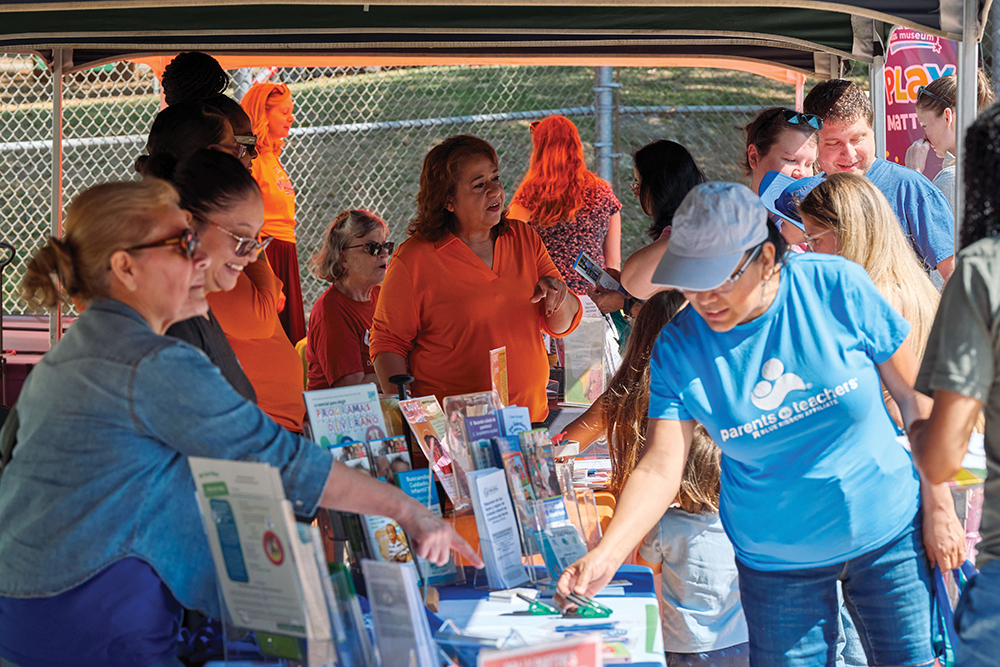
In more recent years, WCSS has broadened its purview to directly support families across Wake County, largely via Wake Connections, an intake system that refers parents to free or low-cost services ranging from prenatal care to early literacy. There are also options like at-home parent support groups, through which families struggling with the mental load of parenting young children can meet with professionals partnered with WCSS.
“This county is rich with resources, but for a parent, it can be very daunting to know what’s available and how to get connected,” explains Headen. “Wake Connections is a way to help simplify and streamline things.”
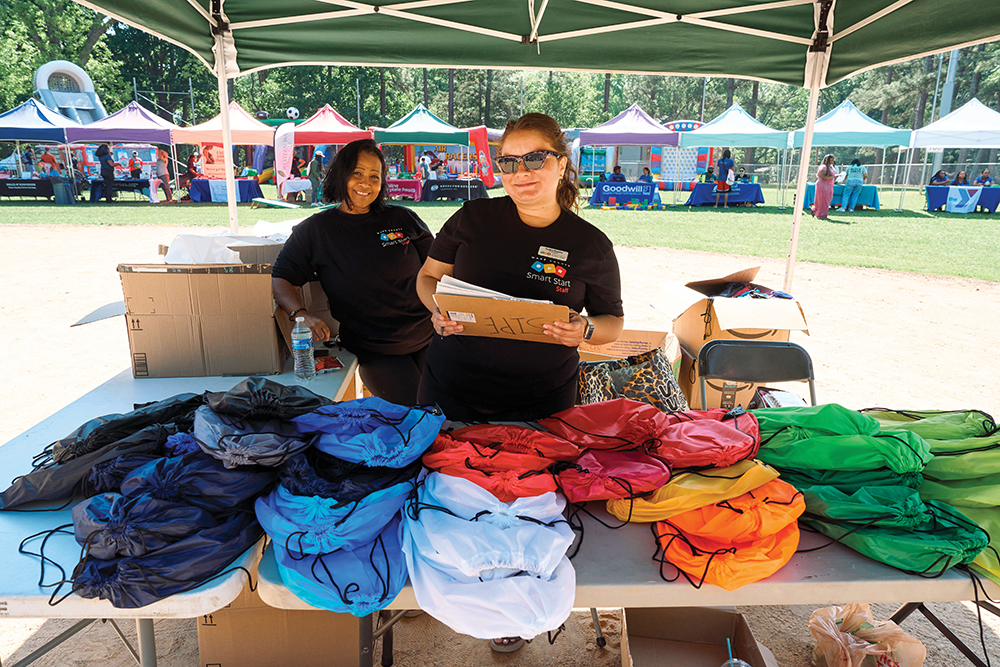
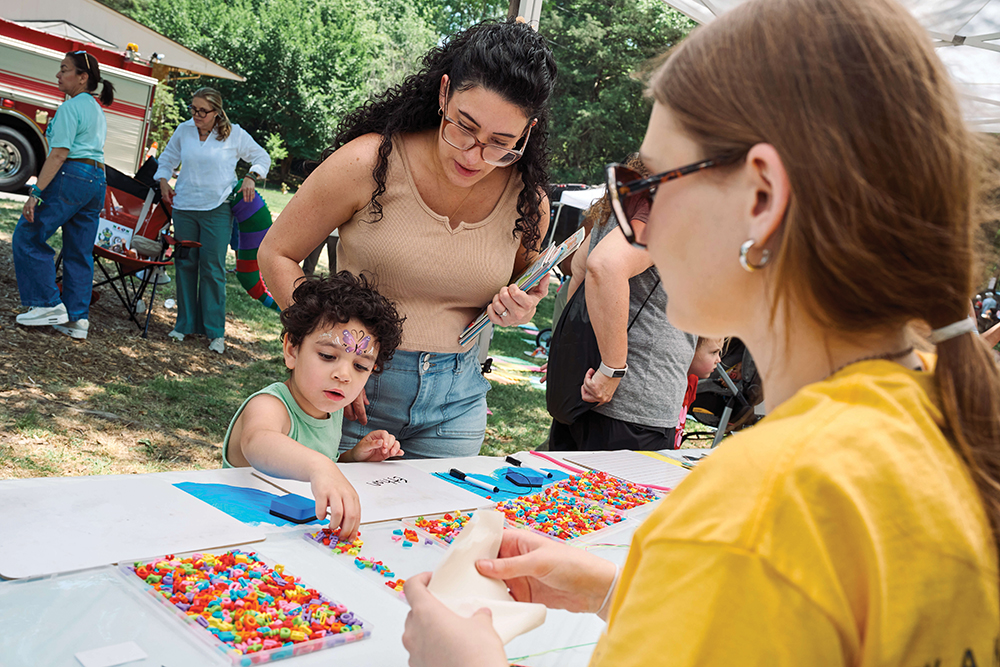
As WCSS’ programs have expanded, so has its community. With the help of a growing staff and numerous volunteers, much of the organization’s efforts in the last several years have revolved around bettering children’s health, whether by educating parents on nutrition or by building gardens at childcare centers. At its annual WCSS block party, which typically takes place in May, representatives from the county’s food banks work alongside the nonprofit’s staff to hand out free meals to thousands of attendees; there are also a number of farmer’s markets and nutrition workshops held throughout the year, geared at both adults and young children.
“We’re making investments in people all along the course of their lives,” says Headen. “But if we make these investments at the beginning, the health outcomes are far better.”
Those investments aren’t possible, however, without ample funding. And while WCSS benefits from a solid array of donations, government budget cuts to early education programs have forced the nonprofit to adjust its strategy. Corporate sponsorships have become a higher priority. “We’re helping businesses understand that early childhood education is the most important and critical investment you can make,” says Headen. WCSS has also begun working on establishing an endowment that would “ensure our viability and sustainability,” says the director, “regardless of what’s happening at the federal or state level.”
For parents like Destynee Edgeton, the importance of WCSS can’t be understated. When the corrections officer moved to Raleigh with her 5-year-old daughter, Kalanee, she wanted her to learn among peers but struggled to afford daycare. After a friend recommended WCSS, Edgeton enrolled Kalanee in one of the nonprofit’s free pre-K childcare centers. In the year since, she’s been thrilled to see her daughter develop a “love for learning” and “thrive in the classroom.”
“I was looking for a community that actually cares and was going to help her not just for kindergarten, but throughout life,” says Edgeton. “It reassures me that they’re building a strong foundation for her. A future.”

This article was originally published in the September 2026 issue of WALTER Magazine.