A ferry ride to Cape Lookout National Seashore reveals lighthouse views, a historic Coast Guard station and North Carolina’s maritime past.
by Jesma Reynolds
photography by Madeline Gray
A bird’s-eye view of Cape Lookout National Seashore shows a hook-shaped island that runs along North Carolina’s coastline. In the elbow of the hook lies a naturally protected harbor that has sheltered boats and ships for centuries.
What’s noticeably missing from this barrier island is the lack of any real human development. This 56 miles of wilderness has remained untouched, most recently due to its protected status established by Congress in 1966. Today it remains accessible only by private boat or ferry.
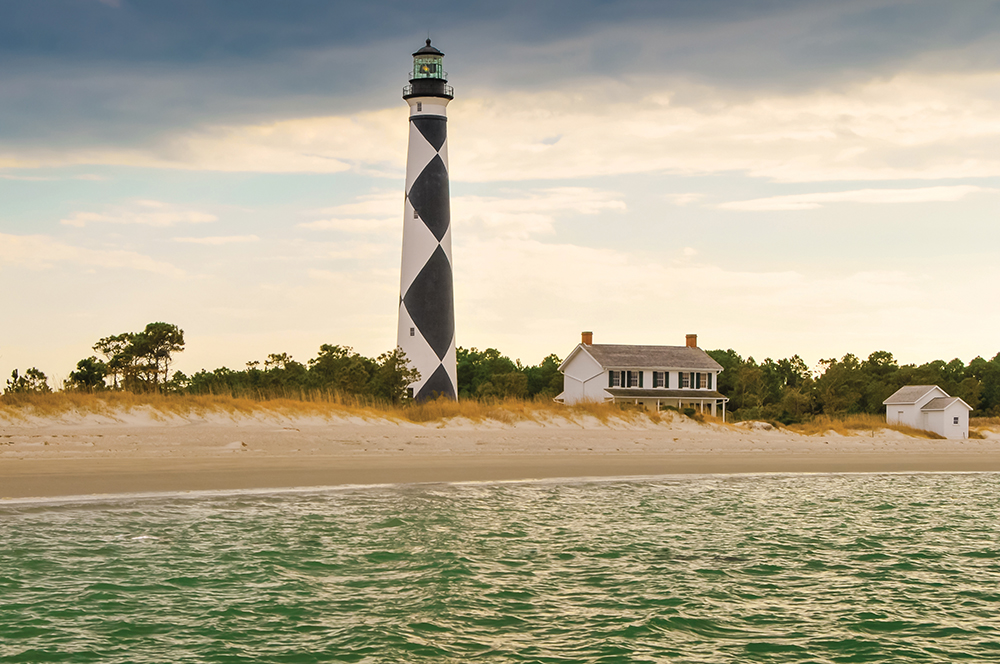
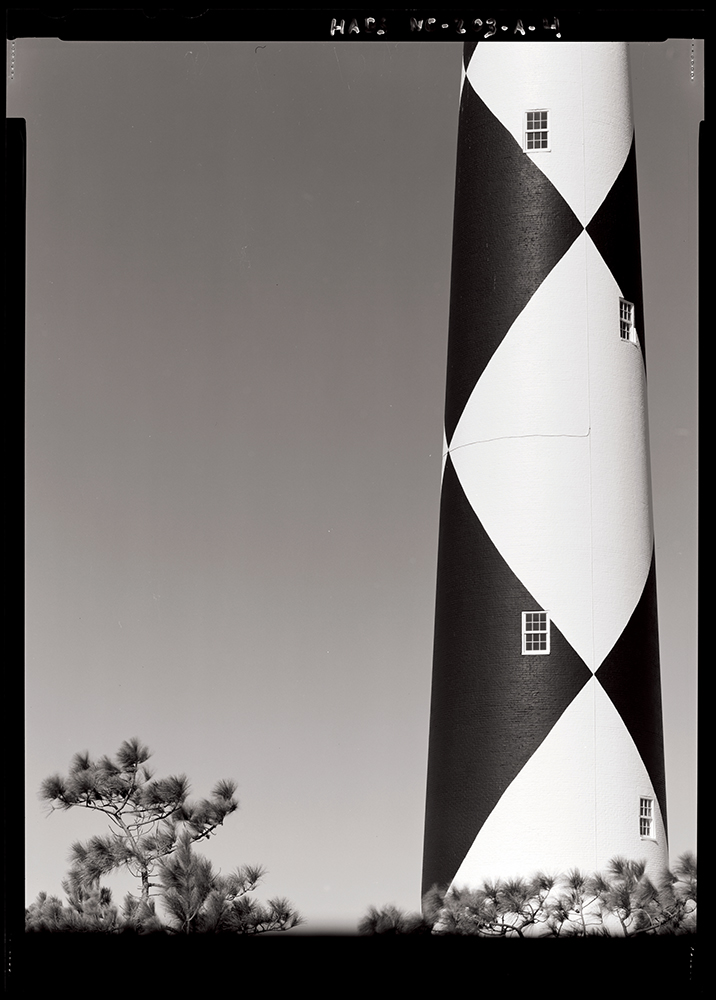
Getting there is part of the adventure. The best way for visitors to travel is aboard the Island Ferry Express from Harkers Island. The 25-minute trip across Back Sound evokes the clear turquoise waters of the Caribbean, but the sight of the iconic “Diamond Lady” lighthouse rising 163 feet above the island quickly dispels any confusion about one’s current location.
Two miles south from the lighthouse is the Cape Lookout Coast Guard station. Completed in 1917, the classic clapboard structure and adjacent galley once housed guardsmen who watched for ships navigating Cape Point, known by sailors as Promontorium Tremendum (Horrible Headland). Shallow shoals that extend up to 16 miles offshore often snared unsuspecting vessels, leading to dangerous search-and-rescue missions and earning high respect for the guardsmen who braved the treacherous waters. Many of the guardsmen hailed from the local fishing communities of Harkers Island and Beaufort, passing their knowledge of the shoals and pride in service to younger generations. The station also served as a vital outpost for anti-submarine patrols and merchant ship rescues during World War II. Consolidation within the National Park Service led to the station’s closure in 1982, and for the past 44 years it has remained vacant.
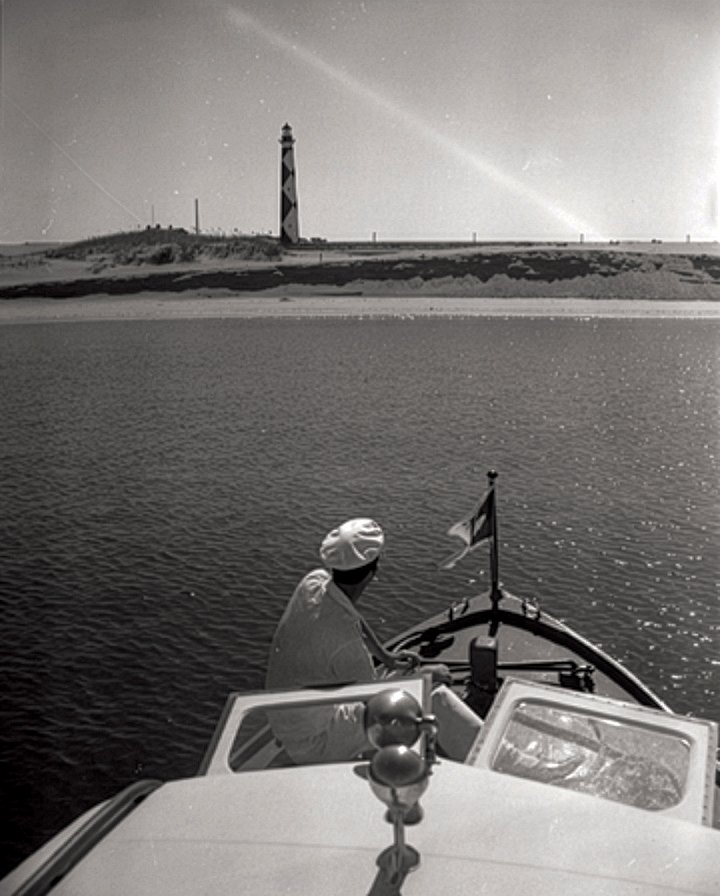
But now, work is underway to breathe new life into the historic site. The Cape Lookout Foundation, a nonprofit founded in 2022, secured a long-term lease with the goal of restoring it as an educational and recreational hub for day trips and overnights. It’s a project 20 years in the making.
For board members Mason Williams and James H. “Bud” Doughton of Raleigh, trips to the Cape were part of their upbringing. They remember free-range summers surfing, fishing, camping and, as Williams recounts, “messing around in small boats.” So wedded was Doughton to the Cape that from 1974 to 1977 he crewed for his cousin Capt. Josiah Bailey on the Diamond City, the only two-masted sailing passenger ferry in the country.
Fellow foundation board member Tom Coxe also worked on the ferry. He and Doughton got to know the guardsmen stationed on the Cape. “A lot of the guys came from down east. They were real seamen who understood how to rescue,” says Doughton. He and Coxe would stop by the station house to shoot pool, play basketball and swap stories.
Although it had been a national park since 1966, there were still summer shacks inhabited by locals through the 1970s. That led to a vibrant seasonal community — square dances at the Coca-Cola House, and trading of goods and fish tales at Les and Sally’s infamous island store. But as the cottages were shuttered and village life came to an end, a new era of undevelopment ushered in. In 1982, search and rescues ceased, and the Coast Guard station was transferred to Cape Lookout National Seashore. Seven years later, it was listed on the National Register of Historic Places.
Keith Rittmaster — a marine biologist, conservationist and dolphin expert, as well as the executive director of the Bonehenge Whale Center and natural science curator for the North Carolina Maritime Museum — saw an opportunity in the late 1980s to use the vacant Coast Guard house as a research and education field station, powering it with solar to help teach about sustainable energy. Collaborating with the maritime museum in Beaufort and in partnership with NPS, his immersive programs, typically 30 days, allowed college and post-grad researchers to study sea turtles, dolphins and other marine life in an unadulterated environment. “It took no effort to blow people’s minds,” Rittmaster says.
During that time, the Doughton and Williams families participated in an experiential overnight on the island. “Keith made science come alive,” Doughton says. Through dolphin sightings, stargazing, observing bioluminescence and listening to marine life through a hydrophone, the two families left the experience assured of what they already knew: This barrier island wasn’t barren. It was a natural treasure.
After Rittmaster’s program on the island shuttered in 2008, Doughton began trying to lease and reactivate the Coast Guard station to share it with a larger audience. It was a lengthy process. “Pretty much everybody on the [foundation] board knew from the beginning what we were trying to do,” Doughton says.
Cape Lookout’s park superintendent, Jeff West, who was appointed in 2017, recognized that the group was serious. He helped the group navigate the beaurocracy of the federal government and stressed the importance of pulling their weight financially from the start. He’d seen too many well-intentioned projects fail because they were counting on future revenue.
In July 2024, the foundation’s dream to share this natural treasure with the wider world was approved when the NPS granted a 20-year lease, recognizing their model as financially sound, with the programming expertise to succeed. Williams chairs the nine-member foundation board, all of whom have personally donated to the cause. Still in their private phase, they are well over halfway to reaching their $1.8 million goal. As executive director, they’ve brought on Garry Brown, the former activities and facilities director at camps Sea Gull and Seafarer in Arapahoe. Brown says this new role is a personal dream realized.
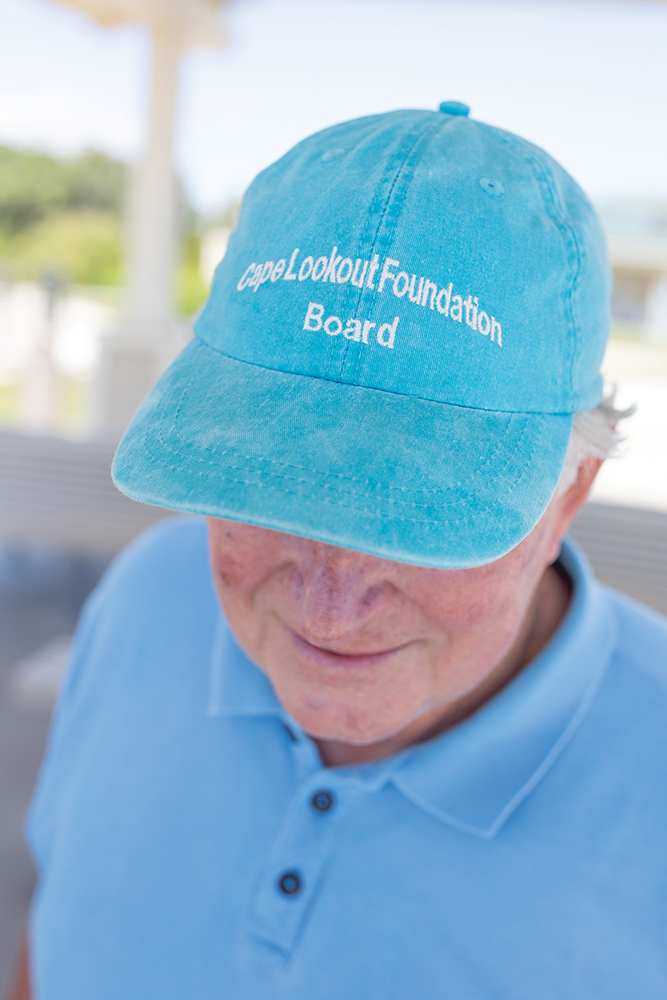
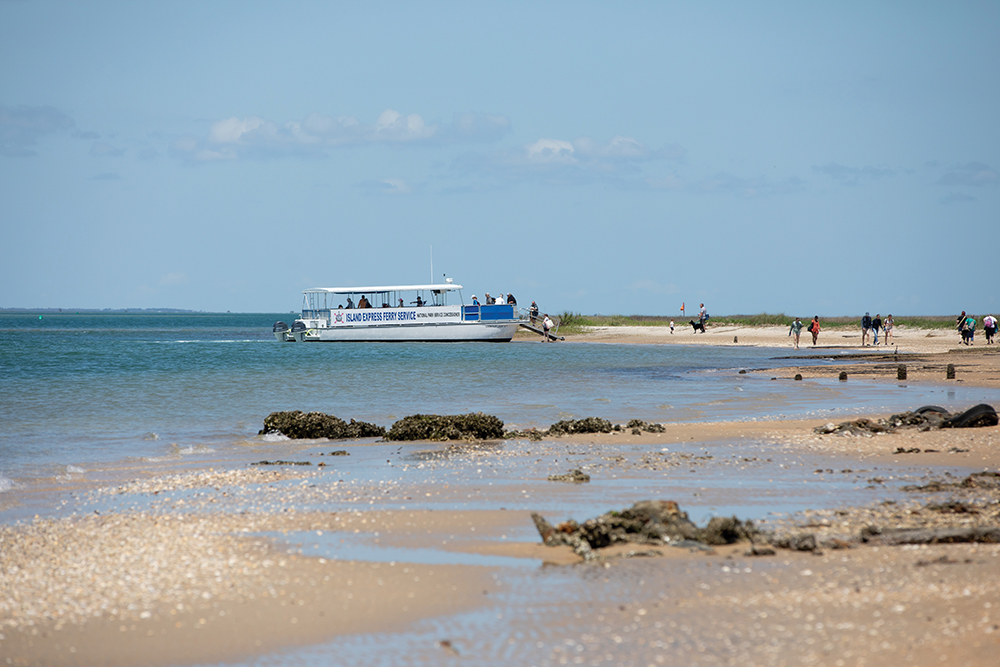
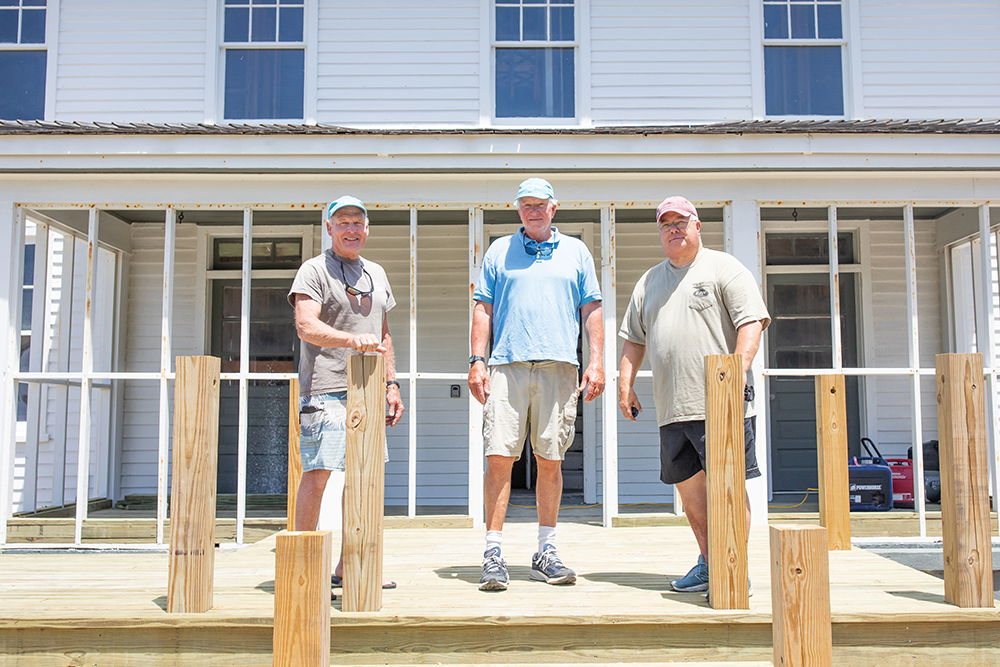
A major programming focus will be introducing the Cape to local youth who have never had outdoor or nature experiences. The foundation plans to support the Boys and Girls Club in Morehead City and afterschool program The Bridge Down East on Harker’s Island. They’ll also partner with the Park Service, which already hosts school groups from as far away as Greensboro — almost 100 kids a day — during the summer. In addition to learning about the ecological wonders, there are plans for maritime history lessons, fishing, boatbuilding workshops and stargazing at this certified International Dark Sky Park.
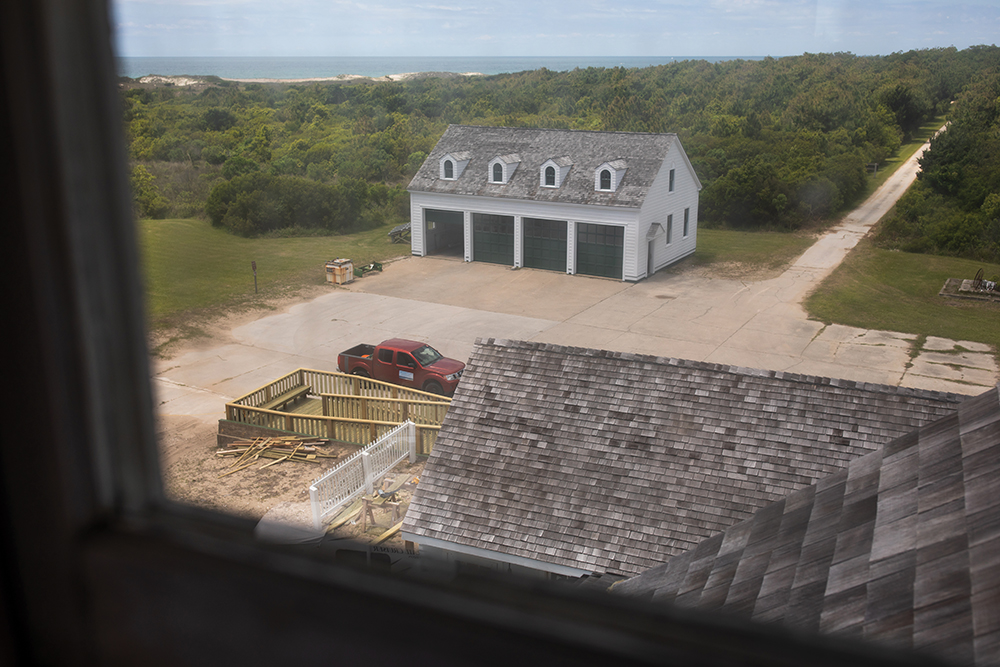
Williams and Doughton are also spearheading the station renovation, overseeing the logistics of bringing the 2,000-square-foot structure and adjacent galley up to code and supplying power — a mix of off-grid solar and a gas generator — for a very 21st-century necessity, air conditioning. Every single material that goes into rebuilding has to make the journey over by ferry. By the time supplies reach the station, they’ve had eight to 10 touches, according to Harkers Island resident Patrick Hallet, who is lending his carpentry skills to the project.
Local support has been strong. Rittmaster stands ready to advise and teach about marine life. Carteret Community College is installing fish tanks in the refurbished basement for the study and rehabilitation of marine mammals and fish species. The local Lowe’s has provided building materials at cost. Board member Coxe, whose family business is sawmilling, donated all the lumber. When a Newport deputy sheriff learned that the group needed help removing construction waste, he organized friends and family to volunteer their Saturdays hauling trash bags of debris back to the mainland, loaded by hand onto a flattop ferry provided by one of the local captains. All told, 30,000 pounds were removed.
Judging by the pace of progress, Williams expects pilot programs to commence later this summer. He and the rest of the board are eager for others to experience what he calls “a truly remarkable place.”
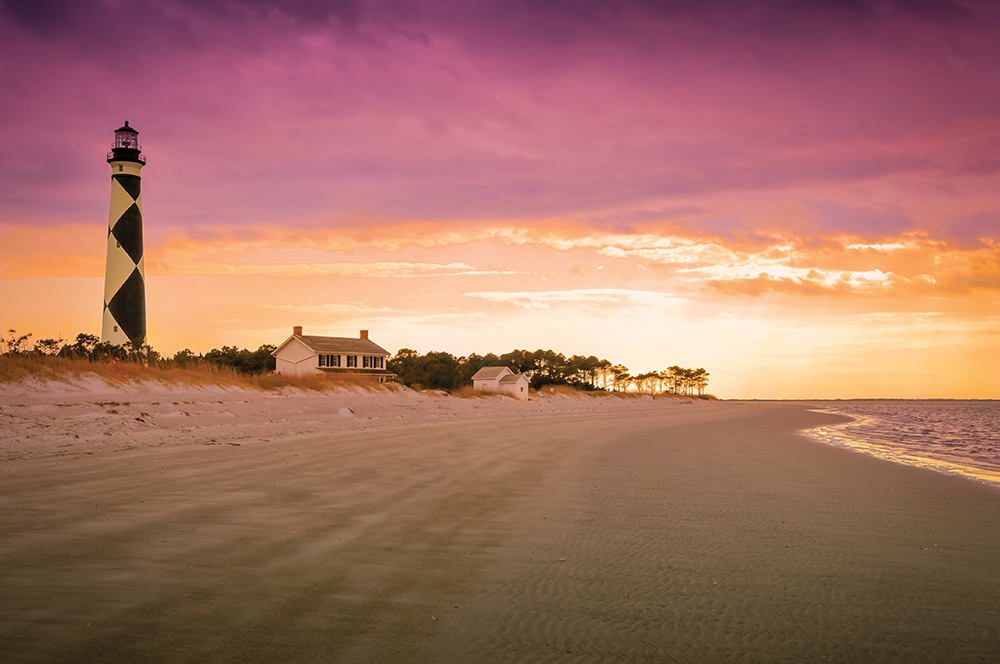
Today, Williams says, Cape Lookout is one of the few places you can experience true solitude and natural wonder. And he should know: He circumnavigated the globe with his family for three years on a sailboat. “We saw a lot of places with very nice beaches and water,” he says. “At the end of our trip, we spent our last night on the Cape before going back to shore. We all agreed, then and there, that it is the prettiest spot in the world.”

This article first appeared in the August 2026 issue of WALTER Magazine.