We caught up with America’s favorite documentarian during a visit to Raleigh to promote his new series on the American Revolution
as told to Josh Klahre
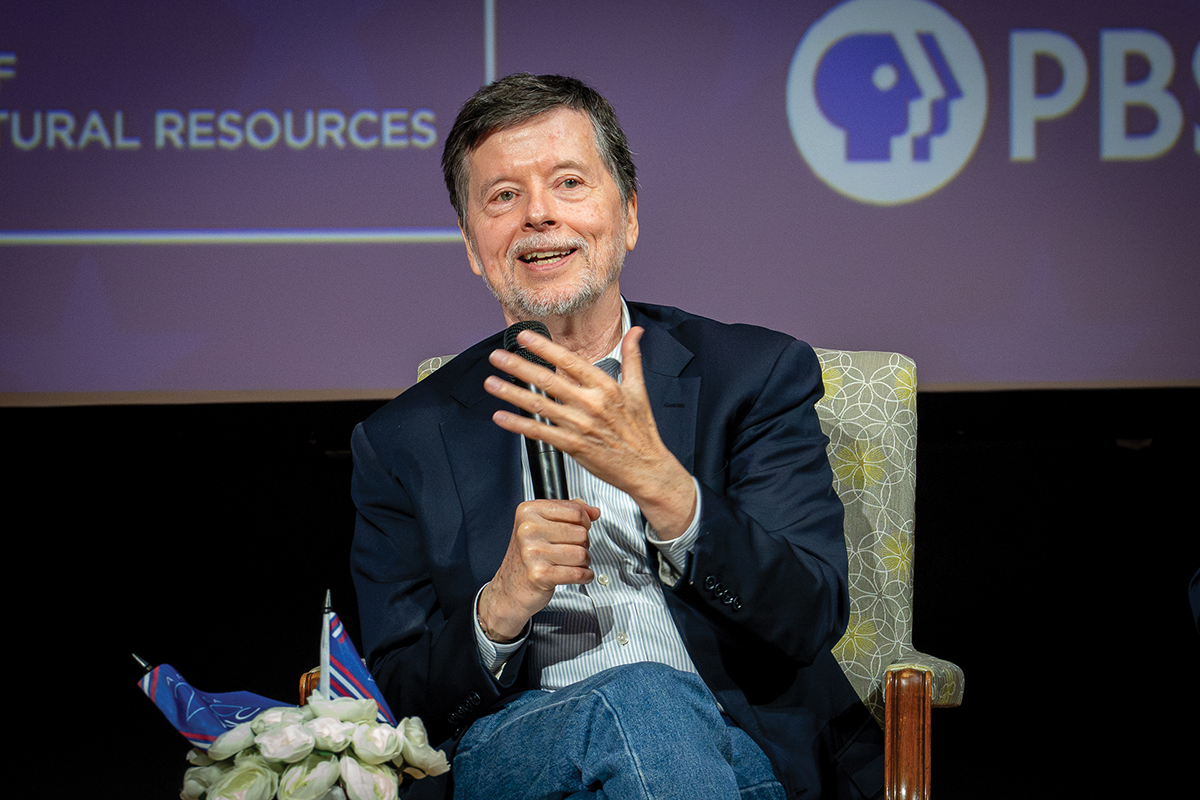
On a sultry late-spring evening, America’s unofficial historian-in-chief, Ken Burns, came through Raleigh to promote his latest endeavor, a documentary on the American Revolutionary War. Burns has been known for making documentaries for more than 45 years, since the release of Brooklyn Bridge in 1981. Since then, his signature style of combining archival images, primary-source narration and music has redefined historical storytelling on screen. His seminal work, The Civil War (1990), became a landmark in television, drawing nearly 40 million viewers, and over the decades, Burns has continued to illuminate U.S. history through acclaimed series on subjects ranging from jazz and baseball to the Vietnam War and Benjamin Franklin.
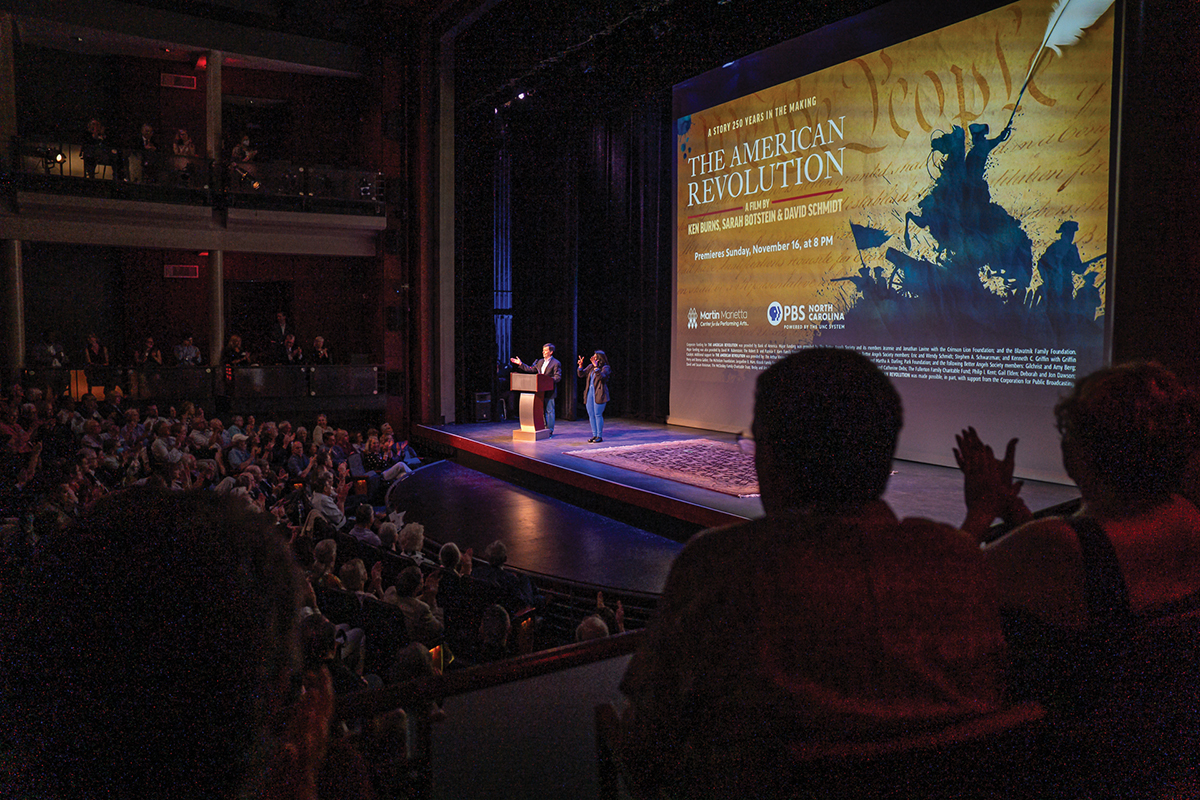
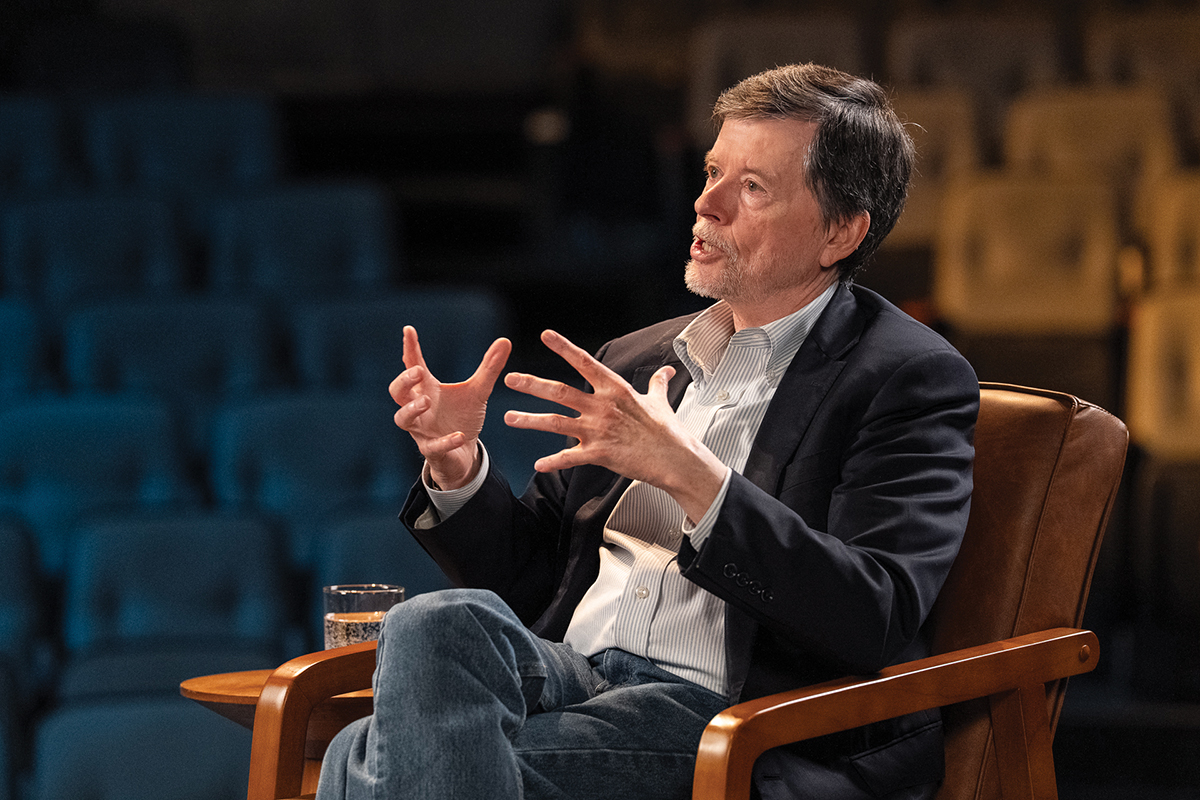
Co-directed by Burns, Sarah Botstein and David Schmidt, The American Revolution is a six-part, 12-hour documentary series that explores the country’s founding struggle and formation of its new brand of government. After listening in on an interview with PBS North Carolina’s CEO David Crabtree in the AJ Fletcher Theater, I was fortunate enough to get some one-on-one time with the man himself.
Do you have any connections to Raleigh?
Yes. I’ve been here once or twice, even three times a year, for many, many years from the late 1980s through the early 2000s. That had to do with a lot of historical advisors, and friends that lived here, including the late historians John Hope Franklin and William Leuchtenburg, who just passed away at 102. Through work, I’ve visited the National Humanities Center at Duke University, and I’ve received honorary degrees from North Carolina State University and the University of North Carolina at Chapel Hill.
What was North Carolina’s contribution to the Revolutionary War?
I think it’s important to note that all of the 13 colonies sent men to Philadelphia to ensure the functioning and cohesion of the Continental Congress during the war. But the battle at Guilford Courthouse was probably the most significant fought in the state. Importantly, North Carolinians volunteered to fight for independence — but North Carolinians also stayed neutral, and they were also royalists. Human beings had to make a very, very tough decision: to decide whether to stay loyal or not. Those who chose to become patriots were taking an enormous gamble — they had to be willing to risk their lives for an idea that was as yet untested, that looked like it had zero chance of success. It was a spectacular act of faith. Every state, North Carolina included, has the right to be very proud that they were involved in this extraordinary experiment.
Your work has covered so many critical moments in American history. Is there a reason you’re covering the Revolutionary War now?
No. You know, the Civil War was important, probably the most important event in our country’s life once we got started — and the echoes of it are still not over in many ways. We initially decided to not do any more wars to broaden our scope on the country’s history. However, we chose to do the Second World War [The War in 2007] because we were losing veterans at the time. And we ran into a lot of high school kids who thought we fought with the Germans against the Russians in the Second World War — so you’re just pulling your hair out — so we said, “OK, we’ll do it!” Before we were done with that film, we said, “Vietnam;” before we were done with Vietnam, we said, “the American Revolution.” There’s no focus groups. It’s just my gut. And then we spend whatever it takes to figure out how to tell that story. We haven’t done World War I, though we have passed through it and done it on a number of films including Ernest Hemingway, Jazz, Baseball and The Roosevelts. It’s just that these were the defining, signal events in terms of military actions in our nation’s history.
How does working on these historical documentaries affect your view of the current state of affairs?
History makes you pretty optimistic, you know? We’ve gotten through a lot of bad stuff in our history and have prevailed. I don’t know if somebody who had experienced the British occupation of Philadelphia or had fought in the Battle of Bunker Hill would say that this is a particularly terrible time, right? There’s a relativity to these things. There’s a perspective. For example, we now think there might have been 750,000 people killed in the Civil War, not the 600,620 that we estimated when we made our series 35 years ago — that’s an enormous percentage of the population then, well over 2% [compared to 0.11% of population dying in WWI or 0.33% in WWII]. Our revolution had proportionately almost as many deaths. The counting is imperfect — today, there is no way to go back and count somebody who just disappeared, or who was a loyalist versus who was a patriot. But we do know that there were Native Americans who were fighting for the British but also who were fighting for the Americans. And we do know individual stories, like that of Rebecca Tanner, a Mohegan woman who lost five sons for the Patriot cause. I know of no greater sacrifice than losing your children to a cause.
So I think history tends to make you an optimist, but it also makes you pretty aware of the signals, right? If you know history, then you’re that canary in the coal mine saying, the air isn’t as good as
you think it is.
The American Revolution will premiere on PBS North Carolina on Nov. 16 at 8 p.m. and air for six consecutive nights. The full series will be available to stream beginning Nov. 16 at PBS.org and on the PBS App.

This article originally appeared in the November, 2025 issue of WALTER magazine.