From Ocracoke to Rockingham, contemplating how a swim in the ocean brings a sense of calm — and listening to the radio with a neighbor does, too
by Tommy Tomlinson | illustration by Gary Palmer
Summer comes in waves. Many years ago I went through a rough stretch, mostly of my own making, and ended up needing to clear my head for a while. I drove alone to the Outer Banks, took the ferry from Swan Quarter to Ocracoke, piddled around in the village for a couple of hours, then aimed the car for Hatteras.
Ocracoke tapers to a thin strand that can be secluded even in high season. I found a spot to pull over and stepped between dunes onto an empty beach. Not a soul in either direction. The only sounds were the wind and the waves: calm and steady, a wet metronome. I got in and rolled in the warm ocean like an otter. Every so often a wave would give me a gentle slap.Snap out of it, son. Everything’s going to be fine.
The waves are even milder on rivers and lakes, at least usually. When you see whitecaps on fresh water you know a storm is coming. That’s when you pull up anchor and gun the outboard and hope you get back to the landing before the sky breaks open. Waves can be a warning, too.
They can also be a mirage. When I was a kid I was mesmerized every summer by the shining puddles that always appeared up ahead on the road, only to disappear when we got close. Much later I found out it’s called heat shimmer, and it happens when a surface like asphalt gets much hotter than the air just above it, refracting the light in between. The same thing on sand creates a false oasis — the thing that drives desert wanderers crazy in the movies.
That road shimmer was my introduction to the idea that some things in life are always dancing just out of your reach, and that maybe they were never really there in the first place.
It takes time to learn some lessons. For example, when waves of heat are rising from a car, it’s not a good time to sit on the hood wearing shorts. The backs of my thighs learned that one the hard way.
It also took time to learn that people in other places don’t wave the way we do in the South. This especially applies to what I think of as the two-lane wave — the wave you give somebody when you’re slowly passing them in a car.
To me, there are a couple of times when that wave is mandatory. One, if you’re out in the country and drive by somebody on the side of the road. Two, if you’re on a narrow street or at a four-way stop and somebody lets you through. I live in a neighborhood with a lot of narrow streets, and my experience is that you get the wave about half the time. Every time I don’t get the wave, I always wonder where up North the driver came from. This is probably not fair. But barring any proper research, I’m gonna roll with it.
You might know about the debate over exactly what Bruce Springsteen sings in the first line of “Thunder Road”: The screen door slams / Mary’s dress . . . What’s the next word? On the record it’s hard to tell. I have always heard it as Mary’s dress sways. Springsteen’s manager has said that it’s definitely “sways.” It feels to me like the most poetic word, the most evocative. But many other Springsteen fans — including my dear friend Joe Posnanski, a fellow North Carolinian — swear that the line is, or at least should be, Mary’s dress waves.
Joe has written thousands of words about this over the years. It is one of those debates that means everything and nothing, much the same way that it means everything and nothing to argue about the greatest baseball player of all time. (Joe, who wrote an entire book called The Baseball 100, says Willie Mays; the correct answer is Henry Aaron.)
Joe has not convinced me on “waves” and probably never will. But when I play “Thunder Road,” I always listen close to that first line. I kind of want to hear “waves,” at least one time. Not because I want Joe to be right, but because you should try, when you can, to feel what someone else feels.
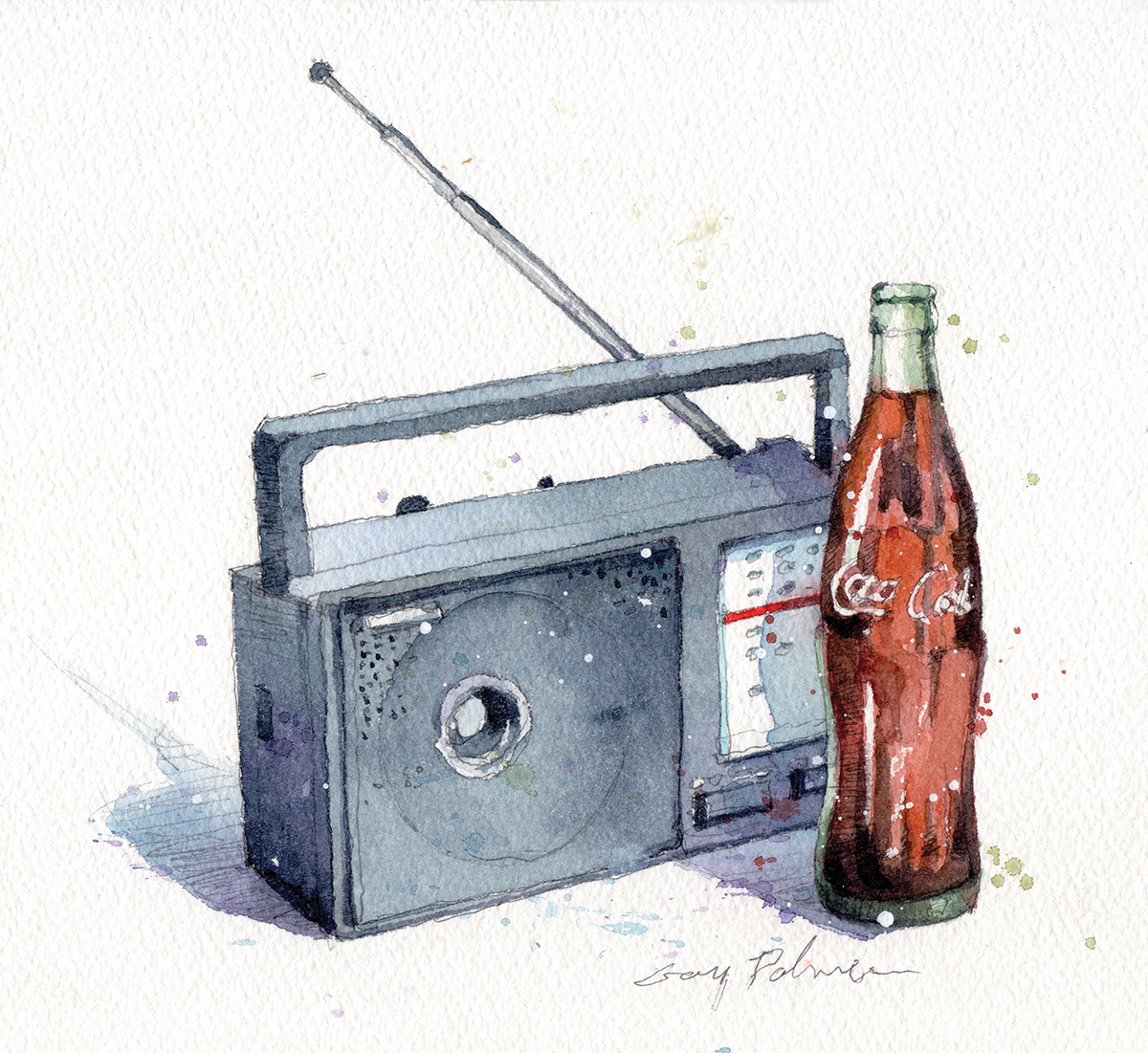
I had a neighbor one time who loved to listen to NASCAR on the radio. Every Sunday afternoon in the summer he would take his old AM/FM portable out to the patio behind his trailer and turn on the race from Rockingham or Martinsville or wherever. This was back in the 1970s, when Richard Petty won most of the time, Cale Yarborough and Bobby Allison occasionally gave him hell, and David Pearson lingered at the back of the pack, waiting to strike.
I wasn’t much of a fan of racing, but I was a fan of my neighbor. So sometimes I’d go over there and we’d drink cold Cokes and listen to the howling engines, those sound waves traveling from the track through the radio to our ears in ways that I still do not fully understand.
The one thing waves have in common is that they carry energy. Something desires to get from one place to another and a wave is the vehicle. That can be a pulse from somewhere deep in the ocean or the attraction from someone who caught your eye across the room.
We are out more this time of year, exposed to the energies of the universe, and open to the waves that life brings our way.
Sometimes they are so powerful they can knock you sideways. But most of the time they’re just a pleasant ride, carrying us through the shimmer of a summer day and the promise of a summer night.

This article originally appeared in the July 2026 issue of WALTER magazine.