During the cold months, the forest canopy shows off its bare branches and forms, offering a different kind of beauty to the keen observer.
by Mike Dunn

Many people I know dislike the winter months. Perhaps it is the cold, the lack of green or the short days that make them yearn for spring in all its glory. But I find winter to be a special time, when I tend to pay more attention to things that have been supplanted the rest of the year by the myriad wildflowers, insects and wildlife in our woods.
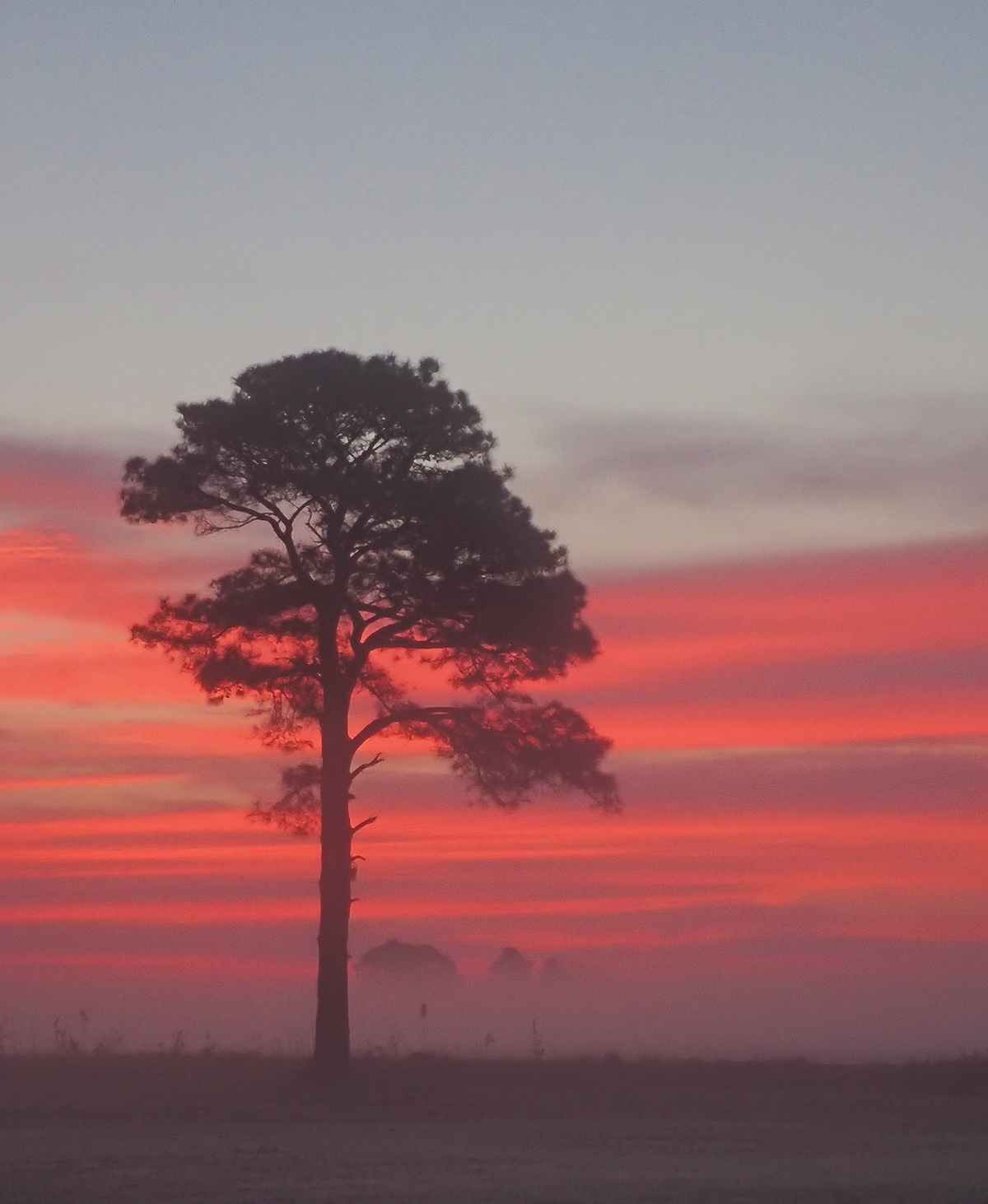
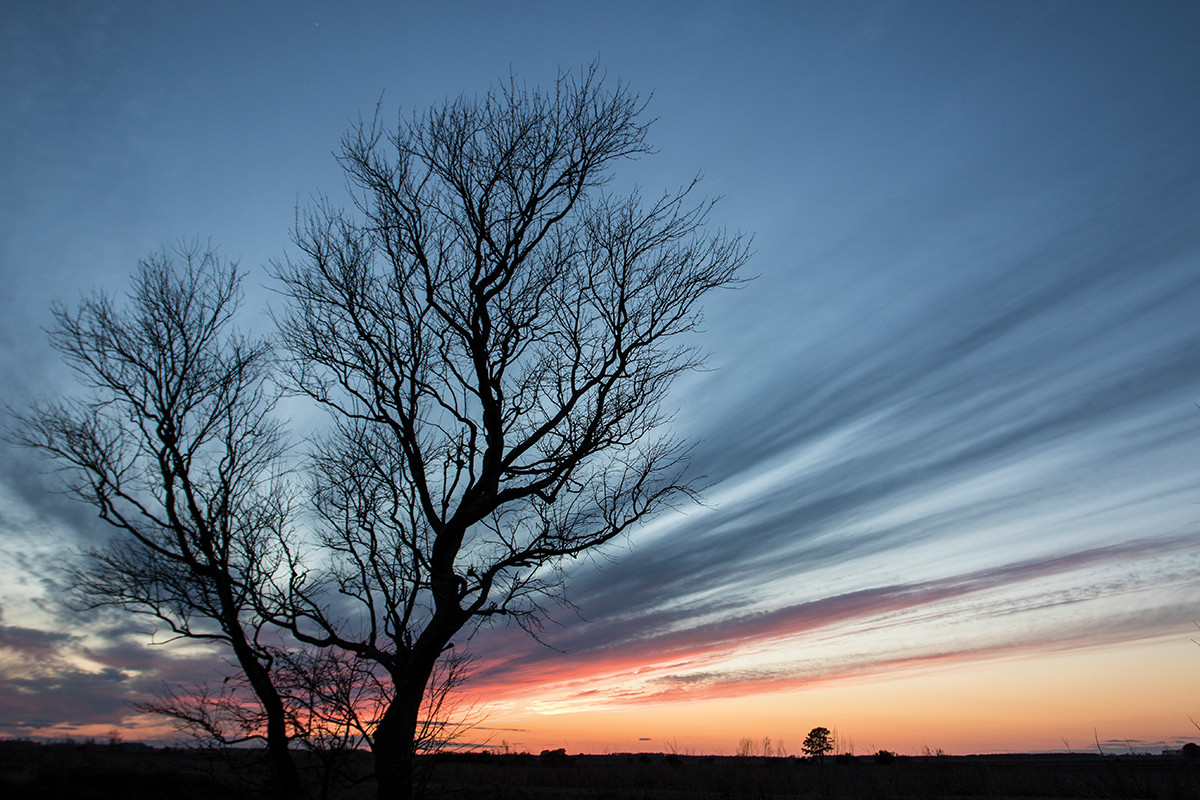
I particularly like to pay attention to winter trees and notice the distinctive outlines and branching patterns of our common species. There are many factors that determine the basic growth form of a tree — genetics, soil type, moisture, age and competition from other trees, to name a few. Some field guides out there include stylized tree silhouettes as a way to help you identify them.
Those shapes are generally for trees that are isolated on the landscape, not the ones you typically see around here in a forest or backyard setting, where a tree must compete with its neighbors for sunlight and nutrients.
But on my winter trips to eastern North Carolina to view the wintering waterfowl, a frequent delight is seeing the stark outlines of countless trees on that flat and wide-open landscape. The bald cypress is the iconic tree of this area’s swamps and lowlands, particularly because of the buttressed base of the trunk with the “knees” (upward extensions of the root system). For many years, I was one of the judges for Wildlife in North Carolina magazine’s annual photo competition. A line of bald cypress trees in Lake Mattamuskeet was a frequent entry in the landscape category.

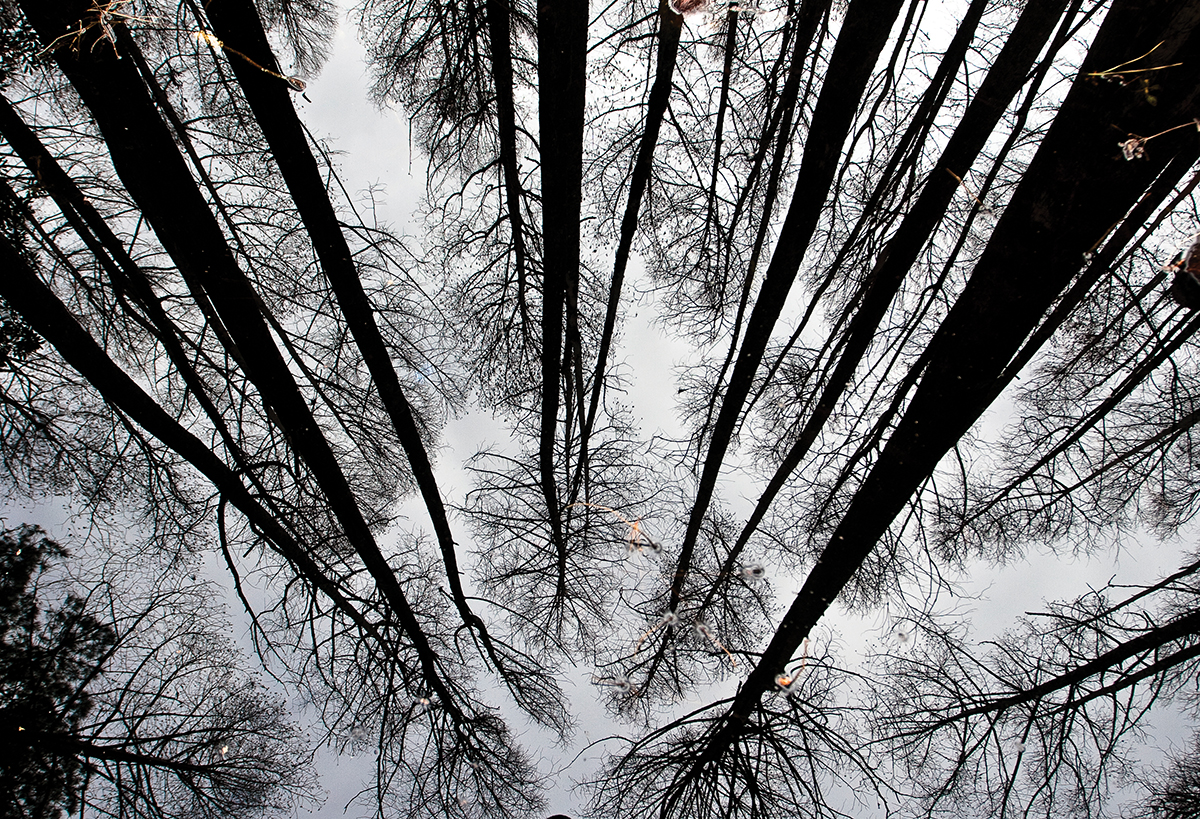
I think every visitor to the lake stops to photograph this group of trees, which is especially impressive at sunrise. And I’ve often stopped to wonder at the beauty of a lone bald cypress on Lake Mattamuskeet on calm evenings when the still waters create its mirror image. One of my favorite silhouette photos that I’ve taken was of trees reflected in the black waters along the lake’s boardwalk. Many years ago, this was one of several prints for sale at the North Carolina Museum of Natural Sciences. Almost every time I went in, someone had turned the photo upside down, thinking it was supposed to be looking up instead of down into the dark water.
I’ve also seen some breathtaking trees on trips to see the elk in the Great Smoky Mountains National Park. One morning, I found a large walnut tree in Cataloochee Valley, alongside a meadow that serves as a gathering place for the elk that reside in our mountains.
The heavy frost created an icy texture to the tree limbs and grasses. Another time, driving out of Cades Cove at sunset, I came across a magnificent tree out in a field along the road. The almost perfect symmetry of its branching pattern suggested that this tree had lived its life out in the open, perhaps as the only tree at the edge of a farmer’s field. I frequently stop along the roadside and snap a picture of a noteworthy tree. I rarely can get to it to confirm its identity. But I don’t think you necessarily need to attach a name to something to appreciate it.
This winter, take some time to look for tree silhouettes in your area, whether it’s a single oak along a city street or an old-growth pine on a hike nearby. Notice the branching pattern, the shape of the crown and the straightness or curvature of the trunk. Look up and appreciate how it creates a unique connection between the earth and the winter sky. One of my favorite photos is of a huge tulip poplar that towers above all of its neighbors on our property in Chatham County. After a February storm, the snow highlighted its branches against a crisp blue sky.
To see a tree in winter, its branches bare, is to see the soul of that tree. Andrew Wyeth, the famous American painter, expressed a similar sentiment: “I prefer winter and fall, when you feel the bone structure in the landscape.” Bone structure, skeleton or soul — however it resonates with you, a winter tree’s silhouette can be a thing of beauty.

This article originally appeared in the February 2026 issue of WALTER magazine.