Family pieces and a tight color scheme come together inside a young couple’s Victorian-era home
by Ayn-Monique Klahre | photography by Abigail Jackson | styled by Heidi Donohue of GTHR.d
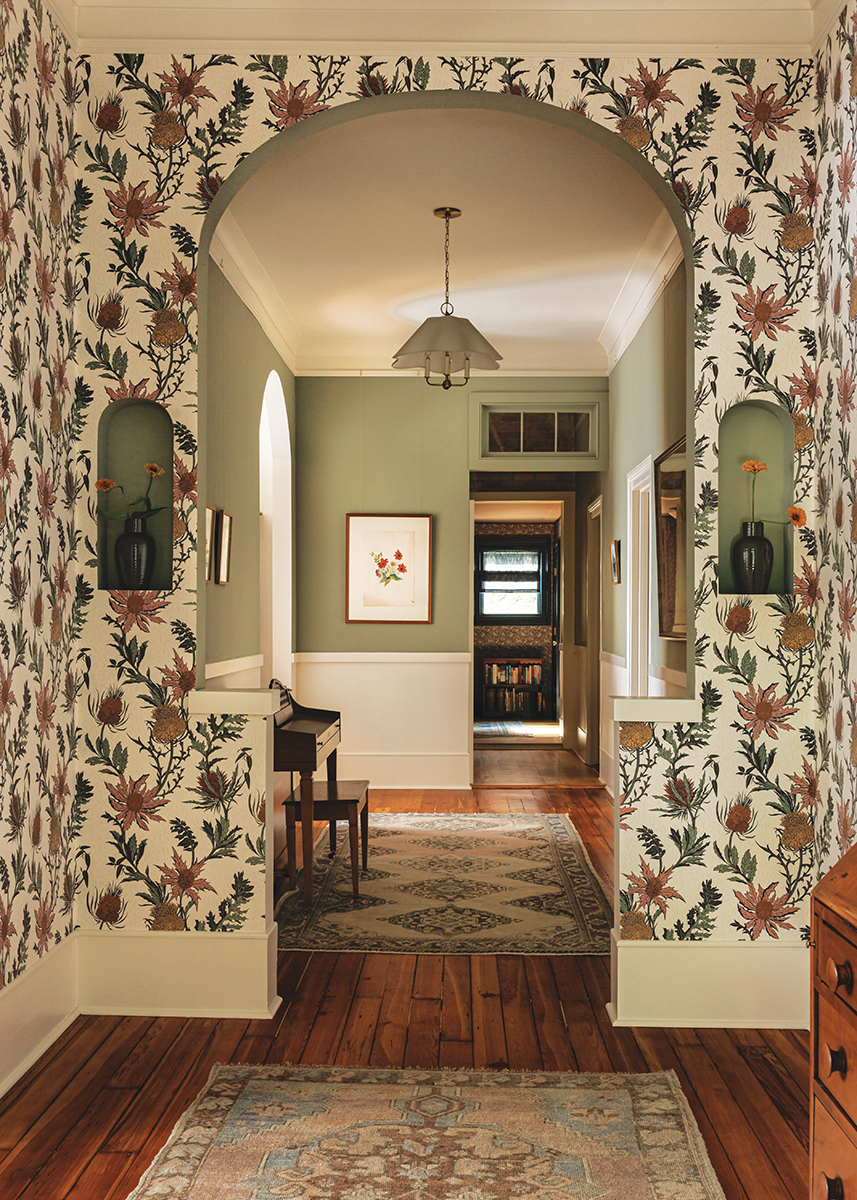
When Robert Fields and Sallie Thompson bought this Historic Oakwood house, it was a homecoming of sorts. Both had grown up in the area — Fields in Raleigh, Thompson in Wake Forest — and went to Wake Forest University. They lived in New York City for a few years before coming back to Raleigh during the pandemic, first settling in a townhouse just outside of the neighborhood. “It felt like this tucked-away area with access to everything,” says Thompson. But the townhouse wasn’t quite right, so they sold most of their furnishings and traveled for a few months before returning to find a sweet Victorian-era house on Elm Street for sale.
The home had some interesting architectural starting points, including high ceilings and a spacious single-floor layout, with a decorative arch in the front hallway that created a vestibule just inside the front door. But the house had also been divided at one point to accommodate an apartment, and it had been unoccupied for a few years, so it needed a little TLC.
“We didn’t do much re-arranging — most construction was to get it back to the original footprint — but we touched every single room,” says Fields. As they got ready to make decorative decisions, they enlisted designer Johanna Lyle of Jo Lyle & Co., with whom they’d gone to college and had come to follow on Instagram. (Incidentally, Lyle was living and working in Chicago at the time, but has since moved to Raleigh.) “She has a great sense of how to maintain the character of a home but not make it feel dated,” Thompson says.
A big starting point for the home was the wallpaper in the front hallway, a contemporary design that felt evocative of Victorian-era prints. When Lyle first showed them the thistle-print pattern, it felt like kismet: they’d spend much of their time traveling in Scotland, where the flower is abundant. It makes a statement within the vestibule, and also served as a “cheat code” for the scheme throughout, says Lyle. All the colors in the home (butter yellow, rusty red, earthy green) have “references and callbacks” to other rooms, says Thompson.
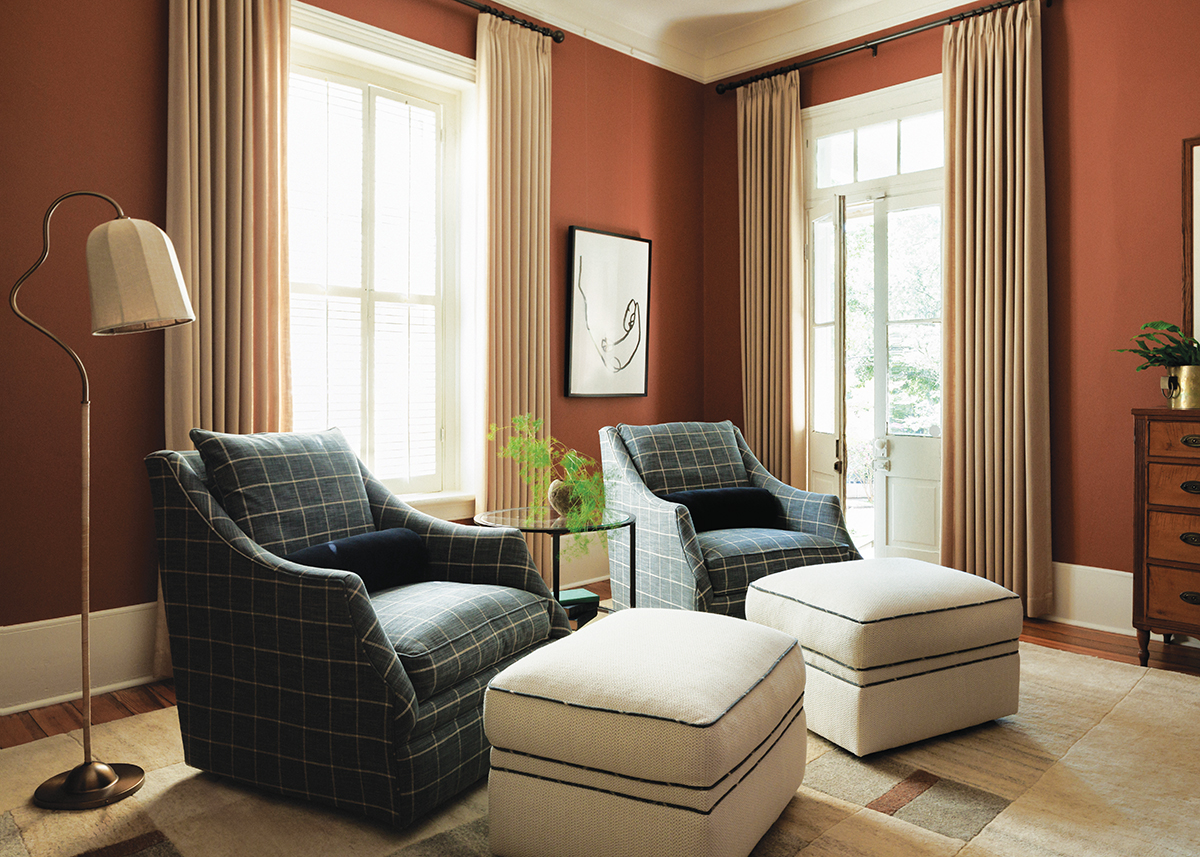
The red of the fireplace in the dining area is the same shade as the walls in the office, for example, and the green detailing in the living room is the wall paint in the main hallway. “Working those colors throughout makes the house feel cohesive,” says Lyle. She also repeated floral elements throughout, particularly in the lighting. In the living room, there’s a branchy chandelier, the dining room has a pendant with a scalloped edge and the bedroom fixture has petal-shaped shades that make it look like a giant flower.
As they were decorating, Fields’ grandfather moved into a retirement community, and much of the furniture from his grandparents’ former home was up for grabs. “We’re both the youngest in our families, so all of our siblings and cousins had already furnished their homes. We ended up with a truckload of antiques,” says Fields. “Jo went through a mountain of wood furniture and pulled at least a half dozen pieces for the house.”
Fields’ late grandmother had been into antiquing and even ran an antique shop for a little bit, so he already knew there were several nice pieces, like the dining set, that would find their way into their home. Others he’d see in the new arrangement, like the secretary in the front hallway, and be surprised to learn it was a family piece. “Jo was able to see what would work and give these pieces a new life, and to balance them with more modern pieces,” says Thompson.
Fields’ grandmother was also a painter and collector of art, so they incorporated some of her pieces throughout, including a piece by one of the now-famous Florida Highwaymen, a group of Black artists who sold oil paintings along the side of the road in the 1950s. “The amount of detail is incredible,” says Fields.
A final touch came through paint. Lyle commissioned Erica Ashley of Made You Look Murals to add detailing throughout the living room. “We felt like this room needed some extra architectural pizazz in keeping with its more casual, folksy identity,” says Lyle. So Ashley painted a stencil-style border along the edges of the room and around the molding, riffing off the fretwork on the front porch and the feather motif in the chandelier medallion. “It’s my favorite part of the room,” says Thompson. “It adds a little flourish, but it’s still playful.”


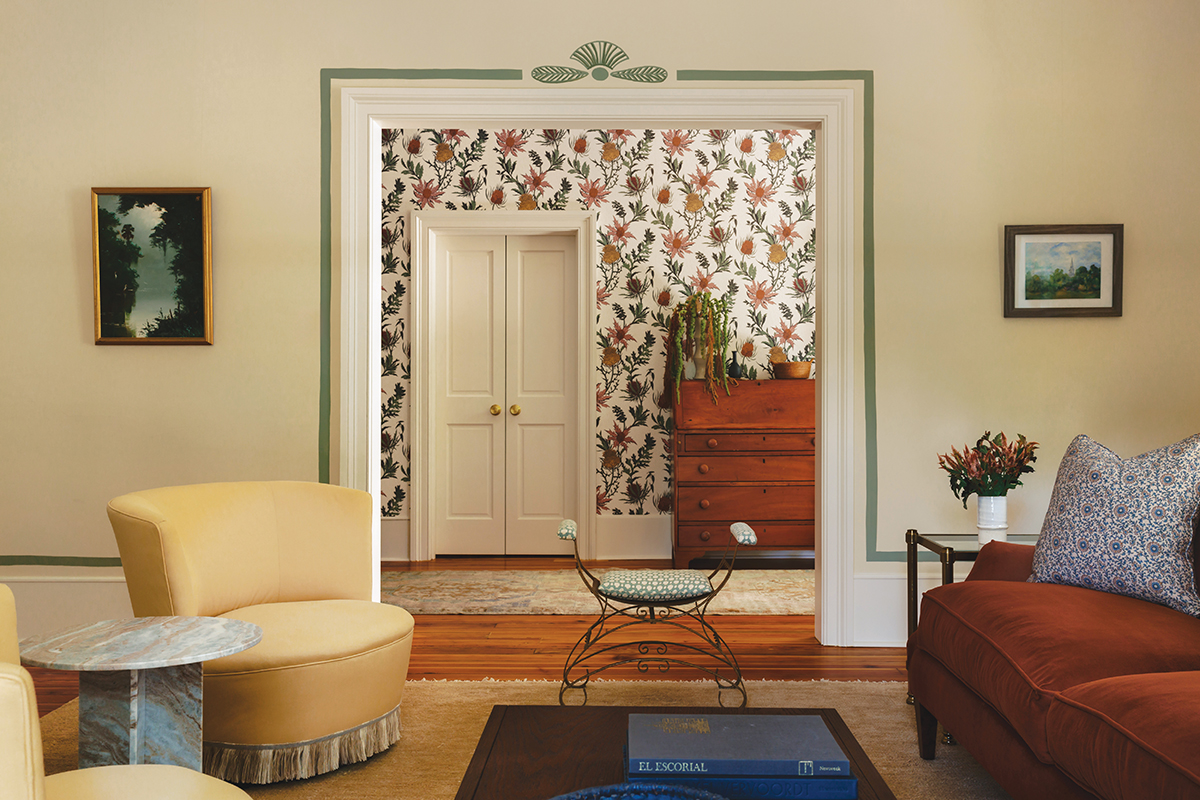
Mix & Match “To make the space feel historical, but not old, we mixed pieces consistent with the home’s era, like the secretary, with contemporary ones,” Lyle says. Since there’s not an island in the kitchen, a small cafe table offers a space to sit and have a coffee or chat during food prep.
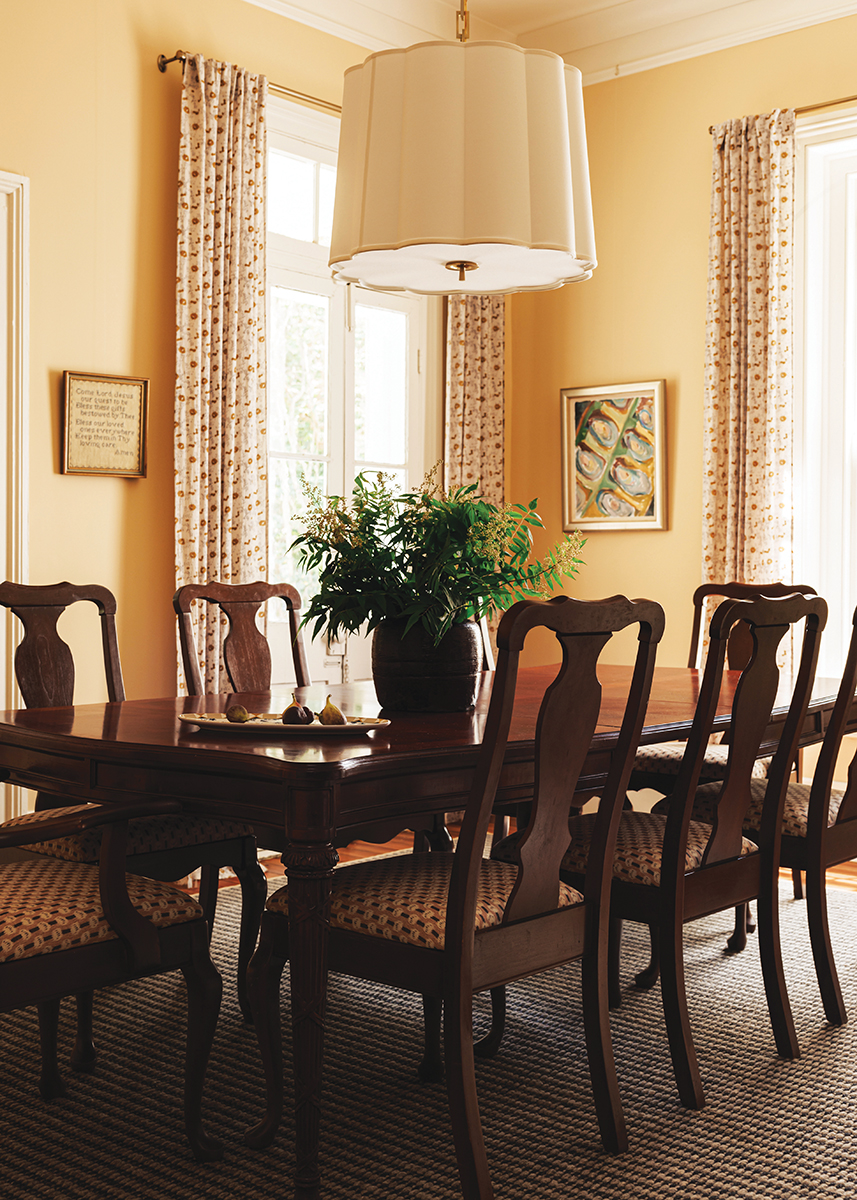
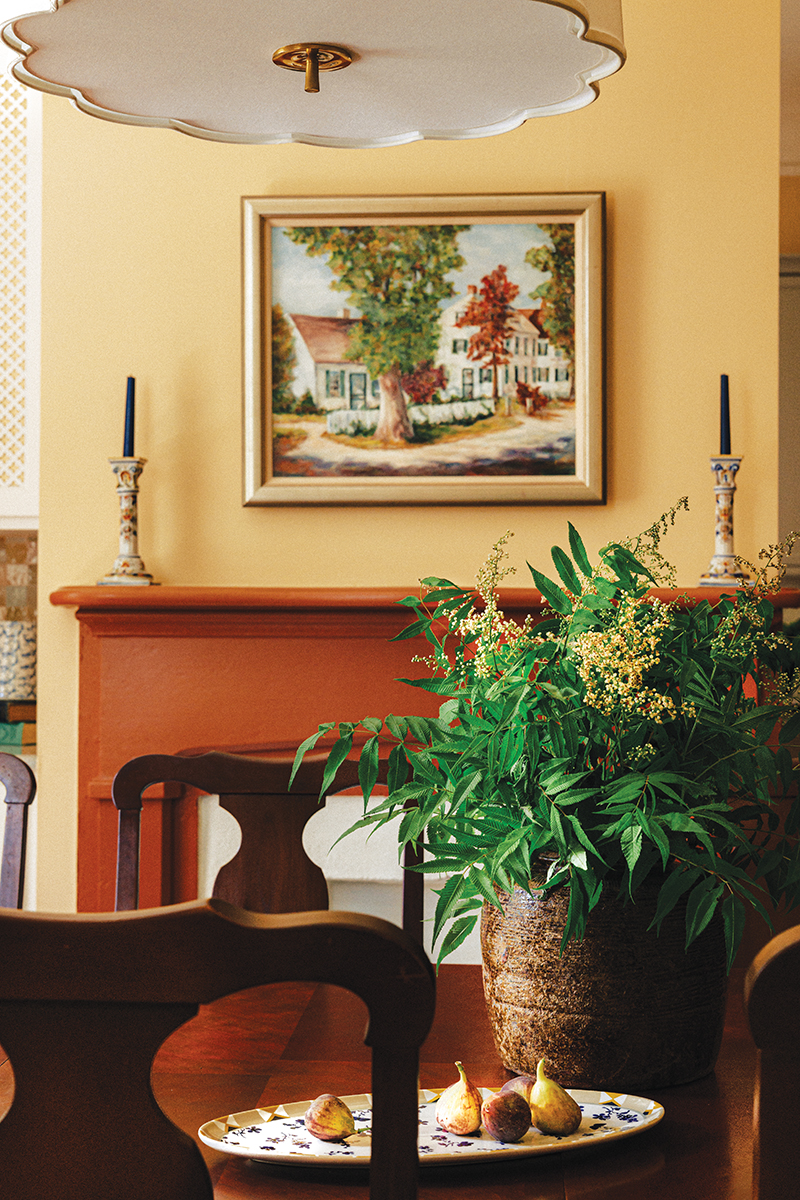
Fine Dining The dining set is a piece from Fields’ grandparents. Lyle had the chairs recovered and paired it with block-print floral curtains. “We repeated the same colors with different patterns and textures for a cozy, layered feeling,” Lyle says. The painting over the fireplace came from Fields’ family, too. “My mom dropped off half a dozen paintings on the back porch, and Jo picked out a few that just worked,” he says.
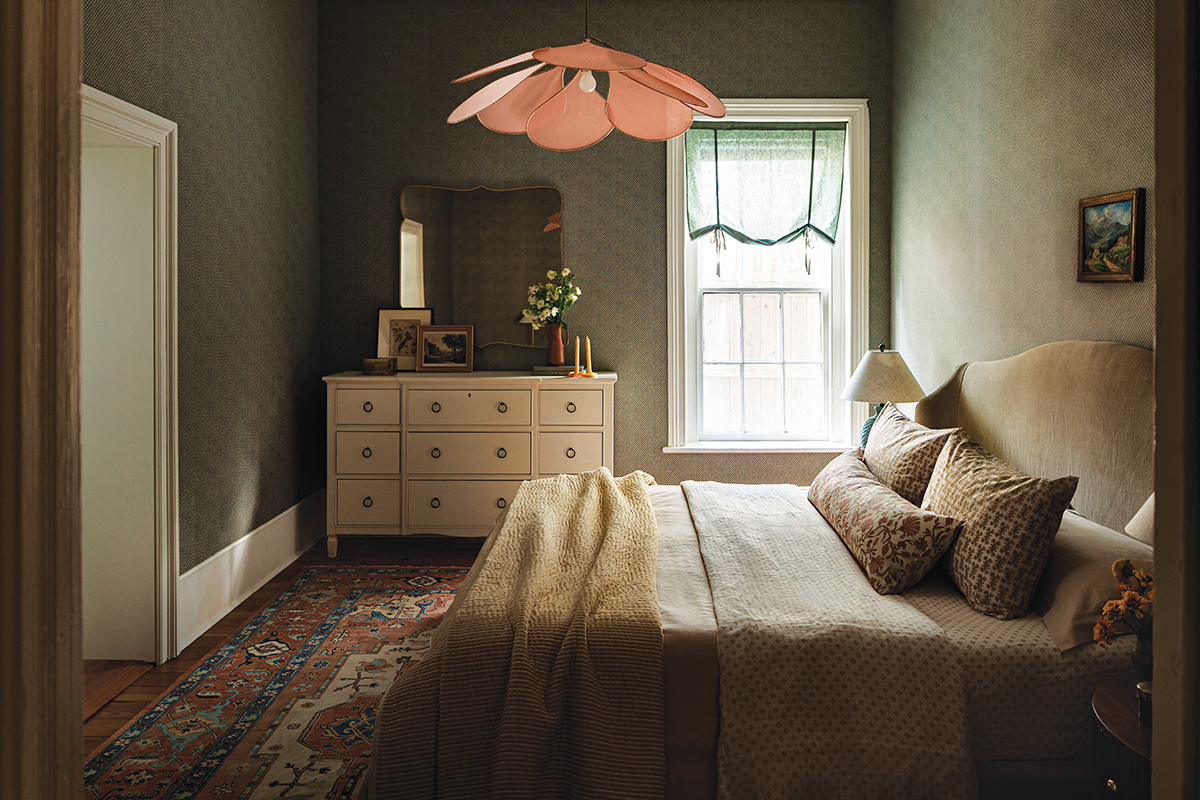
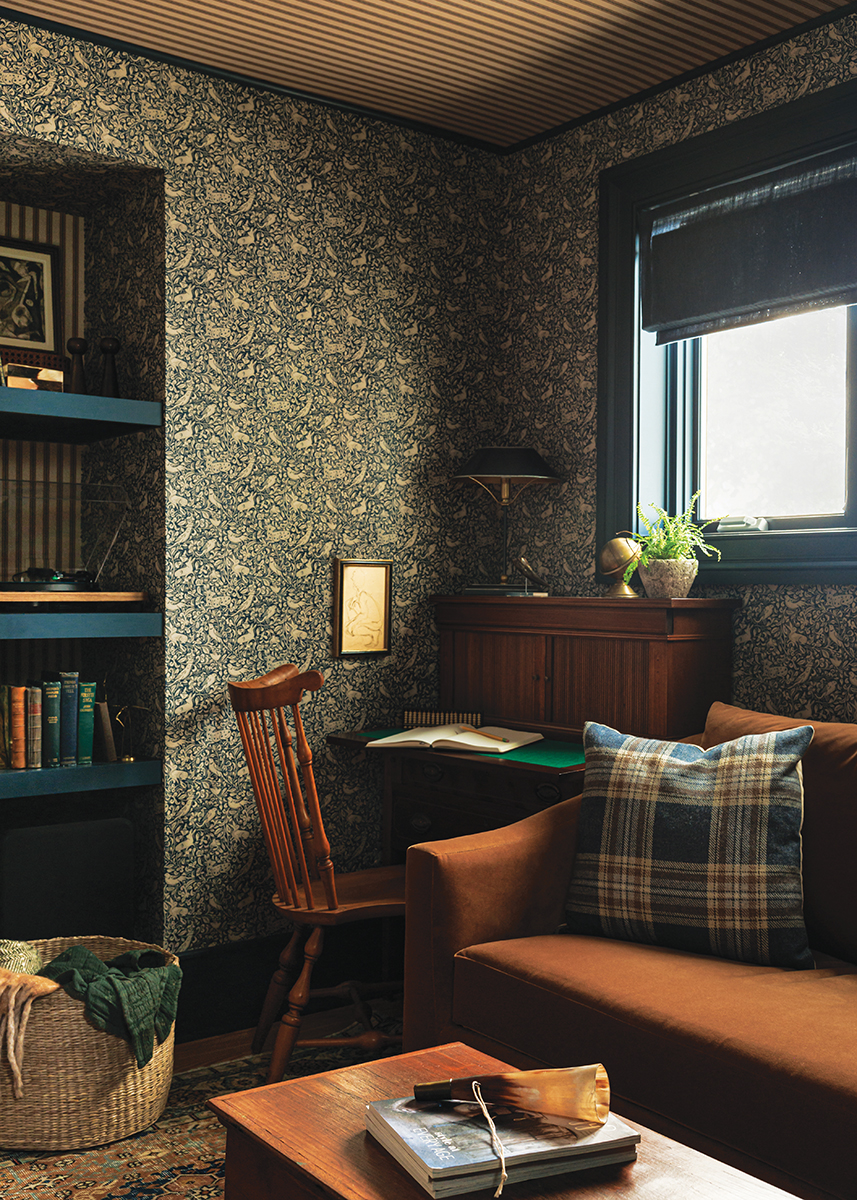
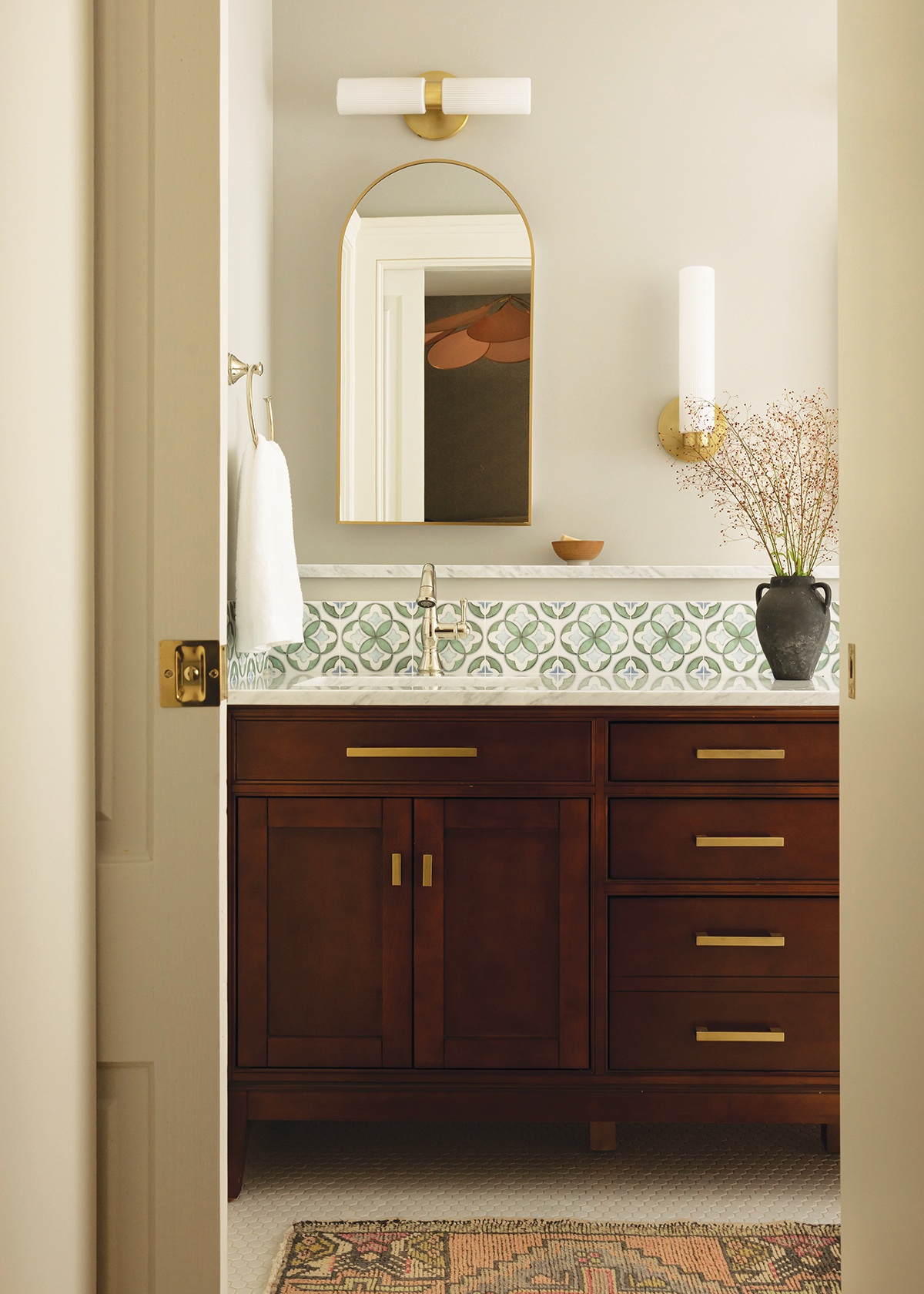
Cozy Spaces (above and below) The walls in the bedroom are covered in a basket- weave print. “The small scale gives it a sense of texture,” Lyle says. A flower-shaped pendant adds whimsy and sheer balloon valances add softness and hide the blackout shade. Nearby, the “snug room,” as the couple calls it, is “probably where we spend most nights,” says Thompson. The tile in the primary bathroom repeats the soft greens.
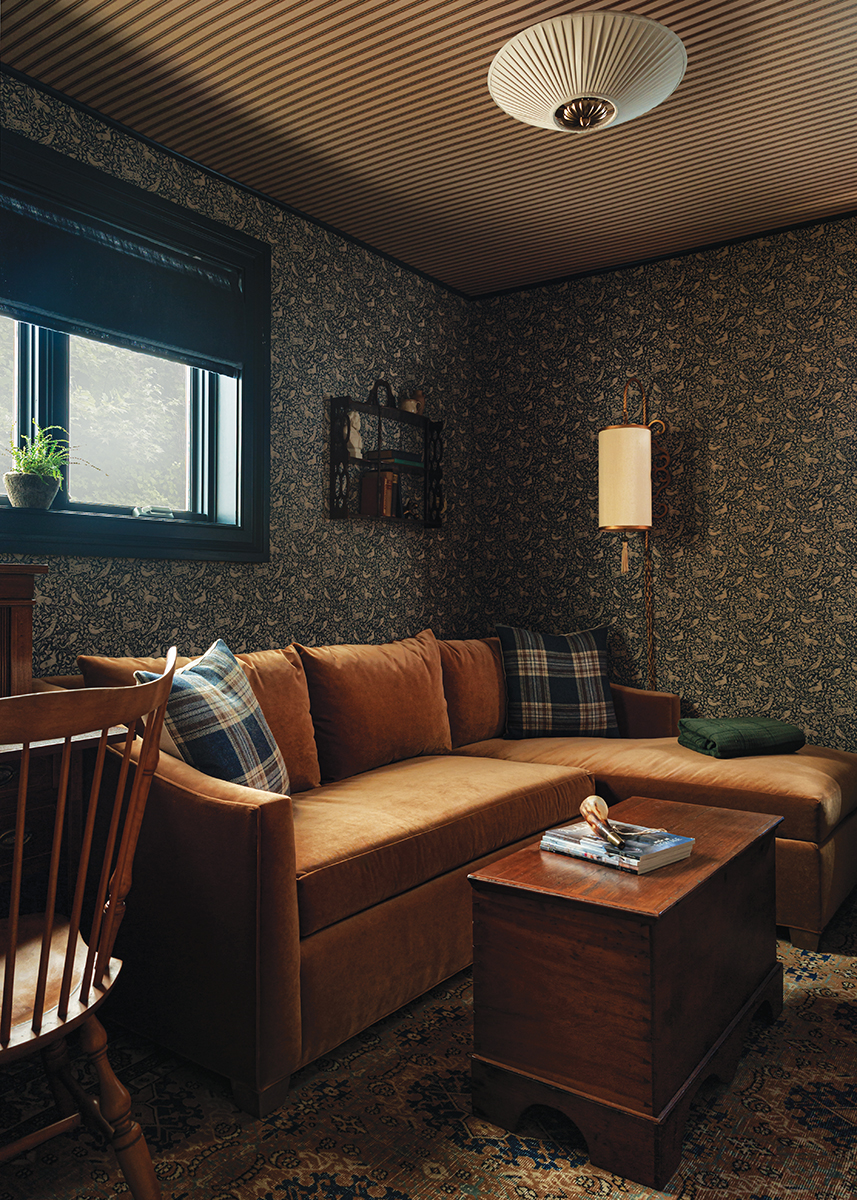
In the snug room, Lyle wallpapered both the walls and the ceiling. “It was an architecturally boring space, so adding different patterns gave it a sense of depth,” Lyle says. The space includes a projector and screen (hidden in the ceiling) for watching shows. “It’s the perfect spot to read or listen to records, too,” says Fields. The writing desk, from his family, is a favorite piece.

This article originally appeared in the October 2025 issue of WALTER magazine.