Highlights from trip to Porciano in Italy, where a group of Raleighites have turned a historic castle into an overnight immersive retreat
by Addie Ladner
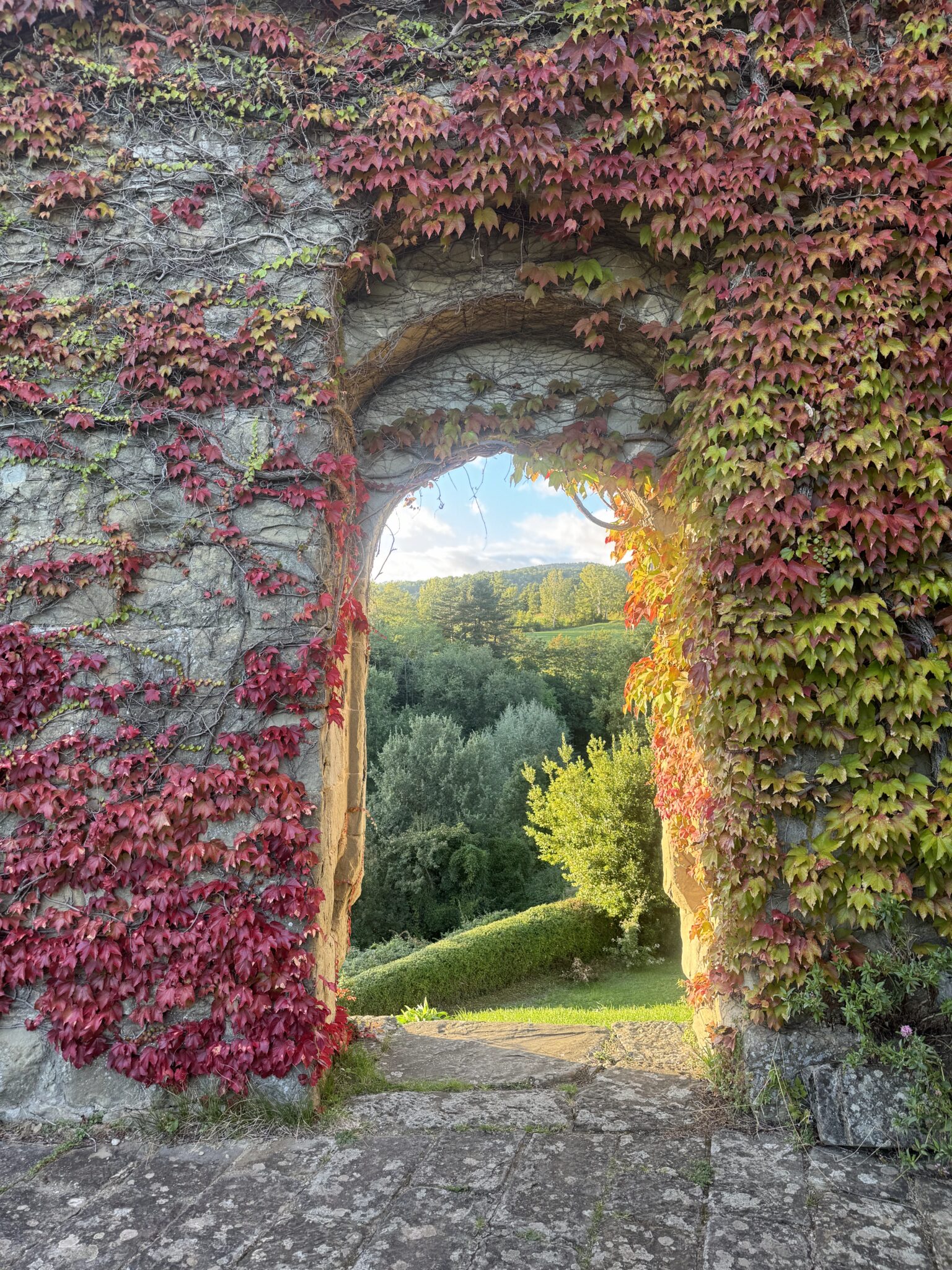
Last fall, I visited Porciano, a medieval village in the Casentino Valley, within Italy’s rural Tuscan region. There, a group of Raleigh families and friends has thoughtfully revived the Castello de Porciano — which includes a castle, cottages, a restaurant and gorgeous gardens — and are operating it as an immersive Italian travel destination. Leading this effort are Will and Molly Volker, former Raleigh residents (and friends of mine) who moved to the area full-time several years ago to renovate and operate the castle.
Will and Molly have completely immersed themselves in the culture, its history and its oddities — and are also the consummate hosts. They take the time to get to know forthcoming guests then cater their experiences by planning authentic local activities, from mushroom foraging in the forest to visiting nearby vineyards or monasatries. Since I could only be there for about four days, they were eager to show me the best of the area. Here’s are some highlights:
Wednesday: Beautiful First Impressions
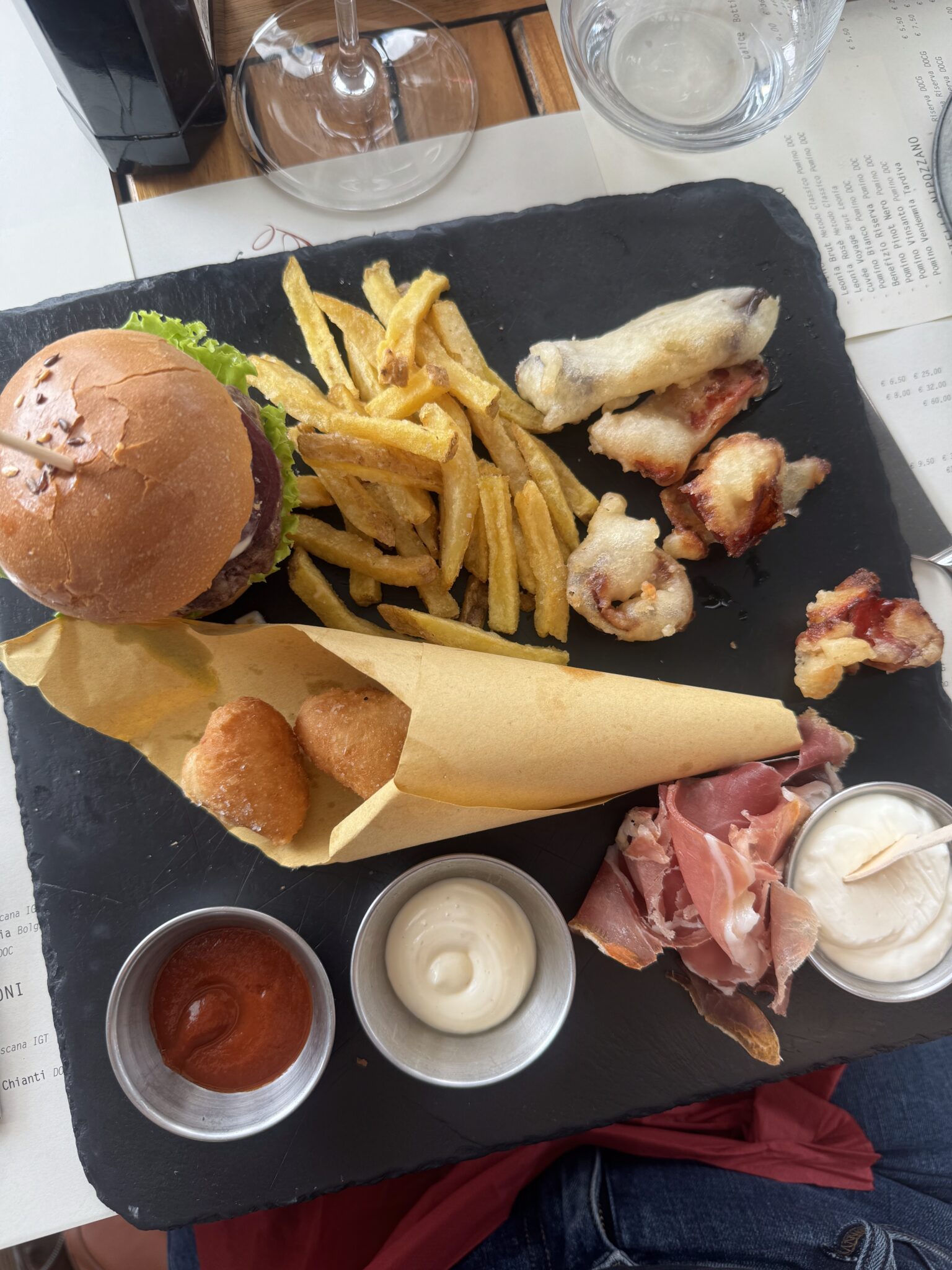
The closest major airport is in Firenze (or, as we Americans call it, the Florence airport). Molly and Will picked me up and we hit the road for the hour-and-a-half long drive southeast to Porciano. On our way, we stopped for lunch at Il Quartino di Frescobaldi in Pelago, just outside of the Florence metro area. We sat outside, overlooking olive groves and grape vineyards, for a meal of hamburgers, beef tartare, fries, cured meats and wine. I immediately noticed the cooler, dryer air, the narrow winding roads and the increased elevation.
After another hour winding along hills and through small Italian towns, we reached the province of Arezzo. It’s a rural, relatively untouched area of Italy that the famous Arno River streams through (the river’s source is nearby at Monte Falterona) and bursting with medieval architecture, old-world Italian art and history, stone bridges, trade shops and rolling hills.
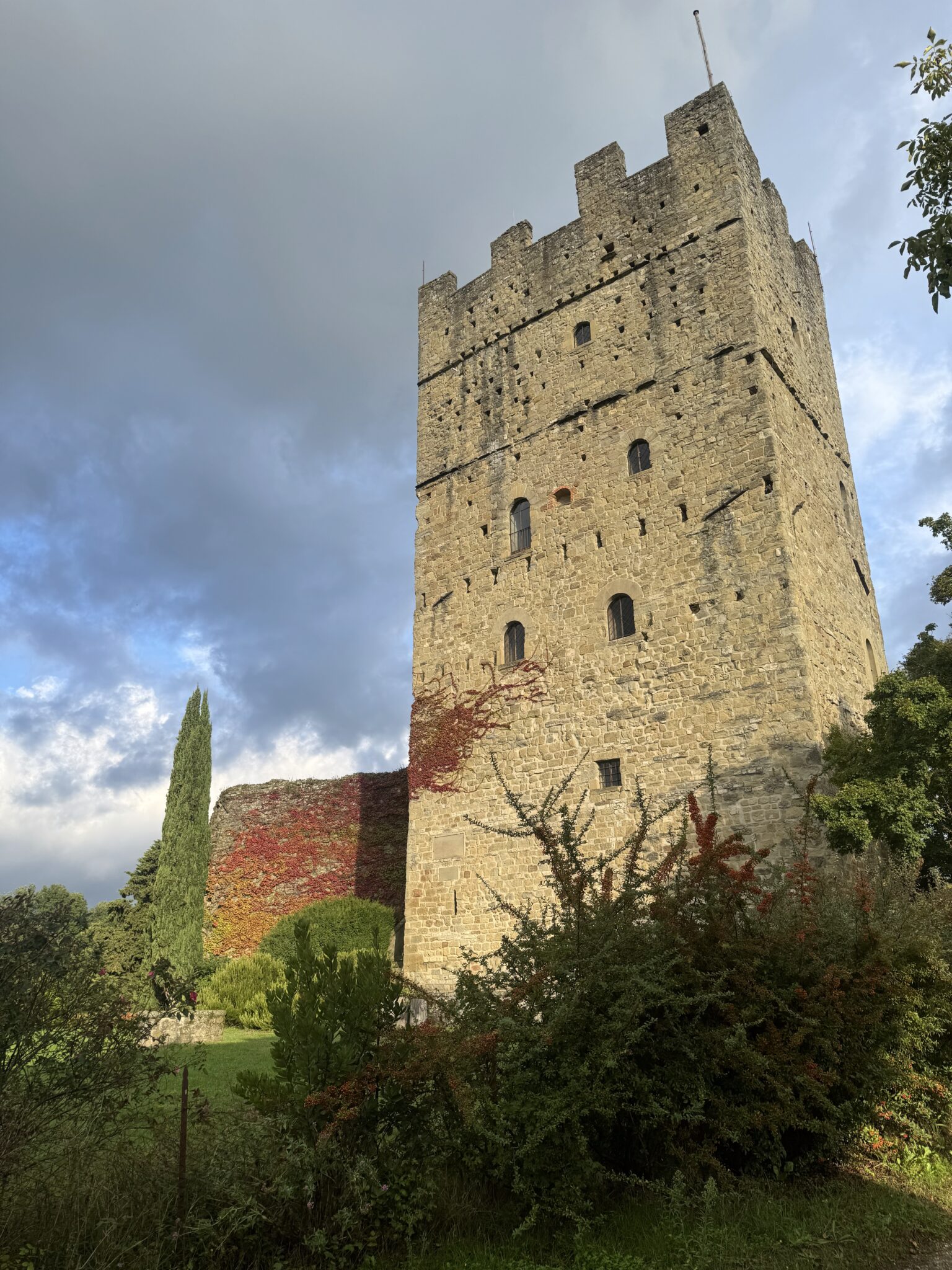
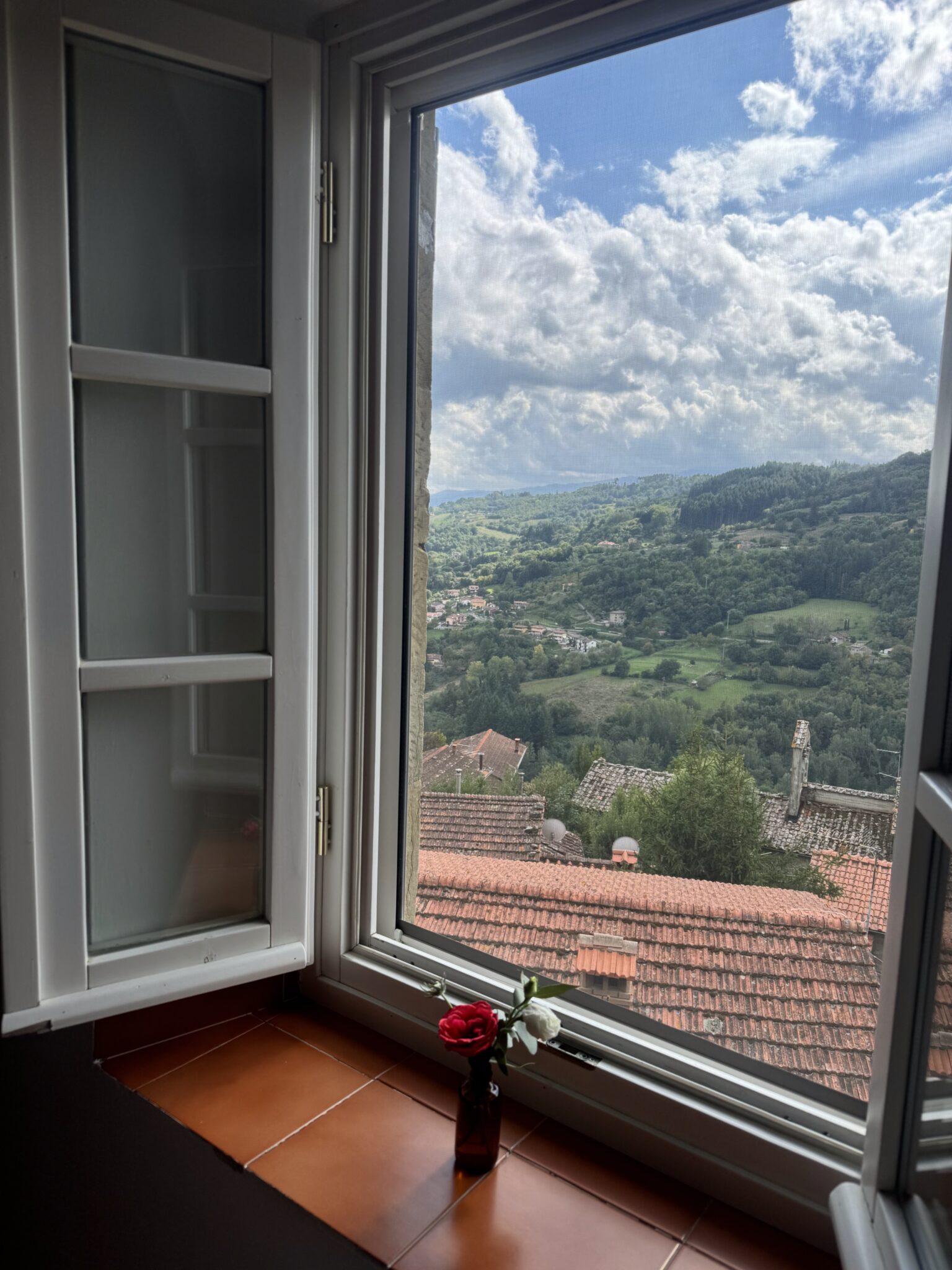
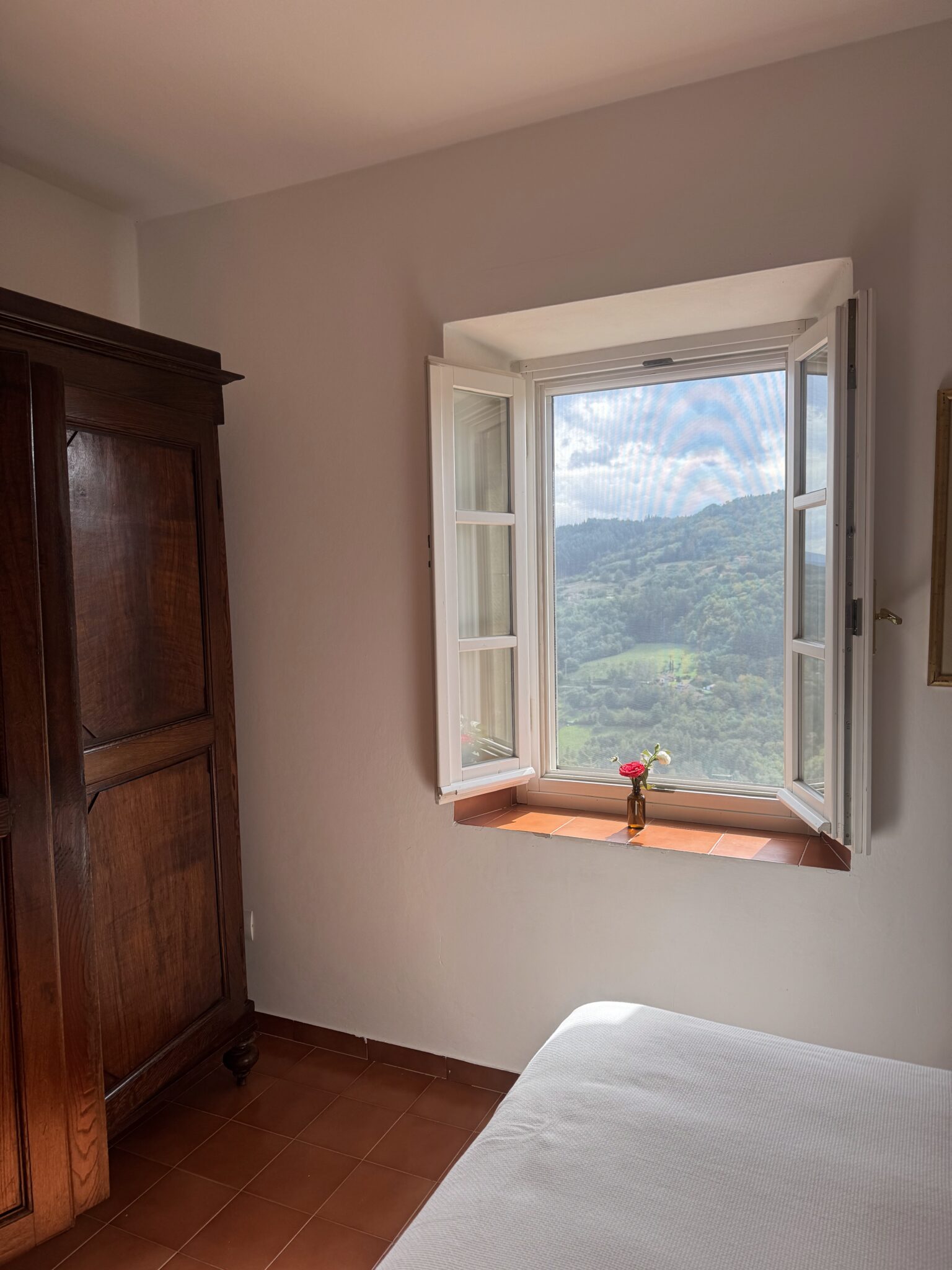
Turning onto the gravel road heading out of town and into the more rural area of Arezzo, the tower at Porciano caught my eye immediately: it’s the tallest tower in the valley at nearly 115 feet tall, an unmissable stone relic. Molly showed me to the nearby Casa Maggiolino cottage; its part of a row of quaint restored cottages in the village near the tower where I’d be staying for the next few nights. Downstairs was a small hearth and exposed stone walls; upstairs were two bedrooms, a petite kitchen and bathroom. I loved the still life paintings, antiques and views of the valley from my windows. (I left them open much of the time, even if it meant a chill at night.)
After a little recharge, I met Molly and Will for a tour of the property. Porciano’s grounds are full of beautiful native vegetation: climbing roses, olive trees, fragrant muscadine grapevines. The property is anchored by the castle (which they refer to as the castillo or tower). The first two floors of the castle operate as a museum; the higher ones include private rooms, a grand dining room, common spaces and balconies.
We had dinner at the on-site restaurant, Ristorante Il Fienile at Porciano — a feast of fried artichokes, stewed plums, pasta and, of course, wine. The restaurant was originally an old barn on the property that’s been converted into an intimate space with a mostly-glass exterior. Chef Catalin Lupu changes the menu often based on what’s in season.


Thursday: Food and Family
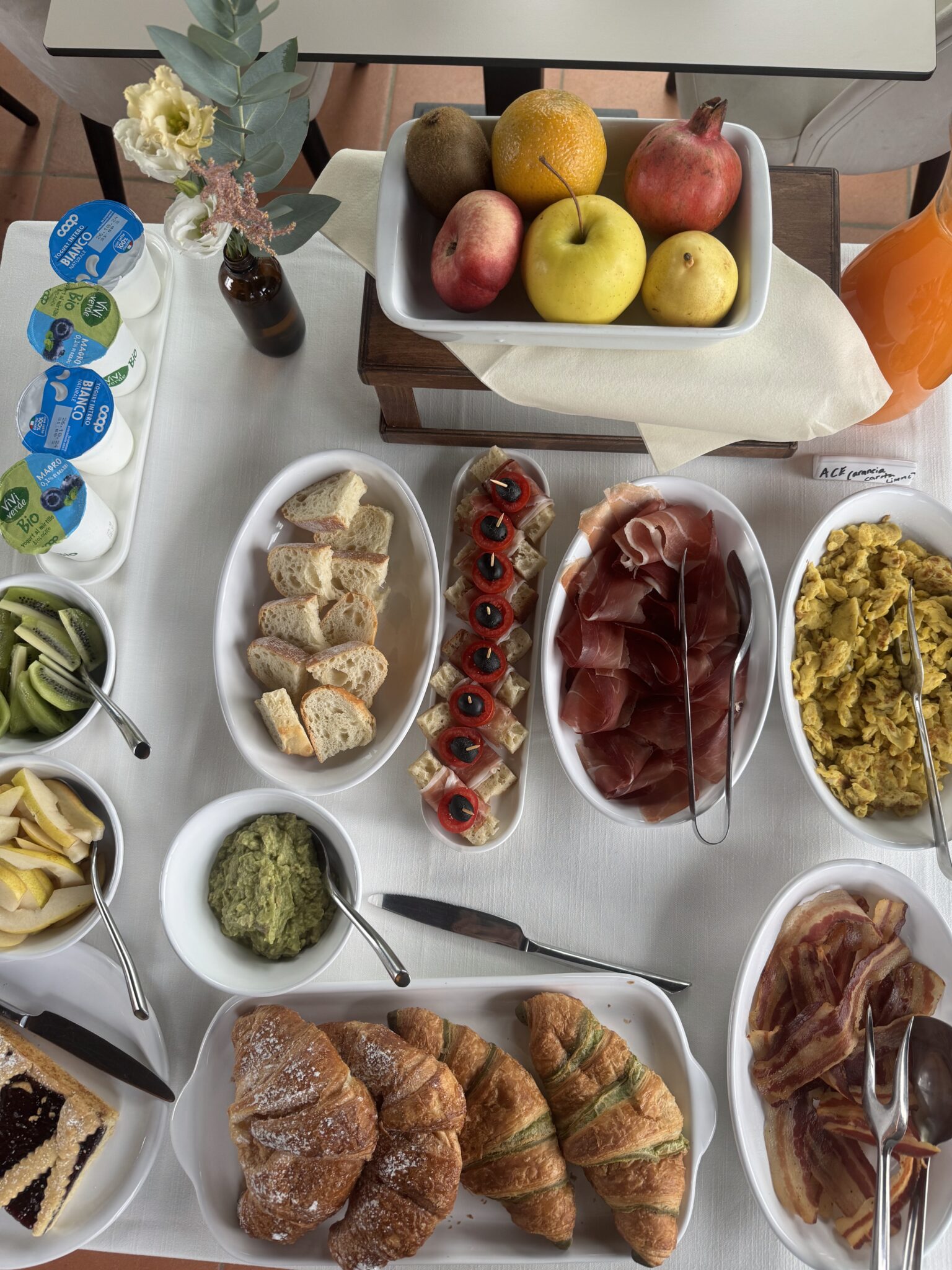
I woke to the sound of workers repairing a nearby ceramic rooftop and the breeze coming in from the valley. Breakfast was a colorful spread of fruit, eggs, yogurt, cured meats, local pastries and espresso (for me, cappuccino) at the restaurant. My favorite pastry was a pistachio croissant: it was perfectly flaky and chewy on the outside, green pistachio cream inside. Afterwards, I went for a walk through the empty fields near the castle, which were filled with bay leaf trees, lemon balm and wild blackberries.
We ventured into town to Porto del Vino Sfuso for a long lunch with Molly’s parents and other guests visiting the castle. There, I had one of the best salads I’ve ever eaten (celery, endive and big chunks of Pecorino, topped with superb olive oil and vinegar), followed by a light seafood pasta. And, of course, wine. Italians truly view mealtimes as a precious ritual, even mid-day.

Friday: Exploring Local History
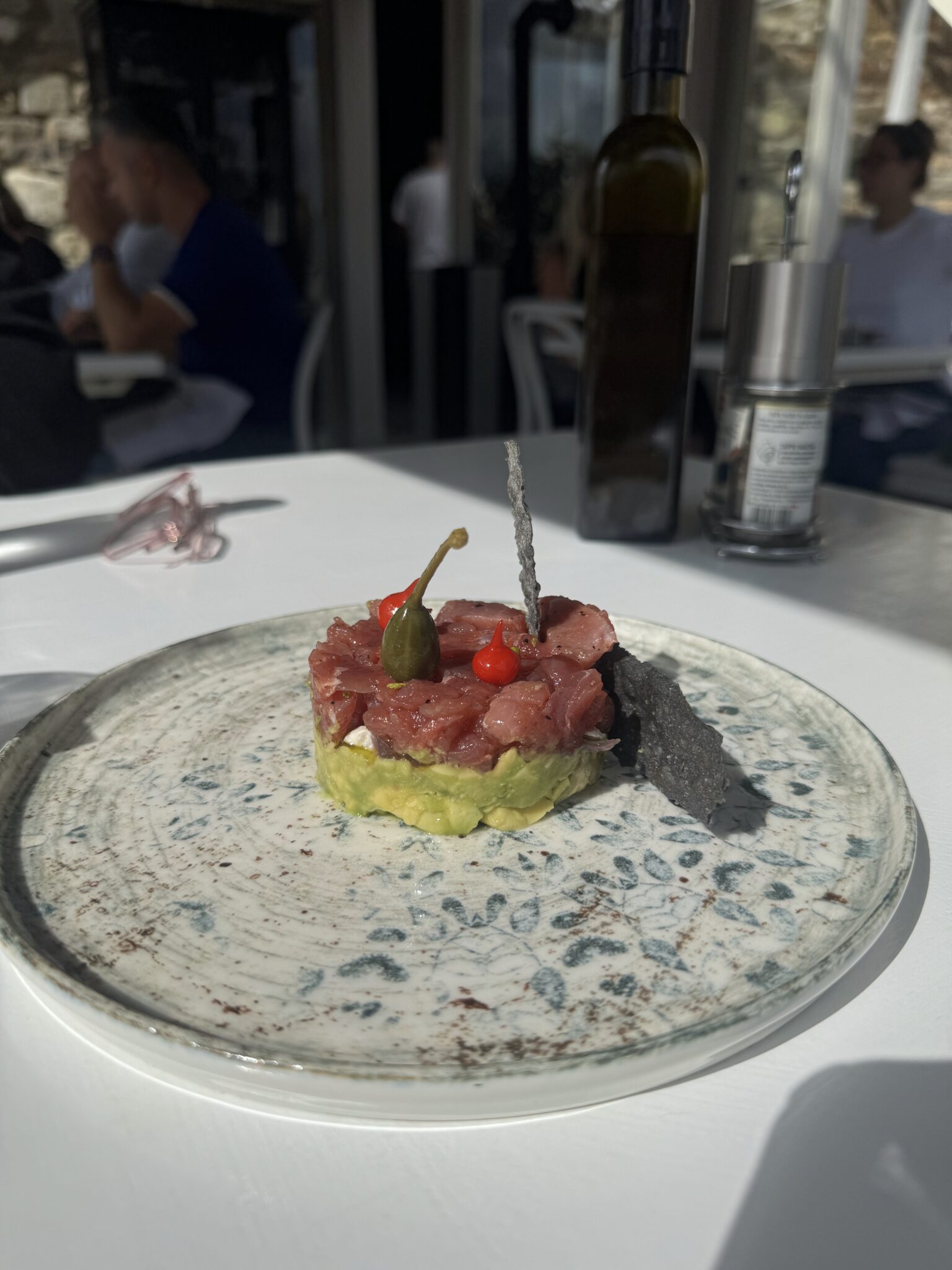
Molly drove us to Poppi Village and Castle, a sprawling 11th and 12th-century estate and an iconic part of Castenino history. Lunch was at L’Acquolina, at the top of the village, a bistro whose name fittingly translates to “mouth-watering.” The menu was more modern Italian fusion, which included an excellent tuna tartare. Afterwards, we explored La Verna Sanctuario, an ancient Franciscan monastery in the mountains that has relics believed to belong to St. Francis himself. In addition to wandering the grounds, chapels and sanctuaries, we watched the daily voyage of the monks, which was a real highlight.


Saturday: Village Life
We took a lovely walk from the village down into Stia, the nearest town just a few miles down the mountain from the castle. It was once a thriving mill town, which you still get glimpses of today. It’s quaint and walkable, just as you would expect for a relatively off-the-radar Italian community, with the river weaving through it, winding stone roads, family-run shops and a piazza in the center with the local schoolchildren running free throughout. There, we explored local shops and bakeries including…
- Tessilnova An old-world wool coat shop known for making Audrey Hepburn’s coat for the movie Breakfast at Tiffany’s.
- C’era una Stoffa: A family-owned shop with delightful linen and cotton napkins, placemats and housewares they make themselves. (Its name translates to “once upon a fabric.”)
- Il Panda: Great for gift shopping, here I snagged some pastel-hued glassware for my girls, along with some Italian-made notebooks and colored pencils.
- Cala Gogo Gelateria: A favorite for housemade gelato.
- La Stiaccia and Bar La Piazza: Two bakeries with fresh croissants, cannolis and other classic Italian pastries

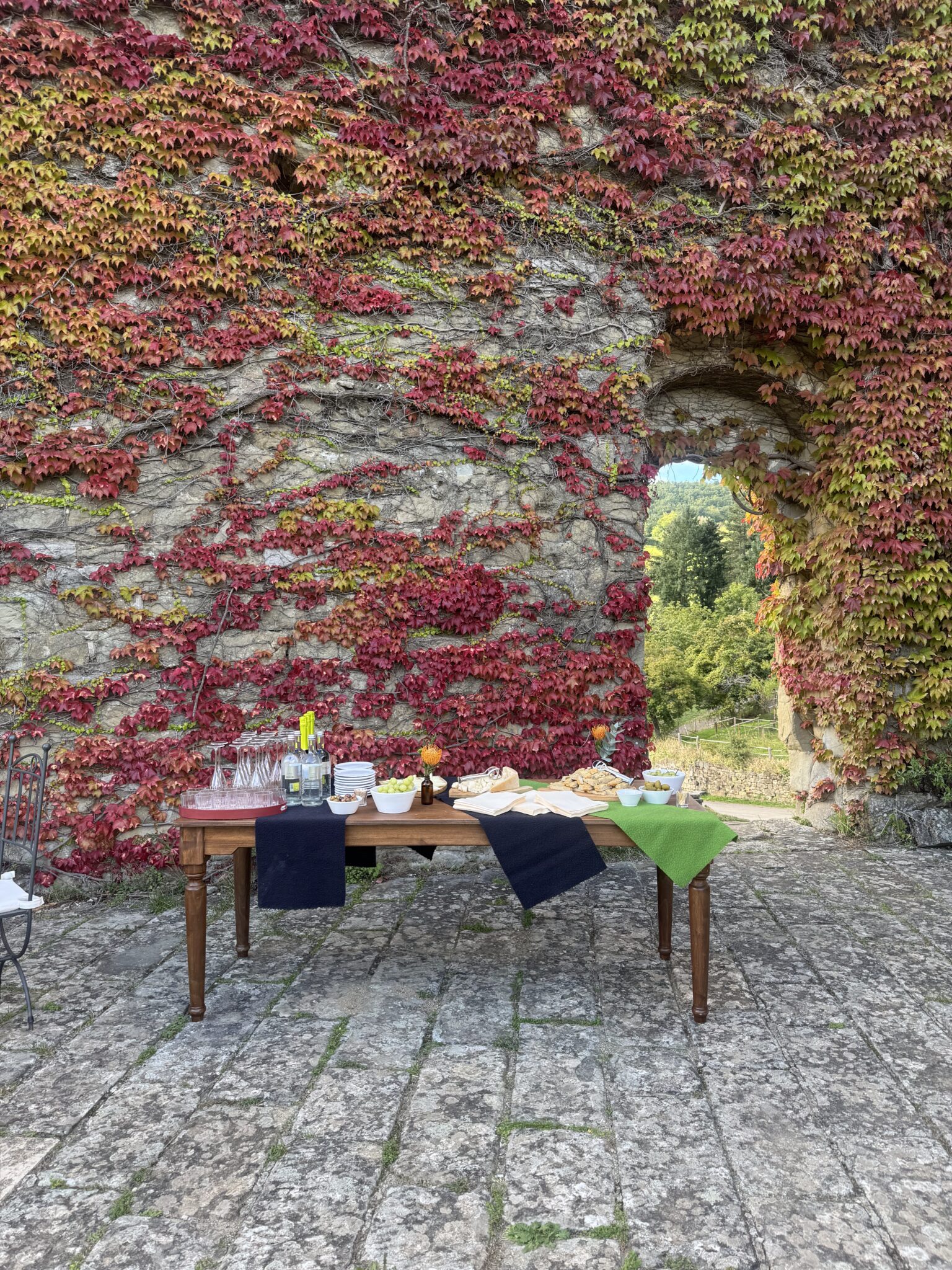
Lunch on Saturday might have been one of my favorites. We ate at La Bottega Delle Esperienze, a small place in town that specializes in seafood, run by chef Francesco Fumarola, who’s originally from Florence. His children are friends with the Volkers’ kids, so the young ones (as well as other locals) bustled in and out — the energy made it feel like we were enjoying a meal in a home dining room.
Saturday evening we went to an art opening reception for regional still life artist Carlo Lanini at Porciano. It was a lovely affair filled with locals who have become friends with the Volkers and their family.


Sunday: A Quick Stay in Florence
I was offered a ride back to Florence by the countess of the castle, who lives in the city. My stay in Florence was entirely too short (two nights), but it allowed me to soak up a few sights, architecture and delicious eats recommended by my friends. A few highlights…
- I stayed at Hotel De Lanzi, a small, historic inn tucked on a side street in the heart of the city. From there, I walked everywhere, enjoyed a European-style continental breakfast and took in the sounds and sights of Brunelleschi’s dome and bell tower just outside my window.
- I ate dinner at Coquinarious twice! I loved the cozy atmosphere, fresh spins on classic Italian fare and the friendly staff. Plus, it was just a few steps from the hotel.
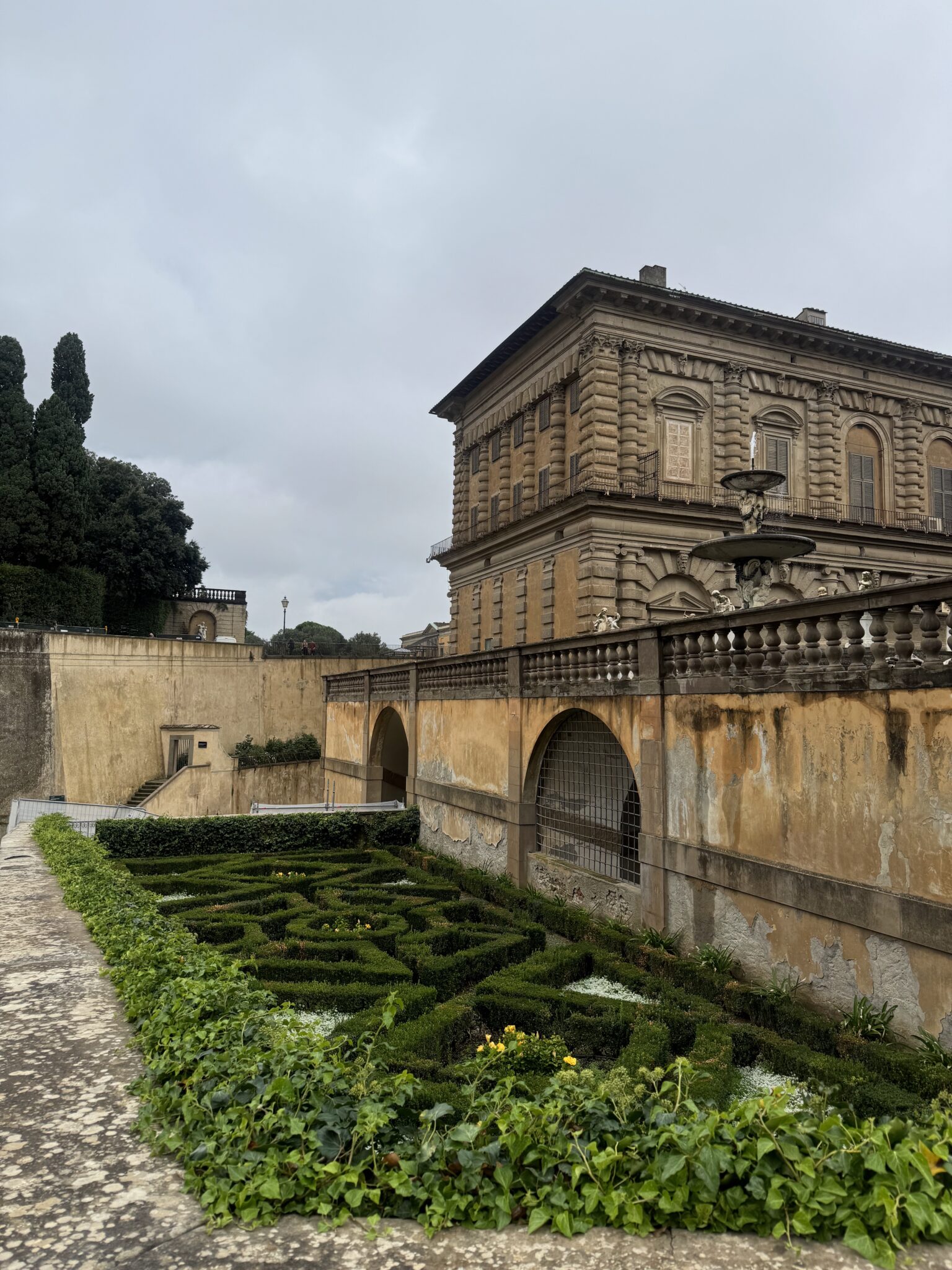
- I explored the gardens for hours at Palazzo Pitti, part of the Uffizi Galleries.
- I walked over and explored the area around the Ponte Vecchio, Italy’s oldest bridge.
- I discovered Marzotto Carta, an old, hidden paper shop tucked on a side street that seemed straight out of an old children’s film. I brought back such neat handmade stationary and journals — I didn’t need them, but couldn’t resist!


I took the red-eye home Sunday night feeling energized and inspired by my time – the later, longer meals, the way of life the Volkers have so naturally adopted, the ancient sights and sometimes lack of sounds in Porciano and the rush of being in Florence, grateful for it all eager to plan a return trip one day.

This article was originally published on October 17, 2025 on waltermagazine.com