These delightful North Carolina lizards have some cool characteristics like their ability to change colors and eyes that move independently
by Mike Dunn
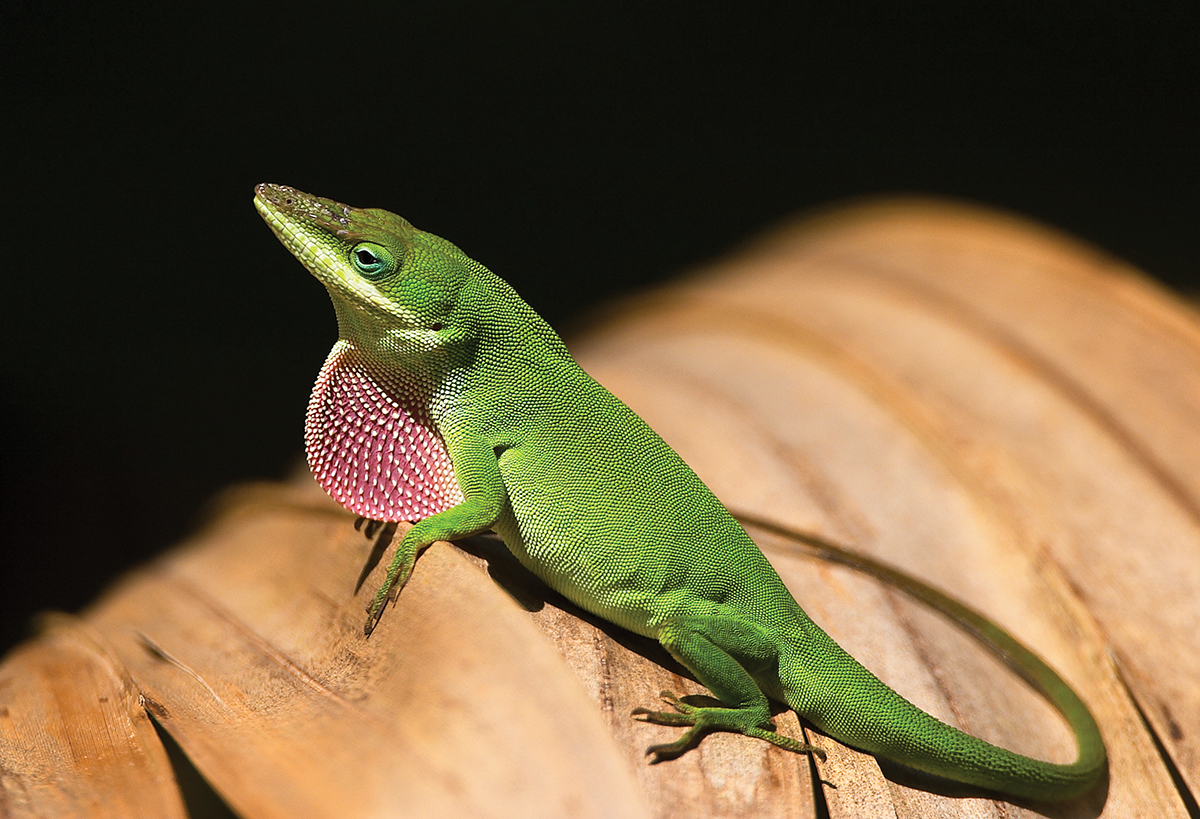
For many years, I had the pleasure of being one of the judges for the annual photo competition sponsored by Wildlife in North Carolina magazine. Each year we reviewed a few thousand photos submitted by photographers of all ages from across the state. Without fail, we would have some high-quality images of a particular lizard that always ended up in our final choices: the green anole, Anolis carolinensis.
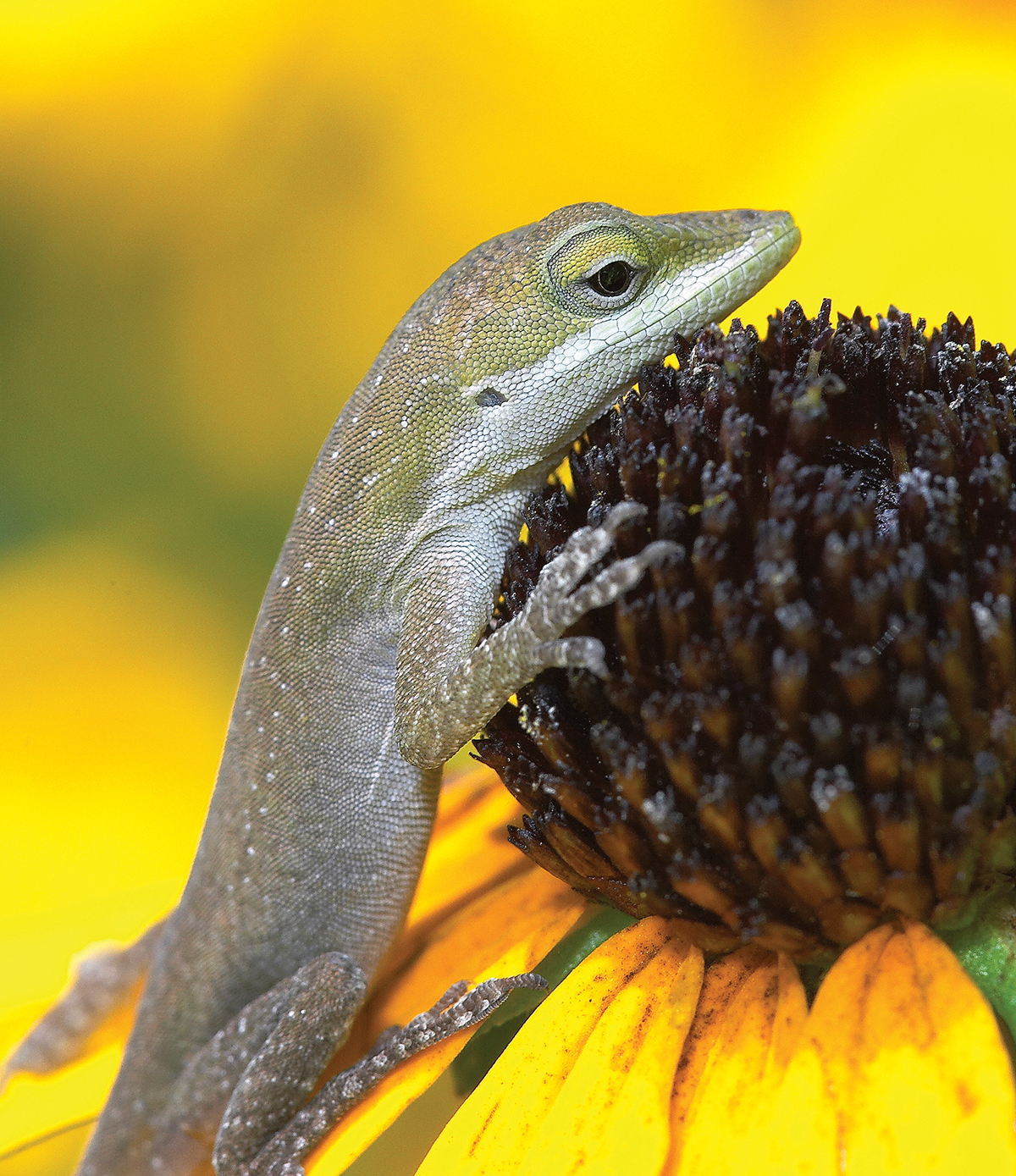
I think the reason they’re photographed so often — and so well — is that they are charismatic little critters. They can change colors from a vibrant green to a subdued brown, their eyes can move independently (unlike our other lizards) and they are common in our area. They also tend to act in a curious manner that seems like they are engaging with us, rather than darting away the instant they see us.
Green anoles, which are sometimes called Carolina anoles, are the only native anole in the continental United States. (A cousin, the brown anole, was introduced into Florida from Cuba and islands in the West Indies and can be found in some North Carolina counties. That one cannot change color and is brown or grayish black with more distinctive patterning than the green anole.)
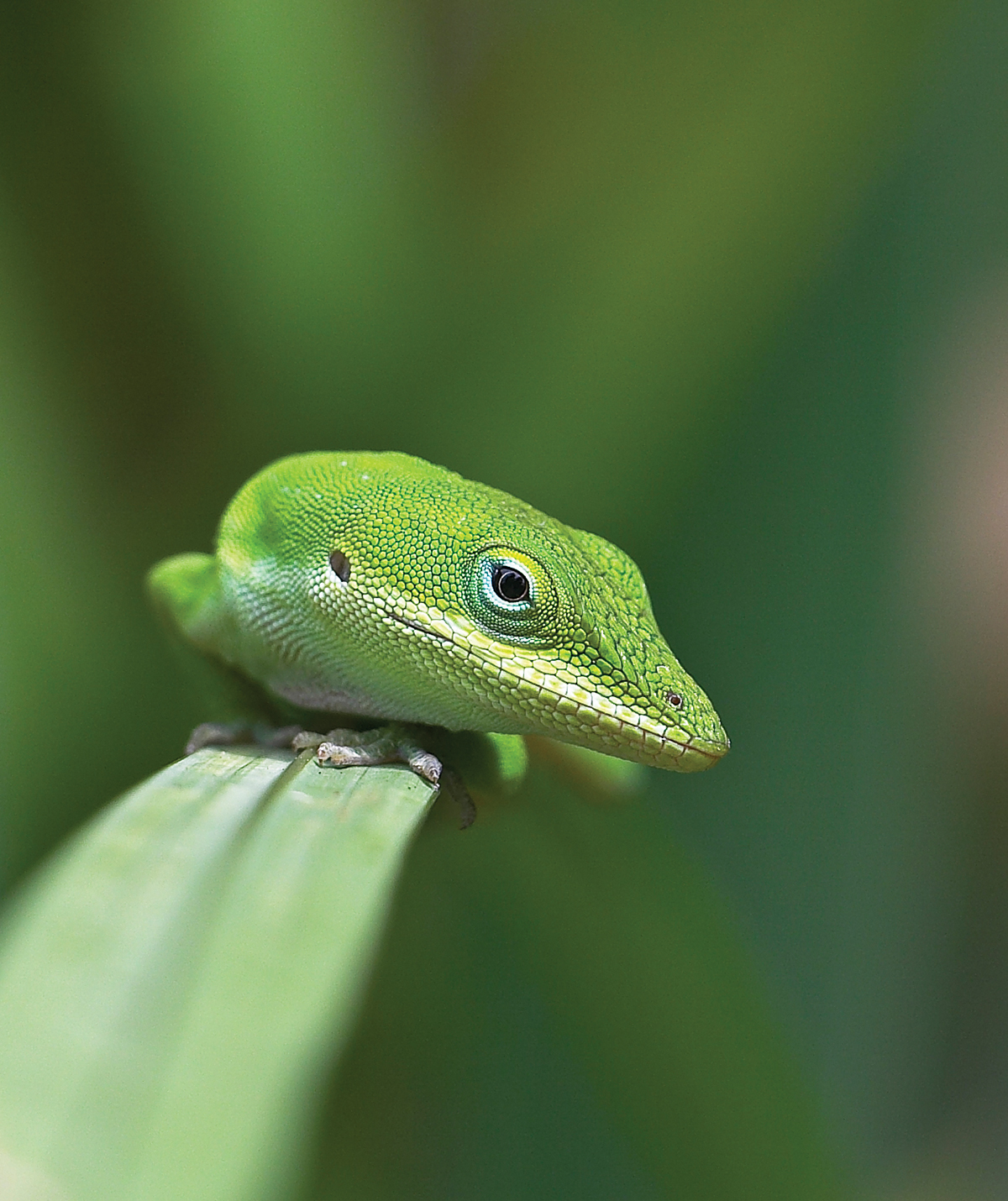
Our green anole is widespread in the southeast and can be seen in North Carolina from the foothills to the coast. Sometimes called the American chameleon because of their ability to change colors, anoles are not related to true chameleons. In fact, they are more closely related to iguanas.
Scientists have studied the mechanism of their color change and it is quite
complex.
Basically, there are pigment-containing cells just beneath the skin, some of which contain melanin, a dark pigment. When the melanin is clumped together in their cells, the skin color is green. When the melanin expands and disperses, it blocks the other pigments and the skin changes to a brown color. Hormonal secretions cause the movement of melanin in response to factors such as stress, temperature, light and social interactions. This type of physiological color change can happen fairly rapidly; anoles are capable of changing their color completely in just a few minutes.
Color change benefits green anoles in terms of camouflage, social signaling and thermoregulation. The first ones I see in spring and the last ones in the fall are usually brown and blend in with the fallen leaves and twigs where I often find them. The darker color may also help these cold-blooded reptiles absorb more heat in cooler weather. In summer, I see more of them showcasing their green color — perhaps to match their verdant surroundings.
Males tend to be green more often than females. Scientists think the green may serve as a social signal of dominance. I read that when males battle for territory or mates, the winner usually ends up green and the loser brown. So, it seems cooler temperatures and higher stress levels are the primary drivers of the change to brown skin color. If you see one with black patches of skin behind the eyes, this also indicates a high level of stress caused by feeling threatened or confrontations between rival males.
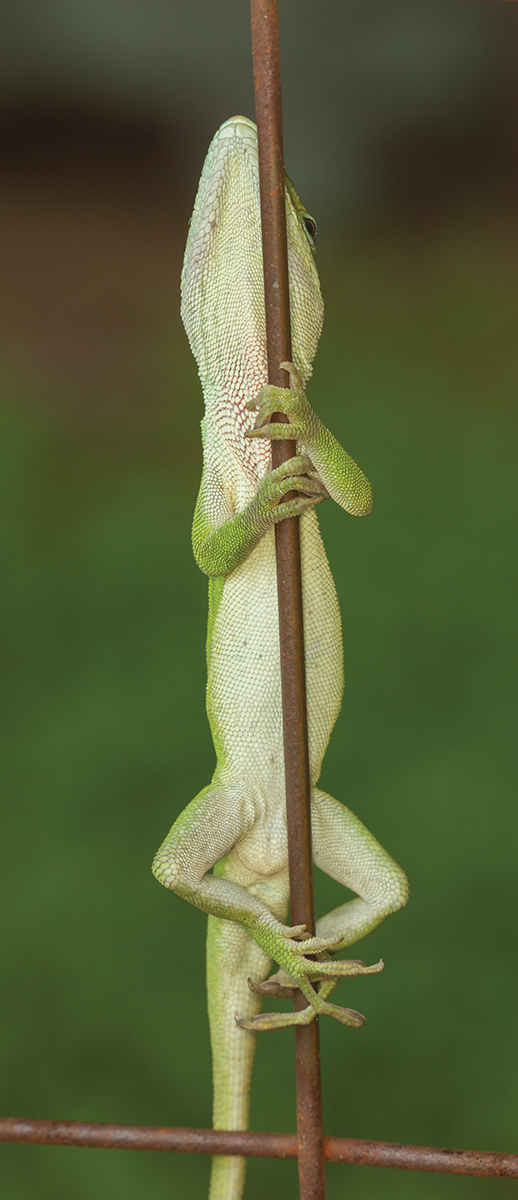
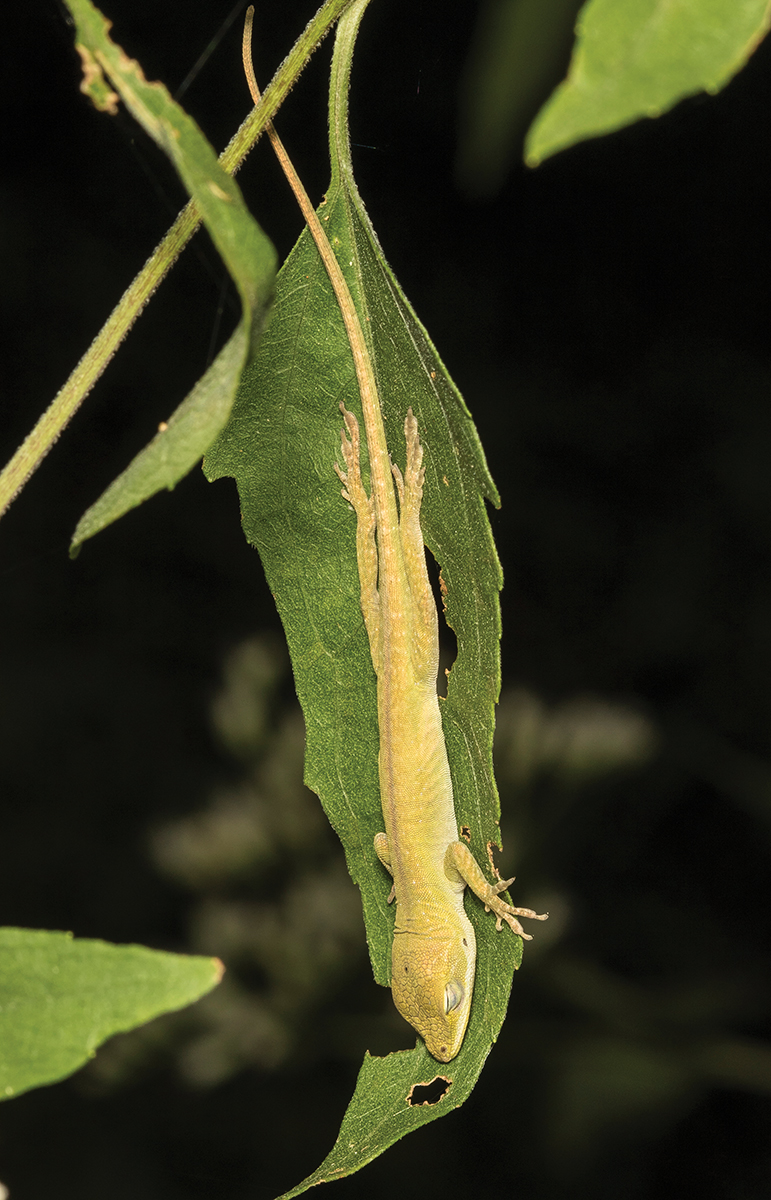
One of the things I love most about these lizards is their dewlap, a pink flap of skin on their throat that can be flared like a fan. Males display their dewlap to attract females and to ward off other males in territorial disputes. This display is usually accompanied by head bobbing and occasional pushups. Males often display in response to movement, which I’ve found helpful when I am trying to get a photo. And I admit to having initiated their head bob and display by doing my own version: bobbing my head while simultaneously holding my hand on my throat and spreading my fingers. (Having no nearby neighbors is probably a good thing.) That may not be as goofy as the habit some kids learned: that you can have living green earrings by holding an anole up to your ear so it bites your earlobe and hangs for a few seconds. (I don’t recommend this as it must be stressful to the lizard and may cause shock to nearby adults).
Green anoles can reach approximately 8 inches in length, including the tail (males are larger than females). A female may lay one tiny egg (1/4-inch-long) every week or two from March to October in loose soil, under logs or in other protected areas. Young anoles hatch in about six weeks and are only about an inch long. Anoles periodically shed their skin, usually in patches that they then often consume.
Anoles are carnivorous, eating a wide variety of insects and spiders. In turn, green anoles are eaten by many birds, snakes and even other lizards. Outdoor cats are also very effective predators. I once had neighbors come over and comment on how many lizards we had in our yard. They never saw any in their own yard — but they had five outdoor cats.
Like most of our lizards, anoles can drop part of their tail to escape a predator. The dropped tail portion will continue to wriggle on its own and serves to distract the predator while the lizard makes its escape. Tails can be partially regrown over time.
Green anoles have been used for a variety of studies in the biological sciences. Because of their importance, they were the first reptile to have its entire genome sequenced over a decade ago!
From their significant place in scientific research to their beauty and fascinating behaviors that anyone can observe, green anoles are one of our most beloved reptiles. I’ll leave you with some praise for anoles from the famed naturalist and explorer, John Lawson. He wrote about his observations of the natural history of our state in his famous book entitled A New Voyage to Carolina, which was first published in 1709. He described green anoles in this way:
Green Lizards are very harmless and beautiful, having a little Bladder under their Throat, which they fill with Wind, and evacuate the same at Pleasure. They are of a most glorious Green, and very tame. They resort to the Walls of Houses in the Summer Season, and stand gazing on a Man, without any Concern or Fear. There are several other Colours of these Lizards; but none so beautiful as the green ones are.
I couldn’t agree more.

This article originally appeared in the May 2026 issue of WALTER magazine.