
The North Carolina signers of the Declaration of Independence
by Warren L. Bingham
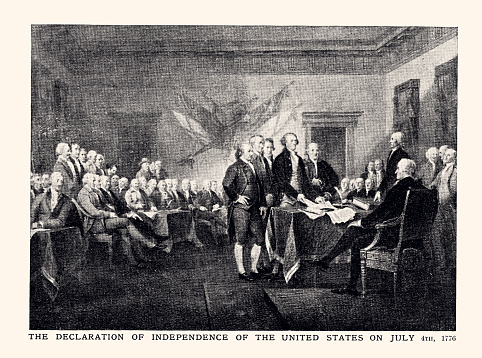
In July 1776, the Continental Congress had been in session in Philadelphia for over a year. It was composed of delegates from the 13 British colonies lining the Atlantic Coast, from New Hampshire to Georgia. Among them were three founding fathers whom you’ve likely never heard of: William Hooper, Joseph Hewes and John Penn. These North Carolinians were among the 56 signers
of the Declaration of Independence.
None of our signatories were originally from North Carolina, but that was not unusual. In the 1770s, it’s thought that over half the residents of North Carolina had come from somewhere else, as it was a time of significant population growth and resettlement. People came from other states and abroad seeking land and opportunity, bringing new talents, skills and ways of thinking.
In 1776, William Hooper was a Wilmington lawyer, but he had previously lived in Campbelltown (present-day Fayetteville) and at one time served in Royal Gov. William Tryon’s legal department. His wife was the former Anne Clark, daughter of a New Hanover sheriff. Born to a prominent Boston family in 1742, Hooper’s father was the second rector of Trinity Church. Hooper graduated from Boston Latin for his prep education, then earned both a bachelor’s and a master’s degree at Harvard University. In addition to his formal training, Hooper studied law in Boston in the early 1760s under Boston lawyer James Otis, who was known for his strong advocacy of Colonial rights.
At the time of the Declaration, Joseph Hewes was a well-established Edenton merchant who had served in Colonial assemblies for 20 years. Hewes was in import-export trading and was a shipbuilder. Born on his family’s large farm in Kingston, New Jersey, in 1730, Hewes completed his formal studies at Kingston Friends School and was apparently bound for college at Princeton but — in today’s vernacular — turned pro instead. Strong-willed and ambitious, Hewes was drawn to commerce and, in lieu of college, sought practical training as an apprentice to a Philadelphia merchant.
After five years of dock work and learning the trading business from the cargo hold up, Hewes struck out on his own, at first in Philadelphia. But by 1755, he was making a life and career for himself in Edenton. Hewes was engaged to marry the well-connected Isabella Johnston of Edenton, sister of Samuel Johnston, a future North Carolina governor. The Johnstons’ uncle was former Royal Gov. Gabriel Johnston. Sadly, Isabella Johnston died after a short illness before her marriage to Hewes could take place, and Hewes ultimately never married.
By 1776, John Penn was a known advocate for independence. Unlike Hooper and Hewes, Penn was not of the eastern North Carolina elite. A Virginia native who grew up on a small farm near the Rappahannock River in Caroline County, Penn was born in 1741 to a hard-working farm family. Though he received little formal education in his late teens, his father’s death left him with enough funds that he could afford to take time to study the law.
He lived in Granville County, in the northern Piedmont, where he farmed and maintained a successful law practice. His wife, the former Susannah Lyme, was a native of Granville County, and their marriage is what brought Penn there. He was more typical of back country settlers who lived simpler lives and distrusted both the crown and the eastern North Carolina elite.
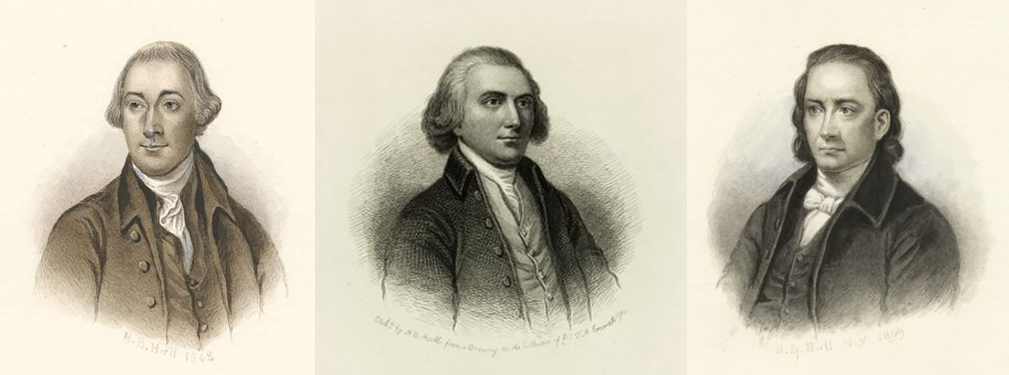
These three men, Hooper, Hewes and Penn, were selected by their peers in North Carolina’s Provincial Congress to represent the state. The primary topic was governance and whether the Colonies should seek independence from Great Britain.
The Colonies had recently ousted royal governors, and now Colonial assemblies were trying to figure out how to best govern themselves — but the people were still subjects of King George III, and a good number of Americans liked it that way. Many felt it was beneficial to remain with Great Britain, and numerous English, Scots and Scots-Irish settlers had known only loyalty to the king. Some historians describe the Revolutionary War as America’s first civil war.
But news of deadly skirmishes in New England perpetuated by British troops against local militia, combined with King George III’s uncompromising efforts to tax and regulate the Colonists, increasingly drove Americans to question their loyalty to the crown. The women of eastern Carolina were notably engaged in their own protest of the crown and the British Parliament: Fifty-one women, led by Penelope Barker of Edenton, lent their names in the fight against tyranny when they staged the Edenton Tea Party in 1774. Parliament had passed several taxes on imported British goods, and the ladies of Edenton called for a boycott of British imports.
As debates about independence crept along in Philadelphia, delegates would come and go, tending to matters at home. Among the dozens of delegates from the 13 Colonies, rarely was everyone present at the same time. Travel was hard — the trip by horse from North Carolina to Philadelphia took two to three weeks.
Leaving his family, farm and practice for long periods, Penn attended more days of the Continental Congress than any other North Carolinian and was a member of 15 or more Congressional committees. Back home, Penn was involved in equipping and supplying both the North Carolina militia and soldiers of the Continental Army.
In January 1776, Thomas Paine, a previously little-known writer and thinker, released his pamphlet,Common Sense, which strongly advocated for American independence from Great Britain. Written for the masses, Paine called monarchies absurd and implored Americans to unite, proclaim independence and create a democratic government. His words resonated and spread throughout the colonies.
In North Carolina, momentum for self-governance was growing. In May 1775, Mecklenburg County leaders met in Charlotte and publicly resolved their desire for independence. Then, in April 1776, the North Carolina Provincial Congress put forth the Halifax Resolves, in which North Carolina became the first Colony to call for independence from Great Britain.
On July 4, 1776, the Continental Congress set forth the Declaration of Independence, which spelled out grievances with Great Britain and specifically with King George III. The collective body declared the “united” States of America to be free and independent states, absolved from all allegiance to the British Crown.
The Declaration was the seed of the future, but the lower case “u” in united meant that each state was sovereign. For the time being, the states would move forward in a loose alliance. That alliance took on the British military, and after eight years of battles and skirmishes, from New Hampshire to Georgia, independence was secured in 1783.
The North Carolina trio had challenges during the war. Hooper’s home, Finian, was situated on 100-plus acres on Masonboro Sound south of Wilmington. The British bombed and burned Finian, and Hooper and his entire family fled to Hillsborough, where they lived out their lives.
During the war, Hewes was in Philadelphia more than in Edenton, often using his knowledge and skill in trade and shipbuilding to help the American cause. He was, in effect, the first secretary of the Navy. As the war raged, his health worsened and he grew increasingly weak, probably from malaria. He died in his Philadelphia rooming house in 1779 and was laid to rest nearby in Christ Church Burial Ground, just a few hundred yards from where he signed the Declaration of Independence.
Despite their role in representing North Carolina in Philadelphia, Hooper, Hewes and Penn are relatively unknown today. Though they made continued contributions to the fledgling state of North Carolina after July 4, 1776, all died in their 40s. They never became widely heralded, though each man is recognized by historical markers and tributes at their graves.

This article originally appeared in the July 2026 issue of WALTER magazine.

Pingback: Revolutionary Roots: America 250 in Raleigh - WALTER Magazine