North Carolina was an important colony during the signing of the Declaration of Independence. Here’s how we’re sharing that history
by Ayn-Monique Klahre

NC MUSEUM OF ART
Study for “The Surrender of Lord Cornwallis at Yorktown” (detail) by John Trumbell, circa 1787-1791
This work is a study for a monumental history painting that hangs in the rotunda of the US Capitol. It represents the 1781 surrender of the British army at Yorktown, ending the last major campaign of the Revolutionary War. Gift of Ann and Jim Goodnight.
Happy Birthday to America!
This year marks 250 years since the signing of the Declaration of Independence. Colonial North Carolina was an important player in the American Revolution, and while the city of Raleigh itself may not have been around at the time, today it’s home to many of the state cultural institutions that preserve this history. From art to artifacts, and through storytelling, events and exhibits, the city is commemorating the “First in Freedom” spirit our citizens established in 1776.
Read on for a few of the ways we’re safeguarding and commemorating America 250 in Raleigh.
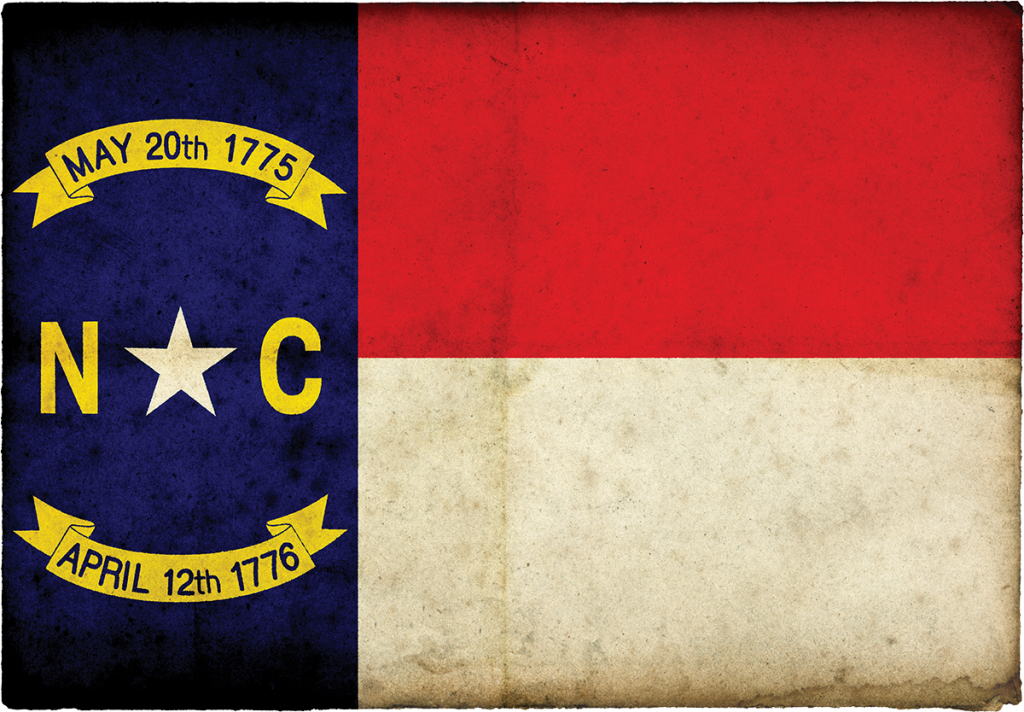
NORTH CAROLINA STATE FLAG
The two dates on the North Carolina state flag commemorate the Mecklenburg Declaration of Independence (May 20, 1775) and the Halifax Resolves (April 12, 1776).
HISTORIC HALIFAX STATE HISTORIC SITE
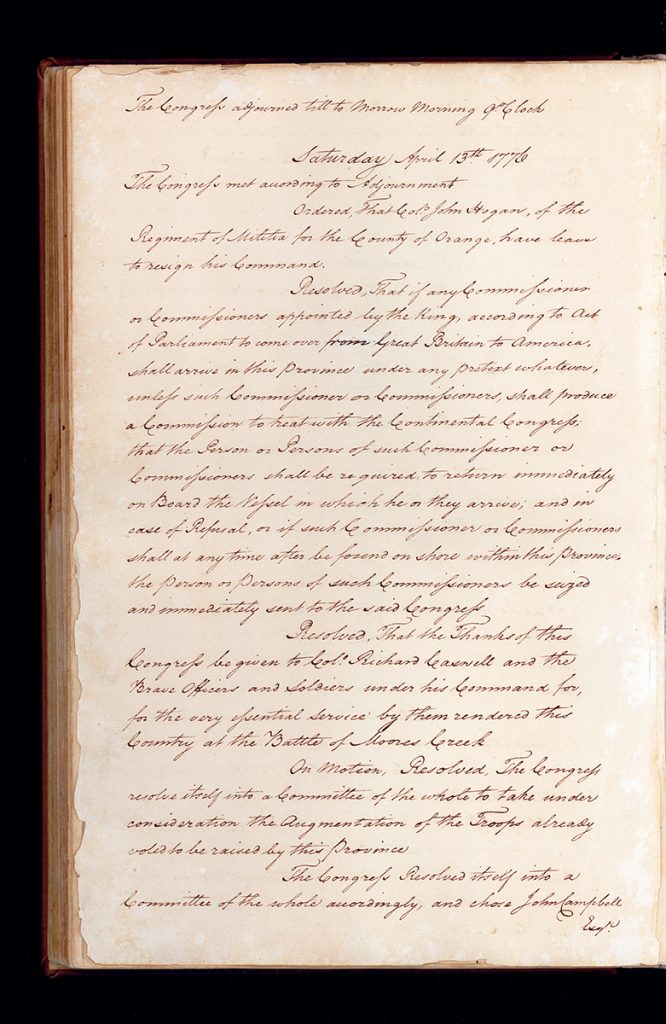
In April 1776, the North Carolina Provincial Congress put forth the Halifax Resolves, in which North Carolina became the first Colony to call for independence from Great Britain.
This is a page from the Halifax Resolves. The originals are typically stored at the National Archives, but are currently on loan and visible at the Historic Halifax State Historic Site. On April 12, 1776, North Carolina’s Fourth Provincial Congress met in Halifax and produced this document, the first official action by a colony supporting independence from England.
America 250 NC
North Carolina Department of Natural and Cultural Resources
In 2019, former Gov. Roy Cooper tasked the NC Department of Natural and Cultural Resources with developing our state’s America 250 commemoration. “We were well suited, since we’re the home of all the history in the state, between the history museum, archives, library and historic sites,” says Ansley Herring Wegner, who heads the program. Harnessing these resources, they have been creating books, exhibits, events and other programming to highlight North Carolina’s role in the American Revolution.
They’ve been working with each of our 100 counties to fund local celebrations, including festivals, plays and public art. On their website, you can find revolution-related events and important historic locales across the state. They have also developed free traveling exhibits to loan to libraries, schools and other organizations. “It’s a way to get museum-quality information into all corners of our state,” Wegner says.
One artifact Wegner is excited about is a rare sketch depicting the Continental Army’s North Carolina Brigade marching through Philadelphia on Aug. 25, 1777. On loan from the Museum of the American Revolution, it will be shown at the NC Museum of Art, the Capitol Building and in Historic Halifax. “It’s an amazing artifact because it realistically shows not just the soldiers, but the camp followers — the women who cooked and cleaned for them,” Wegner says.
Learn more about these efforts at america250.nc.gov.
NC MUSEUM OF HISTORY
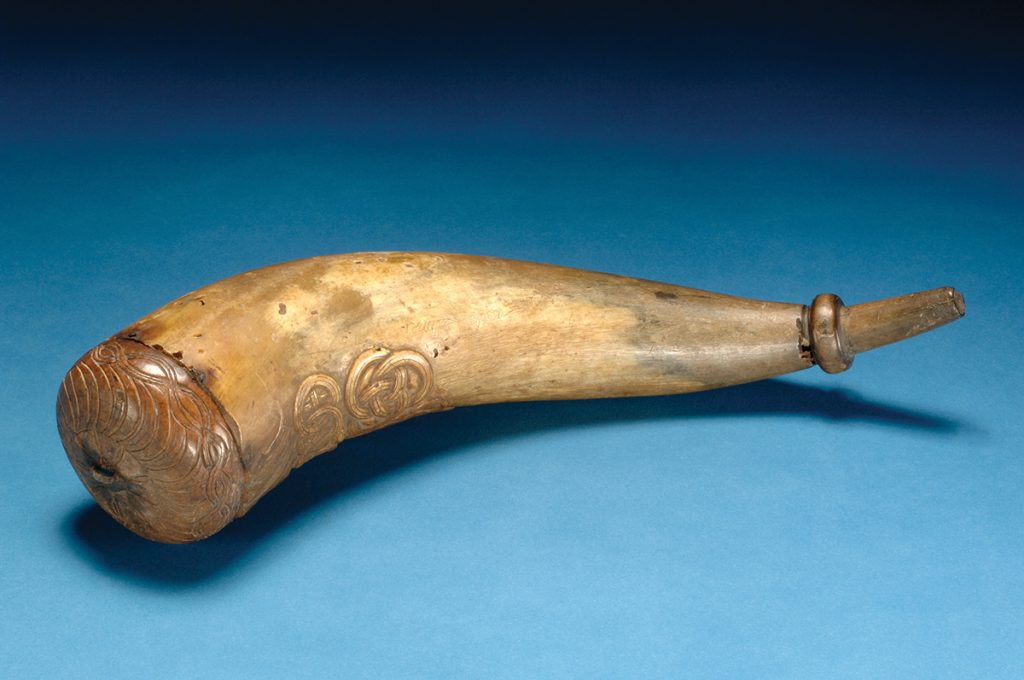
Powder Horn, circa late 1700s
Revolutionary War soldiers had to carry gunpowder for their muskets in a separate container to keep it safe, dry and ready to load when needed. Many soldiers used a “powder horn” for this — and most of these were made from actual animal horns. (This example is from a cow.) Joel Lane, who sold the land used to found our state capital, Raleigh, carried this hand-carved powder horn during the war.
The Spirit of ’76
The North Carolina signers of the Declaration of Independence
Meet the three North Carolinians who signed the Declaration of Independence — and whose names most Americans have never heard. William Hooper, Joseph Hewes, and John Penn represented the Colony in Philadelphia in July 1776, each bringing a distinct background: a Harvard-educated Wilmington lawyer, an Edenton merchant-turned-shipbuilder, and a plain-spoken Piedmont farmer who attended more Congressional sessions than any other North Carolinian. Their contributions helped birth a nation — yet all three died in their 40s, largely forgotten. This is their story, and it’s one every North Carolinian should know >>
NC MUSEUM OF HISTORY
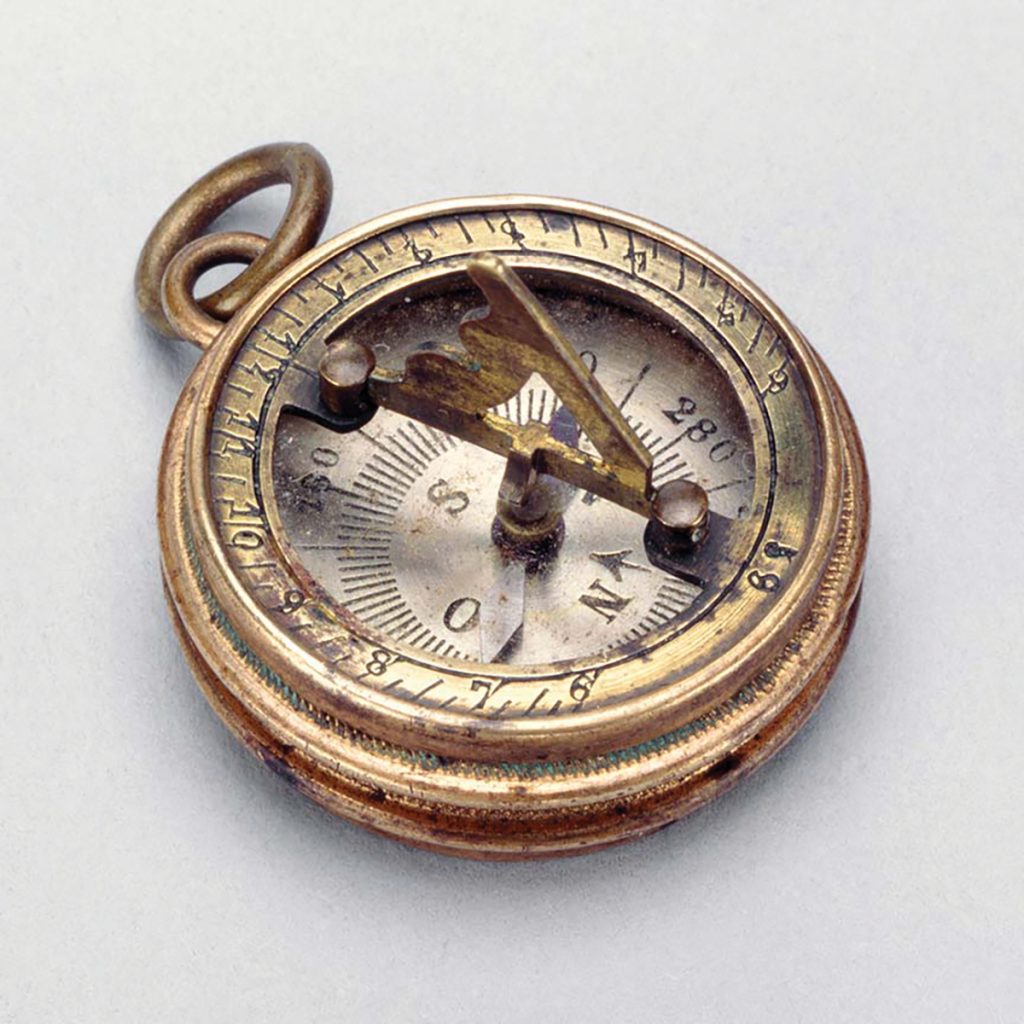
Pocket Sundial with Compass, circa 1770
French naval officer Gabriel du Brutz, who later settled in Fayetteville, had this sundial with him during the Battle of Yorktown in 1781. With the compass pointing to true north, the user lifts the foldable sundial upright and lines it up with the compass needle. Then the sun casts a shadow across the hour.
Revolution, Revisited
A new video series from the NC Museum of History combines documentary and narrative for an immersive tale
North Carolina’s revolutionary past is getting a bold new retelling. It’s Revolutionary!, a free 20-part video series from the NC Museum of History, drops July 3 — and it’s anything but a dry history lesson. Think 48 actors, 100-plus costumes, lots of wigs, and a Greek chorus bringing forgotten figures and pivotal moments to vivid life. Curator Sally Causey Bloom spent years researching and writing the scripts to make sure NC’s story gets its due. From German baronesses to defiant Tory wives, these aren’t the Revolution stories you learned in school. We got a behind-the-scenes look at its production >>
NC MUSEUM OF ART
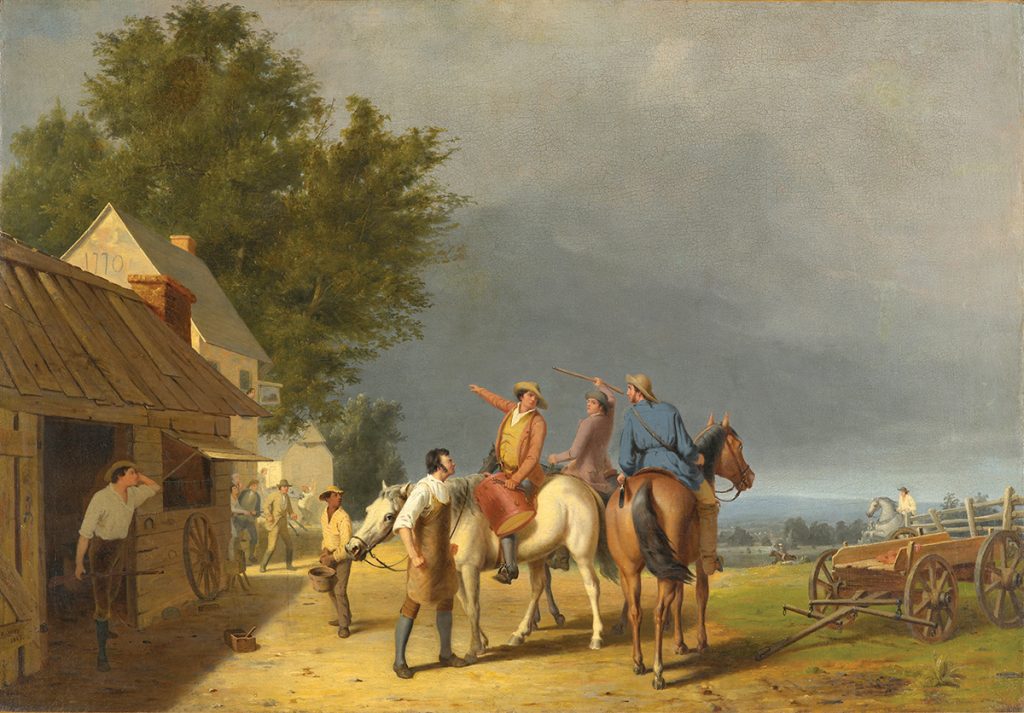
“First News of the Battle of Lexington” by William Tylee Ranney, circa 1847
The skirmish between redcoats and minutemen at Lexington, Massachusetts, on April 19, 1775, signaled the beginning of the Revolutionary War. More than 70 years later, rather than portray this episode as a heroic battle scene, Ranney captured the subsequent spreading news of war.
What’s in a Name?
North Carolina locales named after founding fathers
North Carolina’s map is a Revolutionary history lesson hiding in plain sight. From Washington on the Pamlico River to Hamilton along the Roanoke, our towns and counties quietly honor the founders who shaped a nation. Thomas Jefferson claimed a Blue Ridge town; Ben Franklin got a county and a Chapel Hill street. But the overachiever award goes to Gen. Nathanael Greene — Greensboro, Greenville, and Greene County all bear his name (and a local brewery raises a pint to him, too). Look a little closer at the map, and you’ll find North Carolina’s founding story written right across it. Here are a few more to explore >>
NC MUSEUM OF HISTORY
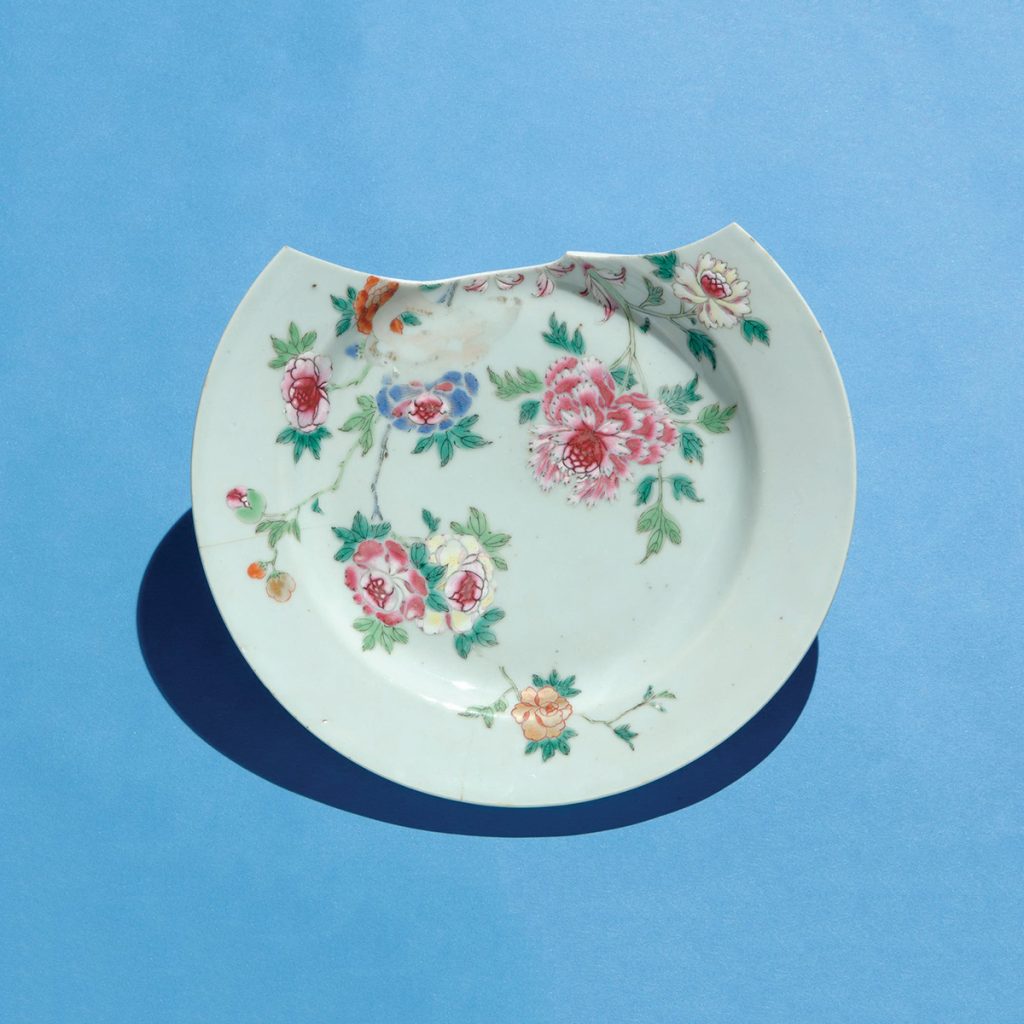
Plate, circa mid 17oos
What does a broken plate have to do with a Revolutionary War battle? British officers often traveled and camped in relative luxury, with nice furniture and even fancy dishes! Colonel Joseph McDowell from North Carolina reportedly took this plate from British Major Patrick Ferguson’s baggage after Ferguson was killed during the Battle of Kings Mountain in 1780.
Oaks for America
In honor of our big anniversary, the Rotary Club of Raleigh is planting 250 trees
What‘s the best way to celebrate 250 years of American independence? If you’re the Rotary Club of Raleigh, you plant 250 oak trees. Partnering with the City of Raleigh, the club has already put down roots in more than 220 spots across town — from Moore Square to Historic Oakwood Cemetery — with plans to surpass their goal this fall. Downtown trees are currently dressed in red, white and blue ribbons, a nod to the yellow ribbons that once welcomed Vietnam veterans home. It’s a living, growing gift to the city that, as fundraising chair John Cates puts it, “will be around long after we’re gone.” Read more about this project >>
NC MUSEUM OF ART
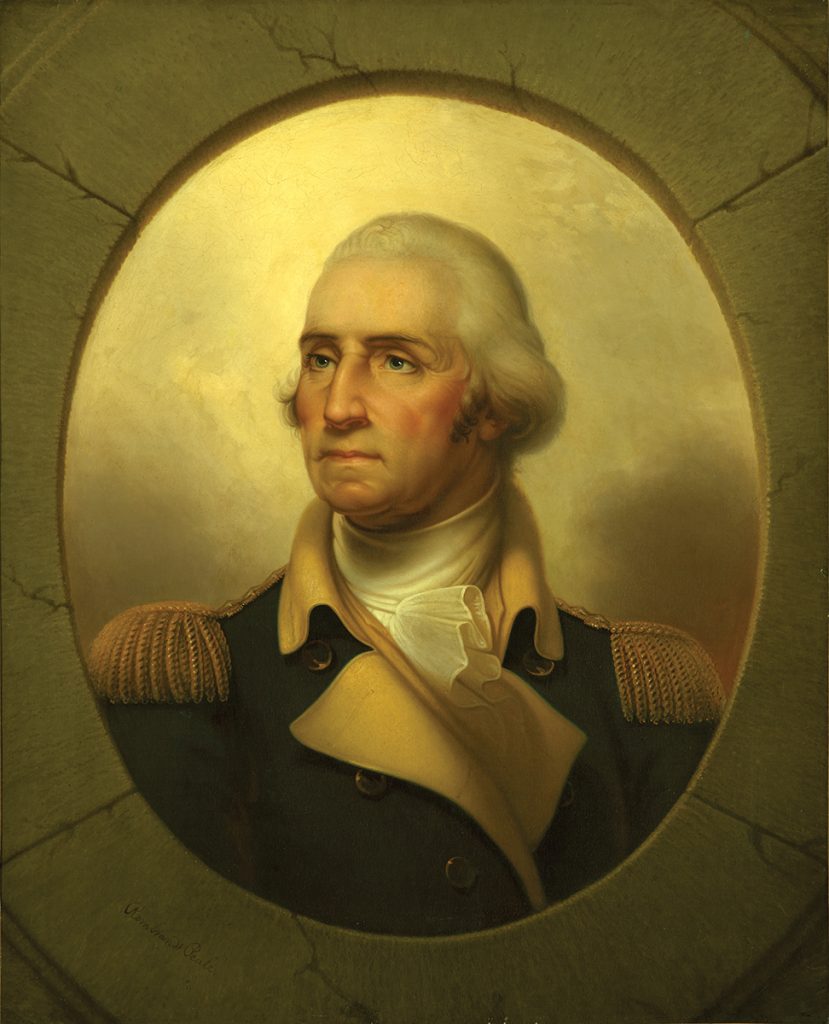
George Washington, circa 1855
American artist Rembrandt Peale painted this “porthole” portrait of George Washington, one of more than 78 nearly identical versions. Gift of Mrs. Charles Lee Smith, Sr., William Oliver Smith, Charles Lee Smith, Jr., and Mrs. Joseph H. Hardison, in memory of Dr. Charles Lee Smith, Sr.

A version of the article originally appeared in the July 2026 issue of WALTER magazine.