Meet a Raleigh native who has been collecting bottles from the city’s waterways and creek shores for nearly seven decades
by Jarrett Van Meter | photography by Joshua Steadman
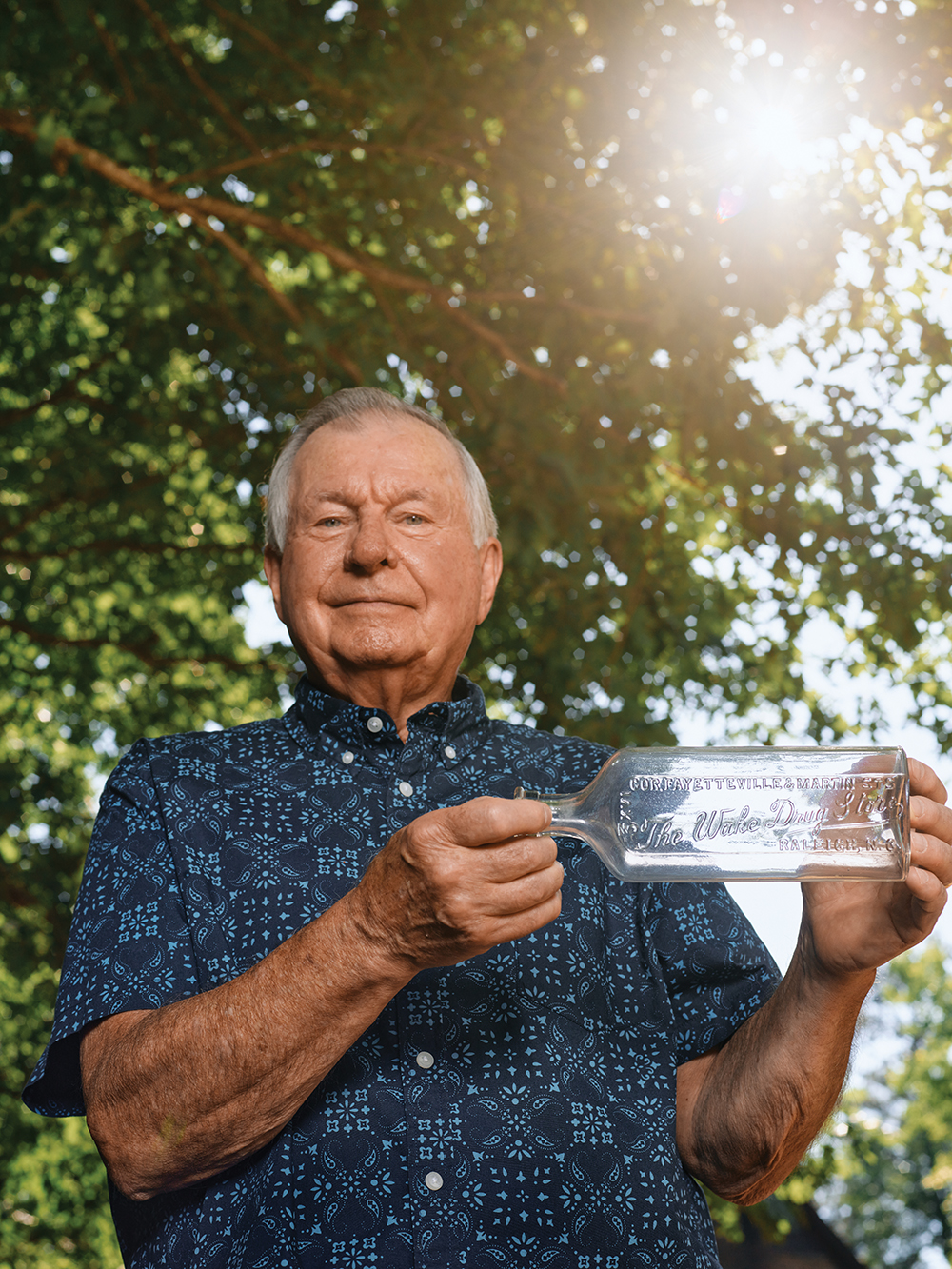
The spot was a decades-old dumping site generally ignored by adults. A roughly 8-foot embankment sloped down to the creek’s edge, where a swing served as the de facto welcome sign for neighborhood kids. It was a hideout, somewhere to while away the warmer months. David Tingen was a regular.
On this day, like so many others in that summer of 1955, Tingen pedaled his secondhand Schwinn bicycle four blocks from his home in Oakwood to “the creek.” His bike basket, installed to hold copies of The Raleigh Times during his afternoon paper route, now carried a hand-carved miniature boat and a shovel.
Upon arrival, he set to work on creating a dam so he could float his boat. He dug into the gradient: scoop-dump, scoop-dump, scoop-dump… TINK.
Several glass bottles tumbled from the slope like busted teeth. The colors gleamed blue, green and amber under the sun. Tingen picked up the brightest one. It was about 3 inches tall, deep cobalt. He squinted to read the embossed lettering: Emerson Drug Company, Baltimore. It was beautiful. He wanted to know its story, and in time he would learn that it was a Bromo Seltzer bottle, produced roughly 45 years prior. Its blue color was standard at the time for distinguishing medicinal contents. The bottle is worth roughly $5 by today’s standards, but to the young collector, it was as good as gold. He pocketed the bottle and a lifelong passion was born.
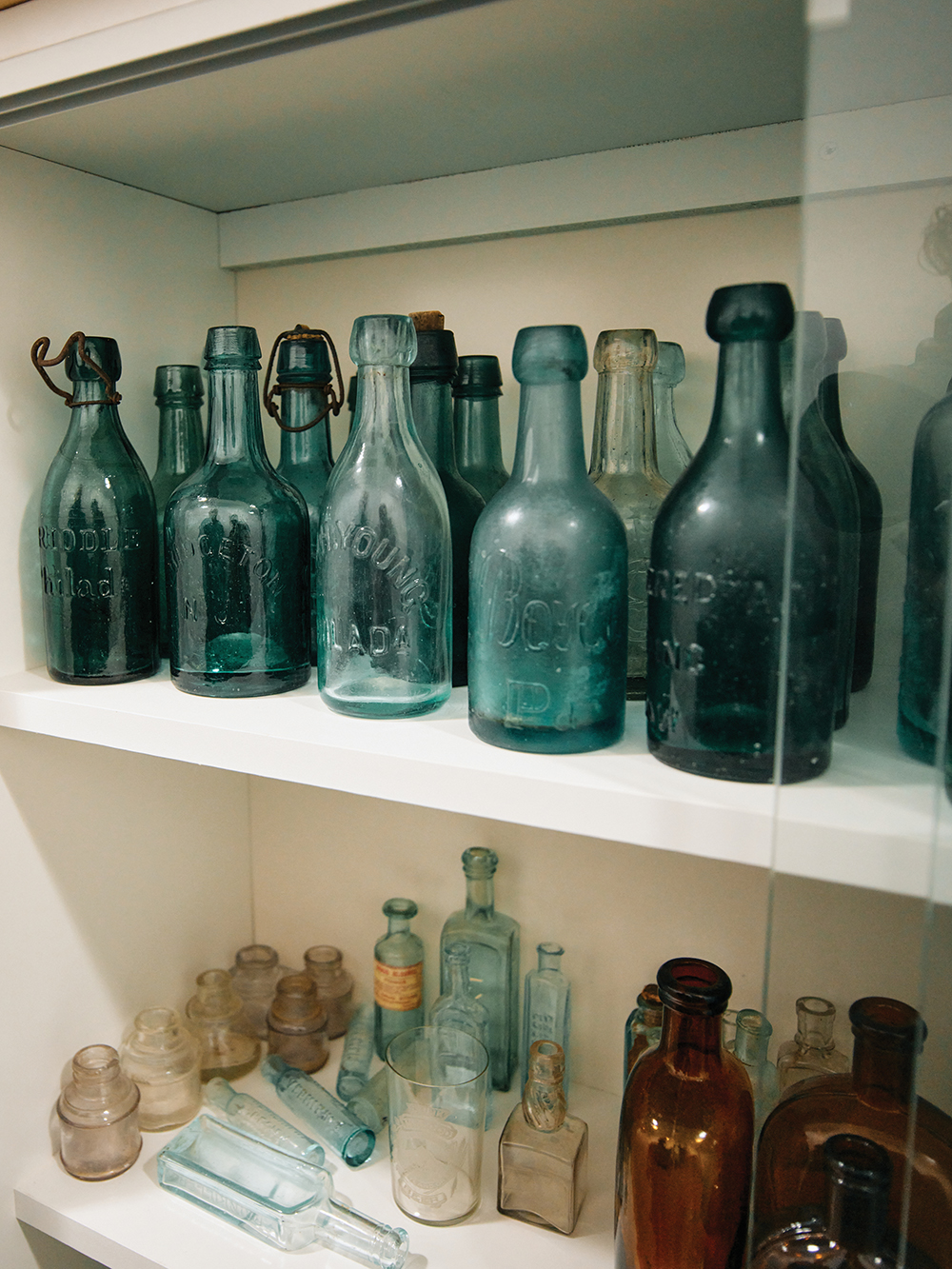
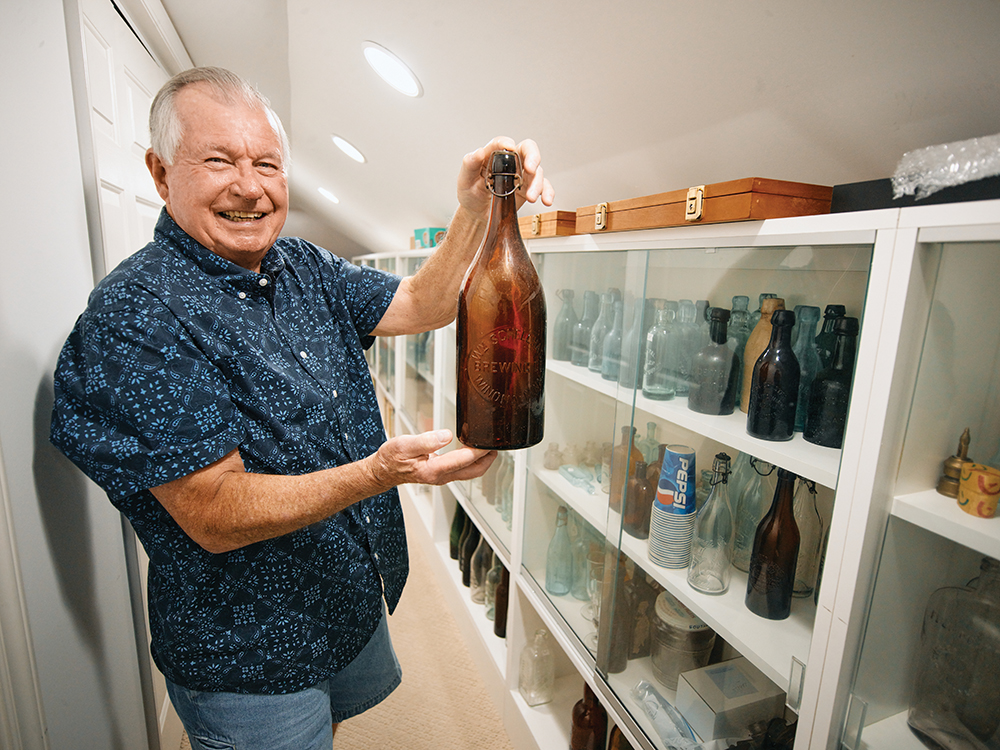
Seventy years later, Tingen is on the other side of a prolific life of bottle collecting that includes 50 years as an officer for the Raleigh Bottle Club (20 as president) and authoring four small-run collector’s guides. He is considered a preeminent expert on the history of bottling in the state of North Carolina, if not the Southeast. Bottle collecting has given him a network of friends, an appreciating asset and framework for history — but the best part, he says, is still the thrill of holding a find in his hand. “It has something real about it, something touchable, something you can look at, something you can put on the shelf, something you can study and learn about,” he says.
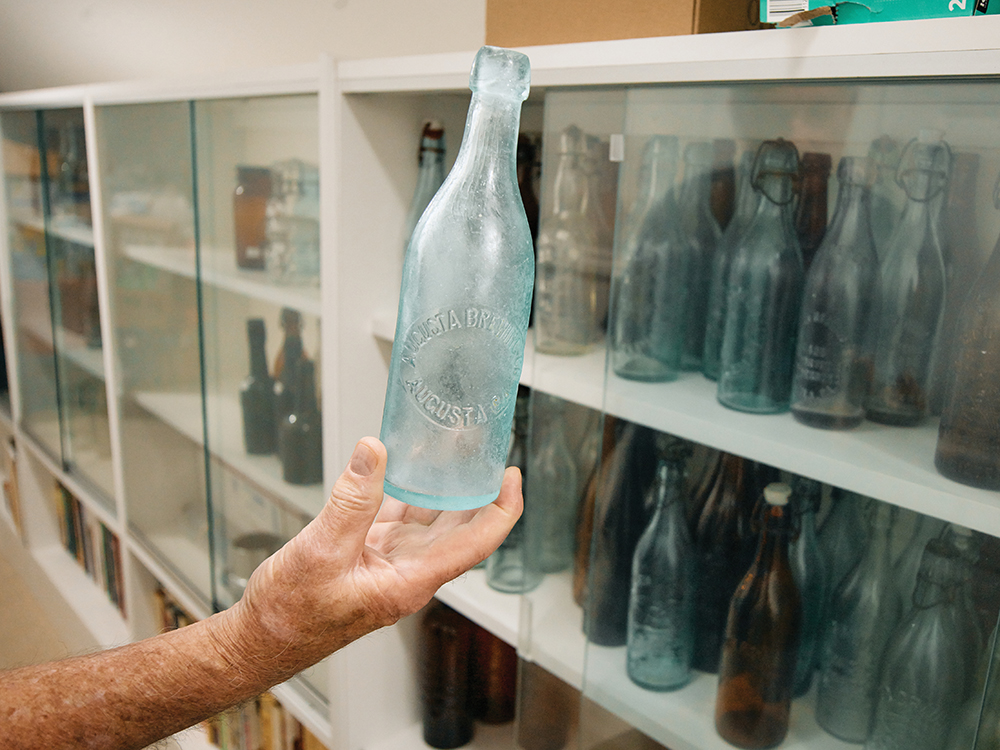
The early days consisted of digging and rummaging around Raleigh. In addition to the creek, favorite spots included the old water works in South Raleigh and the old Caraleigh Mills. As he unearthed bottles, he took them home, loaded them into crates and stuck them beneath his family’s house, plucking his favorites to line the sills of his bedroom.
A lull came as he entered early adulthood and his life busied. He served in the Navy, studied at Hardbarger Business College and Wake Technical Community College, then worked a variety of jobs before settling into a career as an electronics field sales engineer. He started a family and moved to North Raleigh. When he did ultimately return to collecting, he followed his curiosity in pursuit of Raleigh bottles, then North Carolina bottles, then pre-prohibition beer bottles. His collection swelled to well over 1,000. As was the case with the first blue bottle, he wanted to know about each of them. Before the internet was around, he spent countless hours in the Olivia Raney Library and the state archives scouring microfilm for the information that he would ultimately compile for his books.
“It takes forever to go through microfilms of newspaper archives,” he says. “I mean, it’s just tedious work. Then I had to get my wife to agree to let me do it, because it took so many hours.”
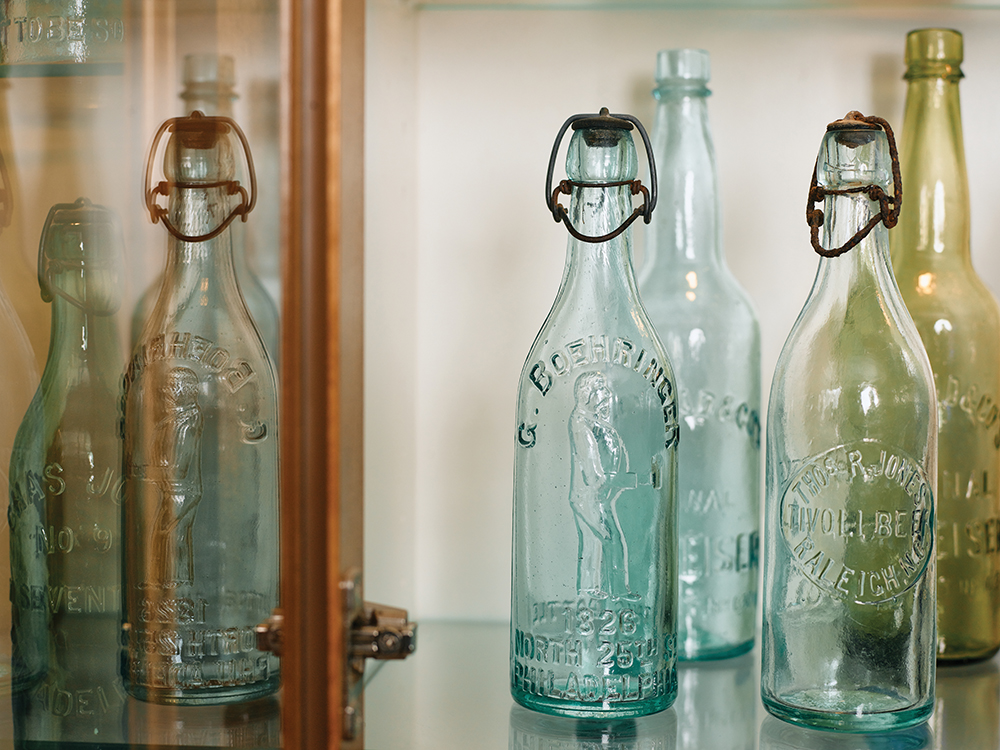
Now 82 years old, Tingen has downsized his collection to about 350 “keepers” — bottles of exceptional scarcity, beauty or both — in recent years, selling the bulk and giving many of his finest to his children. His ambition these days is to be a resource for what he says is a growing number of North Carolina collectors. The state is rich with bottling history. Pepsi and Cheerwine were born here and the latter’s predecessor, Mint Cola, has roots in Salisbury. He assists friends and strangers alike with research, buying and selling.
While his blue Emerson bottle might only fetch enough to pay for for snacks on the drive home, an embossed milk bottle from one of Raleigh’s old dairies might yield in between $20 and $200, and a pre-Civil War North Carolina soda bottle could bring in between $500 and $4,000.
Randy Cobb, one of the friends who has benefited from Tingen’s passion, lives in Macclesfield and started collecting in the late 1990s. He first met Tingen in 2010 at a Greensboro bottle show, walking past his display table and striking up a conversation about his own area of focus: Tarboro bottles. “He was like a walking encyclopedia,” remembers Cobb. “He just knew his stuff.”
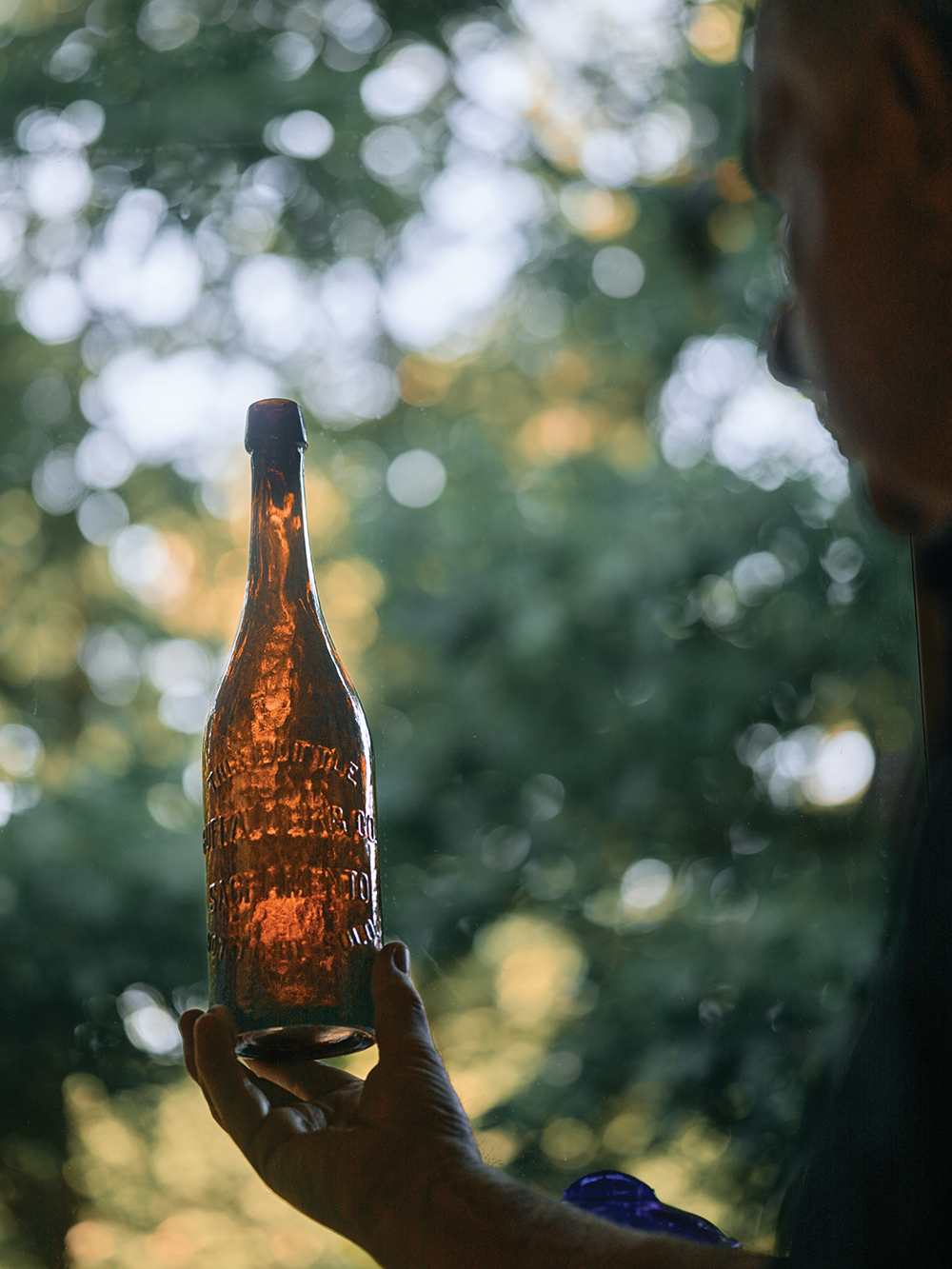
At Tingen’s behest, Cobb started attending Raleigh Bottle Club meetings, and the two would eventually serve as club officers together. Over the years, they’ve made exchanges, helped each other with various searches, and become friends. Cobb says what makes Tingen stand apart is his authentic curiosity about the history of each bottle, such as a pre-prohibition Tarboro beer bottle Tingen sold him five years ago.
Around the time the pair met, Tingen had promised Cobb that, when he ultimately decided to downsize, he’d give him the first crack at the bottle. When he sold it to Cobb, Tingen told him the story of how he had come to own it: by trading a couple of old wax-sealing canning jars — the kind his grandmother used for jellies — to a collector friend who’d found the bottle in Rocky Mount. The trade had occurred at the flea market at the state fairgrounds some 45 years prior.
“He has a good memory and he has stories,” says Cobb. “He can show you a bottle and tell you exactly where it came from, if he found it or he bought it. When I think of someone who collects bottles, he’s the number one guy I think of.”
Bottle collecting has changed in the 70 years since Tingen first started. The advent of the internet lessened research workloads and broadened networks. Many of the dump sites that yielded his first scores in the 1950s are long since paved over, including his original creek spot near Boundary and Watauga Streets, which was taken over by the city to be used as a drainage route.
Tingen has fully embraced the modern resources, but he says no matter his age, the harder the hunt, the more thrilling the find.
“You go out and look through an old dump or a creek bed that has been filled in, or a cistern or outhouse that’s 100 years old — to a bottle collector it’s a treasure hunt,” he says. “The other part of the hunt is going to a massive bottle show, like the one in Baltimore, where they’re 350 8-foot tables full of bottles. That’s a different environment. You walk along and you see something in this area, Oh, man, that’s nice. I’ve been looking for one of those. You give them the money, and you walk off.”
Among the vestigial bottles, perched in a wall-mounted display case in his home, is the very first cobalt-blue Emerson bottle, a reminder of the days of roaming around town with nothing but volition and a shovel.
“In cold weather when the other kids were staying at home, I’d put on all my heavy clothes and my ratty shoes and jeans, and I’d be down there digging around for bottles,” he says. “I’ve always believed that you succeed by being a student of whatever you pursue, and it has been fun for me.”

This article originally appeared in the September 2025 issue of WALTER magazine.