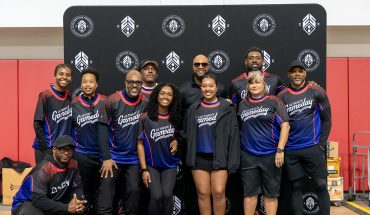
At Pullen Aquatics Center, Coach Zion Hall teaches basic skills, competition and belonging to children and teens
by Lori D. R. Wiggins | photography by Terrence Jones
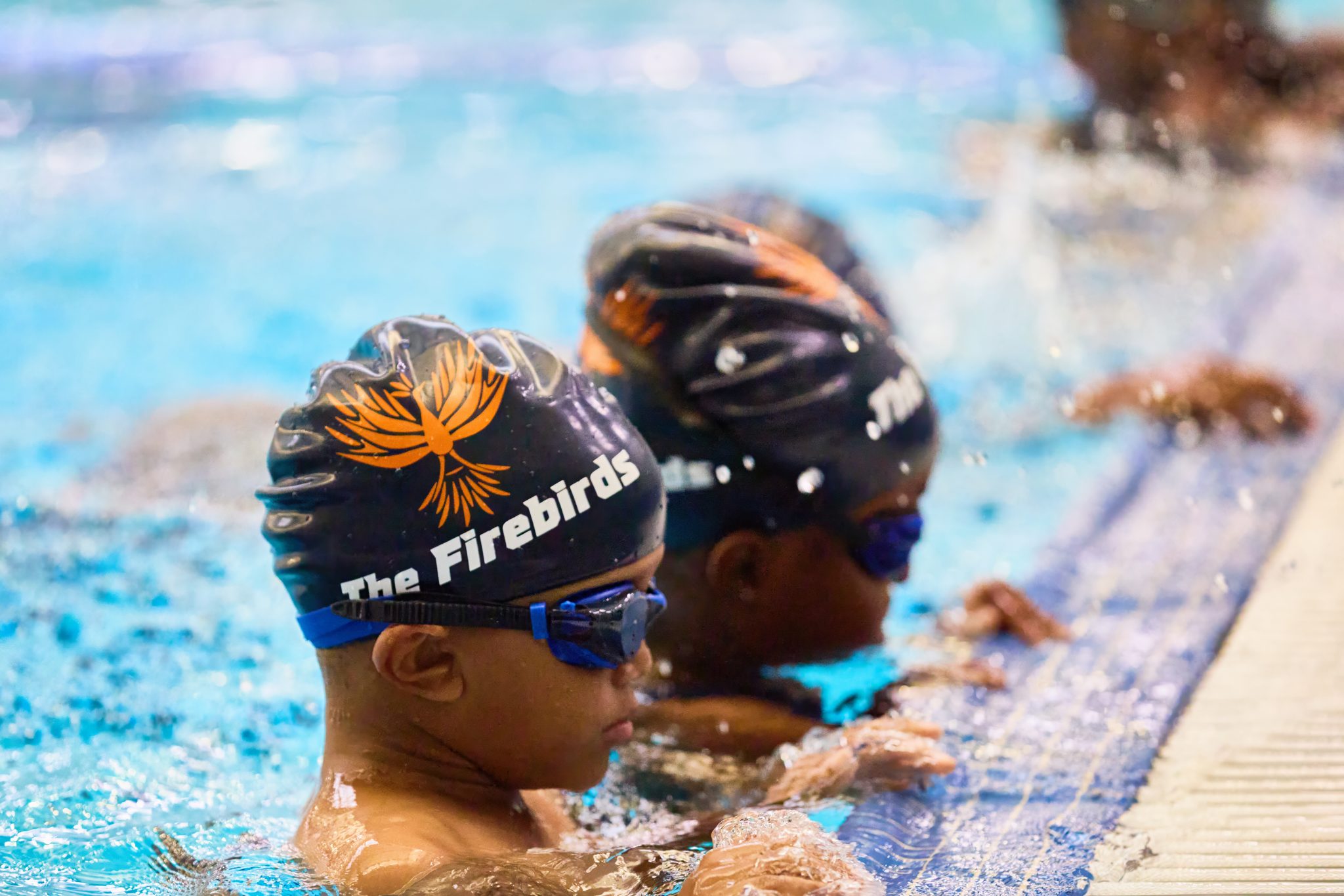
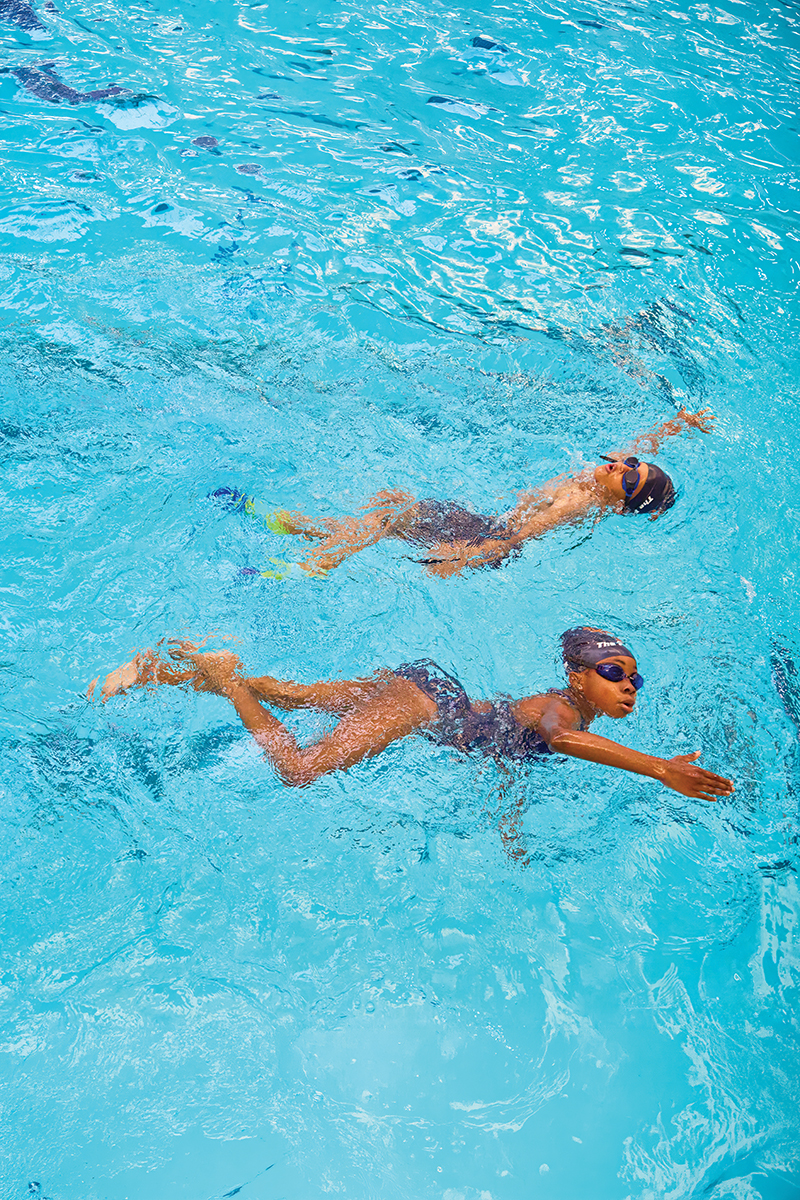
On a weekday evening at Pullen Aquatics Center, young members of The Firebirds swim team glide down three lanes, rotating drills of alternating strokes. Their coach, Zion Hall, moves along the lanes, calling swimmers by name and offering corrections, praise and pushes to go harder.
For many of these swimmers, this is still new. Less than a year ago, some were unsure of the water’s welcome, others disengaged by a sport that left them feeling alone in a crowd. But now, these young people — Black, first-generation swimmers in a sport where few look like them — show up ready to learn, race, win and belong.
Their coach didn’t set out to start a movement. She’s been a competitive swimmer since she was 8, a course her mother, Deidra Hall, never imagined for her children: “I was one of those people saying, What? No! Black people don’t swim!” she’d quipped to her husband Antoine. But her daughter persisted. “Zion really, really wanted to learn,” Deidra says. “And once she got in, she loved it.” Zion pulled her family in, too, convincing her mother to learn to swim, plus her younger brother, Judah — who’d otherwise fought to avoid the water; “Showers included!” he says — to learn to swim and compete as well.
In late 2023, Zion’s competitive swim team abruptly disbanded, leaving many first-generation swimmers like herself without a place to train or a way to stay connected to each other. Instead of joining another team or quitting the sport, Zion and her mother decided to start their own team.
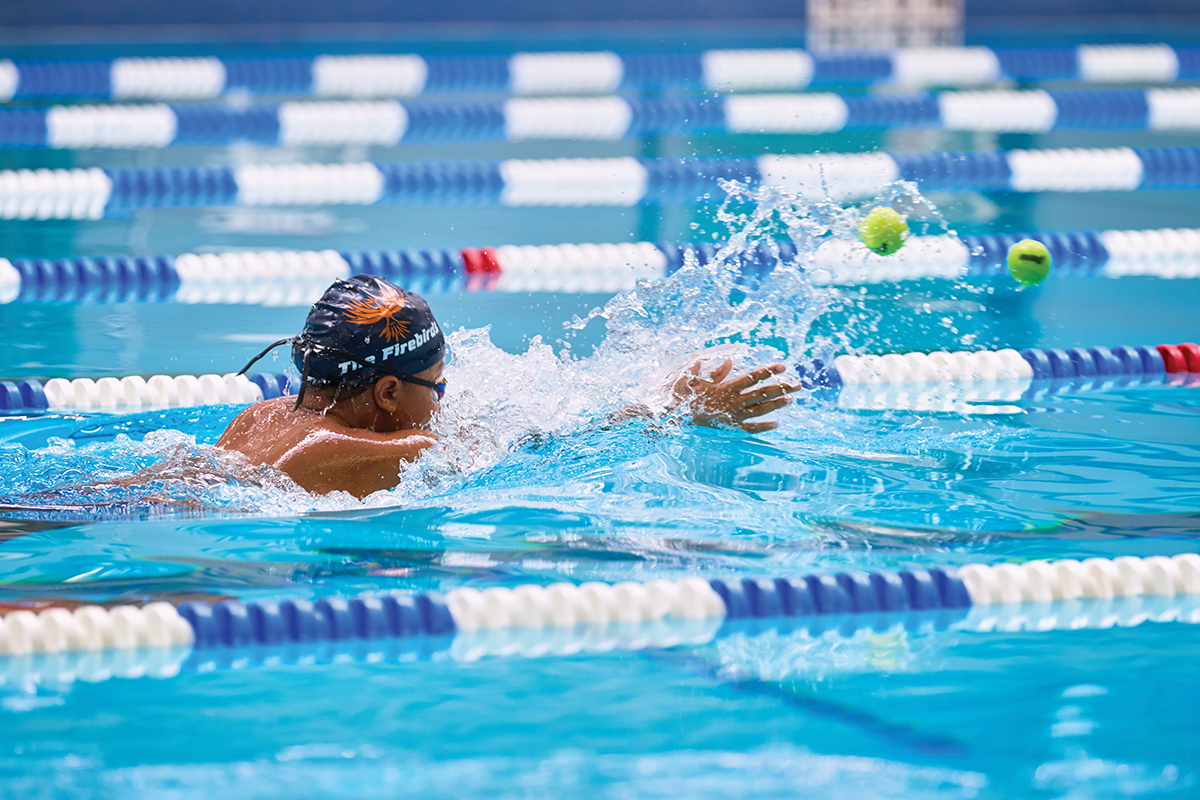
Then just 18, Hall, a former lifeguard who was homeschooled and finished college early, became a certified USA Swimming coach, a formal certification process that allowed her to step into a role that requires both technical knowledge and leadership. Her mother started a nonprofit, Champion’s Coaching, Inc., to help fund the athletes’ needs for lane space. They named their team The Firebirds, a name that symbolizes the team’s rise from the ashes. Fittingly, the team’s motto is “Rise up!”
Before long, the team earned its own certification from USA Swimming, the sport’s national governing body. Now, Zion is reportedly the youngest Black female head coach of a USA Swimming team in North Carolina. The Firebirds is the first Black woman-run swim team in the Triangle.
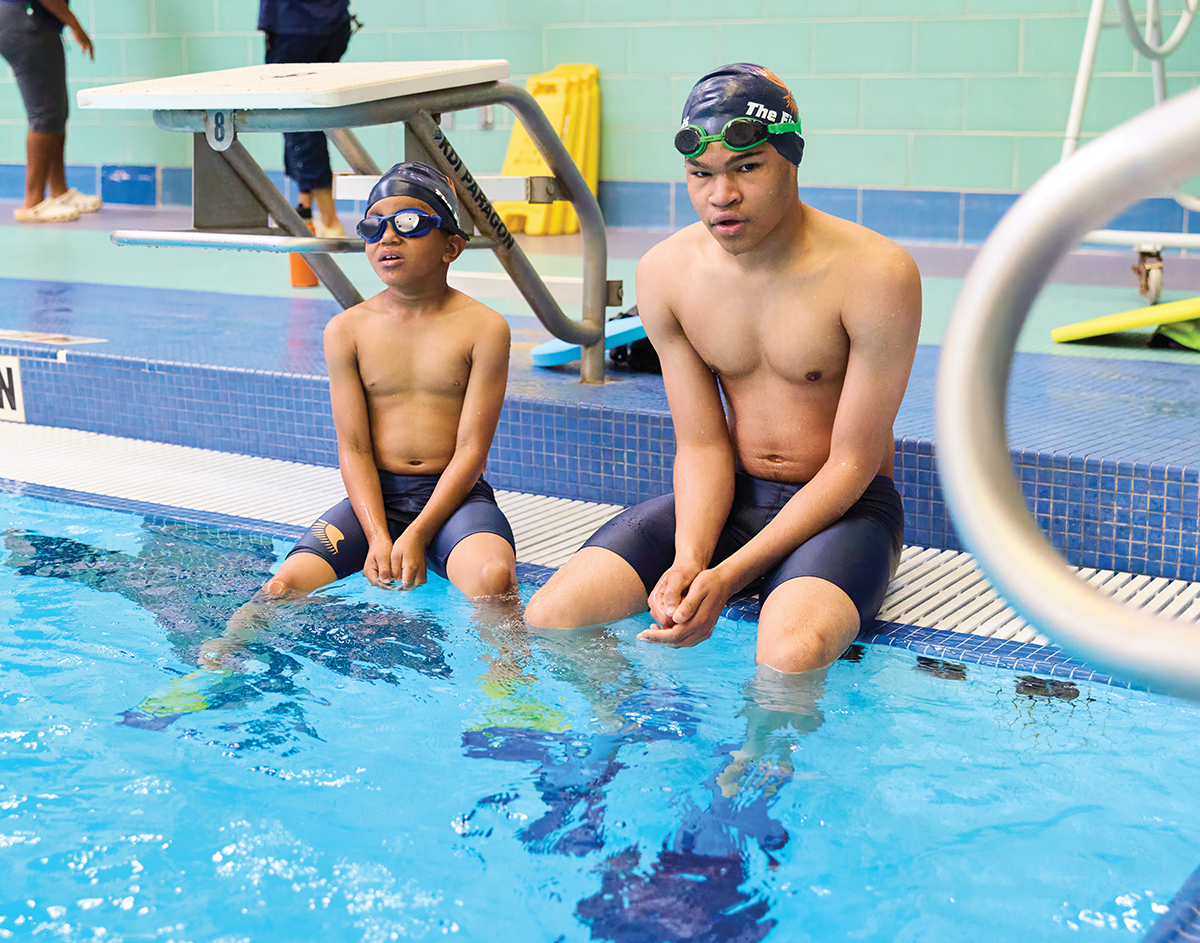
Zion’s mission goes beyond skills and scores; her goal is to train young athletes holistically. While rooted in BIPOC swimmer development, the team is open to everyone. By teaching life-saving skills alongside the life-shaping skills of competition, she addresses disparities like higher drowning rates and lack of access for Black, Indigenous and other people of color while building discipline, resilience, focus and accountability. Zion’s fostering a community that is quietly redefining belonging in the sport. “I want to expose swimming as another opportunity for kids who don’t think of it as a competitive path,” she says.
Arthur Thompson III has watched his children, Arthur IV and Amor, transform. “My kids didn’t know how to swim,” he says. “Within months, everything shifted.” Now they’re competing — and winning. “This team shows them the excellence they were created to have, especially in spaces where success hasn’t always felt expected,” he says. The kids even inspired their mom, his wife Christa, to learn to swim as well.
Deidra, who works with the youngest swimmers, remembers Arthur’s first jump in the pool. “He couldn’t make it halfway, and was grabbing the lane ropes all the way there,” she says. “Now, he’s with the rest of them out there killing the game!”
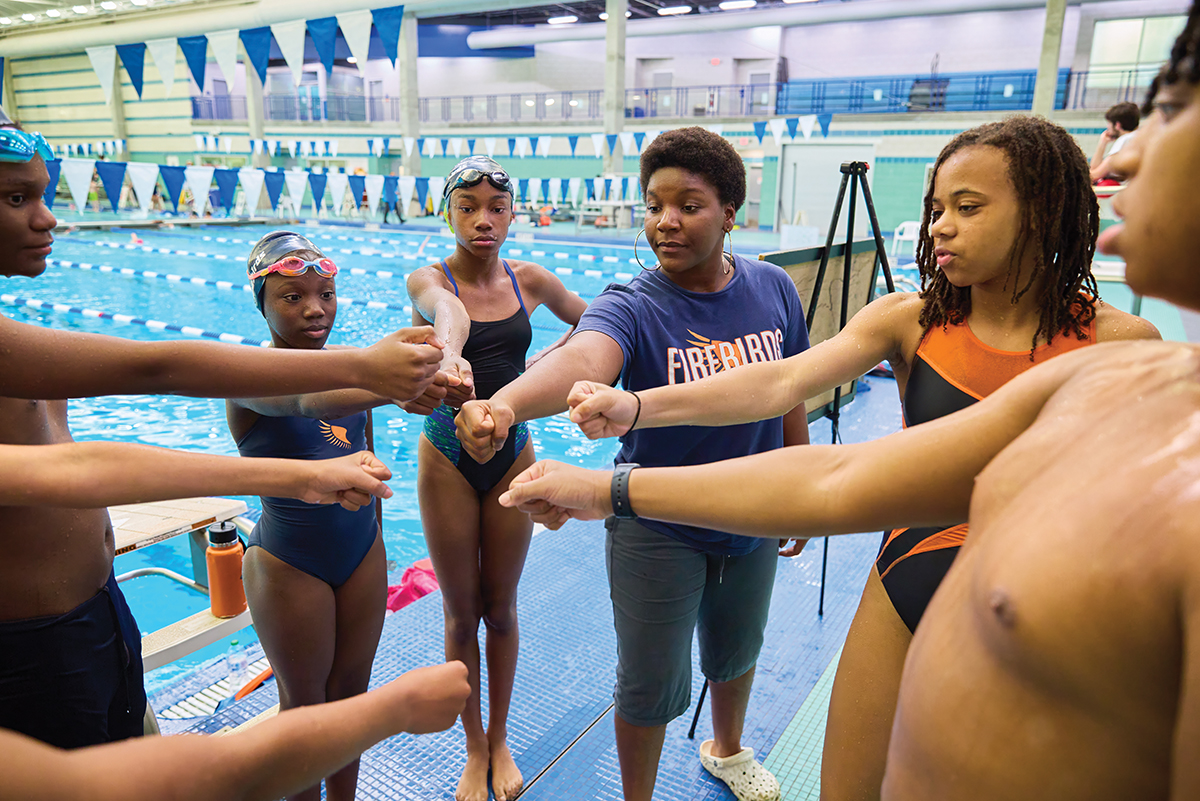
Like many Firebirds parents, the Thompsons intentionally chose a sport for their children that rarely sees athletes of color. “It has a dual purpose,” Arthur III says. “I don’t want them to feel like they have to fit into a box, or a cookie jar of sports. I want them in places we do not typically dominate, places that seem designed for us to lose. I want them to know that their brilliance can come from being in a minority, even if it starts with struggle.” For them, the swim-team experience goes beyond the typical benefits of youth sports: their children learn skills, discipline and teamwork, but their presence also challenges a legacy of discomfort bred by limited access to pools.
The team has become a community where lived experiences are shared and belonging comes naturally, where relationships form and support flows beyond the lanes. “Coach Zion cares, not just about the team, but about the individual,” says Troy Jiggetts, whose daughter Jael is a Firebird. Agrees her mom, Monique: “Coach Zion will get in the water with her and say, Try this, and actually show her the right technique, with no yelling.” Jael now takes the sport seriously, and embraces practice. “It definitely has helped me with all of my strokes,” said Jael, 12, who attends a Johnston County charter school.
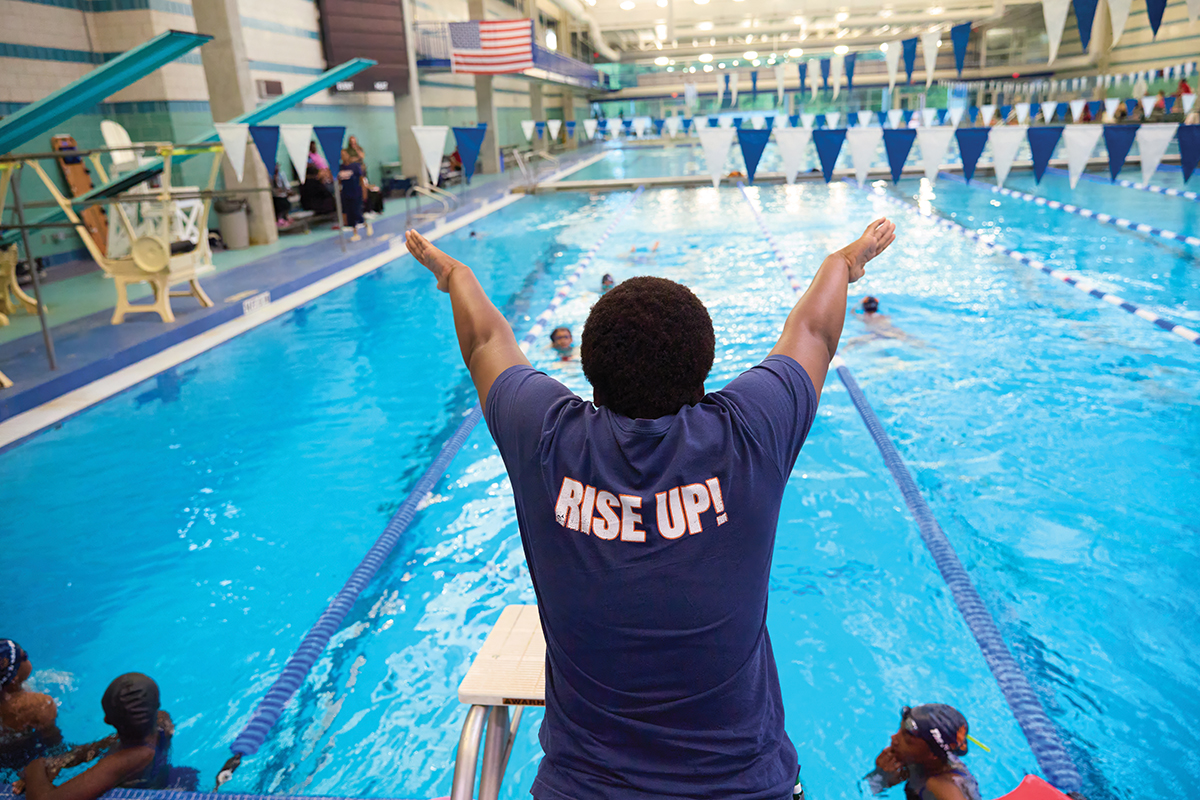
The Firebirds have both a competitive team, the Blue Team, and a noncompetitive team, the Orange Team. Ten-year-old Emerie Hamilton is on the Orange Team, which meets twice a week to learn water safety, enhance swim skills, master teamwork and have fun. “What I love is that if they do want to try it out, see what competing is like, they have the option of competing in three meets,” says her mom, Leslie Hamilton. “Plus, I’m honored my daughter gets to see Black leadership. She’s in good hands.”
At their first long-course meet, held at Pullen Aquatic Center in April 2025, some swimmers won their first-ever heats and performed well in the finals, while others achieved motivational time standards and set early team records. Three Firebirds swimmers competed in an Olympic-length pool for the first time. “They did phenomenal — I’m very proud of them,” says Zion.
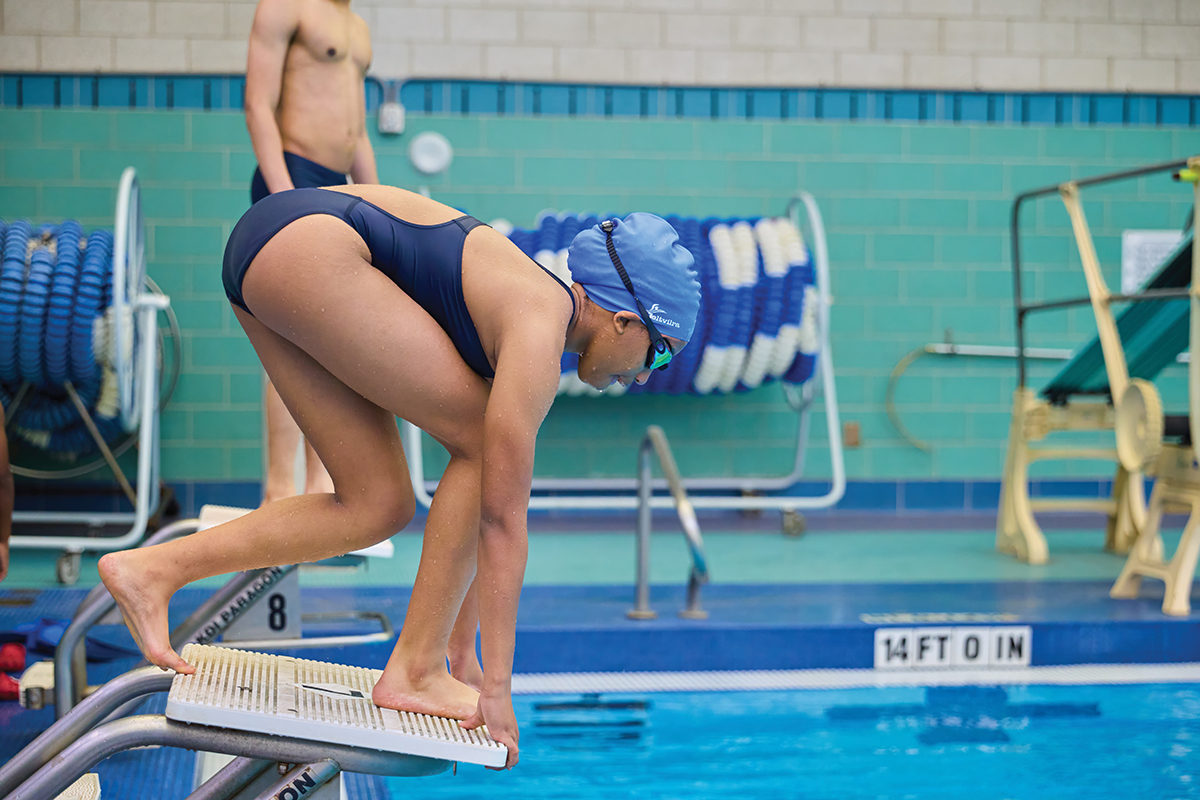
This year, Cameron Carless was one of the ones who went for it. In his first competition, he won first place in backstroke in his heat, second place in the 50-meter backstroke and second place in the 25-meter freestyle. Even so, Cameron says, his eyes still glitter Team Orange. “It helps me get better at swimming,” he says. Not to win, he assures, but “to be safe.” For his older brother Christian, who competes on the Blue Team, his list of wins and his goals go deeper. “I lost weight. I got faster. I’ve gained confidence,” the 15-year-old Rolesville High sophomore says. Plus, Christian, who started swimming at 11 to “try a new sport,” feels himself swimming stronger in all of his strokes. “This is a very welcoming community, and the training technique is a good one,” he says. “I’m learning a lot more efficiently.”
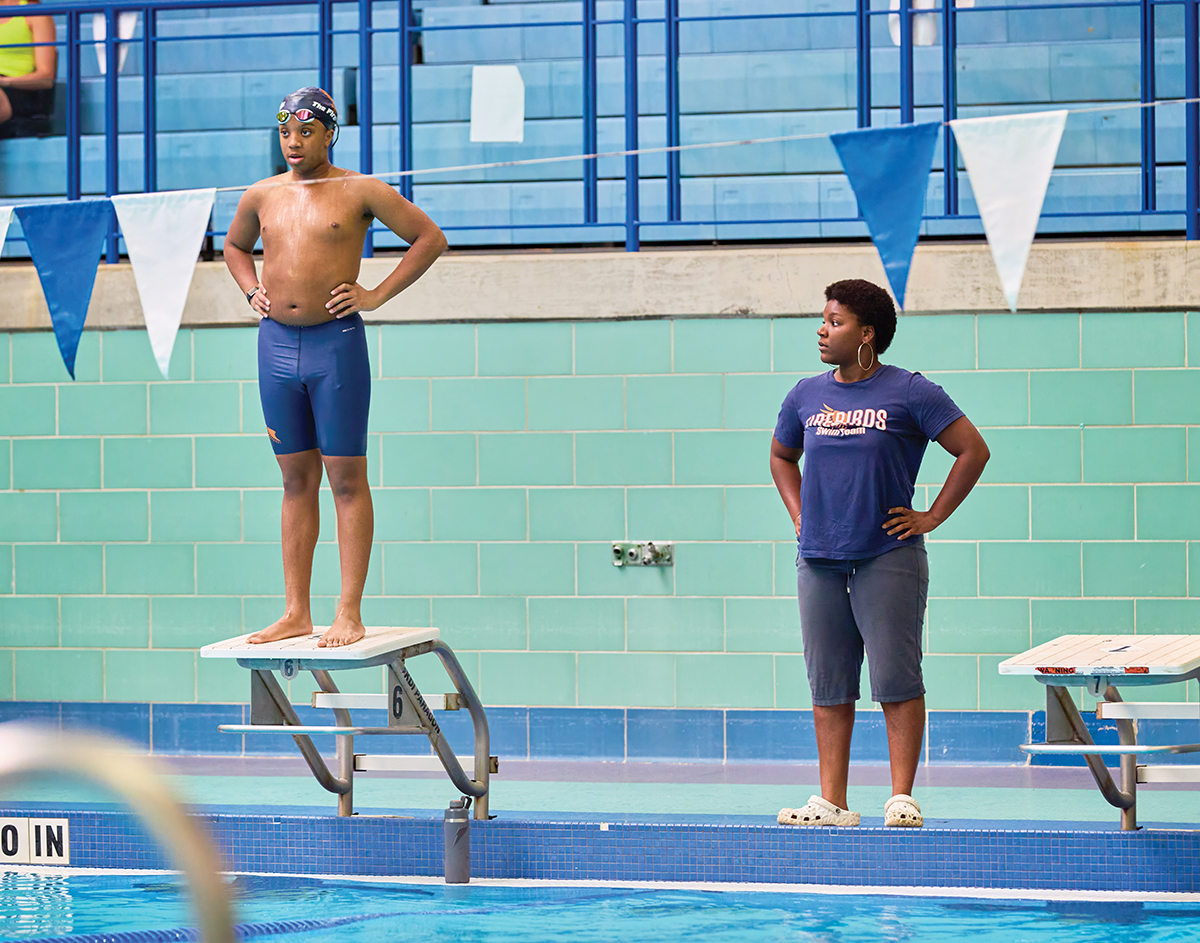
For The Firebirds’ first few months, Zion’s brother Judah was both a swimmer and an assistant coach. Now he’s a 19-year-old freshman on a full, four-year swimming scholarship at Lenoir-Rhyne University in High Point, where he swims the 50-yard butterfly, freestyle and breaststroke. At his first South Atlantic Conference Championships, Judah broke his school’s record in the 50-yard butterfly, becoming the first Black male swimmer in the program’s history to break an individual record and medal, earning bronze.
“It was all about perseverance to get there; then, you’ve got to lock in,” he says. “Being the only Black person in the water, all eyes are on you, whether you’re the fastest or not.”
As practice winds down, swimmers climb out of the water, dripping and tired, but energized. Coach Zion gathers the athletes as one. With parting words of both instruction and encouragement, she sends them off carrying something less visible than their towels and goggles: a little more confidence, and a little more awareness of who they are than they had when they walked on deck. “It’s a great, great experience,” says Thompson, father of Arthur IV and Amor. “I don’t even know if my kids know what they’re a part of.”

This article originally appeared in the June 2026 issue of WALTER magazine.