Albino deer are uncommon in North Carolina but a marvel to behold, as one Chatham County backyard sighting proves.
Words and photography by Mike Dunn
My father grew up in the mountains of southwest Virginia. His upbringing included fishing and hunting. This helped make him a lifelong outdoorsman. He was one of 10 children, so his hobbies weren’t just for sport—they also provided an important source of food for the family. He fished for trout in local streams and hunted all sorts of game, from squirrels and rabbits to deer.
He was a particularly good deer hunter. He scouted areas before the season opened and would hunt those that had lots of deer signs. His hunting style was a “stalk and sit” method, which involved moving slowly and quietly through the woods and then sitting in a spot that looked promising, often against a tree trunk to hide his human outline.
When I was about 12, he started taking me with him on those hunts. No doubt that time spent sitting quietly in the woods helped spark my interest in the natural world. You soon become part of the environment and animals begin to accept you. It was a great way to observe and learn about all sorts of animal behavior. In his later years, I think my father enjoyed just being out there watching the deer as much as he did hunting them—maybe more.
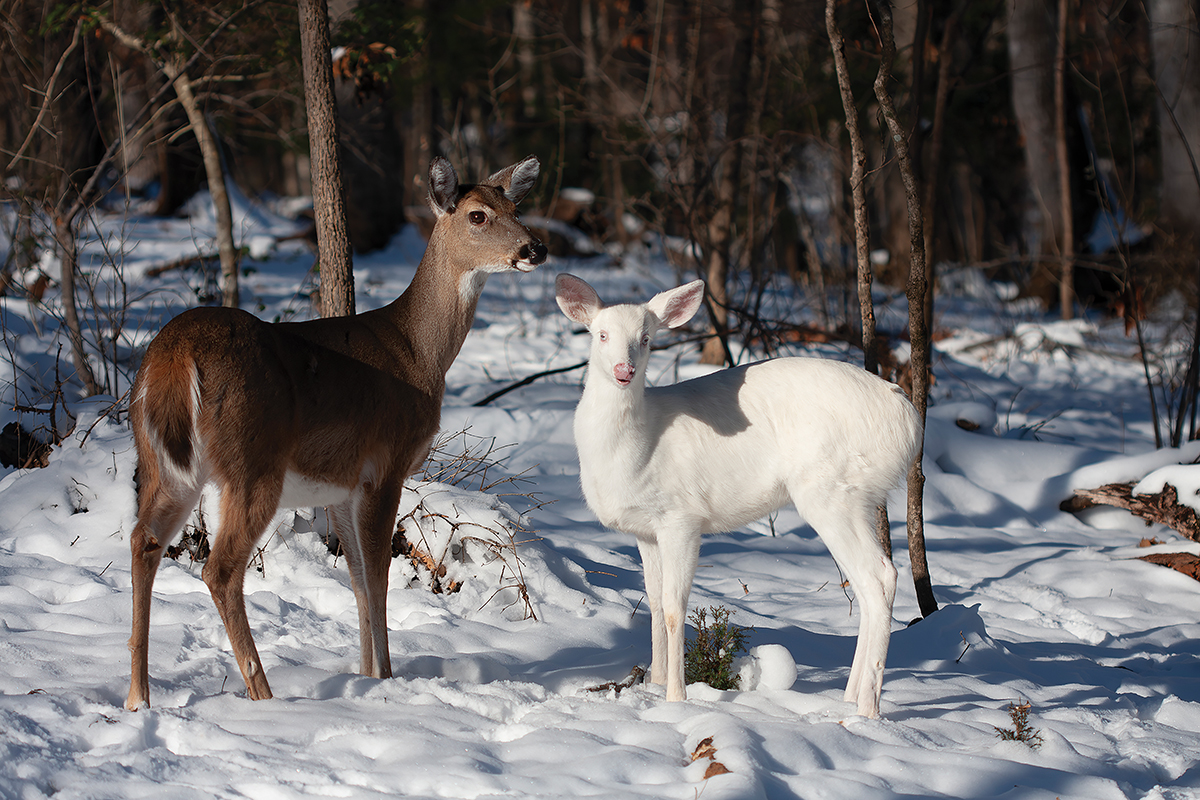
Our property in Chatham County has plenty of deer since the community of 880 acres does not allow hunting. Every time Dad would visit, he loved sitting on the deck or by the window watching the deer that regularly patrolled just outside of our 1-acre deer fence. One fall about 12 years ago, I spotted a rarity: a white deer. Though most people refer to any white deer as an albino, true albinism is exceedingly rare. Some estimates suggest that only about one in 30,000 white-tailed deer are true albinos. Albino deer are characterized by totally white fur and pink eyes, noses, and hooves caused by a complete lack of pigment. With an estimated population of 1 million white-tailed deer in North Carolina, that means there may only be about 33 albino deer in the entire state at any one time.
Most white deer are not true albinos but rather are leucistic, which means they have varying amounts of pigment in parts of their body. Leucistic deer typically have dark eyes, noses, and hooves like a normal deer. This is also rare, but less so than albinism. Partial leucism results in deer with white splotches or maybe even a half-white, half-brown coloration. These are often referred to as being “piebald,” and this condition occurs in about one in every 1,000 deer.
Albinism and leucism can occur in many other animal groups. Many people report seeing unusual white or partially white birds at their feeders, which often attracts the attention of birdwatchers. White squirrels are a tourist attraction in places like Brevard, North Carolina, where they are even protected by the city. Most of the time, these anomalies are leucistic, not albinos.
I wasn’t sure what “our” white deer was, as I was having trouble getting close enough for a good photo. But that autumn was a good mast year for the many oak trees on our property, which meant we had lots of acorns. The large oaks just outside the deer fence were dropping thousands of these nutritious deer treats, and the local herd responded by spending a lot of time near the house, so I was finally able to get some close-up photos.
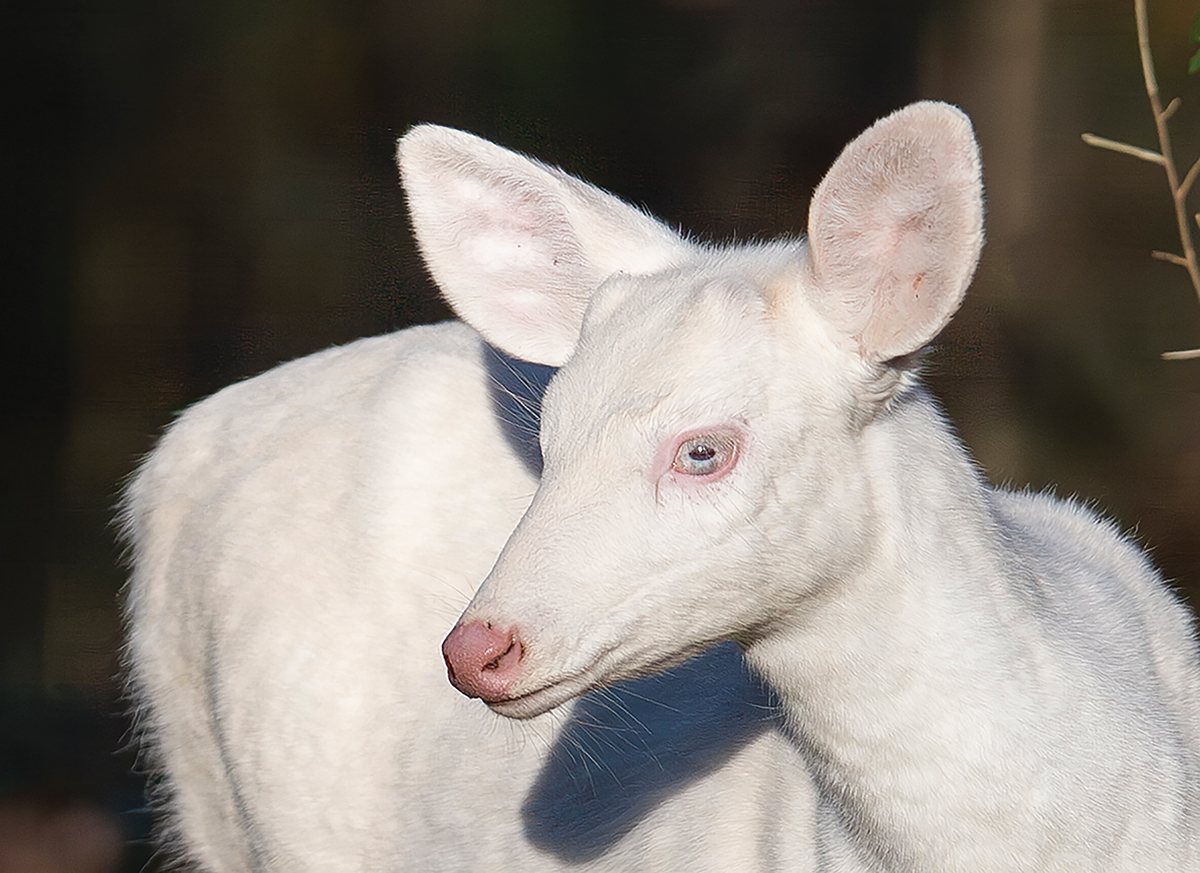
The white deer appeared to be a young buck (you can see the nubs on its head where future antlers will grow). The nose and hooves were pink instead of the normal dark color, so I do believe it was a true albino. I knew Dad would love to see it. I didn’t remember him ever telling me about an all-white deer, though we had seen a couple of piebald ones over the years. Sure enough, when I told him about it, he managed a visit within a couple of weeks. We sat out along the fence line for a couple of hours until we finally saw some deer headed up the slope. Trailing behind the white deer was what I assume was its mother, a normal-colored doe and one of the only deer I saw associating with it. I was so pleased to share such a magical moment with him. I watched this young deer for a few months, but once spring arrived, I never saw it again.
Albino deer usually do not live very long. They tend to have poor eyesight and obviously lack the camouflage of normal deer coats to help hide them from predators, especially human hunters. Though some cultures believe killing an albino animal can bring bad luck, that does not appear to be the case in ours, and white deer are often sought out as trophies.
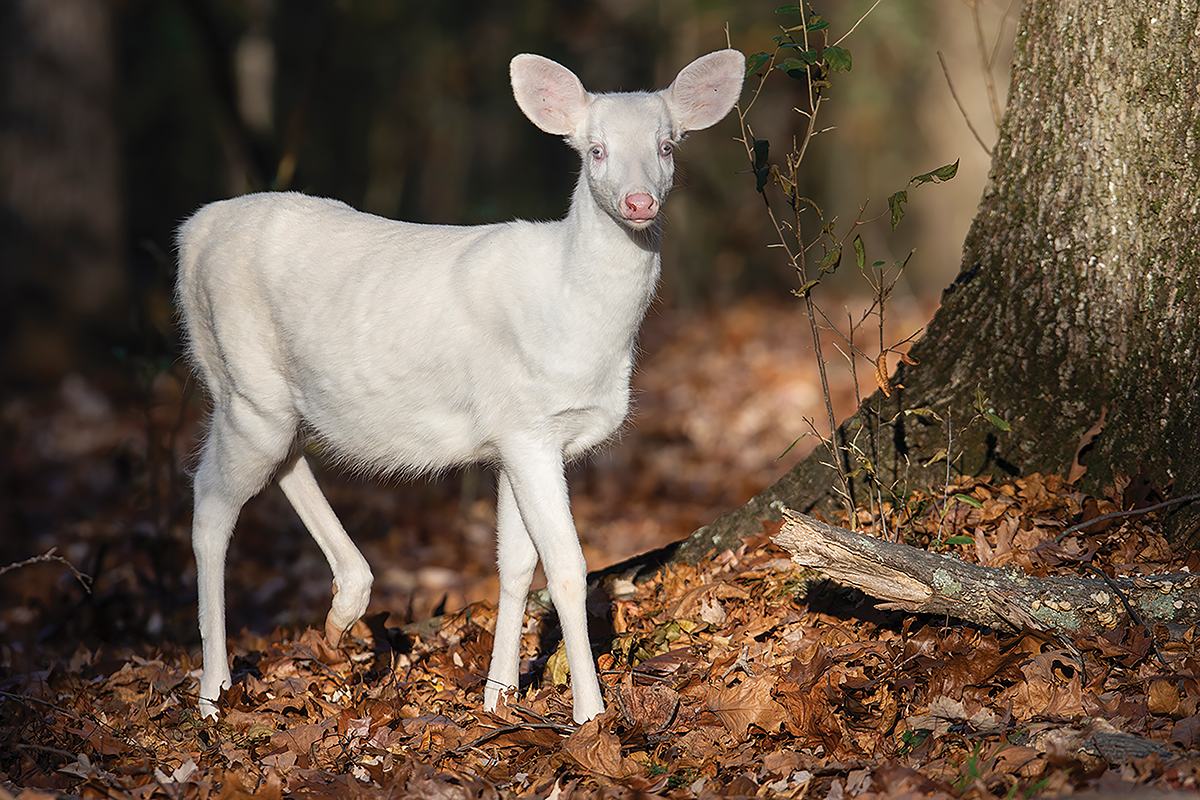
Though I have spent countless hours in the woods since then, I have never seen another white deer. But there is a local park that commemorates another white deer from our area. White Deer Park is a 96-acre urban park in Garner established in 2009. The park offers trails, playgrounds, and a beautiful LEED Gold-certified nature center and offers a variety of educational programs (learn more at garnernc.gov).
Garner officials decided to name the park after a famed white deer that was frequently seen roaming the area. Unfortunately, the white doe was hit by a vehicle and died. But now, visitors can see a taxidermy mount of that famous deer at the entrance to the park’s nature center. It’s not quite as awe-inspiring as seeing one in the woods, but you can get a better appreciation for why a town dedicated a nature park to such a magical creature. Here’s hoping you may one day witness one striding through your local woods.

This article originally appeared in the November 2026 issue of WALTER Magazine.